
A few years ago, I updated my Vacation Bucket List. I am not nearly as adventurous a traveler as people think I am. I like castles, cathedrals, and art museums. After I saw Raphael’s Sistine Madonna at the Dresden Gallery, a moment for which I was waiting almost my entire life, I was temporarily adrift. It was the apex of my dreams. I even had to ask spouse for suggestions on where we should go next, which is how we ended up at Oktoberfest (worth every crowded, beer-soaked minute, and a story for another time). I needed to brainstorm. Many of my travel ideas have been known to come from books, and I have followed the footsteps of some favorite characters. In my adult life, none touched my heart more than Uhtred of Bebbanburg, the imperfectly perfect hero of Bernard Cornwell’s Saxon Chronicles.
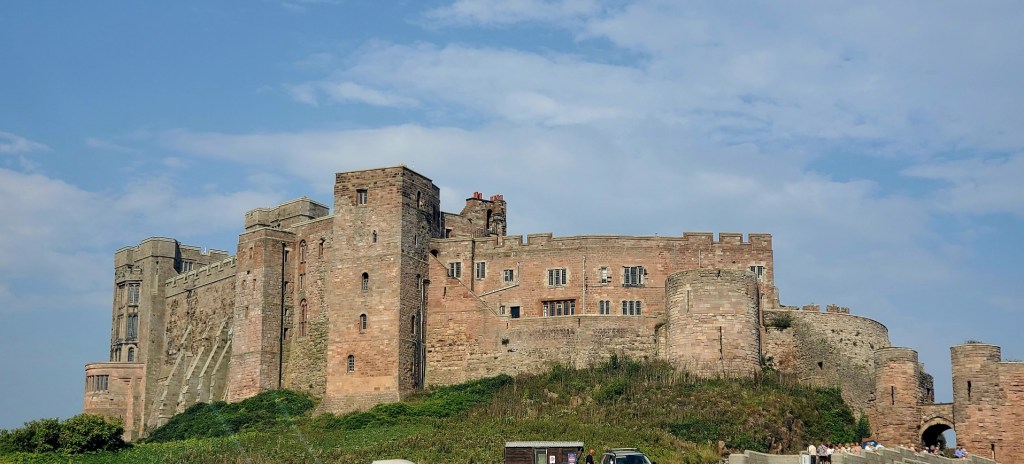
All his life Uhtred was pining for his fortress by the sea. I have been pining alongside him, from the first book which I read in 2009. He regained Bebbanburg in the 10th book, and after that, the last three books were superfluous and I do not remember them (although that might be partially because my shorter term memory is declining with age). But really, much like “The Odyssey”, the quest was the story. All the other plotlines were just there to support this lifelong journey of Uhtred back home. From the beginning, I could identify with his longing. I always felt that I was essentially a female, modern-day version of Uhtred. There are some subtle differences, mainly related to the sword-wielding, but basically, I am Uhtred. His feeling of yearning for his lost ancestral home defined him and gave his life purpose, and I identified with that completely. I spent so much time listening to Uhtred wax nostalgic about his ancestral fortress by the sea, I had to see it for myself. I had to see the sight of the happy ending.
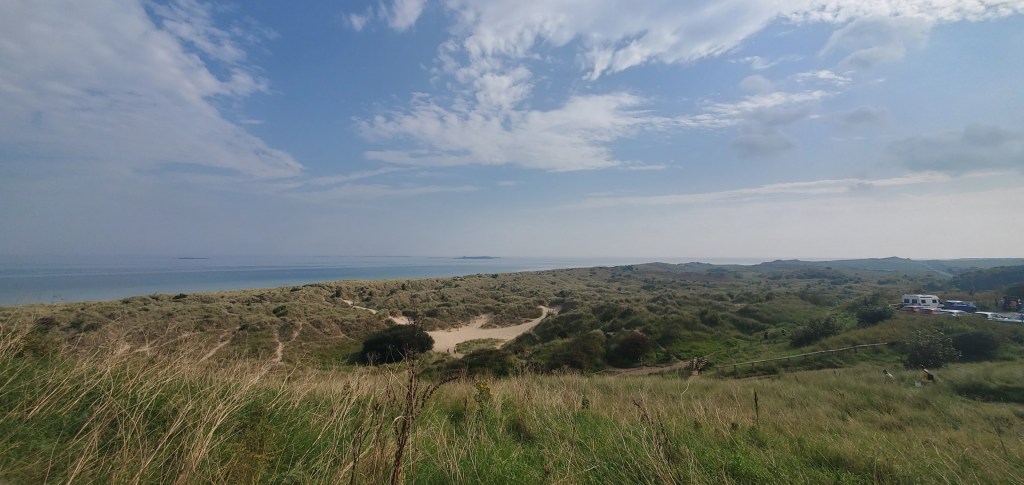
Bebbanburg, under its modern name of Bamburgh, is in the very north of England, in Northumberland, and is much closer to Edinburgh than London. Once that simple geographical equation became clear to me, the rest was easy. I planned a trip to Glasgow, because I have already been to Edinburgh once before, and Glasgow, from where all the rugged and rogue BBC policemen seem to come, was as yet unexplored and still a mere couple of hours from Bamburgh. (Yes, where I come from we measure distance in hours).
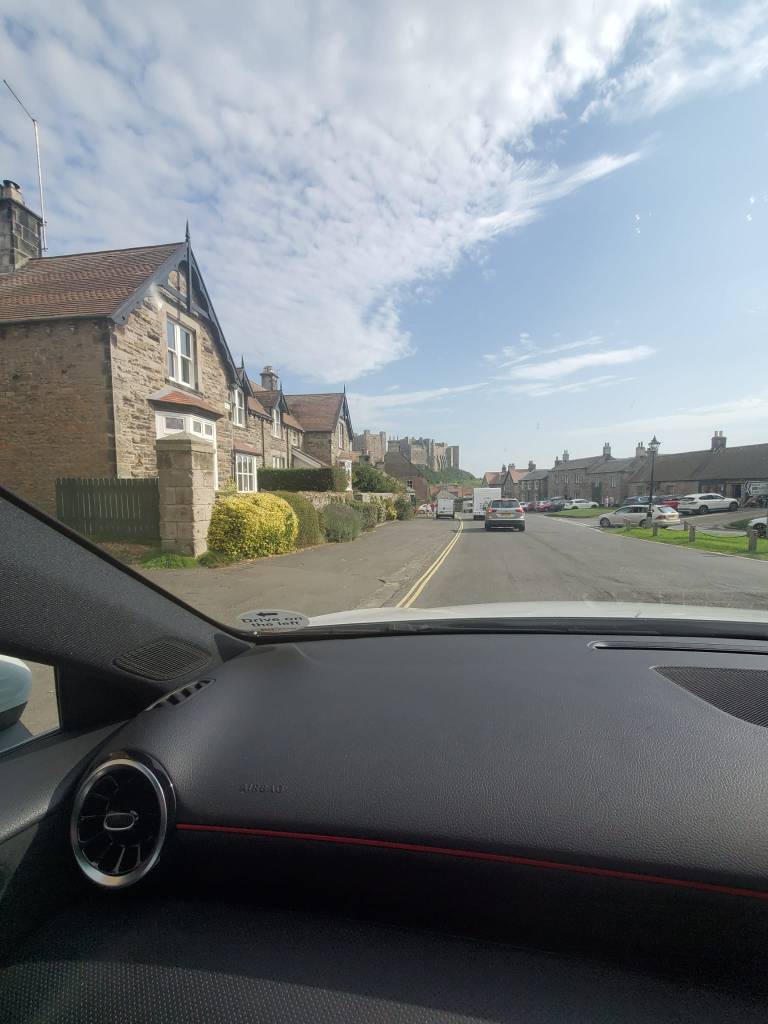
An honorable Bucketless mention goes to my valiant effort of driving from Glasgow to Bamburgh. Even in Europe, trains do not reach every corner of the continent, and one car ride is always simpler than two trains, a bus, and a cab. I will not lie, anxiety was high, and even as someone to whom driving is as natural as walking, I was by no means sure that either the car or its passengers will emerge unscathed from this trip.

And yet we did. I never, ever, not in any demented fantasy, pictured myself driving on the wrong side of the road. But once I did, I realized that the wrong side of the road is not the problem, you just move along (and the helpful “Drive on the left” sticker became a mantra I constantly whispered to myself). It’s sitting on the wrong side of the car, with all that unaccustomed space on the left where nothing but the door should be, that is the real issue. It is difficult to stay within the lines and not veer to the left. If I had a continental car, it would have been a piece of cake. In any case, no one got hurt, and I never want to do it again in this lifetime—even though I am quite inordinately proud of having done it. But seriously, it was not enjoyable at all.

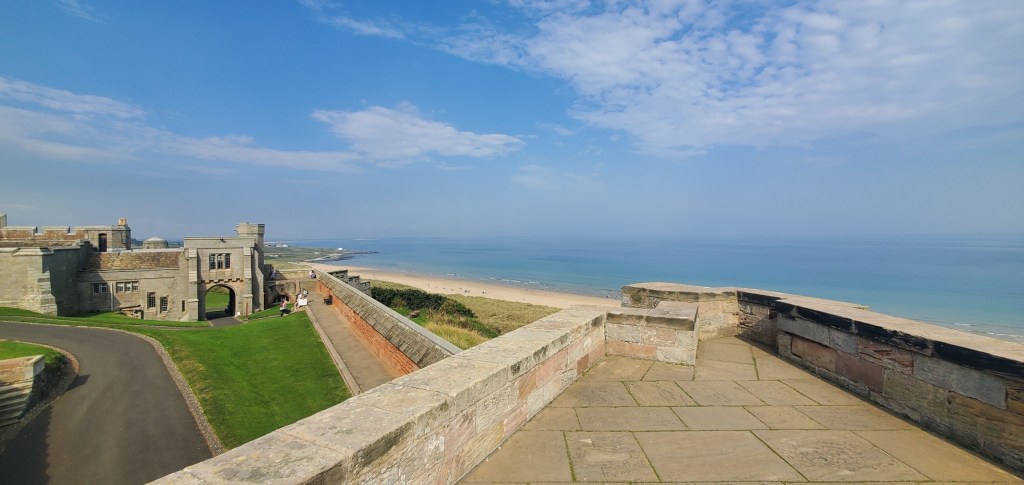
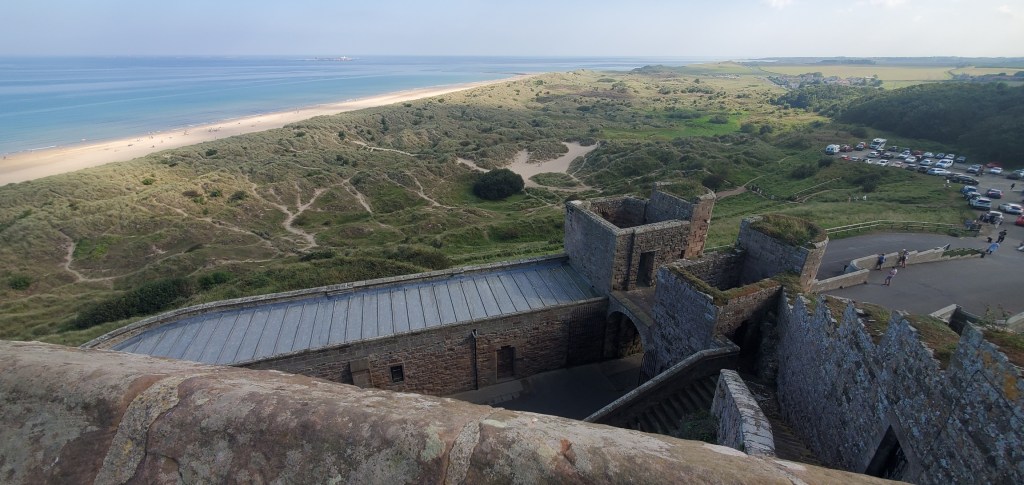
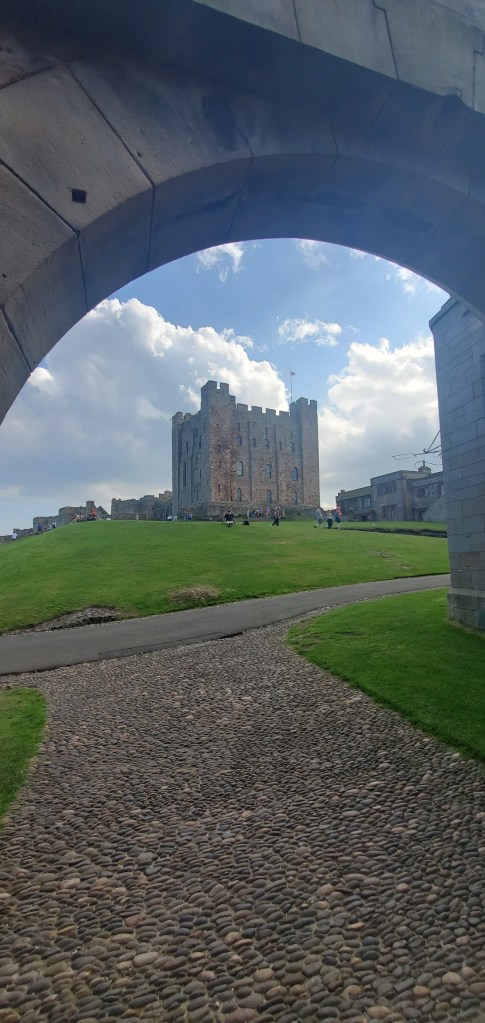
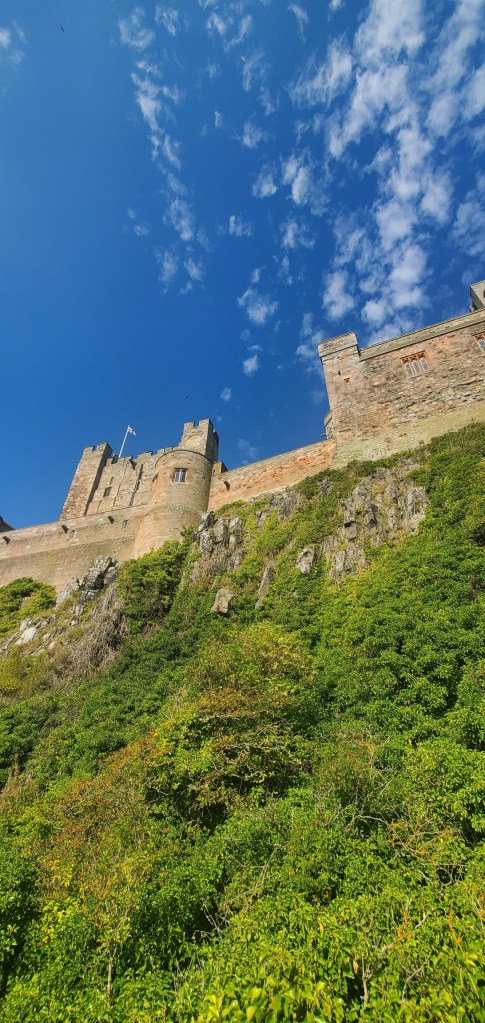
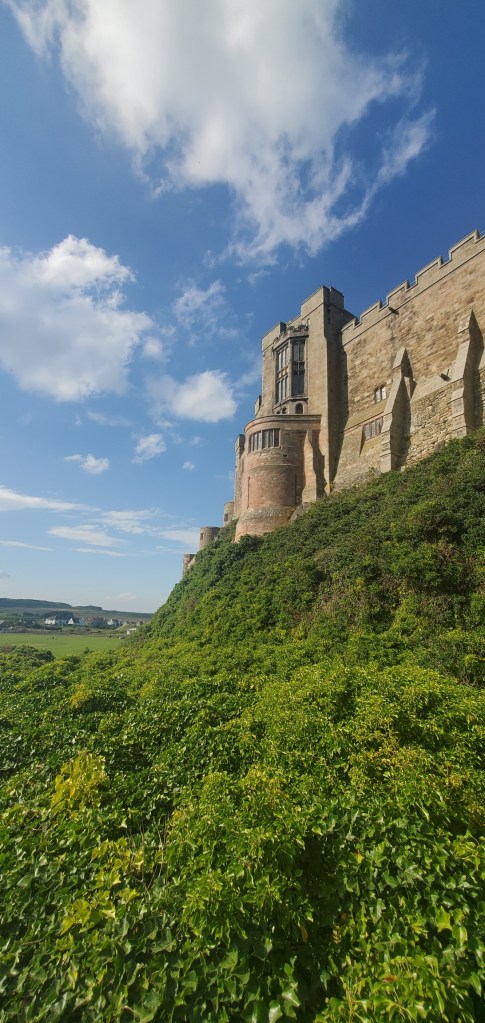
Driving up to Bamburgh castle from the road, seeing it just suddenly come into view, imagining what those Vikings must have seen over a millennium ago as they approached this imposing stone bastion—well, all I could do was yell “Foto machen!”at the spouse, as I could not pull over for fear that I would lose my precarious driving momentum. Is it beautiful? Of course. The current owners—not Uhtred’s descendants, alas—do a good job of displaying the history of the area and showcasing the connection to “The Last Kindgom” (not the books, but the TV series, which I, expectedly, found to be a pale shadow of the books). The castle is majestic, and the views of the North Sea from the ramparts are stunning. The village at the foot of the fortress is charming and picturesque.
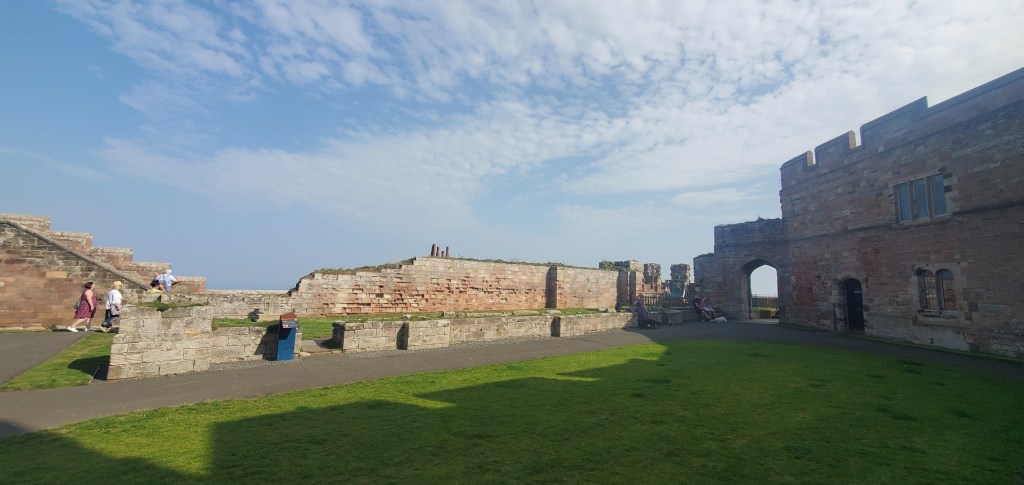

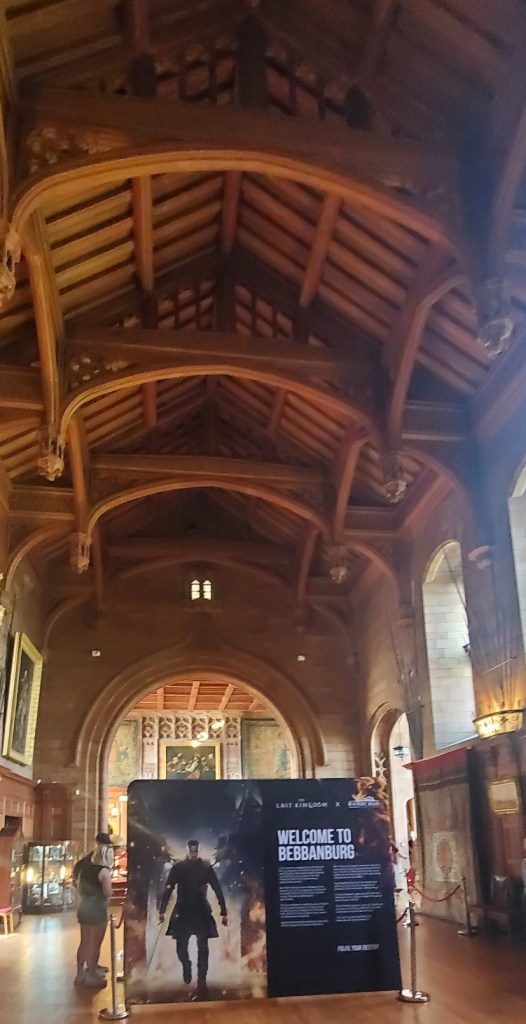


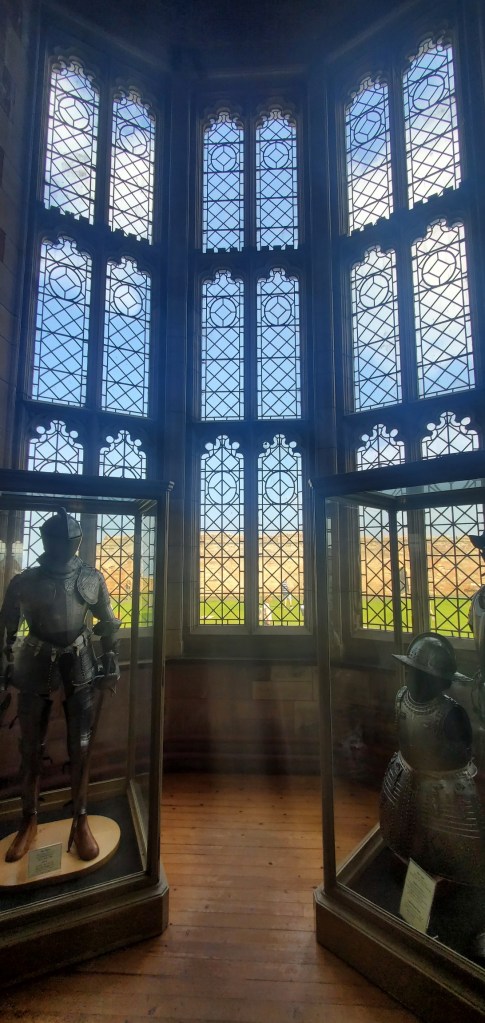


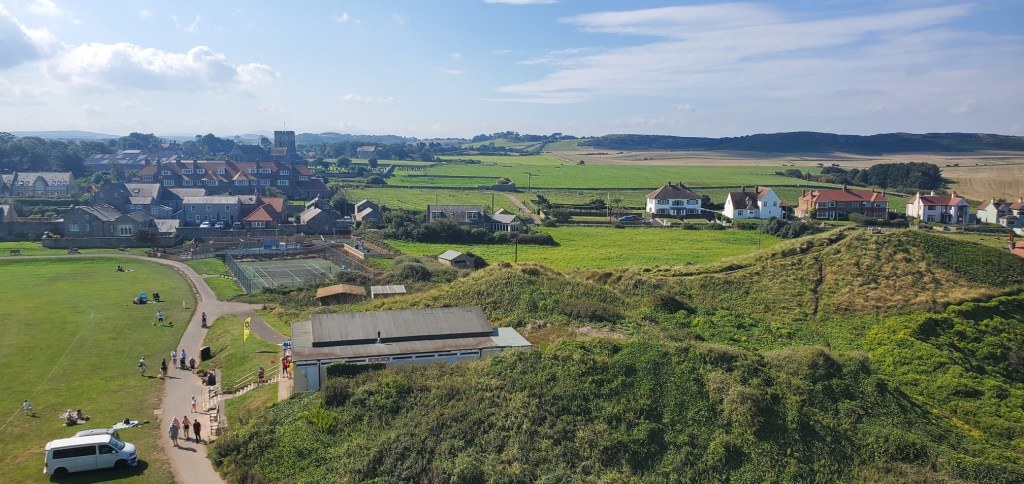
I have seen a lot of castles in my lifetime, including an exhausting obligatory field trip of the Loire Valley during my semester in France, at the end of which I could not imagine that a time would come when I would voluntarily seek out a chateau if I was not required to write an essay about it. Oh, the irony! Last year, I visited Mont St. Michel, another bucket list item, certainly more famous in the world, and arguably more magnificent, in the eye of any beholder. But, I have never read a book about Mont St. Michel, let alone an epic full of longing for home, a decades-long quest to regain one’s destiny, a story of homesickness and loss that echoed in my heart with every installment of Uhtred’s journey’s many setbacks and heartbreaks.
This is why Bebbanburg. It is not just a cool castle. And it is not even just a cool story. It’s THE story. Uhtred loses parents and parental figures, siblings, wives, children, and friends. He lives a life that is not his, a life that was thrust upon him by circumstances and the wills of others. He goes viking, serves and follows orders of people he hates and who hate him, fights in foreign wars, has adventures, achieves success, fame, and fortune, and makes friends for life. Yet through it all, he just wants to go home. Bebbanburg is the reality of his childhood, the dream of his adult life, and ultimately the recaptured reality of his old age. He went home again, and he stayed home. It was exhilarating to stand on those ramparts and imagine him there, his life’s goal achieved. We should all be so blessed to end our journey exactly where we belong.





 Old Lady Writing
Very beautifully written!
LikeLike