Featured

We All Scream For…

Is there anything more universal than ice cream?  That’s a rhetorical question; I was just thinking how many memories I have tied to it throughout my life, starting long ago and oh so far away…

Like everything in the Soviet Union, our ice cream was *supposed* to be the best.  Of course it seemed that way, because we had nothing with which to compare it, and of course I loved it, because I was a child.  In my town and in my time, we had two kinds, and two kinds only—“creamy” and “plombir”.  The first one cost 13 kopecks and came in a waffle cone; the second one, 19 and in a paper cup.  Both came in one flavor, basically sweet cream (not vanilla; all that is white is not vanilla).  At this point in my life, I would not be able to tell the difference between the two, if I ever did, but the important difference was that if someone had a 20 kopeck coin and someone else had 5 kopecks, or someone had 15 and someone else had 10, you and a friend needed to only come up with one kopeck to get two “creamys”, instantly making it a party.  The constant search for the elusive missing kopeck is a vivid memory of my childhood.  On one particularly desperate occasion, a friend and I contemplated selling her baby cousin whom we were watching for as many kopecks as we needed for a “creamy”, but that is another story for another time…
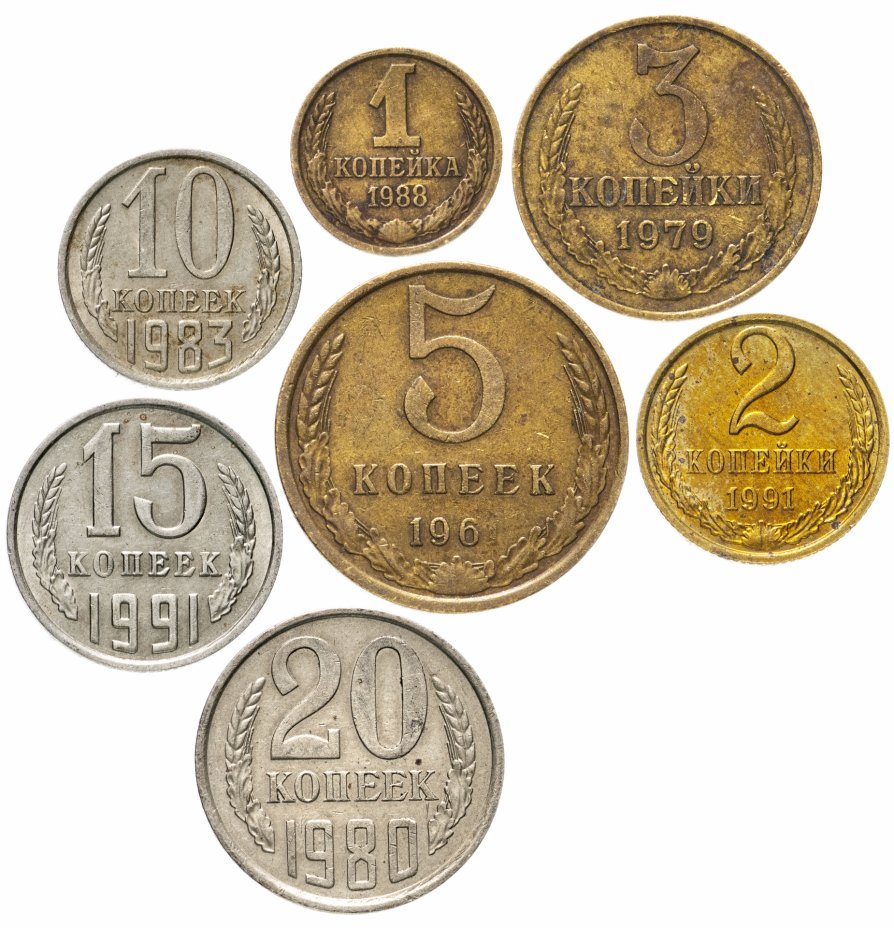
Once my mother took me to the famous ice cream café Cosmos in Moscow.  Having never had anything more exciting than the above-mentioned, I was significantly overwhelmed by its choices.  I ended up with something covered in chocolate sauce and hazelnuts.  Whenever in doubt, I will always choose hazelnuts, but chocolate sauce and I have never really been friends, whether on ice cream, on waffles, or on anything else.  The buildup to it was greater than the experience itself because I think I expected something life-changing, but instead, like everything else in our Golden Domed capital of that era, it was hectic, harried, preceded by a very long wait in line, and basically ended up a “creamy” in disguise.   

When I was visiting in the waning days of the Indestructible Union, wandering around town with my BFF, I suggested we grab a “creamy” or maybe even a “plombir” for old times’ sake.  Her response?  Ice cream is not always available this time of year.  It was May.  Enough said.

[Fast forward to 2003]  When I was in Kyiv with some clients, I was very hopeful for some tastes of childhood. Our first encounter was with an American-style ice cream cart that sold the same products that you will find in any American convenience store’s freezer—good stuff, but not nostalgic.  But when we encountered a café on Khreshchatyk, my client Peter went inside to investigate, and emerged with several bowls of ice cream—and several forks.  Why not spoons, the rest of us asked, quite logically.  Well, because forks were offered gratis, and spoons cost extra.  Not that Peter could not afford spoons, but it was the principle of the thing.  And this, much more than the taste of the ice cream, was enough to instantly remind us of our shared Soviet past.

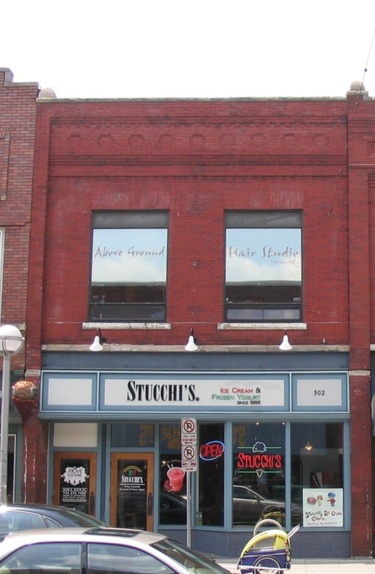
Meanwhile, back home in Ann Arbor, Stucchi’s opened in 1986, when frozen yogurt was new and exciting. Most Fridays, I would meet up with my two best gal pals for a scoop of frozen vanilla yogurt with chocolate covered almonds (for me; I did not pay attention to what they had), and then we would head over to my apartment two blocks away and talk about boys until late into the night.  Best times!  And best ice cream, that sadly went the way of my beloved Breyer’s Vanilla Chocolate Almond Swirl Ice Cream. https://oldladywriting.com/2022/01/29/murder-at-the-marsh/

Another college memory is a weekend field trip to Barcelona during my study abroad in France.  That weekend deserves a story of its own, but at one point, my classmate Lavonne and I discovered a brand of push pop that all these years I thought was called Calypso—but brief internet research revealed that the name is Calippo.  It was some kind of tropical flavor that must have contained crack, because Lavonne and I spent all of our pesetas and most of our time scarfing it down all over town.  No one else in the group was affected by this temporary weekend madness.  I know, it was not technically ice cream, but it was a frozen treat that deserves to be included.
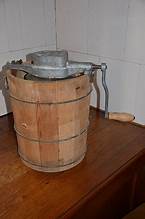
There was also a couple of ice cream producing events which, while I would hesitate to classify as fiascos, were less than entirely successful. One of my selfsame besties owned (maybe still does) a hand-cranking wooden bucket of sorts in which you can make ice cream with the aid of rock salt entirely without electricity.  It was a rigorous exercise, taking turns with that thing.  We lost steam several hours in, at the point of having created a milkshake, earning every calorie we consumed that night.

Another time I made my own ice cream without the aid of the wooden bucket.  Well, it was something about freezing milk and sugar and adding lavender flowers to it. I planted a lavender bush just for this occasion, eagerly waited for it to flower, and was way too impatient to grind them into the milk.  It was flavorful, and entirely too chunky and raw, and one time was enough.  Not too many, but unequivocally enough. And the bush has since died, though from causes unrelated to ice cream.
Honorable mention goes to the Hӓagen Dazs store at the now defunct Smith Terminal at Detroit Metro Airport.  My mom and I had a tradition of getting a scoop of Rum Raisin, to which I added going to the neighboring bookstore and buying an Agatha Christie mystery before getting on a plane.  By the time I returned after a few years away, the ice cream shop was gone, then the bookstore, then the entire terminal. Some things have certainly improved in this particular airport, there is no question about that, but I do miss this special custom of my younger days.
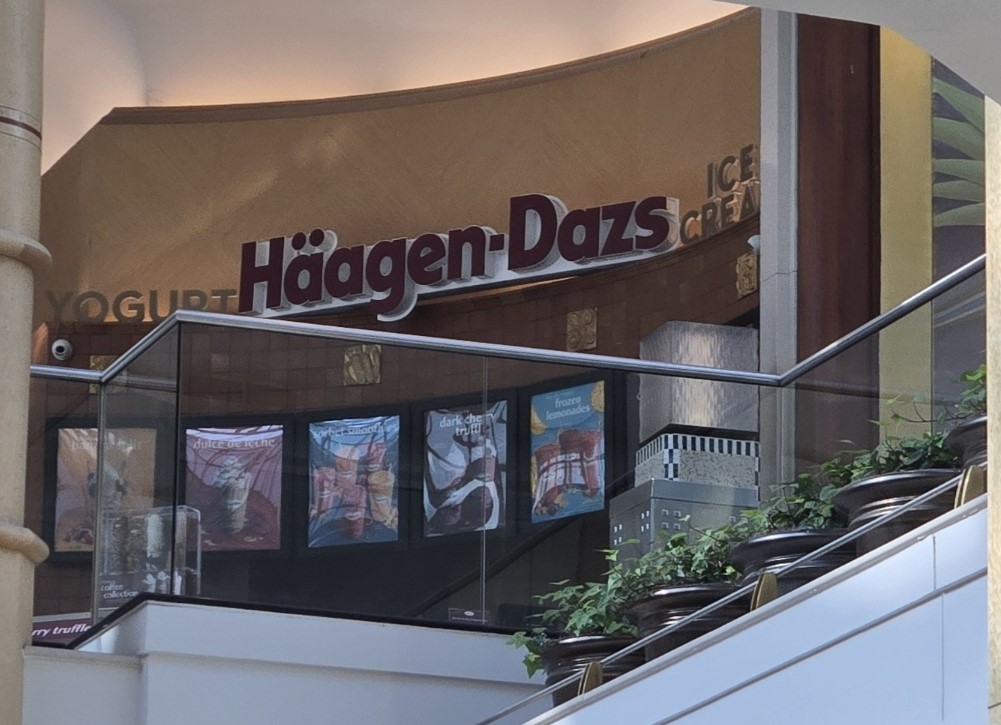
This is a Hӓagen Dazs kiosk at a nearby mall. They do not serve Rum Raisin. Are they barbarians?

The most delicious ice cream I ever tasted was in Tivoli Gardens in Copenhagen.  I took a break from my steady diet of brie and borrelnootjes and treated myself to a scoop before ducking into Madame Tussaud’s (I NEVER miss a wax museum.  Ever.).  It is difficult to recall what was so special about it, other than the almost celestial creaminess.  I still think of it as a transcendent experience.  I have known other people who have traveled to Copenhagen, and no one ever corroborated this.  If I ever make it there again, right after visiting the Royal Treasury which I could not afford to see last time, I will go in search of this amazing ice cream.  Or maybe not, because I cannot bear to be disappointed…

A gratuitous photo of borrelnootjes, a complete nutritious meal. I have lived off of it for weeks at a time.

On the Train to Crimea

I spent four summers of my life in Crimea, in a resort town called Yevpatoria; it was love at first sight, and the kind of love you never recover from.  Childhood memories burn so bright that some scenes of the movie from that era still play unbidden in my mind’s eye.  We then switched to the Baltics for several reasons, none of which seemed good enough to me: easier to find a room for rent, climate not as oppressively hot, wanting to spend more time with friends and family, or maybe something else entirely.  I mourned Crimea every summer in Estonia.  I mourn it still, and more so as it gets farther and farther from me “through wars, death and despair”[1].  My story is small and long ago, and does not begin to compare with the pain and loss of others, but it is my own.  I wish I could tell the story of my childhood in the magical land which I fear I might never see again, but I do not even know where to start.  Maybe with the annual train trip, which itself was the proverbial journey as wondrous as the destination?

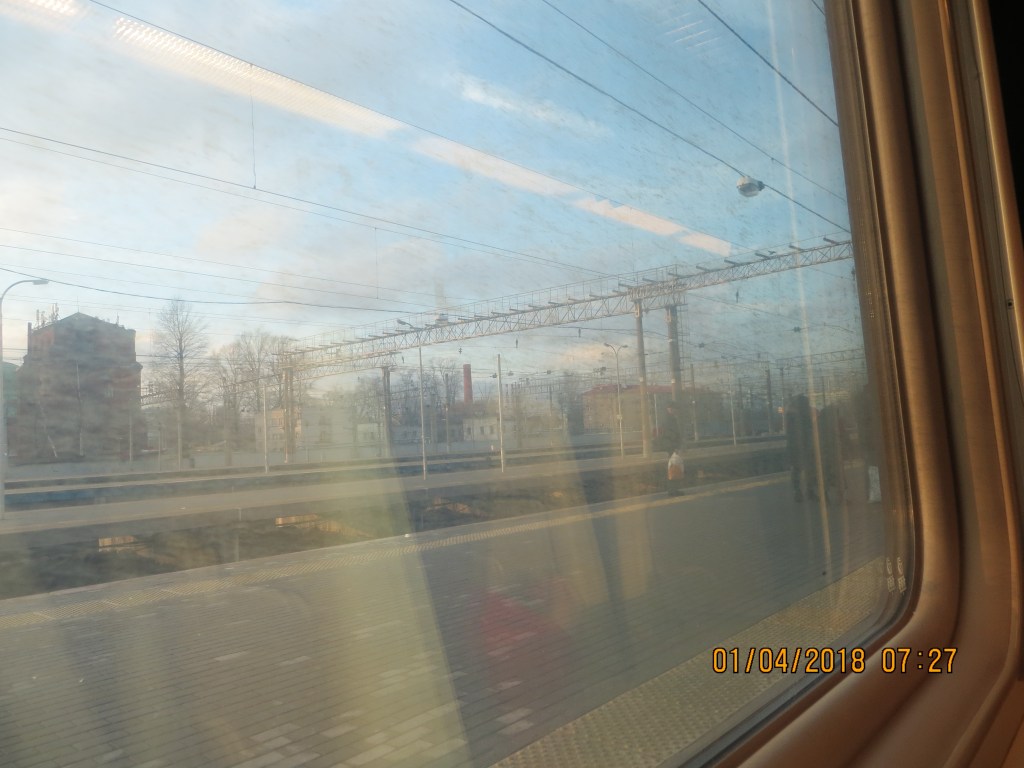
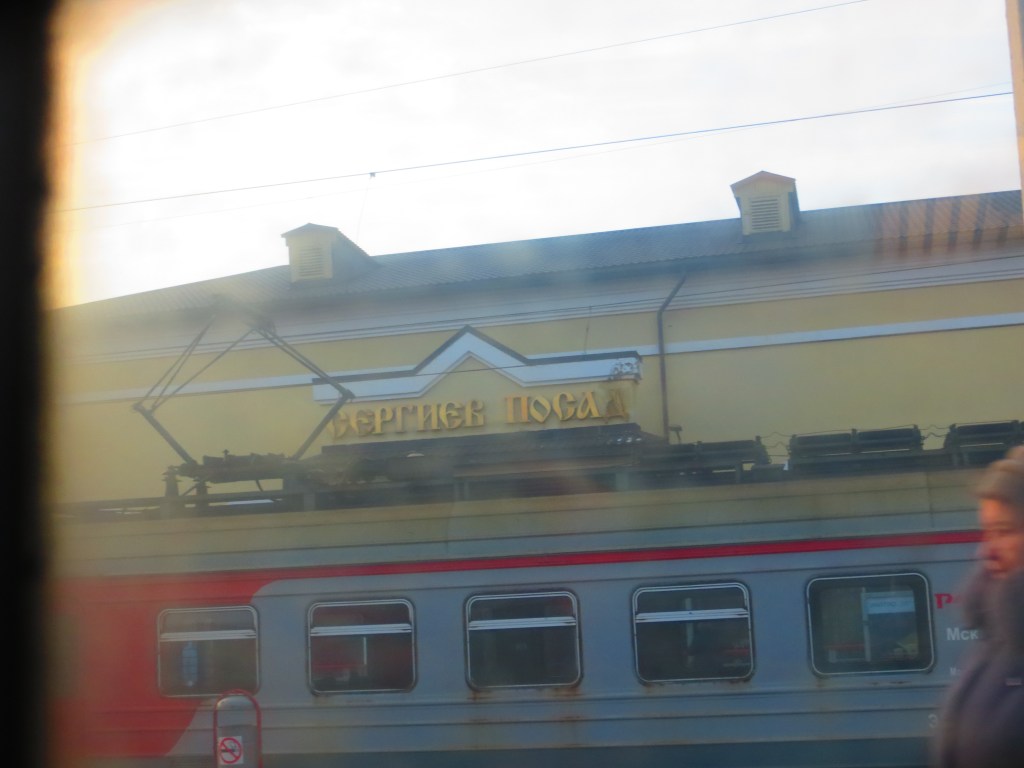
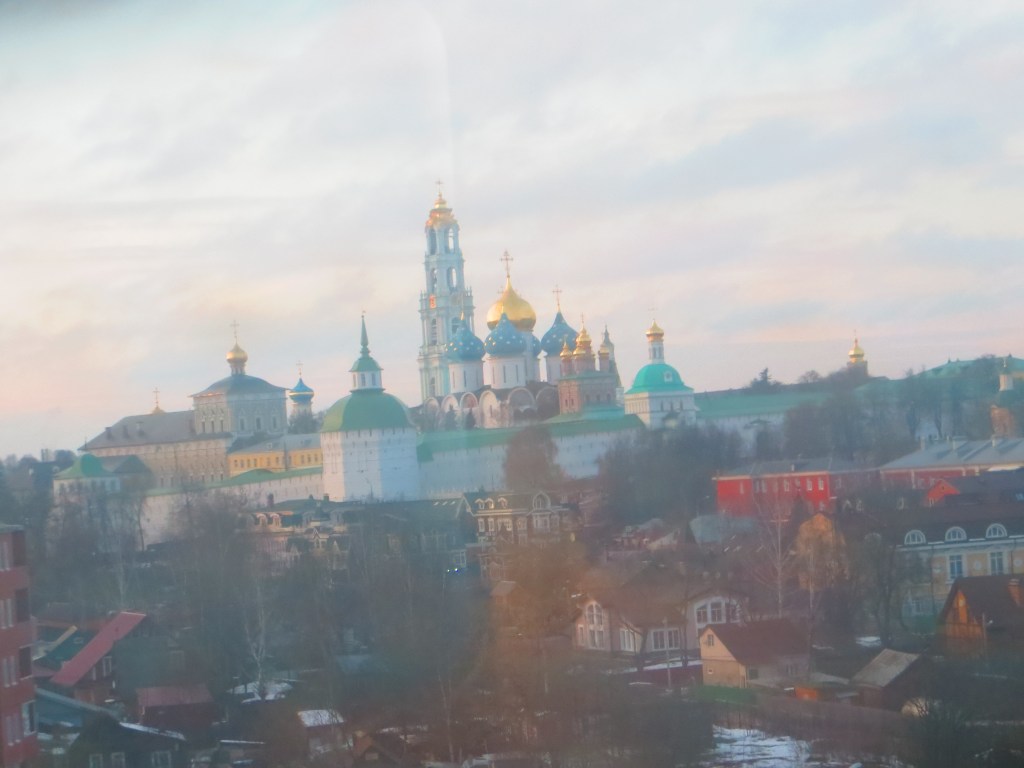
There was no direct train from Yaroslavl, of course, so first there were those four or so hours in a “suburban electric train”[2].  I always found this leg of the voyage excruciatingly boring.  I had the occasion to ride it again a few years ago, and can confirm that there is still something particularly tedious about it.  The big blue faux-leather chairs of old are gone, the new ones are not as spacious as they were when I was a fraction of the size I am now, and the view from the window is just as monotonous (with a tiny exception when the train passes by Sergiyev Posad).

We would arrive at one of Moscow’s nine train stations—Yaroslavsky (of course).  The train to Crimea would take off from another one, Kursky.  It was exciting to be in Moscow, which was huge and terrifying partially because it really is, and partially because my natal family is unusually prone to panic and aimless fuss.  However, while I was always trying to assert my independence and escape from my grandmother’s watchful, and baleful, eye in our provincial town, I would become entirely risk-averse during these long-distance travels.  In addition, Soviet cinematography and literature of the era was replete with fictional accounts of children lost in Moscow.  Although the stories always ended well, for stranger danger was not a thing in a society extolling the virtues of communal living, I found them anxiety-inducing rather than charming.  To this day, Moscow instantly turns me into a country bumpkin.  But I digress.

Yaroslavl Train Station in Moscow. The last time I took the commuter train.

The first year Grandma and I traveled in the regular compartment train which, as time told, was not dramatically different than European trains, with seats converting to bunk beds, four to a compartment. Occasionally, and I suspect it was simply because of availability, we rode in the strange “platzkart” wagon, a uniquely Soviet invention where there were bunks in the corridor as well and thus zero privacy.  Fun fact: there is no word for “privacy” in the Russian language.  I cannot imagine traveling in such a clown car now but, “c’est la vie” say the old folks, “it goes to show you never can tell”[3]. For as a child, I loved the “platzkart” setup, as it was easier to climb to the top bunk, with steps everywhere because of cramming so many people into the wagon, and because it always seemed like such a friendly throng. The only bad memory I have is when the radio in our overstuffed wagon somehow jammed while playing Carmen Suite’s Habanera for a quantity of some interminable hours; I could not hear that piece of music for years without it setting my teeth on edge, and have managed to stealthily avoid the entire opera.

There would have always been a dining car, but of course we never visited such a frivolous establishment.  We brought our own food, like everyone else: canned sprats in oil, black bread, boiled eggs, tomatoes, cucumbers, and salt wrapped in a piece of paper.  The conductor sold tea served in cut glasses with silver holders accompanied by sugar cubes.  Back then, sugar cubes seemed less fashionable than loose sugar, but now the sheen of nostalgia makes those hard blocks seem so retro cool.

It was a day and night’s journey across the land.  Without video stimulation of any kind, the entertainment consisted of eating, playing cards, reading glossy Soviet magazines like “Working Woman” or “Little Flame”, and looking out the window at the landscape gradually changing from north to south.  In the corridor, the windows had these little white curtains that said “Crimea” in light blue cursive letters.  I was always too short to lean on the curtain rod, and eventually too tall to fit under it, but I could stand there and stare out in wonderment for as long as my grandmother would let me. 

We never said “we are going to Crimea”, we said “we are going to the South”.  It was universally understood, same as where I live now, everyone knows the meaning of “Up North”.  Everyone was going on vacation; no one was going home. 

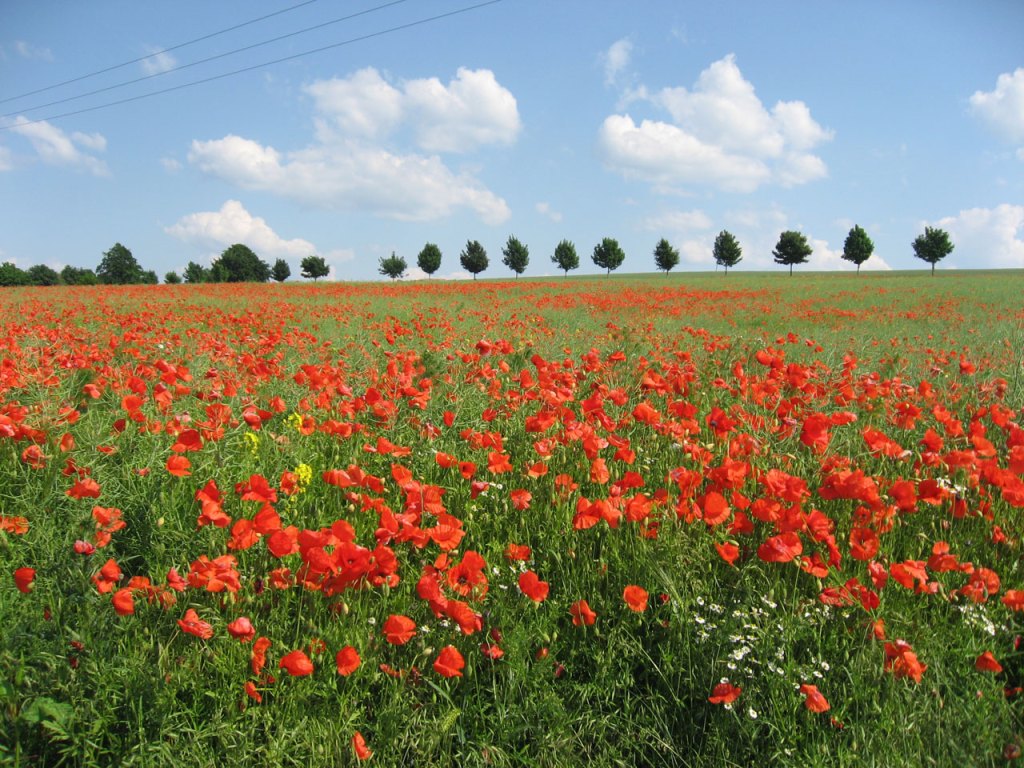
There was a granite plate built into a cliff, proclaiming “Glory to the heroes of Syvash”[4], commemorating events of the Civil War we never studied in school, which just added to the mystery of the land.  I looked for that granite plate every year, because I knew that once I saw it in the morning, I was in a different world.  Waking up in Ukraine, we saw idyllic white daub huts instead of our dark log ones, forests changing into fields, pale bluebells becoming blood-red poppies.  We were coming from the land of asphalt and dusty ash trees, constant strumming of trams, crowded streets.  And then the train just stops, giving the passengers a few enchanting minutes in a field of poppies, imagine that!

The following day would bring Black Sea with its friendly and nonlethal jelly fish, packets of little salty shrimps sold right on the hot sand of the beach, cafeteria “Kolos” with its delicious blintzes filled with sweet cottage cheese or ground beef, Frunze park with its exotic cypresses and statues of fairy tale characters, local history museum with two cannons in the front and a tiny zoo with a monkey in the back.  My grandmother then was younger than I am now, and we were going to the South for an entire summer on the beach.  As an adult, the longest vacation I have ever taken, since age 19, was the trip to, ironically, Russia (11 days).  A summer on the seashore has not been a part of my reality in adulthood.

Curiously enough, I remember nothing at all about the train rides to Estonia in the subsequent summers—not a single thing about the view from the window, people we met along the way, nothing at all.  It was still a summer by the seashore, but no longer the trip of wonders to one of the Seven Seas.

To be continued…


[1] Quoting “Anthem” from “Chess”.

[2] I had to look up the translation.  The Russian word is “elektrichka”.

[3] Quoting Chuck Berry.

[4] Alas, I cannot find any photographic proof of its existence—the plate, not the battle. 

Personal Best

The unthinkable and the entirely unexpected happened—I won a running award that was not just for showing up!  I actually placed second in my age category in a masked, socially distanced race. And though I have always joked that the only way I will place is if only three women run, I always secretly hoped for just such an eventuality.  Frankly, I thought I might have to wait a couple more decades for the ranks to start thinning.  Turns out I just had to wait for the pandemic that would turn most races virtual.  The point in my favor was that with no more than 100 runners, the competition was not that stiff.  However, I have to clarify that there were seven (7) women that showed up in my age category.  And I still placed second (2nd).  There were five (5) entire women slower than me, which is an amazing improvement since gym class[1]. https://oldladywriting.com/2019/06/04/run-your-own-race/

The race itself was actually pretty brutal, and not something in which I would participate under normal circumstances.  I mean, I did not know how crazy it would be because as always, I carefully read the directions about where to park, where to stand to socially isolate at the start, and when to wear the mask.  I blithely overlooked the facts that the race was (1) at night, and (2) in the woods.  Words like “moonlit”, “9 pm”, “trail”, and “forest” did not cause any alarms to go off, so excited I was to just run in an actual race.  And so, I literally stumbled through the dark jungle, leaping (and I use the term loosely) over tree roots, trying not to slip in the mud (as it rained shortly beforehand), alternately praying and swearing.  It was also extremely hilly.  Pure adrenaline moved me forward, based on a desperate desire to not perish in the woods.  This was easily the most exciting thing that happened to me since the plague came to town.

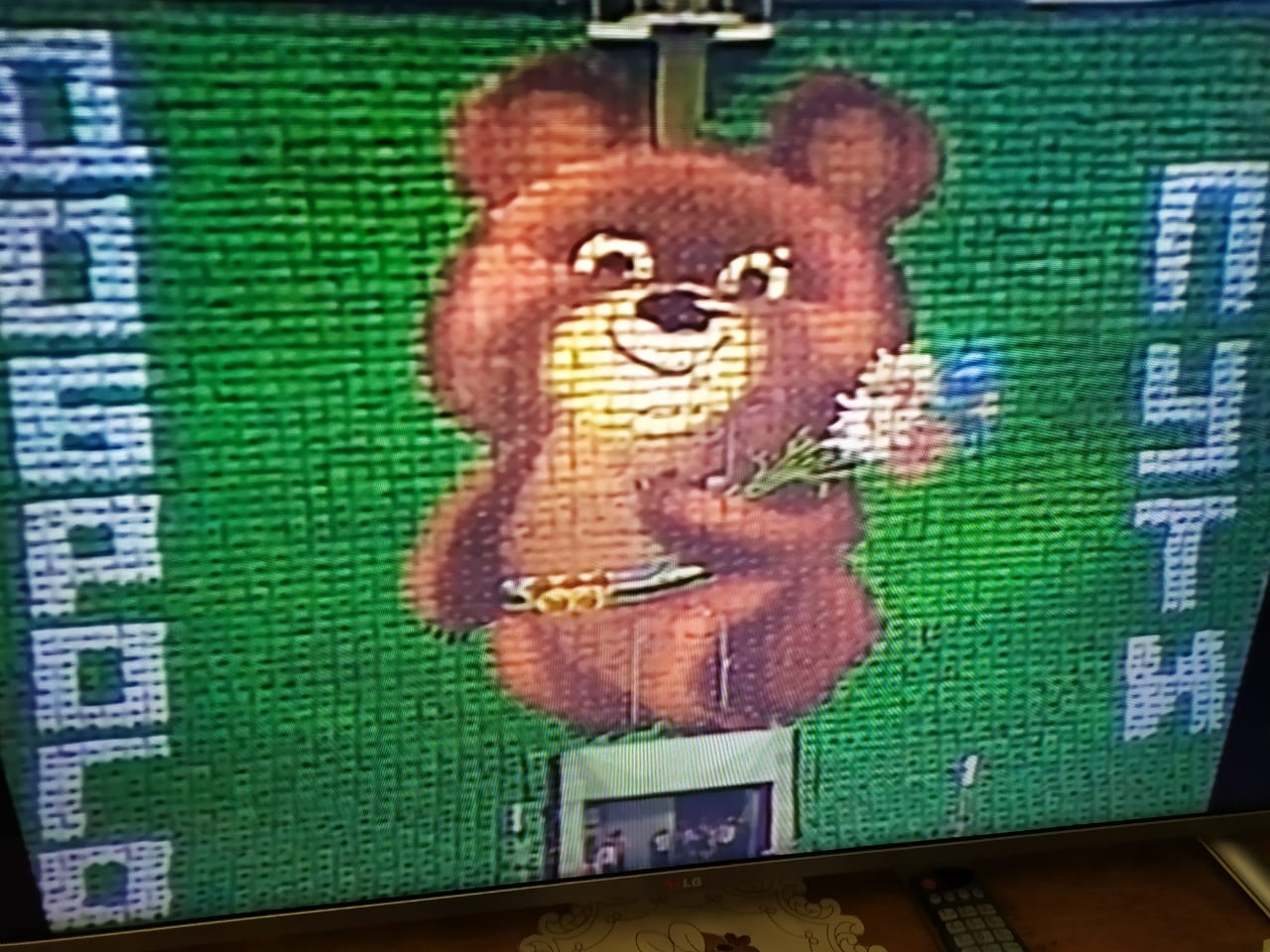
Picture this logo on everything that money can buy in the USSR in 1980. It is more than you would expect.

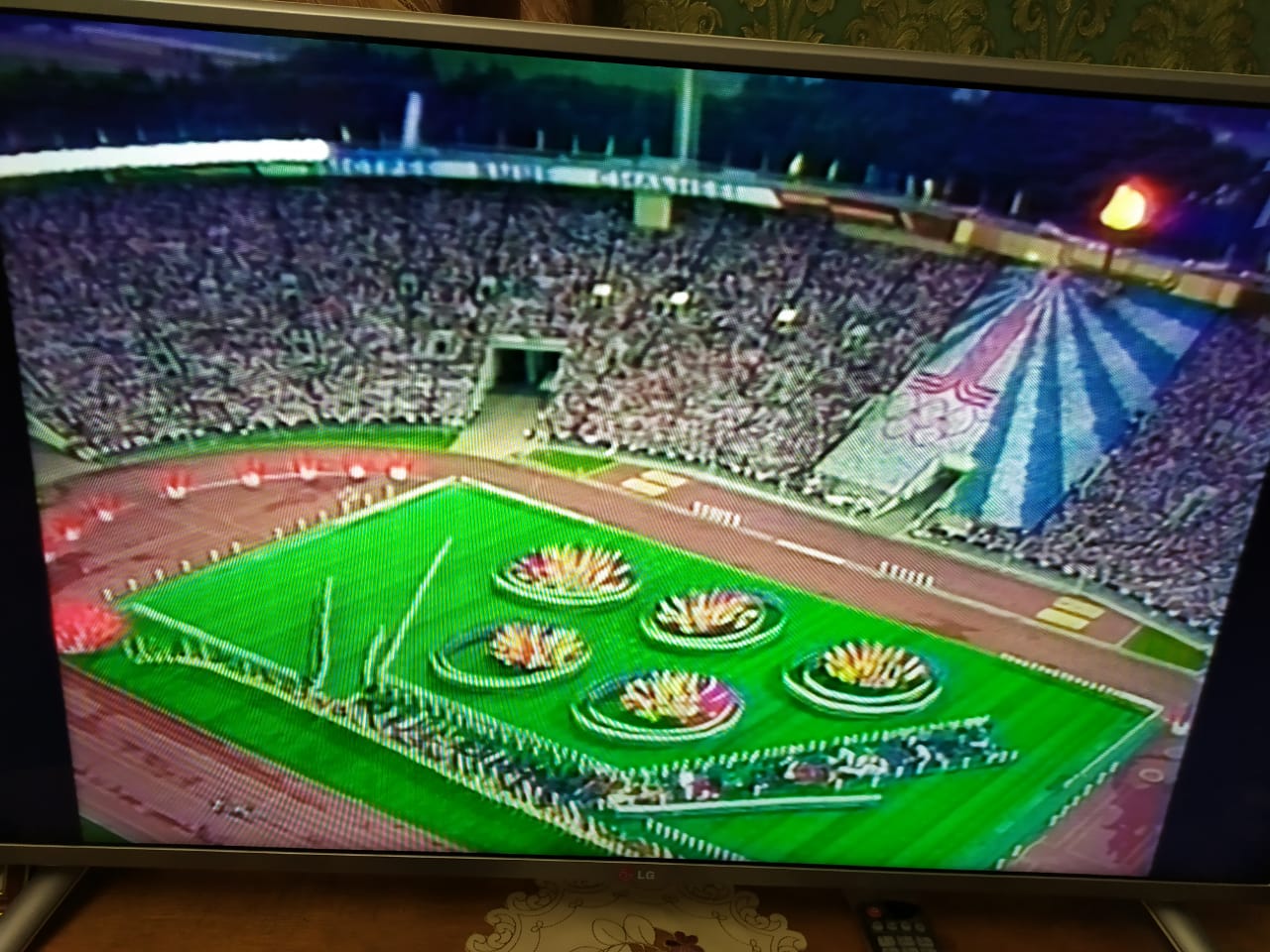
The real twist in all of this is that this past weekend marked the 40th anniversary of the Moscow Olympics.  I tend to see symbolism and omens in everything.  For me, it seemed auspicious to run—and “medal”!—on such an august (see what I did there?) occasion.


The year 1980 was one of the best, if not THE best, year of my life.  It was the last year of my childhood, and my childhood was pretty wonderful.  The Olympics lent the entire year the aura of magic, camaraderie, and celebration.  These were the first Games to come to Eastern Bloc, and are the only Summer Games that took place there to this day.  They were a tremendous big deal for The Soviet Machine.  We all know now how that worked out, sadly, and from then on[2]. But for those of us in close proximity to the Big Event, it was a truly exciting time.

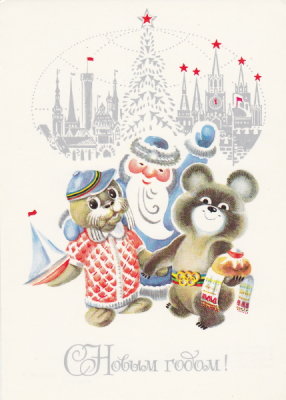
This New Year’s card also lives in my basement.

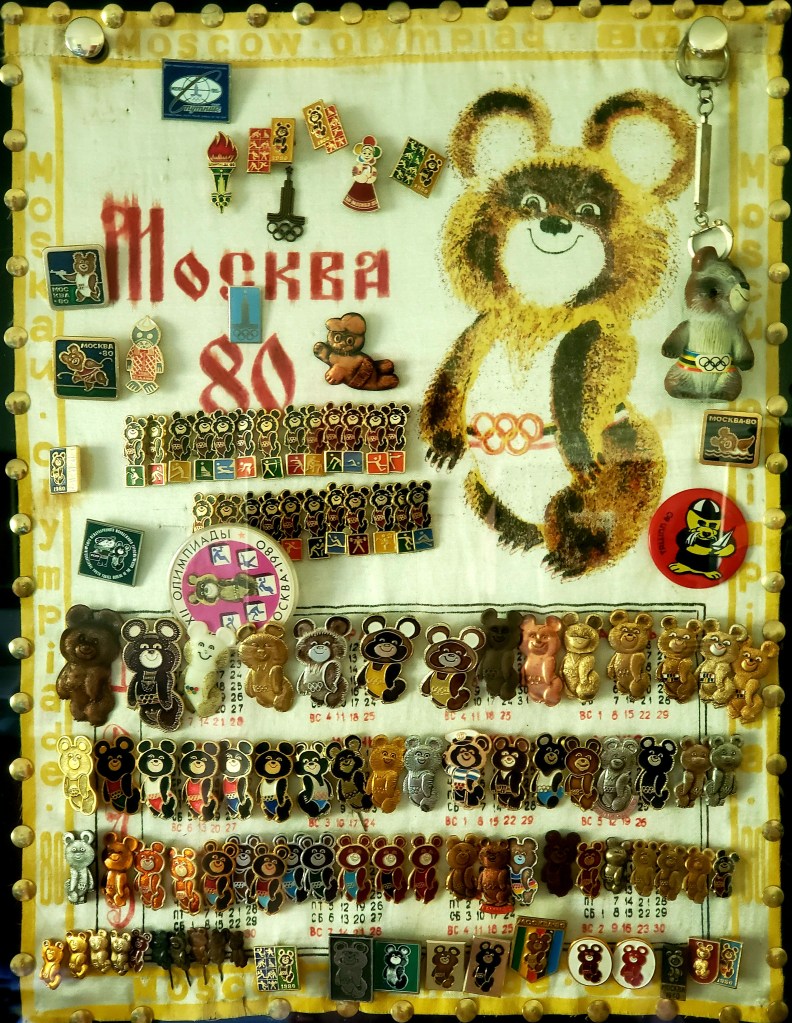
There were several things that made it so.  First, the merch.  You literally could not buy anything that did not have the Olympic logo on it.  And everything that had the logo cost more, even if it was just a few kopeks. It was a cunning plan to raise money, I suppose.  We normally call such a scheme a “load”, but during that glorious year, people were eager to buy even dinner plates that had the discreet stylized image of the Kremlin with the five rings under it.  I myself was a proud owner of a messenger bad with the logo.  I mean, everyone had one, but I was not usually cool enough to have anything that other kids had.  Yet that year, I did!  And of course, Misha the Olympic Bear was the best mascot, because bears are awesome, and he was the cuddliest of bears.  I dreamed of owning a stuffed toy, but that was an unattainable dream.  I did get a rubbery squeezable one, which we duly brought to the US among our very limited possessions, and which is still lurking somewhere in my house, not having been properly appreciated by my kids.  Fun fact:  the mascot of the sailing regatta, held in Tallinn, was Vigri the Seal.  Since my grandmother and I spent part of the pre-game summer in Tallinn, I am a proud owner of a small wooden Vigri.  He also crossed the Atlantic and lives in my basement.

My mom and I diligently collected every Misha–and some Vigri–pin we could find. Seriously, how cool is this?!
NOT the same brand that we had

Second, the food.  Because of my hometown’s close proximity to Moscow, https://oldladywriting.com/2019/06/28/the-three-monuments/ we were getting food.  Not the regular food like meat and potatoes and apples, but tiny portions of packaged food like butter and jam, as well as juice boxes.  These were intended for the athletes, but were siphoned off to the periphery both before their arrival and after their non-arrival.  These were items that you would see outside the Soviet Union in an average, non-fancy diner at breakfast.  To us, they were ambrosia.  I was under strict orders from my grandmother to not tell my friends that we had a supply of this amazing stuff, else we would have an infestation of neighborhood kids in search of mythical juice boxes.  (I received the same orders when we bought a color TV and a car, and whenever we had bananas in the house).

NOT the same brand that we had. There is no image of the incredible juice boxes that I could find. One of the flavors was pineapple–like we even knew what that tasted like!

I still think of Moscow Olympics every time I open a tiny jam container when I have breakfast at a diner.  And I still think of that glorious summer of plenty and exhilaration when I think of the Olympic Games.  And I still say, whenever anyone Russian asks me when I left the Motherland, “After the Olympics”.  And everyone understands.


[1] The plague took my friend who was slower than me in gym class.  I mourn her more than anyone will ever know, and for reasons that have nothing to do with anything that has yet been written…

[2] Five countries have been represented at all Summer Olympic Games – Greece, Great Britain, France, Switzerland, and Australia, but only Greece has participated under its own flag in all modern summer Olympic Games.  Good for Greece, rising above the fray! https://oldladywriting.com/2020/07/30/the-wrong-way-to-the-parthenon/

The cool blue bottle is for winners only!