Featured

Thank You for the Alphabet!

We had a saying back in the day, “Chicken is not a bird, Bulgaria is not abroad” (sounds better in Russian).  It meant no real disrespect; I am certain it came from a place of envy.
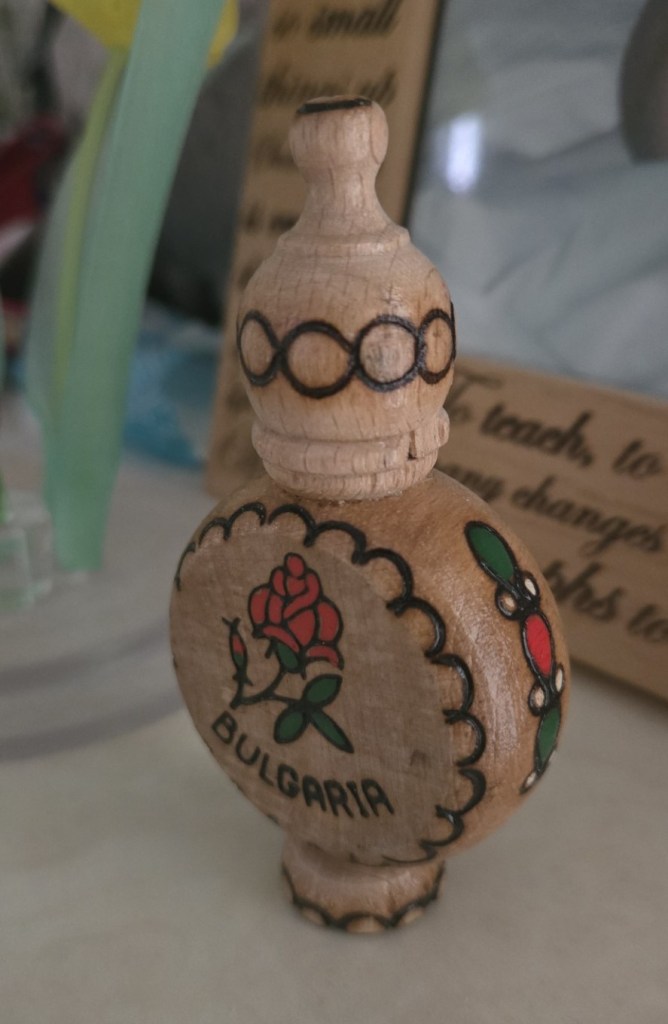
Everyone I knew had one of these little bottles with rose perfume

A close childhood friend of mine lived in Bulgaria with her parents until her father, who was stationed there, died in an accident, and she and her mother returned to our provincial town and our quiet little street.  For years, they would be visited by Bulgarian friends who spoke lightly accented Russian and brought amazing toys and delicacies.  I heard so much about it in my childhood that I felt like I kind of sort of knew it. 
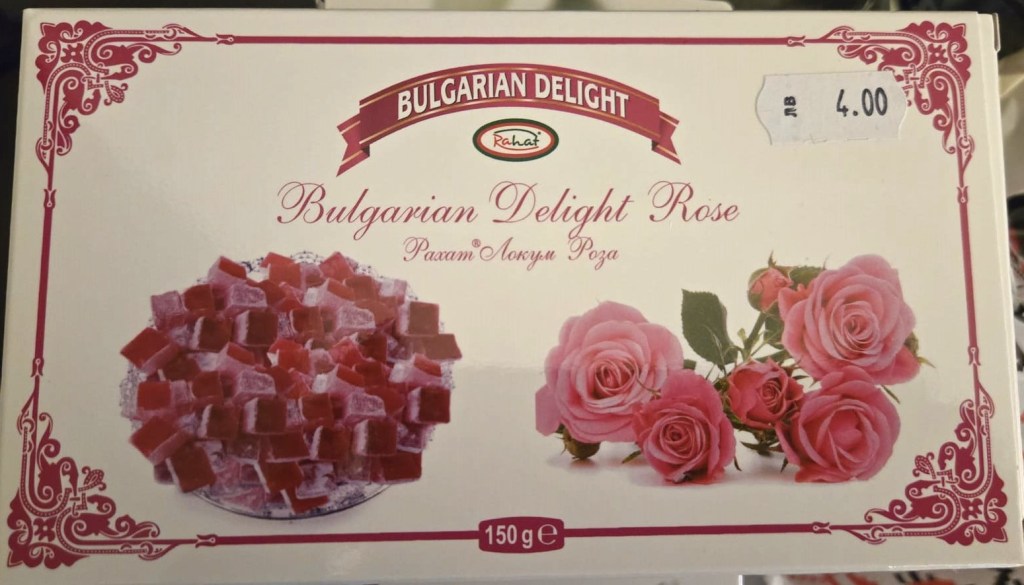
And lokum, this most delectable of desserts!

Bulgaria seemed like us but better.  The people looked, spoke, and dressed a lot like us (though, of course, more fashionably), but were friendlier, less care-worn, just brighter somehow. I imagined their cities were cleaner, and of course the stores were full of treats.  We were supposed to be the biggest, the best, and the most powerful country in the world, but according to numerous accounts from these real people, they had more of everything.  It was a paradox that remained unresolved in my childhood.

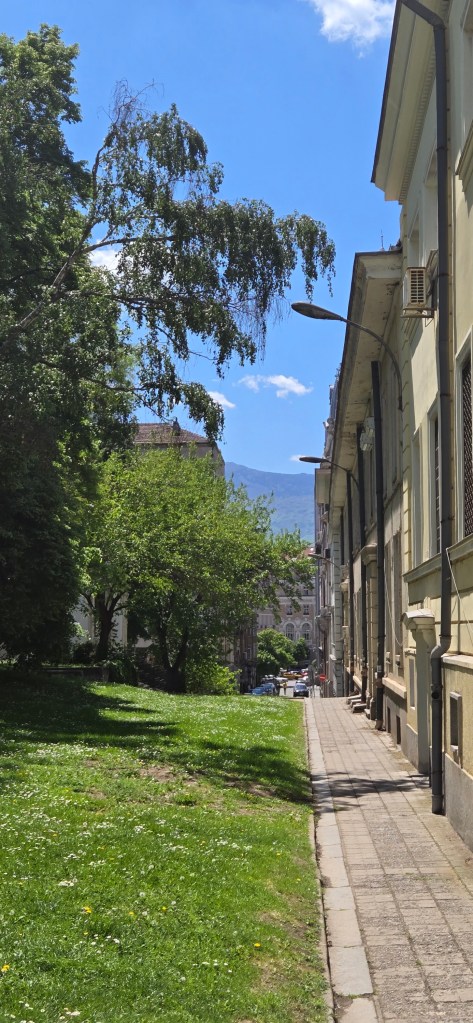
Finally coming to Bulgaria, after imagining it for decades as a fairy tale land of plenty, I found that counterlife I never really lived.  So far away and so long after my childhood, I take the concept of plenty entirely for granted.  Instead of being excited by the exotic otherness that I would have expected to see as a child, I was touched by the occasional glimpses into the past.  The trams and trolley buses.  The tree-lined streets with slightly uneven pavement.  The post-war Soviet-style buildings.  The city parks with benches full of people just hanging out on a warm spring evening.  The onion-domed Orthodox churches.  And everywhere, the signs in Cyrillic. 

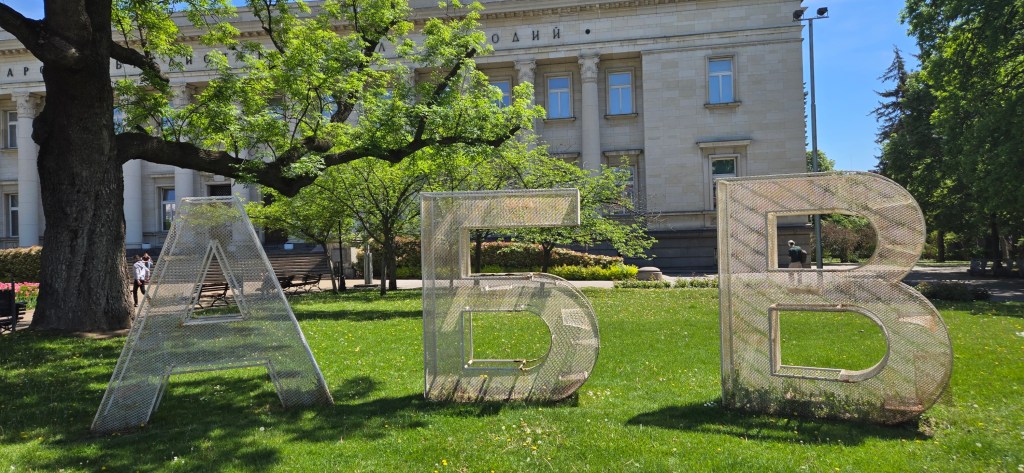
Coincidentally, Sanaz Toossi’s Pulitzer Prize winning play “English” is currently nominated for the Best Play Tony Award.  I saw it performed locally, and sobbed through the whole thing.  One quote stays with me: “When I speak English, I know I will always be a stranger”. I have been a stranger in a strange land for decades.  I speak a foreign language in my home, to my children.  I do not know Bulgarian, but just the cadence of it and the occasional words I could pick out in this native-adjacent language was music to my ears. And seeing familiar letters everywhere, effortlessly reading signs, just absorbing the words, well, that was balm to my eyes—and my soul.  Thank you for the alphabet, Bulgarians Saints Cyril and Methodius!

National Library named after Sts. Cyril and Methodius, naturally

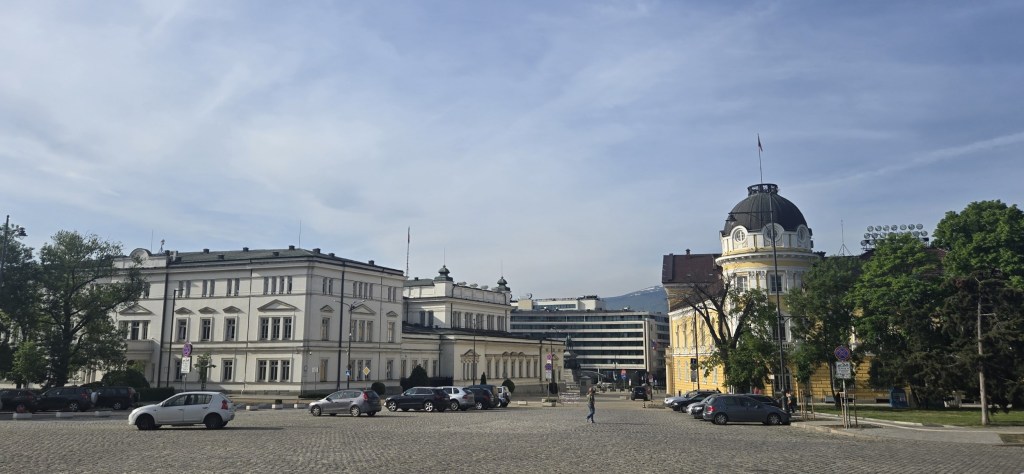
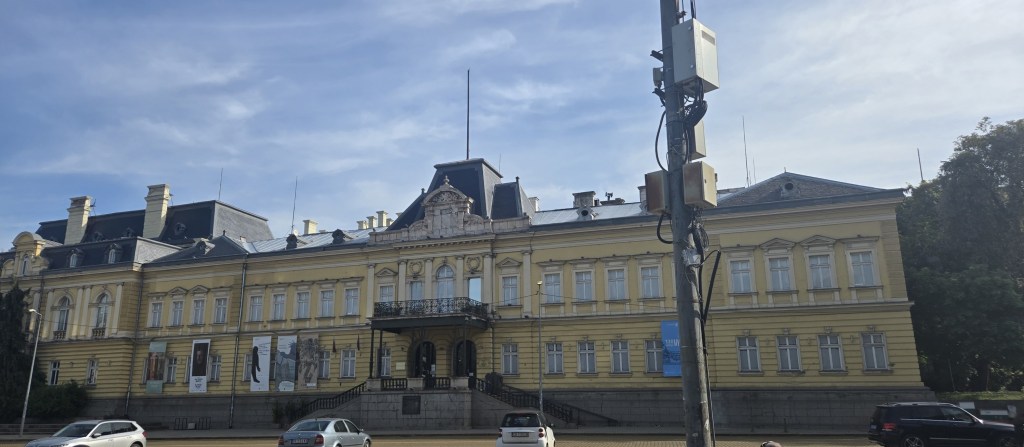
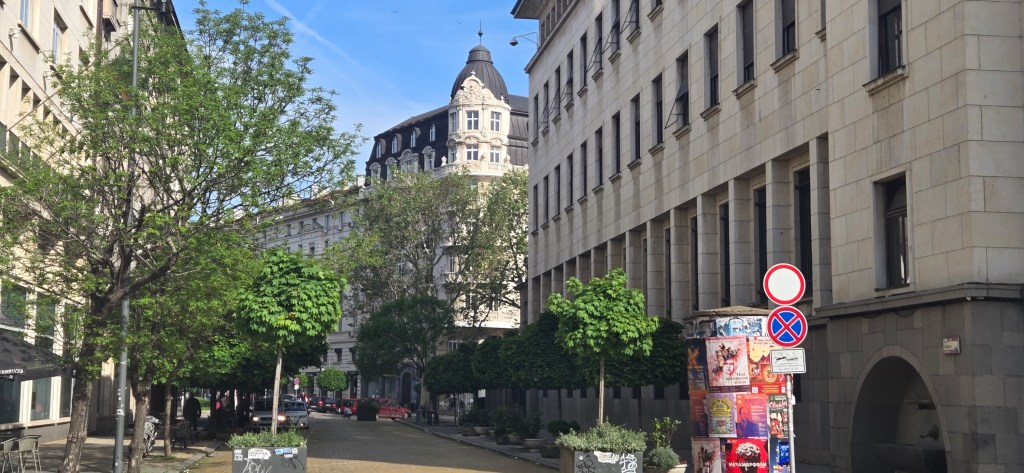
As soon as I arrived in Sofia, I went for a walk that was both purposeful, soaking it all in, and aimless, just wandering the streets and searching for the memories of that parallel childhood.  Walking on the Tsar Osvoboditel Boulevard, taking the slight curve and suddenly seeing the National Assembly building with its tri-color flag, I almost mistook the green stripe for blue.  I could have been in Moscow (had I ever wandered around Moscow on my own—I never have).  It could have been 1972 (if one ignores the modern cars zooming by).  Everything was both larger than my own hometown (for Sofia, after all, is a capital, while I come from provincial backwater), yet small enough to feel familiarly nostalgic. In short, just as I dreamed it would be…

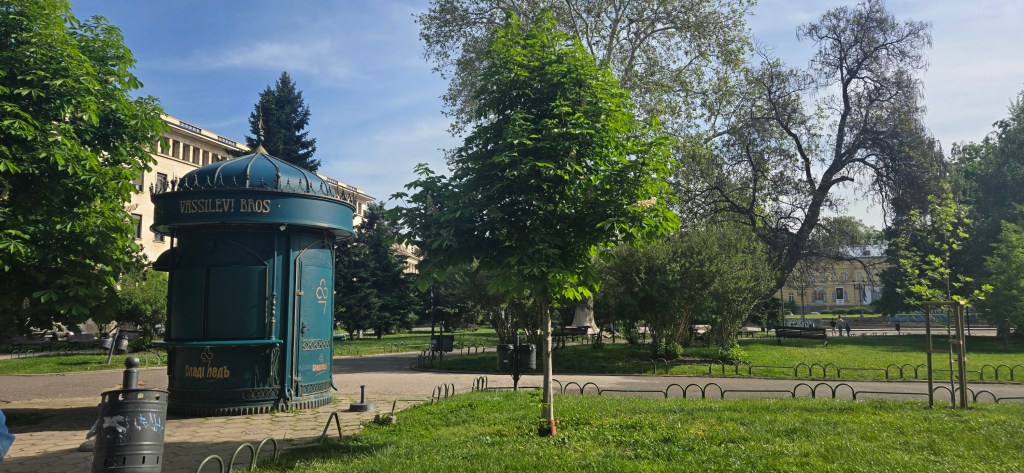
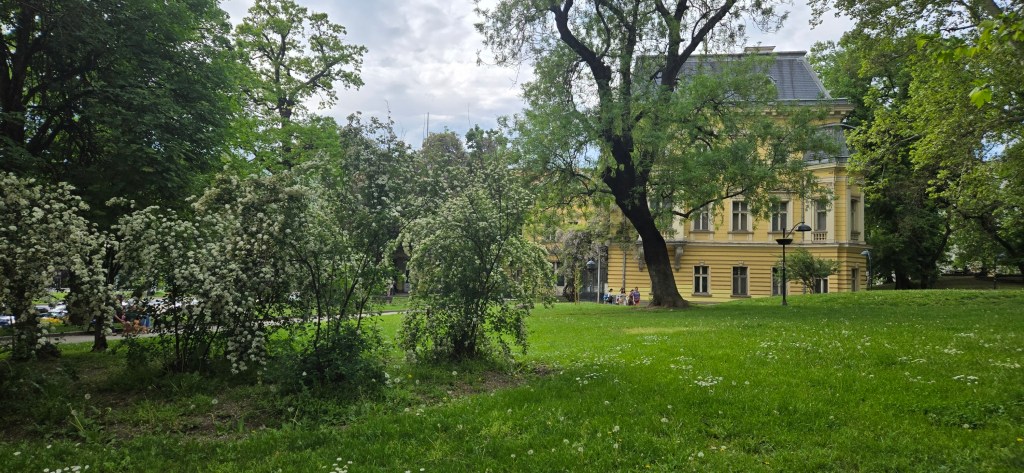
I wandered through the lovely City Garden, and came upon the beautiful neoclassical building of the National Theater named after Ivan Vazov where I saw a poster for the upcoming production of none other than “Rosencrantz and Guildenstern Are Dead”.  How I wish I could have seen it there! 
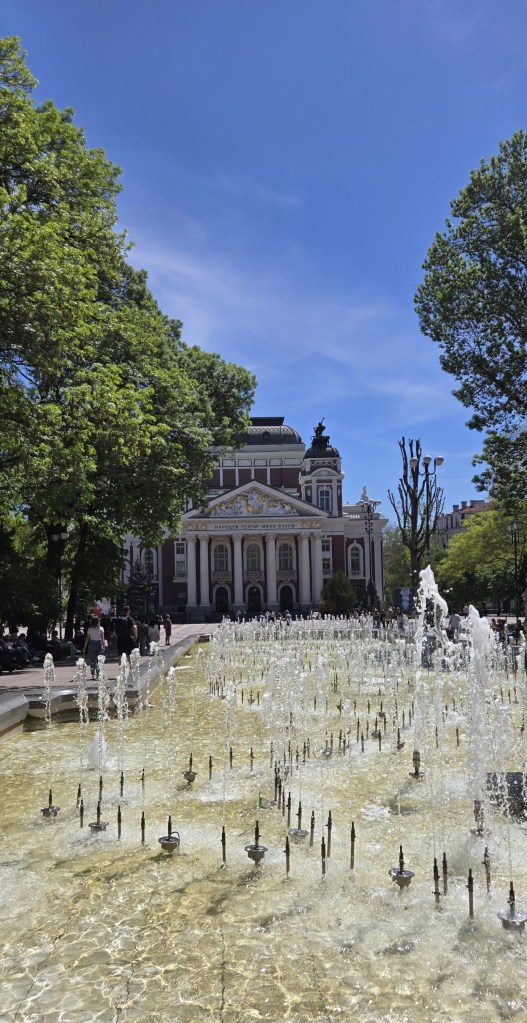
This mix of green spaces, cheerful fountains and colorful flower beds, elegant pre-war buildings on cozy streets and imposing post-war ones on wide avenues, it was all so recognizable from another place and time.  Vitosha Boulevard, the lively pedestrian street with rows of stores and outdoor cafes was the one place that stood out as belonging strictly to the Western, European Union present.  We had nothing like that during the Soviet era.  And even that was heartwarming, a confirmation (as if I needed one) that there is no stagnation, life marches on, and new and wonderful things continue to happen. This is not just an imaginary country of my childhood, but a thriving, vibrant, warm and beautiful land of dynamic present and promising future.

And speaking of Tsar Osvoboditel (Liberator), none other than Alexander II of Russia, who freed Bulgaria from the Ottoman Empire:  my great-great-grandfather fought in his army.  I do not know if he fought in the battles for Bulgarian independence, but I choose to imagine that he did.  I do know that the fact that he was “Alexander’s soldier” decided my family’s destiny, for it enabled him and his descendants, including my beloved maternal grandfather, to live in Russia proper, beyond the Pale of Settlement.  So I have feelings of gratitude to Alexander II that are at least as warm as those that Bulgarians still seem to harbor.   In Russia, he earned his moniker for the emancipation of the serfs, but in Sofia, his impressive monument bears the inscription “To the Tsar-Liberator from grateful Bulgaria”.  He seems to have been the last of the decent ones, as far as Tsars go.

I only spent two days in Sofia, two glorious, beautiful sunny days at the beginning of the longest vacation I have taken in my adult life (10 days).  If I never make it to the land of my actual childhood, I know where to look for a substitute.
Featured

Midsummer Magic

Without any effort—or, indeed, desire—on my part, “A Midsummer Night’s Dream” has recently emerged as the Shakespeare play I have seen most often live on stage.  From some initial encounters ranging from indifferent to downright embarrassing, our relationship has grown and developed into one of admiring understanding.

My favorite among the comedies was always “Twelfth Night”, simply because I saw a televised version of it as a child.  The bumbling duo of Sir Andrew and Sir Toby impressed me the most, and remains my favorite pair of comedic incompetents in the entire canon.  As for “Midsummer”, we did not meet until I was in college. 

I saw several productions over the years, from my beloved Stage West Theatre in Fort Worth to the Stratford Festival in Canada.  Most of them were competently entertaining if not affecting.  Let’s face it, the young lovers’ plight and predictable resolution is not what makes this play so popular; it is Bottom and Co. and the fairies.  And here is where it usually lost me—I have never really enjoyed them as characters on stage.  I have always felt that so much effort goes into the fairies, their costumes, their makeup, their habitat that every else kind of gets lost in the forest, pun intended.  The set is too green, or too blue, there is too much mood lighting, too much gauze/glitter/sparkle/fog/flutter of wings, etc.  I think there is temptation—not entirely surprising—to just get overwhelmed by the external while putting on a play that involves the magic realm.  If I remember nothing else from some of the productions of “A Midsummer Night’s Dream”, I remember a lot of shrubbery and a lot of wings.  I never actively disliked it, but neither did I seek it out. 

Not sure who gets the credit for this photo; it was shared with me by a cast member. Hippolyta/Titania and Theseus/Oberon.

So imagine my surprise when, in a fancy suburb of Chicago which I have distrusted since that fateful day when I visited a client there and could not find my way back. https://oldladywriting.com/2021/08/08/bad-day-in-chicago/  Spoiler alert: Napierville redeemed itself with the most imaginative and heartfelt rendition of “Midsummer” I ever had the privilege of enjoying.

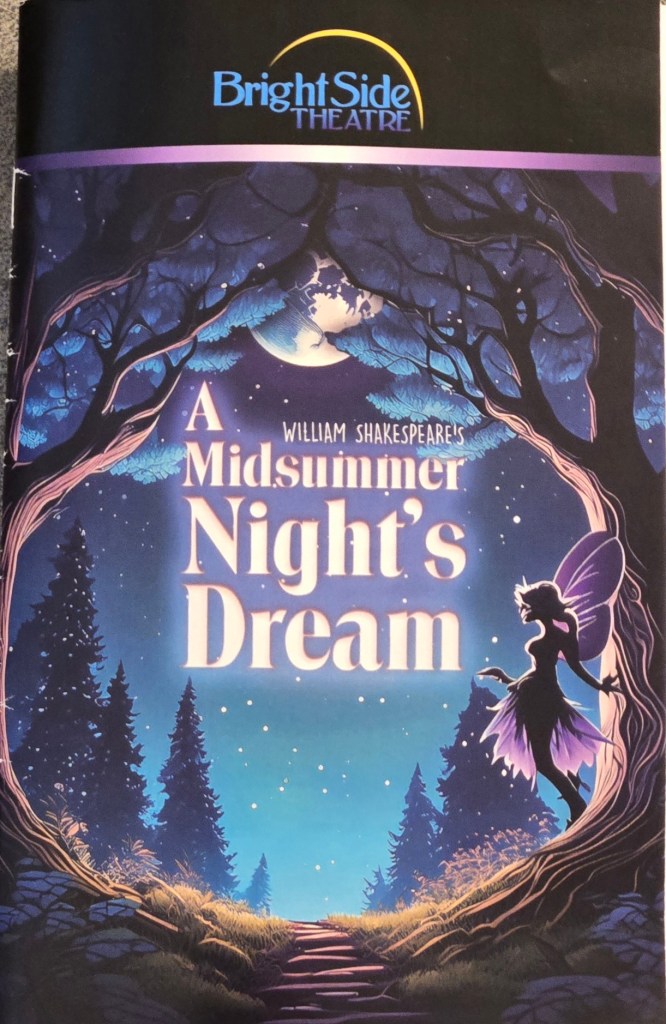
A Midsummer Night’s Dream – BrightSide Theatre

Aside from the quartet of young lovers, who just basically do their thing, the characters in this production are familiar and yet somehow new.  In a smaller theater, with a thrust stage and actors occasionally breaking the proverbial fourth wall, you cannot help but feel part of the story.  But in this version, the relatability is more than a function of proximity.  Theseus of Athens and Hippolyta of the Amazons are played by the same actors as Oberon and Titania, and their attendants in the opening scene also morph into fairies and back again.  Grounded in the corporal world, the fairies are certainly creatures imbued with supernatural powers, but, human-presenting, albeit gorgeously and colorfully costumed, they convey the message that magic is in and all around us.  This double casting, for me, creates a more tightly knit, unified story that is more than just a series of connected plots.  Regal Theseus’ humanity never leaves Oberon, wry elegance of a courtier stays with the mercurial Puck, and Hippolyta is both proud and hopeful as Titania.  So powerful is this bond between the two worlds that I am not sure I ever want to see “Midsummer” again where these roles are *not* played by the same actors.

The play’s funniest scene, when the indomitable troupe of rude mechanicals perform the ill-rehearsed and even worse-written “Pyramus and Thisbe”, is as hilarious as anything I have ever seen.  Peter Quince’s earnestly overwrought introduction, Tom Snout’s exasperated attempts to focus “the wall” on Nick Bottom’s pompous meanderings, Robin Starveling’s laborious attempts to handle two objects at once, and Snug’s brave overcoming of stage fright as the gentlest of lions are all full of humor that never spirals into caricature.  In this production, you root for everyone, even the overly confident yet somehow endearing, wide-eyed Nick Bottom.

I am that pedant who pays attention to and gets distracted by false notes in costuming. This “Midsummer” did what I have seen once before in another play and remembered forever.  It starts in monochrome and gradually becomes more and more colorful.  It is not just that Athenians appear in shades of gray and citizens of the magic realm are in color.  It is not just that Theseus goes from somber black as a ruler of Athens to royal purple as the ruler of the magic kingdom.  The young lovers also gradually transform from gray business professional attire to red and blue silks and lace.  With each exit and entry, I was anticipating the next development of the costumes (and coveted some for myself!).

As for the set, absent are the usual overpowering prop trees and astroturf.  Truly, they just bog down the text and the action (I always knew that).  Instead, there is an abundance of confetti, in all shapes and sizes, and strewn about in every way, including through cannons, which creates an atmosphere of joyful celebration.  And original music written for this production adds another layer of enchantment and lyricism.

Finally, there is *that moment* that transforms everything https://oldladywriting.com/2021/05/25/who-tells-your-story/.  Francis Flute, a mass of nerves as he should be, suddenly loses the high-pitched voice and simpering manner and delivers Thisbe’s farewell speech to the “corpse” of Bottom with the heartfelt pathos of the finest tragic heroes.  I would like to have said that there was not a dry eye in the house, but that would not have been true—still, a hush fell over the audience, and that is no small feat for this play and for this scene.

It never ceases to amaze me how, while staying true to the text and the plot, some productions of Shakespeare’s plays find a truly unique voice.  I give credit to The Bard, of course, for his words are timeless and multilayered.  But I also have to give great credit to the immensely talented team that brought the old story to live in this particular, extraordinary way.  If you are anywhere near Chicago for the next couple of weeks, see this show, before it disappears like so much fairy dust…