Featured

What’s in Belgium?

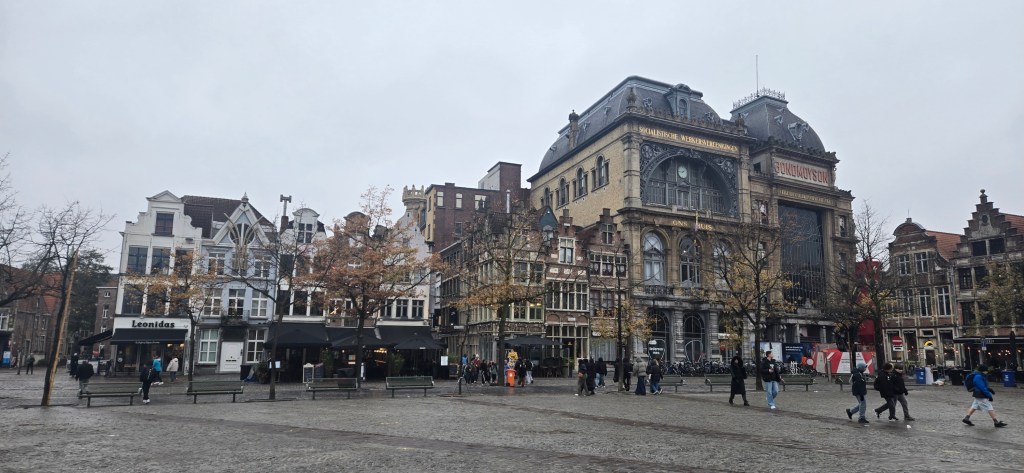
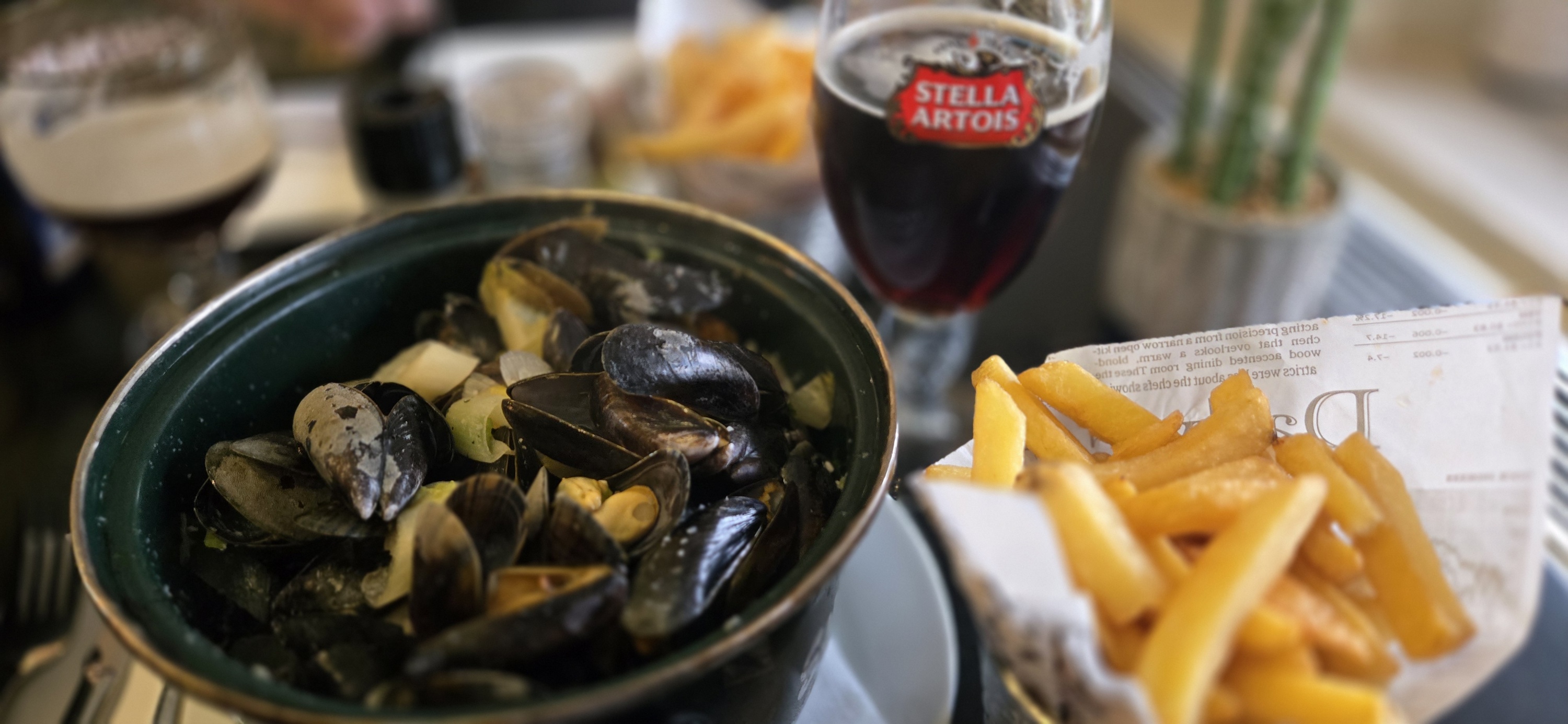
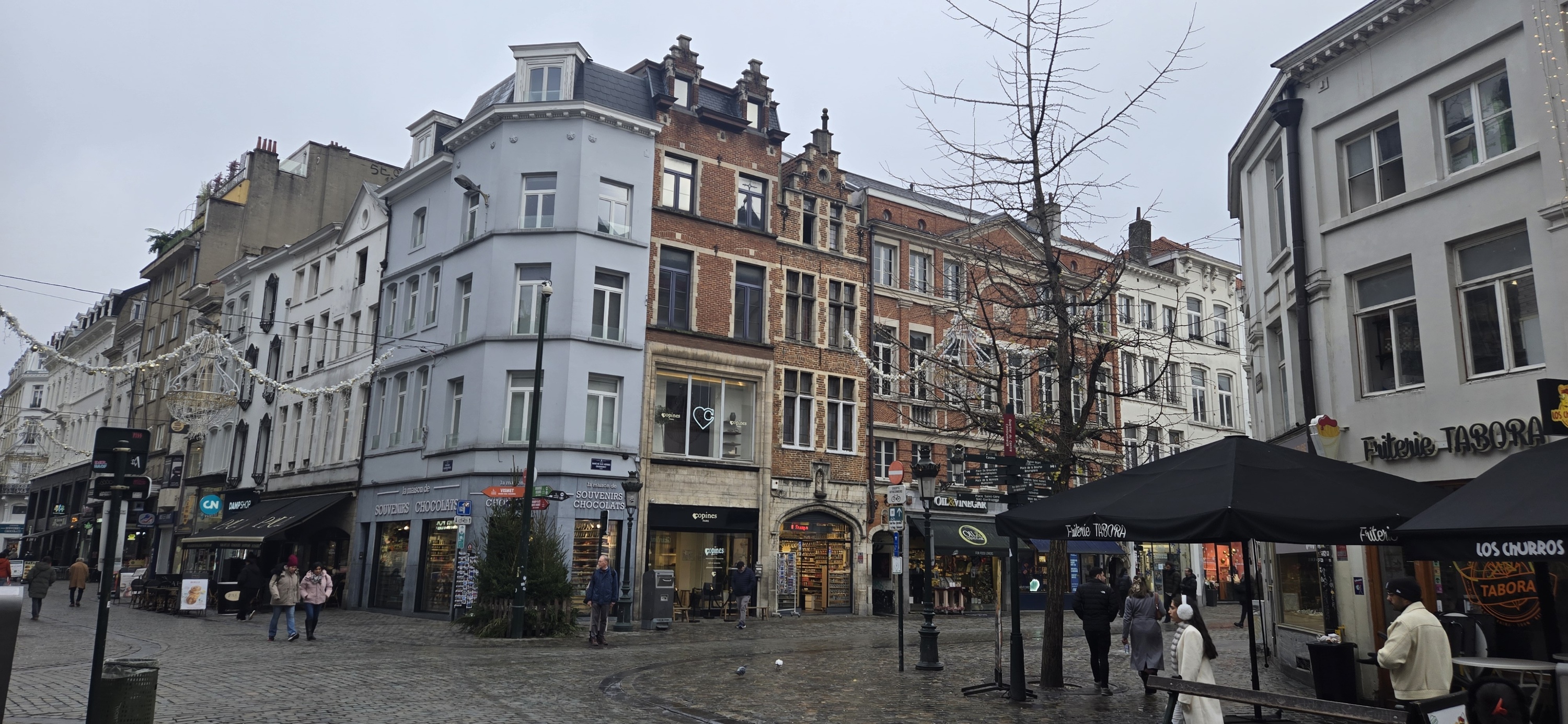
I have been to Belgium twice, and both times were unanticipated.  The first time was a family vacation during my summer in the Netherlands. The second time was during my summer in France.  Both trips are well documented in my erstwhile diary, and both make for a read that is astonishing in its testament to the fallibility of human memory, as well as to the weirdness of teenage travels, and in the 80s to boot.

My first trip to Belgium started in Antwerpen (I do not call it “Antwerp”), but we only stopped at the port where a friend of my Dutch mother was a “shturman” https://oldladywriting.com/2025/09/21/poison-fire-and-flood/ on a cargo ship and gave us a cool private tour.  We then made our way to the coastal resort of Koksijde—close to the French border, but because I was traveling on a refugee travel document and had no visa to France, France was not available to me then.

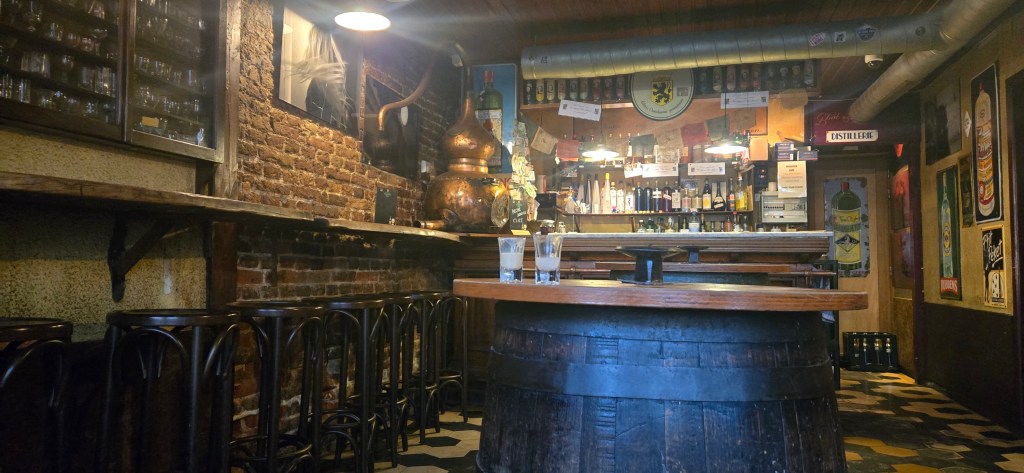
It was the first and probably the last time in my life I was at a campground.  We (my Dutch mother, little brother, and cousin) came with two tents, table and chairs.  As at any resort, there was time spent on the playground, time playing cards and badminton, going to a nearby bar and to a bakery, neither of which I can visualize now, hanging out on the sand dunes, and visiting coastal towns nearby.

I liked Belgium.  I was happy to see the signs in French, which I was already studying, along with the Dutch.  Past recollection recorded has it livelier, prettier, and cleaner than the Netherlands, but I would say now that it was the novelty and the relaxed vacation atmosphere that made it seem so.  The beach, however, did not impress me.  I made a note to go to Romania’s or Bulgaria’s Black Sea beaches when I grew up—this goal remains unmet to this day. 

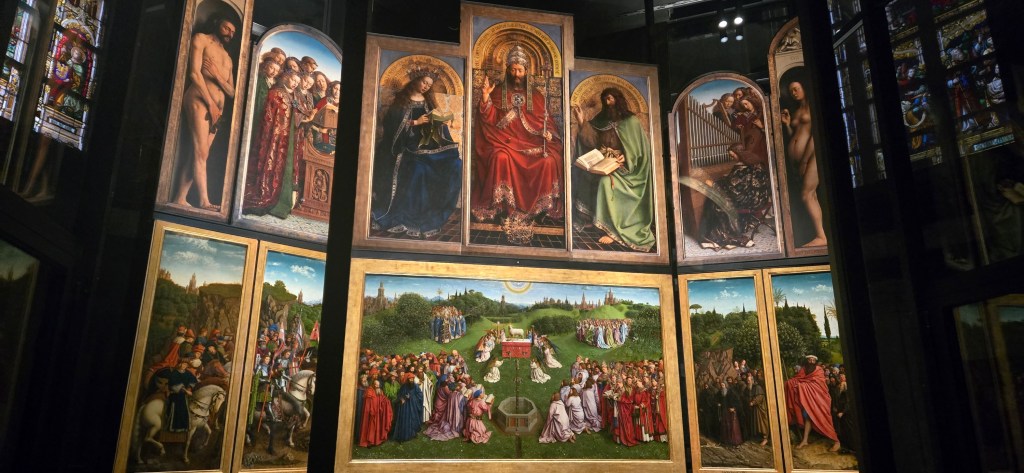
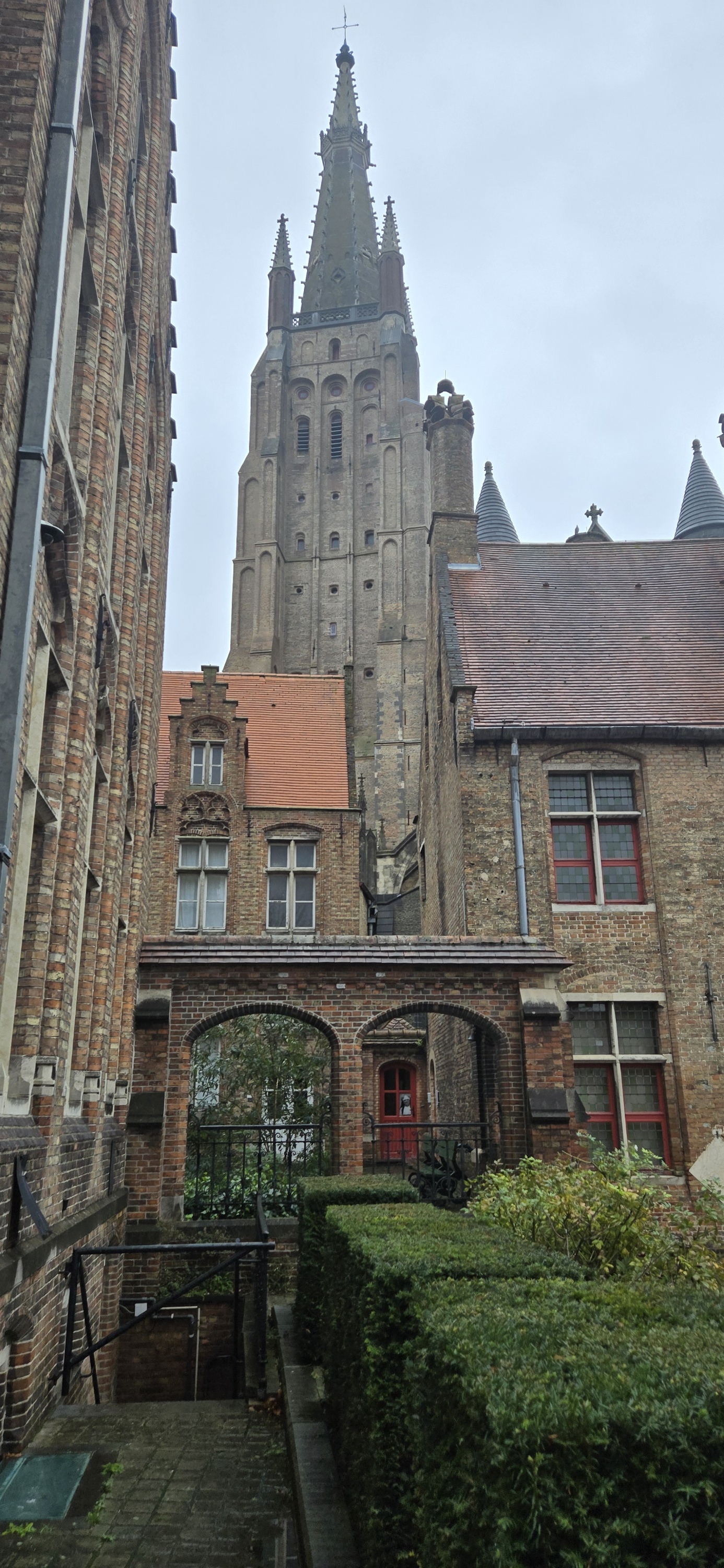
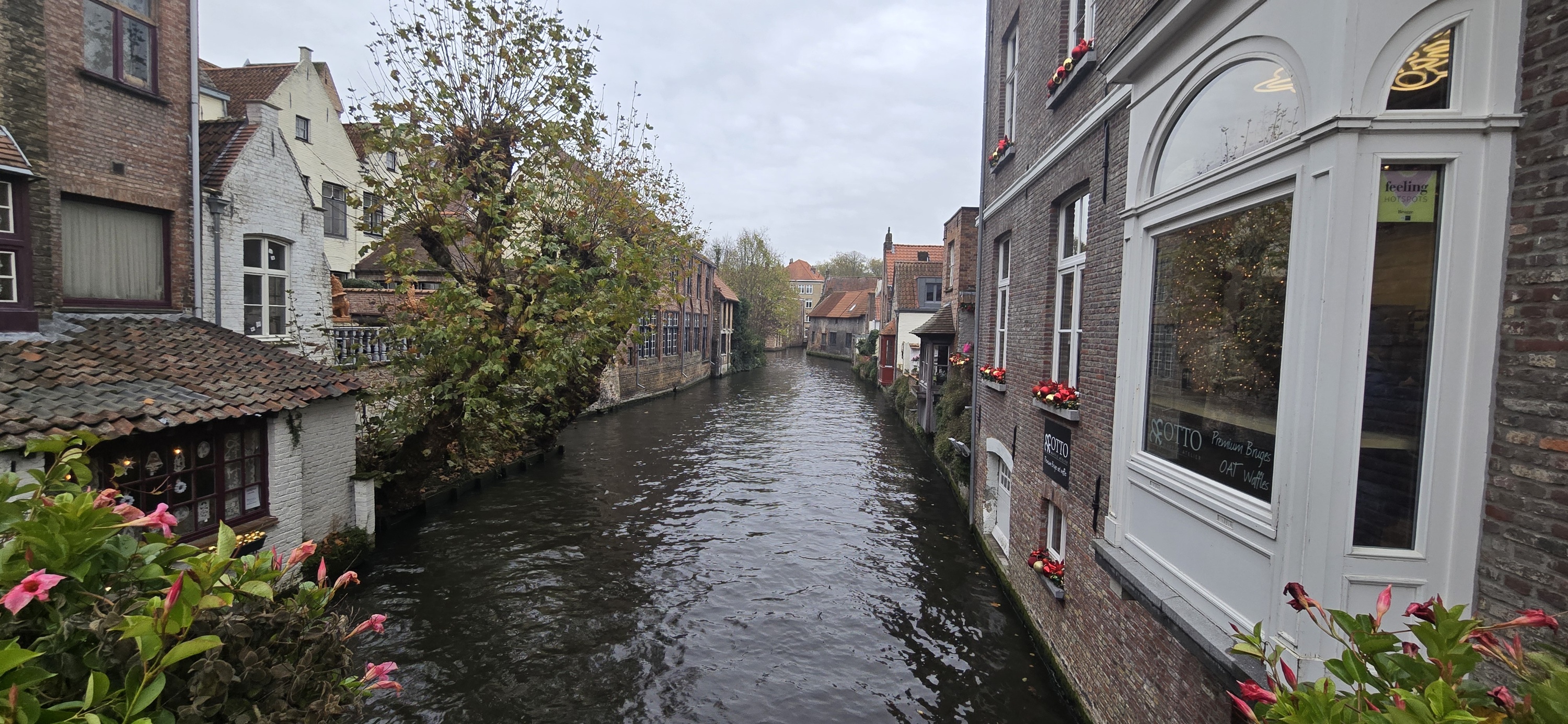
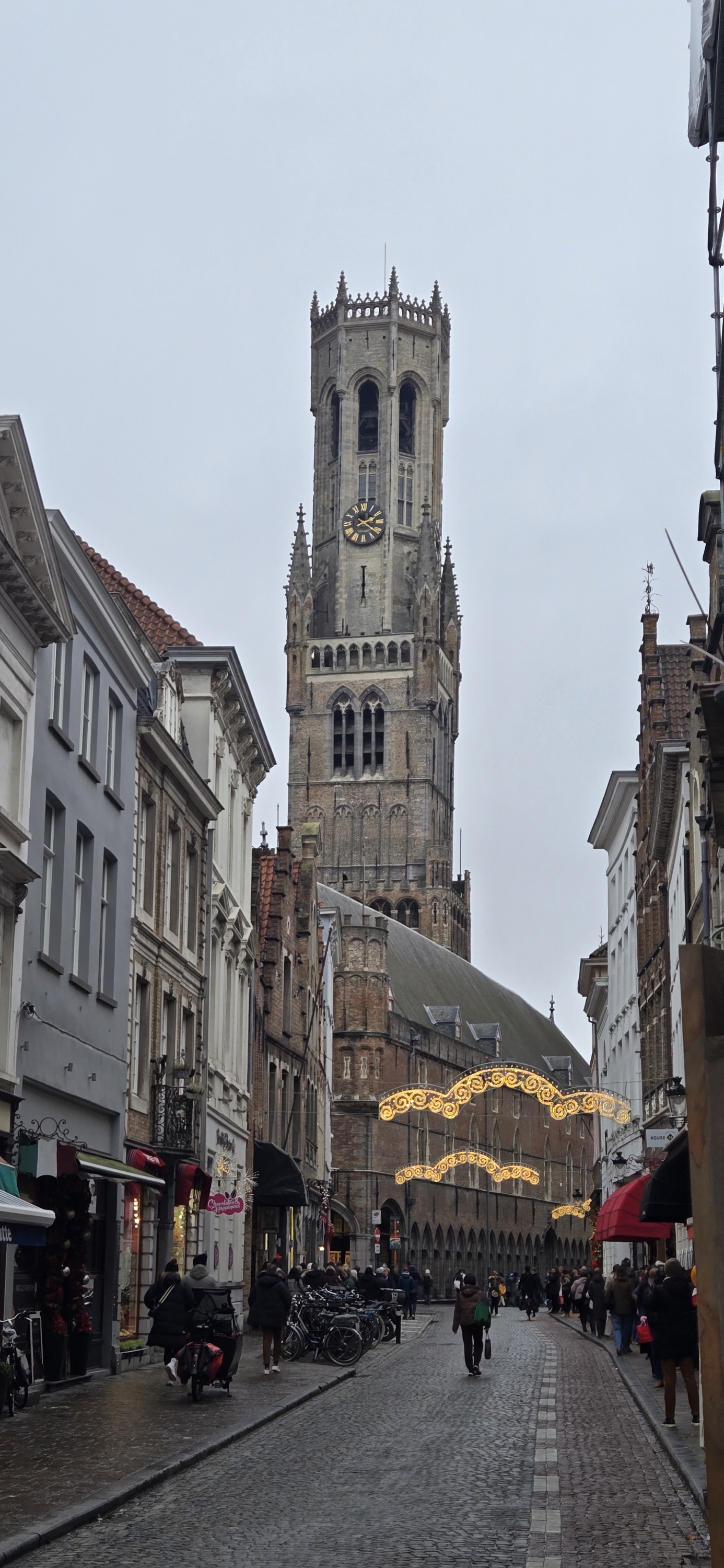
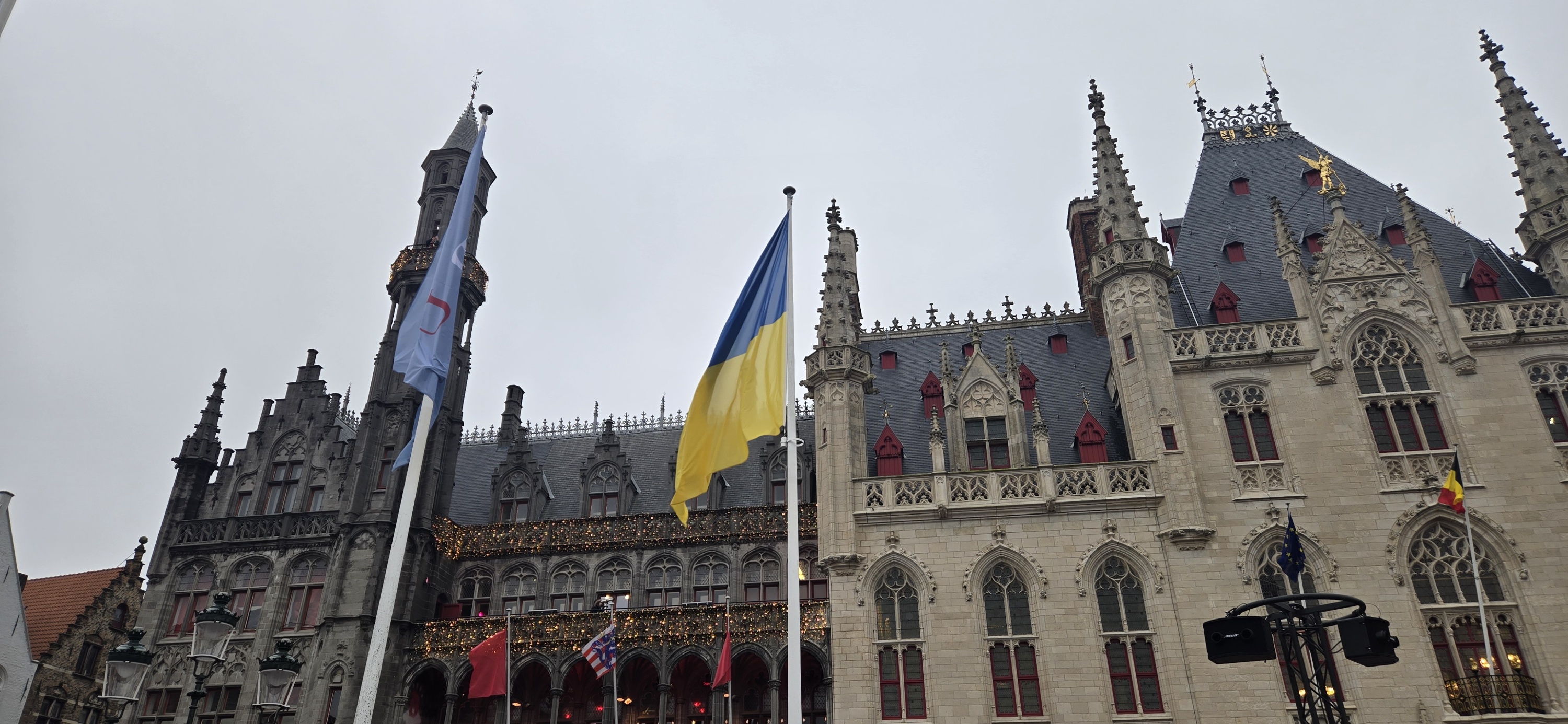
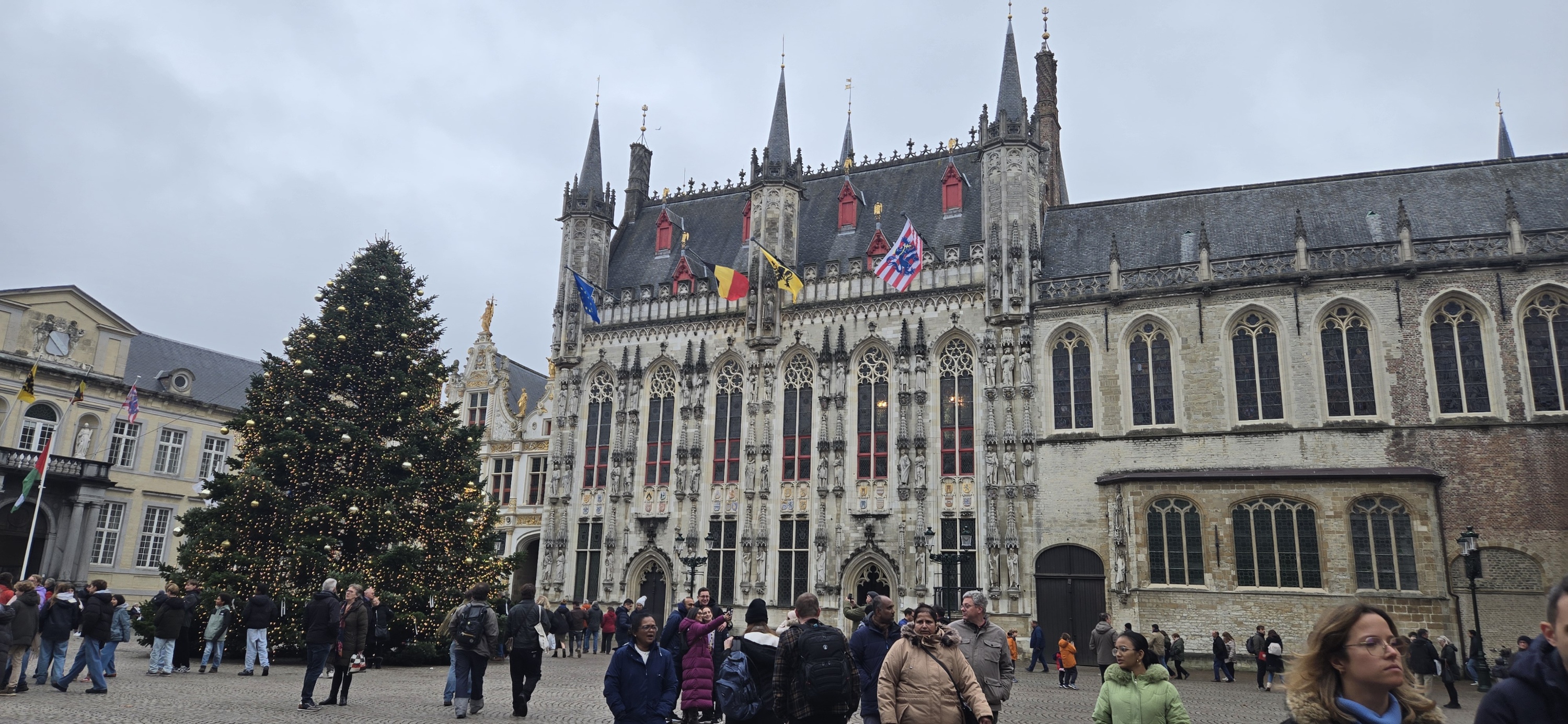
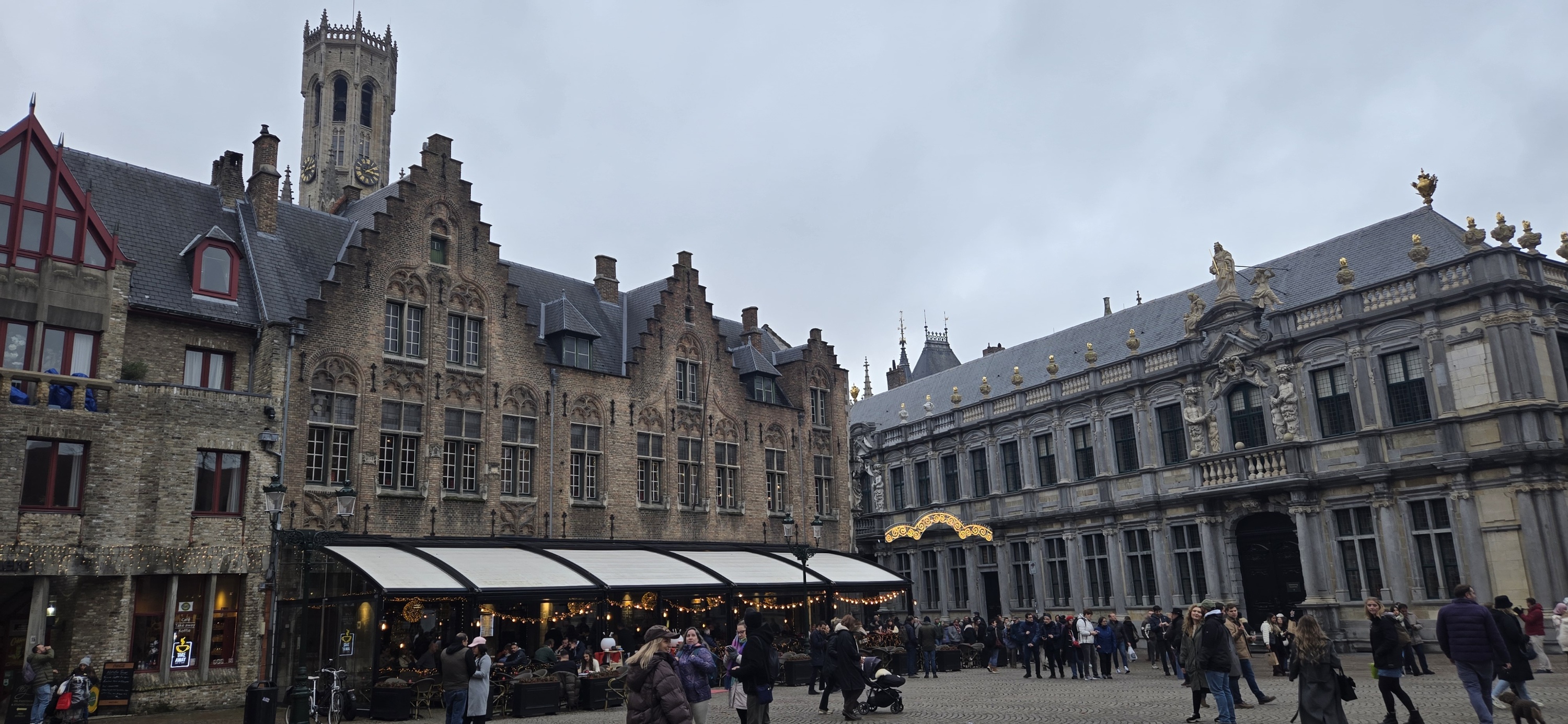
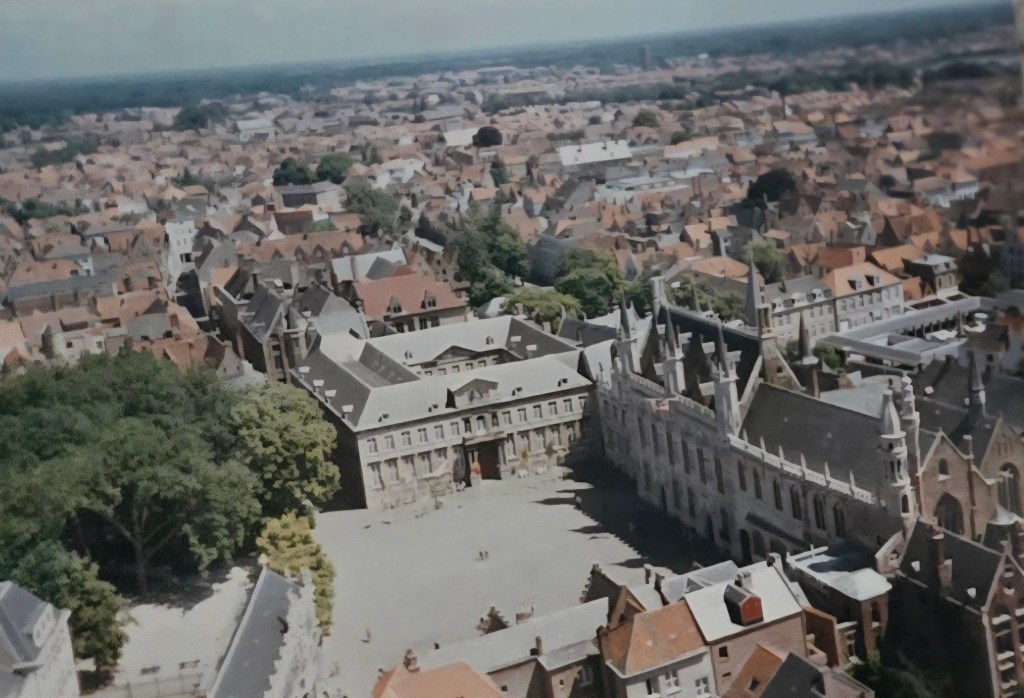
We had a lovely day in Brugge (I do not call is “Bruges”), that most picturesque of Belgian towns, despite our car being towed from a no parking zone.  We retrieved it and continued to have a lovely time despite the car subsequently being totaled in an accident halfway through our two-week trip.  It was a most bizarre thing:  we were stopped at a red light in a small town called De Panne (which literally means “breakdown”) and were suddenly rear-ended by an old man who apparently should not have been driving.  It was a small European car, but it should have still been visible in broad daylight. 

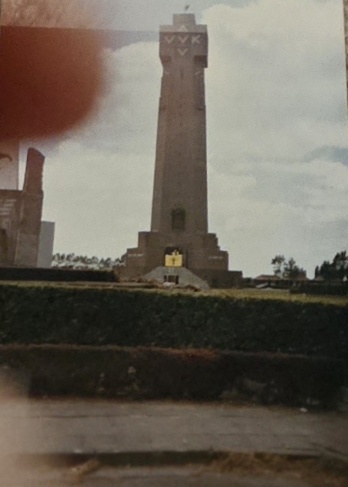
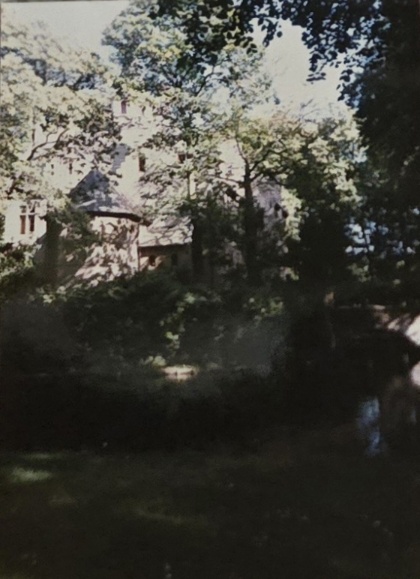
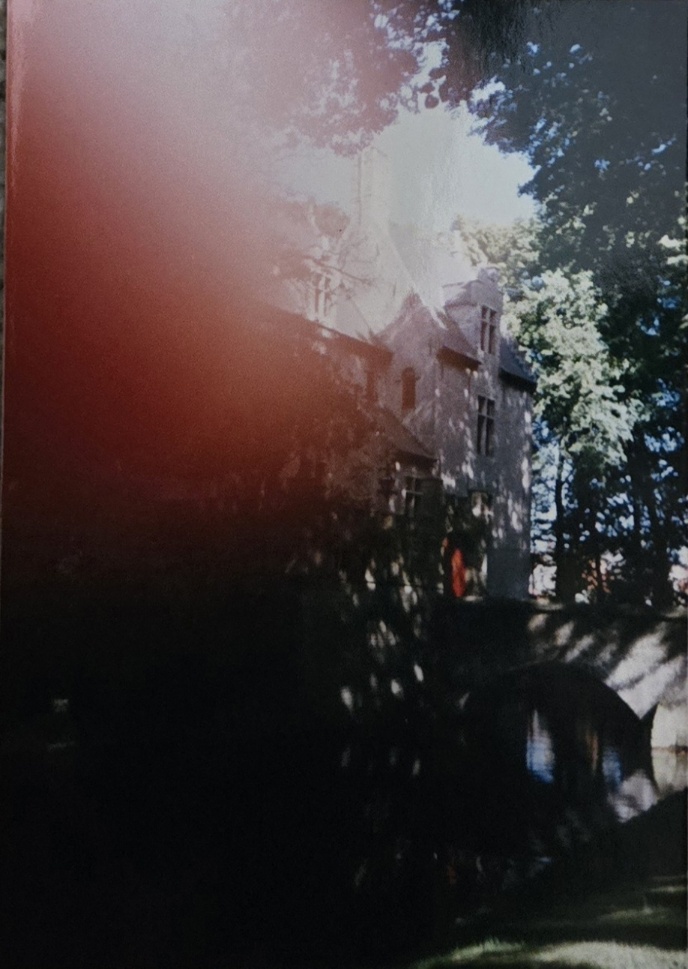
By macabre coincidence, similar to the one when my dog was hit by a car in care of a dog sitter while spouse and I were touring Dachau, the accident happened on our way back from visiting the World War I Trench of Death in Diksmuide.  We then arrived too late for an excursion at some castle, were detained by cows crossing a road, and decided to skip our customary café outing to rush back to Koksijde to see “Amadeus” at a movie theater.  It was a veritable Appointment in Samarra, albeit significantly less fatal.

I was awed then, and remain to this day, by the composure of my Dutch mother who, after some deliberations with adult family members, made the decision to continue our holiday sans auto.  If there was any stress, tension, or worry of any kind, it was either not recorded by me (extremely unlikely) or she assessed the situation and moved on with minimum disruption and maximum determination.  I see no similar scenario in which I or any member of my biological family would not completely freak out and flee.  There was some talk of leaving me with the adult (21 year old) cousin, but ultimately (after learning that this is not permitted by the exchange program’s rules), all four of us rented bikes and proceeded to continue to enjoy our holiday.  Special mention goes to the now defunct bee-themed amusement park, Meli Park, which we visited and found hilarious in its earnestness, and to me, who rode a bike like a [very sore] champ and held her own [at a somewhat lower speed] among the Dutch. And we also saw “Amadeus”.

I managed to visit Antwerpen once more.  In college, another Dutch cousin and I went there for the weekend by train to visit her brother (the cousin of the family vacation fame) and his then boyfriend.  I remember walking through some heavy iron door into the deafening noise and strobe lights of a disco and drinking a lot (“I drank three mugs of beer and a shot of Baileys”, I wrote then).  I remember that we slept through the day and have not a single recollection of seeing anything of the city, but the diary says that “during the day we walked around Antwerpen.”  I took several photos of all of us, and for that I am grateful, because “some are no longer there, and others are far away”, as Pushkin famously said (sounds better in Russian).  I cherish the memory of that weekend with my Dutch cousins; the city is just background noise.

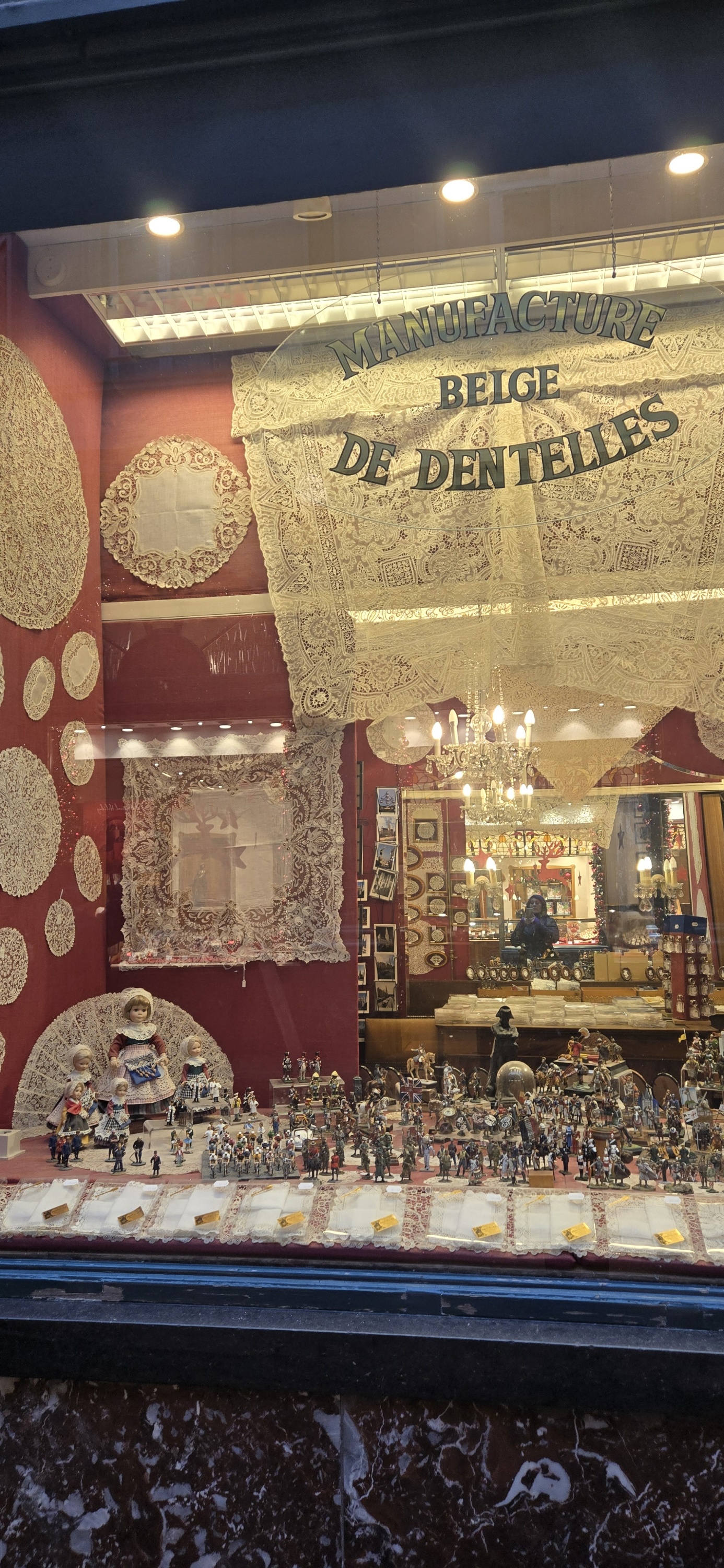
That same summer, my roommate Kathy and I https://oldladywriting.com/2021/04/10/meet-me-in-sistine-chapel-or-rome-second-try/ did that European train loop which had us crossing Belgium on our way to and from Luxembourg.  We missed our connection in Basel and spent the night in the cold train station. The next train to Brussels was full, and we hopped on the one going to Calais (the joys and perils of Eurail Pass!).  In Thionville, the train split, and while I was checking to make sure there was room for us, I almost left without Kathy, and we again ended up waiting in a train station.  But, there was a vending machine that yielded an extra cookie, so there was that.  This is all to say that by the time we finally arrived in Brussels, we were so excited about real beds, hot shower and impending hot breakfast (included) that we decided to skip the city altogether, though we did make it to Brugge in passing, mainly hunting for lace doilies.

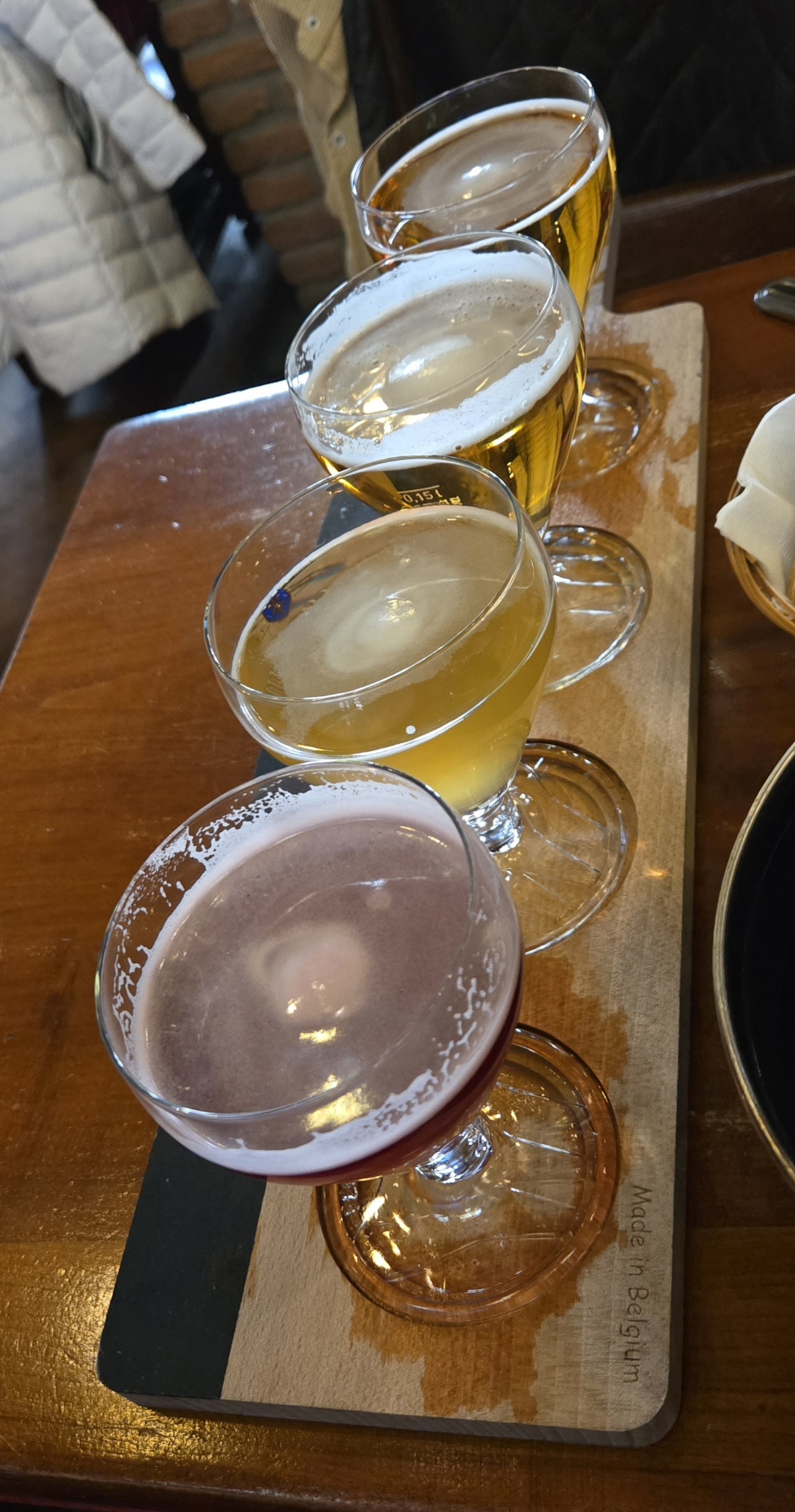
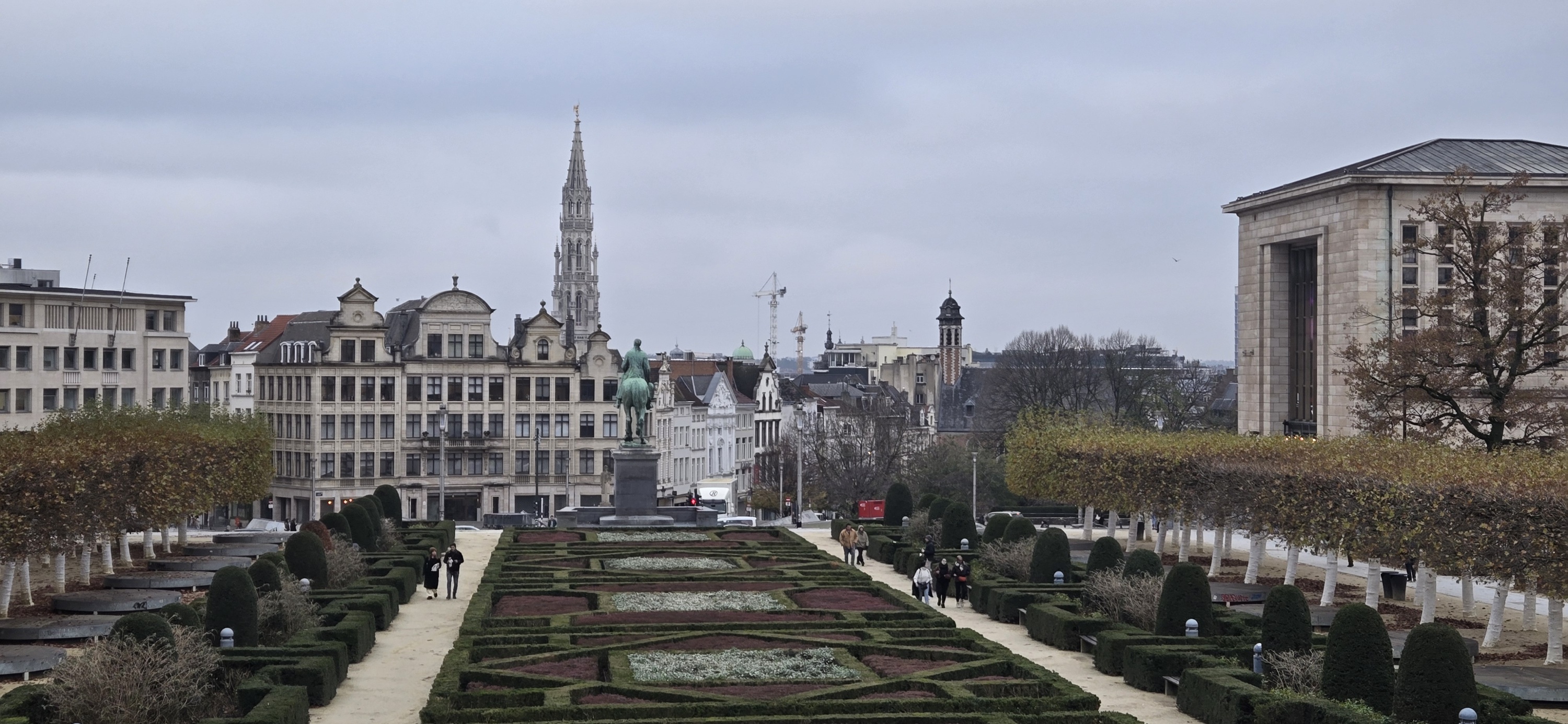
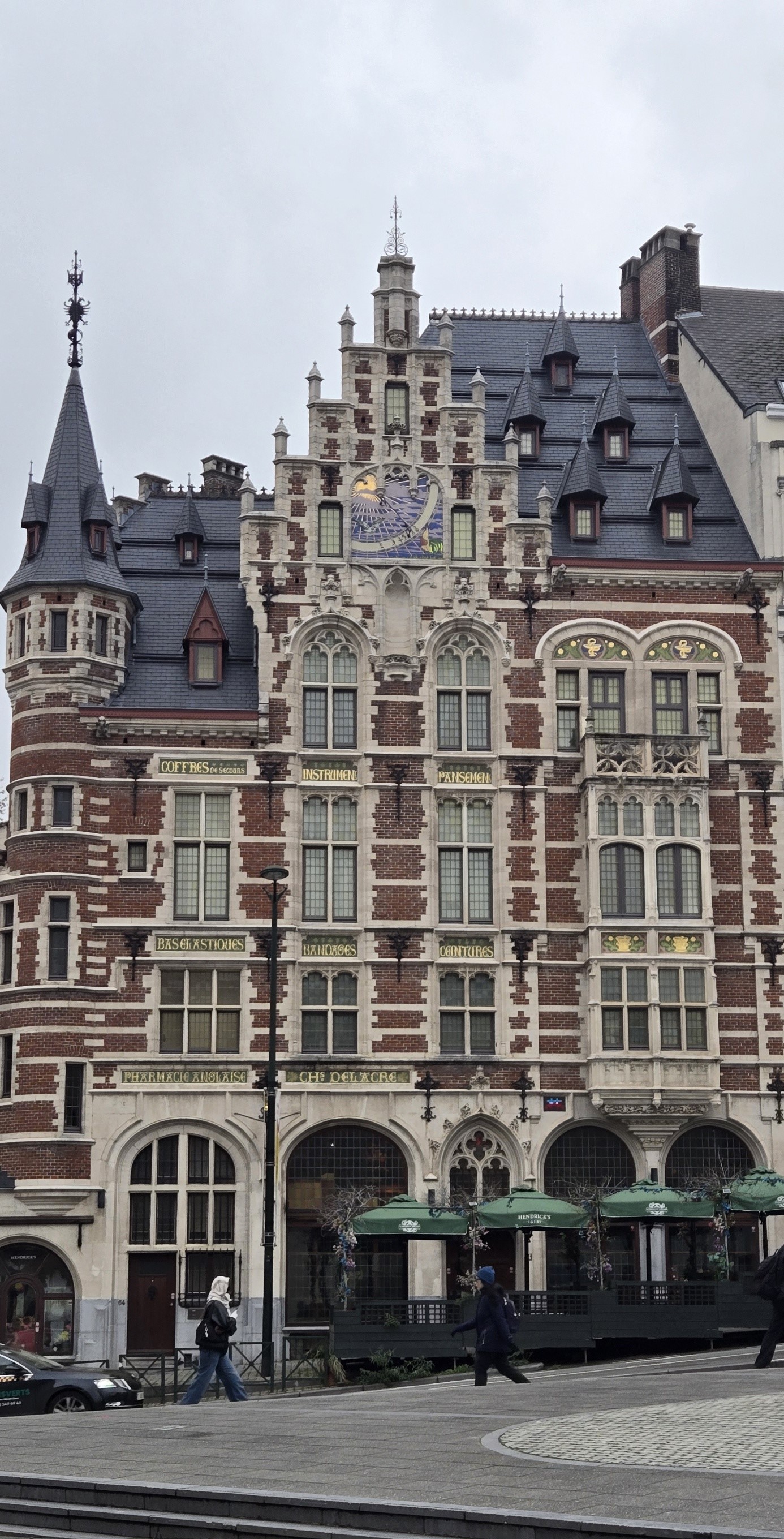
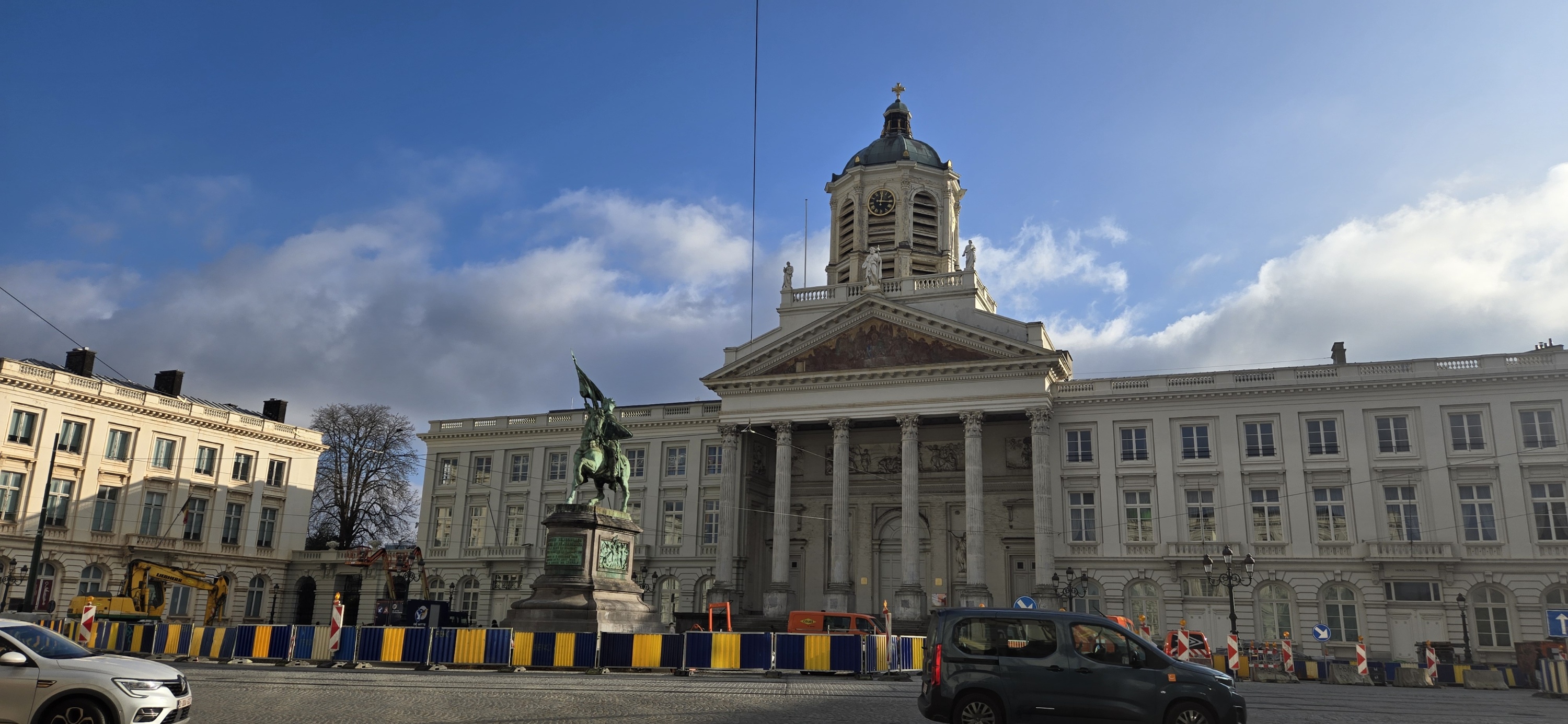
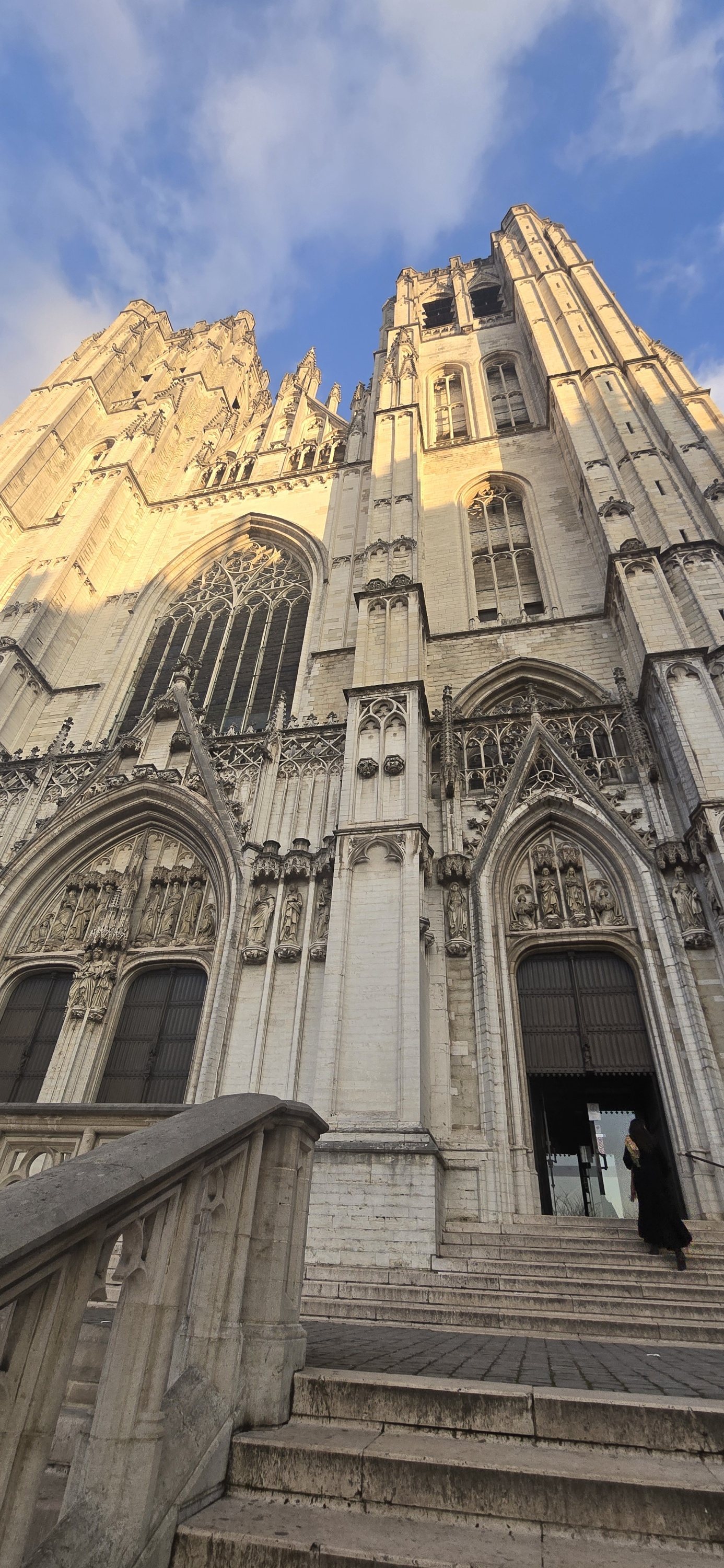
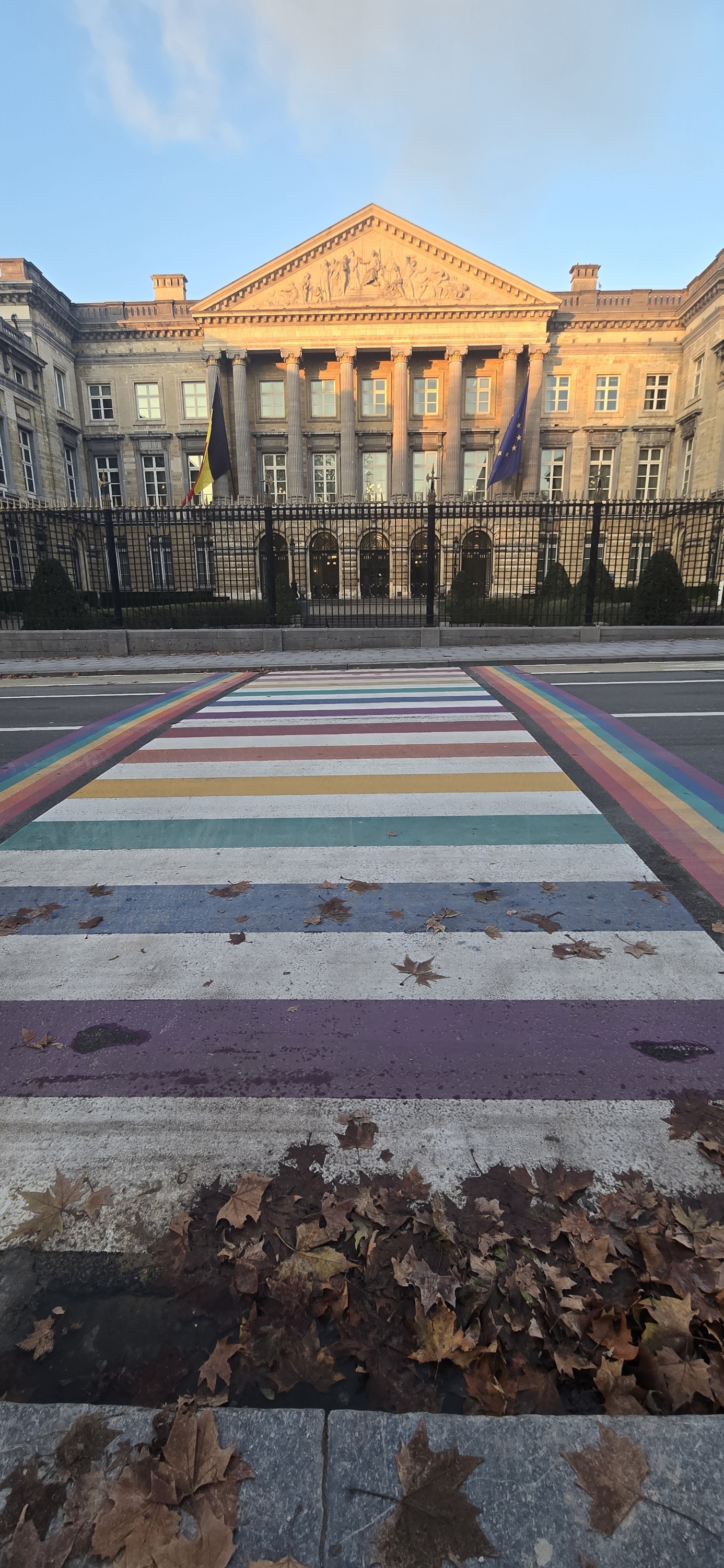
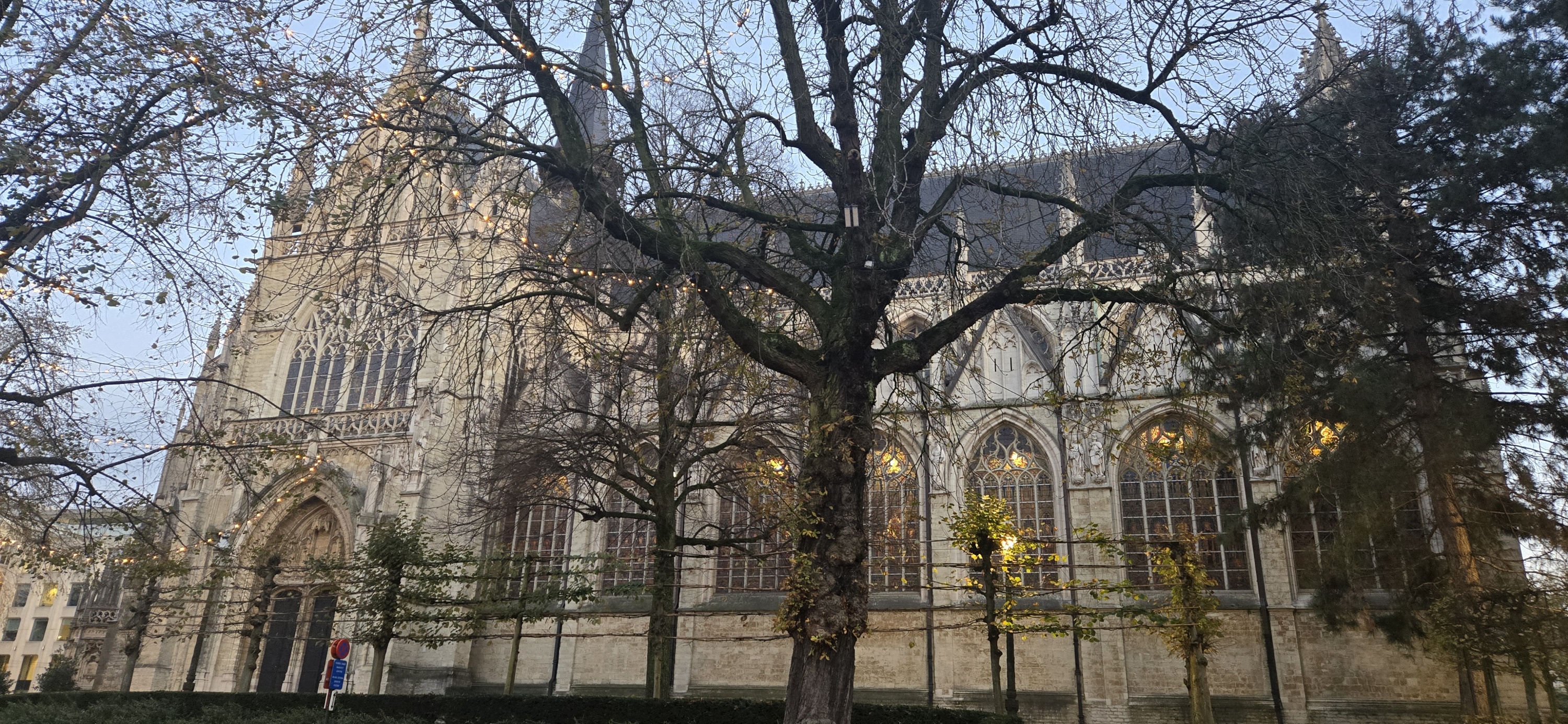
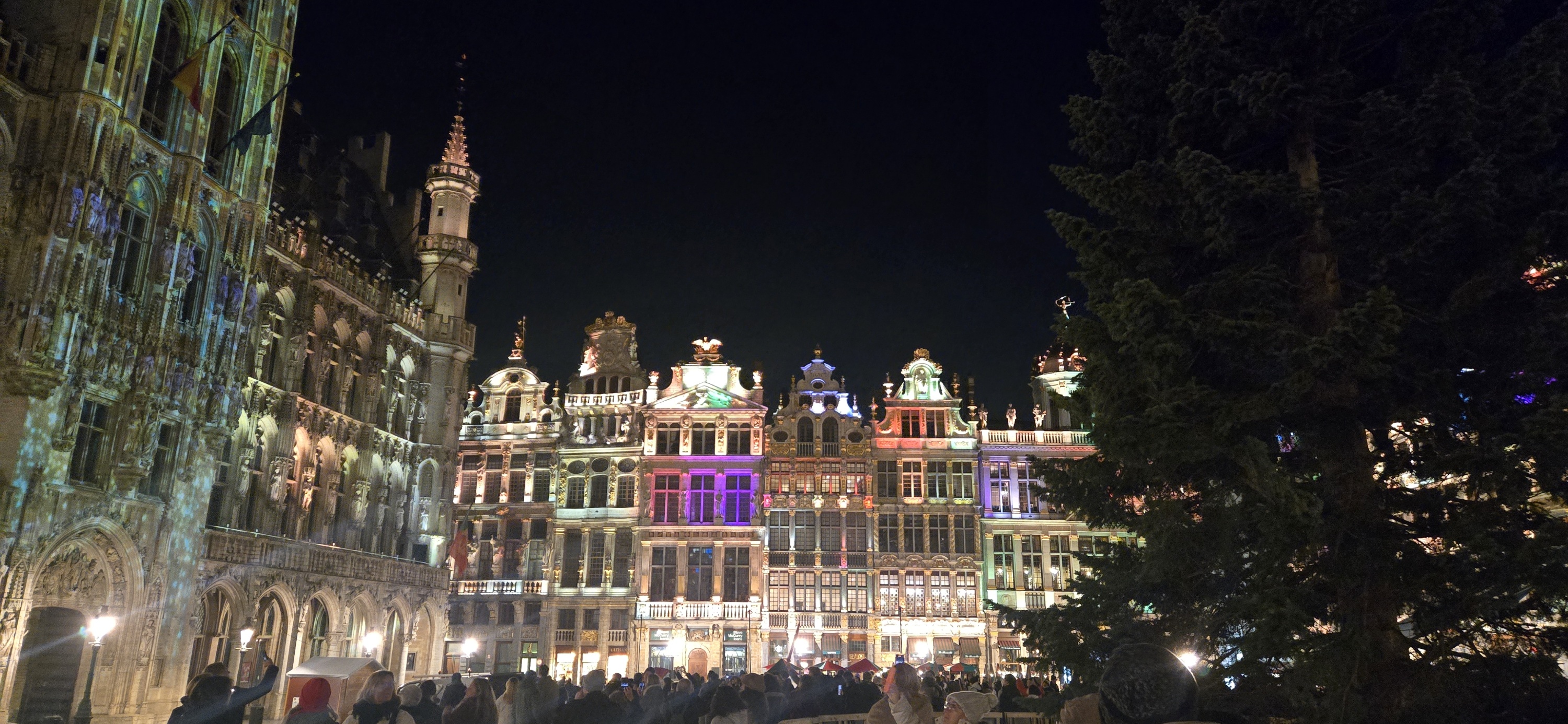
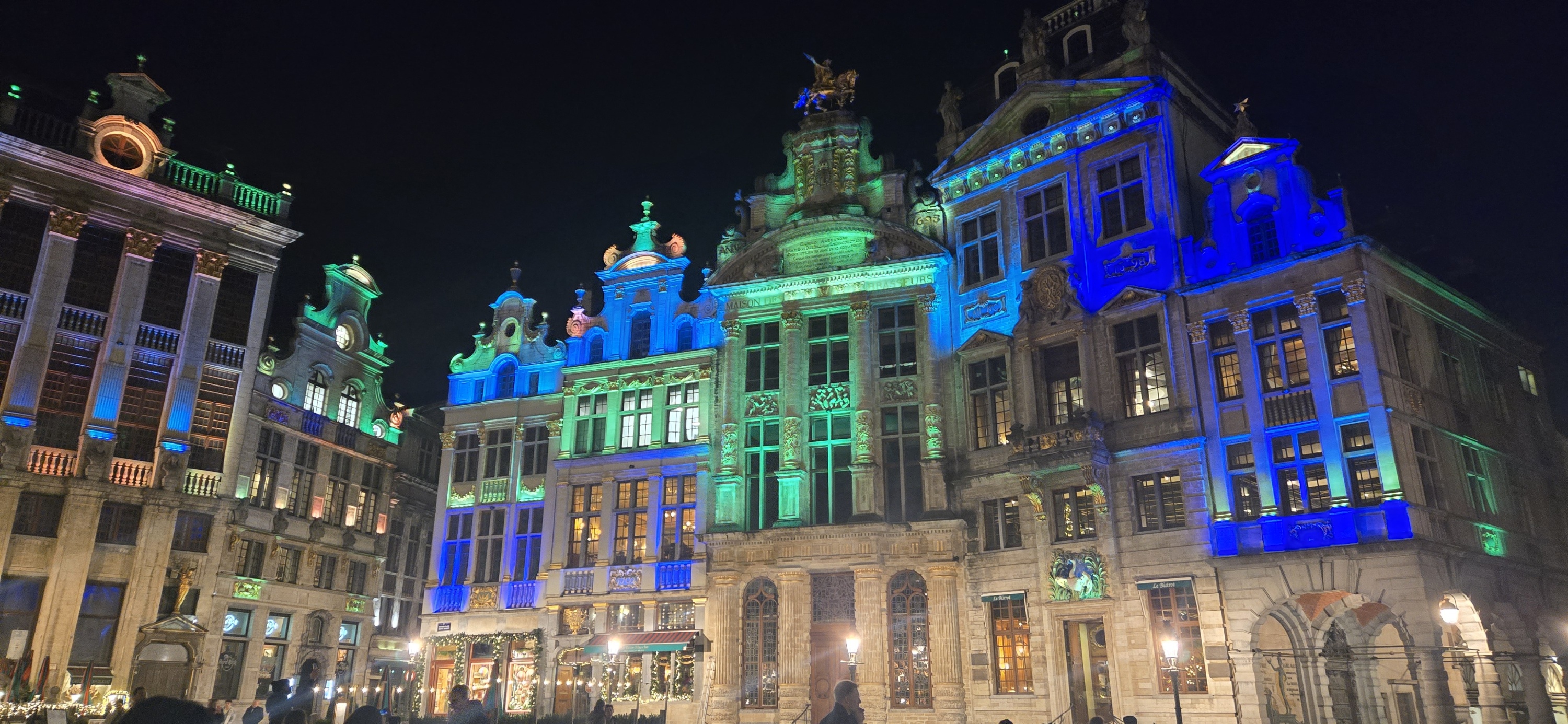
I never saw Brussels to this day, Antwerpen remains a mystery, but the Flemish Coast is a very fond memory.  To be continued…

Featured

Time Shelter: Reminiscence, not Review

“The past is not just that which happened to you.  Sometimes it is that which you just imagined”*. 

The older I get, the more disappointed—and, frankly, disbelieving—I am that we cannot travel back in time.  The more years pass, the farther I get from certain cherished moments, the harder it is to accept the permanence of their departure.  Watching Doctor Who, the ultimate wanderer in time and space, I get a vague sense of unease from the episodes set in the future.  What is the far future to me?  I will not see it, so I am not curious about it and not invested in it.  But the past, well, it is full of second guesses disguised as second chances.  It is full of the comfort of nostalgia. “It’s been written that the past is a foreign country.  Nonsense.  The past is my home country.  The future is a foreign country, full of strange faces, I won’t set foot there”*.

In “Time Shelter”, Bulgarian writer Georgi Gospodinov creates the perfect scenario for which my soul has been yearning.  Gospodinov is Bulgarian, and we are exactly the same age.  I feel his story almost instinctively, beyond the words, for he writes not just about the decades he experienced, but as only an Eastern Block Gen-Xer experienced them.  It is rare that I hear the echoes of the voices in my head in print.

His first person narrator meets Gaustine, a mysterious psychiatrist who opens a “clinic for the past”.  It is meant to evoke recognizable memories for Alzheimer’s patients by reproducing the surroundings of their comforting past lives, but the concept takes off and everyone wants to starts seeking shelter from the relentless passage of time by stepping into the past. “Everything happens years after it has happened”*.

Like Gaustine’s patients, I am not even interested in the historical past, someone else’s past.  I do not want to meet Shakespeare (whoever he really was) or see dinosaurs or anything like that. (OK, maybe I want to meet D’Artagnan in his natural habitat, but that is all).  And fine, I don’t even want to change anything.  I saw “Sliding Doors”.  I read “Midnight Library”.  I am no longer sure which parts of my life I would want to erase if there is no guarantee that this would not have a detrimental effect.  I can no longer fathom what my life would look like today if I had made different decisions at some critical junctures.  I might have been spared some pain, but what unanticipated and ultimately avoided sorrows were waiting in the wings?   The decisions that I made, I stand by them.  The decisions that were made for me trouble me still with the passage of years but regret is useless. And it all basically worked out.

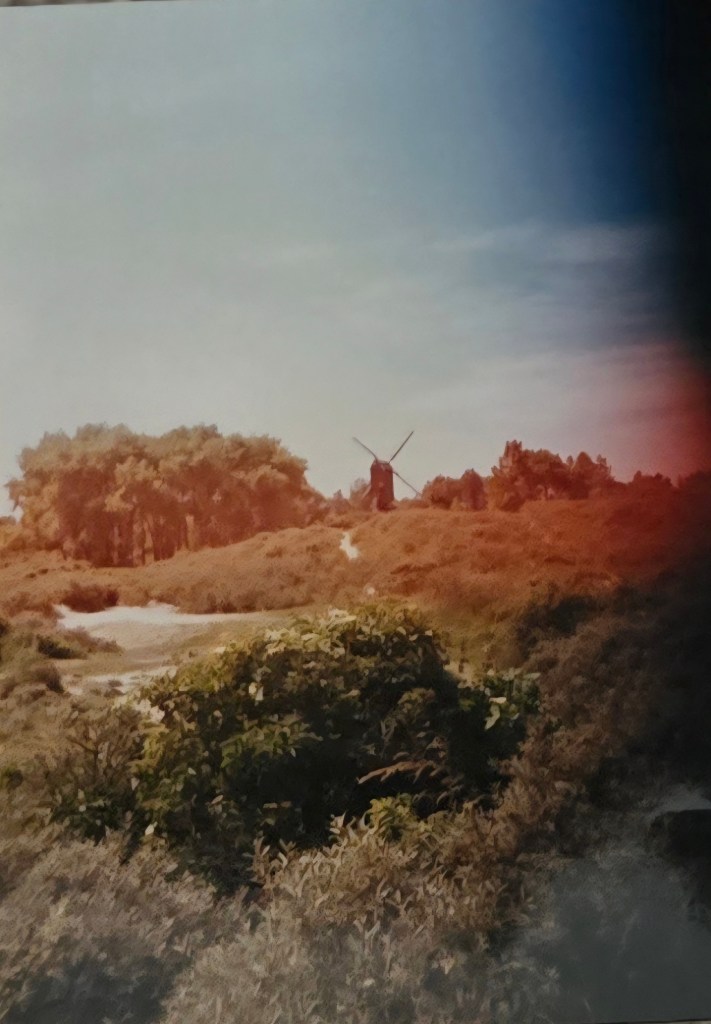
The pool would have been beyond that fence on the right

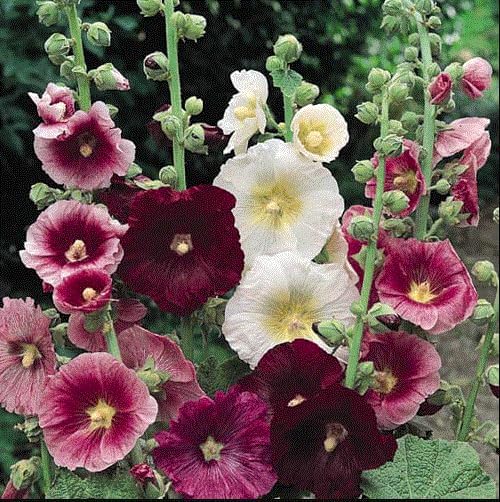
It is just that the melancholy longings come unbidden in the twilight, and that is when I sometimes wish I could revisit my past.  I want to see the sun rise over the roofs from the balcony of my mother’s apartment, for every occasion on which I visited her there seemed special and wonderful.  I want to sit in my childhood apartment’s dark room lit only by the lights of the Christmas tree, the only year my grandparents had a real tree and could finally hang up the one ornament that was too heavy for our little artificial tree—an orange, the size and weight of the actual fruit.  I do not want to forget either that orange that always stayed in the ornament box in the entresol except for that one brief appearance or my favorite ornament, wild strawberry with a human face.  I want to go to the grocery store on the first floor of our apartment building and buy birch juice by the glass and a hard block of coffee with milk, meant to be dissolved in boiling water and not gnawed like I did as a kid.  I want to watch my collection of film strips in the hallway of our apartment on the coldest winter days.  I want to marvel at the hollyhock mallow plants in our neighbors’ garden in the summer.  I want to see again that inground public pool that was filled in when I was just a toddler, leaving behind a weed-covered wasteland—was my memory of this thing even real, a random outdoor pool on our quiet little street?  And I want to sit on our old couch and read the books of my childhood.  There is so much from that era of gentle stagnation which seems positively utopian in comparison to our present cataclysmic times.  “Warning, history in the rearview mirror is always closer than it appears”*.

My favorite part of this mesmerizing novel, which I had to read twice in a row (and even that was not quite enough to fully take it all in; I am yearning to read it again), is when time shelters become so popular that European countries actually vote on returning to their respective favorite past eras.  The clinics of the past are no longer enough; entire countries become engulfed in nostalgia.  It is fascinating to read what decade each country chooses as representative of the glory of its people, yet still recognizable and not entirely devoid of modern comforts.  Some decades of the last century are obviously fraught; 30s and 40s have their devotees, but Gospodinov is not going there.  The story is not about that.  So many countries choose the 1970s or the early ‘80s (including most of the [former] Eastern Bloc—the whiff of freedom in the air, before reality bit), with only Italy choosing the ‘60s.  Bulgaria’s choice is not mentioned, but there is a hint.  “What decade would you choose?  “I’d like to be twelve years old in each of them.” * That would be my answer, too.

*All the quotes are from Georgi Gospodinov, “Time Shelter”, English translation by Angela Rodel

https://georgigospodinov.com/

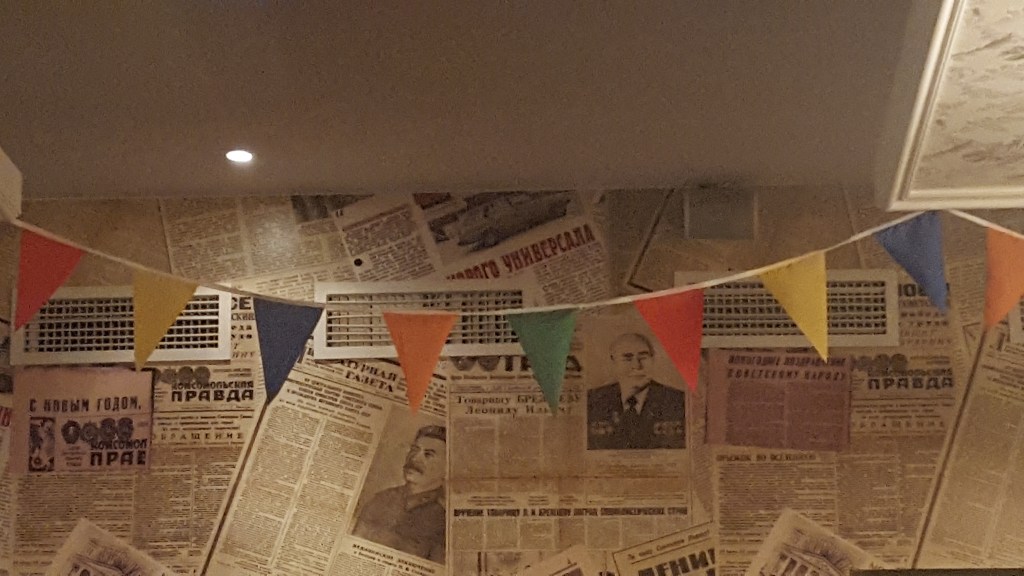
[Caption: my time shelter, for better or worse]

Featured

Poison, Fire, and Flood

One of the main villains of my raucous childhood was one Shturman.  This was, and is, his real last name.  I am not changing it here because (1) he is not likely to read this, (2) this unusual name[1] is too much a part of him, and (3) every word is true.

Shturman’s code name was “Douche”.  No, listen, in Russian, it just means “shower” (and in French as well, but we did not know it then).  And the reason he was “Shower” was because we called him “D.Sh.”, which stood for “Durak Shturman”, which means “Shturman the Fool”.  So it all fits together rather beautifully.  Since “fool” was the worst insult we knew, literally everyone’s code name started with “D”, but this was the only one that is not lost in translation[2].  At school, he was known as “Shturm Zimnego”, or “Storming of the Winter [Palace]” (the event that, according to what we were taught at school, started the Great October Socialist Revolution), but we did not feel that he deserved so much honor.

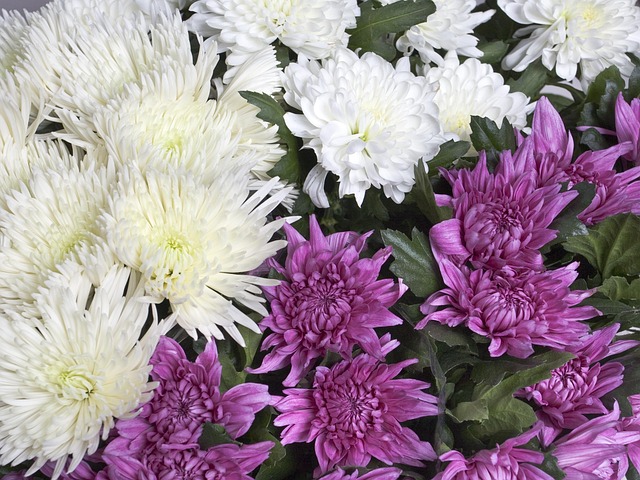
All positive comments regarding these flowers will be deleted

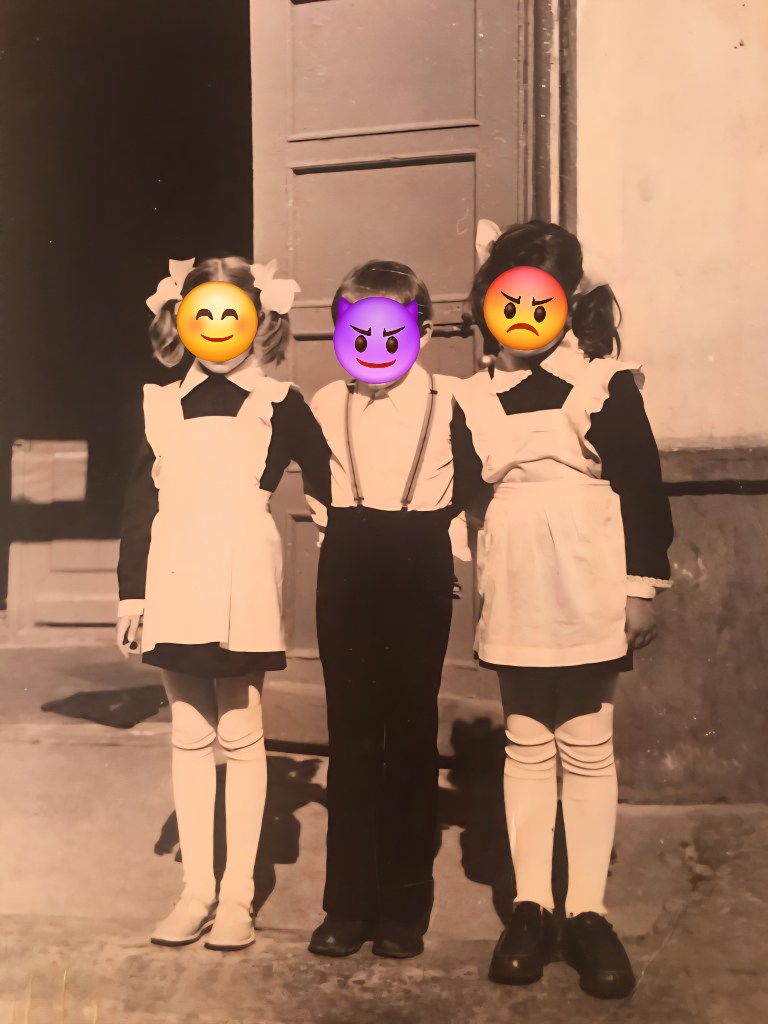
My BFF and I met him on the first day of school, September 1, 1975.  In fact, we all met each other for the first time that day.  It was not a good day for me, for it started out quite literally on the wrong foot.  All the girls were wearing pretty summer sandals (my friend’s were pink).  I, as was my lot in childhood, was wearing heavy, hideous black/brown booties.  I was perpetually overdressed in childhood by my overprotective grandmother; I always had a couple more layers on than anyone else.  My mother, who gets incredibly defensive about every single choice made for me not by me, would undoubtedly say that prettier shoes could not be found—and that would be a lie.  Everyone else wore common Soviet-style sandals readily available at any children’s clothing store in town.  My ugly orthopedic boots were imported.  And to top it all off, the trend of sending me off on the first day of school with a bouquet of chrysanthemums for the classroom teacher started that unfortunate day.  You guessed it—everyone else had lovely summer flowers.  I yearned for daisies, and cannot abide chrysanthemums to this day.  But I digress.

Mine and my BFF’s mothers and both of Shturman’s parents went to high school together.  Their paths diverged for a few short years after college and joined again on that day when it was discovered that they had children born in the same year (two in January, just a week apart, and one in November), who will be starting school not just at the same time, but at the same school and in the same class.  Of course, given that our parents were friends, we were thrown together a lot in those early years, for all the holidays, all the birthdays, summer trips to the countryside, etc.  Well, since I lived with my grandparents, I was not allowed to celebrate with my friends, so that was one very small benefit, having a bunch of 50+ year olds rather than Shturman over.  And since I was born in November, I did not have to share my birthday with him, only with the October Revolution, celebrated in November according to the “new”, Gregorian calendar.

To commemorate the Revolution, we got a few days off from school—basically, our fall break.  In that place and time, it was common to gather for all festivities.   One year, when I was maybe in second grade, we all met at my BFF’s apartment.  The adults, which consisted of Shturman’s parents and mine and my friend’s mothers (both divorced, but with or without boyfriends—memory fails) went for a walk.  Do not be shocked, it was a kinder, gentler time; neighbors looked out for each other and each others’ kids.  And it turned out that the real danger lurked within…

The adults departed for their nighttime stroll, and BFF and I hoped to have some fun:  sing along to Soviet pop music with pantyhose on our heads, make plasticine animals, read about astronauts and plan our own future space adventures—really, the possibilities were endless.   It was a Soviet studio apartment: one room, bathroom, and a kitchen at the end of the hallway.  We staked out the kitchen.  Shturman pestered us for a bit, at one point brandishing a bottle of wine[3] and boasting that he can drink it all.  We called his bluff with all the disdain we could muster; predictably, he did nothing but buzzed off to the room.  But our little gray cells were already activated.

As children, we were told that alcohol is poison. As we saw adults drink copious amounts thereof, the unspoken assumption was that it is poison specifically to children.  Which budding sociopath came up with the cunning plan of serving tea laced with alcohol to our arch enemy shall remain undisclosed.  I know that “Hey, Shturman, do you want some tea?” was not spoken by me.  He and I were never verbal with each other, letting our fists do the talking. 

My friend made him a cup of tea, which was actually mostly vodka.  Shturman, clearly feeling very pleased with himself and his imaginary superiority over us, took a sip, immediately choked and started coughing, eyes bulging.  You did not see this coming, right, because you thought Russians drink vodka from birth, and I am here to break down the stereotypes.  He dropped the cup, and there was that moment in which you know things can go either way—and this is how they went, with him screaming “I will kill you!” and us shrieking and running.  Studio apartment, where are you going to go?  Bathroom, of course—the only place with a lock.

Shturman started pounding on the door and screaming, “Come out or it will be worse for you!  I will break down this door!”  BFF was sort of turning on me: “So, alcohol is poison, huh?  He is alive and well, and even worse than he was!”  I was just hoping the door will hold, and besides, it was a modern apartment, with a “combined” bathroom, meaning toilet, sink, and tub were all in the same place.  We had all the conveniences, and could wait him out until our parents’ return.  Eventually our enemy calmed down and walked away, and we settled in the bathtub, lulled into a false sense of security.

Suddenly, a scratching sound alerted us to a new potential disaster.  Shturman procured matches and started lighting them and shoving them under the door.  He decided to smoke us out, that weasel!  But the joke was on him—we had access to plenty of water, and started pouring it on the matches, having emptied the toothbrush glass for this purpose. Neither side was going to surrender, but we assumed that the matches will run out before water.  As luck, good or bad depending on perception, would have it, adults came home before either, to a minor river in the hallway, with purses and shoes floating by.

We refused to leave the bathroom until the Shturman family departed.  I remember nothing of the aftermath of this event (not even the last of its kind), beyond never getting along with this Shturman until I left the country several years later.  I have not seen him since.  Wherever he is, I hope he is not holding a grudge.


[1] It literally means “navigator” in Russian.  Unusual and kind of cool, if one stops and thinks about it.

[2] For example, we referred to Shturman’s father as “D.P.”, i.e., “Durak Papasha”, meaning “Dad the Fool”.  We disliked him because his son looked just like him, and we never saw him as anything other than his son’s father.  Yet DP was the only father that was present in our group of friends.  Something to unpack here.

[3] Again I remind you, different time, different place, no burden of Puritan heritage. 

Featured

Havana Daydreaming

“Oh, Havana, I’ve been searching for you everywhere
And though I’ll never be there…”

(Billy Joel, “Rosalinda’s Eyes”)

In 1997, I prepared my first list of places I wanted to visit in this lifetime.  It was pretty basic, containing about what you would expect (although even then, my focus was primarily on Europe).  The list was revised several times in the intervening years, and I am currently working off the most current, 2020 version.  It is significantly more precise (I narrowed New England down to Maine, identified specific cities and experiences in various countries which I have already visited, and ultimately, decided there is nothing for me in either Minnesota or Australia—no offense).  The place at the top of this new[ish] list is Cuba.  In 1997, I did not imagine that visiting Cuba was possible.  It seems complicated still (especially for someone with my aversion to organized group travels, and given the general state of the world).  But everyone has to have that one place that remains elusive.   

This is the least horrifying photo I could find in the public domain. Or any other, for that matter.

When I was in second grade, the mother of one of my classmates did a presentation to our class about her trip to Cuba.  Bulgaria was exotic enough.  Cuba was unimaginable.  She came with a show and tell.  There must have been some candy, though I have absolutely no memory, real or imagined, of that, and have no experience with Cuban treats to this day.  There must have been some elementary-level geo-political presentation; we already felt a certain reverence for our exotic, far away only friend in the Western Hemisphere.  What I do remember very vividly is a little stuffed crocodile that she brought with her.  I am sure that a baby taxidermy croc would intrigue any child; it was so fascinating to me that in my mind’s eye, I still see Irka Rybakova’s mother standing in front of our class in her belted dress, holding this shiny leathery wonder.  Neither alligators nor crocodiles exist in Russia; this was years before I saw one in a zoo.  So strong was this impression that for years if I heard “Cuba”, the first image that would come to me is that of a little crocodile. 

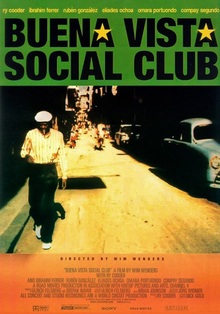
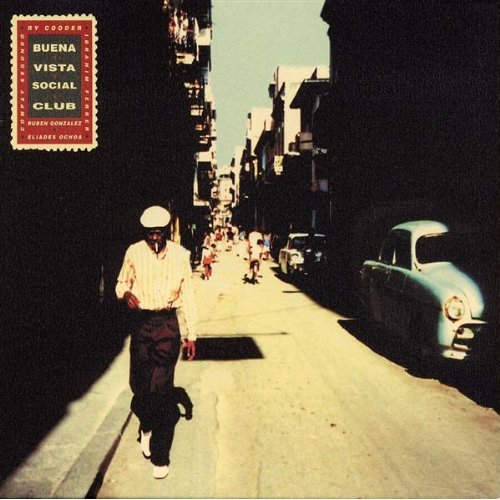
That is, until I saw a documentary on PBS[1]—and that day is about as far away from today as it is from the day I saw the baby crocodile, which is to say that I have identified Cuba with its marvelous music for at least as long as I have identified it with crocodiles, a distinct improvement.  The film touched me on every level—I did not just fall in love with the music, but the sights of Havana, the camaraderie of old musicians, their unpretentious yet assured personalities, their warmth and pride in their homeland[2].  From that time until CDs have gone the way of cassette tapes, I have accumulated a lovely collection of traditional Cuban music.  My meager Spanish is just enough to get the gist of most songs, and that is indeed enough for me.  At some point, the Buena Vista Social Club orchestra came to town during a worldwide tour.  I did not go (something about ticket prices, and I am generally not a concert goer).  While it is tempting to call this the biggest regret of my life, it did not feel so at the time.  The CDs continued to sustain me.

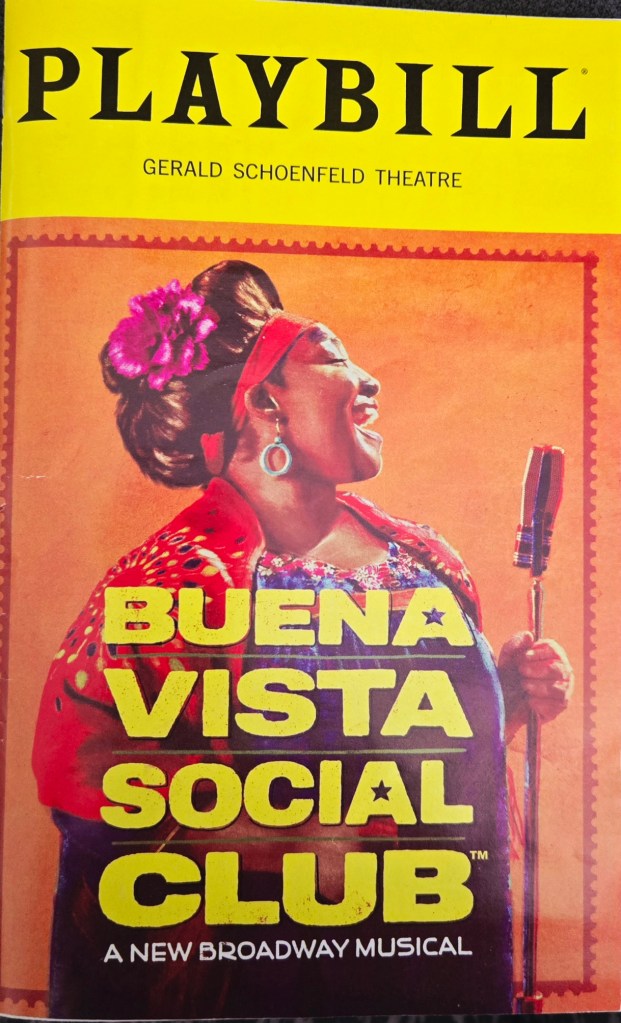
Almost two years ago, Buena Vista Social Club musical showed up off Broadway, but it was December, and I had other plans.  Once again, I made an informed decision to hold out. This time, I was not wrong, for a little over a year later, it finally appeared on The Great White Way, and I was there for it.  Well, to be honest, I was not the first in line.  I was skeptical.  When you love something, you do not want it touched and tinkered with.  You do not want your memories sullied.  This is why I avoid movies based on books I love[3], and generally try to avoid musicals based on movies, which these days is practically an impossibility.  My mother and I planned a trip to NYC, and I was still not convinced, thinking that I will grab the tickets when I get there.  Then Buena Vista was nominated for a Tony, and I figured I better make a move before it becomes a hotter ticket than my limited window of opportunity could support.

I loved the music, but knew nothing about the story, or even cared about it.  On the night of the Tony Awards, I instantly recognized all the characters during the musical number as if they were old friends.  I figured, if nothing else, I will still love the music.  I have seen jukebox musicals, some with better books than others, and in all cases, the music alone has been enough.   

It turned out to be the story I did not know I needed.  The prequel to the events of the documentary, when Omara Portuondo met Ibrahim Ferrer, Compay Segundo, Ruben Gonzalez and others, when they were all making music in the waning days of the Batista regime and the dawning of the revolution, is full of hope, exuberance, and excitement, and sparkles with gentle humor.  The reunion of the former bandmates several decades later, familiar from the documentary, is wistful and burdened with the weight of years gone by, as these things go.  Through it all, the musicians—recipients of the most well-deserved special Tony Award—are simply spellbinding, and the songs are just as gorgeous as ever I heard and loved them.

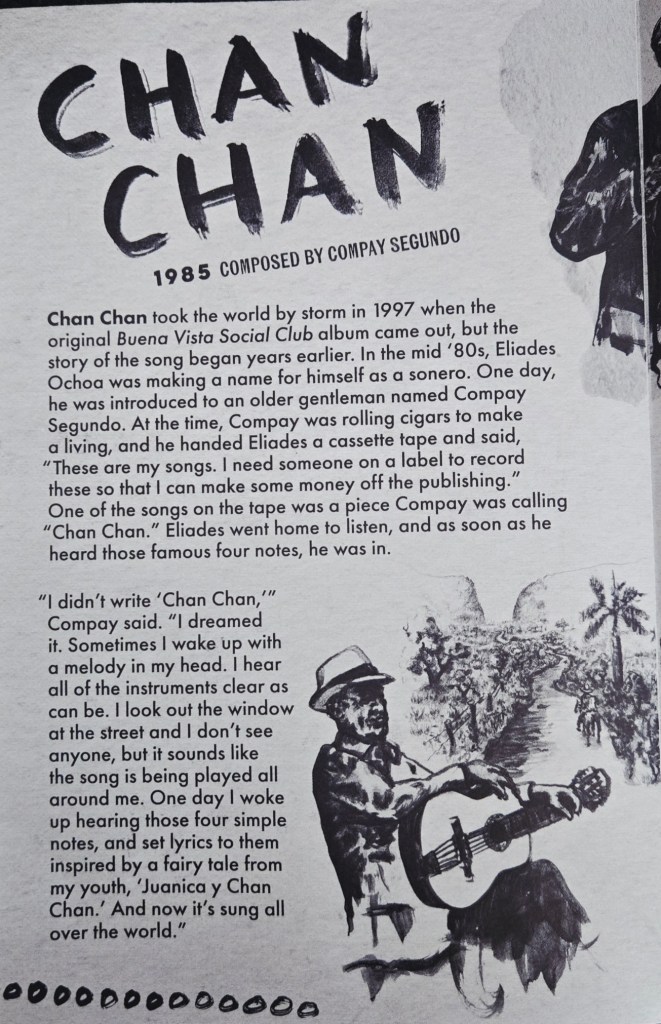
And then there are the Portuondo sisters.  On the eve of the revolution, one leaves for the U.S., in the scene reminiscent of another musical, on seemingly the last plane out of Havana.  The other stays, because someone has to continue to sing the songs of the people, for the people.  The moment when Omara decides not to leave, whether based in truth or in romantic fiction, touched my heart even more than hearing Chan-Chan live.  Some choices we make, some are made for us, some are conscious and based in sacred truth, some are based on the cards we are holding at the time.  Sitting in the Schoenfeld Theatre on a Friday night in July, seeing and hearing this story with all my senses, I both cried for and praised the impossible, life-altering, life-affirming decision[4]. https://buenavistamusical.com/


[1] When we still had PBS…

[2] The Mandela Effect had me believing all these years that Buena Vista Social Club won the Oscar for best documentary.  It did not. The documentary that won that year was “One Day in September”.  Do you remember it?  Me, neither. 
[3] No, Les Miserables does NOT count, because I saw the French TV special first, for those reading [all] along.

[4] I once had a classmate of Cuban heritage.  His father fled to the US during Batista’s rule; his mother, during Castro’s.  He marveled at the idea that had they never left Cuba, they would have never met, being from such different socio-economic background.  The conclusion that I drew from this story, however, was that people flee various regimes for various reasons, not just the ones from which we are taught to believe they do.

Godfather and Me

I had a client once who professed to be a disciple of The Godfather.  He claimed that he read the book daily to gain wisdom.  It was his Bible, or, as they say in Russia (for he was indeed Russian), “table book”—meaning, a book that you keep on your table for daily reference.  He was a product of The Wild 90s—a decade of extreme instability and possibilities back in the Old Country, so no wonder one or both Dons Corleone were his models and ideals.  It was quite a different time in the U.S. in the 90s, where I was focused on building a career and a family in a way that did not involve any bloodshed.  And so, the hopeful young me thought that there were many literary characters much worthier of admiration.
Coming to America (actually, already here, just out and about)

It took me quite a few years to appreciate The Godfather in my own way.  I first saw it as a teenager; my mother must have rented it in her quest to absorb American popular culture (a trend that, at least for her, turned out to be reversible).  I liked it—who wouldn’t—but I did not really “get” it, not completely.  It was certainly a big story, with an iconic score.  At the time of the first viewing, the death of Sonny Corleone touched me the most.  I was no stranger to similar scenes of unflinching and unfair brutality in Soviet cinema.

I am not posting any scenes of murder and mayhem in this family-friendly blog.

Some decades later I caught The Godfather Saga, a spliced chronological combination of the first two movies, when it was once (once!) shown on TV in 2012.  I thoroughly appreciated the sequential flow, and finally jumped on its bandwagon.  Since there were no more movies to be had once I watched the final part of the trilogy, I read the book and all its sequels, including the ones written after Mario Puzo’s death.  Conventional wisdom claims that the film is better than the book.  Nah, it’s just more recognizable.  The book is fine.  However, how that client of mine chose it to be his life primer is still incomprehensible.  What actual life lessons worth emulating did he really learn from it? I always suspected it was so much posturing…

The story and its characters are so ingrained in our culture that I think we just identify with the familiarity of it.  There was even an episode of “Married with Children” literally called “The Godfather”.  I do not remember the plot (nor is it relevant), but there is a moment when Bud, feeling excluded, exclaims that he is not Fredo, it’s Kelly who is Fredo. 

Going through a particularly turbulent time at work, my mind unearthed this memory, and I became mildly fixated on figuring out who I am in the Godfather universe.  Identifying with the hapless Bud Bundy for the purpose of this exercise, and this exercise only, I started suspecting that *I* was Fredo.  Somehow I came to accept the idea of The Godfather as a microcosm of both work and family life where everyone has a cinematic, if not literary, doppelganger.  Surprisingly (Or not?  No, I really was surprised) there are quizzes to tell you what Godfather character you are.  I took several, with the unexpectedly consistent results.  Spoiler alert: I am not Fredo. 

These highly scientific quizzes are based on the movies and not the books.  In the books, Fredo is a thoroughly debauched and deviant womanizer.  He is not, or not just, the stereotypical middle child, overlooked and unable to find his place among the stronger and smarter siblings.  He is simply unsympathetic and unredeemed.  He is most assuredly not an innocent victim—he is basically not a nice guy.  It was tempting to relate to the slightly less harmful, more sad-sack movie version of him for a hot minute while feeling sorry for myself, but fortunately, the feeling passed.

While I certainly do not, not have I ever, identify with Michael Corleone in any of the movies or the books, I quite [over]use the quote “Just when I thought I was out, they pull me back in.”  It has basically become one of my favorite sayings about the state of my career over the past few years.  But it is just one saying.  The rest of his character and destiny resemble mine not at all.

I would have thought I would be Tom Hagen, at least as a professional courtesy, but truth be told, I am no one’s consigliere, no one’s voice of reason, and much more of a perennial ethnic outsider walking along to a funky beat than he would ever want to be.

And so, the big reveal of the quiz is that I got Kay, Michael Corleone’s second wife.  The highly scientific explanation was that I allegedly can be naïve and foolish when it comes to judging others.  That much is true—I have been known to misplace my trust in folks. But who hasn’t?  I protest a lot, but despite my attempts at outward cynicism, I hope for the best—and “hope dies last” is another favorite mantra. 

Kay has always been one of my least favorite characters in The Godfather.  She is just not cool in the romanticized world of the mafia dons.  But, she is also smart, independent, and—this is a big one—not a ruthless killer.  She finds the strength to break with the evil empire and make a new life for herself, and, ultimately, I can relate to that so much more than to anything and anyone else in those movies and books.  It doesn’t change a thing, but even so, I am feeling pretty good about this.  It’s nice to know.
And yet sometimes—sometimes—I cannot help feeling that in the parallel Godfather universe, I am the horse’s head.

Featured

More than Dracula

And then I went to Romania.  It was not on my bingo card in this lifetime.  It was not on my bucket, or any other, list.  In the hierarchy of the Soviet Block, Bulgaria was the most accessible, and there was that personal connection that I already mentioned.  DDR was glamorous and had amazing, coveted toys that sometimes found their way to our stores. Yugoslavia was practically The West.  Poland, Romania, Hungary, and Czechoslovakia were somewhere in the middle, and I never knew anyone who visited these countries. 

The 1980s brought a version of Romania into my own life in the person of my stepfather.  As a teenager going through a trauma that informed her entire life (to which he himself was not a minor contributor), I only listened to his stories on the good days, and those were few and farther between.  He was born when Romania was still a monarchy, and left it for good during the next to last and not even the most brutal decade of Ceauşescu’s reign.
This is what I remember, and there is no one around who can challenge my [faulty] recollections. Like many, his family of well-to-do landowners suffered when the Communists came.  There was a last name change, family separation, exile to a remote village, and the eventual cloak and dagger story of fleeing with his two friends Gheorghe and Mihai (straight out of Romanian central casting) with visas to Hungary which were then altered to get to Austria and with the ultimate goal of defecting to the U.S.  He hated communism with a passion that was matched only by his hatred of everything Russian—and I hope you see the bitter irony in that.  The ‘80s were not great for the Soviet Bloc, and for Romania in particular, though the very end of the decade finally brought the long-awaited relief.  Some of those countries are democracies still…

My BFF of the annual girl trips and I were talking about making the pilgrimage, but somehow it seemed too fanciful.  And then one day, it just didn’t.  I figured, if guided tours were going there, it is no longer the place from which to flee.  I know, I know, it has literally been decades, but those early memories last the longest.   My friend’s grandmother came from Romania, but in a way of turn-of-the-century immigrants, from Transylvania via Ellis Island.  Her childhood impressions of the far away ancestral home were quite different than mine.  What a difference a few decades (and a mad dictator) make!  I am happy to report that she found the Romania of grandma’s stories; I found only a shadow of my stepfather’s.

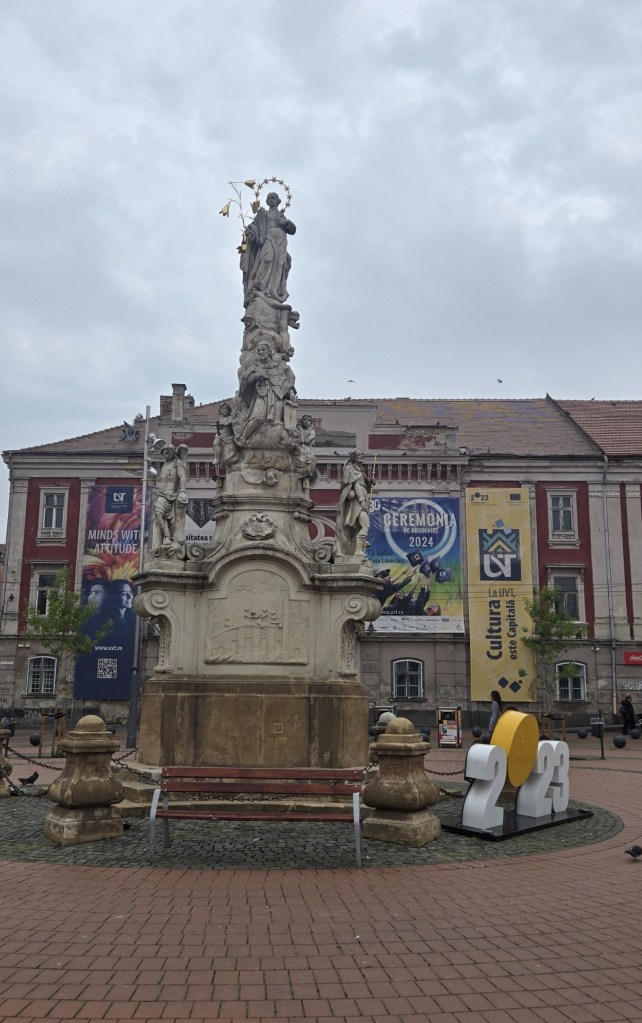
Arriving in the Western part of the country, I saw not even a hint of the dark and depressing past of the previous regime.  It could be that, on a guided tour full of Americans, we were only shown the best parts, but we had enough free time to see beyond any potential Potemkin villages.  Our lovely, warm, spirited tour manager warned us more than once, with just a hint of apology, that we will see some remnants of the Communist times, such as our hotel in Timisoara which, while the best in town, was ostensibly less luxurious than other hotels on our tour (but as for me, I concluded that all the hotels in which I usually stay are apparently “Communist”, including in places where Communists were not known to have made any inroads!).  If this was the only outward reminder of that era, it was truly nothing at all.  Instead, Romania unfolded as a land full of natural, architectural, and culinary wonders.

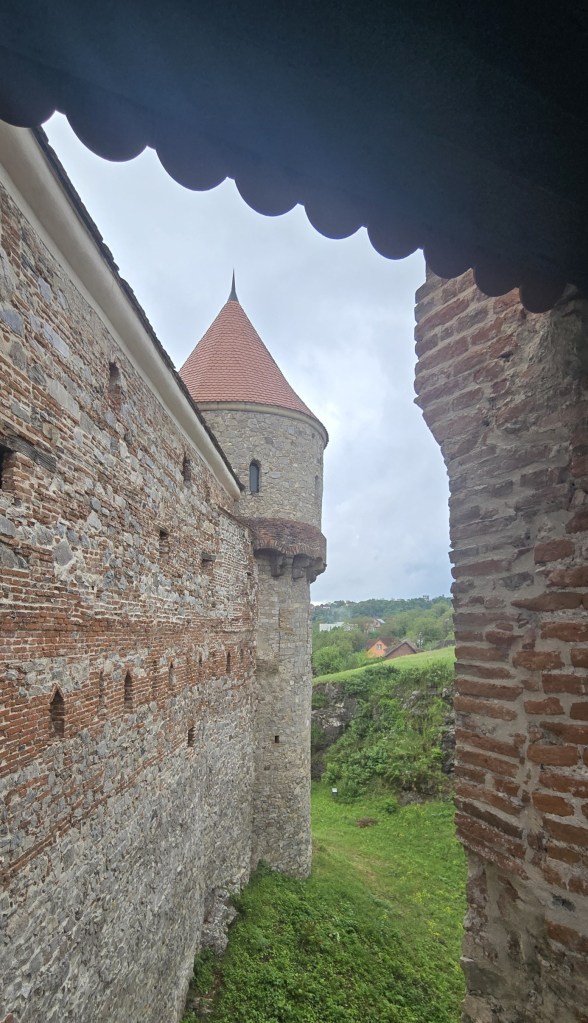
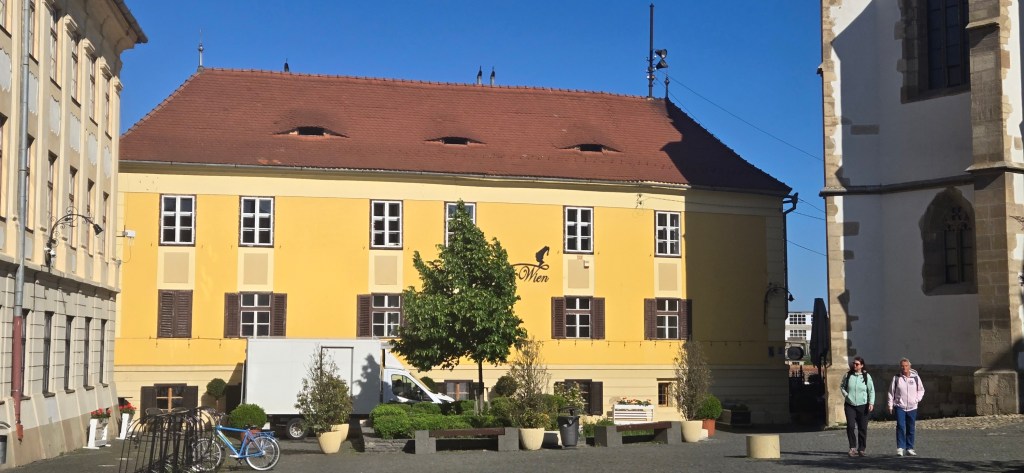
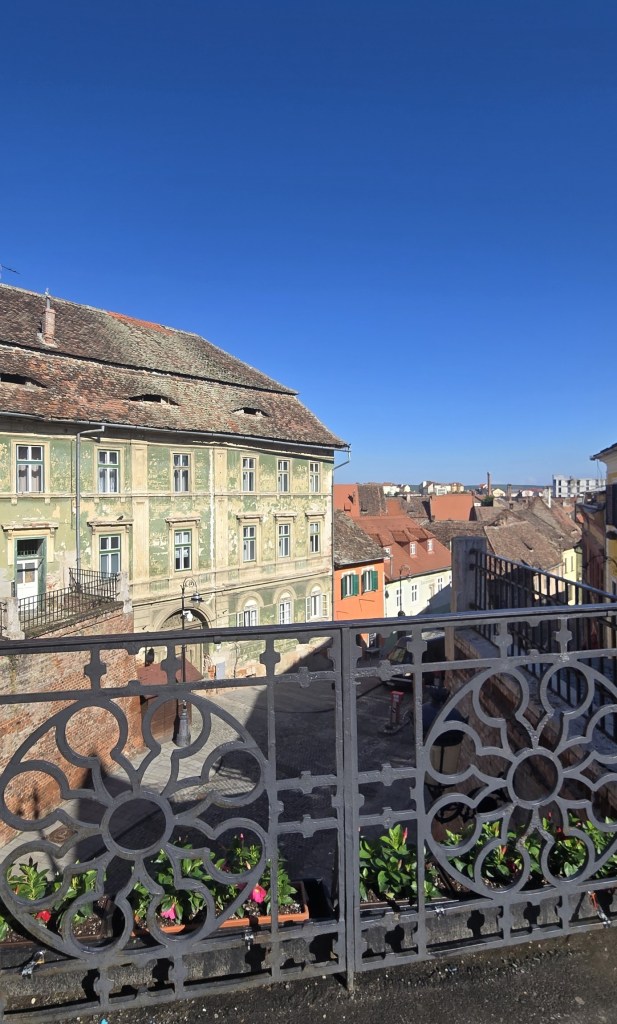
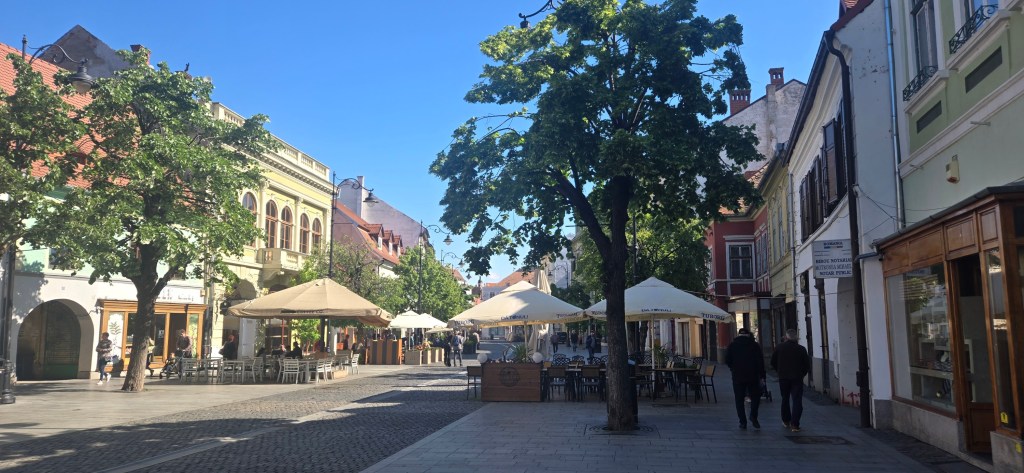
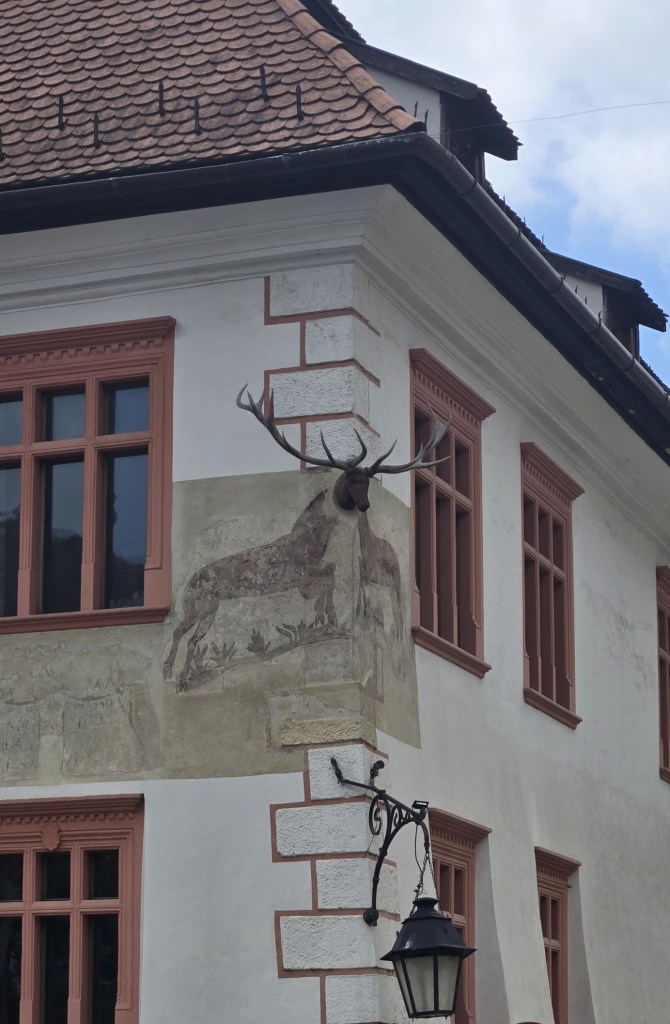
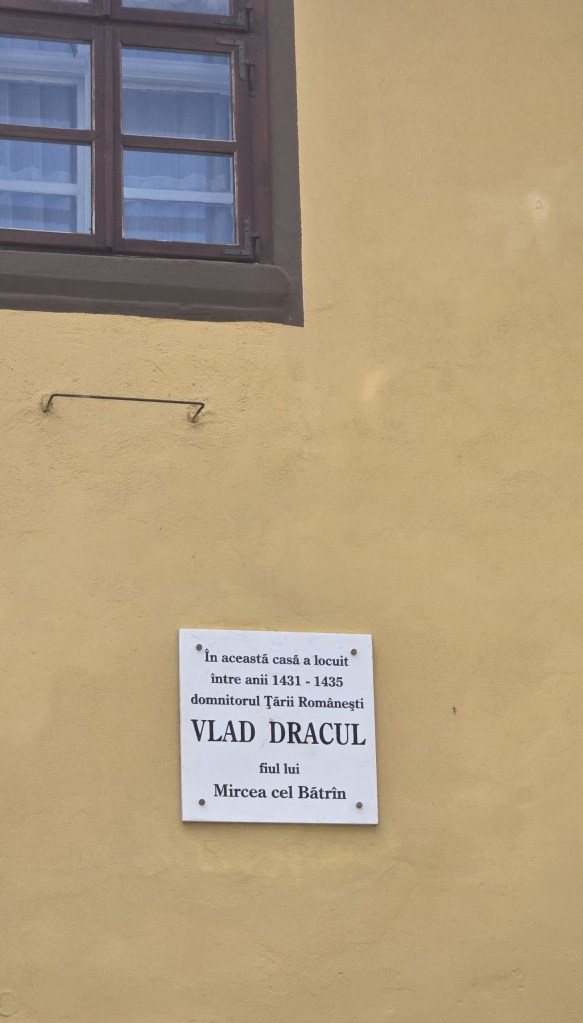
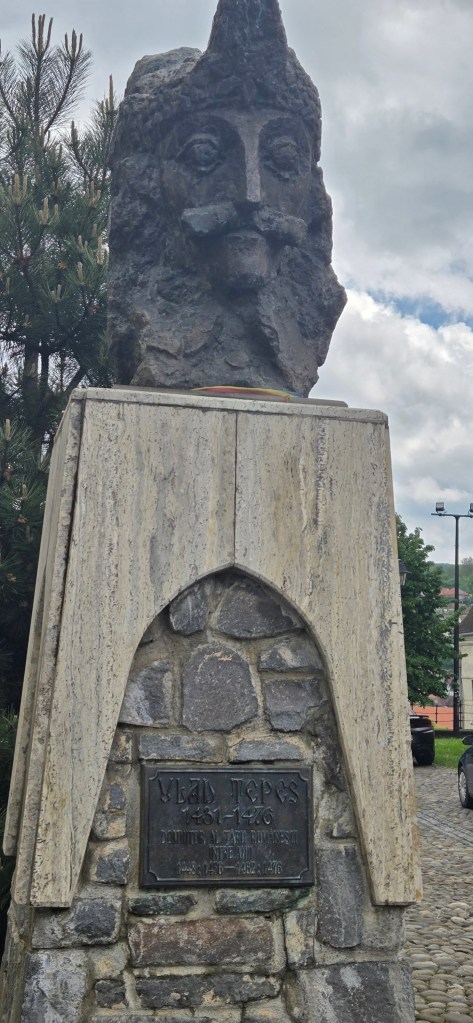
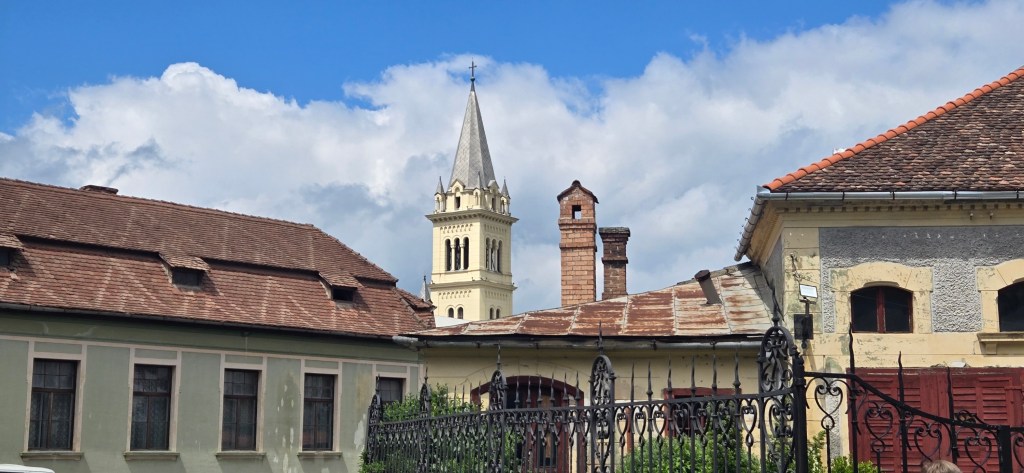
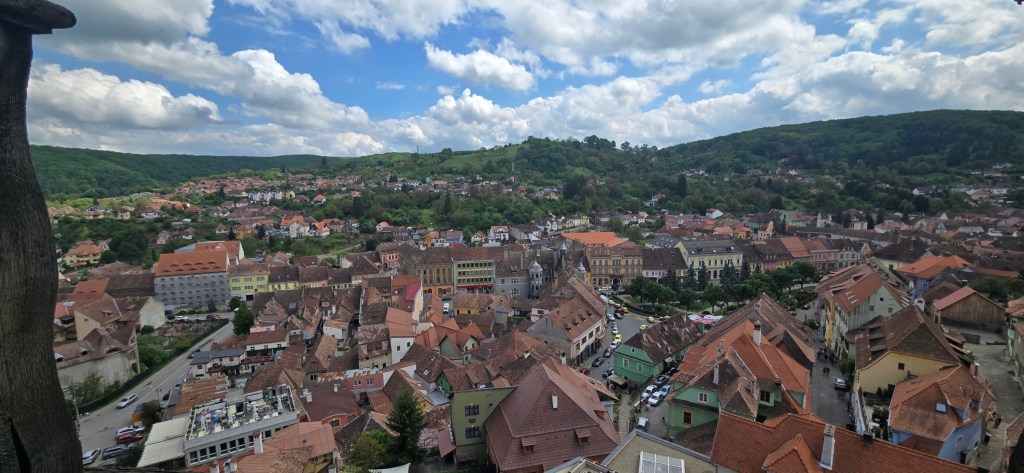
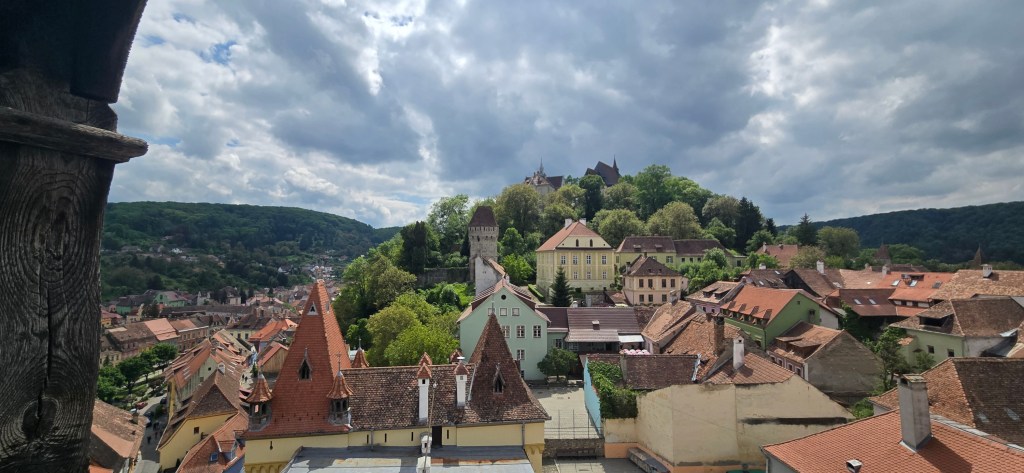
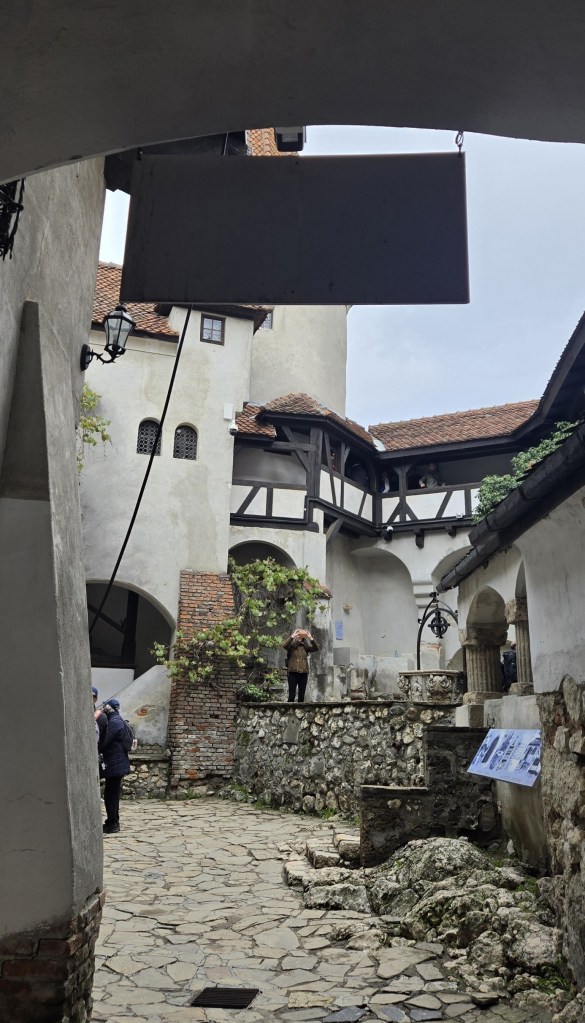
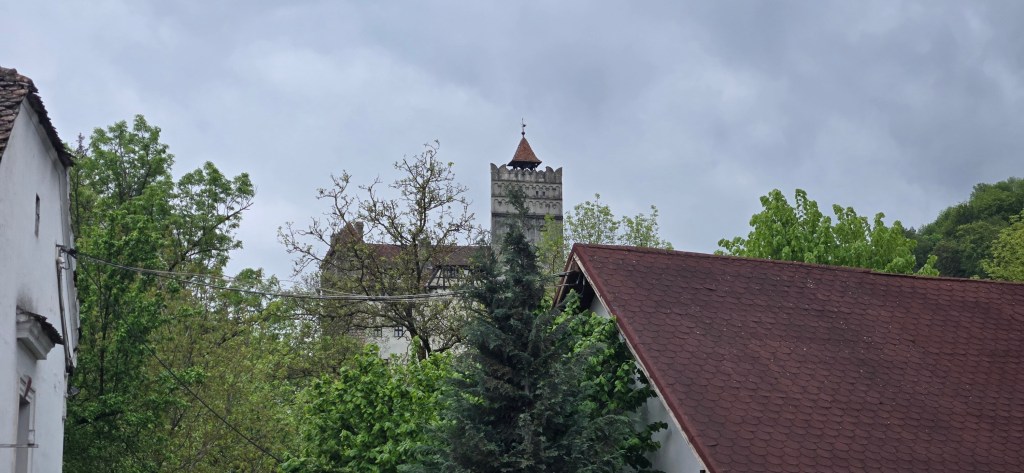
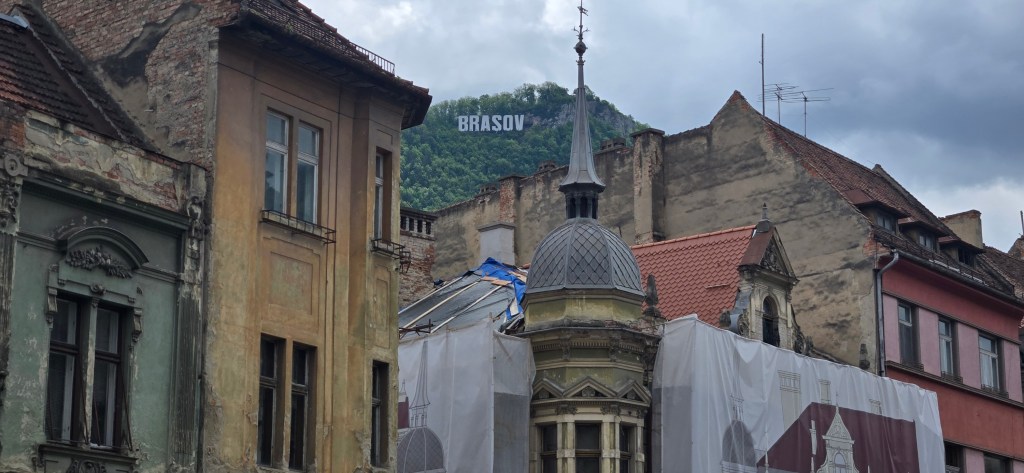
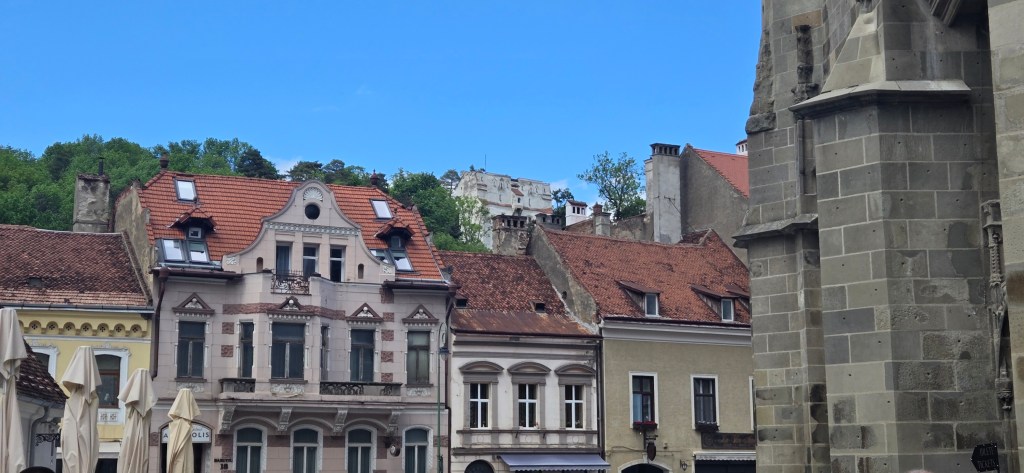
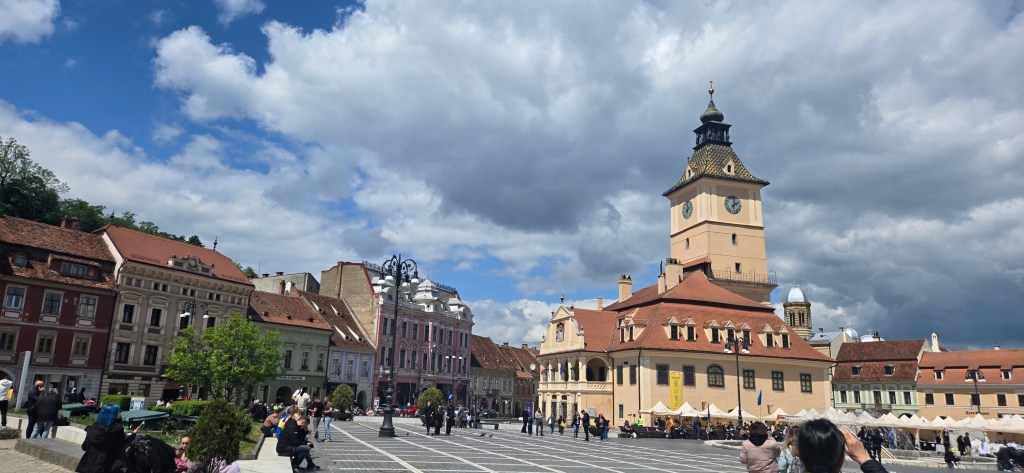
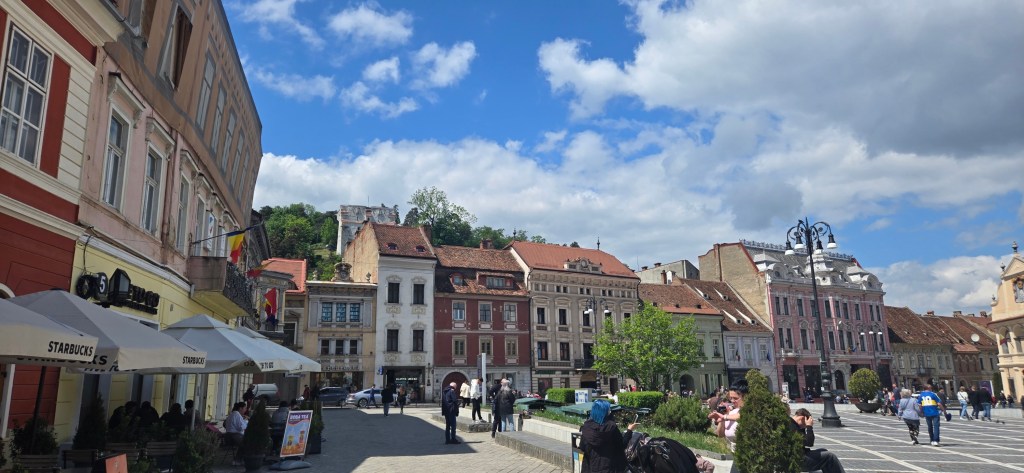
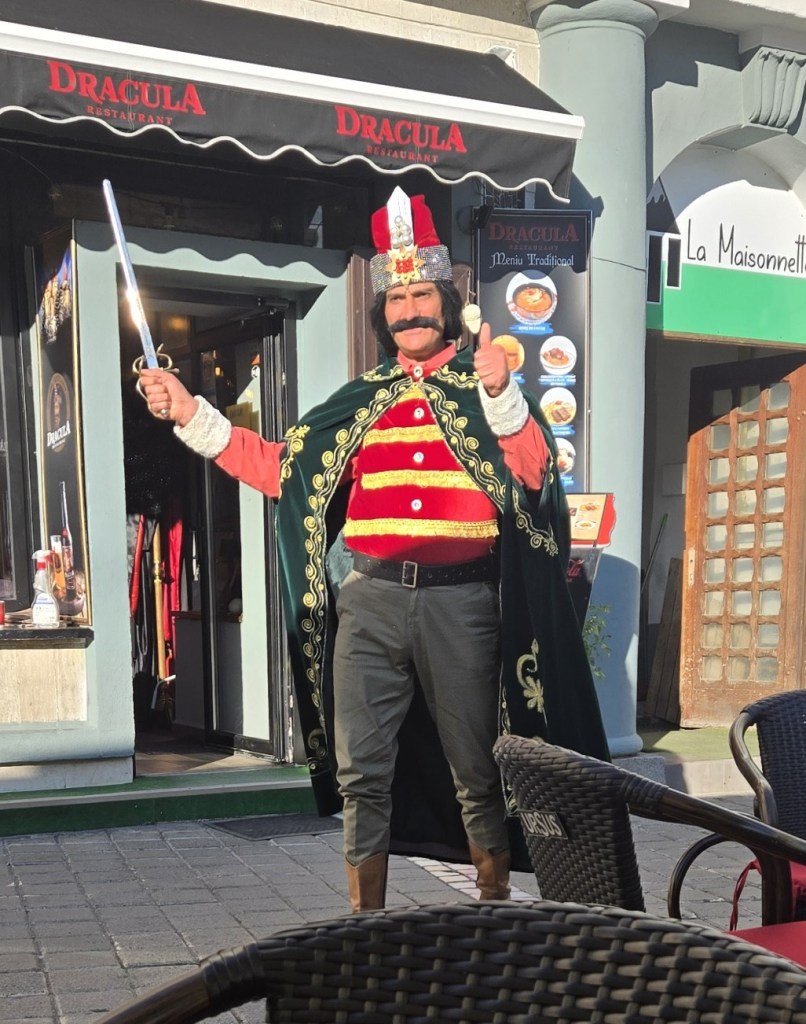
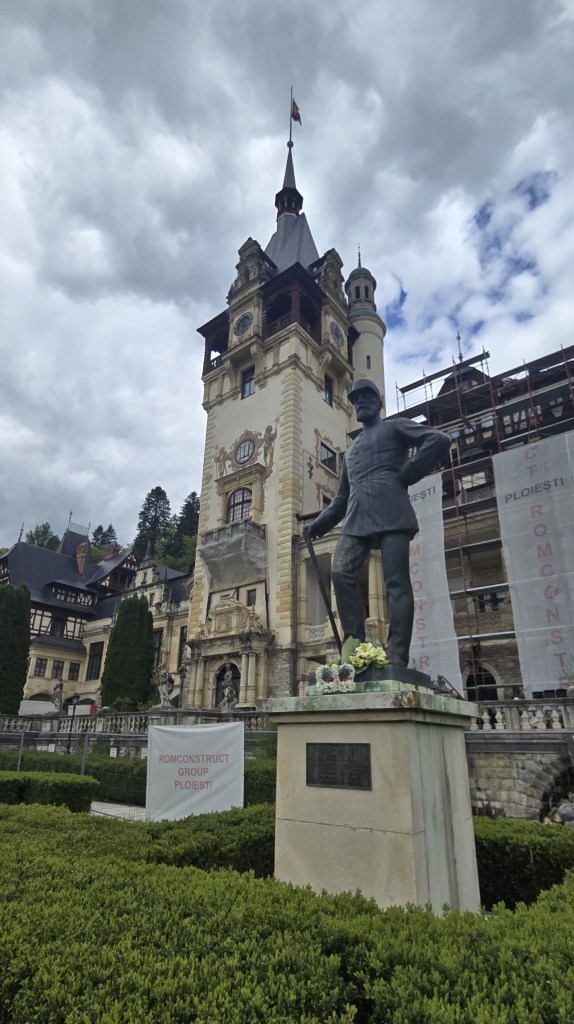
We saw castles: Hunedoara’s Corvin Castle, as intricately feudal as anything France has to offer; Peles, an opulent gem of a palace; Bran, of Dracula fame, both charming and historic and surprisingly unspoiled by its reputation, and towns: Timisoara, where Romania’s present was born, with its three distinct, gorgeous squares; Sibiu, full of small-town European elegance; Sighisoara, with its medieval cobblestone streets and a clocktower with a view that takes one’s breath away; and Brasov, charming and joyous, full of unexpected delights like sampling local wine in a beautiful garden, jubilant Europe Day celebration in a square right below our hotel window, and Dracula himself roaming the streets.  I did not know what to expect, but I did not expect this.  I hate to say “normal”, because what is that, really, but “normal” is the word that kept coming to mind.  After all the suffering, the deaths, the people fleeing into the diaspora, normal would be enough.  But it is more than that.  It’s glorious.  It’s absolutely wonderful.

I did not see the Romania I thought I knew, if vicariously, until we reached Bucharest, and even that took a minute, for we arrived on the weekend, when the central street of the city, Victory Avenue, was closed to traffic for a kind of an extended block party.  People were promenading, music was playing, food was being served everywhere, and it felt like the whole city was out and about, enjoying a warm Sunday night.  The memories flooded the next day, with our walking tour.  Just steps from our hotel was the Revolution Square.  Our guide was telling us about how the dictator would speak from the balcony of the building of the Central Committee of the Communist Party, and my heart just broke.  To the rest of the group, most older than me, these were just words of unfamiliar history, a curiosity.  To the guide, a man younger than me, it was his entire childhood.  We spoke briefly; we understood each other viscerally, survivors of the tangentially shared past.   This country has been through so much, and so recently, and you would not even know it unless you knew for what to look—and listen.  A quarter of a century under a dictatorship, under a cult of personality, all those lives lost or irreparably damaged…  The mind boggles that anyone would choose, or even just flirt with, tyranny as a form of government, but the extra heartbreak is that people do not learn from the lessons and losses suffered by others.

My stepfather and I had a complicated relationship all the way until his death at age 56.  In the grand scheme of things, he died less than a year after Ceauşescu, and never saw this version of Romania that I just did.  And that makes me more than a little sad, for everyone deserves to see their homeland thriving and free.

Featured

Thank You for the Alphabet!

We had a saying back in the day, “Chicken is not a bird, Bulgaria is not abroad” (sounds better in Russian).  It meant no real disrespect; I am certain it came from a place of envy.

Everyone I knew had one of these little bottles with rose perfume

A close childhood friend of mine lived in Bulgaria with her parents until her father, who was stationed there, died in an accident, and she and her mother returned to our provincial town and our quiet little street.  For years, they would be visited by Bulgarian friends who spoke lightly accented Russian and brought amazing toys and delicacies.  I heard so much about it in my childhood that I felt like I kind of sort of knew it. 

And lokum, this most delectable of desserts!

Bulgaria seemed like us but better.  The people looked, spoke, and dressed a lot like us (though, of course, more fashionably), but were friendlier, less care-worn, just brighter somehow. I imagined their cities were cleaner, and of course the stores were full of treats.  We were supposed to be the biggest, the best, and the most powerful country in the world, but according to numerous accounts from these real people, they had more of everything.  It was a paradox that remained unresolved in my childhood.

Finally coming to Bulgaria, after imagining it for decades as a fairy tale land of plenty, I found that counterlife I never really lived.  So far away and so long after my childhood, I take the concept of plenty entirely for granted.  Instead of being excited by the exotic otherness that I would have expected to see as a child, I was touched by the occasional glimpses into the past.  The trams and trolley buses.  The tree-lined streets with slightly uneven pavement.  The post-war Soviet-style buildings.  The city parks with benches full of people just hanging out on a warm spring evening.  The onion-domed Orthodox churches.  And everywhere, the signs in Cyrillic. 

Coincidentally, Sanaz Toossi’s Pulitzer Prize winning play “English” is currently nominated for the Best Play Tony Award.  I saw it performed locally, and sobbed through the whole thing.  One quote stays with me: “When I speak English, I know I will always be a stranger”. I have been a stranger in a strange land for decades.  I speak a foreign language in my home, to my children.  I do not know Bulgarian, but just the cadence of it and the occasional words I could pick out in this native-adjacent language was music to my ears. And seeing familiar letters everywhere, effortlessly reading signs, just absorbing the words, well, that was balm to my eyes—and my soul.  Thank you for the alphabet, Bulgarians Saints Cyril and Methodius!

National Library named after Sts. Cyril and Methodius, naturally

As soon as I arrived in Sofia, I went for a walk that was both purposeful, soaking it all in, and aimless, just wandering the streets and searching for the memories of that parallel childhood.  Walking on the Tsar Osvoboditel Boulevard, taking the slight curve and suddenly seeing the National Assembly building with its tri-color flag, I almost mistook the green stripe for blue.  I could have been in Moscow (had I ever wandered around Moscow on my own—I never have).  It could have been 1972 (if one ignores the modern cars zooming by).  Everything was both larger than my own hometown (for Sofia, after all, is a capital, while I come from provincial backwater), yet small enough to feel familiarly nostalgic. In short, just as I dreamed it would be…

I wandered through the lovely City Garden, and came upon the beautiful neoclassical building of the National Theater named after Ivan Vazov where I saw a poster for the upcoming production of none other than “Rosencrantz and Guildenstern Are Dead”.  How I wish I could have seen it there! 

This mix of green spaces, cheerful fountains and colorful flower beds, elegant pre-war buildings on cozy streets and imposing post-war ones on wide avenues, it was all so recognizable from another place and time.  Vitosha Boulevard, the lively pedestrian street with rows of stores and outdoor cafes was the one place that stood out as belonging strictly to the Western, European Union present.  We had nothing like that during the Soviet era.  And even that was heartwarming, a confirmation (as if I needed one) that there is no stagnation, life marches on, and new and wonderful things continue to happen. This is not just an imaginary country of my childhood, but a thriving, vibrant, warm and beautiful land of dynamic present and promising future.

And speaking of Tsar Osvoboditel (Liberator), none other than Alexander II of Russia, who freed Bulgaria from the Ottoman Empire:  my great-great-grandfather fought in his army.  I do not know if he fought in the battles for Bulgarian independence, but I choose to imagine that he did.  I do know that the fact that he was “Alexander’s soldier” decided my family’s destiny, for it enabled him and his descendants, including my beloved maternal grandfather, to live in Russia proper, beyond the Pale of Settlement.  So I have feelings of gratitude to Alexander II that are at least as warm as those that Bulgarians still seem to harbor.   In Russia, he earned his moniker for the emancipation of the serfs, but in Sofia, his impressive monument bears the inscription “To the Tsar-Liberator from grateful Bulgaria”.  He seems to have been the last of the decent ones, as far as Tsars go.

I only spent two days in Sofia, two glorious, beautiful sunny days at the beginning of the longest vacation I have taken in my adult life (10 days).  If I never make it to the land of my actual childhood, I know where to look for a substitute.

Featured

Midsummer Magic

Without any effort—or, indeed, desire—on my part, “A Midsummer Night’s Dream” has recently emerged as the Shakespeare play I have seen most often live on stage.  From some initial encounters ranging from indifferent to downright embarrassing, our relationship has grown and developed into one of admiring understanding.

My favorite among the comedies was always “Twelfth Night”, simply because I saw a televised version of it as a child.  The bumbling duo of Sir Andrew and Sir Toby impressed me the most, and remains my favorite pair of comedic incompetents in the entire canon.  As for “Midsummer”, we did not meet until I was in college. 

I saw several productions over the years, from my beloved Stage West Theatre in Fort Worth to the Stratford Festival in Canada.  Most of them were competently entertaining if not affecting.  Let’s face it, the young lovers’ plight and predictable resolution is not what makes this play so popular; it is Bottom and Co. and the fairies.  And here is where it usually lost me—I have never really enjoyed them as characters on stage.  I have always felt that so much effort goes into the fairies, their costumes, their makeup, their habitat that every else kind of gets lost in the forest, pun intended.  The set is too green, or too blue, there is too much mood lighting, too much gauze/glitter/sparkle/fog/flutter of wings, etc.  I think there is temptation—not entirely surprising—to just get overwhelmed by the external while putting on a play that involves the magic realm.  If I remember nothing else from some of the productions of “A Midsummer Night’s Dream”, I remember a lot of shrubbery and a lot of wings.  I never actively disliked it, but neither did I seek it out. 

Not sure who gets the credit for this photo; it was shared with me by a cast member. Hippolyta/Titania and Theseus/Oberon.

So imagine my surprise when, in a fancy suburb of Chicago which I have distrusted since that fateful day when I visited a client there and could not find my way back. https://oldladywriting.com/2021/08/08/bad-day-in-chicago/  Spoiler alert: Napierville redeemed itself with the most imaginative and heartfelt rendition of “Midsummer” I ever had the privilege of enjoying.

A Midsummer Night’s Dream – BrightSide Theatre

Aside from the quartet of young lovers, who just basically do their thing, the characters in this production are familiar and yet somehow new.  In a smaller theater, with a thrust stage and actors occasionally breaking the proverbial fourth wall, you cannot help but feel part of the story.  But in this version, the relatability is more than a function of proximity.  Theseus of Athens and Hippolyta of the Amazons are played by the same actors as Oberon and Titania, and their attendants in the opening scene also morph into fairies and back again.  Grounded in the corporal world, the fairies are certainly creatures imbued with supernatural powers, but, human-presenting, albeit gorgeously and colorfully costumed, they convey the message that magic is in and all around us.  This double casting, for me, creates a more tightly knit, unified story that is more than just a series of connected plots.  Regal Theseus’ humanity never leaves Oberon, wry elegance of a courtier stays with the mercurial Puck, and Hippolyta is both proud and hopeful as Titania.  So powerful is this bond between the two worlds that I am not sure I ever want to see “Midsummer” again where these roles are *not* played by the same actors.

The play’s funniest scene, when the indomitable troupe of rude mechanicals perform the ill-rehearsed and even worse-written “Pyramus and Thisbe”, is as hilarious as anything I have ever seen.  Peter Quince’s earnestly overwrought introduction, Tom Snout’s exasperated attempts to focus “the wall” on Nick Bottom’s pompous meanderings, Robin Starveling’s laborious attempts to handle two objects at once, and Snug’s brave overcoming of stage fright as the gentlest of lions are all full of humor that never spirals into caricature.  In this production, you root for everyone, even the overly confident yet somehow endearing, wide-eyed Nick Bottom.

I am that pedant who pays attention to and gets distracted by false notes in costuming. This “Midsummer” did what I have seen once before in another play and remembered forever.  It starts in monochrome and gradually becomes more and more colorful.  It is not just that Athenians appear in shades of gray and citizens of the magic realm are in color.  It is not just that Theseus goes from somber black as a ruler of Athens to royal purple as the ruler of the magic kingdom.  The young lovers also gradually transform from gray business professional attire to red and blue silks and lace.  With each exit and entry, I was anticipating the next development of the costumes (and coveted some for myself!).

As for the set, absent are the usual overpowering prop trees and astroturf.  Truly, they just bog down the text and the action (I always knew that).  Instead, there is an abundance of confetti, in all shapes and sizes, and strewn about in every way, including through cannons, which creates an atmosphere of joyful celebration.  And original music written for this production adds another layer of enchantment and lyricism.

Finally, there is *that moment* that transforms everything https://oldladywriting.com/2021/05/25/who-tells-your-story/.  Francis Flute, a mass of nerves as he should be, suddenly loses the high-pitched voice and simpering manner and delivers Thisbe’s farewell speech to the “corpse” of Bottom with the heartfelt pathos of the finest tragic heroes.  I would like to have said that there was not a dry eye in the house, but that would not have been true—still, a hush fell over the audience, and that is no small feat for this play and for this scene.

It never ceases to amaze me how, while staying true to the text and the plot, some productions of Shakespeare’s plays find a truly unique voice.  I give credit to The Bard, of course, for his words are timeless and multilayered.  But I also have to give great credit to the immensely talented team that brought the old story to live in this particular, extraordinary way.  If you are anywhere near Chicago for the next couple of weeks, see this show, before it disappears like so much fairy dust…

Featured

Tartuffe, Impostor, Hypocrite

To mention, let alone stage, “Tartuffe” (or “The Impostor”, or “The Hypocrite”) in these turbulent times is almost too obvious.  There is nothing I can say about this brilliant enduring satire that scholars of history and literature have not already said with significantly greater insight.  I will just leave this quote here from the program from the best production of this play that I saw in Stratford in the summer of 2017 (and we thought times were turbulent THEN…):

“Tartuffe” was the first adult play I ever saw live.  It was also the only adult play I saw as a child in the Soviet Union, in our externally beautiful, internally uninspired, historic Volkov Theater [https://oldladywriting.com/2020/07/26/all-my-world-is-a-stage/].  Credit goes only and eternally to Molière (and to the translator, whoever he was[1]) that this experience did not sour me on either live theater or French literature.  That my enduring love of both has shaped my life is something that could not have been anticipated from that first chaotic encounter.

“Tartuffe” came to town when I was maybe 11, and my mother decided that this will make a fine mother/daughter afternoon of culture.  We had fewer such opportunities than one would expect, for reasons that are many, varied, and complicated, ranging from familial to societal.  Everything that pertained to cultural development in my childhood, every museum visit, every book about art, came from my mother.  I cannot bear to think what my early childhood would have been had we spent less time together, but I used to often wonder what it would have been like if we had spent more.  And this is most certainly a story for another time. 
In order to prepare for this momentous event, she decided that we will read the play aloud together.  It was a great idea.  I still remember the first lines spoken by Mme Pernelle to her maid Flipote and Elmire’s response, that opening scene that sets the stage long before the titular character makes his entrance .  To me, they are like the iconic opening bars of a musical.  We took turns reading it aloud, sitting on the stools in my mother’s kitchen.  It was pure joy: the relatable characters with fun names, the dialogue alternately wacky and clever, the ultimate victory of sane minds and loving hearts over liars and cheats.  After “Tartuffe”, I read the rest of the plays in the Molière “greatest hits” collection, and liked them all, but none had a lead character as deplorable and deserving of retribution as this one[2].  It aged extremely well, from the day it was written to the day I read it a little over three centuries later to our tense present. My oh my, plus ça change…
And then came the actual day.  I do not remember the time of year (but choose to set it on a beautiful springtime day) or what I wore (a good sign; I hold enough grudges from my childhood for not being able to choose what to wear on a special occasion).  I remember arriving and heading straight to the theater buffet for a glass of sparkling lemonade and a “basket” pastry.  (For how much I keep mentioning this pastry, I should just make it already—there are recipes online.  Of course, I fear it will not be as amazing as I remember it from childhood.  Nothing ever is.)  My mother cannot be credited with coining the phrase “eat dessert first”, but can definitely be trusted to always do it.  It was a matinee, the buffet was not crowded, and we enjoyed our pre-show treats before proceeding without undue hurry to our seats.  At which point we discovered that we arrived an hour late and missed the entire first act, Mme Pernelle’s opening speech that I memorized being the first, but by far not the only, casualty.

To be honest, I do not recall feeling particular distress at that moment.  I was happy to have enjoyed a pastry, and I did not expect much from the spectacle, for I have been to the Volkov before on school field trips.  Its reputation at the time was consistent with everything else in our stagnant provincial town.  We sat way in the back of the orchestra, under the balcony, a terrible spot in any theater.  Either the acoustics or the actors themselves were lacking, but we had trouble making out what was going on; the words were completely unintelligible (and this was back in the days when my young hearing was very keen, so if I could have heard anything, I would have).  And thus the second act passed in a haze of confusion.
After the second intermission (first for us), my mother, determined to see and/or hear the rest of the play, searched for better seats.  Fortified with more treats from the buffet, I was game.  We spotted an empty opera box and moved in, feeling pretty pleased with ourselves.  We actually started to enjoy the final act when the door behind us opened and two guys in their 20s rolled in, looking and smelling like they partook of something stronger than sparkling lemonade at the buffet.  Checking their tickets with some incredulity, they asked if these were in fact their seats.  My mother barked that the seats were ours, and they meekly retreated, presumably back to the buffet.  We felt triumphant.  It might not seem like much, but it was a perfect coda to a memorable and fun afternoon to which the play was merely an atmospheric backdrop.

I do not expect that I will live to see “Tartuffe” again performed in the language in which I first read and loved it, but I would like to someday experience it in the language in which it was written, the original words I studied in college, in the House That Molière Built, where it is allegedly the most produced play (where so far I only keep running into “Cyrano de Bergerac”). 

P.S.  About translations:  I am of the opinion that French and English are not entirely compatible when it comes to literature.  Established translations, to my ear, do not convey the lightness of the original—yet some modern translations are too colloquial to retain that time and place that is unmistakably Molière.  I have seen some adaptions of his plays that were competent, yet unrecognizable, although for “Tartuffe”, I prefer the crisp, sparkling translation by Ranjit Bolt to Richard Wilbur’s staid and stolid one.  This was the translation used in the 2017 production mentioned above.


[1] In this particular case, it was someone by the name of M. Donskoy.  I give credit where credit is due.

[2] What were the other plays in this collection, you ask? About what you would expect:  “Don Juan”, “L’avare”, “Le Bourgeois gentilhomme”, “Les Fourberies de Scapin”, and “Le Malade imaginaire”.  I saw a televised Moscow theater production of  “Le Bourgeois gentilhomme” as a child, and never forgot the hilarious part where M. Jourdain discovers that he has been speaking in prose his entire life.  Coincidentally, this play remains one of the few on my theater bucket list—I have not seen it live to this day.

Featured

Lyon and Environs

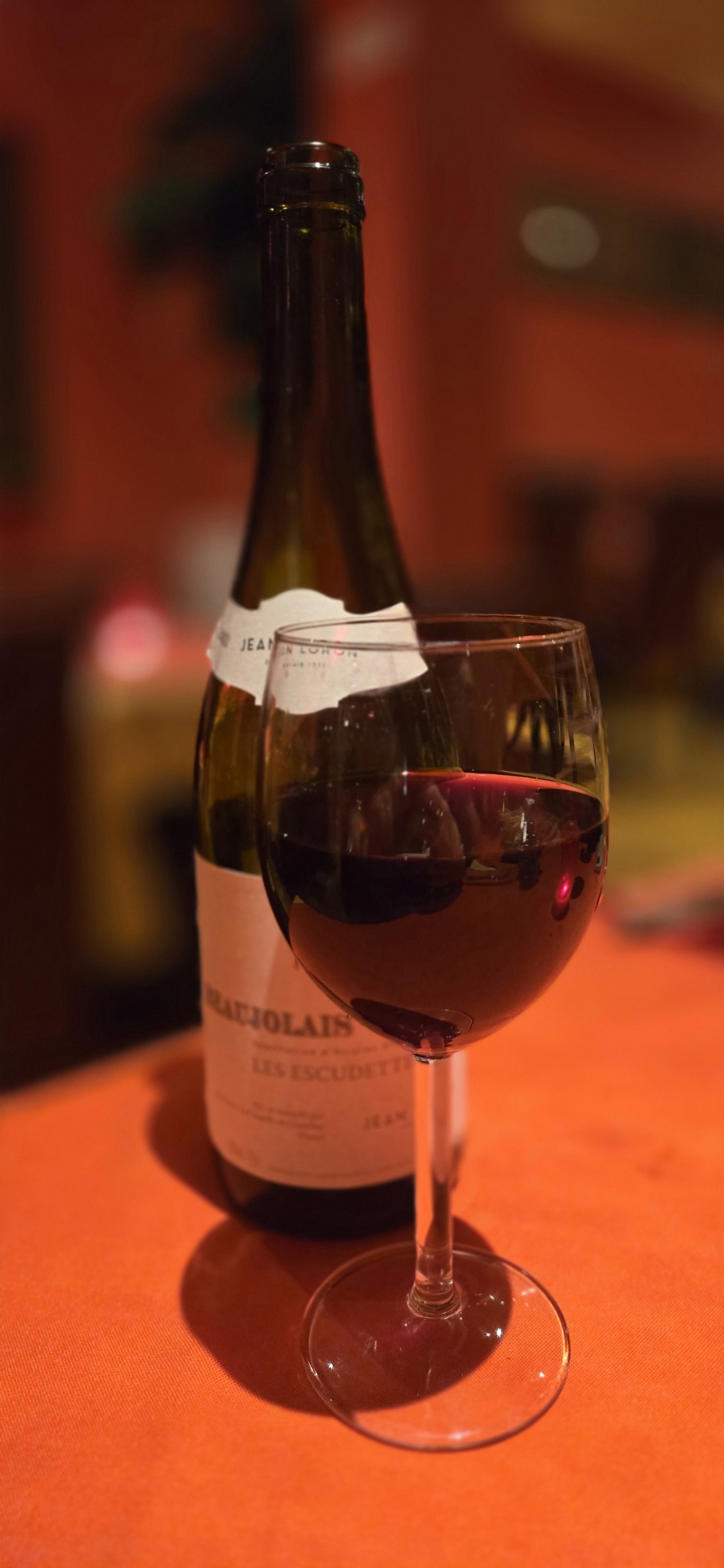
After discovering Beaujolais Nouveau on a trip to France in 2017, followed by some social-distanced celebrations on the Third Thursday of the Eleventh Month during The Plague Years, I decided to add the visit to this annual event, Les Sarmentelles de Beaujeu in the heart of the wine region, to my bucket list.  Spoiler alert:  I was saddened, but not entirely surprised to discover that my wine and charcuterie consumption has a limit.  No, I will not tell you what that limit is, because it is kind of embarrassingly low.  In any case, even before the trip, I correctly guessed that merely drinking copious amounts of wine will not be enough for a European vacation—and decided to add the heretofore unknown to me the city of Lyon to my travels, due to its proximity to the festival.

For reasons that are passing understanding, quick online research resulted in a portrayal of this city as crowded and crime-ridden, with traffic jams for days.  This gave me some measure of anxiety, despite the fact that I (1) drove in Munich on the opening weekend of Oktoberfest, (2) drove in Scotland, (3) drove and lived in New York City, and (4) you know of some of my other more colorful misadventures, including being attacked by monkeys.  I discovered Lyon to be just what I expected (once the sane voices in my head, including that of Rick Steves, prevailed), a lovely French town with rich history and interesting food.  Here are some highlights:

The food.  Lyon certainly has its own gastronomic style. I will try anything once.  Once.

Andouillette sausage: Our very first meal upon arrival was to order sausages, Lyonnais and Andouillette.  I just knew “sausages”, and how bad can they be?  I do not eat them at home, they are gross to me, but I enjoyed them in Germany.  And with all the emotional and historical baggage set aside, I have to admit—Germans do them best.  Lyonnais was covered in mustard, which was fine.  The other one was made of tripe.  I am sure Rick Steves warned me, but I forgot. (Also forgot to take a picture of this delicacy; probably for the best)

Brioche praline:  I am not a fan pralines.  It is the texture for me.  I was raised by dentists, and have bad Soviet-era teeth, so I am forever conscious when crunchy things come into contact with them (although the biggest villain in my dental saga turned out to be Laffy Taffy—took one of my crowns clean off).  Spouse and I watched people with intriguing colorful packages walk by, and were determined to try whatever extremely popular item they contained.  The actual store turned out to have a line to enter snaking for almost a block.  We demurred, but managed to get in the next day during a slow time.  Having bought the small brioche (which was still quite substantial), we parked ourselves on the nearest bench, in the courtyard of St. John Cathedral, and eagerly unwrapped our package.  It was as expected.  Brioche would have been fine without the pralines.  It would have been better with coffee.  My advice is, get the coffee, and leave this thing alone. 

Pike dumpling:  I read that one of the Lyonnais delicacies is dumplings.  I was as game for that as I am for everything else.  I love baos.  I expected a stuffed bun.  I got something completely different.  It took me a bit of time to figure out that the word is not “dumpling” but “soufflé”—confusing, because “soufflé” is literally a French word, so why not use it?  So I basically got a fish soufflé.  It was very airy and delicate and not fishy (and I do not say “fishy” like it’s a bad thing), and I enjoyed.

Cervelle de canut:  It is a creamy cheese spread with herbs and spices, a bit tart courtesy of added vinegar.  To me, it was a less salty, less chunky version of the Austrian Liptauer spread, with which I am more familiar.  Basically, “creamy”, “cheese”, and “spread” are three words that go together in the best possible way. Speaking of three words that do NOT go together, I have not tried Salad Lyonnais.  Bacon, egg, and lettuce together is neither my idea of a good time, nor does it seem interesting enough for a vacation meal. Sorry not sorry.
Kir:  It seems that every region in France has its own take on this drink.  I love it in every variation, which is ironic, because I hate black currants.  When I was growing up, I loved the delicate white and red currants, but always found the thick-skinned black ones a bit too aggressive.  Crème de cassis, however, is delicious when diluted with champagne to make Kir Royale.  In Brittany, I discovered Kir Breton, which substitutes apple cider for white wine.  In Lyon, they unironically serve up Communard, with red wine in place of white.  Next time I host a party, I need to offer a flight of Kirs.  I just came up with this idea, and hope I will not forget it.

Murals: Lyon has a lot more to offer than just eating and drinking, and one absolutely amazing feature of the city is its murals—specifically, the trompe l’oeil kind.  I was really only looking for that one that is in all the tour books and pops up on social media whenever one sees anything about murals, Le Mur des Canuts (“Wall of the Silk Weavers”, the largest mural in Europe), but the handy paper map that we got at the hotel listed a few more, and so we went on a quest.  The best part of this kind of treasure hunt is that, because they are on outside walls of random buildings, they just sneak up on you.  You walk along, and there is a fake cat on a windowsill, or a fake windowsill, or a fake window.  After a while, you start questioning every door—is it real?  Is it just painted on?  Special mention goes to the Diego Rivera Mural which even has a small part that replicates the magnificent Detroit Industry Murals, as well as a portrait of Vladimir Ilyich Lenin; I sure recognized his familiar face.

Lumière museum—In college, I took a couple of French cinema classes, including during my very first trip to France for my semester abroad, so the Lumière name was familiar to me.  This is not a French cinema museum (there is one in Paris, also very cool), but specifically, a museum of the Lumière family legacy and the early days after the invention of the cinematograph, in their actual villa.  Auguste and Louis were brilliant scientists, businessmen, and artists, and the world has not been the same since they were in it.

For the rest of the sights, the other museums, cathedrals, etc., check out a reputable tour book and do not trust the keyboard warriors—and I am unanimous in that.