Another Turkeyless Thanksgiving

I have disliked Thanksgiving before it was politically correct to dislike it.  Well, technically, that is an exaggeration, but the warmest emotion I ever felt toward it was indifference with a tinge of bafflement.  And by “Thanksgiving” I mean the actual celebration and trappings thereof; I always have, and always will, welcome and support the idea of a four-day weekend.  In fact, the four-day weekend is one of my most aspirational career goals.  But I digress.

Of all the big American holidays, Thanksgiving was easy for my mother to embrace during our early immigrant years because of its secular nature and a very specific, mandatory, and exotic (to us) menu.  Paradoxically, these are the very same attributes that eventually turned me off it.

For me, it has been a struggle to celebrate something to which I am not connected emotionally, religiously, or traditionally.  The holidays of my childhood were deeply rooted in the Soviet calendar, the May Day with its first blooms of spring, the Victory Day with its patriotic pride, the October Revolution (celebrated in November during the fall break, so kind of like the long weekend of Thanksgiving).  And then there were the traditional ones, New Year’s Eve conflated with Christmas, a kind of two-for-one complete with Grandpa Frost, gifts under the decorated evergreen tree, but also champagne and a glorious feast at midnight, Cheesefare disguised as Rites of Spring, and some very low-key, irreligious and food-focused Easters and Passovers.

And thus, Thanksgiving did not offer me anything from the very beginning.  When I first watched Macy’s Parade on TV, it seemed chaotic and pointless.  I was used to parades in which you walk, with classmates, with family, with balloons, banners, flowers, and it’s a party.  Watching giant things float is faintly anxiety-inducing to me.  The bland menu as well is almost opposite of comfort food, especially the turkey stuffing, which remains incomprehensible to me.  My spouse enjoys pumpkin pie, and I can make a good one, but making a pie out of pumpkins continues to persist as an alien construct.

My first distinct memory of this holiday is, fittingly, one of attempted avoidance.  My senior year of high school my mother and stepfather went on a cruise, taking advantage of the long weekend—a practice I later wholeheartedly embraced.  I was left home alone, having just turned 17 and anticipating four days in the company of my VHS tapes and Little Debbie snack cakes.  A caring friend was absolutely appalled at the idea of me spending the holiday alone, and took me to a large family gathering at her uncle’s farm.  It was a very nice time, and her kindness stayed with me.  This scenario played out again the following year, with different high school friends.  It was my first year of college, my parents were far away, and being enveloped in the warmth of a family that was not mine, and thus non-judgmental, remains a cherished memory.

For the rest of my time in college, Thanksgiving became a prized homestretch to write the final term papers.  I developed an efficient 24-hour four-day rotation of half hour writing/half hour listening to music while eating Oreos and mixed nuts and drinking black coffee.  Before my mom gifted me a Mac and a dot matrix printer my senior year, Sunday after Thanksgiving was spent in an interminable line at one of the university computing centers, waiting to type up and print my handwritten pages.  I will never forget when a frat boy from one of my Poli Sci classes spotted me sitting on the hallway floor in an unwashed mass of exhausted students and gave me his number that was dozens if not hundreds closer to being called for computer access than mine.  It’s funny, these memories of random acts of kindness…  I have to say that those solitary, but productive days were my second favorite iteration of this strange holiday.

The least favorite, by far, was the actual gatherings with family.  Oh, it is not the family itself, as much as the rituals.  Thanksgiving at my in-laws’, while casual and inoffensive, included the traditional menu I dislike and the obligatory mind-numbing football game that basically concluded with a disorienting midday nap for me.  Thanksgiving at my mom’s was exactly the opposite, extreme formality in dress and elaborate Russianized variations on the dreaded poultry and other dishes, also followed by naps on stiff furniture and a desperate search for the nearest open WalMart as the only available diversion.

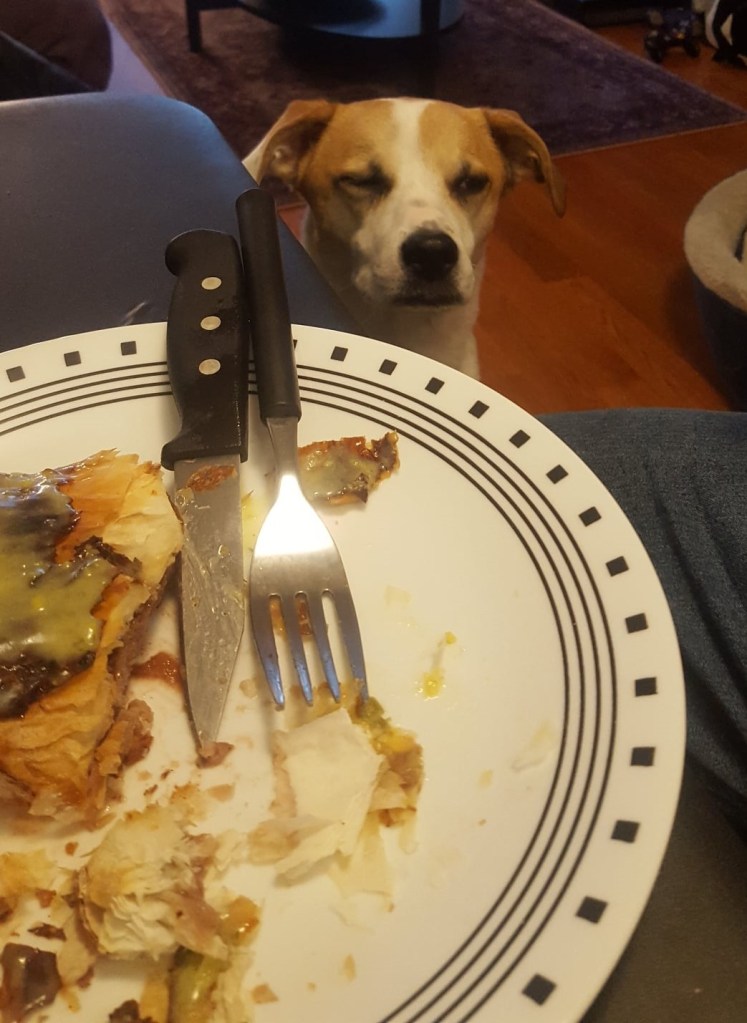
I don’t know who put this thing on my plate. I am sure I did not eat it. (2009)
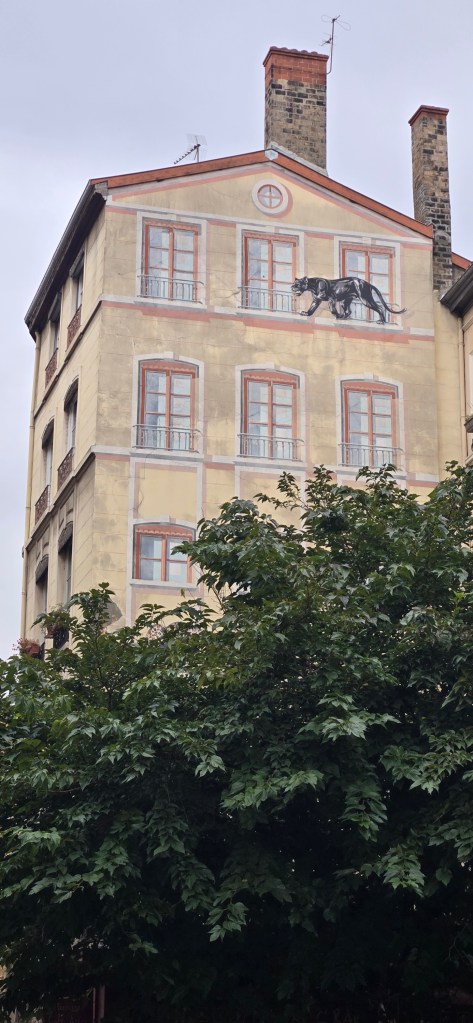
The truly worst, however, were the Thanksgiving gatherings at my own house.  One time, my mother literally broke her foot when she slipped while running on my newly mopped floor.  Why was she running?  Oh, because as soon as she arrived at my house and saw me manually mashing potatoes, she exclaimed that she brought an electric potato masher to my house in anticipation of just such a clumsy error on my part, and ran for it.  Spouse finished the mashed potatoes and turkey, as I ate Lorna Doone cookies from the emergency room vending machine.  It was a horrible weekend however you look at it, but there is a tiny moral here of letting adult children adult.
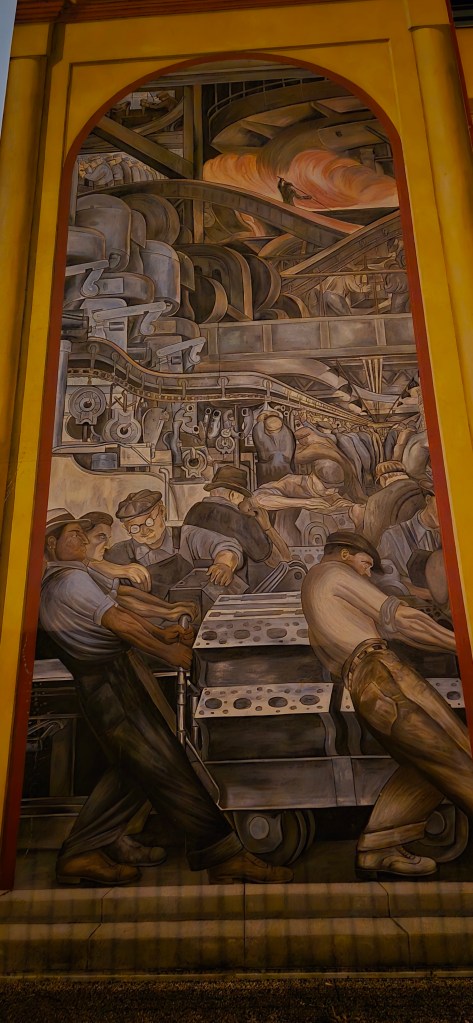
Another Thanksgiving saw my son run away from home.  We assumed he was spending the night at a friend’s after one of the typical teenage fights.  It turned out that he was driving all night to none other than my mom’s house.  When he crossed the border into Tennessee on Thanksgiving Day, he realized that he did not know her exact address, and the gig was up.  It was a strange, strange weekend, and the less said about it, the better.

I have to give a nod to a few gatherings in New York.  There was my first year living in Manhattan, when I was wandering Greenwich Village with a friend (we saw “Home Alone” during its first run in a movie theater, and I also saw “L’Atalante”—and how is that for an eclectic mix that only NYC can provide), and because of exams coming after Christmas (creating a nightmare of a different kind), Thanksgiving was truly a four-day urban holiday.  There were also milestone family birthdays that coincided with Thanksgiving, and we gathered in Russian restaurants in Brooklyn with our traditions, including singing, dancing, and the comfort foods such as caviar/herring/tongue/”Olivier” salad and copious amounts of vodka.  Good times! 

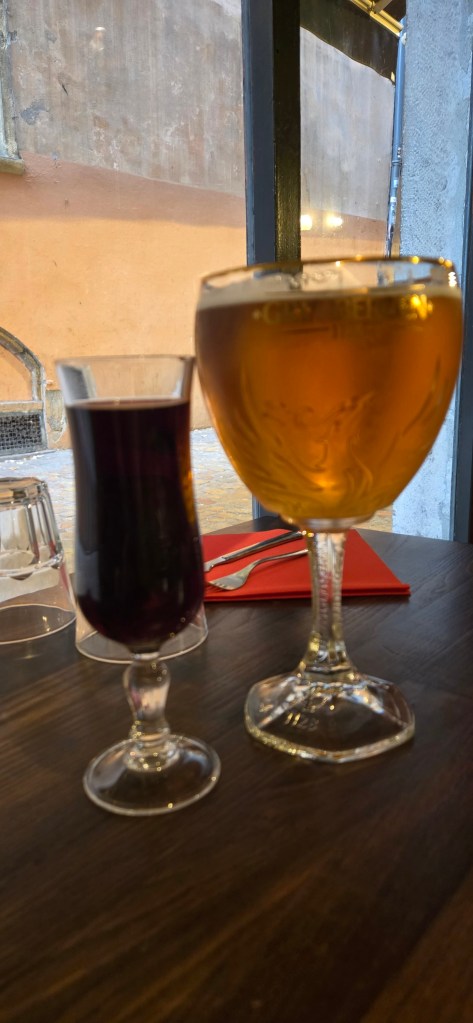
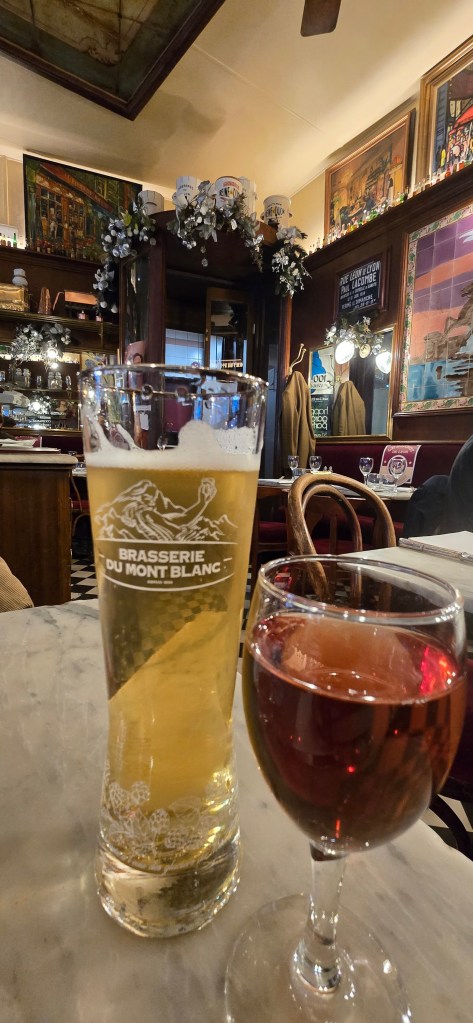
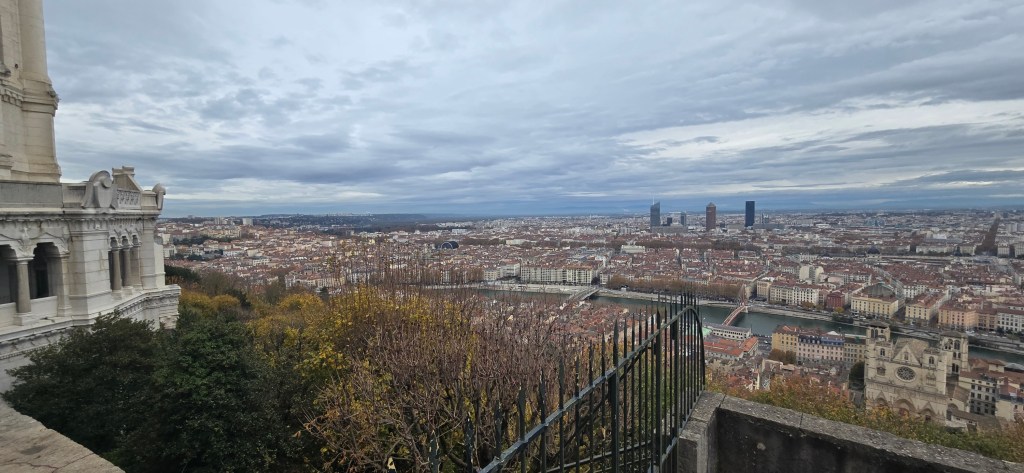
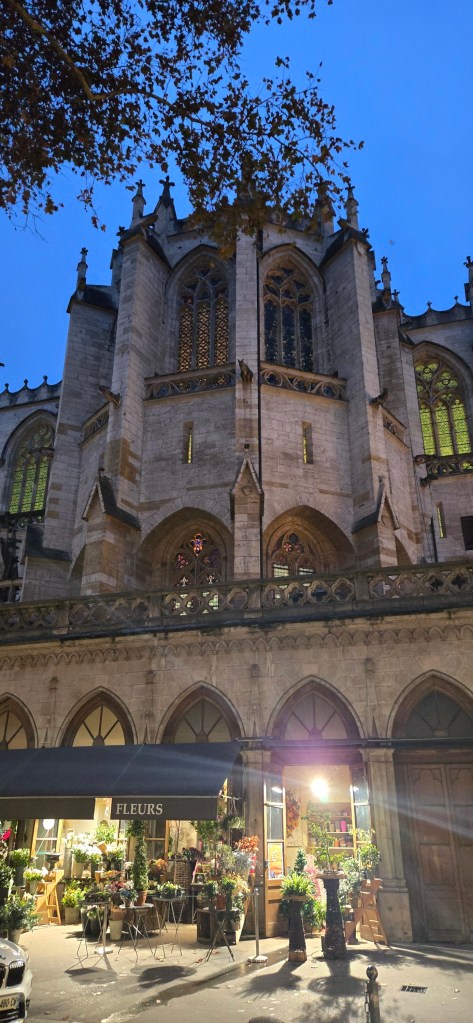
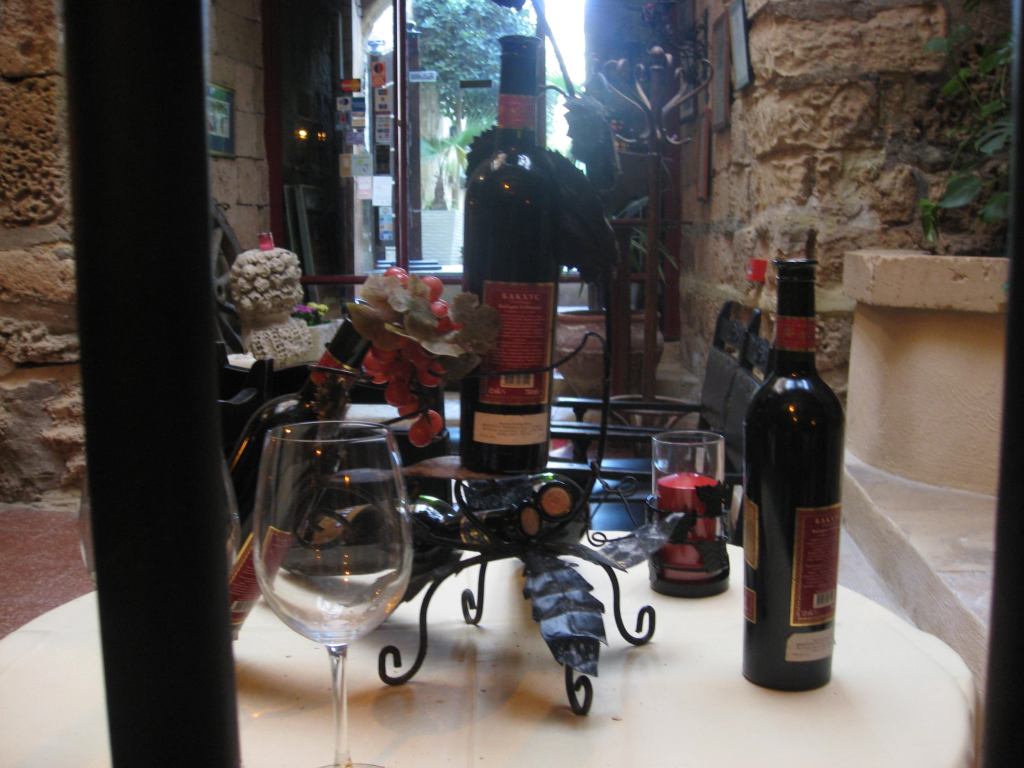
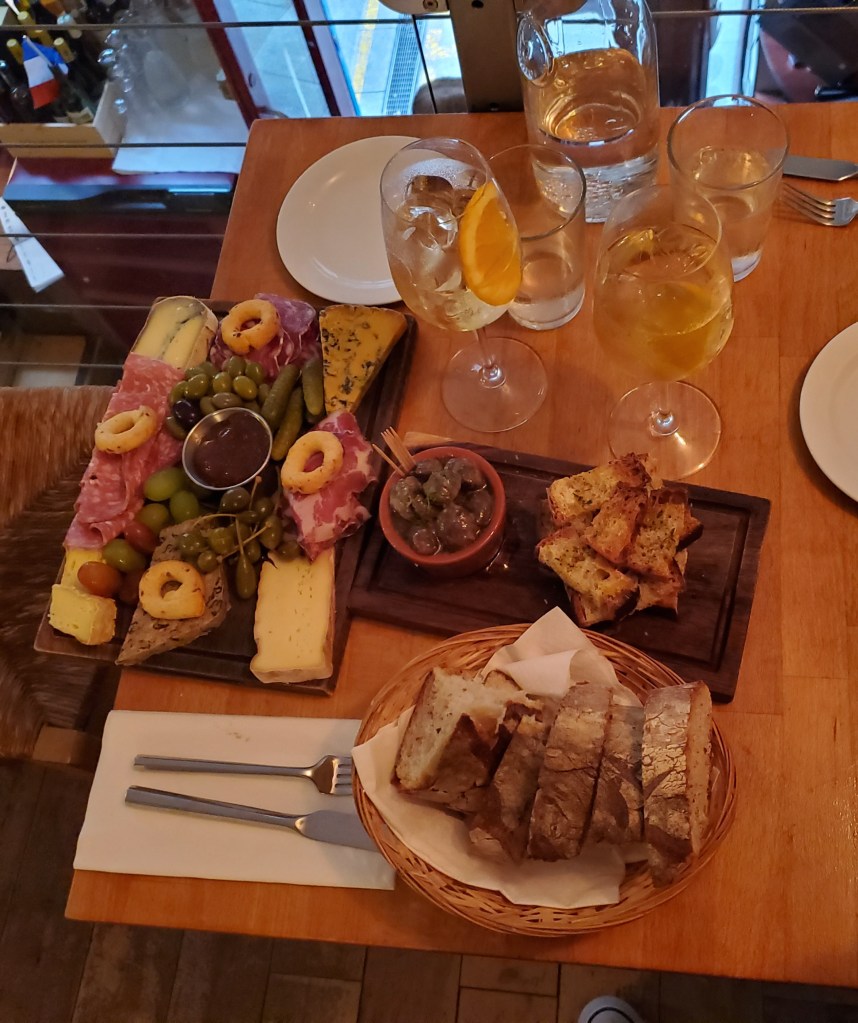
And this brings me to the best Thanksgivings.  They were all non-traditional and European.  There was paella in Spain (2008), rabbit in Malta (2010), Kir Royale at the Deux Magots in Paris (2012), discovery of Guinness in Dublin (2013), fresh turbot in Italy (2014), this incredible smoked orange liqueur in Portugal (2016), discovery of Beaujolais Nouveau on the French Riviera (2017), and the surprising charcuterie in Dublin (2019).

Also whiskey tasting in Dublin. Tealing Distillery. (2019)

Honorary mention goes to Vegas 2015—not quite out of the U.S., but still, Vegas is not your typical Thanksgiving venue—and Chicago 2018, with this failed Beef Wellington.

(2018)

Last year we attempted to have a first firmly post-pandemic family Thanksgiving, albeit in Chicago, and I woke up to a smell of smoke and a wail of sirens.  The building next door caught on fire.  It was a restaurant, so closed for the day.  No one was hurt.  But as I passed the fire trucks on my morning run along the lakeshore, I said to myself, strike three. 

Fat Ham, or Not Your Father’s Bard

Disclaimer:  I am not a theater critic, nor could I ever be one.  I am excited to share and recommend what I like, but with the wisdom (and empathy) of the years, I do not feel sufficiently invested in discouraging folks from seeing shows I do not enjoy.  I just cancel my season subscription.  Well, of course I will call a couple of my gal pals to warn them, but all of this is to say, we here at #oldladywriting are not panning any shows, especially in our local theater community.  We do not need the negative energy.  And so, here comes another glowing review, well-deserved.

Sometimes I see a show because I know it or about it, and I am excited to experience it.  Occasionally, it is because someone I know is in a show.  And then there are the theaters where I want to see everything, because they are consistently good.  And by “consistently” I mean, sometimes for a quantity of years and depending heavily on the artistic director.  As of this writing, I made a one-year commitment, with an option to renew, to the Detroit Public Theatre.

“Fat Ham” just opened the 10th season at the DPT.  I am not ashamed to admit that I knew nothing about it (because I am also not a literary critic).  I actually vaguely assumed it was a Hamilton parody.  I was completely wrong, as it is actually a modern-day reimagining of Hamlet with a queer Black protagonist.  Shakespeare again—and Hamlet again!  https://oldladywriting.com/2024/04/06/rosencrantz-guildenstern-are/ 

I have seen different Hamlets, cerebral, brooding, vengeful, and eliciting different levels of compassion dependent on the production and its star.  But it is always his story.  We know the end, but it is the mind’s journey to the inevitable conclusion that captivates. “Fat Ham’s” sweet, sensitive protagonist Juicy, a child of no privilege, is a lot less self-centered and a lot more caring than Hamlet has ever been.  How much more relatable is a young man who is not a prince, but just a regular person who is burdened by the world in which parents range from neglectful to abusive, friends are equally beleaguered by the big and small tragedies of everyday existence, and life was never fair to begin with.

Some of the Bard’s iconic plot points are there: the father whose death was engineered by the uncle who then married the mom, the father’s ghost calling the son to avenge his death, the mom whose loyalties and motivations are suspect.  But quite a bit is different, too (spoiler alert):  far fewer people die, even when justice is served, fate takes back seat to positive action, and ultimately, the kids are all right.

I fought the urge to give Juicy a hug and tell him that it will all work out in the end.  I kept thinking of one those rhetorical questions, “what would you say to your younger self”, because I saw a bit of my younger self in Juicy.  Not everything, and obviously not the part of uncle killing father and all that, but just that general feeling of not having agency, of being trapped in a situation with limited means to change.  I wanted to tell him that breaking free from the ties that bind and gag is essential.  Polonius’ famous advice is not quoted in “Fat Ham”, but I have always taken it to heart: “To thine own self be true”.  And say what you will about that old courtier, but as a parent, he is one of the best in the Canon, for he loves his children and tries to do right by them.

And then there is the humor.  “Hamlet” is not particularly funny, other than that scene where Polonius is desperately kissing up to the prince while the two are cloud-gazing.  “Fat Ham”, however, is joyously hilarious, heartfelt and witty, introspective and warm, and rowdy and raucous as life itself.  The acting in this particular production is absolutely effortless.  There is not a single false note in the cast.  I am continuously amazed and impressed by the abundance and caliber of local talent. And also, let us not forget the fun set, an impressively detailed backyard complete with the pig rotating on the spit, kind of like a warped interpretation of “Pleasant Valley Sunday” come to life.  I am thinking that these meticulous lifelike sets are almost a trademark for the Detroit Public.  The last couple of shows I have seen there were equally impressively immersive.

I realize that I have said a lot more about the play itself than about this particular production, but truly, this is because for me, it is almost impossible to separate them now.  So if you are in Metro Detroit over the next few weeks, see “Fat Ham”.  If you are not so fortunate, keep it in mind for future productions.  It is a hopeful message of a glorious triumph of love and self-awareness over toxic masculinity, and that is a beautiful thing.

https://www.detroitpublictheatre.org/season-ten

On the Train to Crimea

I spent four summers of my life in Crimea, in a resort town called Yevpatoria; it was love at first sight, and the kind of love you never recover from.  Childhood memories burn so bright that some scenes of the movie from that era still play unbidden in my mind’s eye.  We then switched to the Baltics for several reasons, none of which seemed good enough to me: easier to find a room for rent, climate not as oppressively hot, wanting to spend more time with friends and family, or maybe something else entirely.  I mourned Crimea every summer in Estonia.  I mourn it still, and more so as it gets farther and farther from me “through wars, death and despair”[1].  My story is small and long ago, and does not begin to compare with the pain and loss of others, but it is my own.  I wish I could tell the story of my childhood in the magical land which I fear I might never see again, but I do not even know where to start.  Maybe with the annual train trip, which itself was the proverbial journey as wondrous as the destination?

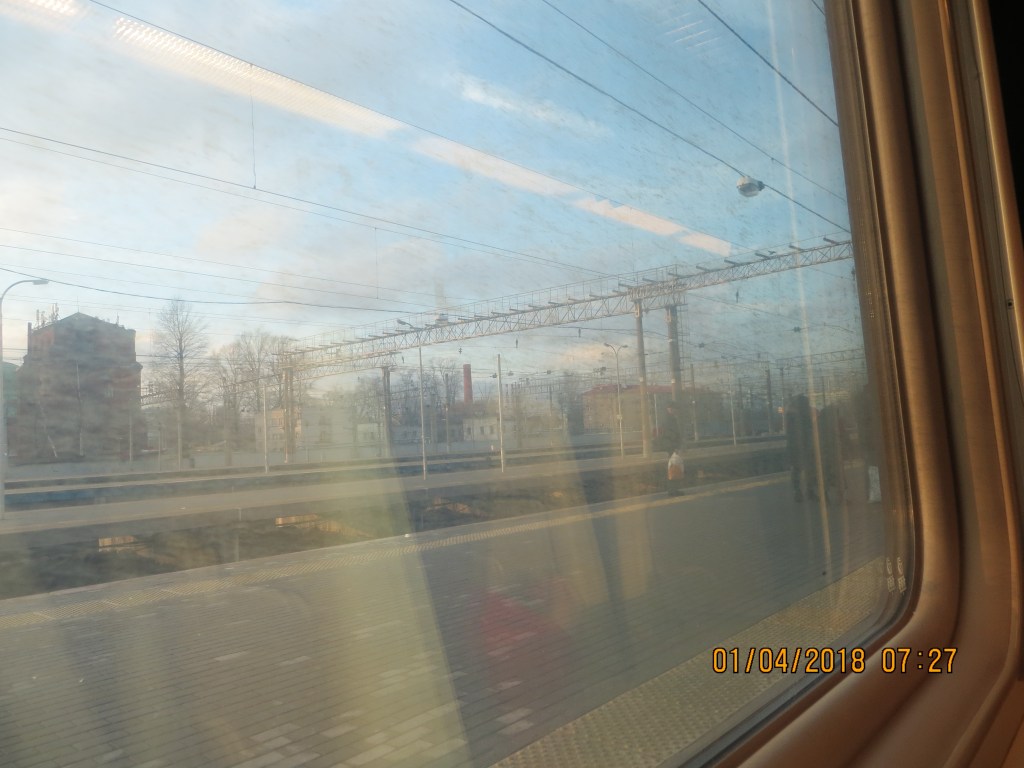
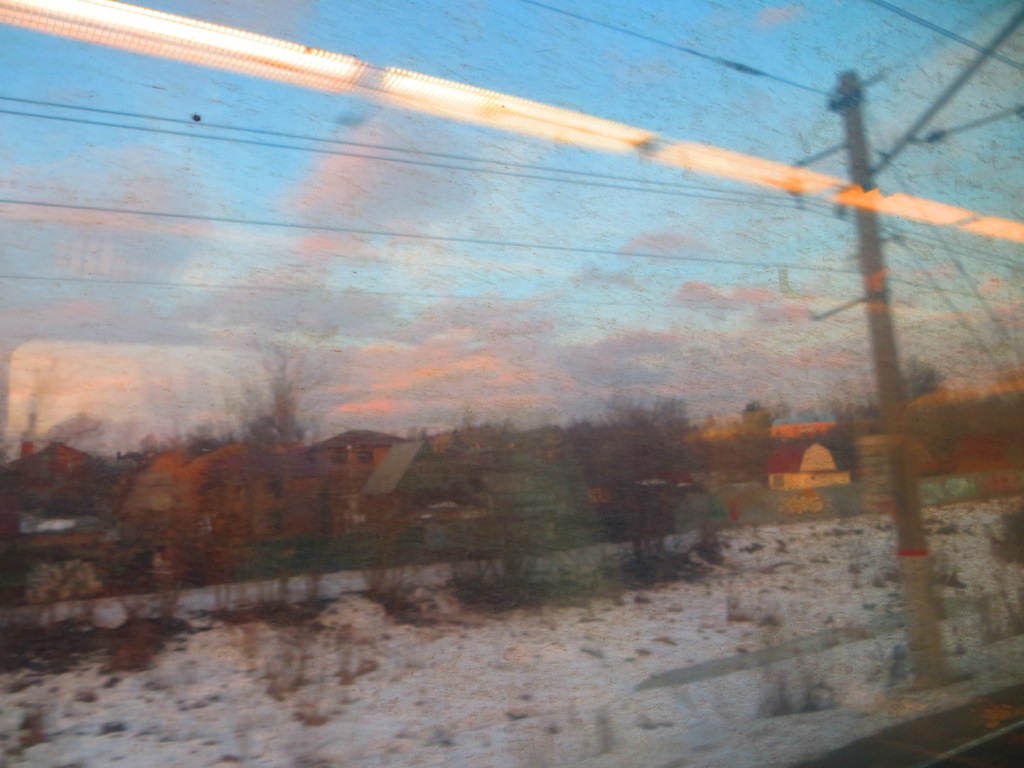
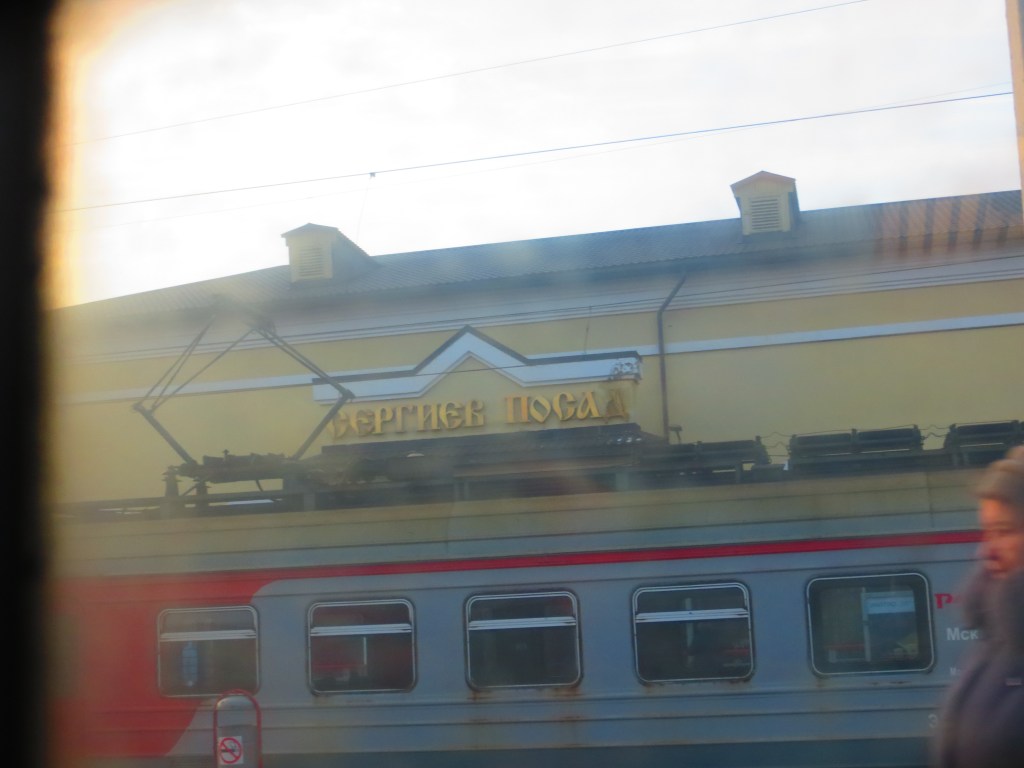
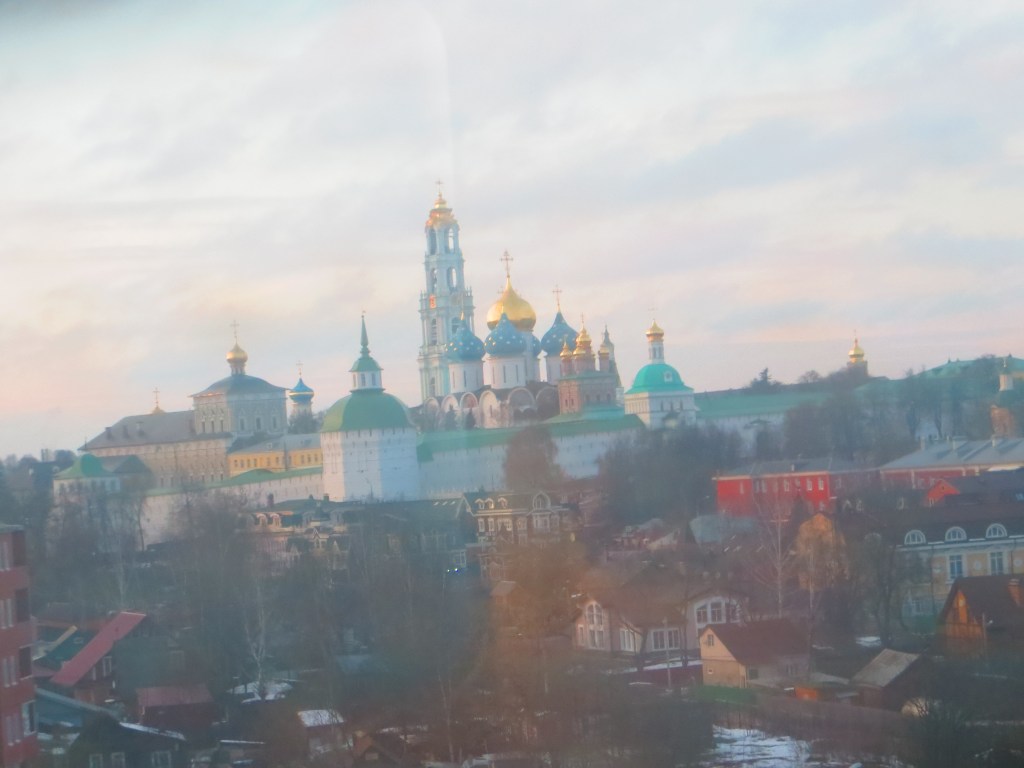
There was no direct train from Yaroslavl, of course, so first there were those four or so hours in a “suburban electric train”[2].  I always found this leg of the voyage excruciatingly boring.  I had the occasion to ride it again a few years ago, and can confirm that there is still something particularly tedious about it.  The big blue faux-leather chairs of old are gone, the new ones are not as spacious as they were when I was a fraction of the size I am now, and the view from the window is just as monotonous (with a tiny exception when the train passes by Sergiyev Posad).

We would arrive at one of Moscow’s nine train stations—Yaroslavsky (of course).  The train to Crimea would take off from another one, Kursky.  It was exciting to be in Moscow, which was huge and terrifying partially because it really is, and partially because my natal family is unusually prone to panic and aimless fuss.  However, while I was always trying to assert my independence and escape from my grandmother’s watchful, and baleful, eye in our provincial town, I would become entirely risk-averse during these long-distance travels.  In addition, Soviet cinematography and literature of the era was replete with fictional accounts of children lost in Moscow.  Although the stories always ended well, for stranger danger was not a thing in a society extolling the virtues of communal living, I found them anxiety-inducing rather than charming.  To this day, Moscow instantly turns me into a country bumpkin.  But I digress.

Yaroslavl Train Station in Moscow. The last time I took the commuter train.

The first year Grandma and I traveled in the regular compartment train which, as time told, was not dramatically different than European trains, with seats converting to bunk beds, four to a compartment. Occasionally, and I suspect it was simply because of availability, we rode in the strange “platzkart” wagon, a uniquely Soviet invention where there were bunks in the corridor as well and thus zero privacy.  Fun fact: there is no word for “privacy” in the Russian language.  I cannot imagine traveling in such a clown car now but, “c’est la vie” say the old folks, “it goes to show you never can tell”[3]. For as a child, I loved the “platzkart” setup, as it was easier to climb to the top bunk, with steps everywhere because of cramming so many people into the wagon, and because it always seemed like such a friendly throng. The only bad memory I have is when the radio in our overstuffed wagon somehow jammed while playing Carmen Suite’s Habanera for a quantity of some interminable hours; I could not hear that piece of music for years without it setting my teeth on edge, and have managed to stealthily avoid the entire opera.

There would have always been a dining car, but of course we never visited such a frivolous establishment.  We brought our own food, like everyone else: canned sprats in oil, black bread, boiled eggs, tomatoes, cucumbers, and salt wrapped in a piece of paper.  The conductor sold tea served in cut glasses with silver holders accompanied by sugar cubes.  Back then, sugar cubes seemed less fashionable than loose sugar, but now the sheen of nostalgia makes those hard blocks seem so retro cool.

It was a day and night’s journey across the land.  Without video stimulation of any kind, the entertainment consisted of eating, playing cards, reading glossy Soviet magazines like “Working Woman” or “Little Flame”, and looking out the window at the landscape gradually changing from north to south.  In the corridor, the windows had these little white curtains that said “Crimea” in light blue cursive letters.  I was always too short to lean on the curtain rod, and eventually too tall to fit under it, but I could stand there and stare out in wonderment for as long as my grandmother would let me. 

We never said “we are going to Crimea”, we said “we are going to the South”.  It was universally understood, same as where I live now, everyone knows the meaning of “Up North”.  Everyone was going on vacation; no one was going home. 

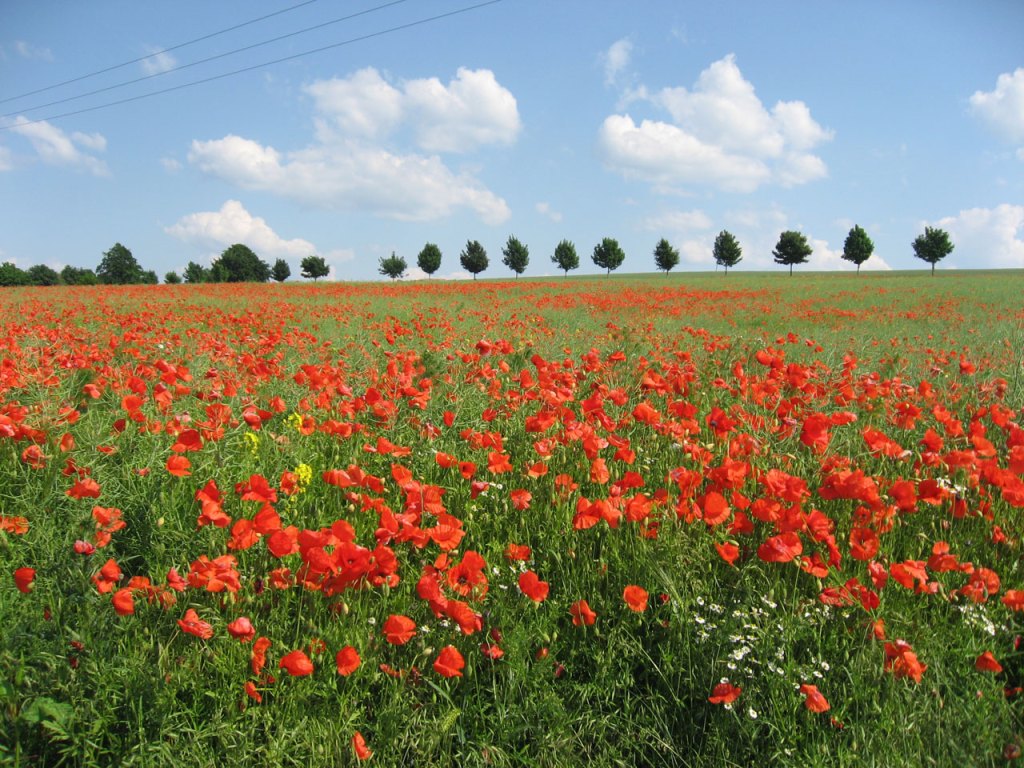
There was a granite plate built into a cliff, proclaiming “Glory to the heroes of Syvash”[4], commemorating events of the Civil War we never studied in school, which just added to the mystery of the land.  I looked for that granite plate every year, because I knew that once I saw it in the morning, I was in a different world.  Waking up in Ukraine, we saw idyllic white daub huts instead of our dark log ones, forests changing into fields, pale bluebells becoming blood-red poppies.  We were coming from the land of asphalt and dusty ash trees, constant strumming of trams, crowded streets.  And then the train just stops, giving the passengers a few enchanting minutes in a field of poppies, imagine that!

The following day would bring Black Sea with its friendly and nonlethal jelly fish, packets of little salty shrimps sold right on the hot sand of the beach, cafeteria “Kolos” with its delicious blintzes filled with sweet cottage cheese or ground beef, Frunze park with its exotic cypresses and statues of fairy tale characters, local history museum with two cannons in the front and a tiny zoo with a monkey in the back.  My grandmother then was younger than I am now, and we were going to the South for an entire summer on the beach.  As an adult, the longest vacation I have ever taken, since age 19, was the trip to, ironically, Russia (11 days).  A summer on the seashore has not been a part of my reality in adulthood.

Curiously enough, I remember nothing at all about the train rides to Estonia in the subsequent summers—not a single thing about the view from the window, people we met along the way, nothing at all.  It was still a summer by the seashore, but no longer the trip of wonders to one of the Seven Seas.

To be continued…


[1] Quoting “Anthem” from “Chess”.

[2] I had to look up the translation.  The Russian word is “elektrichka”.

[3] Quoting Chuck Berry.

[4] Alas, I cannot find any photographic proof of its existence—the plate, not the battle. 

The War of the Roses

Five years ago, I wrote how in my quest to complete the Shakespeare canon, I was still five plays short.  As of this writing, I only [still?] have two to go (“Troilus and Cressida” and “Two Noble Kinsmen” for those keeping track at home).  “Henry VI” trilogy is done, and how!

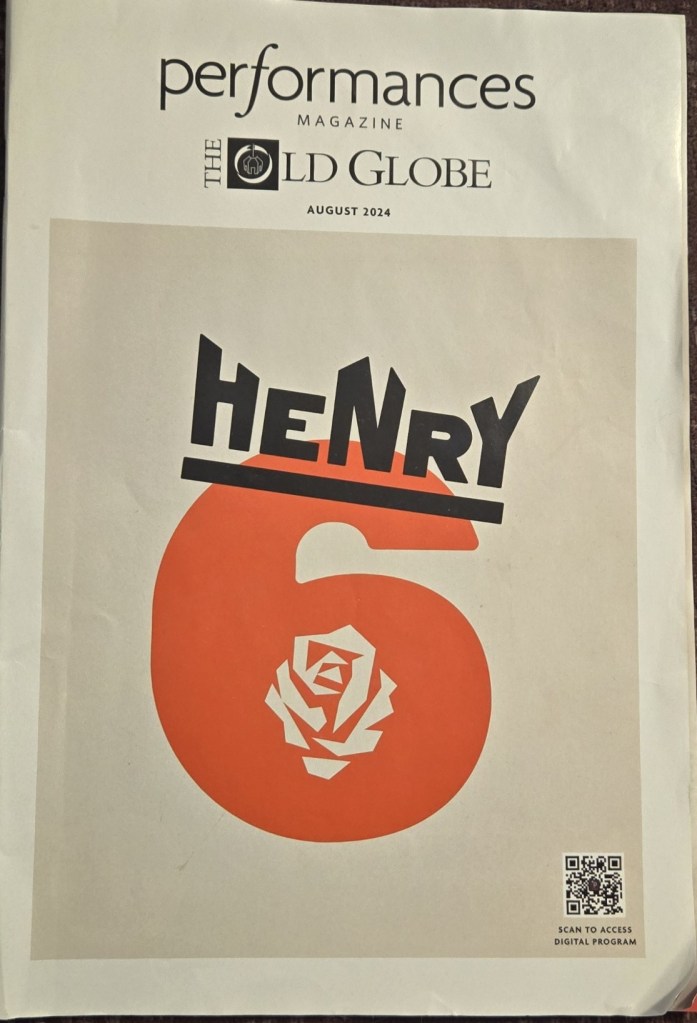
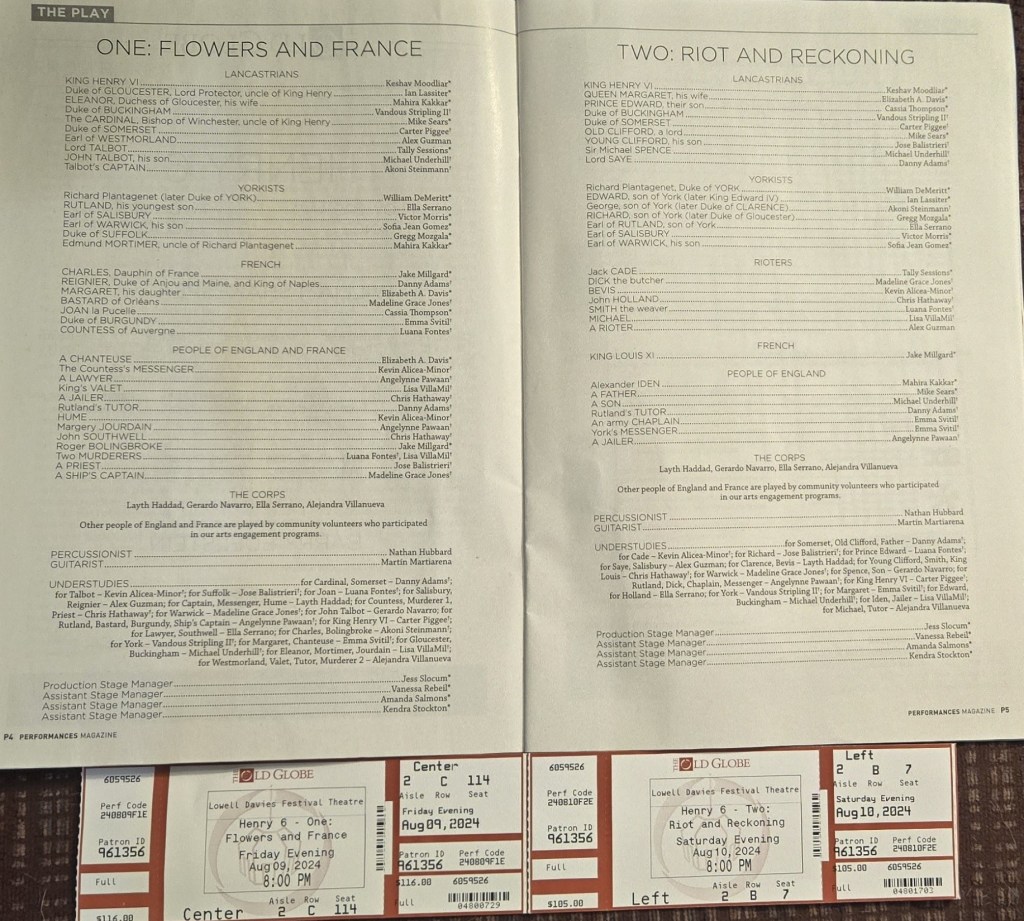
I have to note that it took me fewer attempts to get to Henry (three) than to Vienna (five).  I literally had tickets to see it at the Oregon Shakespeare Festival in the fall of 2020, and we all know how that went.  Michigan Shakespeare Festival was going to produce it this summer but sadly, had to go dark.  I was merely wondering what might be playing at The Old Globe in San Diego during my upcoming trip next spring when I noticed that it is actually doing “Henry VI” this summer.  And so I said to myself, who am I if I am not true to this glorious quest?  I found the perfect weekend when the “Henry VI” Parts 1-3 would play on two successive nights, reserved a hotel room, and spent a couple of months in happy anticipation of a visit to the place of which I warmly think as American Crimea. 

Credit to production designers: Lawrence E. Moten III, Scenic Design; David Israel Reynoso, Costume Design; Mextly Couzin, Lighting Design; Melanie Chen Cole, Sound Design; Caite Hevner, Projection Design.

I have been to The Old Globe several years ago, and loved their production of “Red Velvet”.  However, checking the tickets shortly before the trip, I was slightly dismayed to discover that “Henry” is being staged at an outdoor venue.  I pictured lawn seats, actors scurrying to not be seen behind awkward wooden set pieces, and lots of bugs.  In the Midwest, I have missed more than one outdoor performance and sporting event (yes, I have been known to attend a baseball game, don’t look so shocked!) that have been rained out.  However, I know as well as anyone that it never rains in Southern California, and was willing to put up with the rest of the potential unpleasantries just to cross this elusive trio of plays off my list.  Spoiler alert:  this did not turn out to be your usual Shakespeare in the Park.

Now, much as all I know about French history I learned from the novels of Alexandre Dumas, all I know about English history I learned from Shakespeare.  While I still need to recite the opening lines of “Richard III” to help myself remember who is York and who is Lancaster (and need a mnemonic device I heretofore have not found to identify which rose is red and which is white), I am happy to have finally filled the gap between “Henry V” and “Richard III”. 

It turns out that the gap includes some pretty exciting stuff, such as Joan of Arc’s last stand, epic battles between the English and the French, and intense subsequent plotting and fighting for the crown among the various English heirs and pretenders.  What’s not to like?  Ah, here is what:  my least favorite line in all of Shakespeare, “let’s kill all the lawyers”, makes its annoying appearance.  Even though in the play (and I knew this before seeing it) it is meant as the first step to chaos and political instability and is spoken by a villainous character, it has been misquoted for centuries.  But I am getting ahead of myself.

I have been seeing Shakespeare performed primarily at the Stratford Festival in Canada, which is as good as it gets.  I have seen some fantastic interpretations elsewhere, innovative, beautifully acted, creatively staged, but I have always thought that Stratford’s scale and scope is second to none.  Until now.  And unexpectedly, this “Henry VI”—actually, styled as “Henry 6”—an English Civil War saga 600 years old, filled me with patriotism.  I was all like, look at our American actors being as good as Canadians!

First, the outdoor theater at the Old Globe is basically the same as any other theater but without a roof—and a roof is not critical to a play unless you are dropping a chandelier from the ceiling.  But the way the natural surroundings of the gorgeous Balboa Park worked with the set, however, was both unique and exhilarating.  Every time those giant doors opened to let actors on stage and we saw, instead of the usual backstage darkness, majestic trees lit in the night, it was a spectacle like none I have ever experienced.  The most powerful moment came early on, when Lord Talbot, The Sword of England, first burst on the scene, from the actual forest, backlit and accompanied by stirring rock music.  It was just too cool!

Second, rarely have I seen a Shakespeare production that is so accessible, yet still recognizably classic.  The inventive prologue gave a quick summary of The Henriad (Richard II/Henry IV, Henry V–it was yet unwritten by Shakespeare at the time of the staging of Henry VI) and set the stage for what is to follow.  The costumes, the crowns, the crowds, the chaos—oh, it is history all right, but what gripping history!  Maybe these are earlier plays, but what they lack in familiar soliloquies they more than make up in the absorbing (and true) story that is better than any tragedy (or comedy) from the pen of the same author. 

This production is full of fun anachronisms, including a hilarious presentation by Richard of York to explain his right to the throne with the aid of an overhead projector.  I have to add that, besides the valiant Talbot, Richard was my other favorite character.  Is he supposed to be sympathetic?  I found his sincerity and single-minded focus on the throne endearing.  There was one scene where others are talking, planning, plotting, and he just paces around the stage, literally circumnavigating it, talking to himself.  I caught myself with my mouth literally gaping open, trying to absorb everything that was going on.

I liked the first part more than the second one, for purely subjective reasons—more of the French (Charles the Dauphin bearing hilarious resemblance to King Herod in “Jesus Christ Superstar”), Talbot and the cult of Talbot, and just a lot more humor.  The second part, all about the infighting and plotting for the English throne among the English themselves, is quite a bit darker.  And once that madman Richard III shows up on the scene, events start snowballing, and you know it will end badly.  He gets his own show later; let’s see more of the other people.

Also, Part 2 started right off with the reenactment of the January 6 riot, complete with the QAnon Shaman, albeit with the Union Jack painted on his face—and, obviously, with Shakespeare’s words, which, I imagine, elevated that particular disaster.  It was disturbing and a terrible reminder that we humans never change and learn nothing from history.  We live through these cataclysms and they shock us, but there is nothing new under the sun. Shakespeare already wrote about it…

The thing about Shakespeare is, his words, or even what we take to be his words, are constantly edited and reinterpreted.  Having seen “Henry VI”/”6” for the first time, I do not know if I have fallen in love with the play itself, or with this particular version of it.  But does it really matter?  It was a magical experience that touched my heart, and that is what great theater does.

Hometown: Ann Arbor

When I started law school, we had this incoming yearbook with everyone’s photos, so that you could get to know your classmates—you were going to be with them for three years.  We had to list our undergraduate institution and hometown.  The first was easy because factual; the second, for me, became unexpectedly convoluted.

At that time, I was not even a decade out of the Old Country, but it was lost to me, irrelevant, and politically incorrect (oh, how the times have not changed!).  I had no home with my mother and stepfather, last and least because they moved states a couple of times since my last sojourn with them.  I was living year round, working, and attending university in Ann Arbor, Michigan, and so it became my hometown, by default and of the moment.    

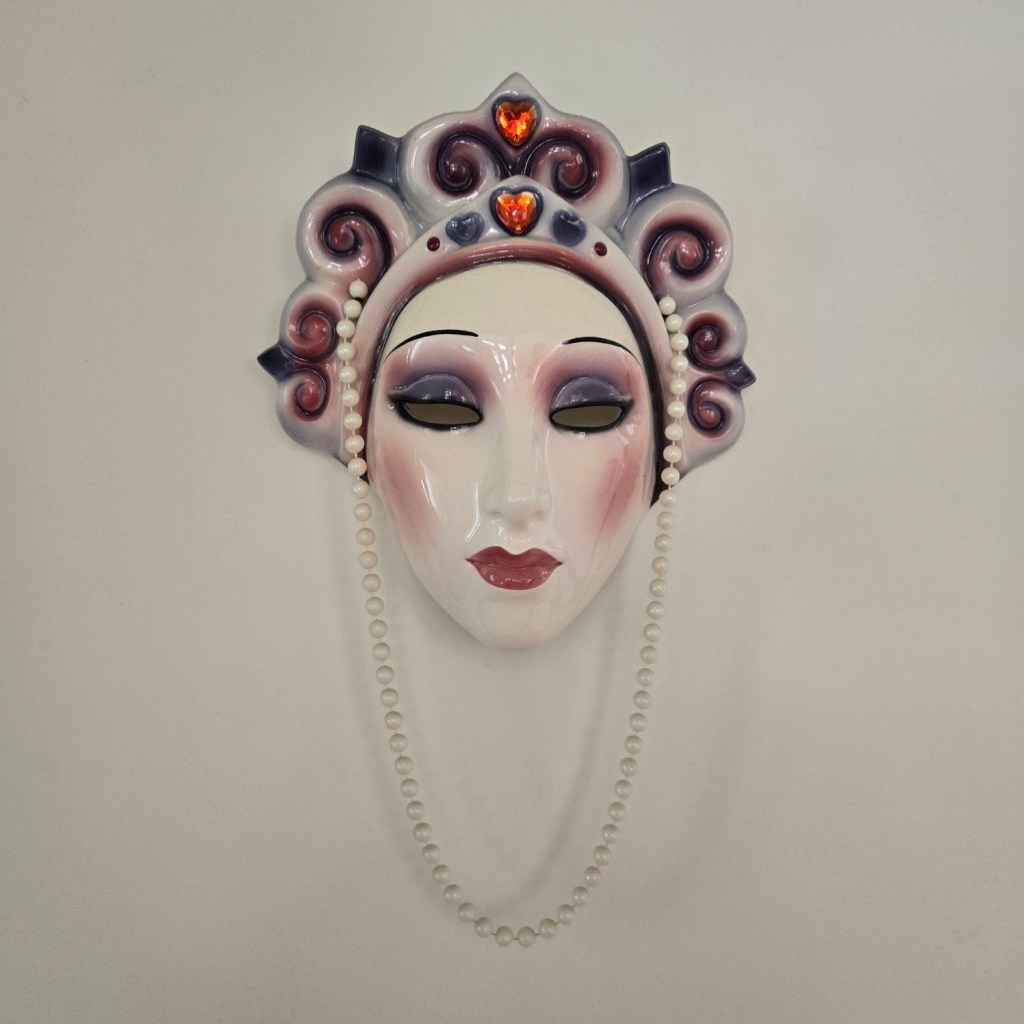
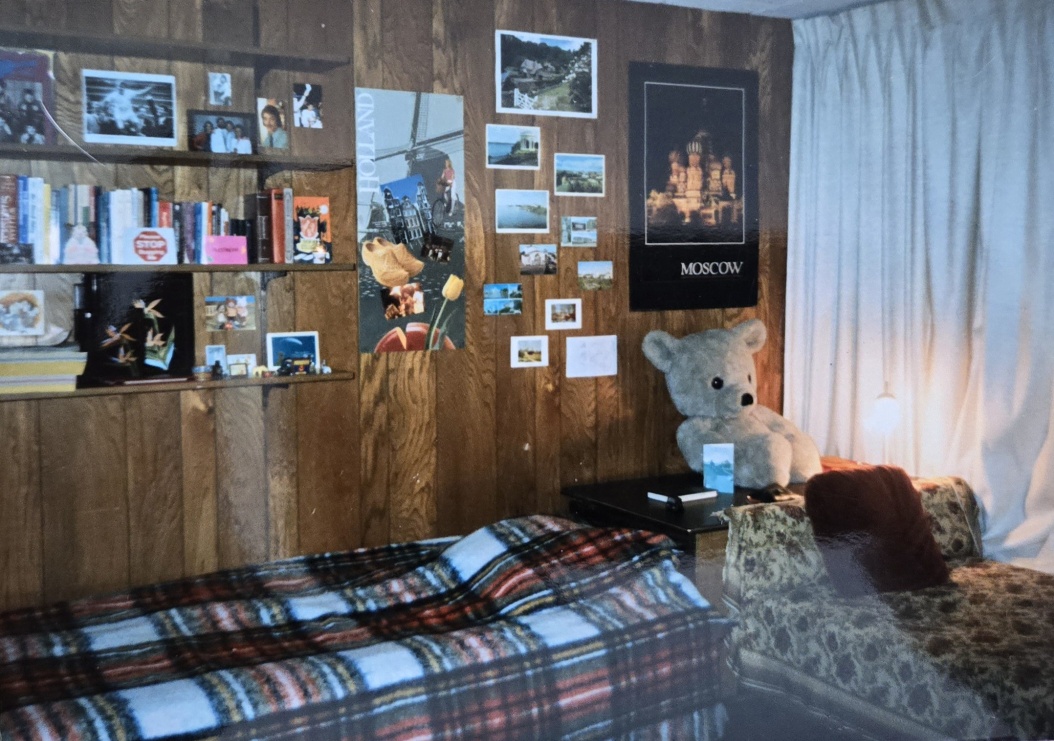
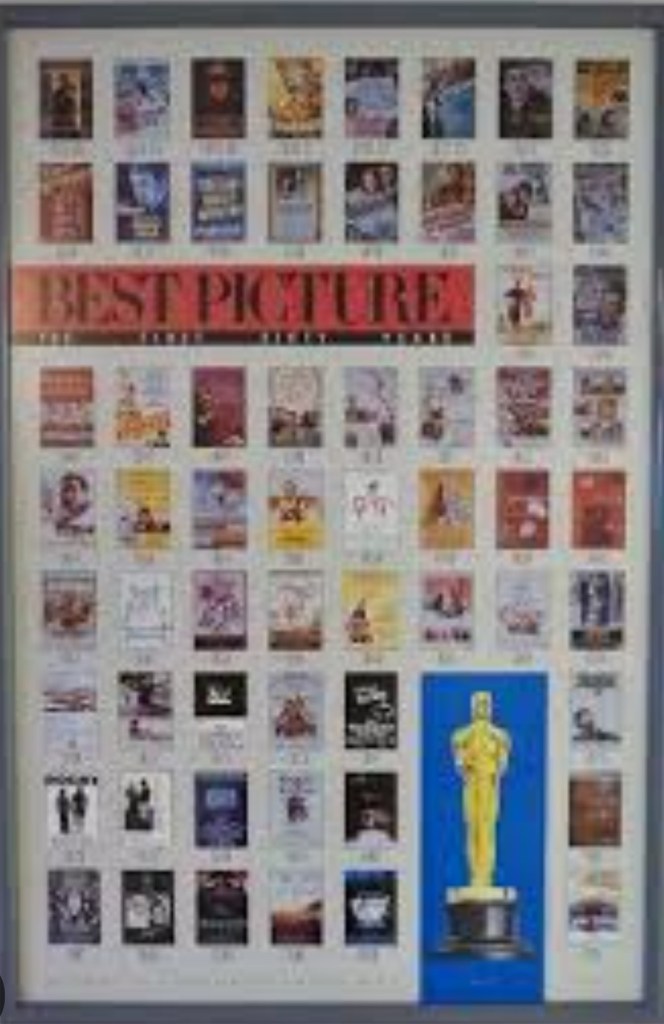
I lived in the same studio apartment for three years, which was the only place in this lifetime that was all mine, decorated by my teenage self with a combination of my favorite things, including a porcelain mask bought at Middle Earth from when I dreamed of an entire wall of masks (I still have it, the lone holdover; I never bought any others), and a collection of posters of my favorite people and places: best of the Netherlands sent to me by my beloved Dutch host family, the Marx Brothers and the Monkees, Oscar winning movies when there was still a finite number and I knew every one, Mardi Gras by Andrea Mistretta, a field of poppies that reminded me of a train ride from Moscow to Crimea, and an obligatory poster of Moscow (I am most assuredly not from Moscow, but that was the best that was available at Borders). The posters subsequently fell victims to a flood in the basement of my first house, but most of these are still some of my favorite things.

Out there, next to State Theater, is the location of the original Borders bookstore.

And speaking of Borders, I lived a block away from the original bookstore.  This was the Borders before it was a chain, before it was international, before it sold music or had a café, and even before the flagship store moved into the space vacated by Jacobson’s (another sad loss; Jacobson’s was a great store).  Being able to just walk in and browse, after work, between classes, on the weekends—ah, it was heaven!  It was certainly a big part of what made Ann Arbor home.  When I was in high school, coming to Ann Arbor with my mother was a double-edged sword:  she would visit her friends, I was either bored or resentful, but Borders and the nearby movie theater on Fifth that showed foreign and art films that would never make it to our painfully provincial town of Jackson were always worth the trip[1]

Summers in Ann Arbor were magical yet awful.  It was like being in one of those weird stories in which a person wakes up one day and the world is different: there are no adults, or half the population is gone, or the Beatles never existed.  All right, maybe this last one is not strictly relevant.  But basically, you just walked out on the street one day, and all the students were gone, save for the few of us year-round semi-townies.  On the one hand, it was nice to just work and have the predictability of time off.  I craved the stability, but I missed the difference of days and the extra activities that filled the school year.  And, full time job was not twice as boring as a part time job, it was more boring cubed or quadrupled.  It took up so very much time, leaving only the evenings of nothing to do or the weekends of trying to find things to do.  There were no tasks to perform in my free time, but instead, the panic of not having those tasks.  It was the waiting time.  Which is how I sometimes still feel in my adult life.

Eventually, Ann Arbor became too small to contain me and my dreams.  It really is a tiny town, with the downtown you can criss-cross in a quantity of minutes, not hours.  Were it not for the diagonal part of the main campus (obviously nicknamed The Diag), you could look right through it.  I was weary of walking the same half dozen streets.  I needed a change of scenery, and so I went to the biggest city I could find.

Back when there was only one tall building on South University.

I spent another summer in Ann Arbor after that, two years later.  All but one of my friends were gone, and I was living out a Cat Stevens song lyric, “For you will still be here tomorrow, but your dreams may not” and an agonizing “you can’t go home again” adage.  I was a wildly unhappy law student and summer associate in a big firm, terrified by the future not of my own dreaming unfolding in front of me.  It was such a weird time, living in an old familiar place, but on different terms, as a quasi-adult in a college town.  Living in New York, I yearned for Ann Arbor, yet the minute I arrived, the streets started closing in on me again. 

And now, some more decades later, the changes make the town barely recognizable to me.  Gone are all the stores I frequented—yes, literally every single one.  Not one survives, not Borders, not Middle Earth, not Peaceable Kingdom, not Falling Water, not Schoolkids Records.  Some restaurants remain, and there are better ones, including a handful of decent breweries, which would have been irrelevant to the underage me in any case.  But the stores were special because of all the solitary browsing one could do, in a crowd yet apart.  This is a feeling one can cultivate only in an urban environment, walking in, walking around, walking out, invisible.

Ann Arbor is a reminder, a symbol of the time when everything was possible.  Before I started law school, I could have started anything else instead.  The road was chosen, but not yet taken.  I could have taken a gap year (no, I could not have, I had no resources for that, but it is nice to think that I might have had options).  I could have kept working at an office job and used my after work hours to find myself and my path.  I could have… well, that is about it.  I never really had choices.  But there was that one brief shining moment when I thought I did—and that was in Ann Arbor.  And so, this town will always be for me a symbol of possibilities, and that is enough for it to have been called “home”.

[1] “Cinema Ann Arbor: How Campus Rebels Forged a Singular Film Culture” by Frank Uhle is a time-machine trip down memory lane to a time that I just barely glimpsed, but during which I consider myself incredibly fortunate to have lived.

[https://oldladywriting.com/2021/01/30/the-road-not-taken/]


Memories of The Fourth Sense

I recently had perfume custom made for me.  It sounds fancier than it is, because you basically go on this website[1], pick several scents, and fervently hope that they combine into something that does not make anyone within sniffing vicinity gasp and choke.  Suggestions of complementary scents are available, but I scoffed at those and proceeded to trust my own senses. I was not disappointed!

I knew nothing about fine fragrances growing up—which is no surprise, considering my upbringing.  My no-nonsense grandmother (she of https://oldladywriting.com/2021/08/30/just-boil-water/) did not bother with such frivolities.  She was kind enough to buy me a bottle of children’s eau de cologne one summer in Estonia.  The bottle was shaped like a clown, leaked to the point of extreme transience, and left no olfactory impression on me whatsoever.  She also, in a fit of unprecedented and unrepeated generosity, bought me a tiny bottle of adult perfume, Vecrīga (Old Riga), which miraculously survived to present day and, considerably less miraculously, turned itself into vinegar in the intervening decades without me ever opening it.  I had vague plans to wear it on my wedding day, but forgot and instead dumped half a bottle of Dali on my wrists.  As the latter is currently fetching $800 on EBay while the former is not, I can only say that my marriage was—and is—worth it[2].

In college, the same friend who introduced me to Elton John’s music [https://oldladywriting.com/2019/06/23/rocketman/] also introduced me to quality scents.  She mocked the drugstore-bought Lutece supplied by my mom, who still picks perfume based on the attractiveness of its receptacle, and gave me a bottle of Oscar De La Renta from her personal collection.  Fun fact: today, a half-used bottle of former would set you back the same $90 as the retail-bought bottle of the latter, which just confirms the old adage that there is no accounting for taste, as well as there is no limit to the pull of nostalgia.  But, once I started drenching myself in that designer fragrance, no fewer (and yet no more) than two young men followed the scent straight to my apartment.  In the immortal words of Simon and Garfunkel, “It was a time of innocence”.

When I was in Greece, walking through the Club Med resort on the way to my job as an ouzo drinker [https://oldladywriting.com/2020/07/30/the-wrong-way-to-the-parthenon/ ], a fragrance wafting from some flowers instantly transported me to warm nights on the Black Sea.  I did not expect to smell it again until I discovered Orange Blossoms at Lush.  I do not think oranges grow in Crimea, where I spent the summers of my childhood.  In fact, growing up I was violently allergic to what everyone assumed were oranges, but it was actually the poison with which they were injected to make them ripen or at least appear ripe during their long trek to my North Volga hometown. Logic tells us that this particular scent should not evoke any memories more pleasant than a trip to the children’s hospital—yet it does, and logic is a sword by which I do not want to die.  I am happy to report that Orange Blossoms, after suffering a couple of setbacks, did not permanently join the list of my favorite discontinued things [https://oldladywriting.com/2022/01/29/murder-at-the-marsh/] but has instead become my signature scent.  I also read somewhere that it is the signature scent of French women, so in this case, logic is firmly on my side. 

As for the ones that did join the sad list, there is Yves St. Laurent’s In Love Again.  Like Orange Blossoms, it came, went, came back—but then disappeared for good.  My tenuous connection with YSL was thus severed, and Fragonard took his place as my French perfumer [https://oldladywriting.com/2019/06/09/when-did-the-arc-de-triomphe-start-leaning/].  I owe allegiance to Fragonard for (1) creating not just one but—count them—four scents I love (Belle de Nuit, Emilie, Etoile, and Fragonard itself), (2) not attempting to cancel any of them, and (3) supplying me with its version of Orange Blossoms during the dark period when Lush did not.

Yes, this is a photo of the actual perfumes in my bathroom. All accounted for. Vecrīga is in the middle.

Some years ago, my erstwhile BFF asked what gift I wanted from the homeland; I had trouble coming up with something that I could not get here, and requested a bottle of Red Moscow perfume.  Her cousin finally located it in a Soviet nostalgia shop in actual Moscow, and the two of them could not be dissuaded from the conclusion that this peculiar retro item was meant for my ancient grandmother.  Rumor has it that it existed before the Revolution of 1917 as The Empress’ Favorite Bouquet, and was renamed like so many things during the Soviet era.  I had no idea what it would smell like, and just thought it would be something weird at best, and most likely fetid.  But you know what?  I love it.  It is a very strong floral chypre (there are those orange blossoms again, though I cannot detect them in it) that lasts from morning till night.  There is something symbolic as well as ironic in the existence of a fragrance that survived two ages of empires—and hopefully will outlast a third.

And so what is this custom scent that I chose?  Tulips and mimosa.  Surprised?  Tulips do have a smell, albeit a very subtle and delicate one.  Mimosa—the flower, not the drink—overwhelms in this particular combination, but I am fine with that.  In my childhood, mimosa was the earliest blooming flower of spring, omnipresent on March 8, International Women’s Day.  The smell of this perfume conjures bouquets of those fuzzy yellow balls on the desks of all the girls in class.  One of the big benefits of that egalitarian society was that no one was excluded, unlike the mortifying Valentine Day popularity contests in the U.S.[3]  The homeroom teacher insured that all the boys participated, and all the girls got flowers, and sometimes even perfume, though I do not recall what kind (in any case, it would not have been Red Moscow).  And now Queen’s Bouquet © (see what I did there?) recalls one of the most pure memories of my joyful childhood during these complicated times…[4]


[1] https://scentcrafters.com/ 

[2] I found a lovely write up which made me regret just slightly that I have never really sniffed Vecrīga myself.  But, in my younger days, I would not have appreciated it, and now, I have enough, so all is well. And in any case, I still have never been to Riga. https://www.fragrantica.com/news/Spirit-of-the-City-Riga-in-Dzintars-fragrances-18365.html

[3] Do I even need to mention that the only carnations that I got in high school were from female friends?

[4] The many links to the previous blog posts are for my new subscriber(s) who might have missed them in the past. [insert smiley face]

Those Two Guys in a Painting in The Hague

I spent a summer in the Netherlands when I was in high school, and still feel that I know it better than anything.  Those youthful impressions are just so much sharper than later ones, when everything sort of starts blending together.  Besides, I kept a diary.  It was the age before digital cameras, let alone camera phones, and a thousand words were cheaper and easier than a picture to be developed.  What led me to the Netherlands in the first place is a longer story that stretches all the way back to my childhood, so will wait to be told another time, but today I am reminiscing about my first independent (meaning, unaccompanied by adults or even Dutch siblings) trip of that summer.  It was to The Hague.  Being the seat of government, home of the Queen *and* the International Court of Justice, as well as the other major museum in the country, it was the natural choice.

I set my alarm for 5 a.m., and once it buzzed, immediately turned it off and slept for three more hours.  By quarter after 8, I was on the bus, and by a minute to 9 on the train heading to The Hague.  I noted in my diary that a roundtrip train ticket from Amersfoort cost 27.80 guilders, which would have been around $9 at the time[1].  In a state of light but persistent confusion, changing trains in Rotterdam, I finally arrived, purchased a map sorely lacking in detail, and after several false starts made my way to Binnenhof and its Ridderzaal, home of the Dutch Parliament and the royal throne.  I could have sworn that I went on a tour, but the diary (present recollection refreshed) denies it and confirms only that I saw an exhibit about the queen (Beatrix at the time) and the Dutch government. (I returned to The Hague a couple of weeks later, just for this, and a good thing, too—I have never seen it since).

I definitely did go to Mauritshuis, which was under restoration, and most of the paintings were displayed in the house of Johan de Witt.  This may or may not explain why I have no recollection of seeing “The Goldfinch” and “The Girl with the Pearl Earring” at that time (books were not written about either one yet), but I was very impressed by Rembrandt’s “The Anatomy Lesson”.  All these guys are hanging on Dr. Tulp’s every word, but then there are two—one a little dazed, probably by the presence of the cadaver, and one who is staring right at the audience, clearly thinking, what the heck am I doing here, at this boring lecture with this gross corpse?  Way to break the fourth wall, Rembrandt[2]!

You see what I mean?

After some more chaos caused by my crap map, I found Panorama Mesdag, the very cool painting of 19th century Scheveningen in the round (the diary says “last century”, but now the diary itself is from the last century, making the panorama from the “century before last”).  And then I made my way to the Peace Palace.  I do remember waiting a bit for an English language excursion, eating ice cream on the grass.  It was a great tour, very informative, and the malachite vases that were the gift of the Russian czar made a particular impression on me.  I even got to sit on the lawyers bench, dreaming of someday.  That particular day never came, but I did have a professor who litigated at the International Court of Justice, so there is that, less than six degrees of separation.

The only photo from my first trip.
What even IS this?!

As the final sight of The Hague, I was determined to see the Queen’s palace, Huis ten Bosch.  It was quite a trek, and a waste of time, because it is literally surrounded by woods.  I walked by the gate several times before I gathered the courage to ask the guard if the Queen lives here. He said yes, but she is currently on vacation.  It was enough of a thrill for me.  I do have to add that my only brush, if we may even call it that, with royalty was when spouse and I glimpsed Juan Carlos I in his limo (or something) pulling out of the royal palace in Madrid as we were coming out of the garden.  We do not talk about that exciting moment when we complain about The First Spanish Trip. https://oldladywriting.com/2020/11/02/the-first-spanish-trip/ But I digress.

The second visit to The Hague[3] was 20 years later, and almost 20 years ago, so there is a slight pattern here.  We went to the Mauritshuis, now fully restored, and infinitely more crowded.  I still missed “The Goldfinch”, for again, the book was not yet written.  We then stumbled onto It Rains Fishes, a restaurant I read about in a guidebook, but did not seek out because I have learned to mistrust guidebooks.  And thus the day was lost, but also gained, because the lunchtime meal in this Indonesian/Malaysian restaurant remains one of my Top Three dining experiences to this day.  I was recently trying to remember the particulars of it, but all we could recall was the tiny green pea puree amuse bouche.  My notes say that spouse had steak and crème brulée, and that I had seafood curry and rum caramel shake.  We spent about $100, which was quite expensive for both the times and time of day, but the elegant décor, lovely music, and superb service made it worth it. 

This year, the Annual Girls Trip took my mother and me to the Netherlands.  We moved at a pace significantly slower than the frenetic speed of my teenage years, and mostly hung around Amsterdam, but could not miss paying homage to the Mauritshuis paintings that have been made more famous by books. 

I have a logical, if not infallible, sense of direction, and a rich collection of memories (as some of these writings demonstrate, I hope).  But The Hague looked entirely unfamiliar from the moment I exited the train station.  I do not mean that it changed, but somehow I could not summon any visions of the city from my previous visits.  My recollections of the gate to Huis ten Bosch and Peace Palace were not tested, Binnenhof was/is disappointingly closed for renovation, and It Rains Fishes closed down permanently.  There was no déjà vu until I saw the staircase within Mauritshuis—I recalled ascending it with spouse on our prior visit.  This time, I paid particular attention to “The Goldfinch”, and was relieved that he was fine after his ordeal[4].  And then I saw that panic-stricken guy desperately plotting his escape from Dr. Tulp’s gruesome anatomy lesson as he has done for almost 400 years, and all was well with the world. 

Ars longa, vita brevis.


[1] It is about three times more now, but I am not sure that it is not a fair increase for four decades.

[2] Fun fact: in the copy which is in Edinburgh and not attributed to Rembrandt, all the observers are staring at Dr. Tulp or the corpse—and this alone makes it inferior.  Don’t bother with it.

[3] Technically, the third, because I visited The Hague twice during that summer in high school.

[4] I know the theft of this painting is a fiction, but I have been mildly anxious about the fate of missing artworks for most of my life.  I am still not entirely convinced that the original portrait of Whistler’s mother does not hang in Mr. Bean’s bedroom, and give the Musée d’Orsay’s version a knowing wink every time I see it.

Rosencrantz & Guildenstern Are

When I first read “Hamlet” in a high school literature class, Shakespeare’s language was still difficult and unfamiliar, but I immediately and always felt affection for its conflicted [anti]hero.  A family friend told me about “Rosencrantz and Guildenstern Are Dead”, which I also immediately read, intrigued by the concept, and understood nothing.  I have seen some magnificent productions of “Hamlet” over the years, and have been fortunate to ponder and debate its themes with folks much smarter and more astute than myself.  Until now, I have never seen the parallel universe version.

When “Rosencrantz and Guildenstern” rolled into Toronto, with two of the Hobbits, Dominic Monaghan and Billy Boyd, as the leads, I was determined to make the trek.  Now, the Hobbit connection is of no use to me—I slept through all those movies, sitting upright and with my eyes wide open, and actually listened to the book on tape, all 197 hours of it, and retained none of it.  But, I appreciate both the tremendous stage training and presence of the British actors, and the immense talent of Tom Stoppard, one of the greatest—if not THE greatest—living playwrights.  I have come a long way since I first read his words.

Toronto, on occasion, has served as an extension of my theater playground.  It tends to have a slightly different lineup for big Broadway shows through the Mirvish theaters, and some straight plays in addition to the major musicals.  I do not know the city, just how to find my way to the couple of theaters and, obviously, to the Hockey Hall of Fame.  My favorite restaurant, Le Marché, fell victim to the pandemic economy, so the play was truly the only focus of this trip.

I was not disappointed (spoiler alert: far from it!).  But I was surprised.  My memory of this play was so hazy as to be almost nonexistent.  I just knew what is common knowledge: absurdist tragicomedy, similar to “Waiting for Godot”, minor characters from a major play.  All of this is technically true, and none of it is sufficient.  I did not find it absurdist but actually quite heartfelt and authentic—unless life is absurd, and that is a premise that I refuse to countenance.  And as for being minor characters—well, maybe they only passed through “Hamlet”, but they are the heroes of their own story.  I was reminded of how Fredrik Bakman weaves the same cast of characters through several novels, with some front and center in one book but only episodically appearing in another.  Stoppard did it earlier.

These guys were so gentle and genuine.  Rosencrantz in particular was sweet, befuddled, with a hint of Eric Idle-esque wide-eyed mischief.  Guildenstern was a bit more anxious and focused, and also wistful.  There is so much to absorb and contemplate.  They live in a parallel universe and we know how their story will end, but they do not know it.  They are not entirely sure of anything, including the limits of their own power and will. They are floundering, but they are living—as are we all. And that is really the story.  We might think that they do not have agency, but that is only because the title of the play gives it away.   And even despite that, I was waiting for it to unfold differently.  I did not get the sense that they are marching toward an inevitable conclusion.  They are just making some decisions that will affect their lives in dire ways—as do we all.  The Casablanca quote came to my mind, the one about how “the problems of three [let alone two—OLW] little people don’t amount to a hill of beans in this crazy world”.
And there is no predestination, just a series of circumstances and how people make the best, and occasionally the worst, of them, because they are not omniscient.  It is a story of two guys who are not necessarily worse than anyone else.  And in this production, it also helped that Hamlet himself was the worst character in the ensemble:  bearded middle aged man, prone to bulging eyes, with a startlingly booming voice and an utterly charmless manner.  He was manipulative, callous, and revenge-driven.  It was impossible to care, let alone root, for him. Perhaps that was intentional, but I do not know the play—I only know what I felt.  This all goes back to who controls the narrative—“who tells your story”.

And so this experience just confirmed, yet again, my firm belief that plays need to be seen, and the power of live theatre to make one think and feel is unsurpassed.  I wrote before about that one moment for which I wait in each show, and here there was the instance that I realized what is coming, and spouse whispered to me, “This is how they die”.  So invested was I that I forgot the title of show!  And then when Guildenstern said,  “There must have been a moment, at the beginning, where we could have said — no. But somehow we missed it”.  It broke my heart.  And that is really it; “the rest is silence”.

Tooth Fairy

Last year, I lost my favorite tooth.  I mean, I did not misplace it, nor did it fall out.  It was surgically removed.  This tooth, #6, was my first root canal and my first crown.  My own grandfather put the crown on it, made from a melted down earring, and it lasted for decades.  Eventually, the crown wore out, and then the tooth itself.  There was even another root canal in the mix, so suffice it to say, #6 and I were bonded by hardship.  On the day when #6 and I finally parted ways, the nurse offered me nitrous oxide and oxygen, and how could I say no?  I welcome any option that results in less or no pain for me.

Jubilee Square. Motorbuilders Palace is on the left. The clinic is on the right.

As I was dutifully breathing in and out, an unbidden memory came to me, of me and my classmates trooping down Lenin Avenue to the Jubilee Square (the one with the Motorbuilders Palace [https://oldladywriting.com/2020/08/18/valor-and-glory-of-the-motorbuilders/].  In my mind’s eye, I saw the golden Russian autumn sung by poets, maple leaves everywhere, the only melancholy season of an ever-sunshiny year.  The school year has begun long ago enough to be a bore and a burden, and the time has come for one of the most unpleasant organized events of the Soviet school system—the dental checkup.  It is about a mile from the school to the clinic—the longest mile.  If ever I felt like a lamb to the slaughter, this was most certainly the time.  Usually, I got some kind of exemption, being raised by dentists and being dragged to the children’s dental clinic by my grandmother on my own free time, but that day, I was all out of aces.  It is also possible that this was shortly after my grandmother took me to the clinic and I escaped, bolting out of the torture chair and making it halfway through Jubilee Square before I was captured (traffic in those days was unimpressive, but not nonexistent—I was absolutely in danger of being struck by a bus, a fate still preferable to any dental procedure).  I have to add, individual cabinets are a Western luxury.  In Soviet Russia, an army of Orin Scrivello clones with their whirring drills were leaning over screaming kids in one big room in a fog of ether.  

I have a lot to say about growing up in an apartment where our kitchen doubled as the prosthodontist’s office, but that is another story for another time.  But one thing I know is true, and that is that our home never smelled of ether.  Maybe grandpa had no access to it.  Maybe the smells of grandma’s cooking overwhelmed.  Regardless, the scents of home were not medicinal.  And I know this because had I been immune to these odors, I would not have been so jolted into panic each time I entered a Soviet dental clinic and been positively engulfed by that distinct piercing stench.  A mere whiff was enough to activate the fight-or-flight instinct.  It was always flight, because fighting presumes staying, and there are no fools.  Flee, always flee. 

The unintended consequence of my recurrent, determined, and frantic rejections of the most feared dental procedures was that my grandmother gave up (a precursor of things to come—a scythe came upon a stone, as in, she met her match when it comes to wills of iron), leaving me at the mercy of the school system.  And so began the long march.

The clinic where my grandmother worked. The was not just dentistry here, but other tortures as well. To be continued…

I always think of that BBC commercial, “They say one’s cows are mad, they say one’s dentistry is diabolical” when I think of the dentists of my childhood.  My grandfather did not work with children and was overwhelmingly busy with his relentless stream of patients, and my grandmother—well, I did not trust her.  More specifically, I did not trust in her not taking care to not inflict pain. (Well, that was a lot of “nots”—also emblematic of my childhood). 

That day, which my classmates and I anticipated with varying degree of fear but with unanimous distaste, was the source of much scheming.  While most of them were fairly resigned to this grim fate, I had one accomplice whose fear of the dentist actually exceeded my own.  His name was Max, and he was a freethinker.  I am told he eventually became an alcoholic, a fate not only unsurprising but entirely predictable given both his environment and spirit (no pun intended).  But when I knew him, ages seven to 12, he was a shrewd kid with a profound dislike of conformity and authority.  He was non-confrontational but steadfast in his avoidance of anything extra.  He was the epitome of “quiet quitting” decades ahead of its time. One of his catchphrases was “And the lesson is going on”, whispered to me whenever a teacher would get distracted and go off on a tangent, meaning that while time is getting wasted, no work gets done, and that is its own reward.  Max never got any exemptions from attending mandatory events, and yet he never attended them.  He just did not show up. He was reprimanded, chastised, shamed, and accused of being an “individualist”.  He gave zero you-know-well-whats.  He was, of course, a member of my Link. [https://oldladywriting.com/2023/11/11/scrap-metal-fiasco/]

Max and I conferred and confirmed that we were not going to the dentist, with the class or without.  Ever.  We did not have the audacity to just not show up to school that day—that seemed just too brazen, and we were not hooligans.  We were conscientious objectors.  And so, as the column of the condemned dragged itself along that familiar tree-lined alley, led by our fearsome homeroom teacher, the grammatically and socially challenged instructor of algebra and geometry, the two of us simply ducked into the labyrinth of yards off Lenin Avenue.  Without any regard for consequences, we ran for our lives.  We were not good friends, merely coconspirators.  We quickly went our own way, but for one brief shiny moment, we were bound by the shared taste of complete and utter freedom.

Lenin Ave. We escaped between those yellow buildings on the left. Photo taken in January; alas, I have no autumnal images to share.

And all these many years later, in a dental surgery under the calming influence of gas, it all came back to me, the sepia colors and the smell of fall leaves, the voices of my young comrades, the distinct flavor of childhood of unlimited future and potential, and the feeling of my long ago and far away home deep in my bones.  It never ceases to amaze me how memories can be summoned by the most unlikely agents and at the most unlikely times.  And how joy can be found even in the middle of pain.

Papa Taught Hebrew in Harbin

My grandmother used to tell me stories about her childhood, in the 1920s, which were both exotic and relatable.  She was only 45 when I was born, which seemed ancient to me, of course, but now I know that the half century mark is prime time for reflection and reminiscing.  We are unreliable narrators of our own lives, and the charm of her mischievous and adventurous early years in the small provincial town on the Volga remains the biggest shared treasure of our fraught relationship. 

Now that I am the age that she was when she was raising me, I realize how memory shifts as time goes by.  In her telling, she was a spirited and inquisitive child that was frequently in trouble with her humorless but loving parents.  The irony that these were the qualities she most deplored in me escaped me then.  I also bought into this portrayal of her parents for the time being, while years later it came to me that perhaps the character trait she most chose to emulate—grim rigidity—was the least praiseworthy attribute of this couple.  They never seemed quite real, just shadows of semi-forgotten ancestors, even though less time separated my childhood from them than from today.

I recently read “People Love Dead Jews” by Dara Horn.  In this book, which had me both nodding in agreement and holding my breath, I came across a chapter about the Jewish community in Harbin in early 20th century.  I do not know if more is written about this place and time in history, but this was the first time I gasped in recognition:  “Papa taught Hebrew in Harbin”.  For among grandmother’s stories was always this nugget: her father spent several years in Harbin, teaching Hebrew to children while his brothers were running a business there.  This has always been just a naked, stand-alone fact, and when I was a child, it always seemed like enough information.  Great-grandfather, whom no one in my world besides grandma and her brother ever met, for he died before The War and before she left her hometown that neither my mom nor I ever even visited, was always described as a stern disciplinarian and seemed sufficiently boring to not merit additional investigation.  But grandma’s own childhood memories of her father speaking Chinese to make the neighborhood kids laugh echoed my own delight when her brother, my beloved great uncle, would pretend to speak Chinese to me.  I knew he was faking it, but he was so delightfully comical!

I finally learned that this interlude in great-grandfather’s life was not random, as I always assumed without additional thought.  Fortunately for me and mine, his ultimate fate was arguably better than that of many of the people he would have known in Harbin—and that is saying a lot, considering that he returned to his hometown of Lyozna, Belarus [1] (at some point before getting engaged to my great-grandmother on June 12, 1919 in Vitebsk[2]), got married and had two children, lived through the darkest years of Stalinism, and died before he was 60 in 1940.

I have been an immigrant since I was a teenager.  I have traveled.  I spent two summers in Europe, and I have been to China on a work trip, to the beautiful and sophisticated Shanghai, which is actually nowhere near Harbin and has a completely different history.  Every day of my professional life, I talk to people who have, at a minimum, spent several years in a foreign country.  Until now, I have not thought of this remote, unknown man’s journey, his years (how many?) in a much colder climate, in a completely different world.  I never imagined that he had his own “stranger in a strange land” journey.

Synagogue in Harbin

As a child I did not know enough about the world to imagine China at the beginning of the 20th century.  I never gave a single thought to how great-grandfather traveled so far—and back—what kind of business these nameless brothers of his had, why and when did he return to Belarus, eventually making his way to and settling in Russia proper. My grandmother was not a person who did not talk about the past, but I do not know how much she knew about that period of her father’s life.  Somewhere along the way, there was some falling out with these uncles that severed the family ties for all eternity (they were not welcome to attend their brother’s funeral).  It might have been related to this business in China, but grandmother’s own mother never told her.  In those days, people did not ask; children did not question their parents.  It is nearly impossible for me to understand the respectful yet reserved, affectionate yet distant relationships of that bygone era.  To the families of these great-uncles, whoever and wherever they are, my family is the missing link, the lost tribe.  Do their descendants remember today that there was another brother, another uncle?  Is this Harbin interlude a part of their family lore?  Sometimes I lament the loss of family memories to family feuds on top of the already precarious and unreliable way history was treated in the Soviet Union.  Other times, I concede that maybe it is only natural that the lives of ordinary people do not survive generational memories.

Dara Horn’s book gave me an unexpected glimpse into my great-grandfather’s unknowable life.  There is a connection that survives time and space, and a memory that is a blessing.

 זיכרונו  לברכה  אַבְרָהָם


[1] The birthplace of Moishe Shagal, aka Marc Chagall.  I wonder if they knew each other?  They would have been contemporaries. 

[2] The only exact date in this narrative, because my great-grandparents’ engagement announcement somehow survived time and distance, and I treasure it.