Featured

What’s in Belgium?

I have been to Belgium twice, and both times were unanticipated.  The first time was a family vacation during my summer in the Netherlands. The second time was during my summer in France.  Both trips are well documented in my erstwhile diary, and both make for a read that is astonishing in its testament to the fallibility of human memory, as well as to the weirdness of teenage travels, and in the 80s to boot.

My first trip to Belgium started in Antwerpen (I do not call it “Antwerp”), but we only stopped at the port where a friend of my Dutch mother was a “shturman” https://oldladywriting.com/2025/09/21/poison-fire-and-flood/ on a cargo ship and gave us a cool private tour.  We then made our way to the coastal resort of Koksijde—close to the French border, but because I was traveling on a refugee travel document and had no visa to France, France was not available to me then.

It was the first and probably the last time in my life I was at a campground.  We (my Dutch mother, little brother, and cousin) came with two tents, table and chairs.  As at any resort, there was time spent on the playground, time playing cards and badminton, going to a nearby bar and to a bakery, neither of which I can visualize now, hanging out on the sand dunes, and visiting coastal towns nearby.

I liked Belgium.  I was happy to see the signs in French, which I was already studying, along with the Dutch.  Past recollection recorded has it livelier, prettier, and cleaner than the Netherlands, but I would say now that it was the novelty and the relaxed vacation atmosphere that made it seem so.  The beach, however, did not impress me.  I made a note to go to Romania’s or Bulgaria’s Black Sea beaches when I grew up—this goal remains unmet to this day. 
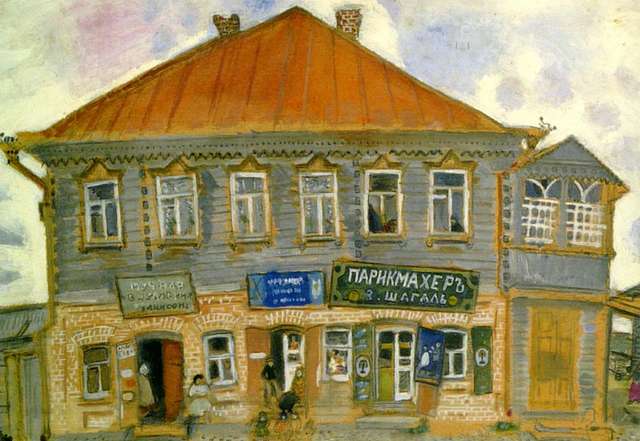
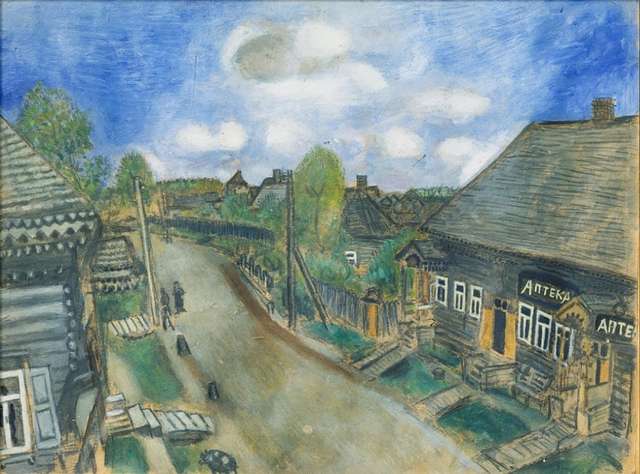
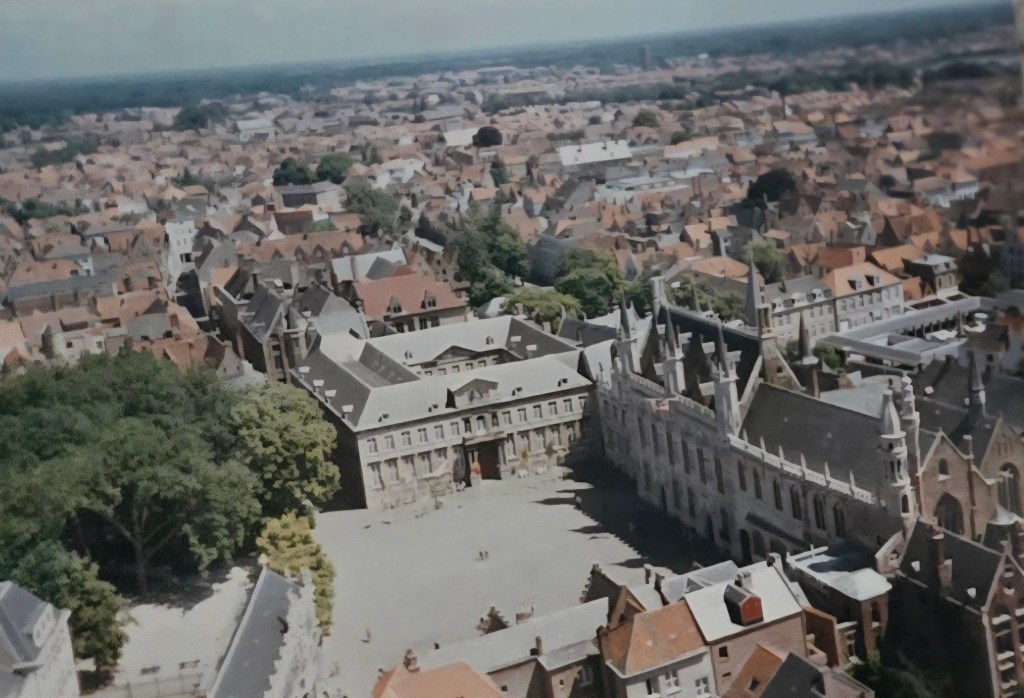
We had a lovely day in Brugge (I do not call is “Bruges”), that most picturesque of Belgian towns, despite our car being towed from a no parking zone.  We retrieved it and continued to have a lovely time despite the car subsequently being totaled in an accident halfway through our two-week trip.  It was a most bizarre thing:  we were stopped at a red light in a small town called De Panne (which literally means “breakdown”) and were suddenly rear-ended by an old man who apparently should not have been driving.  It was a small European car, but it should have still been visible in broad daylight. 

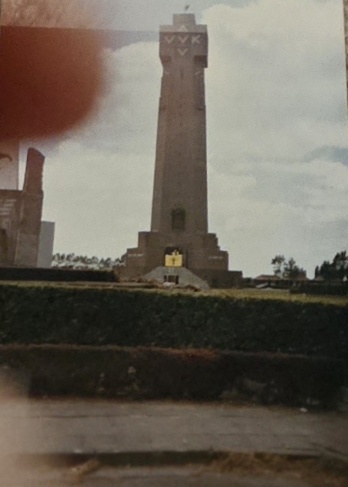
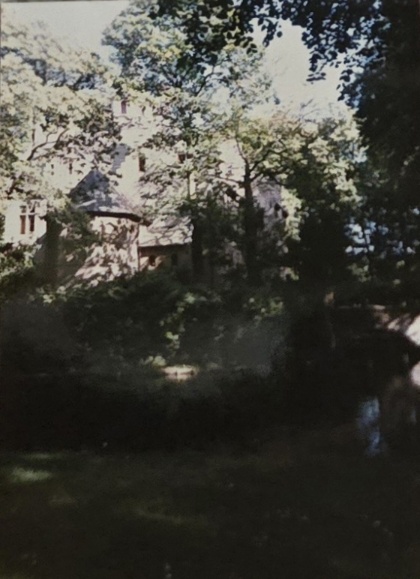
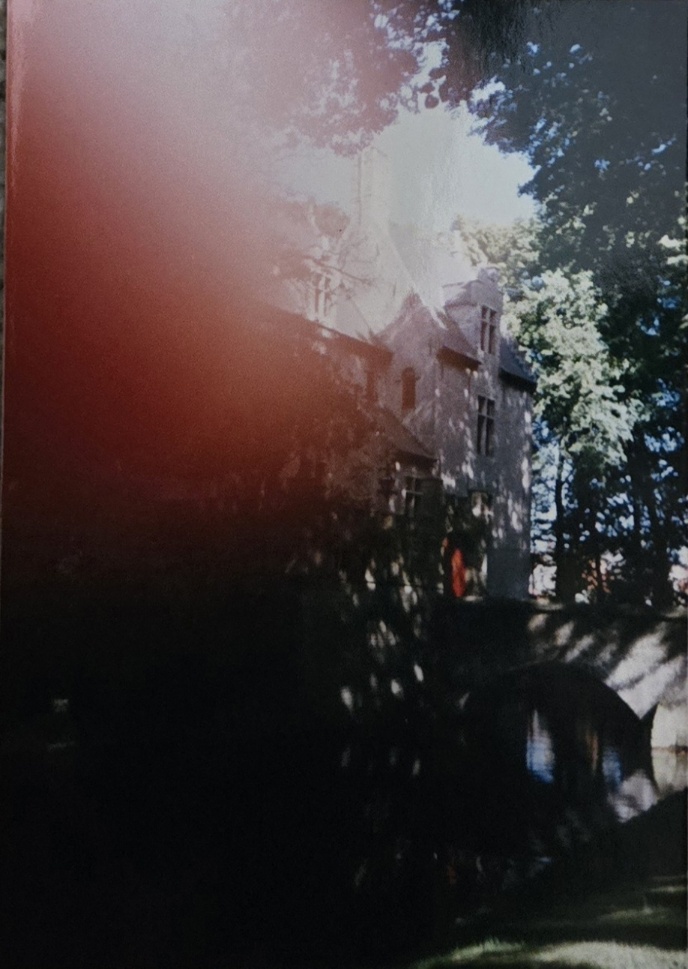
By macabre coincidence, similar to the one when my dog was hit by a car in care of a dog sitter while spouse and I were touring Dachau, the accident happened on our way back from visiting the World War I Trench of Death in Diksmuide.  We then arrived too late for an excursion at some castle, were detained by cows crossing a road, and decided to skip our customary café outing to rush back to Koksijde to see “Amadeus” at a movie theater.  It was a veritable Appointment in Samarra, albeit significantly less fatal.

I was awed then, and remain to this day, by the composure of my Dutch mother who, after some deliberations with adult family members, made the decision to continue our holiday sans auto.  If there was any stress, tension, or worry of any kind, it was either not recorded by me (extremely unlikely) or she assessed the situation and moved on with minimum disruption and maximum determination.  I see no similar scenario in which I or any member of my biological family would not completely freak out and flee.  There was some talk of leaving me with the adult (21 year old) cousin, but ultimately (after learning that this is not permitted by the exchange program’s rules), all four of us rented bikes and proceeded to continue to enjoy our holiday.  Special mention goes to the now defunct bee-themed amusement park, Meli Park, which we visited and found hilarious in its earnestness, and to me, who rode a bike like a [very sore] champ and held her own [at a somewhat lower speed] among the Dutch. And we also saw “Amadeus”.

I managed to visit Antwerpen once more.  In college, another Dutch cousin and I went there for the weekend by train to visit her brother (the cousin of the family vacation fame) and his then boyfriend.  I remember walking through some heavy iron door into the deafening noise and strobe lights of a disco and drinking a lot (“I drank three mugs of beer and a shot of Baileys”, I wrote then).  I remember that we slept through the day and have not a single recollection of seeing anything of the city, but the diary says that “during the day we walked around Antwerpen.”  I took several photos of all of us, and for that I am grateful, because “some are no longer there, and others are far away”, as Pushkin famously said (sounds better in Russian).  I cherish the memory of that weekend with my Dutch cousins; the city is just background noise.

That same summer, my roommate Kathy and I https://oldladywriting.com/2021/04/10/meet-me-in-sistine-chapel-or-rome-second-try/ did that European train loop which had us crossing Belgium on our way to and from Luxembourg.  We missed our connection in Basel and spent the night in the cold train station. The next train to Brussels was full, and we hopped on the one going to Calais (the joys and perils of Eurail Pass!).  In Thionville, the train split, and while I was checking to make sure there was room for us, I almost left without Kathy, and we again ended up waiting in a train station.  But, there was a vending machine that yielded an extra cookie, so there was that.  This is all to say that by the time we finally arrived in Brussels, we were so excited about real beds, hot shower and impending hot breakfast (included) that we decided to skip the city altogether, though we did make it to Brugge in passing, mainly hunting for lace doilies.

I never saw Brussels to this day, Antwerpen remains a mystery, but the Flemish Coast is a very fond memory.  To be continued…

Featured

Another Turkeyless Thanksgiving

I have disliked Thanksgiving before it was politically correct to dislike it.  Well, technically, that is an exaggeration, but the warmest emotion I ever felt toward it was indifference with a tinge of bafflement.  And by “Thanksgiving” I mean the actual celebration and trappings thereof; I always have, and always will, welcome and support the idea of a four-day weekend.  In fact, the four-day weekend is one of my most aspirational career goals.  But I digress.

Of all the big American holidays, Thanksgiving was easy for my mother to embrace during our early immigrant years because of its secular nature and a very specific, mandatory, and exotic (to us) menu.  Paradoxically, these are the very same attributes that eventually turned me off it.

For me, it has been a struggle to celebrate something to which I am not connected emotionally, religiously, or traditionally.  The holidays of my childhood were deeply rooted in the Soviet calendar, the May Day with its first blooms of spring, the Victory Day with its patriotic pride, the October Revolution (celebrated in November during the fall break, so kind of like the long weekend of Thanksgiving).  And then there were the traditional ones, New Year’s Eve conflated with Christmas, a kind of two-for-one complete with Grandpa Frost, gifts under the decorated evergreen tree, but also champagne and a glorious feast at midnight, Cheesefare disguised as Rites of Spring, and some very low-key, irreligious and food-focused Easters and Passovers.

And thus, Thanksgiving did not offer me anything from the very beginning.  When I first watched Macy’s Parade on TV, it seemed chaotic and pointless.  I was used to parades in which you walk, with classmates, with family, with balloons, banners, flowers, and it’s a party.  Watching giant things float is faintly anxiety-inducing to me.  The bland menu as well is almost opposite of comfort food, especially the turkey stuffing, which remains incomprehensible to me.  My spouse enjoys pumpkin pie, and I can make a good one, but making a pie out of pumpkins continues to persist as an alien construct.

My first distinct memory of this holiday is, fittingly, one of attempted avoidance.  My senior year of high school my mother and stepfather went on a cruise, taking advantage of the long weekend—a practice I later wholeheartedly embraced.  I was left home alone, having just turned 17 and anticipating four days in the company of my VHS tapes and Little Debbie snack cakes.  A caring friend was absolutely appalled at the idea of me spending the holiday alone, and took me to a large family gathering at her uncle’s farm.  It was a very nice time, and her kindness stayed with me.  This scenario played out again the following year, with different high school friends.  It was my first year of college, my parents were far away, and being enveloped in the warmth of a family that was not mine, and thus non-judgmental, remains a cherished memory.

For the rest of my time in college, Thanksgiving became a prized homestretch to write the final term papers.  I developed an efficient 24-hour four-day rotation of half hour writing/half hour listening to music while eating Oreos and mixed nuts and drinking black coffee.  Before my mom gifted me a Mac and a dot matrix printer my senior year, Sunday after Thanksgiving was spent in an interminable line at one of the university computing centers, waiting to type up and print my handwritten pages.  I will never forget when a frat boy from one of my Poli Sci classes spotted me sitting on the hallway floor in an unwashed mass of exhausted students and gave me his number that was dozens if not hundreds closer to being called for computer access than mine.  It’s funny, these memories of random acts of kindness…  I have to say that those solitary, but productive days were my second favorite iteration of this strange holiday.

The least favorite, by far, was the actual gatherings with family.  Oh, it is not the family itself, as much as the rituals.  Thanksgiving at my in-laws’, while casual and inoffensive, included the traditional menu I dislike and the obligatory mind-numbing football game that basically concluded with a disorienting midday nap for me.  Thanksgiving at my mom’s was exactly the opposite, extreme formality in dress and elaborate Russianized variations on the dreaded poultry and other dishes, also followed by naps on stiff furniture and a desperate search for the nearest open WalMart as the only available diversion.

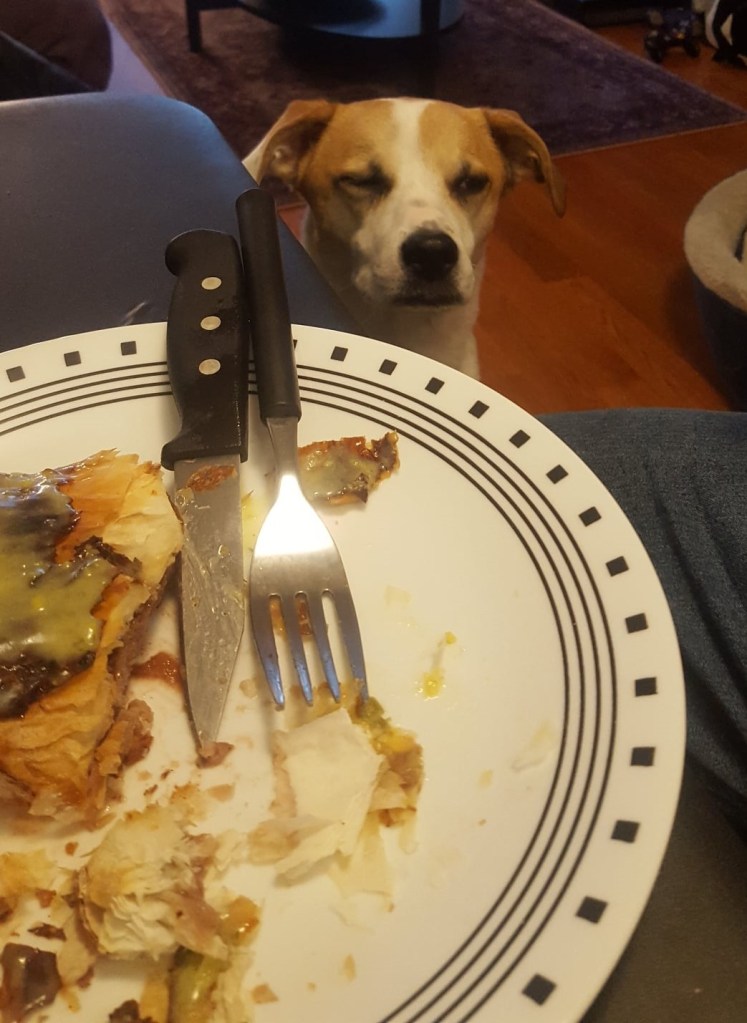
I don’t know who put this thing on my plate. I am sure I did not eat it. (2009)

The truly worst, however, were the Thanksgiving gatherings at my own house.  One time, my mother literally broke her foot when she slipped while running on my newly mopped floor.  Why was she running?  Oh, because as soon as she arrived at my house and saw me manually mashing potatoes, she exclaimed that she brought an electric potato masher to my house in anticipation of just such a clumsy error on my part, and ran for it.  Spouse finished the mashed potatoes and turkey, as I ate Lorna Doone cookies from the emergency room vending machine.  It was a horrible weekend however you look at it, but there is a tiny moral here of letting adult children adult.

Another Thanksgiving saw my son run away from home.  We assumed he was spending the night at a friend’s after one of the typical teenage fights.  It turned out that he was driving all night to none other than my mom’s house.  When he crossed the border into Tennessee on Thanksgiving Day, he realized that he did not know her exact address, and the gig was up.  It was a strange, strange weekend, and the less said about it, the better.

I have to give a nod to a few gatherings in New York.  There was my first year living in Manhattan, when I was wandering Greenwich Village with a friend (we saw “Home Alone” during its first run in a movie theater, and I also saw “L’Atalante”—and how is that for an eclectic mix that only NYC can provide), and because of exams coming after Christmas (creating a nightmare of a different kind), Thanksgiving was truly a four-day urban holiday.  There were also milestone family birthdays that coincided with Thanksgiving, and we gathered in Russian restaurants in Brooklyn with our traditions, including singing, dancing, and the comfort foods such as caviar/herring/tongue/”Olivier” salad and copious amounts of vodka.  Good times! 

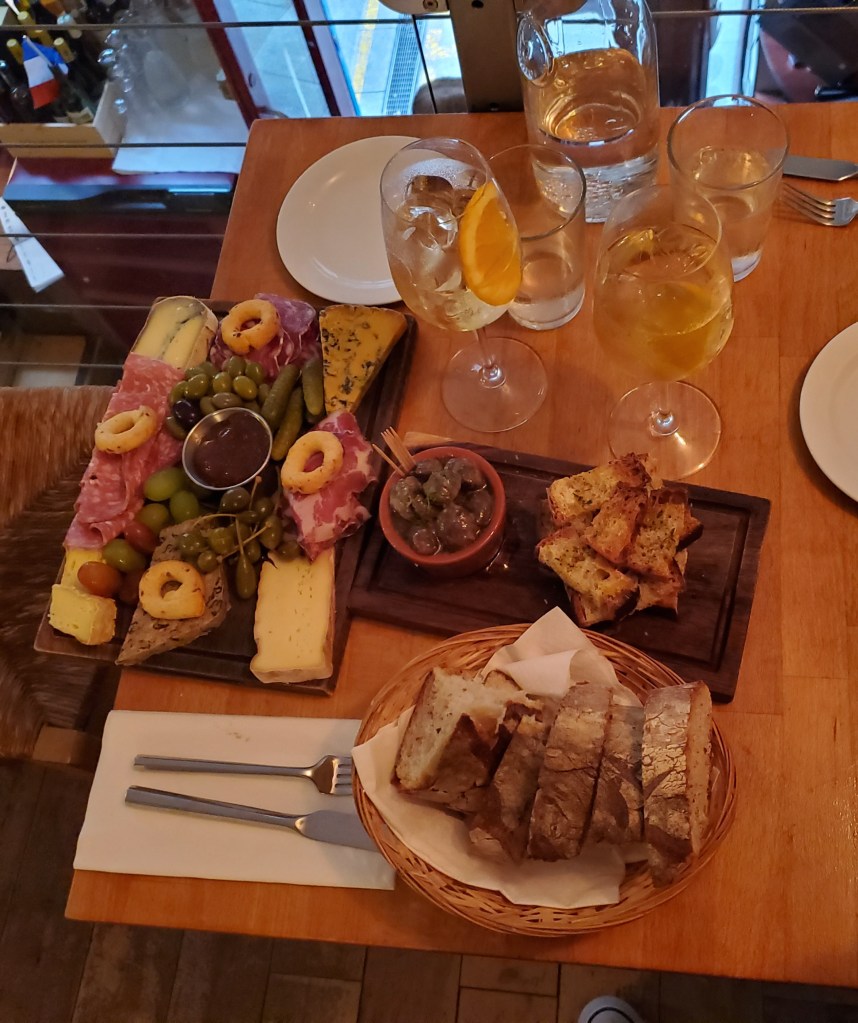
And this brings me to the best Thanksgivings.  They were all non-traditional and European.  There was paella in Spain (2008), rabbit in Malta (2010), Kir Royale at the Deux Magots in Paris (2012), discovery of Guinness in Dublin (2013), fresh turbot in Italy (2014), this incredible smoked orange liqueur in Portugal (2016), discovery of Beaujolais Nouveau on the French Riviera (2017), and the surprising charcuterie in Dublin (2019).

Also whiskey tasting in Dublin. Tealing Distillery. (2019)

Honorary mention goes to Vegas 2015—not quite out of the U.S., but still, Vegas is not your typical Thanksgiving venue—and Chicago 2018, with this failed Beef Wellington.

(2018)

Last year we attempted to have a first firmly post-pandemic family Thanksgiving, albeit in Chicago, and I woke up to a smell of smoke and a wail of sirens.  The building next door caught on fire.  It was a restaurant, so closed for the day.  No one was hurt.  But as I passed the fire trucks on my morning run along the lakeshore, I said to myself, strike three. 

Featured

Papa Taught Hebrew in Harbin

My grandmother used to tell me stories about her childhood, in the 1920s, which were both exotic and relatable.  She was only 45 when I was born, which seemed ancient to me, of course, but now I know that the half century mark is prime time for reflection and reminiscing.  We are unreliable narrators of our own lives, and the charm of her mischievous and adventurous early years in the small provincial town on the Volga remains the biggest shared treasure of our fraught relationship. 

Now that I am the age that she was when she was raising me, I realize how memory shifts as time goes by.  In her telling, she was a spirited and inquisitive child that was frequently in trouble with her humorless but loving parents.  The irony that these were the qualities she most deplored in me escaped me then.  I also bought into this portrayal of her parents for the time being, while years later it came to me that perhaps the character trait she most chose to emulate—grim rigidity—was the least praiseworthy attribute of this couple.  They never seemed quite real, just shadows of semi-forgotten ancestors, even though less time separated my childhood from them than from today.

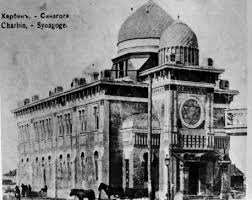
I recently read “People Love Dead Jews” by Dara Horn.  In this book, which had me both nodding in agreement and holding my breath, I came across a chapter about the Jewish community in Harbin in early 20th century.  I do not know if more is written about this place and time in history, but this was the first time I gasped in recognition:  “Papa taught Hebrew in Harbin”.  For among grandmother’s stories was always this nugget: her father spent several years in Harbin, teaching Hebrew to children while his brothers were running a business there.  This has always been just a naked, stand-alone fact, and when I was a child, it always seemed like enough information.  Great-grandfather, whom no one in my world besides grandma and her brother ever met, for he died before The War and before she left her hometown that neither my mom nor I ever even visited, was always described as a stern disciplinarian and seemed sufficiently boring to not merit additional investigation.  But grandma’s own childhood memories of her father speaking Chinese to make the neighborhood kids laugh echoed my own delight when her brother, my beloved great uncle, would pretend to speak Chinese to me.  I knew he was faking it, but he was so delightfully comical!

I finally learned that this interlude in great-grandfather’s life was not random, as I always assumed without additional thought.  Fortunately for me and mine, his ultimate fate was arguably better than that of many of the people he would have known in Harbin—and that is saying a lot, considering that he returned to his hometown of Lyozna, Belarus [1] (at some point before getting engaged to my great-grandmother on June 12, 1919 in Vitebsk[2]), got married and had two children, lived through the darkest years of Stalinism, and died before he was 60 in 1940.

I have been an immigrant since I was a teenager.  I have traveled.  I spent two summers in Europe, and I have been to China on a work trip, to the beautiful and sophisticated Shanghai, which is actually nowhere near Harbin and has a completely different history.  Every day of my professional life, I talk to people who have, at a minimum, spent several years in a foreign country.  Until now, I have not thought of this remote, unknown man’s journey, his years (how many?) in a much colder climate, in a completely different world.  I never imagined that he had his own “stranger in a strange land” journey.

Synagogue in Harbin

As a child I did not know enough about the world to imagine China at the beginning of the 20th century.  I never gave a single thought to how great-grandfather traveled so far—and back—what kind of business these nameless brothers of his had, why and when did he return to Belarus, eventually making his way to and settling in Russia proper. My grandmother was not a person who did not talk about the past, but I do not know how much she knew about that period of her father’s life.  Somewhere along the way, there was some falling out with these uncles that severed the family ties for all eternity (they were not welcome to attend their brother’s funeral).  It might have been related to this business in China, but grandmother’s own mother never told her.  In those days, people did not ask; children did not question their parents.  It is nearly impossible for me to understand the respectful yet reserved, affectionate yet distant relationships of that bygone era.  To the families of these great-uncles, whoever and wherever they are, my family is the missing link, the lost tribe.  Do their descendants remember today that there was another brother, another uncle?  Is this Harbin interlude a part of their family lore?  Sometimes I lament the loss of family memories to family feuds on top of the already precarious and unreliable way history was treated in the Soviet Union.  Other times, I concede that maybe it is only natural that the lives of ordinary people do not survive generational memories.

Dara Horn’s book gave me an unexpected glimpse into my great-grandfather’s unknowable life.  There is a connection that survives time and space, and a memory that is a blessing.

 זיכרונו  לברכה  אַבְרָהָם


[1] The birthplace of Moishe Shagal, aka Marc Chagall.  I wonder if they knew each other?  They would have been contemporaries. 

[2] The only exact date in this narrative, because my great-grandparents’ engagement announcement somehow survived time and distance, and I treasure it.

Father’s Day Part II

I meant to add this as a follow up to Part I.  Like for Rose Tyler, it is certainly an unexamined subject for me.  I never had a father.  Well, strictly, it is not true.  He has always existed in the ether, and walks the Earth today. 

Here is how we first met.  Back in the pre-Afghan invasion days, before the Soviet Union reinstituted the draft, young men were only conscripted if they were not in college.  Those pursuing a higher education were exempt from the brute service.  My father failed out of college and was immediately snapped up.    One fine day during my fifth summer, I was told that my father was coming home.  I was made to wear a hideous sleeveless blue dress with pink trim, and have not forgiven my mother for it to this day.  It was made in Egypt, and had a head of Nefertiti on the inside tag.  It freaked me out, and I hated the dress because of it.  I also hated how my bangs were pulled back in a bow.  It seemed a lousy first impression to make on my father.

He arrived with a bouquet of flowers for my mother, and I recall turning away from a hug.  He was a stranger, and it was all completely embarrassing.  I lived with my grandparents, and young men were scarce in my world.  He was probably about 25 at the time.

I think my parents were only together for that one summer.  Several memories I have of that time are as follows:

Living with my other grandparents.  They had a two bedroom apartment. It was a standard and familiar layout of the times. I remember they had a vase on the floor with cattails. I must have had the urge to pick at them.  I probably did.  My other grandmother, who, as my father later confirmed, disliked my mother and her family (and me, I certainly felt so), was ironing a beige dress with white lace that I had and ironed out a crease on the front.  It was the design of the dress, and I protested, because “my” grandmother would not do such a thing.  She responded that she was also a grandmother of mine.  Whatevs, lady.  I never believed her, and she never really was.  I addressed her with the polite “vy” instead of the familiar “ty”, which irritated her.  I do not even have a photo of her. I would not know her in this life or the next.  She died just a few years ago. 

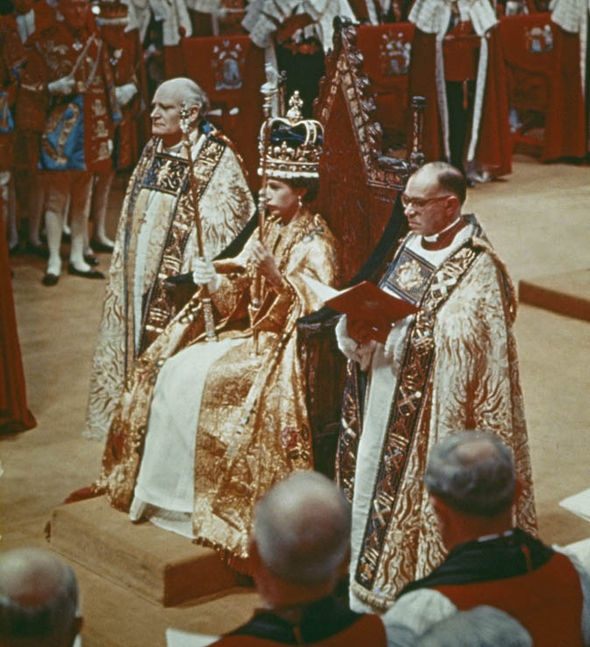
Toys. My other grandparents presented me with some cool toys.  There was a set of amazing dollhouse furniture, which I regrettably did not treasure.  Of course, it would have never made it to America anyway.  What did was an old Viewmaster which my father must have had as a child when his parents lived in India.  It had some amazing Western shows, such as a three-disk set of “Bambi”, “Three Little Pigs”, “Little Black Sambo” (it was a long time ago…), coronation of Queen Elizabeth II, lots of brightly colored parrots and one monkey (there is always one monkey), and incredible views of faraway Asian lands, particularly Mount Fuji and the Taj Mahal.  I brought it frequently to show and tell in my Russian school.  The collection made it to America but not past high school. When I went away to college, I neglected to supervise, and my mother, predictably, lost it.  It is a damn shame.  Damn shame.

Aunt.  My mother is an only child.  My father has a younger sister.  They seems to have retained a close relationship to this day.  She was a college student at the time, and he encouraged me to shake a fist at her and yell, “We will show you, students!”  Only recently did I learn that this was because of the famous Shurik the Student movie, “Operation Y”.  My father must have been a fan.  My aunt Tanya seemed a benign, but nondescript, presence.  I remember almost nothing about her.  My father was allowed to name his newborn baby sister Tatiana, which is apparently his favorite name.  He suggested it as a name for me, but of course my mother had to step in without something less “common”.  It appears that my father did not get a vote.  He managed to prevail with my sister, who has a different mother. 

Car.  My other grandfather had a car.  It was huge and green and white, but maybe it wasn’t either.  My father must have known how to drive, because I recall sitting in the front, which is quite illegal for very young children, Soviet Union being no exception, and he admonished me to slide under the dashboard if we saw the road patrol out in the country.  Great parenting right there! 

Not my other grandparents’ actual dacha

Dacha.  My family never had a dacha, a “beyond the Volga” country home, because my grandfather worked all the time.  It was not that my grandparents could not afford it, but more that they did not want to be bothered with working the land.  Besides, pretty much everyone we knew had a dacha.  My other grandparents’ dacha was a two story construction, which was very exciting.  The second story was some kind of a loft where my parents slept.  I wonder if that is what caused my affinity and longing for lofts.  I have never lived in one.  My father’s paternal grandmother was still alive at the time.  She seemed ancient.  She was dressed all in black and sat on the steps of the dacha and yelled at me whenever I ran in or out of the house.  I have no recollection of her being elsewhere, just on the steps of the dacha. 

And then there were the pranks.  Tall, handsome, fair, young, my father was not really a parent, but a fun older brother type.  One time we came to pick my mother up from work (he was not working—not then, not later).  My mother worked at the Synthetic Rubber Plant.  There was a mean old Soviet woman guarding the exit.  It was a secure facility, and those without authorization could not enter.  I saw my mother walk toward us down a long hallway.  Father urged me to run to her, past the mean woman—and I did.  It was, of course, unimaginable, but it was fun!

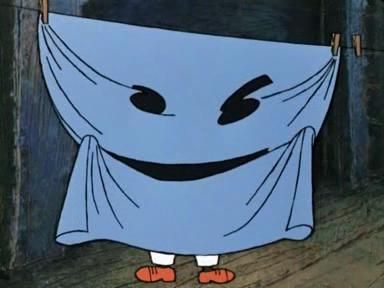
Another time we were waiting for my mother to come home.  My father came up with a basic, but ballsy, plan of cutting out eyes in a sheet, putting me on his shoulders, and scaring my mother as soon as she entered the apartment.  It was hilarious.  He was so much fun!

I never had any grievances against my father.  He was—and, I am afraid, remains—a stranger, but the memories are mine and lovely…

The Day I Fell in Love with Dr. Who or Father’s Day Part I

It was Father’s Day.  Not “a” Father’s Day, but “the” Father’s Day—the episode of the first season of the sci-fi series’ revival.  This is not a spoiler, because the episode aired in 2005.  Rose Tyler travels back in time and tries to save her father who died in 1987.   

I don’t like science fiction.  I mean, I really, really don’t like science fiction.  I do not read science fiction, I do not watch science fiction.  I walked out of the first “Star Wars” movie on the pretext that my mom was picking me up (before I was driving myself), fell asleep in the movie theater during one of the later prequels in the dead  afternoon (I do not even know which one), never saw any of the “Star Trek” movies or TV episodes, and just generally have always appreciated the genre exclusively for its great soporific quality.  It’s actually my little prescription-free secret—on long flights, instead of popping Ambien, I watch dreary sci-fi and fantasy movies to fall asleep (unless they are showing the original “Wall Street”—I have never been able to stay awake for more than a few minutes of that movie!)

I had a boyfriend who was obsessed with the original “Dr. Who” (this is not the same terrible college boyfriend, but a fairly nice guy law school boyfriend).  He was a geek and of course loved sci-fi.  I was (and still am) a geek as well, but I drew the line in the sand at watching bad ‘70s English TV show about a guy with the long scarf, mad hair, googly eyes, and terrible special effects, doing incomprehensible thing for reasons that were passing understanding.  I pretty much slept through all the episodes that were shown to me. It may or may not have been the beginning of the end of that relationship.

So having never cared for any of this, and having, in fact, a somewhat self-congratulatory attitude about being intentionally ignorant about this segment of pop culture, I found myself, quite unexpectedly, watching the 21st century regeneration of the good Doctor. 

Something happened.  Maybe my kids started watching it, and they were old enough to offer a valuable opinion (it happens!).  Maybe there was some hype that led to some curiosity.  Maybe I pressed the wrong icon on Netflix.  Maybe the trailers were good.  But still, a couple of seasons have passed, because at the time I started watching, the first of the modern Doctors’ time has already passed.

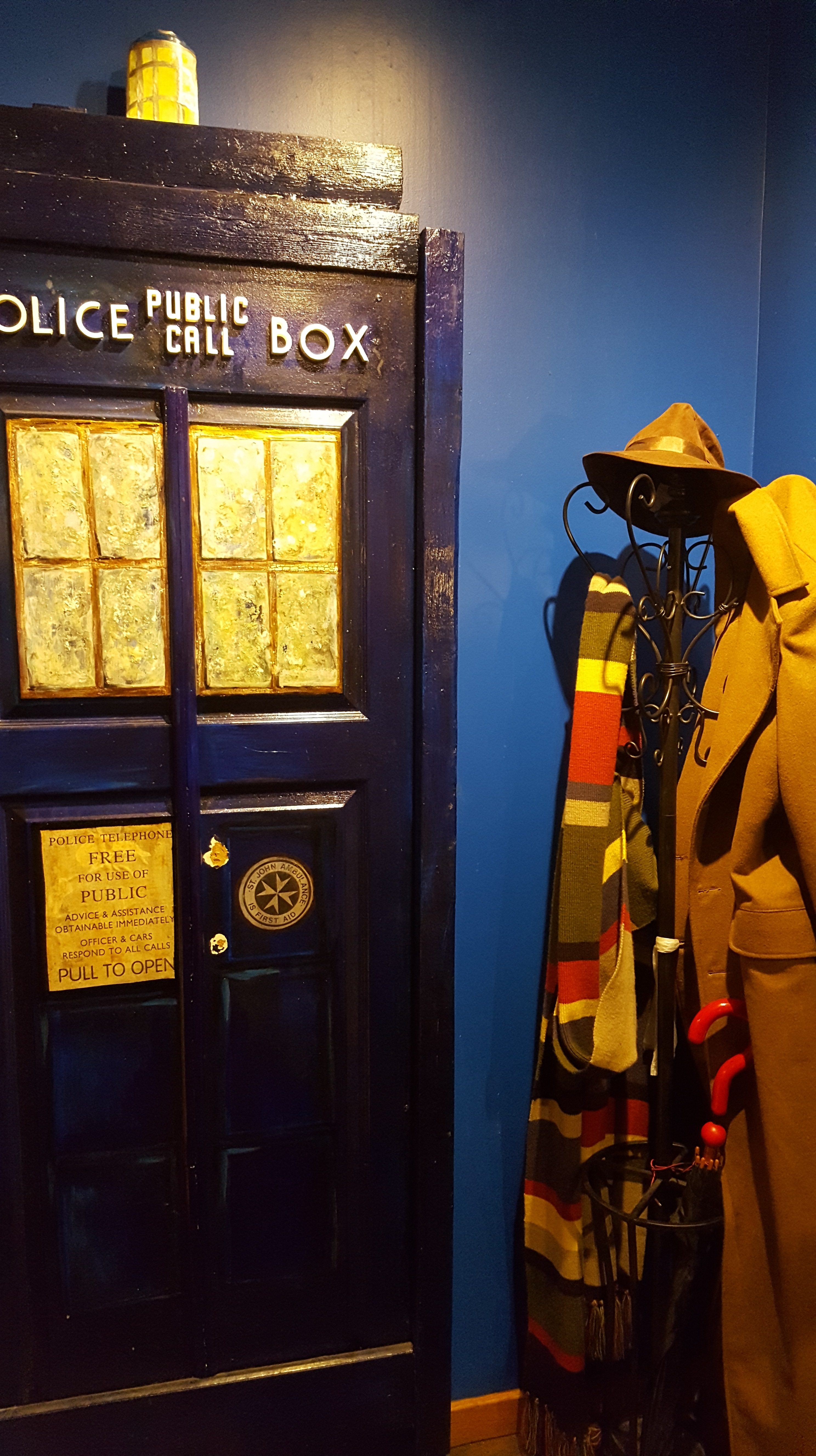
Tardis in London

And so I slogged through the first several episodes on my Kindle.  Tiny portable TV that you can watch everywhere, including in the bathroom, but also contains a giant library of books, the Kindle is, to my mind, the most spectacular technological invention of my lifetime.  I never wanted to get it, but once it came to me one year as a Christmas present, it was love at first sight.  So I was carrying my Kindle around watching sci-fi, and thinking, who AM I?  The episode about mannequins coming to life (kind of funny), one about some aliens (definitely stupid!), one about traveling back in time and meeting Charles Dickens (ooh, I like that!), a few more aliens (OK, I think I am going to be stopping pretty soon here, aliens are super-boring to me), and then…

Father’s day…Rose’s father was run over by a car when she was just an infant.  She never knew him.  Suddenly, she travels back in time with the Doctor and meets her father.  Of course, her instinct is to save him and to get to know him.  Because, like Rose, I never really knew my father (spoiler alert:  he did NOT die when I was an infant, and as of this writing, continues to be very much alive), this story hit me right where it hurt.  Except I never expect it to hurt, until it does…  Unlike some other deficiencies of my life, I am not super-fixated on having grown up fatherless.  I do not know anything different, as simple as that.  I grew up without a father, but also without siblings, without a dog, without figure skates (I really wanted figure skates!), but with wonderful neighbors and friends, a cat, a bicycle, etc.  I mean, you have some things, and you do not have others, which is the way of the world.  But every time I see a show not just about a missing father—because a missing father is merely a fact that in and of itself is not worth mentioning, to my mind—but about a father that was lost and now is found, it touches my heart.  Because deep down, all my life, I have hoped, without ever daring to give that hope a name, that I would have a second chance with my own earthly father.  And seeing that episode of the heretofore farfetched, phantasmagorical, and often downright silly show, about a girl getting that second chance, made me love all of “Dr. Who.  And even the fact that Rose was not able to save her father and live happily ever after with him by her side (because that would wreck the whole balance of time, of course) made me love it even more, because life is never that simple, and father-daughter relationships, and non-relationships, are fraught.  But sci-fi is great escapism—and when it’s great drama to boot, well, let the binge watching begin!