Featured

Charlie Chaplin Christmas

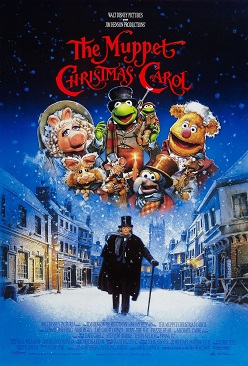
I am not a total holiday Scrooge or Grinch.  I do happily celebrate Christmas.  In fact, my family’s most cherished and enduring Christmas tradition is to watch “The Muppet Christmas Carol”.  We have not missed a year since it came out.  I can recite all the words, just like I can to “The Lion in Winter” (another Christmas movie, though not part of our lore) and, of course, “Chariots of Fire” (entirely unrelated to this holiday, but I never pass up an opportunity to mention it).  And a few years ago, I actually went to three churches on Christmas Eve:  Orthodox Church for Eve of the Nativity service, Catholic Church because a friend of mine sang “O Holy Night” during mass, and Methodist Church for evening carols and candles.  (This feat is not likely to be repeated)

If you are one of the very few people who have not seen this, go watch it now. You are welcome.

Back in the Old Country, all holidays were secular, some were political, and we only read about Christmas in classical literature.  The religious aspect of it was merely a relic of antiquity, but we had the rest of it, the tree with all the trimmings, the gifts, Grandpa Frost and Snow Maiden, festive meal with friends and family, kids pageants, seasonal movies and, of course, “The Nutcracker”.  It was just entirely conflated with New Year’s.  It was the “New Year’s tree” and Grandpa Frost, bearing gifts, was joined, at a critical juncture, by Baby New Year.  As a child, I had some vague notion that the pre-revolutionary holiday, while similar to our own, contained some forbidden mystical elements, but never understood why it was celebrated before the actual final day of the year—and what did people then do on December 31, the *real* holiday, if they already spent all of its currency the week before?   I assumed it might have had something to do with the old Julian calendar, with its confusing two week delay, which was finally abolished in 1918.

New Year’s tree at my parents’.

Our first year in the U.S., my mother allowed me to open the gifts under the tree on Christmas rather than December 31, but strictly because I was a tremendous pest about it.  She literally told me, “I hear in this country, they open the gifts a week early”!  I took that as a very personal victory, and it was also the first time I heard that this unfamiliar holiday was still being celebrated, and in the New World no less.  Who knew?  We continued to do our tree/gifts/dinner thing on New Year’s Eve.

For the next decade, this holiday continued to elude me.  American Christmas always seemed reserved for family, but it was also a part of the larger holiday landscape, so December 25 was really no different than any other vacation day until the big event—New Year’s Eve.

One time in college, I actually spent part of winter break with a Jewish friend.  Her kind mother was so concerned that I was being deprived of some family tradition that she took me to a neighbor’s house to at least look at a decorated Christmas tree.  It was nice, and I did not have the heart to tell her that the tree alone did not mean much, and it was a week early anyway.

On my drive home, late that Christmas Day, my car spun out on a highway in a snowstorm and ended up facing the oncoming traffic.  Some kind man drove me home in my car, because I was too shaken up, while his wife followed in theirs.  They kept asking if I had someone to be with me.  I reassured them that I did.  But, I lived alone in Michigan, my parents lived in Texas and were on a cruise to boot, my grandparents lived in New York and were visiting friends in Atlanta, all my friends were with their families, every single store and restaurant in town was closed, and this was before cell phones.  I started watching TV, and it blew out in the middle of “National Lampoon’s Christmas Vacation”.  It took me some years to learn how the movie ends.

The last time I did not celebrate Christmas was a tail end of a very rough year, probably one of the Bottom Three in my life thus far.  My personal life was unsettled, I was fed up with living in Manhattan in a high-rent closet where cockroaches paraded by my futon every morning in search of sustenance (but the joke was on them, because I kept everything, including silverware, in a refrigerator that they have never figured out how to breach), and fed up with school after attending it non-stop in various form for almost two decades. I still lived alone, but finally near family, which was the one saving grace in an otherwise dark period. 

The only photo from the unhappiest place I have ever lived.

My mother inexplicably sent me a small live evergreen tree, which was incongruous in my tiny apartment, and incompatible both with my hectic lifestyle and black thumb.  Predictably, it did not survive the season.

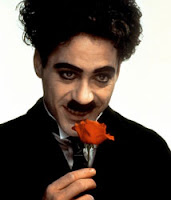
I cannot remember now what depths of despair made me summon my grandparents all the way from Brooklyn on Christmas Day to my tiny studio. We first went to see “Chaplin” at the movie theater.  Robert Downey Jr. was not the action star he is today but a handsome young romcom-ish actor, before all his troubles, and way before he successfully overcame them.  The film was beautiful, and he should have gotten the best actor Oscar.  I still think of it as one of the biggest Oscar snubs in my lifetime.  Back at my place, grandmother fried up some liver and onions on my two-burner stove, and somehow all three of us managed to squeeze in and enjoy both the feast and the company, keeping the window open because the radiator emitted unrelenting heat—but I lived on the ninth floor, so it was safe.  If this is not a quintessential immigrant Christmas in New York, I do not want to know what is.

Through the years, that day has acquired the soft patina of nostalgia, but I do know that it looked and felt less like “Home Alone 2” than “Fairytale of New York”, for this was a time before Disney moved into Times Square, and you could literally smell Manhattan Valley, the upper part of Upper West Side, as soon as you crossed into the 90s. 

I did not record this particular day in my diary, but sometime before the end of that year, I wrote about how much I hated my life.  Within a week, a new year dawned, and it turned out to be one of the Top Three for me.  It just goes to show, the darkest hour is just before dawn.

Featured

Time Shelter: Reminiscence, not Review

“The past is not just that which happened to you.  Sometimes it is that which you just imagined”*. 

The older I get, the more disappointed—and, frankly, disbelieving—I am that we cannot travel back in time.  The more years pass, the farther I get from certain cherished moments, the harder it is to accept the permanence of their departure.  Watching Doctor Who, the ultimate wanderer in time and space, I get a vague sense of unease from the episodes set in the future.  What is the far future to me?  I will not see it, so I am not curious about it and not invested in it.  But the past, well, it is full of second guesses disguised as second chances.  It is full of the comfort of nostalgia. “It’s been written that the past is a foreign country.  Nonsense.  The past is my home country.  The future is a foreign country, full of strange faces, I won’t set foot there”*.

In “Time Shelter”, Bulgarian writer Georgi Gospodinov creates the perfect scenario for which my soul has been yearning.  Gospodinov is Bulgarian, and we are exactly the same age.  I feel his story almost instinctively, beyond the words, for he writes not just about the decades he experienced, but as only an Eastern Block Gen-Xer experienced them.  It is rare that I hear the echoes of the voices in my head in print.

His first person narrator meets Gaustine, a mysterious psychiatrist who opens a “clinic for the past”.  It is meant to evoke recognizable memories for Alzheimer’s patients by reproducing the surroundings of their comforting past lives, but the concept takes off and everyone wants to starts seeking shelter from the relentless passage of time by stepping into the past. “Everything happens years after it has happened”*.

Like Gaustine’s patients, I am not even interested in the historical past, someone else’s past.  I do not want to meet Shakespeare (whoever he really was) or see dinosaurs or anything like that. (OK, maybe I want to meet D’Artagnan in his natural habitat, but that is all).  And fine, I don’t even want to change anything.  I saw “Sliding Doors”.  I read “Midnight Library”.  I am no longer sure which parts of my life I would want to erase if there is no guarantee that this would not have a detrimental effect.  I can no longer fathom what my life would look like today if I had made different decisions at some critical junctures.  I might have been spared some pain, but what unanticipated and ultimately avoided sorrows were waiting in the wings?   The decisions that I made, I stand by them.  The decisions that were made for me trouble me still with the passage of years but regret is useless. And it all basically worked out.

The pool would have been beyond that fence on the right

It is just that the melancholy longings come unbidden in the twilight, and that is when I sometimes wish I could revisit my past.  I want to see the sun rise over the roofs from the balcony of my mother’s apartment, for every occasion on which I visited her there seemed special and wonderful.  I want to sit in my childhood apartment’s dark room lit only by the lights of the Christmas tree, the only year my grandparents had a real tree and could finally hang up the one ornament that was too heavy for our little artificial tree—an orange, the size and weight of the actual fruit.  I do not want to forget either that orange that always stayed in the ornament box in the entresol except for that one brief appearance or my favorite ornament, wild strawberry with a human face.  I want to go to the grocery store on the first floor of our apartment building and buy birch juice by the glass and a hard block of coffee with milk, meant to be dissolved in boiling water and not gnawed like I did as a kid.  I want to watch my collection of film strips in the hallway of our apartment on the coldest winter days.  I want to marvel at the hollyhock mallow plants in our neighbors’ garden in the summer.  I want to see again that inground public pool that was filled in when I was just a toddler, leaving behind a weed-covered wasteland—was my memory of this thing even real, a random outdoor pool on our quiet little street?  And I want to sit on our old couch and read the books of my childhood.  There is so much from that era of gentle stagnation which seems positively utopian in comparison to our present cataclysmic times.  “Warning, history in the rearview mirror is always closer than it appears”*.

My favorite part of this mesmerizing novel, which I had to read twice in a row (and even that was not quite enough to fully take it all in; I am yearning to read it again), is when time shelters become so popular that European countries actually vote on returning to their respective favorite past eras.  The clinics of the past are no longer enough; entire countries become engulfed in nostalgia.  It is fascinating to read what decade each country chooses as representative of the glory of its people, yet still recognizable and not entirely devoid of modern comforts.  Some decades of the last century are obviously fraught; 30s and 40s have their devotees, but Gospodinov is not going there.  The story is not about that.  So many countries choose the 1970s or the early ‘80s (including most of the [former] Eastern Bloc—the whiff of freedom in the air, before reality bit), with only Italy choosing the ‘60s.  Bulgaria’s choice is not mentioned, but there is a hint.  “What decade would you choose?  “I’d like to be twelve years old in each of them.” * That would be my answer, too.

*All the quotes are from Georgi Gospodinov, “Time Shelter”, English translation by Angela Rodel

https://georgigospodinov.com/

[Caption: my time shelter, for better or worse]

Featured

Poison, Fire, and Flood

One of the main villains of my raucous childhood was one Shturman.  This was, and is, his real last name.  I am not changing it here because (1) he is not likely to read this, (2) this unusual name[1] is too much a part of him, and (3) every word is true.

Shturman’s code name was “Douche”.  No, listen, in Russian, it just means “shower” (and in French as well, but we did not know it then).  And the reason he was “Shower” was because we called him “D.Sh.”, which stood for “Durak Shturman”, which means “Shturman the Fool”.  So it all fits together rather beautifully.  Since “fool” was the worst insult we knew, literally everyone’s code name started with “D”, but this was the only one that is not lost in translation[2].  At school, he was known as “Shturm Zimnego”, or “Storming of the Winter [Palace]” (the event that, according to what we were taught at school, started the Great October Socialist Revolution), but we did not feel that he deserved so much honor.

All positive comments regarding these flowers will be deleted

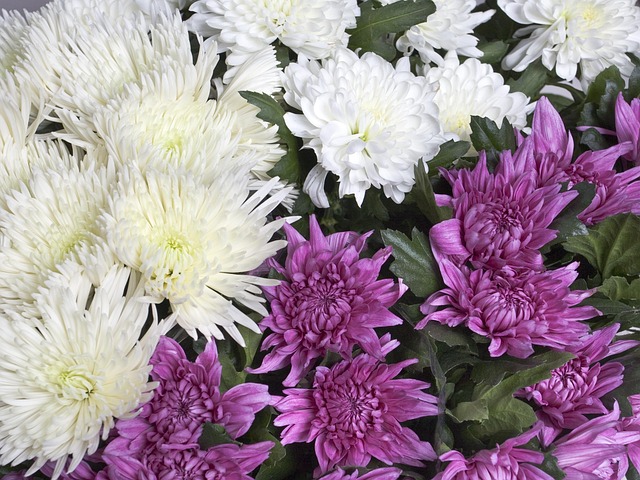
My BFF and I met him on the first day of school, September 1, 1975.  In fact, we all met each other for the first time that day.  It was not a good day for me, for it started out quite literally on the wrong foot.  All the girls were wearing pretty summer sandals (my friend’s were pink).  I, as was my lot in childhood, was wearing heavy, hideous black/brown booties.  I was perpetually overdressed in childhood by my overprotective grandmother; I always had a couple more layers on than anyone else.  My mother, who gets incredibly defensive about every single choice made for me not by me, would undoubtedly say that prettier shoes could not be found—and that would be a lie.  Everyone else wore common Soviet-style sandals readily available at any children’s clothing store in town.  My ugly orthopedic boots were imported.  And to top it all off, the trend of sending me off on the first day of school with a bouquet of chrysanthemums for the classroom teacher started that unfortunate day.  You guessed it—everyone else had lovely summer flowers.  I yearned for daisies, and cannot abide chrysanthemums to this day.  But I digress.

Mine and my BFF’s mothers and both of Shturman’s parents went to high school together.  Their paths diverged for a few short years after college and joined again on that day when it was discovered that they had children born in the same year (two in January, just a week apart, and one in November), who will be starting school not just at the same time, but at the same school and in the same class.  Of course, given that our parents were friends, we were thrown together a lot in those early years, for all the holidays, all the birthdays, summer trips to the countryside, etc.  Well, since I lived with my grandparents, I was not allowed to celebrate with my friends, so that was one very small benefit, having a bunch of 50+ year olds rather than Shturman over.  And since I was born in November, I did not have to share my birthday with him, only with the October Revolution, celebrated in November according to the “new”, Gregorian calendar.

To commemorate the Revolution, we got a few days off from school—basically, our fall break.  In that place and time, it was common to gather for all festivities.   One year, when I was maybe in second grade, we all met at my BFF’s apartment.  The adults, which consisted of Shturman’s parents and mine and my friend’s mothers (both divorced, but with or without boyfriends—memory fails) went for a walk.  Do not be shocked, it was a kinder, gentler time; neighbors looked out for each other and each others’ kids.  And it turned out that the real danger lurked within…

The adults departed for their nighttime stroll, and BFF and I hoped to have some fun:  sing along to Soviet pop music with pantyhose on our heads, make plasticine animals, read about astronauts and plan our own future space adventures—really, the possibilities were endless.   It was a Soviet studio apartment: one room, bathroom, and a kitchen at the end of the hallway.  We staked out the kitchen.  Shturman pestered us for a bit, at one point brandishing a bottle of wine[3] and boasting that he can drink it all.  We called his bluff with all the disdain we could muster; predictably, he did nothing but buzzed off to the room.  But our little gray cells were already activated.

As children, we were told that alcohol is poison. As we saw adults drink copious amounts thereof, the unspoken assumption was that it is poison specifically to children.  Which budding sociopath came up with the cunning plan of serving tea laced with alcohol to our arch enemy shall remain undisclosed.  I know that “Hey, Shturman, do you want some tea?” was not spoken by me.  He and I were never verbal with each other, letting our fists do the talking. 

My friend made him a cup of tea, which was actually mostly vodka.  Shturman, clearly feeling very pleased with himself and his imaginary superiority over us, took a sip, immediately choked and started coughing, eyes bulging.  You did not see this coming, right, because you thought Russians drink vodka from birth, and I am here to break down the stereotypes.  He dropped the cup, and there was that moment in which you know things can go either way—and this is how they went, with him screaming “I will kill you!” and us shrieking and running.  Studio apartment, where are you going to go?  Bathroom, of course—the only place with a lock.

Shturman started pounding on the door and screaming, “Come out or it will be worse for you!  I will break down this door!”  BFF was sort of turning on me: “So, alcohol is poison, huh?  He is alive and well, and even worse than he was!”  I was just hoping the door will hold, and besides, it was a modern apartment, with a “combined” bathroom, meaning toilet, sink, and tub were all in the same place.  We had all the conveniences, and could wait him out until our parents’ return.  Eventually our enemy calmed down and walked away, and we settled in the bathtub, lulled into a false sense of security.

Suddenly, a scratching sound alerted us to a new potential disaster.  Shturman procured matches and started lighting them and shoving them under the door.  He decided to smoke us out, that weasel!  But the joke was on him—we had access to plenty of water, and started pouring it on the matches, having emptied the toothbrush glass for this purpose. Neither side was going to surrender, but we assumed that the matches will run out before water.  As luck, good or bad depending on perception, would have it, adults came home before either, to a minor river in the hallway, with purses and shoes floating by.

We refused to leave the bathroom until the Shturman family departed.  I remember nothing of the aftermath of this event (not even the last of its kind), beyond never getting along with this Shturman until I left the country several years later.  I have not seen him since.  Wherever he is, I hope he is not holding a grudge.


[1] It literally means “navigator” in Russian.  Unusual and kind of cool, if one stops and thinks about it.

[2] For example, we referred to Shturman’s father as “D.P.”, i.e., “Durak Papasha”, meaning “Dad the Fool”.  We disliked him because his son looked just like him, and we never saw him as anything other than his son’s father.  Yet DP was the only father that was present in our group of friends.  Something to unpack here.
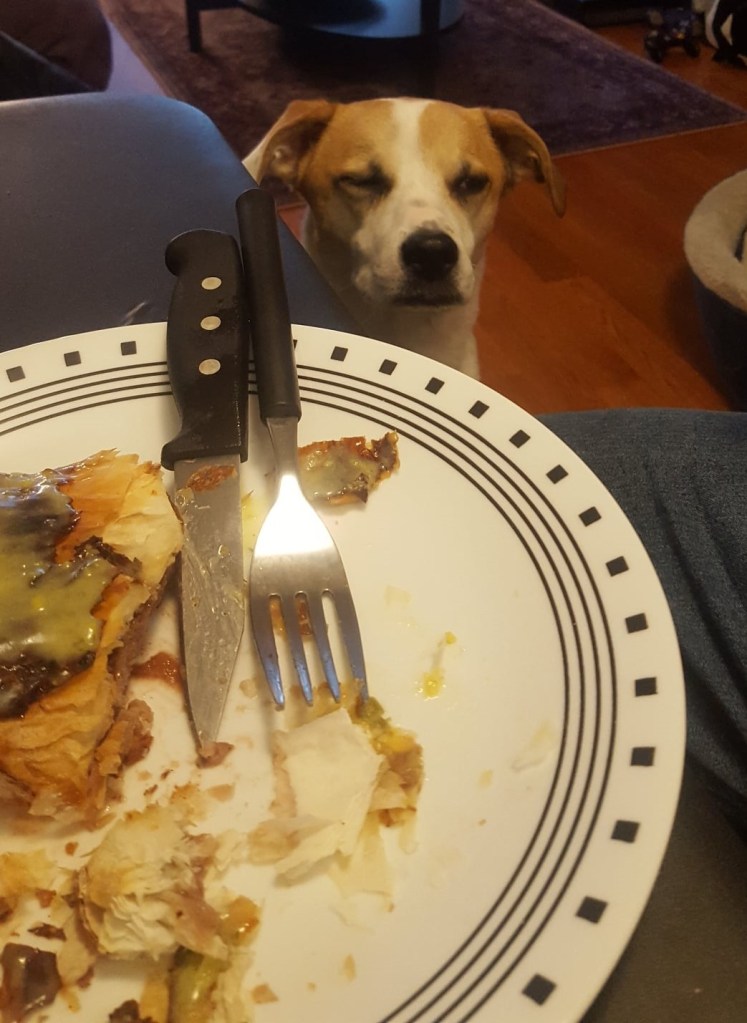
[3] Again I remind you, different time, different place, no burden of Puritan heritage. 

Godfather and Me

I had a client once who professed to be a disciple of The Godfather.  He claimed that he read the book daily to gain wisdom.  It was his Bible, or, as they say in Russia (for he was indeed Russian), “table book”—meaning, a book that you keep on your table for daily reference.  He was a product of The Wild 90s—a decade of extreme instability and possibilities back in the Old Country, so no wonder one or both Dons Corleone were his models and ideals.  It was quite a different time in the U.S. in the 90s, where I was focused on building a career and a family in a way that did not involve any bloodshed.  And so, the hopeful young me thought that there were many literary characters much worthier of admiration.

Coming to America (actually, already here, just out and about)

It took me quite a few years to appreciate The Godfather in my own way.  I first saw it as a teenager; my mother must have rented it in her quest to absorb American popular culture (a trend that, at least for her, turned out to be reversible).  I liked it—who wouldn’t—but I did not really “get” it, not completely.  It was certainly a big story, with an iconic score.  At the time of the first viewing, the death of Sonny Corleone touched me the most.  I was no stranger to similar scenes of unflinching and unfair brutality in Soviet cinema.

I am not posting any scenes of murder and mayhem in this family-friendly blog.

Some decades later I caught The Godfather Saga, a spliced chronological combination of the first two movies, when it was once (once!) shown on TV in 2012.  I thoroughly appreciated the sequential flow, and finally jumped on its bandwagon.  Since there were no more movies to be had once I watched the final part of the trilogy, I read the book and all its sequels, including the ones written after Mario Puzo’s death.  Conventional wisdom claims that the film is better than the book.  Nah, it’s just more recognizable.  The book is fine.  However, how that client of mine chose it to be his life primer is still incomprehensible.  What actual life lessons worth emulating did he really learn from it? I always suspected it was so much posturing…

The story and its characters are so ingrained in our culture that I think we just identify with the familiarity of it.  There was even an episode of “Married with Children” literally called “The Godfather”.  I do not remember the plot (nor is it relevant), but there is a moment when Bud, feeling excluded, exclaims that he is not Fredo, it’s Kelly who is Fredo. 

Going through a particularly turbulent time at work, my mind unearthed this memory, and I became mildly fixated on figuring out who I am in the Godfather universe.  Identifying with the hapless Bud Bundy for the purpose of this exercise, and this exercise only, I started suspecting that *I* was Fredo.  Somehow I came to accept the idea of The Godfather as a microcosm of both work and family life where everyone has a cinematic, if not literary, doppelganger.  Surprisingly (Or not?  No, I really was surprised) there are quizzes to tell you what Godfather character you are.  I took several, with the unexpectedly consistent results.  Spoiler alert: I am not Fredo. 
These highly scientific quizzes are based on the movies and not the books.  In the books, Fredo is a thoroughly debauched and deviant womanizer.  He is not, or not just, the stereotypical middle child, overlooked and unable to find his place among the stronger and smarter siblings.  He is simply unsympathetic and unredeemed.  He is most assuredly not an innocent victim—he is basically not a nice guy.  It was tempting to relate to the slightly less harmful, more sad-sack movie version of him for a hot minute while feeling sorry for myself, but fortunately, the feeling passed.

While I certainly do not, not have I ever, identify with Michael Corleone in any of the movies or the books, I quite [over]use the quote “Just when I thought I was out, they pull me back in.”  It has basically become one of my favorite sayings about the state of my career over the past few years.  But it is just one saying.  The rest of his character and destiny resemble mine not at all.

I would have thought I would be Tom Hagen, at least as a professional courtesy, but truth be told, I am no one’s consigliere, no one’s voice of reason, and much more of a perennial ethnic outsider walking along to a funky beat than he would ever want to be.

And so, the big reveal of the quiz is that I got Kay, Michael Corleone’s second wife.  The highly scientific explanation was that I allegedly can be naïve and foolish when it comes to judging others.  That much is true—I have been known to misplace my trust in folks. But who hasn’t?  I protest a lot, but despite my attempts at outward cynicism, I hope for the best—and “hope dies last” is another favorite mantra. 

Kay has always been one of my least favorite characters in The Godfather.  She is just not cool in the romanticized world of the mafia dons.  But, she is also smart, independent, and—this is a big one—not a ruthless killer.  She finds the strength to break with the evil empire and make a new life for herself, and, ultimately, I can relate to that so much more than to anything and anyone else in those movies and books.  It doesn’t change a thing, but even so, I am feeling pretty good about this.  It’s nice to know.

And yet sometimes—sometimes—I cannot help feeling that in the parallel Godfather universe, I am the horse’s head.

Featured

Another Turkeyless Thanksgiving

I have disliked Thanksgiving before it was politically correct to dislike it.  Well, technically, that is an exaggeration, but the warmest emotion I ever felt toward it was indifference with a tinge of bafflement.  And by “Thanksgiving” I mean the actual celebration and trappings thereof; I always have, and always will, welcome and support the idea of a four-day weekend.  In fact, the four-day weekend is one of my most aspirational career goals.  But I digress.

Of all the big American holidays, Thanksgiving was easy for my mother to embrace during our early immigrant years because of its secular nature and a very specific, mandatory, and exotic (to us) menu.  Paradoxically, these are the very same attributes that eventually turned me off it.

For me, it has been a struggle to celebrate something to which I am not connected emotionally, religiously, or traditionally.  The holidays of my childhood were deeply rooted in the Soviet calendar, the May Day with its first blooms of spring, the Victory Day with its patriotic pride, the October Revolution (celebrated in November during the fall break, so kind of like the long weekend of Thanksgiving).  And then there were the traditional ones, New Year’s Eve conflated with Christmas, a kind of two-for-one complete with Grandpa Frost, gifts under the decorated evergreen tree, but also champagne and a glorious feast at midnight, Cheesefare disguised as Rites of Spring, and some very low-key, irreligious and food-focused Easters and Passovers.

And thus, Thanksgiving did not offer me anything from the very beginning.  When I first watched Macy’s Parade on TV, it seemed chaotic and pointless.  I was used to parades in which you walk, with classmates, with family, with balloons, banners, flowers, and it’s a party.  Watching giant things float is faintly anxiety-inducing to me.  The bland menu as well is almost opposite of comfort food, especially the turkey stuffing, which remains incomprehensible to me.  My spouse enjoys pumpkin pie, and I can make a good one, but making a pie out of pumpkins continues to persist as an alien construct.

My first distinct memory of this holiday is, fittingly, one of attempted avoidance.  My senior year of high school my mother and stepfather went on a cruise, taking advantage of the long weekend—a practice I later wholeheartedly embraced.  I was left home alone, having just turned 17 and anticipating four days in the company of my VHS tapes and Little Debbie snack cakes.  A caring friend was absolutely appalled at the idea of me spending the holiday alone, and took me to a large family gathering at her uncle’s farm.  It was a very nice time, and her kindness stayed with me.  This scenario played out again the following year, with different high school friends.  It was my first year of college, my parents were far away, and being enveloped in the warmth of a family that was not mine, and thus non-judgmental, remains a cherished memory.

For the rest of my time in college, Thanksgiving became a prized homestretch to write the final term papers.  I developed an efficient 24-hour four-day rotation of half hour writing/half hour listening to music while eating Oreos and mixed nuts and drinking black coffee.  Before my mom gifted me a Mac and a dot matrix printer my senior year, Sunday after Thanksgiving was spent in an interminable line at one of the university computing centers, waiting to type up and print my handwritten pages.  I will never forget when a frat boy from one of my Poli Sci classes spotted me sitting on the hallway floor in an unwashed mass of exhausted students and gave me his number that was dozens if not hundreds closer to being called for computer access than mine.  It’s funny, these memories of random acts of kindness…  I have to say that those solitary, but productive days were my second favorite iteration of this strange holiday.

The least favorite, by far, was the actual gatherings with family.  Oh, it is not the family itself, as much as the rituals.  Thanksgiving at my in-laws’, while casual and inoffensive, included the traditional menu I dislike and the obligatory mind-numbing football game that basically concluded with a disorienting midday nap for me.  Thanksgiving at my mom’s was exactly the opposite, extreme formality in dress and elaborate Russianized variations on the dreaded poultry and other dishes, also followed by naps on stiff furniture and a desperate search for the nearest open WalMart as the only available diversion.

I don’t know who put this thing on my plate. I am sure I did not eat it. (2009)

The truly worst, however, were the Thanksgiving gatherings at my own house.  One time, my mother literally broke her foot when she slipped while running on my newly mopped floor.  Why was she running?  Oh, because as soon as she arrived at my house and saw me manually mashing potatoes, she exclaimed that she brought an electric potato masher to my house in anticipation of just such a clumsy error on my part, and ran for it.  Spouse finished the mashed potatoes and turkey, as I ate Lorna Doone cookies from the emergency room vending machine.  It was a horrible weekend however you look at it, but there is a tiny moral here of letting adult children adult.

Another Thanksgiving saw my son run away from home.  We assumed he was spending the night at a friend’s after one of the typical teenage fights.  It turned out that he was driving all night to none other than my mom’s house.  When he crossed the border into Tennessee on Thanksgiving Day, he realized that he did not know her exact address, and the gig was up.  It was a strange, strange weekend, and the less said about it, the better.

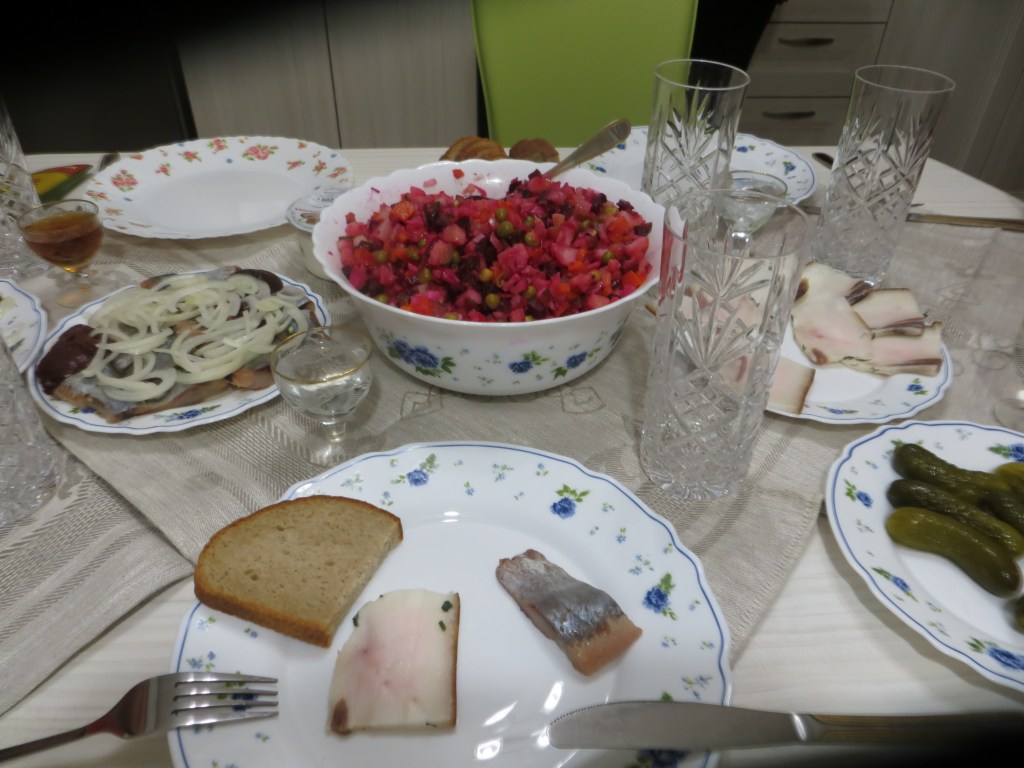
I have to give a nod to a few gatherings in New York.  There was my first year living in Manhattan, when I was wandering Greenwich Village with a friend (we saw “Home Alone” during its first run in a movie theater, and I also saw “L’Atalante”—and how is that for an eclectic mix that only NYC can provide), and because of exams coming after Christmas (creating a nightmare of a different kind), Thanksgiving was truly a four-day urban holiday.  There were also milestone family birthdays that coincided with Thanksgiving, and we gathered in Russian restaurants in Brooklyn with our traditions, including singing, dancing, and the comfort foods such as caviar/herring/tongue/”Olivier” salad and copious amounts of vodka.  Good times! 

And this brings me to the best Thanksgivings.  They were all non-traditional and European.  There was paella in Spain (2008), rabbit in Malta (2010), Kir Royale at the Deux Magots in Paris (2012), discovery of Guinness in Dublin (2013), fresh turbot in Italy (2014), this incredible smoked orange liqueur in Portugal (2016), discovery of Beaujolais Nouveau on the French Riviera (2017), and the surprising charcuterie in Dublin (2019).

Also whiskey tasting in Dublin. Tealing Distillery. (2019)

Honorary mention goes to Vegas 2015—not quite out of the U.S., but still, Vegas is not your typical Thanksgiving venue—and Chicago 2018, with this failed Beef Wellington.

(2018)

Last year we attempted to have a first firmly post-pandemic family Thanksgiving, albeit in Chicago, and I woke up to a smell of smoke and a wail of sirens.  The building next door caught on fire.  It was a restaurant, so closed for the day.  No one was hurt.  But as I passed the fire trucks on my morning run along the lakeshore, I said to myself, strike three. 

Featured

Hometown: Ann Arbor

When I started law school, we had this incoming yearbook with everyone’s photos, so that you could get to know your classmates—you were going to be with them for three years.  We had to list our undergraduate institution and hometown.  The first was easy because factual; the second, for me, became unexpectedly convoluted.

At that time, I was not even a decade out of the Old Country, but it was lost to me, irrelevant, and politically incorrect (oh, how the times have not changed!).  I had no home with my mother and stepfather, last and least because they moved states a couple of times since my last sojourn with them.  I was living year round, working, and attending university in Ann Arbor, Michigan, and so it became my hometown, by default and of the moment.    

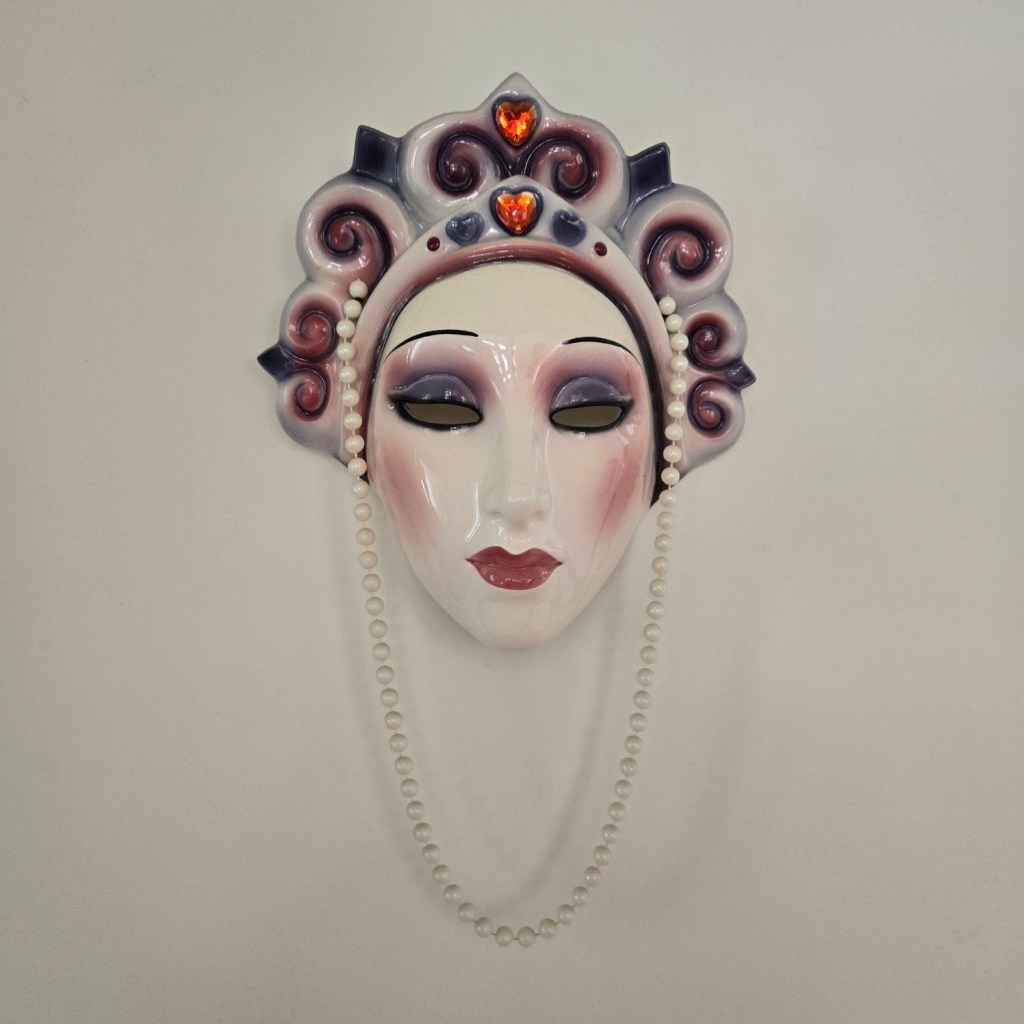
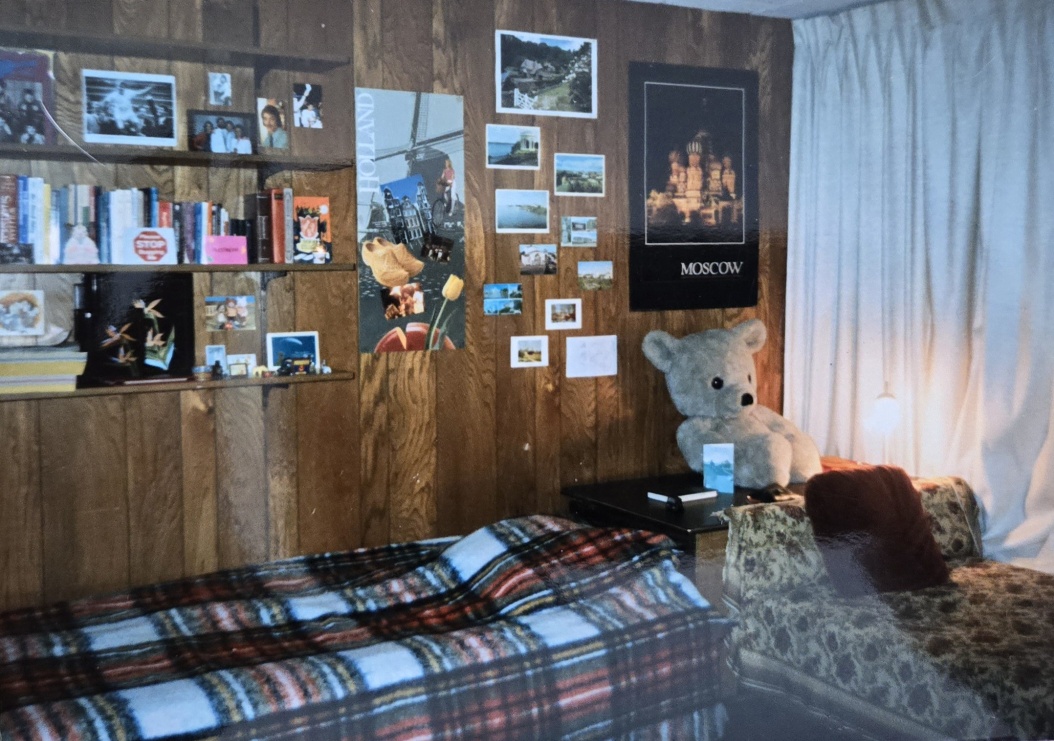
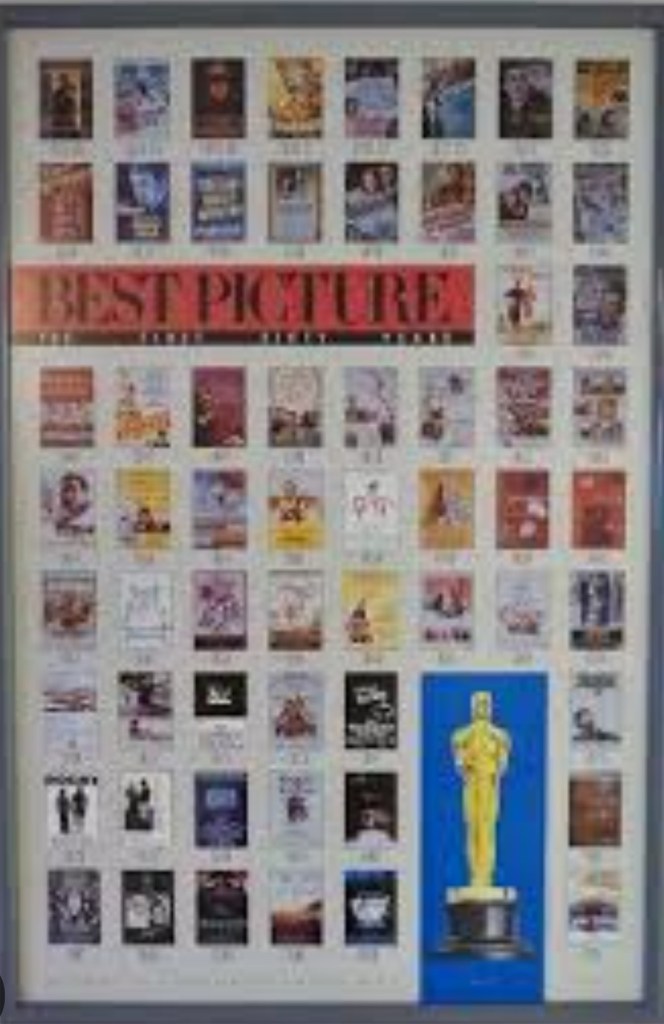
I lived in the same studio apartment for three years, which was the only place in this lifetime that was all mine, decorated by my teenage self with a combination of my favorite things, including a porcelain mask bought at Middle Earth from when I dreamed of an entire wall of masks (I still have it, the lone holdover; I never bought any others), and a collection of posters of my favorite people and places: best of the Netherlands sent to me by my beloved Dutch host family, the Marx Brothers and the Monkees, Oscar winning movies when there was still a finite number and I knew every one, Mardi Gras by Andrea Mistretta, a field of poppies that reminded me of a train ride from Moscow to Crimea, and an obligatory poster of Moscow (I am most assuredly not from Moscow, but that was the best that was available at Borders). The posters subsequently fell victims to a flood in the basement of my first house, but most of these are still some of my favorite things.

Out there, next to State Theater, is the location of the original Borders bookstore.

And speaking of Borders, I lived a block away from the original bookstore.  This was the Borders before it was a chain, before it was international, before it sold music or had a café, and even before the flagship store moved into the space vacated by Jacobson’s (another sad loss; Jacobson’s was a great store).  Being able to just walk in and browse, after work, between classes, on the weekends—ah, it was heaven!  It was certainly a big part of what made Ann Arbor home.  When I was in high school, coming to Ann Arbor with my mother was a double-edged sword:  she would visit her friends, I was either bored or resentful, but Borders and the nearby movie theater on Fifth that showed foreign and art films that would never make it to our painfully provincial town of Jackson were always worth the trip[1]

Summers in Ann Arbor were magical yet awful.  It was like being in one of those weird stories in which a person wakes up one day and the world is different: there are no adults, or half the population is gone, or the Beatles never existed.  All right, maybe this last one is not strictly relevant.  But basically, you just walked out on the street one day, and all the students were gone, save for the few of us year-round semi-townies.  On the one hand, it was nice to just work and have the predictability of time off.  I craved the stability, but I missed the difference of days and the extra activities that filled the school year.  And, full time job was not twice as boring as a part time job, it was more boring cubed or quadrupled.  It took up so very much time, leaving only the evenings of nothing to do or the weekends of trying to find things to do.  There were no tasks to perform in my free time, but instead, the panic of not having those tasks.  It was the waiting time.  Which is how I sometimes still feel in my adult life.

Eventually, Ann Arbor became too small to contain me and my dreams.  It really is a tiny town, with the downtown you can criss-cross in a quantity of minutes, not hours.  Were it not for the diagonal part of the main campus (obviously nicknamed The Diag), you could look right through it.  I was weary of walking the same half dozen streets.  I needed a change of scenery, and so I went to the biggest city I could find.

Back when there was only one tall building on South University.

I spent another summer in Ann Arbor after that, two years later.  All but one of my friends were gone, and I was living out a Cat Stevens song lyric, “For you will still be here tomorrow, but your dreams may not” and an agonizing “you can’t go home again” adage.  I was a wildly unhappy law student and summer associate in a big firm, terrified by the future not of my own dreaming unfolding in front of me.  It was such a weird time, living in an old familiar place, but on different terms, as a quasi-adult in a college town.  Living in New York, I yearned for Ann Arbor, yet the minute I arrived, the streets started closing in on me again. 

And now, some more decades later, the changes make the town barely recognizable to me.  Gone are all the stores I frequented—yes, literally every single one.  Not one survives, not Borders, not Middle Earth, not Peaceable Kingdom, not Falling Water, not Schoolkids Records.  Some restaurants remain, and there are better ones, including a handful of decent breweries, which would have been irrelevant to the underage me in any case.  But the stores were special because of all the solitary browsing one could do, in a crowd yet apart.  This is a feeling one can cultivate only in an urban environment, walking in, walking around, walking out, invisible.

Ann Arbor is a reminder, a symbol of the time when everything was possible.  Before I started law school, I could have started anything else instead.  The road was chosen, but not yet taken.  I could have taken a gap year (no, I could not have, I had no resources for that, but it is nice to think that I might have had options).  I could have kept working at an office job and used my after work hours to find myself and my path.  I could have… well, that is about it.  I never really had choices.  But there was that one brief shining moment when I thought I did—and that was in Ann Arbor.  And so, this town will always be for me a symbol of possibilities, and that is enough for it to have been called “home”.

[1] “Cinema Ann Arbor: How Campus Rebels Forged a Singular Film Culture” by Frank Uhle is a time-machine trip down memory lane to a time that I just barely glimpsed, but during which I consider myself incredibly fortunate to have lived.

[https://oldladywriting.com/2021/01/30/the-road-not-taken/]


Featured

Tooth Fairy

Last year, I lost my favorite tooth.  I mean, I did not misplace it, nor did it fall out.  It was surgically removed.  This tooth, #6, was my first root canal and my first crown.  My own grandfather put the crown on it, made from a melted down earring, and it lasted for decades.  Eventually, the crown wore out, and then the tooth itself.  There was even another root canal in the mix, so suffice it to say, #6 and I were bonded by hardship.  On the day when #6 and I finally parted ways, the nurse offered me nitrous oxide and oxygen, and how could I say no?  I welcome any option that results in less or no pain for me.

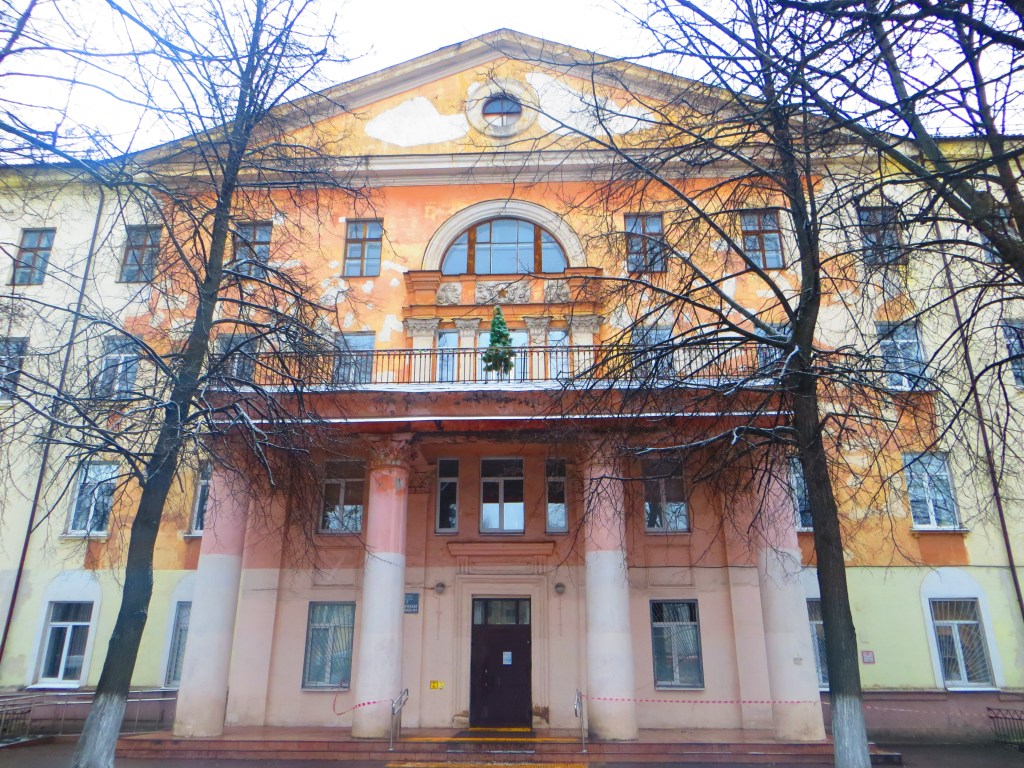
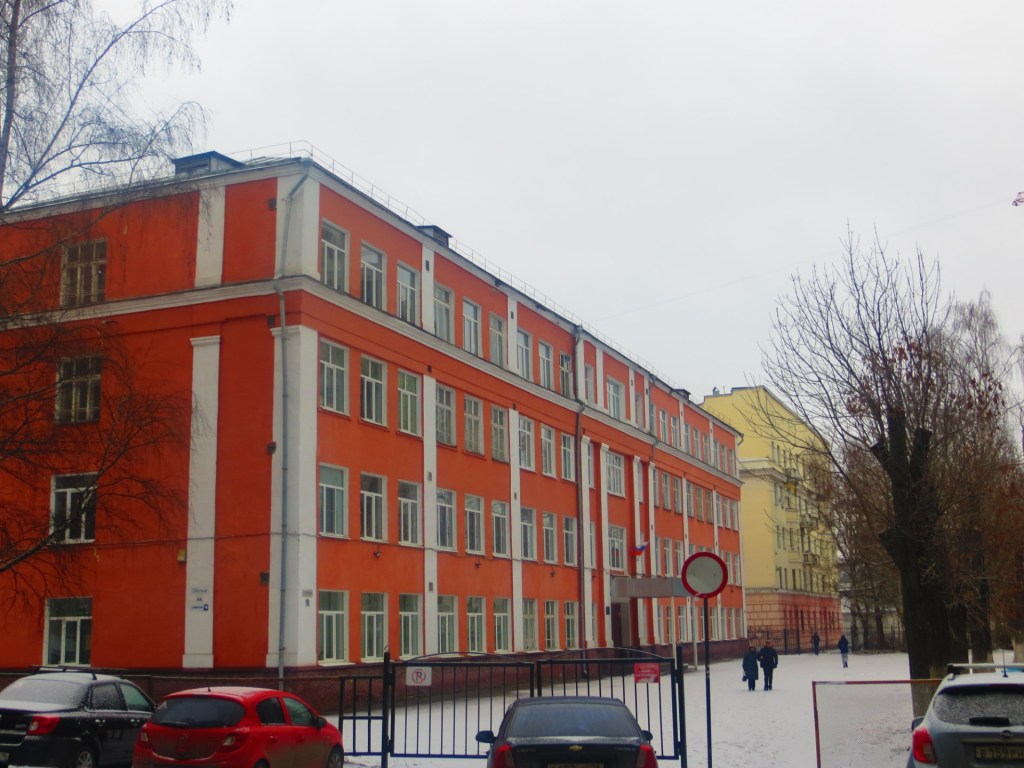
Jubilee Square. Motorbuilders Palace is on the left. The clinic is on the right.

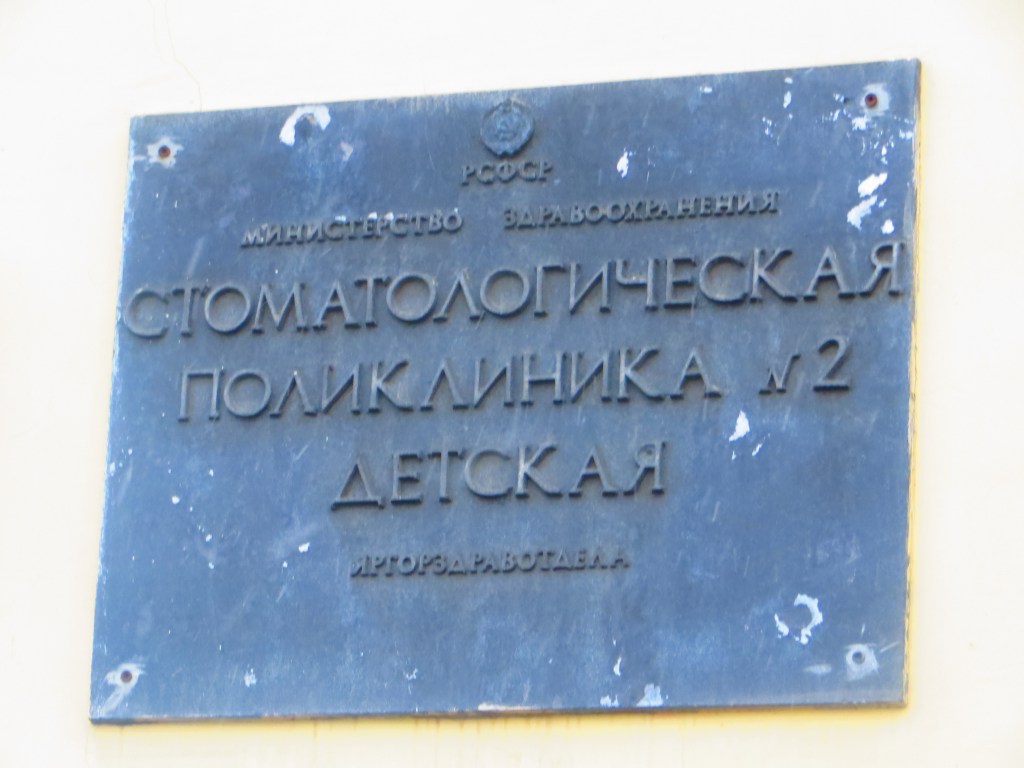
As I was dutifully breathing in and out, an unbidden memory came to me, of me and my classmates trooping down Lenin Avenue to the Jubilee Square (the one with the Motorbuilders Palace [https://oldladywriting.com/2020/08/18/valor-and-glory-of-the-motorbuilders/].  In my mind’s eye, I saw the golden Russian autumn sung by poets, maple leaves everywhere, the only melancholy season of an ever-sunshiny year.  The school year has begun long ago enough to be a bore and a burden, and the time has come for one of the most unpleasant organized events of the Soviet school system—the dental checkup.  It is about a mile from the school to the clinic—the longest mile.  If ever I felt like a lamb to the slaughter, this was most certainly the time.  Usually, I got some kind of exemption, being raised by dentists and being dragged to the children’s dental clinic by my grandmother on my own free time, but that day, I was all out of aces.  It is also possible that this was shortly after my grandmother took me to the clinic and I escaped, bolting out of the torture chair and making it halfway through Jubilee Square before I was captured (traffic in those days was unimpressive, but not nonexistent—I was absolutely in danger of being struck by a bus, a fate still preferable to any dental procedure).  I have to add, individual cabinets are a Western luxury.  In Soviet Russia, an army of Orin Scrivello clones with their whirring drills were leaning over screaming kids in one big room in a fog of ether.  

I have a lot to say about growing up in an apartment where our kitchen doubled as the prosthodontist’s office, but that is another story for another time.  But one thing I know is true, and that is that our home never smelled of ether.  Maybe grandpa had no access to it.  Maybe the smells of grandma’s cooking overwhelmed.  Regardless, the scents of home were not medicinal.  And I know this because had I been immune to these odors, I would not have been so jolted into panic each time I entered a Soviet dental clinic and been positively engulfed by that distinct piercing stench.  A mere whiff was enough to activate the fight-or-flight instinct.  It was always flight, because fighting presumes staying, and there are no fools.  Flee, always flee. 

The unintended consequence of my recurrent, determined, and frantic rejections of the most feared dental procedures was that my grandmother gave up (a precursor of things to come—a scythe came upon a stone, as in, she met her match when it comes to wills of iron), leaving me at the mercy of the school system.  And so began the long march.

The clinic where my grandmother worked. The was not just dentistry here, but other tortures as well. To be continued…

I always think of that BBC commercial, “They say one’s cows are mad, they say one’s dentistry is diabolical” when I think of the dentists of my childhood.  My grandfather did not work with children and was overwhelmingly busy with his relentless stream of patients, and my grandmother—well, I did not trust her.  More specifically, I did not trust in her not taking care to not inflict pain. (Well, that was a lot of “nots”—also emblematic of my childhood). 

That day, which my classmates and I anticipated with varying degree of fear but with unanimous distaste, was the source of much scheming.  While most of them were fairly resigned to this grim fate, I had one accomplice whose fear of the dentist actually exceeded my own.  His name was Max, and he was a freethinker.  I am told he eventually became an alcoholic, a fate not only unsurprising but entirely predictable given both his environment and spirit (no pun intended).  But when I knew him, ages seven to 12, he was a shrewd kid with a profound dislike of conformity and authority.  He was non-confrontational but steadfast in his avoidance of anything extra.  He was the epitome of “quiet quitting” decades ahead of its time. One of his catchphrases was “And the lesson is going on”, whispered to me whenever a teacher would get distracted and go off on a tangent, meaning that while time is getting wasted, no work gets done, and that is its own reward.  Max never got any exemptions from attending mandatory events, and yet he never attended them.  He just did not show up. He was reprimanded, chastised, shamed, and accused of being an “individualist”.  He gave zero you-know-well-whats.  He was, of course, a member of my Link. [https://oldladywriting.com/2023/11/11/scrap-metal-fiasco/]

Max and I conferred and confirmed that we were not going to the dentist, with the class or without.  Ever.  We did not have the audacity to just not show up to school that day—that seemed just too brazen, and we were not hooligans.  We were conscientious objectors.  And so, as the column of the condemned dragged itself along that familiar tree-lined alley, led by our fearsome homeroom teacher, the grammatically and socially challenged instructor of algebra and geometry, the two of us simply ducked into the labyrinth of yards off Lenin Avenue.  Without any regard for consequences, we ran for our lives.  We were not good friends, merely coconspirators.  We quickly went our own way, but for one brief shiny moment, we were bound by the shared taste of complete and utter freedom.

Lenin Ave. We escaped between those yellow buildings on the left. Photo taken in January; alas, I have no autumnal images to share.

And all these many years later, in a dental surgery under the calming influence of gas, it all came back to me, the sepia colors and the smell of fall leaves, the voices of my young comrades, the distinct flavor of childhood of unlimited future and potential, and the feeling of my long ago and far away home deep in my bones.  It never ceases to amaze me how memories can be summoned by the most unlikely agents and at the most unlikely times.  And how joy can be found even in the middle of pain.

Featured

Scrap Metal Fiasco

“Nothing that happens to us after we are twelve matters very much.” J.M. Barrie

I must preface the following with a disclaimer.  I have told this story so often that I am pretty certain I have already written it, so if you have already heard or read it, please let me know (and like it anyway). 

I was six years old when I cautioned myself to beware, for I was surrounded by people who were not smarter than me.  It might have been a devastating realization to a child that young.  Instead, it was an inspiration to rally and rely on myself—the old “trust but verify” (which is, in fact, a Russian proverb), minus the trust.  I proceeded to have an eventful childhood full of hijinks, camaraderie, and a singular focus on defying authority.  Almost half a century later, I stand by every shenanigan, and only wish I had made more mischief.  “Forget regret or life is yours to miss”—Jonathan Larson was also right.

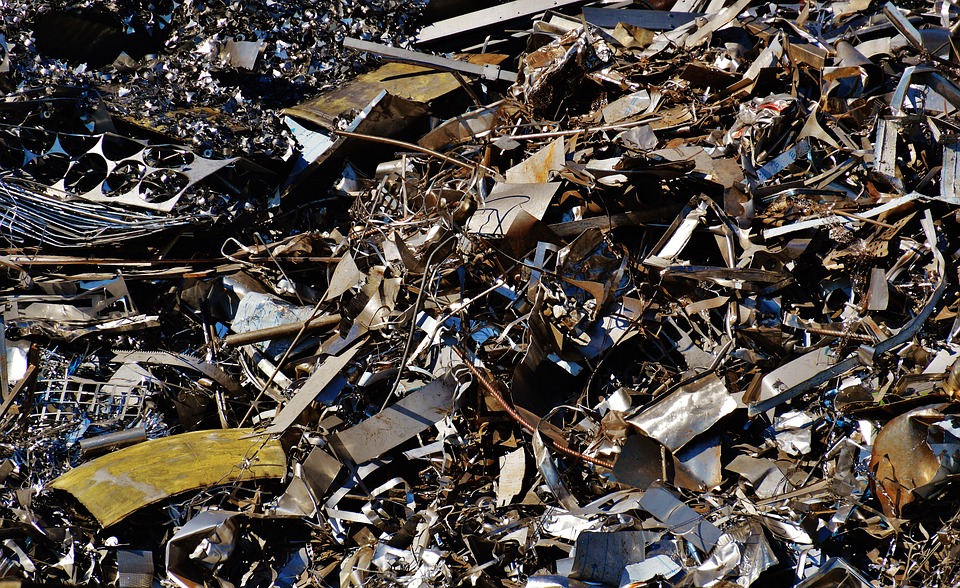
In some late years of the seemingly never-ending stagnation of Leonid Brezhnev’s rule, I was a Young Pioneer.  Surrounded by like-minded and like-spirited delinquents-in-training, I vacillated between apathy and active defiance, usually settling on an attitude of passive aggression.  My class of just under thirty pupils[1] was divided into three “links”, similar to a coed Cub Scout den without parents.  In the most disorganized, wild, and irresponsible class, I predictably belonged to the laziest and most undisciplined link.  There were eight of us, if memory serves, which included a core group of restless and adventurous girlfriends, and a couple of unpopular boys.  To snatch defeat out of the jaws of any potential victory was almost a point of honor for me and my young comrades.  To be fair, we usually started out doing what we were supposed to, and proceeded to fail in an epic manner.  None illustrates this better than the one time we collected scrap metal.  So unmitigated was this disaster that our entire school was banned from this time-honored activity for my remaining time back in the USSR.

The day of scrap metal collection, Link One and Three departed post haste in search thereof.  We members of Link Two briefly lingered in class.  Our Link Leader, an earnest, sweet girl who stood alone in our entire class as a follower of the prevailing ideology, made a short motivational speech along the lines of, do not attempt to evade your Young Pioneer duty.  This motivated the rest of us to want to bail on the whole thing, but someone yelled “Construction”, and we rallied.

There used to be a small park next to my school with a couple of see-saws and slides.  I used to come there on field trips with my daycare, and it was still there when I was in first grade.  However, by the start of second grade, the little friendly playground was demolished and taken over by construction of the regional archives.  Five years later, the site of the stalled construction was the school’s perpetual grim neighbor[2].  There was a crane which never seemed to move, and the more daring of us enjoyed crawling through the hole in the fence and all over what looked like the ruins of an old fortress[3].

And so of course construction (and we called it just that, as in “let’s go and find some metal at the construction”) became our first target.  Several of us filed through the habitual hole in the fence, but were dismayed to find that the site was picked over.  The better organized and more ideologically focused Links One and Three already raided it and carried off all the spare metal!  As I say, my little gang was always a day late and a ruble short. We took a couple of abandoned hammers and managed to detach a piece of pipe we determined to be nonessential, but it was not nearly enough.  (Surprisingly, no one thought to cut the fence down for scraps).

My school was located in a residential urban area, surrounded by apartment buildings.  It was an older, more established area of the city, though not quite the prestigious historic center.  Raiding the surrounding courtyards, we added a couple of unattended shovels and rakes to our bounty.  It was a bit of a task to stop the boys from hitting each other with the shovels, but I do not recall any significant injuries during this escapade.

In one of the courtyards, we spotted a child playing with a toy metal wagon and attempted to negotiate surrender, but his vigilant grandma chased us off with a broom.  We also kept losing link members with every encounter, kind of like when Three Musketeers started off for England in search of the queen’s diamonds.  Getting distracted, losing interest, and entirely changing course was typical behavior for me and my friends during any school-sanctioned undertaking.

Still, five intrepid girls persevered, and fortune really smiled on us when we encountered a clearly abandoned metal bed frame in one of the courtyards—with wheels, and even a mattress to boot!  Never questioning why a bed would be parked near an apartment building entrance, we immediately threw off the unnecessary ballast of a mattress, situated our rakes, shovels, and hammers on the springs, and proceeded to move the bed on out.  It was a swift and stealthy getaway, several middle-schoolers in school uniforms[4] earnestly pushing a bed along a lively avenue.  Some passers-by stared, some wondered, none dared to stop the purposeful Young Pioneers.

Not the image of that actual bed. It is surprising how a search for “metal bed with wheels” only comes up with images of hospital beds…

What should have been the long-sought success not just for our merry band of misfits but for the entire class went decidedly pear shaped, for the owners of the all this paraphernalia (neighbors in the process of moving, careless gardeners, construction supervisor) eventually found their way to our school and claimed their belongings.  The worst part was that the bulk of our bounty, the bed and garden tools, was easily returned with apologies because—private property, so a “remnant of the past”, in the ideology of the times.  It was the looting of the construction site—“plunder of state property”—that was the real offense, and our couple of hammers and the piece of nonessential pipe were the least of it.  The more proactive students got there before us and in their zeal carried off everything that was not nailed down, and some things that were, including the nails themselves.  I never got the opportunity to participate in collecting scrap metal again, but I will never forget our glorious entry into the school courtyard, riding on a bed, wielding a rake—Young Pioneer triumphant!


[1] In the Soviet Union, and I believe in today’s Russia as well, you moved from grade 1 to 8 with the same group of 30 or so students, took the same classes, and had the same teachers.  In my school, there were 3 classes to a “parallel”. After grade 8, a third of the students who did not pass the high school entrance exams would go on to trade and vocational schools, and the rest were reshuffled into 2 classes. My school, which housed grades 1 to 10 (and later, the added 11th grade), would graduate about 60 students from high school.

[2] First, not a uniquely Soviet issue.  Second, when I visited in 2018, I saw the unimpressive final product. I did not even take a picture of it. (I found this on GoogleMaps)

[3] If this is not a classic example of “attractive nuisance”, I do not know what is. What we thought we were getting versus what we got (not actual photos).

[4] Brown woolen dresses with black aprons.

…and Bratislava

I always assumed that if I made it to Vienna, I would have to add a day for Bratislava.  Fun fact:  Vienna and Bratislava are two closest European capitals in terms of distance, so I understand that it is a common side trip, but that was never my reasoning.  I generally do not like to “gallop through Europe”, as the saying goes.  I learned to not overplan from experience (although my consequential plunge into underplanning has resulted in some unintended and occasionally hilarious jams—but that is another story for another time).  I like to take in the sights and go at my own pace, and I dislike leaving a place without exploring it fully.  So short story long, if I am going somewhere, I am not also going somewhere else.  However, what led me to Bratislava was not its proximity to Vienna, but that Trip That Never Happened 42 years ago.

To be fair, Bratislava was never going to be more than a train connection on our original journey.  We always knew that we were not going to see the town.  It was an almost unimaginably different world back then. Europe was still divided into East and West, and getting from East to West was complicated even with a passport.  A moot point, in any case, because we had no passports.  We no longer had passports because we no longer had citizenship of any country, none at all.  We were put on a train heading out of the USSR, and the first stop was Bratislava.  Czechoslovakia was still united, and Bratislava was not a national capital of anything. 

NOT what I remembered

We disembarked in Bratislava and waited for the train to take us into the *real* West, to Vienna.  On that cold and lonely platform in December of 1980, I do not remember any other passengers.  It was just the four of us, my mom and grandparents and I, and we stood there with our two suitcases per person for what seemed like hours.  This might be an invented memory, but I remember going into the train station itself and seeing chewing gum for sale (if you ever heard how prized it was in the Soviet Union—it’s all true!).  Could we have just walked into the city?  Were there any guards who would have stopped us?  It is impossible to know now, because the only tangible goal was to get on that train heading to Vienna.  These days, the hour-long trip between the two cities is almost akin to a suburban commuter ride.  Back then, one travelled from the Eastern Block to the Capitalist West in a fancy sleeper compartment, and I remember it taking hours—probably because of border control.  My mother remembers red velvet upholstery; I do not.

But there IS a vending machine selling dairy products

And so Bratislava remained something I never even pictured, just a footnote to a trip to Vienna.  The only part of a this visit I could envision was arriving at that train station and walking past that kiosk selling gum and sundries out into an unimaginable town.  Medieval? Baroque? Modern? The important part was the station, the kiosk, the sunlit town square.  None of them turned out to be real in 2022.

My persistence in going to Bratislava in the face of my mother’s mild opposition; my brisk realization that in this century, trains to and from Vienna connect to Bratislava via a suburban station and not the main one, preventing the recreation of that long ago voyage; brief panic about having to also get on a bus to get to city center—none of these are worth recounting.  Well, maybe the briefest of mentions—repeatedly seeing the words “Bratislava Petrzalka” instead of “Bratislava Central” or “Bratislava Hlavna” led this sophisticated traveler and polyglot to feverishly search the interwebs for a route into the city (get on the bus in this area, alarmingly advised the web, never take the taxi).  Otherwise, we would be walking out of the train station into a somewhat grim peripheral disappointment and then right back to Vienna, as per tradition. 

Ultimately, I feel like I gave Bratislava a short shrift.  We walked around a bit, enjoyed the most lavish meat feast I could ever imagine (allegedly for two people, but there were six meat servings), encountered another Christmas market (again, mostly meat), saw some charming medieval sites, and hightailed it back to Vienna before dark.  But I think Bratislava deserves more than just a couple of hours.  It seemed like a lovely town I would like to get to know better.  I would have liked to visit its castle high above the city, its churches and museums, taste the local wine at a very cool cellar by which I walked, and learn more about the effect the decoupling from Czechia had on Slovakia.  I could have researched and planned prior to going, but I think the existence of this town was simply too fantastic to contemplate.  Now that I know that it is real, we need to be properly introduced.

Thank You for Being a Friend

According to my recently unearthed diary (it was not missing or anything, I just do not like to refer to it too often because of the cringe factor), my teen years were full of seemingly perpetual anguish related to various betrayals which I would never recollect but for this traumatizing written record.  I was, at times, surrounded by The Mean Girls—but who wasn’t in their teen years?  But in a period of just three days recently, I interacted with a variety of people who, in various ways, reminded me how incredibly blessed I have been by friendships in this lifetime. 

  • I auditioned for several parts in a show at the local community theater.  I did not get cast for several reasons.
    • First, for one of the characters, my Russian accent is no longer convincing.  Yes, and I feel slightly stupid even writing this, but I am only identified as vaguely Eastern European to someone with a very good ear.  There were literally women on that stage who sounded authentically foreign-born (and weren’t), while I was doing a desperate impression of Crazy Russian Hacker.  And I am terrible enough with accents that I cannot just summon it.
    • Second, the director decided that the part of a “wanna be lawyer” should be played by a man, because, well, lawyers are men.  Triggering, and certainly nothing I have not heard from every corner over the past three decades, but for reasons passing understanding I always expect more parity from community theater.  What an unlikely source of optimism!  This actually reminds me of a time when I was not cast in another show.  It was a dual part—Eastern European mother in her youth in Act I, and then her daughter, a lawyer, a couple of decades later, in Act II.  The director called me and told me that I was believable as one but not as the other, and for the life of me I cannot remember which one was which.  There is great irony somewhere here, but ultimately, I guess I would prefer to think that I am an implausible lawyer.  Frankly, I usually feel that way anyway…
    • But, my point in all of this is that I ran into two women I know at the audition.  The camaraderie, the emotional support, the cheering each other on and complimenting each other even though we were up for the same couple of parts was absolutely lovely.  I have not known either of these fine humans in my youth, so cannot tell with certainty if we are all improving with age or if I am meeting a better class of people. Perhaps a little bit of both, which is both sensible and hopeful.
  • Not to make it sound like my American youth was misspent in the friendship department, the following day I drove to Hell (a real town; I am not this inventive) for a “Still 50” party of a high school classmate I have never met before.  Well, we met during a series of Zoom calls that were held on the regular during the darkest days of the pandemic, and encompassed a group of pals who all graduated within three years of each and now live all over not just the continental U.S., but as far as Hawaii.  I count myself more than a little lucky to enjoy the company of almost a dozen folks who knew me at my utmost awkward, clueless, and, in my mother’s characterization, gloomy, and who still willingly interact with me going on forty years later. 
  • The following day I had a lunch lasting several hours with a college friend.  We have not seen each other in about a decade, which is a ridiculous and inexplicable gap, but there it is.  The old saying of picking up where you leave off without missing a beat is always true with this friend, and has been for over thirty years.  I often see people question if there can be genuine, non-romantic friendship between men and women, and this long-standing unshakeable bond between an introverted engineer/scientist and a [seemingly] extroverted lawyer/amateur thespian is a testament to the fact that friendship, like love, is a gift that you take where you find it.
  • And finally, there is my childhood BFF.  She is the one whom I met on my first day of school, and who is the closest I have come to having a sister in this world (I have known my actual sister for a fraction of the time, both in quality and quantity—but that is another story for another time).  We have lived world apart for over forty years, and have averaged one in-person meeting per decade during this time.  Right now, she is on a road trip to the Russian Near North.  From each scenic stop, she has been sending me daily videos, narrating the town histories, telling fun local facts, showing scenic views.  They visited Novgorod the Great, Petrozavodsk the capital of Karelia, Murmansk above the Arctic Circle, stopped on the shores of the Barents Sea.  I have felt included in this wonderful adventure.  In return, I send videos of my foster dog.  And beer.  And my office.  And I feel unbelievably fortunate that my first school friend is still my best friend.  She is, and always will be, family.

The wisdom of the years taught me that not all friendships are for always.  Some relationships are for a season, and every season has its ups and downs.  Looking back, there have certainly been some downs.  But, as the song goes, thank you for having been a friend (this is the Russian/Georgian version—not to be confused with the theme to “The Golden Girls”).  The ups have, and continue to, fill this life with meaning, warmth, and laughter.