Featured

Time Shelter: Reminiscence, not Review

“The past is not just that which happened to you.  Sometimes it is that which you just imagined”*. 

The older I get, the more disappointed—and, frankly, disbelieving—I am that we cannot travel back in time.  The more years pass, the farther I get from certain cherished moments, the harder it is to accept the permanence of their departure.  Watching Doctor Who, the ultimate wanderer in time and space, I get a vague sense of unease from the episodes set in the future.  What is the far future to me?  I will not see it, so I am not curious about it and not invested in it.  But the past, well, it is full of second guesses disguised as second chances.  It is full of the comfort of nostalgia. “It’s been written that the past is a foreign country.  Nonsense.  The past is my home country.  The future is a foreign country, full of strange faces, I won’t set foot there”*.

In “Time Shelter”, Bulgarian writer Georgi Gospodinov creates the perfect scenario for which my soul has been yearning.  Gospodinov is Bulgarian, and we are exactly the same age.  I feel his story almost instinctively, beyond the words, for he writes not just about the decades he experienced, but as only an Eastern Block Gen-Xer experienced them.  It is rare that I hear the echoes of the voices in my head in print.

His first person narrator meets Gaustine, a mysterious psychiatrist who opens a “clinic for the past”.  It is meant to evoke recognizable memories for Alzheimer’s patients by reproducing the surroundings of their comforting past lives, but the concept takes off and everyone wants to starts seeking shelter from the relentless passage of time by stepping into the past. “Everything happens years after it has happened”*.

Like Gaustine’s patients, I am not even interested in the historical past, someone else’s past.  I do not want to meet Shakespeare (whoever he really was) or see dinosaurs or anything like that. (OK, maybe I want to meet D’Artagnan in his natural habitat, but that is all).  And fine, I don’t even want to change anything.  I saw “Sliding Doors”.  I read “Midnight Library”.  I am no longer sure which parts of my life I would want to erase if there is no guarantee that this would not have a detrimental effect.  I can no longer fathom what my life would look like today if I had made different decisions at some critical junctures.  I might have been spared some pain, but what unanticipated and ultimately avoided sorrows were waiting in the wings?   The decisions that I made, I stand by them.  The decisions that were made for me trouble me still with the passage of years but regret is useless. And it all basically worked out.

The pool would have been beyond that fence on the right

It is just that the melancholy longings come unbidden in the twilight, and that is when I sometimes wish I could revisit my past.  I want to see the sun rise over the roofs from the balcony of my mother’s apartment, for every occasion on which I visited her there seemed special and wonderful.  I want to sit in my childhood apartment’s dark room lit only by the lights of the Christmas tree, the only year my grandparents had a real tree and could finally hang up the one ornament that was too heavy for our little artificial tree—an orange, the size and weight of the actual fruit.  I do not want to forget either that orange that always stayed in the ornament box in the entresol except for that one brief appearance or my favorite ornament, wild strawberry with a human face.  I want to go to the grocery store on the first floor of our apartment building and buy birch juice by the glass and a hard block of coffee with milk, meant to be dissolved in boiling water and not gnawed like I did as a kid.  I want to watch my collection of film strips in the hallway of our apartment on the coldest winter days.  I want to marvel at the hollyhock mallow plants in our neighbors’ garden in the summer.  I want to see again that inground public pool that was filled in when I was just a toddler, leaving behind a weed-covered wasteland—was my memory of this thing even real, a random outdoor pool on our quiet little street?  And I want to sit on our old couch and read the books of my childhood.  There is so much from that era of gentle stagnation which seems positively utopian in comparison to our present cataclysmic times.  “Warning, history in the rearview mirror is always closer than it appears”*.

My favorite part of this mesmerizing novel, which I had to read twice in a row (and even that was not quite enough to fully take it all in; I am yearning to read it again), is when time shelters become so popular that European countries actually vote on returning to their respective favorite past eras.  The clinics of the past are no longer enough; entire countries become engulfed in nostalgia.  It is fascinating to read what decade each country chooses as representative of the glory of its people, yet still recognizable and not entirely devoid of modern comforts.  Some decades of the last century are obviously fraught; 30s and 40s have their devotees, but Gospodinov is not going there.  The story is not about that.  So many countries choose the 1970s or the early ‘80s (including most of the [former] Eastern Bloc—the whiff of freedom in the air, before reality bit), with only Italy choosing the ‘60s.  Bulgaria’s choice is not mentioned, but there is a hint.  “What decade would you choose?  “I’d like to be twelve years old in each of them.” * That would be my answer, too.

*All the quotes are from Georgi Gospodinov, “Time Shelter”, English translation by Angela Rodel

https://georgigospodinov.com/

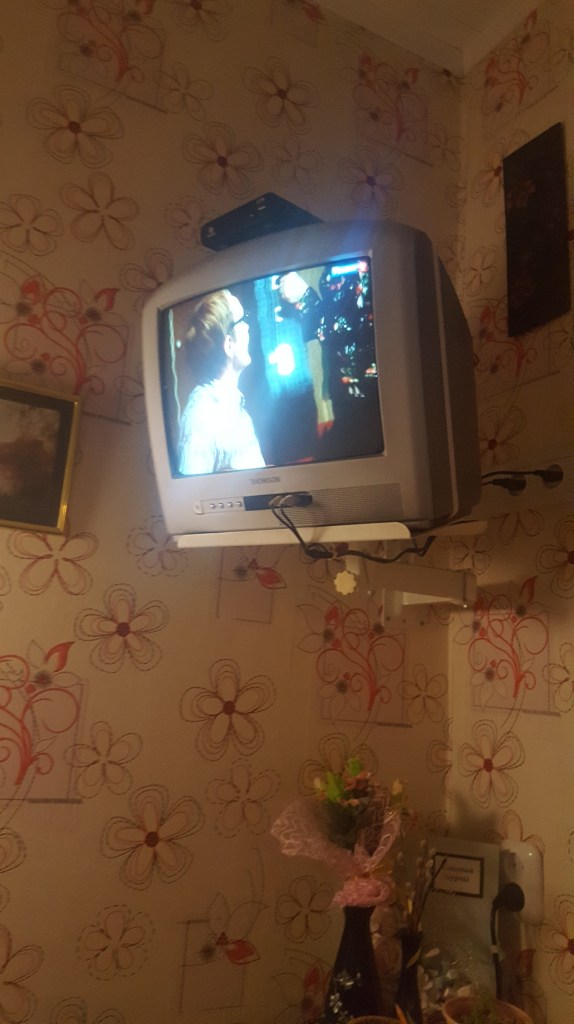
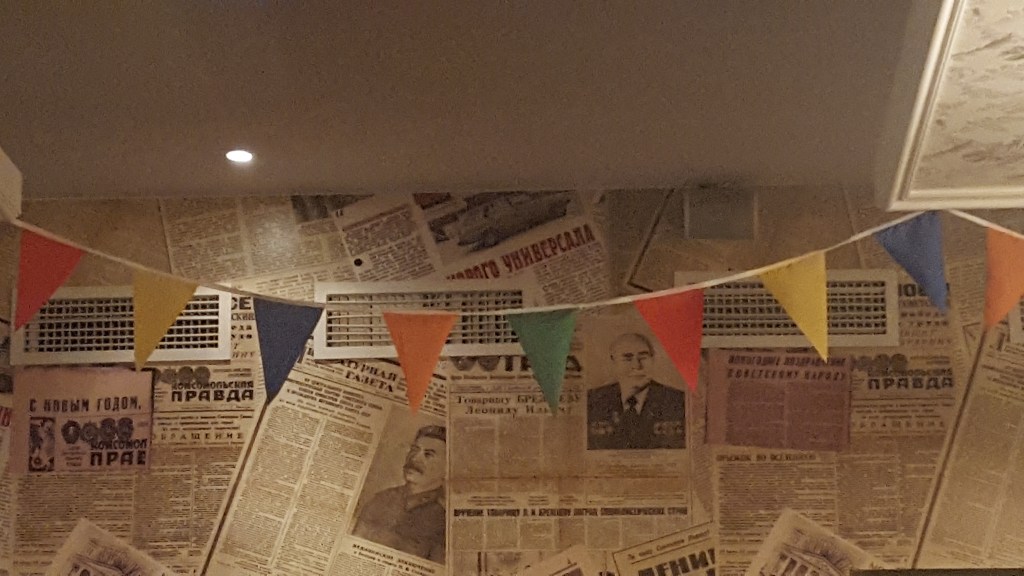
[Caption: my time shelter, for better or worse]

Featured

Poison, Fire, and Flood

One of the main villains of my raucous childhood was one Shturman.  This was, and is, his real last name.  I am not changing it here because (1) he is not likely to read this, (2) this unusual name[1] is too much a part of him, and (3) every word is true.

Shturman’s code name was “Douche”.  No, listen, in Russian, it just means “shower” (and in French as well, but we did not know it then).  And the reason he was “Shower” was because we called him “D.Sh.”, which stood for “Durak Shturman”, which means “Shturman the Fool”.  So it all fits together rather beautifully.  Since “fool” was the worst insult we knew, literally everyone’s code name started with “D”, but this was the only one that is not lost in translation[2].  At school, he was known as “Shturm Zimnego”, or “Storming of the Winter [Palace]” (the event that, according to what we were taught at school, started the Great October Socialist Revolution), but we did not feel that he deserved so much honor.

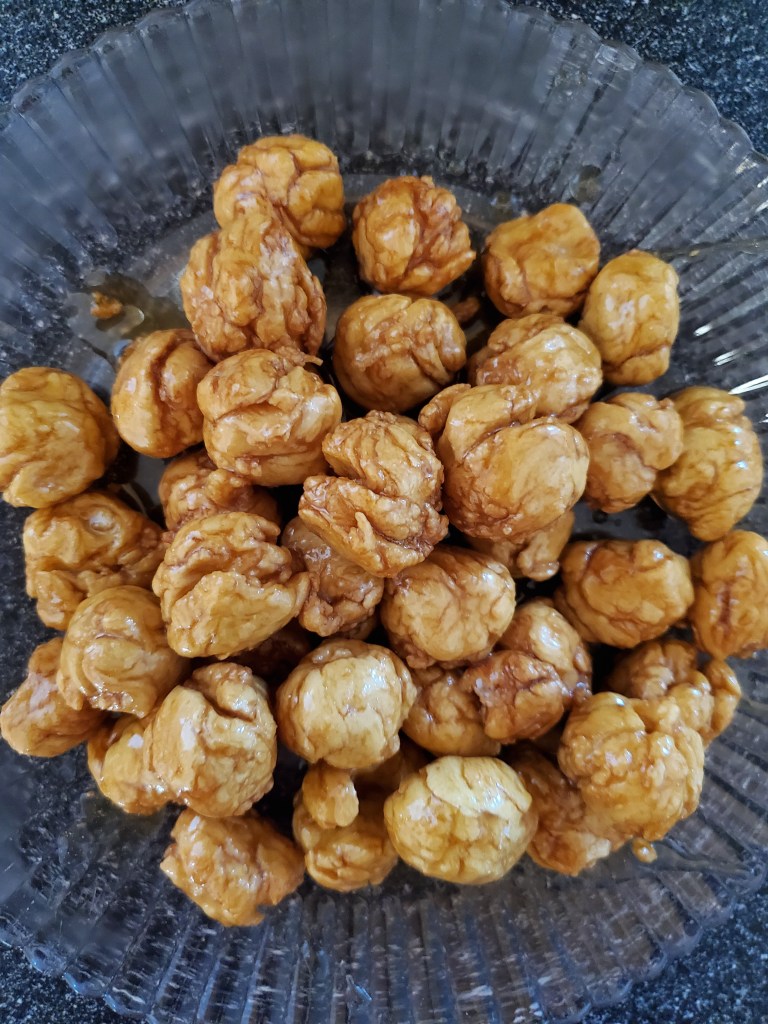
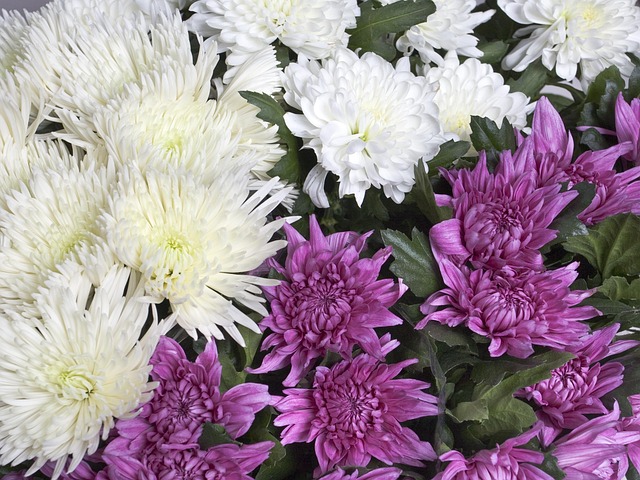
All positive comments regarding these flowers will be deleted

My BFF and I met him on the first day of school, September 1, 1975.  In fact, we all met each other for the first time that day.  It was not a good day for me, for it started out quite literally on the wrong foot.  All the girls were wearing pretty summer sandals (my friend’s were pink).  I, as was my lot in childhood, was wearing heavy, hideous black/brown booties.  I was perpetually overdressed in childhood by my overprotective grandmother; I always had a couple more layers on than anyone else.  My mother, who gets incredibly defensive about every single choice made for me not by me, would undoubtedly say that prettier shoes could not be found—and that would be a lie.  Everyone else wore common Soviet-style sandals readily available at any children’s clothing store in town.  My ugly orthopedic boots were imported.  And to top it all off, the trend of sending me off on the first day of school with a bouquet of chrysanthemums for the classroom teacher started that unfortunate day.  You guessed it—everyone else had lovely summer flowers.  I yearned for daisies, and cannot abide chrysanthemums to this day.  But I digress.

Mine and my BFF’s mothers and both of Shturman’s parents went to high school together.  Their paths diverged for a few short years after college and joined again on that day when it was discovered that they had children born in the same year (two in January, just a week apart, and one in November), who will be starting school not just at the same time, but at the same school and in the same class.  Of course, given that our parents were friends, we were thrown together a lot in those early years, for all the holidays, all the birthdays, summer trips to the countryside, etc.  Well, since I lived with my grandparents, I was not allowed to celebrate with my friends, so that was one very small benefit, having a bunch of 50+ year olds rather than Shturman over.  And since I was born in November, I did not have to share my birthday with him, only with the October Revolution, celebrated in November according to the “new”, Gregorian calendar.

To commemorate the Revolution, we got a few days off from school—basically, our fall break.  In that place and time, it was common to gather for all festivities.   One year, when I was maybe in second grade, we all met at my BFF’s apartment.  The adults, which consisted of Shturman’s parents and mine and my friend’s mothers (both divorced, but with or without boyfriends—memory fails) went for a walk.  Do not be shocked, it was a kinder, gentler time; neighbors looked out for each other and each others’ kids.  And it turned out that the real danger lurked within…

The adults departed for their nighttime stroll, and BFF and I hoped to have some fun:  sing along to Soviet pop music with pantyhose on our heads, make plasticine animals, read about astronauts and plan our own future space adventures—really, the possibilities were endless.   It was a Soviet studio apartment: one room, bathroom, and a kitchen at the end of the hallway.  We staked out the kitchen.  Shturman pestered us for a bit, at one point brandishing a bottle of wine[3] and boasting that he can drink it all.  We called his bluff with all the disdain we could muster; predictably, he did nothing but buzzed off to the room.  But our little gray cells were already activated.

As children, we were told that alcohol is poison. As we saw adults drink copious amounts thereof, the unspoken assumption was that it is poison specifically to children.  Which budding sociopath came up with the cunning plan of serving tea laced with alcohol to our arch enemy shall remain undisclosed.  I know that “Hey, Shturman, do you want some tea?” was not spoken by me.  He and I were never verbal with each other, letting our fists do the talking. 

My friend made him a cup of tea, which was actually mostly vodka.  Shturman, clearly feeling very pleased with himself and his imaginary superiority over us, took a sip, immediately choked and started coughing, eyes bulging.  You did not see this coming, right, because you thought Russians drink vodka from birth, and I am here to break down the stereotypes.  He dropped the cup, and there was that moment in which you know things can go either way—and this is how they went, with him screaming “I will kill you!” and us shrieking and running.  Studio apartment, where are you going to go?  Bathroom, of course—the only place with a lock.

Shturman started pounding on the door and screaming, “Come out or it will be worse for you!  I will break down this door!”  BFF was sort of turning on me: “So, alcohol is poison, huh?  He is alive and well, and even worse than he was!”  I was just hoping the door will hold, and besides, it was a modern apartment, with a “combined” bathroom, meaning toilet, sink, and tub were all in the same place.  We had all the conveniences, and could wait him out until our parents’ return.  Eventually our enemy calmed down and walked away, and we settled in the bathtub, lulled into a false sense of security.

Suddenly, a scratching sound alerted us to a new potential disaster.  Shturman procured matches and started lighting them and shoving them under the door.  He decided to smoke us out, that weasel!  But the joke was on him—we had access to plenty of water, and started pouring it on the matches, having emptied the toothbrush glass for this purpose. Neither side was going to surrender, but we assumed that the matches will run out before water.  As luck, good or bad depending on perception, would have it, adults came home before either, to a minor river in the hallway, with purses and shoes floating by.

We refused to leave the bathroom until the Shturman family departed.  I remember nothing of the aftermath of this event (not even the last of its kind), beyond never getting along with this Shturman until I left the country several years later.  I have not seen him since.  Wherever he is, I hope he is not holding a grudge.


[1] It literally means “navigator” in Russian.  Unusual and kind of cool, if one stops and thinks about it.

[2] For example, we referred to Shturman’s father as “D.P.”, i.e., “Durak Papasha”, meaning “Dad the Fool”.  We disliked him because his son looked just like him, and we never saw him as anything other than his son’s father.  Yet DP was the only father that was present in our group of friends.  Something to unpack here.

[3] Again I remind you, different time, different place, no burden of Puritan heritage. 

Featured

Tooth Fairy

Last year, I lost my favorite tooth.  I mean, I did not misplace it, nor did it fall out.  It was surgically removed.  This tooth, #6, was my first root canal and my first crown.  My own grandfather put the crown on it, made from a melted down earring, and it lasted for decades.  Eventually, the crown wore out, and then the tooth itself.  There was even another root canal in the mix, so suffice it to say, #6 and I were bonded by hardship.  On the day when #6 and I finally parted ways, the nurse offered me nitrous oxide and oxygen, and how could I say no?  I welcome any option that results in less or no pain for me.

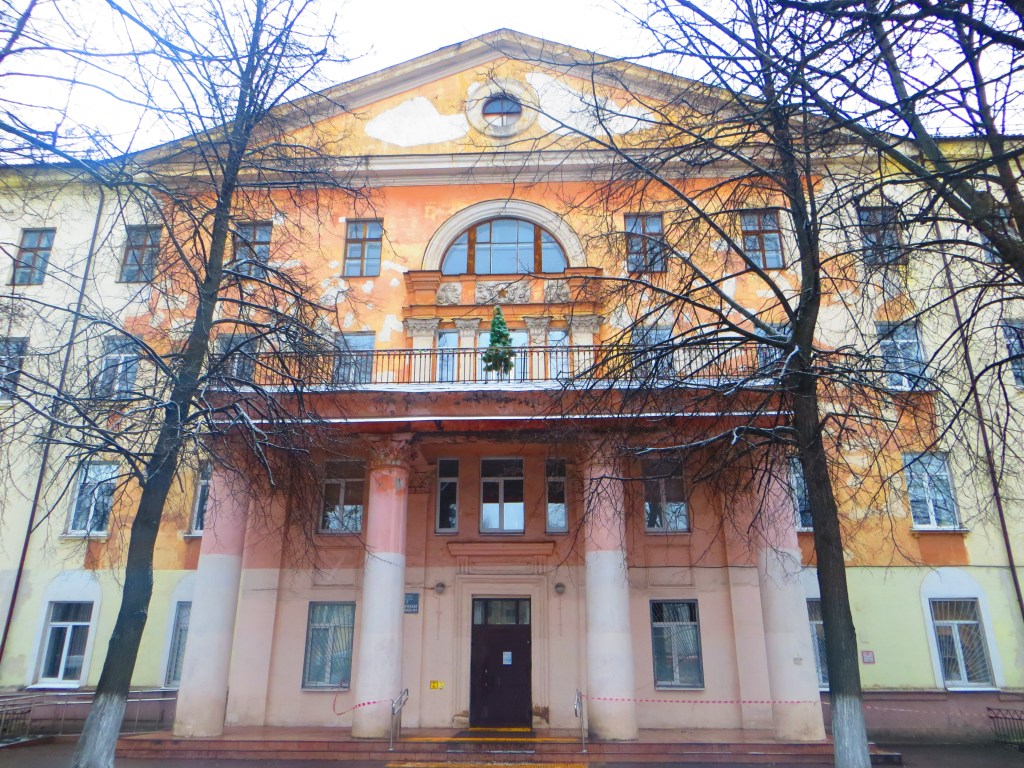
Jubilee Square. Motorbuilders Palace is on the left. The clinic is on the right.

As I was dutifully breathing in and out, an unbidden memory came to me, of me and my classmates trooping down Lenin Avenue to the Jubilee Square (the one with the Motorbuilders Palace [https://oldladywriting.com/2020/08/18/valor-and-glory-of-the-motorbuilders/].  In my mind’s eye, I saw the golden Russian autumn sung by poets, maple leaves everywhere, the only melancholy season of an ever-sunshiny year.  The school year has begun long ago enough to be a bore and a burden, and the time has come for one of the most unpleasant organized events of the Soviet school system—the dental checkup.  It is about a mile from the school to the clinic—the longest mile.  If ever I felt like a lamb to the slaughter, this was most certainly the time.  Usually, I got some kind of exemption, being raised by dentists and being dragged to the children’s dental clinic by my grandmother on my own free time, but that day, I was all out of aces.  It is also possible that this was shortly after my grandmother took me to the clinic and I escaped, bolting out of the torture chair and making it halfway through Jubilee Square before I was captured (traffic in those days was unimpressive, but not nonexistent—I was absolutely in danger of being struck by a bus, a fate still preferable to any dental procedure).  I have to add, individual cabinets are a Western luxury.  In Soviet Russia, an army of Orin Scrivello clones with their whirring drills were leaning over screaming kids in one big room in a fog of ether.  

I have a lot to say about growing up in an apartment where our kitchen doubled as the prosthodontist’s office, but that is another story for another time.  But one thing I know is true, and that is that our home never smelled of ether.  Maybe grandpa had no access to it.  Maybe the smells of grandma’s cooking overwhelmed.  Regardless, the scents of home were not medicinal.  And I know this because had I been immune to these odors, I would not have been so jolted into panic each time I entered a Soviet dental clinic and been positively engulfed by that distinct piercing stench.  A mere whiff was enough to activate the fight-or-flight instinct.  It was always flight, because fighting presumes staying, and there are no fools.  Flee, always flee. 

The unintended consequence of my recurrent, determined, and frantic rejections of the most feared dental procedures was that my grandmother gave up (a precursor of things to come—a scythe came upon a stone, as in, she met her match when it comes to wills of iron), leaving me at the mercy of the school system.  And so began the long march.

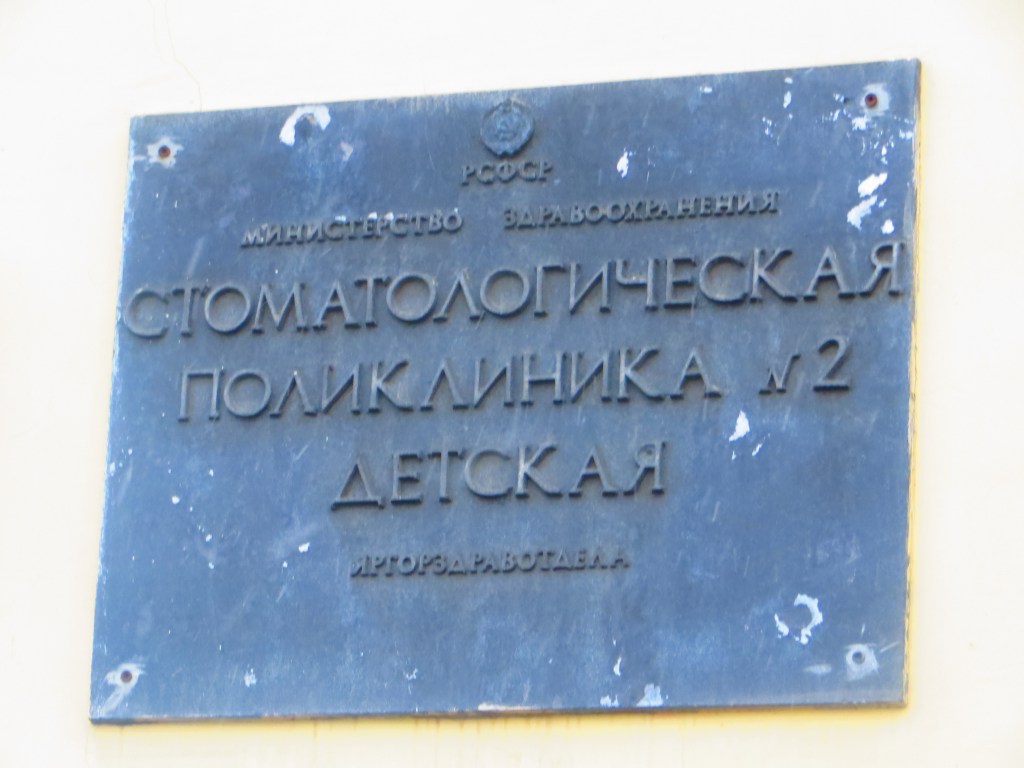
The clinic where my grandmother worked. The was not just dentistry here, but other tortures as well. To be continued…

I always think of that BBC commercial, “They say one’s cows are mad, they say one’s dentistry is diabolical” when I think of the dentists of my childhood.  My grandfather did not work with children and was overwhelmingly busy with his relentless stream of patients, and my grandmother—well, I did not trust her.  More specifically, I did not trust in her not taking care to not inflict pain. (Well, that was a lot of “nots”—also emblematic of my childhood). 

That day, which my classmates and I anticipated with varying degree of fear but with unanimous distaste, was the source of much scheming.  While most of them were fairly resigned to this grim fate, I had one accomplice whose fear of the dentist actually exceeded my own.  His name was Max, and he was a freethinker.  I am told he eventually became an alcoholic, a fate not only unsurprising but entirely predictable given both his environment and spirit (no pun intended).  But when I knew him, ages seven to 12, he was a shrewd kid with a profound dislike of conformity and authority.  He was non-confrontational but steadfast in his avoidance of anything extra.  He was the epitome of “quiet quitting” decades ahead of its time. One of his catchphrases was “And the lesson is going on”, whispered to me whenever a teacher would get distracted and go off on a tangent, meaning that while time is getting wasted, no work gets done, and that is its own reward.  Max never got any exemptions from attending mandatory events, and yet he never attended them.  He just did not show up. He was reprimanded, chastised, shamed, and accused of being an “individualist”.  He gave zero you-know-well-whats.  He was, of course, a member of my Link. [https://oldladywriting.com/2023/11/11/scrap-metal-fiasco/]

Max and I conferred and confirmed that we were not going to the dentist, with the class or without.  Ever.  We did not have the audacity to just not show up to school that day—that seemed just too brazen, and we were not hooligans.  We were conscientious objectors.  And so, as the column of the condemned dragged itself along that familiar tree-lined alley, led by our fearsome homeroom teacher, the grammatically and socially challenged instructor of algebra and geometry, the two of us simply ducked into the labyrinth of yards off Lenin Avenue.  Without any regard for consequences, we ran for our lives.  We were not good friends, merely coconspirators.  We quickly went our own way, but for one brief shiny moment, we were bound by the shared taste of complete and utter freedom.

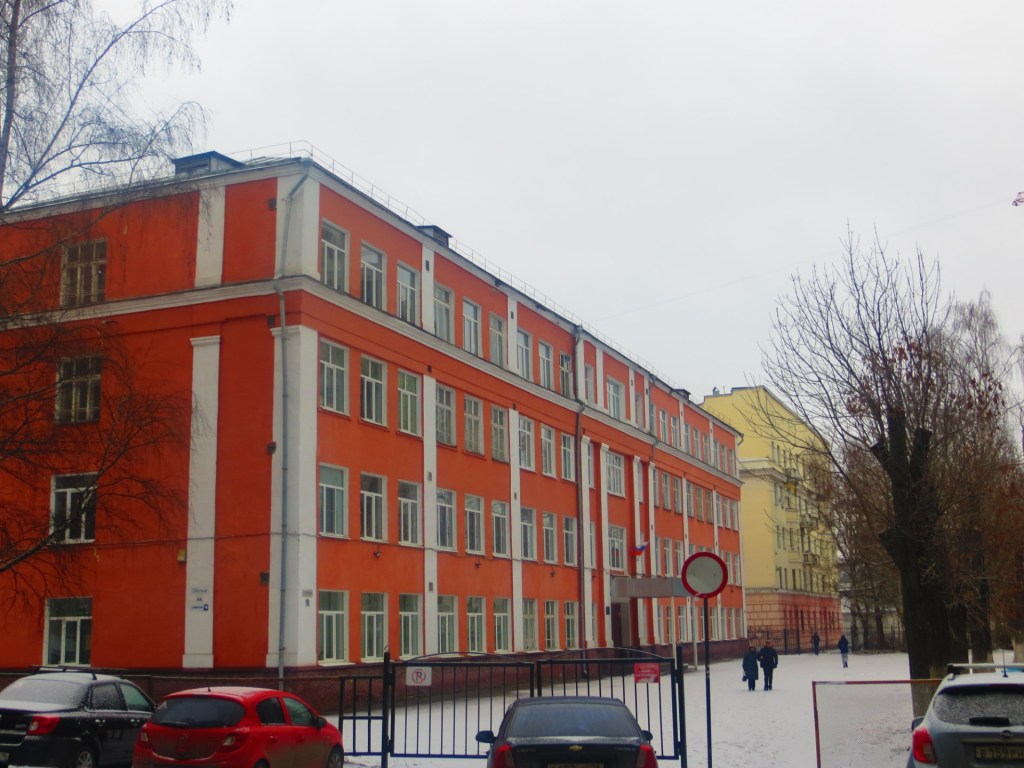
Lenin Ave. We escaped between those yellow buildings on the left. Photo taken in January; alas, I have no autumnal images to share.

And all these many years later, in a dental surgery under the calming influence of gas, it all came back to me, the sepia colors and the smell of fall leaves, the voices of my young comrades, the distinct flavor of childhood of unlimited future and potential, and the feeling of my long ago and far away home deep in my bones.  It never ceases to amaze me how memories can be summoned by the most unlikely agents and at the most unlikely times.  And how joy can be found even in the middle of pain.

Featured

Scrap Metal Fiasco

“Nothing that happens to us after we are twelve matters very much.” J.M. Barrie

I must preface the following with a disclaimer.  I have told this story so often that I am pretty certain I have already written it, so if you have already heard or read it, please let me know (and like it anyway). 

I was six years old when I cautioned myself to beware, for I was surrounded by people who were not smarter than me.  It might have been a devastating realization to a child that young.  Instead, it was an inspiration to rally and rely on myself—the old “trust but verify” (which is, in fact, a Russian proverb), minus the trust.  I proceeded to have an eventful childhood full of hijinks, camaraderie, and a singular focus on defying authority.  Almost half a century later, I stand by every shenanigan, and only wish I had made more mischief.  “Forget regret or life is yours to miss”—Jonathan Larson was also right.

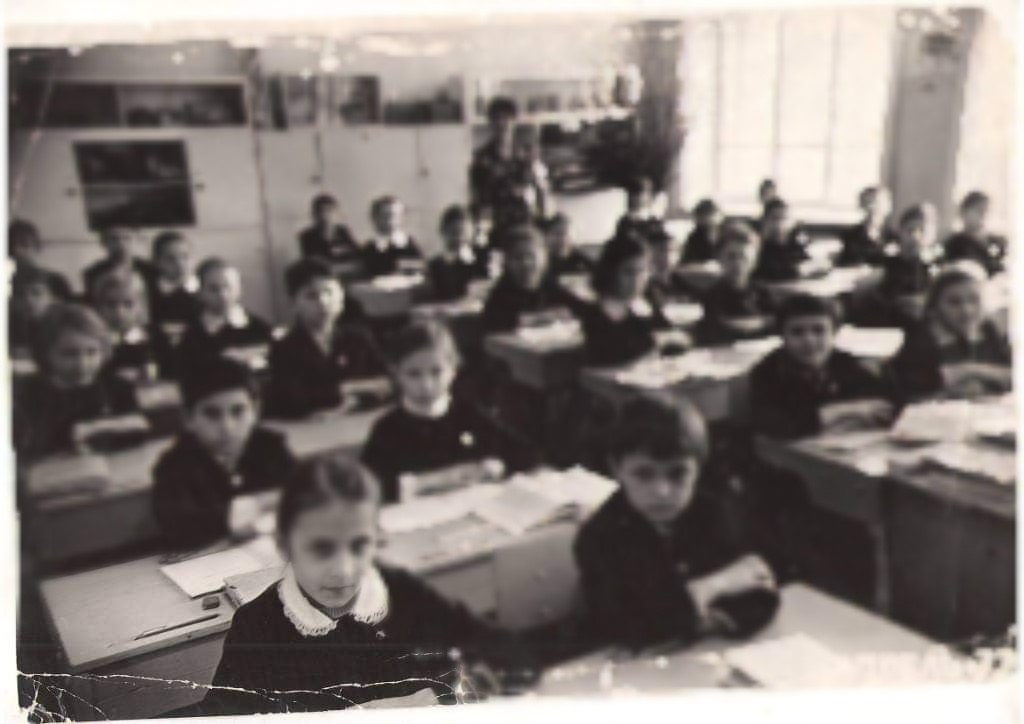
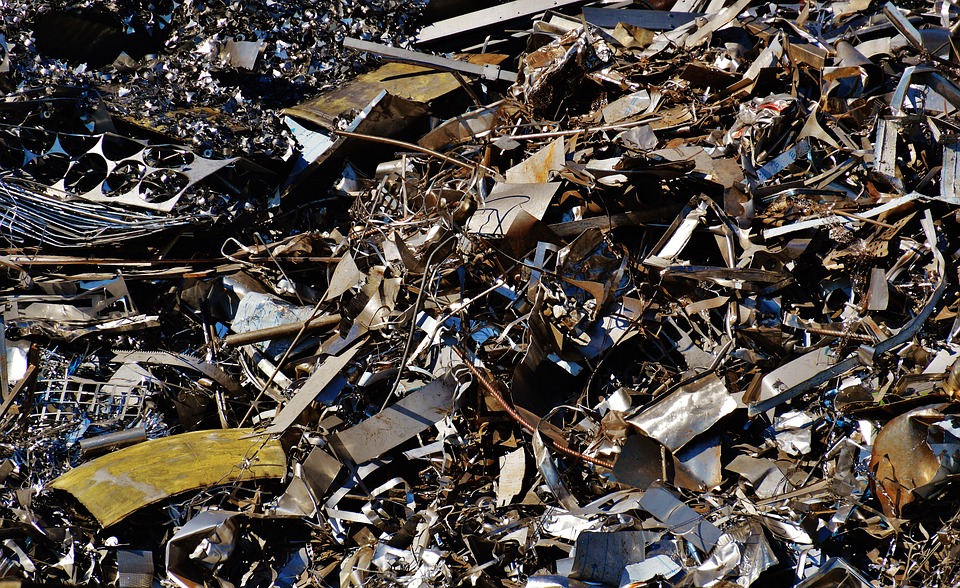
In some late years of the seemingly never-ending stagnation of Leonid Brezhnev’s rule, I was a Young Pioneer.  Surrounded by like-minded and like-spirited delinquents-in-training, I vacillated between apathy and active defiance, usually settling on an attitude of passive aggression.  My class of just under thirty pupils[1] was divided into three “links”, similar to a coed Cub Scout den without parents.  In the most disorganized, wild, and irresponsible class, I predictably belonged to the laziest and most undisciplined link.  There were eight of us, if memory serves, which included a core group of restless and adventurous girlfriends, and a couple of unpopular boys.  To snatch defeat out of the jaws of any potential victory was almost a point of honor for me and my young comrades.  To be fair, we usually started out doing what we were supposed to, and proceeded to fail in an epic manner.  None illustrates this better than the one time we collected scrap metal.  So unmitigated was this disaster that our entire school was banned from this time-honored activity for my remaining time back in the USSR.

The day of scrap metal collection, Link One and Three departed post haste in search thereof.  We members of Link Two briefly lingered in class.  Our Link Leader, an earnest, sweet girl who stood alone in our entire class as a follower of the prevailing ideology, made a short motivational speech along the lines of, do not attempt to evade your Young Pioneer duty.  This motivated the rest of us to want to bail on the whole thing, but someone yelled “Construction”, and we rallied.

There used to be a small park next to my school with a couple of see-saws and slides.  I used to come there on field trips with my daycare, and it was still there when I was in first grade.  However, by the start of second grade, the little friendly playground was demolished and taken over by construction of the regional archives.  Five years later, the site of the stalled construction was the school’s perpetual grim neighbor[2].  There was a crane which never seemed to move, and the more daring of us enjoyed crawling through the hole in the fence and all over what looked like the ruins of an old fortress[3].

And so of course construction (and we called it just that, as in “let’s go and find some metal at the construction”) became our first target.  Several of us filed through the habitual hole in the fence, but were dismayed to find that the site was picked over.  The better organized and more ideologically focused Links One and Three already raided it and carried off all the spare metal!  As I say, my little gang was always a day late and a ruble short. We took a couple of abandoned hammers and managed to detach a piece of pipe we determined to be nonessential, but it was not nearly enough.  (Surprisingly, no one thought to cut the fence down for scraps).

My school was located in a residential urban area, surrounded by apartment buildings.  It was an older, more established area of the city, though not quite the prestigious historic center.  Raiding the surrounding courtyards, we added a couple of unattended shovels and rakes to our bounty.  It was a bit of a task to stop the boys from hitting each other with the shovels, but I do not recall any significant injuries during this escapade.

In one of the courtyards, we spotted a child playing with a toy metal wagon and attempted to negotiate surrender, but his vigilant grandma chased us off with a broom.  We also kept losing link members with every encounter, kind of like when Three Musketeers started off for England in search of the queen’s diamonds.  Getting distracted, losing interest, and entirely changing course was typical behavior for me and my friends during any school-sanctioned undertaking.

Still, five intrepid girls persevered, and fortune really smiled on us when we encountered a clearly abandoned metal bed frame in one of the courtyards—with wheels, and even a mattress to boot!  Never questioning why a bed would be parked near an apartment building entrance, we immediately threw off the unnecessary ballast of a mattress, situated our rakes, shovels, and hammers on the springs, and proceeded to move the bed on out.  It was a swift and stealthy getaway, several middle-schoolers in school uniforms[4] earnestly pushing a bed along a lively avenue.  Some passers-by stared, some wondered, none dared to stop the purposeful Young Pioneers.

Not the image of that actual bed. It is surprising how a search for “metal bed with wheels” only comes up with images of hospital beds…

What should have been the long-sought success not just for our merry band of misfits but for the entire class went decidedly pear shaped, for the owners of the all this paraphernalia (neighbors in the process of moving, careless gardeners, construction supervisor) eventually found their way to our school and claimed their belongings.  The worst part was that the bulk of our bounty, the bed and garden tools, was easily returned with apologies because—private property, so a “remnant of the past”, in the ideology of the times.  It was the looting of the construction site—“plunder of state property”—that was the real offense, and our couple of hammers and the piece of nonessential pipe were the least of it.  The more proactive students got there before us and in their zeal carried off everything that was not nailed down, and some things that were, including the nails themselves.  I never got the opportunity to participate in collecting scrap metal again, but I will never forget our glorious entry into the school courtyard, riding on a bed, wielding a rake—Young Pioneer triumphant!


[1] In the Soviet Union, and I believe in today’s Russia as well, you moved from grade 1 to 8 with the same group of 30 or so students, took the same classes, and had the same teachers.  In my school, there were 3 classes to a “parallel”. After grade 8, a third of the students who did not pass the high school entrance exams would go on to trade and vocational schools, and the rest were reshuffled into 2 classes. My school, which housed grades 1 to 10 (and later, the added 11th grade), would graduate about 60 students from high school.

[2] First, not a uniquely Soviet issue.  Second, when I visited in 2018, I saw the unimpressive final product. I did not even take a picture of it. (I found this on GoogleMaps)

[3] If this is not a classic example of “attractive nuisance”, I do not know what is. What we thought we were getting versus what we got (not actual photos).

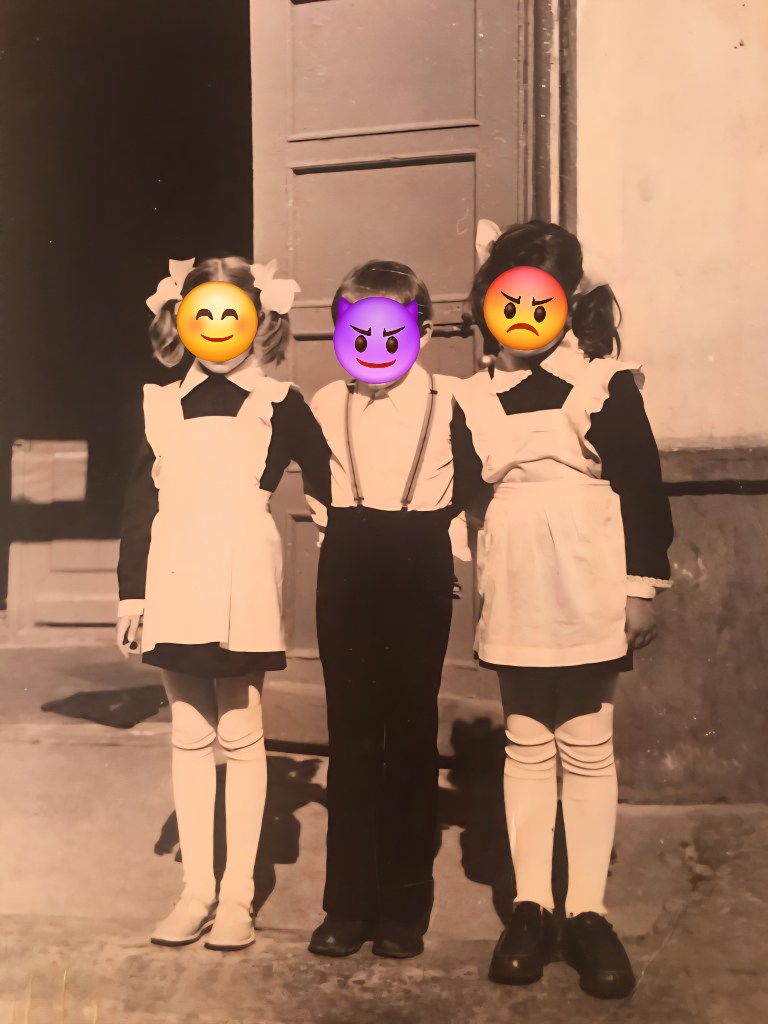
[4] Brown woolen dresses with black aprons.