Featured

Havana Daydreaming

“Oh, Havana, I’ve been searching for you everywhere
And though I’ll never be there…”

(Billy Joel, “Rosalinda’s Eyes”)

In 1997, I prepared my first list of places I wanted to visit in this lifetime.  It was pretty basic, containing about what you would expect (although even then, my focus was primarily on Europe).  The list was revised several times in the intervening years, and I am currently working off the most current, 2020 version.  It is significantly more precise (I narrowed New England down to Maine, identified specific cities and experiences in various countries which I have already visited, and ultimately, decided there is nothing for me in either Minnesota or Australia—no offense).  The place at the top of this new[ish] list is Cuba.  In 1997, I did not imagine that visiting Cuba was possible.  It seems complicated still (especially for someone with my aversion to organized group travels, and given the general state of the world).  But everyone has to have that one place that remains elusive.   

This is the least horrifying photo I could find in the public domain. Or any other, for that matter.

When I was in second grade, the mother of one of my classmates did a presentation to our class about her trip to Cuba.  Bulgaria was exotic enough.  Cuba was unimaginable.  She came with a show and tell.  There must have been some candy, though I have absolutely no memory, real or imagined, of that, and have no experience with Cuban treats to this day.  There must have been some elementary-level geo-political presentation; we already felt a certain reverence for our exotic, far away only friend in the Western Hemisphere.  What I do remember very vividly is a little stuffed crocodile that she brought with her.  I am sure that a baby taxidermy croc would intrigue any child; it was so fascinating to me that in my mind’s eye, I still see Irka Rybakova’s mother standing in front of our class in her belted dress, holding this shiny leathery wonder.  Neither alligators nor crocodiles exist in Russia; this was years before I saw one in a zoo.  So strong was this impression that for years if I heard “Cuba”, the first image that would come to me is that of a little crocodile. 
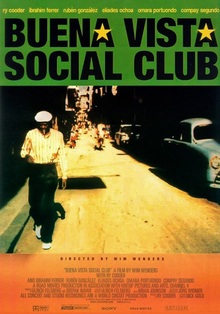
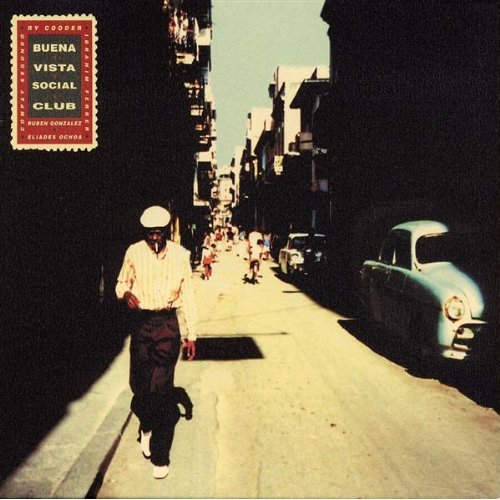
That is, until I saw a documentary on PBS[1]—and that day is about as far away from today as it is from the day I saw the baby crocodile, which is to say that I have identified Cuba with its marvelous music for at least as long as I have identified it with crocodiles, a distinct improvement.  The film touched me on every level—I did not just fall in love with the music, but the sights of Havana, the camaraderie of old musicians, their unpretentious yet assured personalities, their warmth and pride in their homeland[2].  From that time until CDs have gone the way of cassette tapes, I have accumulated a lovely collection of traditional Cuban music.  My meager Spanish is just enough to get the gist of most songs, and that is indeed enough for me.  At some point, the Buena Vista Social Club orchestra came to town during a worldwide tour.  I did not go (something about ticket prices, and I am generally not a concert goer).  While it is tempting to call this the biggest regret of my life, it did not feel so at the time.  The CDs continued to sustain me.
Almost two years ago, Buena Vista Social Club musical showed up off Broadway, but it was December, and I had other plans.  Once again, I made an informed decision to hold out. This time, I was not wrong, for a little over a year later, it finally appeared on The Great White Way, and I was there for it.  Well, to be honest, I was not the first in line.  I was skeptical.  When you love something, you do not want it touched and tinkered with.  You do not want your memories sullied.  This is why I avoid movies based on books I love[3], and generally try to avoid musicals based on movies, which these days is practically an impossibility.  My mother and I planned a trip to NYC, and I was still not convinced, thinking that I will grab the tickets when I get there.  Then Buena Vista was nominated for a Tony, and I figured I better make a move before it becomes a hotter ticket than my limited window of opportunity could support.

I loved the music, but knew nothing about the story, or even cared about it.  On the night of the Tony Awards, I instantly recognized all the characters during the musical number as if they were old friends.  I figured, if nothing else, I will still love the music.  I have seen jukebox musicals, some with better books than others, and in all cases, the music alone has been enough.   
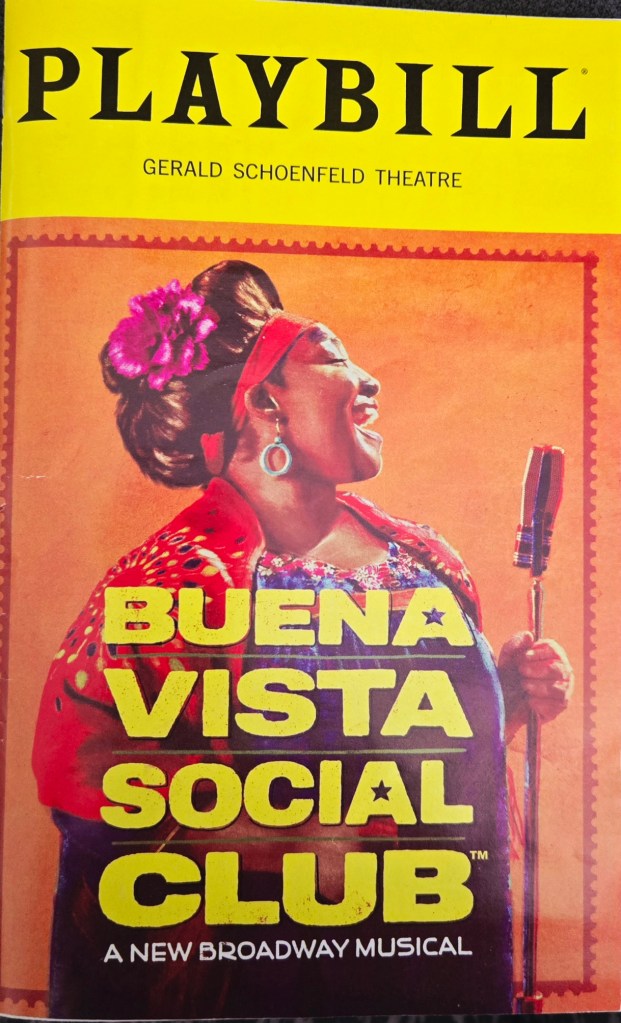
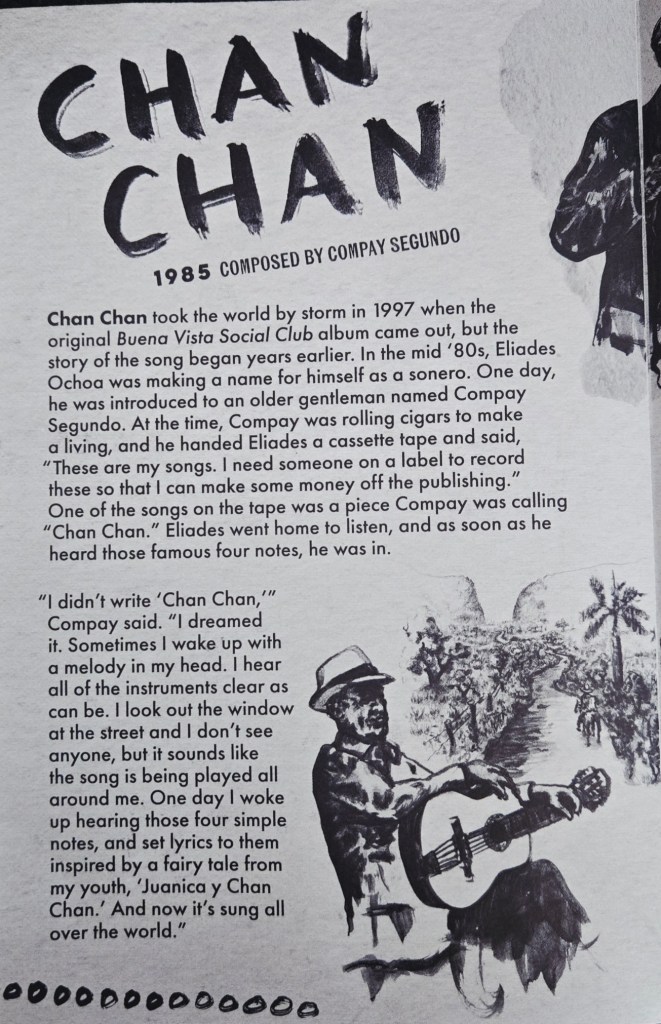
It turned out to be the story I did not know I needed.  The prequel to the events of the documentary, when Omara Portuondo met Ibrahim Ferrer, Compay Segundo, Ruben Gonzalez and others, when they were all making music in the waning days of the Batista regime and the dawning of the revolution, is full of hope, exuberance, and excitement, and sparkles with gentle humor.  The reunion of the former bandmates several decades later, familiar from the documentary, is wistful and burdened with the weight of years gone by, as these things go.  Through it all, the musicians—recipients of the most well-deserved special Tony Award—are simply spellbinding, and the songs are just as gorgeous as ever I heard and loved them.

And then there are the Portuondo sisters.  On the eve of the revolution, one leaves for the U.S., in the scene reminiscent of another musical, on seemingly the last plane out of Havana.  The other stays, because someone has to continue to sing the songs of the people, for the people.  The moment when Omara decides not to leave, whether based in truth or in romantic fiction, touched my heart even more than hearing Chan-Chan live.  Some choices we make, some are made for us, some are conscious and based in sacred truth, some are based on the cards we are holding at the time.  Sitting in the Schoenfeld Theatre on a Friday night in July, seeing and hearing this story with all my senses, I both cried for and praised the impossible, life-altering, life-affirming decision[4]. https://buenavistamusical.com/


[1] When we still had PBS…

[2] The Mandela Effect had me believing all these years that Buena Vista Social Club won the Oscar for best documentary.  It did not. The documentary that won that year was “One Day in September”.  Do you remember it?  Me, neither. 

[3] No, Les Miserables does NOT count, because I saw the French TV special first, for those reading [all] along.

[4] I once had a classmate of Cuban heritage.  His father fled to the US during Batista’s rule; his mother, during Castro’s.  He marveled at the idea that had they never left Cuba, they would have never met, being from such different socio-economic background.  The conclusion that I drew from this story, however, was that people flee various regimes for various reasons, not just the ones from which we are taught to believe they do.

Featured

Midsummer Magic

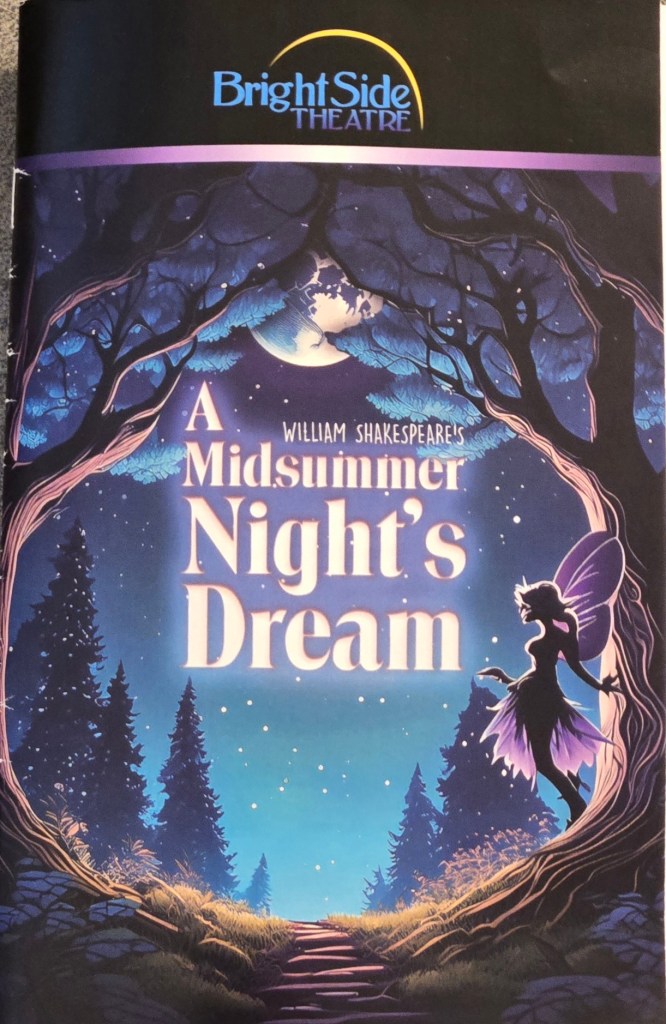
Without any effort—or, indeed, desire—on my part, “A Midsummer Night’s Dream” has recently emerged as the Shakespeare play I have seen most often live on stage.  From some initial encounters ranging from indifferent to downright embarrassing, our relationship has grown and developed into one of admiring understanding.

My favorite among the comedies was always “Twelfth Night”, simply because I saw a televised version of it as a child.  The bumbling duo of Sir Andrew and Sir Toby impressed me the most, and remains my favorite pair of comedic incompetents in the entire canon.  As for “Midsummer”, we did not meet until I was in college. 

I saw several productions over the years, from my beloved Stage West Theatre in Fort Worth to the Stratford Festival in Canada.  Most of them were competently entertaining if not affecting.  Let’s face it, the young lovers’ plight and predictable resolution is not what makes this play so popular; it is Bottom and Co. and the fairies.  And here is where it usually lost me—I have never really enjoyed them as characters on stage.  I have always felt that so much effort goes into the fairies, their costumes, their makeup, their habitat that every else kind of gets lost in the forest, pun intended.  The set is too green, or too blue, there is too much mood lighting, too much gauze/glitter/sparkle/fog/flutter of wings, etc.  I think there is temptation—not entirely surprising—to just get overwhelmed by the external while putting on a play that involves the magic realm.  If I remember nothing else from some of the productions of “A Midsummer Night’s Dream”, I remember a lot of shrubbery and a lot of wings.  I never actively disliked it, but neither did I seek it out. 
Not sure who gets the credit for this photo; it was shared with me by a cast member. Hippolyta/Titania and Theseus/Oberon.

So imagine my surprise when, in a fancy suburb of Chicago which I have distrusted since that fateful day when I visited a client there and could not find my way back. https://oldladywriting.com/2021/08/08/bad-day-in-chicago/  Spoiler alert: Napierville redeemed itself with the most imaginative and heartfelt rendition of “Midsummer” I ever had the privilege of enjoying.

A Midsummer Night’s Dream – BrightSide Theatre

Aside from the quartet of young lovers, who just basically do their thing, the characters in this production are familiar and yet somehow new.  In a smaller theater, with a thrust stage and actors occasionally breaking the proverbial fourth wall, you cannot help but feel part of the story.  But in this version, the relatability is more than a function of proximity.  Theseus of Athens and Hippolyta of the Amazons are played by the same actors as Oberon and Titania, and their attendants in the opening scene also morph into fairies and back again.  Grounded in the corporal world, the fairies are certainly creatures imbued with supernatural powers, but, human-presenting, albeit gorgeously and colorfully costumed, they convey the message that magic is in and all around us.  This double casting, for me, creates a more tightly knit, unified story that is more than just a series of connected plots.  Regal Theseus’ humanity never leaves Oberon, wry elegance of a courtier stays with the mercurial Puck, and Hippolyta is both proud and hopeful as Titania.  So powerful is this bond between the two worlds that I am not sure I ever want to see “Midsummer” again where these roles are *not* played by the same actors.

The play’s funniest scene, when the indomitable troupe of rude mechanicals perform the ill-rehearsed and even worse-written “Pyramus and Thisbe”, is as hilarious as anything I have ever seen.  Peter Quince’s earnestly overwrought introduction, Tom Snout’s exasperated attempts to focus “the wall” on Nick Bottom’s pompous meanderings, Robin Starveling’s laborious attempts to handle two objects at once, and Snug’s brave overcoming of stage fright as the gentlest of lions are all full of humor that never spirals into caricature.  In this production, you root for everyone, even the overly confident yet somehow endearing, wide-eyed Nick Bottom.

I am that pedant who pays attention to and gets distracted by false notes in costuming. This “Midsummer” did what I have seen once before in another play and remembered forever.  It starts in monochrome and gradually becomes more and more colorful.  It is not just that Athenians appear in shades of gray and citizens of the magic realm are in color.  It is not just that Theseus goes from somber black as a ruler of Athens to royal purple as the ruler of the magic kingdom.  The young lovers also gradually transform from gray business professional attire to red and blue silks and lace.  With each exit and entry, I was anticipating the next development of the costumes (and coveted some for myself!).

As for the set, absent are the usual overpowering prop trees and astroturf.  Truly, they just bog down the text and the action (I always knew that).  Instead, there is an abundance of confetti, in all shapes and sizes, and strewn about in every way, including through cannons, which creates an atmosphere of joyful celebration.  And original music written for this production adds another layer of enchantment and lyricism.

Finally, there is *that moment* that transforms everything https://oldladywriting.com/2021/05/25/who-tells-your-story/.  Francis Flute, a mass of nerves as he should be, suddenly loses the high-pitched voice and simpering manner and delivers Thisbe’s farewell speech to the “corpse” of Bottom with the heartfelt pathos of the finest tragic heroes.  I would like to have said that there was not a dry eye in the house, but that would not have been true—still, a hush fell over the audience, and that is no small feat for this play and for this scene.

It never ceases to amaze me how, while staying true to the text and the plot, some productions of Shakespeare’s plays find a truly unique voice.  I give credit to The Bard, of course, for his words are timeless and multilayered.  But I also have to give great credit to the immensely talented team that brought the old story to live in this particular, extraordinary way.  If you are anywhere near Chicago for the next couple of weeks, see this show, before it disappears like so much fairy dust…

Featured

Tartuffe, Impostor, Hypocrite

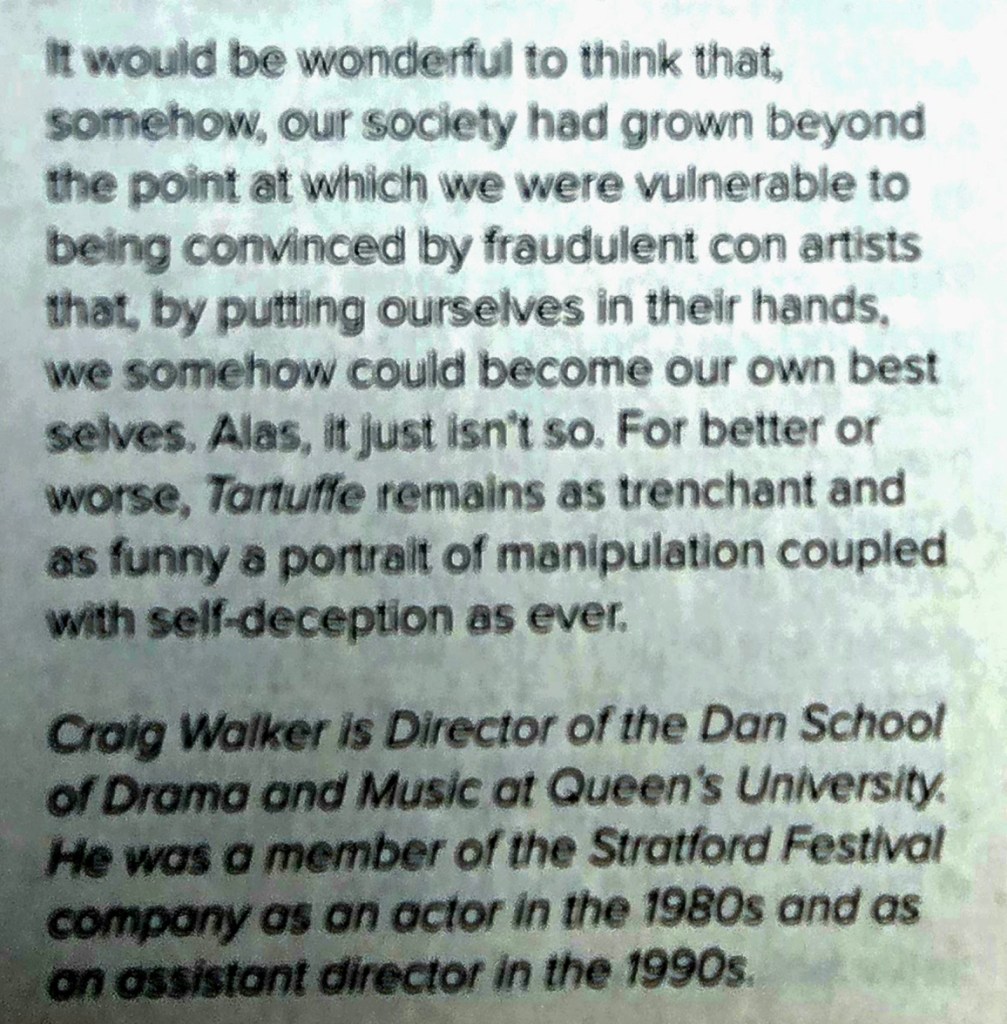
To mention, let alone stage, “Tartuffe” (or “The Impostor”, or “The Hypocrite”) in these turbulent times is almost too obvious.  There is nothing I can say about this brilliant enduring satire that scholars of history and literature have not already said with significantly greater insight.  I will just leave this quote here from the program from the best production of this play that I saw in Stratford in the summer of 2017 (and we thought times were turbulent THEN…):

“Tartuffe” was the first adult play I ever saw live.  It was also the only adult play I saw as a child in the Soviet Union, in our externally beautiful, internally uninspired, historic Volkov Theater [https://oldladywriting.com/2020/07/26/all-my-world-is-a-stage/].  Credit goes only and eternally to Molière (and to the translator, whoever he was[1]) that this experience did not sour me on either live theater or French literature.  That my enduring love of both has shaped my life is something that could not have been anticipated from that first chaotic encounter.

“Tartuffe” came to town when I was maybe 11, and my mother decided that this will make a fine mother/daughter afternoon of culture.  We had fewer such opportunities than one would expect, for reasons that are many, varied, and complicated, ranging from familial to societal.  Everything that pertained to cultural development in my childhood, every museum visit, every book about art, came from my mother.  I cannot bear to think what my early childhood would have been had we spent less time together, but I used to often wonder what it would have been like if we had spent more.  And this is most certainly a story for another time. 

In order to prepare for this momentous event, she decided that we will read the play aloud together.  It was a great idea.  I still remember the first lines spoken by Mme Pernelle to her maid Flipote and Elmire’s response, that opening scene that sets the stage long before the titular character makes his entrance .  To me, they are like the iconic opening bars of a musical.  We took turns reading it aloud, sitting on the stools in my mother’s kitchen.  It was pure joy: the relatable characters with fun names, the dialogue alternately wacky and clever, the ultimate victory of sane minds and loving hearts over liars and cheats.  After “Tartuffe”, I read the rest of the plays in the Molière “greatest hits” collection, and liked them all, but none had a lead character as deplorable and deserving of retribution as this one[2].  It aged extremely well, from the day it was written to the day I read it a little over three centuries later to our tense present. My oh my, plus ça change…

And then came the actual day.  I do not remember the time of year (but choose to set it on a beautiful springtime day) or what I wore (a good sign; I hold enough grudges from my childhood for not being able to choose what to wear on a special occasion).  I remember arriving and heading straight to the theater buffet for a glass of sparkling lemonade and a “basket” pastry.  (For how much I keep mentioning this pastry, I should just make it already—there are recipes online.  Of course, I fear it will not be as amazing as I remember it from childhood.  Nothing ever is.)  My mother cannot be credited with coining the phrase “eat dessert first”, but can definitely be trusted to always do it.  It was a matinee, the buffet was not crowded, and we enjoyed our pre-show treats before proceeding without undue hurry to our seats.  At which point we discovered that we arrived an hour late and missed the entire first act, Mme Pernelle’s opening speech that I memorized being the first, but by far not the only, casualty.

To be honest, I do not recall feeling particular distress at that moment.  I was happy to have enjoyed a pastry, and I did not expect much from the spectacle, for I have been to the Volkov before on school field trips.  Its reputation at the time was consistent with everything else in our stagnant provincial town.  We sat way in the back of the orchestra, under the balcony, a terrible spot in any theater.  Either the acoustics or the actors themselves were lacking, but we had trouble making out what was going on; the words were completely unintelligible (and this was back in the days when my young hearing was very keen, so if I could have heard anything, I would have).  And thus the second act passed in a haze of confusion.

After the second intermission (first for us), my mother, determined to see and/or hear the rest of the play, searched for better seats.  Fortified with more treats from the buffet, I was game.  We spotted an empty opera box and moved in, feeling pretty pleased with ourselves.  We actually started to enjoy the final act when the door behind us opened and two guys in their 20s rolled in, looking and smelling like they partook of something stronger than sparkling lemonade at the buffet.  Checking their tickets with some incredulity, they asked if these were in fact their seats.  My mother barked that the seats were ours, and they meekly retreated, presumably back to the buffet.  We felt triumphant.  It might not seem like much, but it was a perfect coda to a memorable and fun afternoon to which the play was merely an atmospheric backdrop.

I do not expect that I will live to see “Tartuffe” again performed in the language in which I first read and loved it, but I would like to someday experience it in the language in which it was written, the original words I studied in college, in the House That Molière Built, where it is allegedly the most produced play (where so far I only keep running into “Cyrano de Bergerac”). 

P.S.  About translations:  I am of the opinion that French and English are not entirely compatible when it comes to literature.  Established translations, to my ear, do not convey the lightness of the original—yet some modern translations are too colloquial to retain that time and place that is unmistakably Molière.  I have seen some adaptions of his plays that were competent, yet unrecognizable, although for “Tartuffe”, I prefer the crisp, sparkling translation by Ranjit Bolt to Richard Wilbur’s staid and stolid one.  This was the translation used in the 2017 production mentioned above.


[1] In this particular case, it was someone by the name of M. Donskoy.  I give credit where credit is due.

[2] What were the other plays in this collection, you ask? About what you would expect:  “Don Juan”, “L’avare”, “Le Bourgeois gentilhomme”, “Les Fourberies de Scapin”, and “Le Malade imaginaire”.  I saw a televised Moscow theater production of  “Le Bourgeois gentilhomme” as a child, and never forgot the hilarious part where M. Jourdain discovers that he has been speaking in prose his entire life.  Coincidentally, this play remains one of the few on my theater bucket list—I have not seen it live to this day.

Featured

Fat Ham, or Not Your Father’s Bard

Disclaimer:  I am not a theater critic, nor could I ever be one.  I am excited to share and recommend what I like, but with the wisdom (and empathy) of the years, I do not feel sufficiently invested in discouraging folks from seeing shows I do not enjoy.  I just cancel my season subscription.  Well, of course I will call a couple of my gal pals to warn them, but all of this is to say, we here at #oldladywriting are not panning any shows, especially in our local theater community.  We do not need the negative energy.  And so, here comes another glowing review, well-deserved.

Sometimes I see a show because I know it or about it, and I am excited to experience it.  Occasionally, it is because someone I know is in a show.  And then there are the theaters where I want to see everything, because they are consistently good.  And by “consistently” I mean, sometimes for a quantity of years and depending heavily on the artistic director.  As of this writing, I made a one-year commitment, with an option to renew, to the Detroit Public Theatre.

“Fat Ham” just opened the 10th season at the DPT.  I am not ashamed to admit that I knew nothing about it (because I am also not a literary critic).  I actually vaguely assumed it was a Hamilton parody.  I was completely wrong, as it is actually a modern-day reimagining of Hamlet with a queer Black protagonist.  Shakespeare again—and Hamlet again!  https://oldladywriting.com/2024/04/06/rosencrantz-guildenstern-are/ 

I have seen different Hamlets, cerebral, brooding, vengeful, and eliciting different levels of compassion dependent on the production and its star.  But it is always his story.  We know the end, but it is the mind’s journey to the inevitable conclusion that captivates. “Fat Ham’s” sweet, sensitive protagonist Juicy, a child of no privilege, is a lot less self-centered and a lot more caring than Hamlet has ever been.  How much more relatable is a young man who is not a prince, but just a regular person who is burdened by the world in which parents range from neglectful to abusive, friends are equally beleaguered by the big and small tragedies of everyday existence, and life was never fair to begin with.

Some of the Bard’s iconic plot points are there: the father whose death was engineered by the uncle who then married the mom, the father’s ghost calling the son to avenge his death, the mom whose loyalties and motivations are suspect.  But quite a bit is different, too (spoiler alert):  far fewer people die, even when justice is served, fate takes back seat to positive action, and ultimately, the kids are all right.

I fought the urge to give Juicy a hug and tell him that it will all work out in the end.  I kept thinking of one those rhetorical questions, “what would you say to your younger self”, because I saw a bit of my younger self in Juicy.  Not everything, and obviously not the part of uncle killing father and all that, but just that general feeling of not having agency, of being trapped in a situation with limited means to change.  I wanted to tell him that breaking free from the ties that bind and gag is essential.  Polonius’ famous advice is not quoted in “Fat Ham”, but I have always taken it to heart: “To thine own self be true”.  And say what you will about that old courtier, but as a parent, he is one of the best in the Canon, for he loves his children and tries to do right by them.

And then there is the humor.  “Hamlet” is not particularly funny, other than that scene where Polonius is desperately kissing up to the prince while the two are cloud-gazing.  “Fat Ham”, however, is joyously hilarious, heartfelt and witty, introspective and warm, and rowdy and raucous as life itself.  The acting in this particular production is absolutely effortless.  There is not a single false note in the cast.  I am continuously amazed and impressed by the abundance and caliber of local talent. And also, let us not forget the fun set, an impressively detailed backyard complete with the pig rotating on the spit, kind of like a warped interpretation of “Pleasant Valley Sunday” come to life.  I am thinking that these meticulous lifelike sets are almost a trademark for the Detroit Public.  The last couple of shows I have seen there were equally impressively immersive.

I realize that I have said a lot more about the play itself than about this particular production, but truly, this is because for me, it is almost impossible to separate them now.  So if you are in Metro Detroit over the next few weeks, see “Fat Ham”.  If you are not so fortunate, keep it in mind for future productions.  It is a hopeful message of a glorious triumph of love and self-awareness over toxic masculinity, and that is a beautiful thing.

https://www.detroitpublictheatre.org/season-ten

Featured

The War of the Roses

Five years ago, I wrote how in my quest to complete the Shakespeare canon, I was still five plays short.  As of this writing, I only [still?] have two to go (“Troilus and Cressida” and “Two Noble Kinsmen” for those keeping track at home).  “Henry VI” trilogy is done, and how!

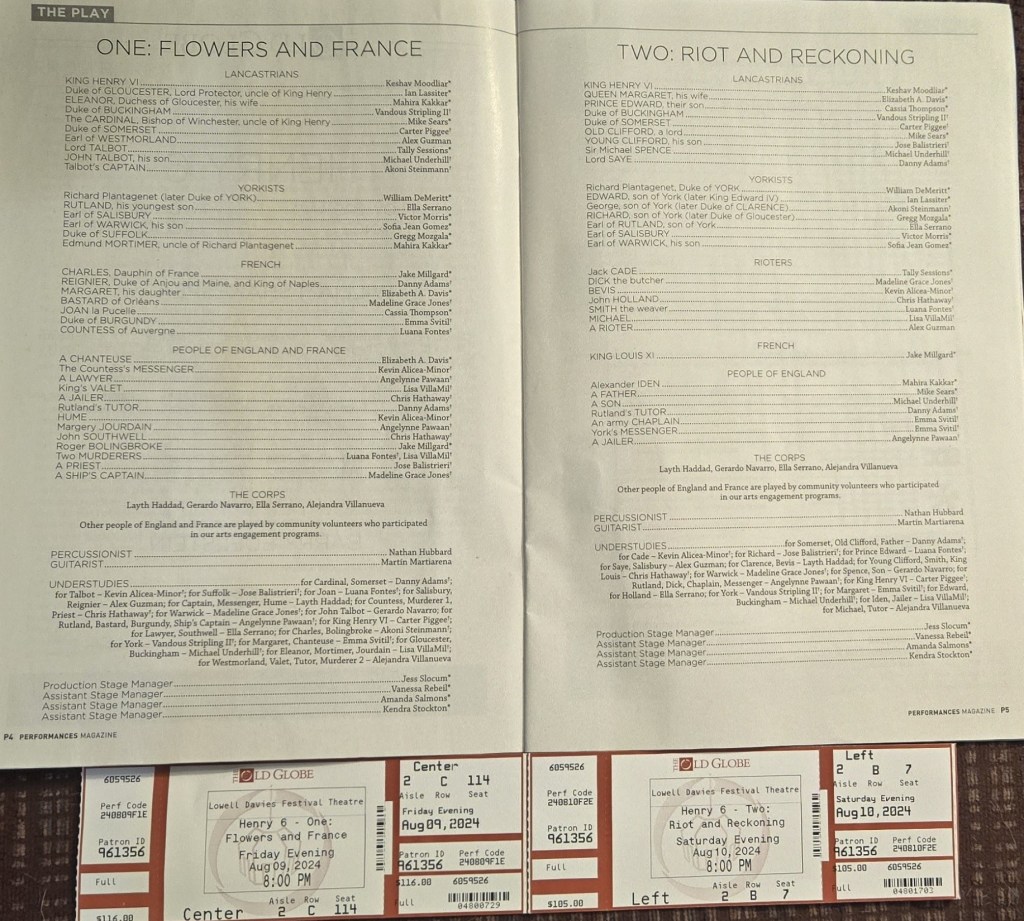
I have to note that it took me fewer attempts to get to Henry (three) than to Vienna (five).  I literally had tickets to see it at the Oregon Shakespeare Festival in the fall of 2020, and we all know how that went.  Michigan Shakespeare Festival was going to produce it this summer but sadly, had to go dark.  I was merely wondering what might be playing at The Old Globe in San Diego during my upcoming trip next spring when I noticed that it is actually doing “Henry VI” this summer.  And so I said to myself, who am I if I am not true to this glorious quest?  I found the perfect weekend when the “Henry VI” Parts 1-3 would play on two successive nights, reserved a hotel room, and spent a couple of months in happy anticipation of a visit to the place of which I warmly think as American Crimea. 

Credit to production designers: Lawrence E. Moten III, Scenic Design; David Israel Reynoso, Costume Design; Mextly Couzin, Lighting Design; Melanie Chen Cole, Sound Design; Caite Hevner, Projection Design.

I have been to The Old Globe several years ago, and loved their production of “Red Velvet”.  However, checking the tickets shortly before the trip, I was slightly dismayed to discover that “Henry” is being staged at an outdoor venue.  I pictured lawn seats, actors scurrying to not be seen behind awkward wooden set pieces, and lots of bugs.  In the Midwest, I have missed more than one outdoor performance and sporting event (yes, I have been known to attend a baseball game, don’t look so shocked!) that have been rained out.  However, I know as well as anyone that it never rains in Southern California, and was willing to put up with the rest of the potential unpleasantries just to cross this elusive trio of plays off my list.  Spoiler alert:  this did not turn out to be your usual Shakespeare in the Park.

Now, much as all I know about French history I learned from the novels of Alexandre Dumas, all I know about English history I learned from Shakespeare.  While I still need to recite the opening lines of “Richard III” to help myself remember who is York and who is Lancaster (and need a mnemonic device I heretofore have not found to identify which rose is red and which is white), I am happy to have finally filled the gap between “Henry V” and “Richard III”. 

It turns out that the gap includes some pretty exciting stuff, such as Joan of Arc’s last stand, epic battles between the English and the French, and intense subsequent plotting and fighting for the crown among the various English heirs and pretenders.  What’s not to like?  Ah, here is what:  my least favorite line in all of Shakespeare, “let’s kill all the lawyers”, makes its annoying appearance.  Even though in the play (and I knew this before seeing it) it is meant as the first step to chaos and political instability and is spoken by a villainous character, it has been misquoted for centuries.  But I am getting ahead of myself.

I have been seeing Shakespeare performed primarily at the Stratford Festival in Canada, which is as good as it gets.  I have seen some fantastic interpretations elsewhere, innovative, beautifully acted, creatively staged, but I have always thought that Stratford’s scale and scope is second to none.  Until now.  And unexpectedly, this “Henry VI”—actually, styled as “Henry 6”—an English Civil War saga 600 years old, filled me with patriotism.  I was all like, look at our American actors being as good as Canadians!

First, the outdoor theater at the Old Globe is basically the same as any other theater but without a roof—and a roof is not critical to a play unless you are dropping a chandelier from the ceiling.  But the way the natural surroundings of the gorgeous Balboa Park worked with the set, however, was both unique and exhilarating.  Every time those giant doors opened to let actors on stage and we saw, instead of the usual backstage darkness, majestic trees lit in the night, it was a spectacle like none I have ever experienced.  The most powerful moment came early on, when Lord Talbot, The Sword of England, first burst on the scene, from the actual forest, backlit and accompanied by stirring rock music.  It was just too cool!

Second, rarely have I seen a Shakespeare production that is so accessible, yet still recognizably classic.  The inventive prologue gave a quick summary of The Henriad (Richard II/Henry IV, Henry V–it was yet unwritten by Shakespeare at the time of the staging of Henry VI) and set the stage for what is to follow.  The costumes, the crowns, the crowds, the chaos—oh, it is history all right, but what gripping history!  Maybe these are earlier plays, but what they lack in familiar soliloquies they more than make up in the absorbing (and true) story that is better than any tragedy (or comedy) from the pen of the same author. 

This production is full of fun anachronisms, including a hilarious presentation by Richard of York to explain his right to the throne with the aid of an overhead projector.  I have to add that, besides the valiant Talbot, Richard was my other favorite character.  Is he supposed to be sympathetic?  I found his sincerity and single-minded focus on the throne endearing.  There was one scene where others are talking, planning, plotting, and he just paces around the stage, literally circumnavigating it, talking to himself.  I caught myself with my mouth literally gaping open, trying to absorb everything that was going on.

I liked the first part more than the second one, for purely subjective reasons—more of the French (Charles the Dauphin bearing hilarious resemblance to King Herod in “Jesus Christ Superstar”), Talbot and the cult of Talbot, and just a lot more humor.  The second part, all about the infighting and plotting for the English throne among the English themselves, is quite a bit darker.  And once that madman Richard III shows up on the scene, events start snowballing, and you know it will end badly.  He gets his own show later; let’s see more of the other people.

Also, Part 2 started right off with the reenactment of the January 6 riot, complete with the QAnon Shaman, albeit with the Union Jack painted on his face—and, obviously, with Shakespeare’s words, which, I imagine, elevated that particular disaster.  It was disturbing and a terrible reminder that we humans never change and learn nothing from history.  We live through these cataclysms and they shock us, but there is nothing new under the sun. Shakespeare already wrote about it…

The thing about Shakespeare is, his words, or even what we take to be his words, are constantly edited and reinterpreted.  Having seen “Henry VI”/”6” for the first time, I do not know if I have fallen in love with the play itself, or with this particular version of it.  But does it really matter?  It was a magical experience that touched my heart, and that is what great theater does.

Featured

Rosencrantz & Guildenstern Are

When I first read “Hamlet” in a high school literature class, Shakespeare’s language was still difficult and unfamiliar, but I immediately and always felt affection for its conflicted [anti]hero.  A family friend told me about “Rosencrantz and Guildenstern Are Dead”, which I also immediately read, intrigued by the concept, and understood nothing.  I have seen some magnificent productions of “Hamlet” over the years, and have been fortunate to ponder and debate its themes with folks much smarter and more astute than myself.  Until now, I have never seen the parallel universe version.

When “Rosencrantz and Guildenstern” rolled into Toronto, with two of the Hobbits, Dominic Monaghan and Billy Boyd, as the leads, I was determined to make the trek.  Now, the Hobbit connection is of no use to me—I slept through all those movies, sitting upright and with my eyes wide open, and actually listened to the book on tape, all 197 hours of it, and retained none of it.  But, I appreciate both the tremendous stage training and presence of the British actors, and the immense talent of Tom Stoppard, one of the greatest—if not THE greatest—living playwrights.  I have come a long way since I first read his words.

Toronto, on occasion, has served as an extension of my theater playground.  It tends to have a slightly different lineup for big Broadway shows through the Mirvish theaters, and some straight plays in addition to the major musicals.  I do not know the city, just how to find my way to the couple of theaters and, obviously, to the Hockey Hall of Fame.  My favorite restaurant, Le Marché, fell victim to the pandemic economy, so the play was truly the only focus of this trip.

I was not disappointed (spoiler alert: far from it!).  But I was surprised.  My memory of this play was so hazy as to be almost nonexistent.  I just knew what is common knowledge: absurdist tragicomedy, similar to “Waiting for Godot”, minor characters from a major play.  All of this is technically true, and none of it is sufficient.  I did not find it absurdist but actually quite heartfelt and authentic—unless life is absurd, and that is a premise that I refuse to countenance.  And as for being minor characters—well, maybe they only passed through “Hamlet”, but they are the heroes of their own story.  I was reminded of how Fredrik Bakman weaves the same cast of characters through several novels, with some front and center in one book but only episodically appearing in another.  Stoppard did it earlier.

These guys were so gentle and genuine.  Rosencrantz in particular was sweet, befuddled, with a hint of Eric Idle-esque wide-eyed mischief.  Guildenstern was a bit more anxious and focused, and also wistful.  There is so much to absorb and contemplate.  They live in a parallel universe and we know how their story will end, but they do not know it.  They are not entirely sure of anything, including the limits of their own power and will. They are floundering, but they are living—as are we all. And that is really the story.  We might think that they do not have agency, but that is only because the title of the play gives it away.   And even despite that, I was waiting for it to unfold differently.  I did not get the sense that they are marching toward an inevitable conclusion.  They are just making some decisions that will affect their lives in dire ways—as do we all.  The Casablanca quote came to my mind, the one about how “the problems of three [let alone two—OLW] little people don’t amount to a hill of beans in this crazy world”.

And there is no predestination, just a series of circumstances and how people make the best, and occasionally the worst, of them, because they are not omniscient.  It is a story of two guys who are not necessarily worse than anyone else.  And in this production, it also helped that Hamlet himself was the worst character in the ensemble:  bearded middle aged man, prone to bulging eyes, with a startlingly booming voice and an utterly charmless manner.  He was manipulative, callous, and revenge-driven.  It was impossible to care, let alone root, for him. Perhaps that was intentional, but I do not know the play—I only know what I felt.  This all goes back to who controls the narrative—“who tells your story”.

And so this experience just confirmed, yet again, my firm belief that plays need to be seen, and the power of live theatre to make one think and feel is unsurpassed.  I wrote before about that one moment for which I wait in each show, and here there was the instance that I realized what is coming, and spouse whispered to me, “This is how they die”.  So invested was I that I forgot the title of show!  And then when Guildenstern said,  “There must have been a moment, at the beginning, where we could have said — no. But somehow we missed it”.  It broke my heart.  And that is really it; “the rest is silence”.

Featured

Do You Hear the People Sing?

It has been brought to my attention more than once[1] that all my theater posts have referred only obliquely to my most favorite musical of all time, “Les Miserables”.  And so because I (1) tend to not write timely and (2) am most assuredly not a theater reviewer, here is a tribute more than 30 years in the making.

My first encounter with “Les Miserables” was when the French black and white 1958 miniseries made it to the Soviet television during my childhood.  It seems to be the superior cinematic version because it is French and stars the great Jean Gabin.  At whatever single-digit age I was when I saw it, however, I was incredibly impressed by Gavroche, his pluck, tragic death, and the fact that he lived inside an elephant.  So much did I carry on about this elephant than when we saw the US movie version, the one with Hugh Jackman[2], my kids were besides themselves with the realization that I did not exaggerate this fact.  (I really do not embellish—it’s just that my reality has routinely been stranger than fiction…)

When I moved to New York City in 1990, “Phantom of the Opera” was the hottest ticket in town.  It was not even brand new by then, but the wait for tickets was two years.  Two years, “Hamilton” fans!  In those pre-internet days, I literally had to call the box office and be told that I can get on the wait list.  I planned to be in NYC for at least three years, but I was also 21.   Needless to say, I never got on a wait list, and never saw “Phantom” on Broadway. 

Somehow, word got around that “Les Miserables” not only did not have a decade-long wait for tickets but was offering student discounts to the tune of $14.  Now, this was a very different time with very different pricing structure for live theater.  Full price tickets were $50, which was substantial, especially for poor students.  But, movie ticket prices in NYC were climbing into double digits, so to see a Broadway show for just a few more dollars seemed—and was—extremely reasonable.  Some friends of mine took advantage of this amazing offer and reported that, while the show was good, it was “depressing”.  This was high recommendation, leading me to believe that the story was not Hollywood-ized.  Of course I loved it.  If I knew then what I know now, I would have seen it again.  And again.

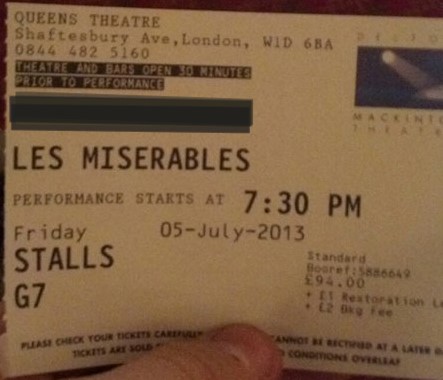
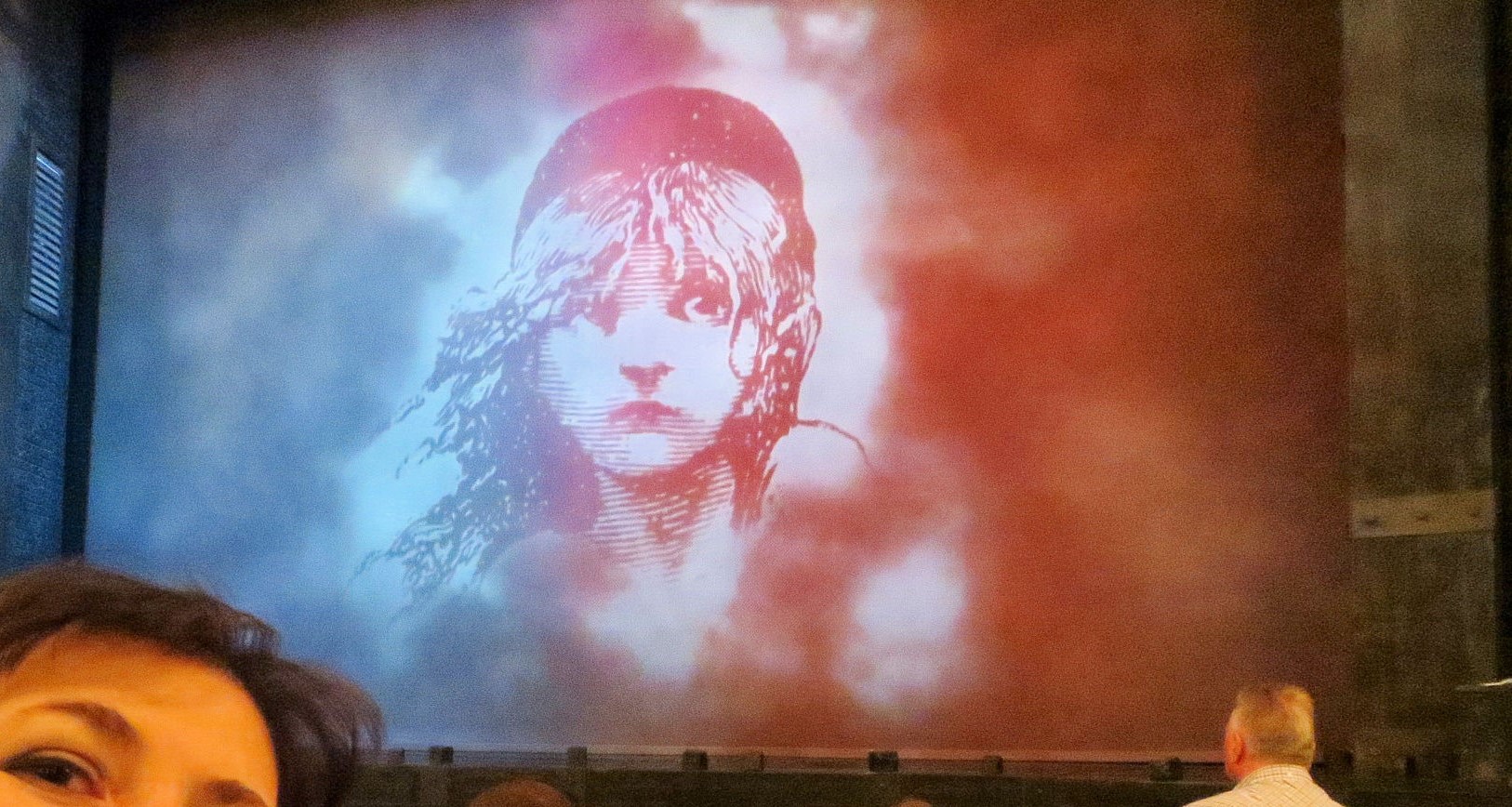
In the 1990s and early 2000s, “Les Miz” was touring on a semi-regular basis, and I saw it twice more in Detroit.  The third time, in 2010, my kids were finally old enough to be worth a ticket (for at that point, we were already hundreds of dollars away from the measly $50, let alone $14).  I built it up as the best thing they will ever see live on stage.  The lights came down, and I broke out in cold sweat, because—“There is no ship in Les Miz”!  The Abomination came to town.  For three interminable hours, I watched my beloved show dismantled.  Gone were the revolving stage and the barricades, replaced with CGI images.  Gavroche’s song was cut.  The whole production was just somehow pedestrian, dull, in a word—miserable.  And poor Enjolras, the tragic hero of the doomed uprising, is wheeled away in a cart possibly borrowed from Spamalot (don’t you just expect him to spring up singing “I’m not dead yet”?)  Trevor Nunn, the director of the original production, hated it, asking “why something inferior has been created when something superior could have been created.” [3]  Why indeed? 

I took this musical for granted because it always existed, it always toured, but after seeing the new and worsened version, I was crushingly disappointed.  I took to the internet and discovered that the original version was still playing at the West End.  That was all well and good, but before I even had time to lament this unreachable dream, I learned that I would be going on a business trip to London in the coming months.  If ever I believed in luck and fate, it was at that moment.  But… but, I must have forgotten that life is just a series of turns around which fate is waiting with a stuffed eel skin[4].  Thinking that a musical that is a quarter of a century old is not the hottest ticket in town, I figured that I will just grab a ticket at a half-price booth upon arrival.  However, leisurely perusing West End offerings with the idea to see what else I could see[5], led me to a sudden shocking discovery: there were no tickets for “Les Miserables” during the time of my trip!  Whaaat?!   An increasingly frantic internet search revealed that Alfie Boe[6] was doing a limited run as Jean Valjean.  Furthermore, Matt Lucas was appearing as Thenardier at the same time—and frankly, my money is still on him causing the sellout, because when he said “Paris in the DUST” and chuckled knowingly, the audience just died like when Lin Manuel Miranda first appears on stage and utters “Alexander Hamilton”.

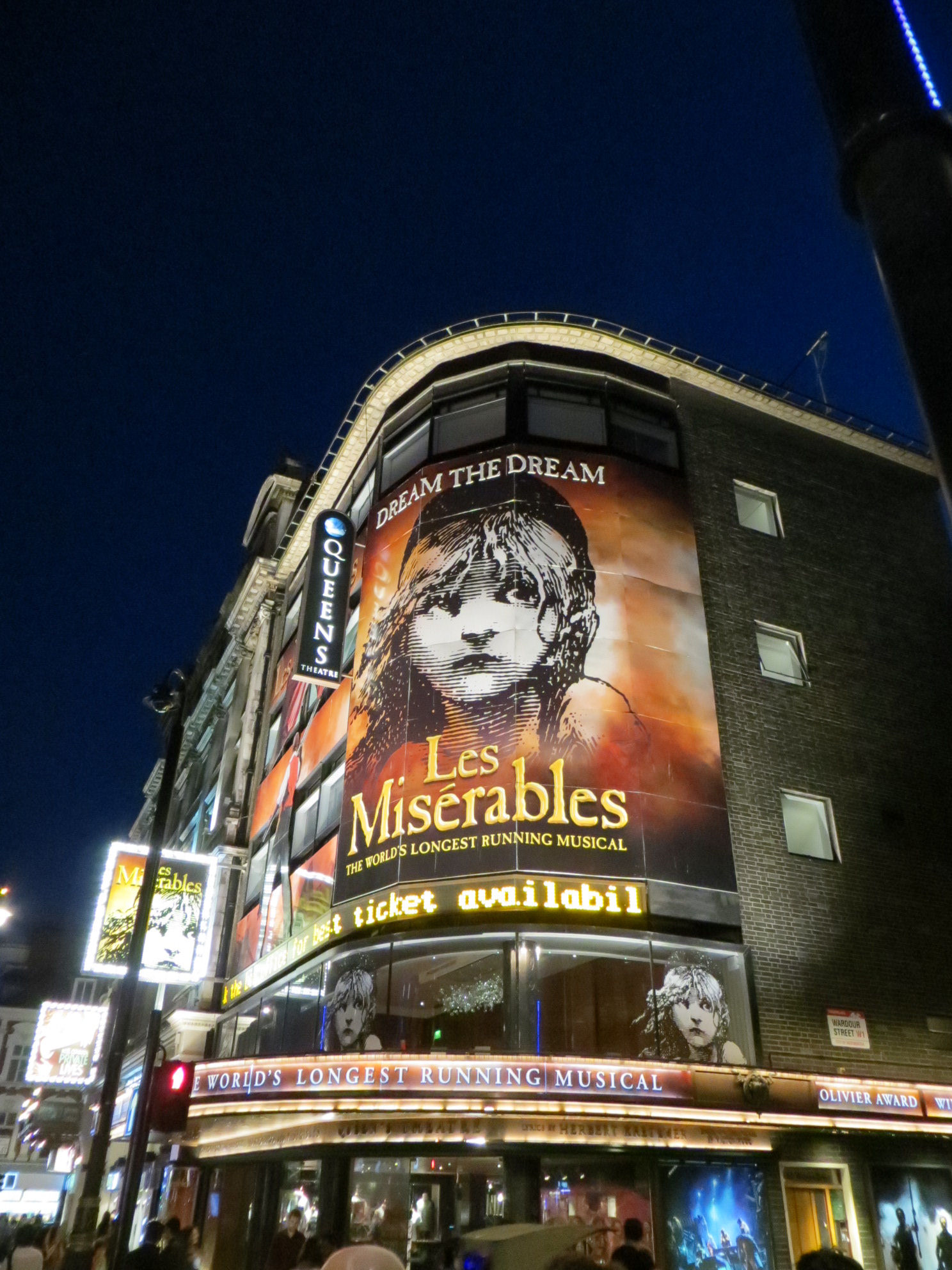
Top of the show, 2011, Queen’s Theatre

So yes, that was a spoiler alert: I got the ticket, from a reseller.  I actually got two tickets, because they were not sold singly, and it was still cheaper than a ticket to a touring production in Detroit, because, well, U.S. theater prices versus the rest of the world.  If you know, you know.  It was all that I remembered and missed, and more, because I knew to never take it for granted again—not just the gorgeous music and the moving story, but Trevor Nunn’s iconic production.  

2015

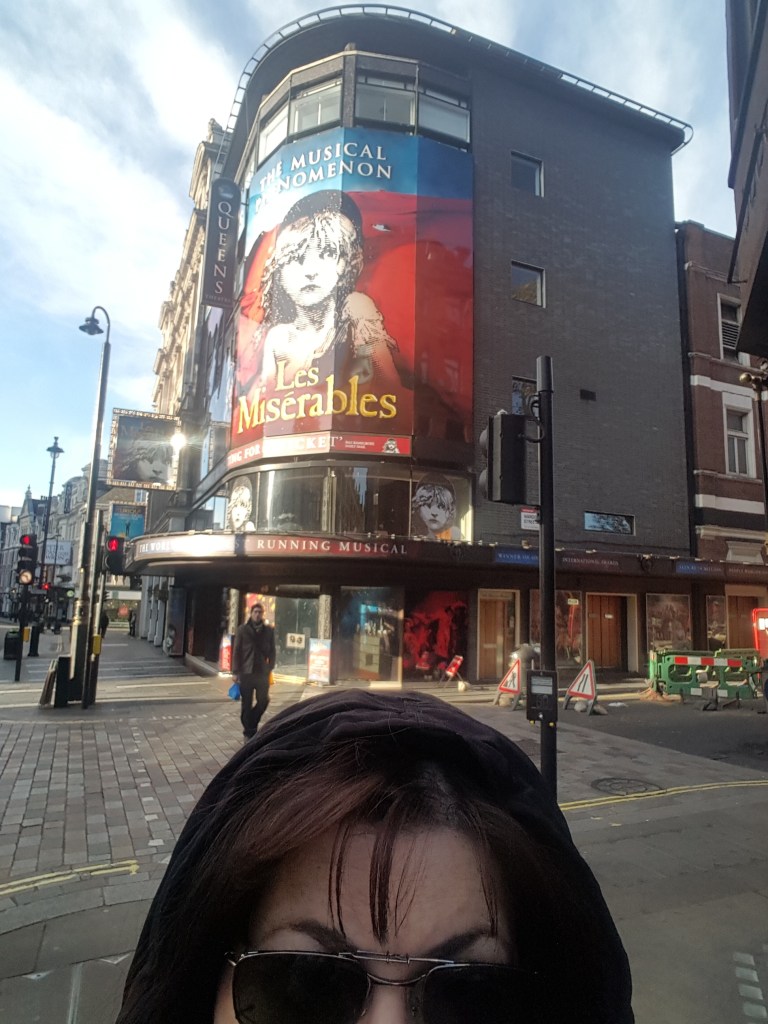
In the few years that followed, I was extremely fortunate to see the original London production four more times.  The last time was in the spring of 2018.  In 2019, it closed, and was eventually replaced by The Abomination.  On my last visit to London, in November 2021, weeks after Les Miz’ post-pandemic reopening, I walked on by [ https://oldladywriting.com/2021/11/28/west-end-and-beyond/].  I am grateful that the last time I saw Les Miserables, it was in its full glory, revolving stage, barricade coming together and turning, no unnecessary projections and other staging fails too numerous to mention.  Hope dies last, but in any case, the original production of Les Miserables lives in my memory.


[1] Maybe it was only once, but very recently on World Theatre Day.

[2] Hugh is great in many ways, but he is no Jean Gabin.  I said what I said.

[3] https://playbill.com/article/trevor-nunn-speaks-out-on-revised-london-bound-les-miz-mackintosh-responds-com-169704

[4] P.G. Wodehouse

[5] I also saw “Billy Elliott” and “Betty Blue Eyes”; the first one because a colleague chose it and the second one because it looked like something that would never come to the U.S., which, as you know, is how I pick my West End shows.

[6] Alfie Boe is an incredible operatic tenor.  But the best Valjean is Killian Donnelly, who not only sings, but is a fantastic actor.  OK, Jean Gabin is THE best Valjean overall, but Killian Donnelly is the best singing Valjean.  I said what I said.

West End and Beyond

The great Russian writer Konstantin Paustovsky astutely noted, “A sense of nature is one of the foundations of patriotism”.   During the pandemic, while everyone was communing with nature, camping and hiking, I most assuredly was not.  I visited one national park (with mixed success) https://oldladywriting.com/2021/06/11/i-went-up-north-once-once/, did not take down my old lady bicycle from the ceiling of our garage where it has been hanging for about twenty years now, and did not take up “hiking” as a hobby.  I waited and bided my time in a Midwestern suburb until an opportunity to travel to London presented itself.

I saw five plays in seven days, which is my ideal vacation under any circumstances.  Now that the original production of “Les Miserables” has been replaced (not permanently, I fervently pray) by the abomination that is the 25th anniversary version, my London dance card is emptier.  I must clarify that at the West End, I try to see shows that I am unlikely to see anywhere else.  Unless Sir Patrick Stewart, Sir Ian McKellen, or the not-yet-knighted David Tennant or John Simm are appearing in “Jersey Boys” or “Book of Mormon”, I am catching those when they come to Detroit.  On this trip, I even wandered out of London, to Bath and Richmond.  The theater scene even outside of the West End was breathtaking.

And here they are, in order of appearance.  Spoiler alert:  all were great.

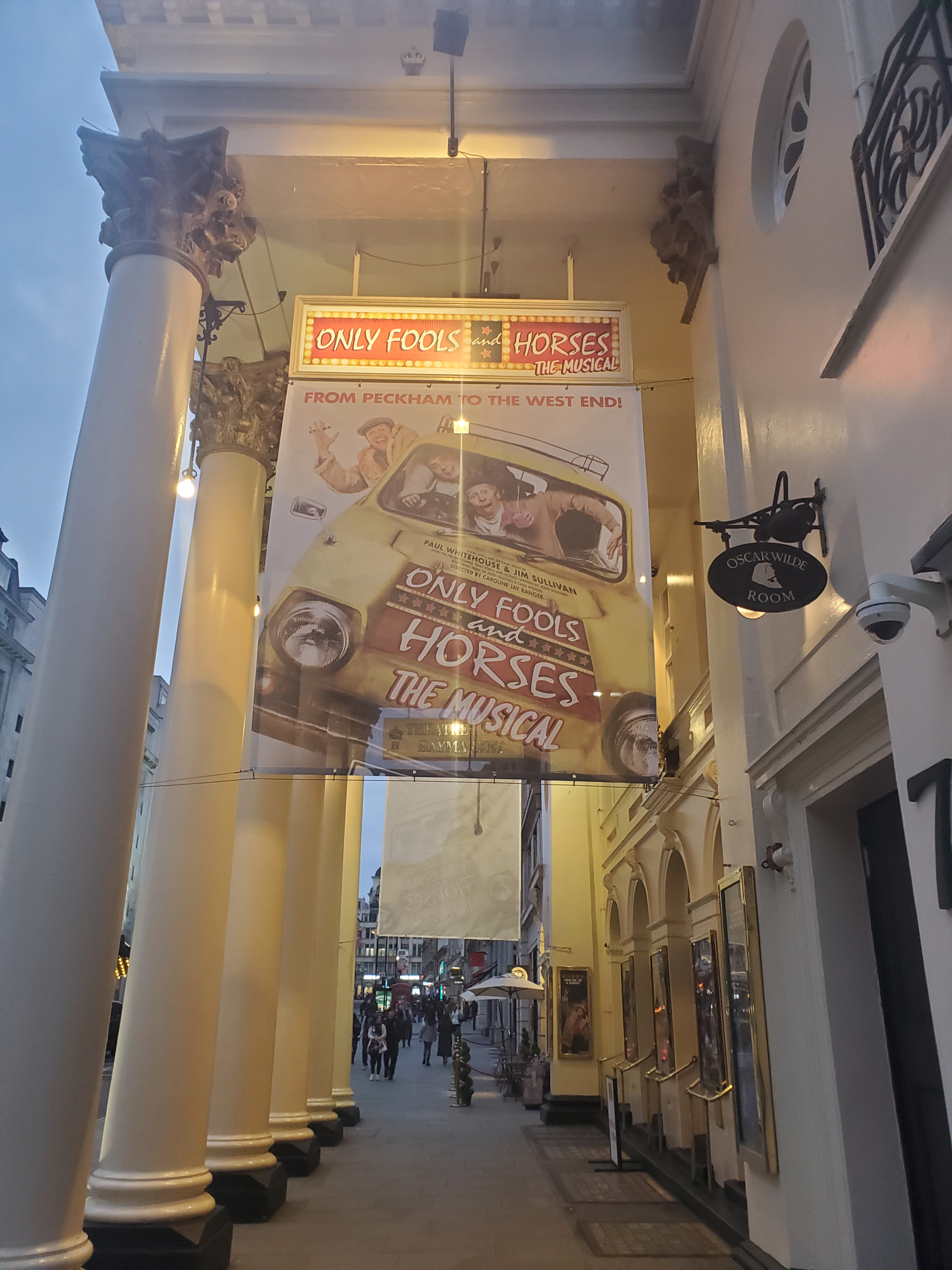
Number One:  “Only Fools and Horses”—a delightful new[ish] musical to welcome us back to the West End.  I actually researched the current offerings for about five minutes and this one jumped out at me as something that will never make it to the US, being as it is based on what is apparently a cult favorite English sitcom from the 80’s that is not part of the BBC America repertoire.  The fact that I missed many inside show references did not diminish the enjoyment.  The shady dealer older brother, the earnest goofy younger brother, the slightly demented grandad, various other comical yet lovable characters inhabiting their corner of London, catchy tunes, fun choreography, heartwarming story, and the evident delight of the audience made me want to go out and find the original TV show.  This was met with zero success during the trip, but thank God for Brit Box.

Number Two:  “Magic Goes Wrong”—the latest installment in the “Goes Wrong” series by Mischief Theatre company.  We saw “Peter Pan Goes Wrong” at the London Apollo a few years ago (“Magic”’s current home), and it was the funniest thing I have ever seen in my life.  The woman who sat next to spouse actually confessed that she wet herself laughing, which is neither surprising nor shameful given the level of creative absurdity that starts even before the curtain goes up.  The element of surprise is gone once you have seen one of their shows—I mean, you know that everything that can go wrong will—but it is still a hilarious great fun.  Penn and Teller created the magic side of it, so there is some actual legitimate magic alongside the bumbling tomfoolery.  I suppose *that* is the surprise.

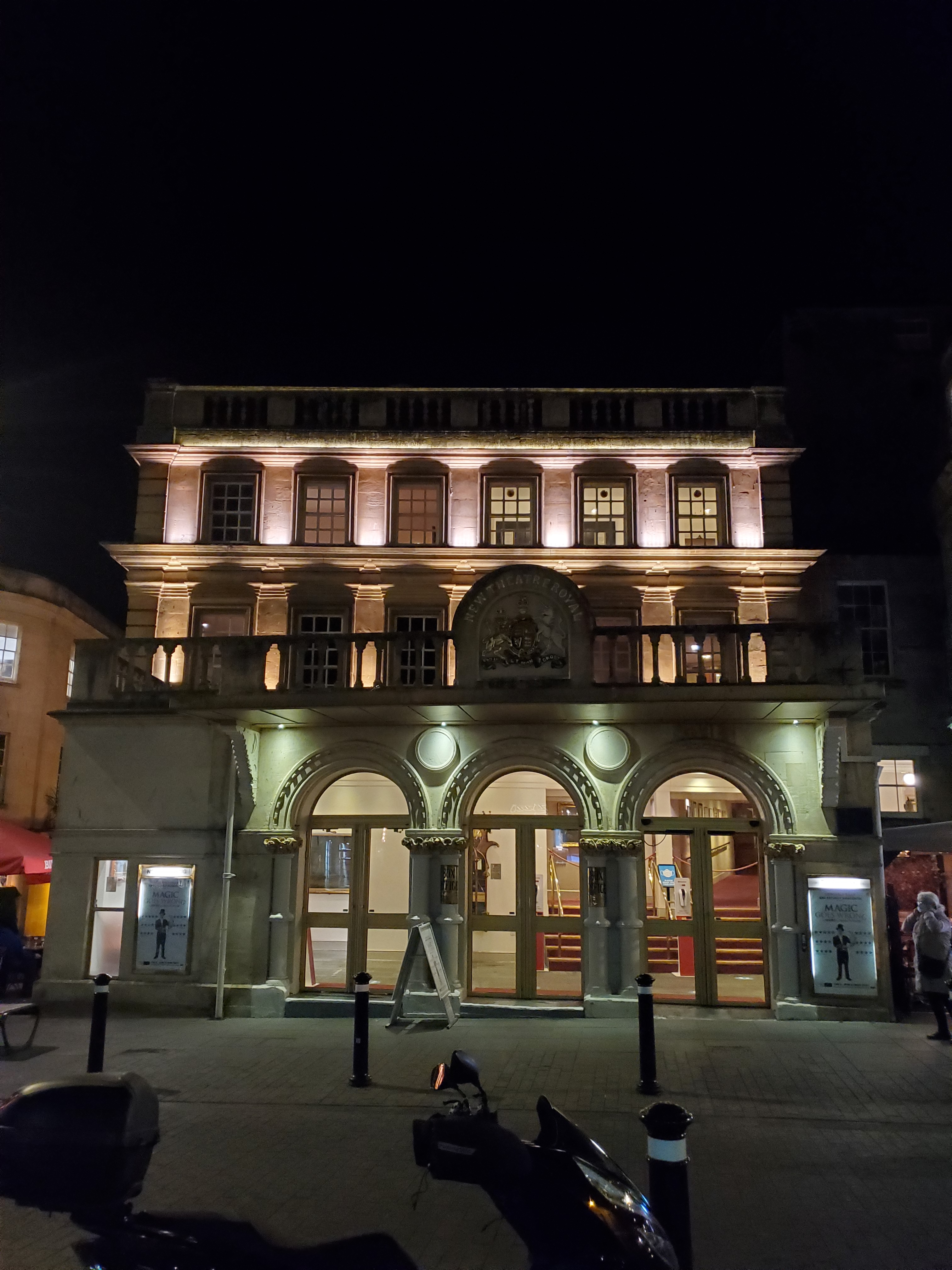
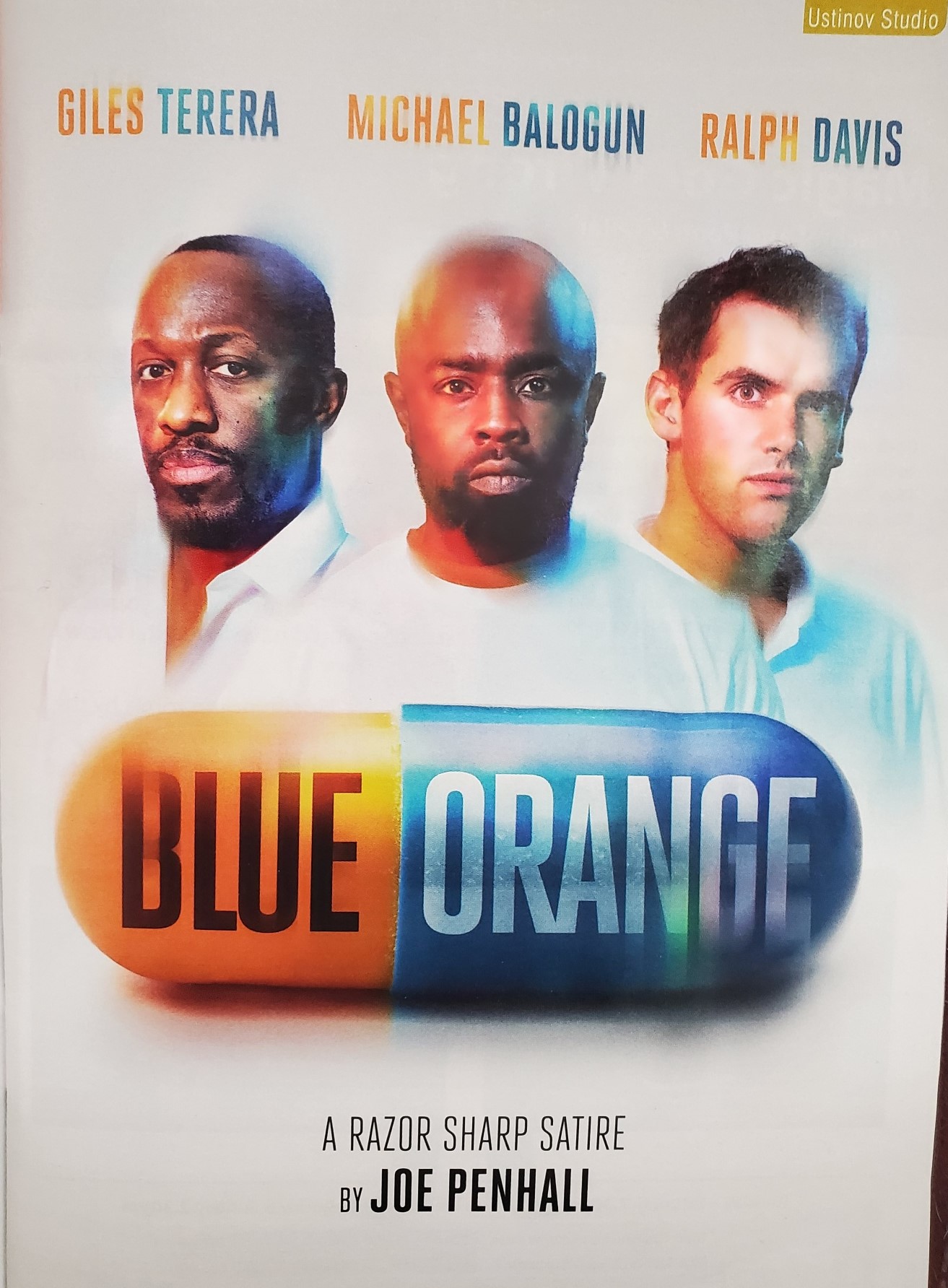
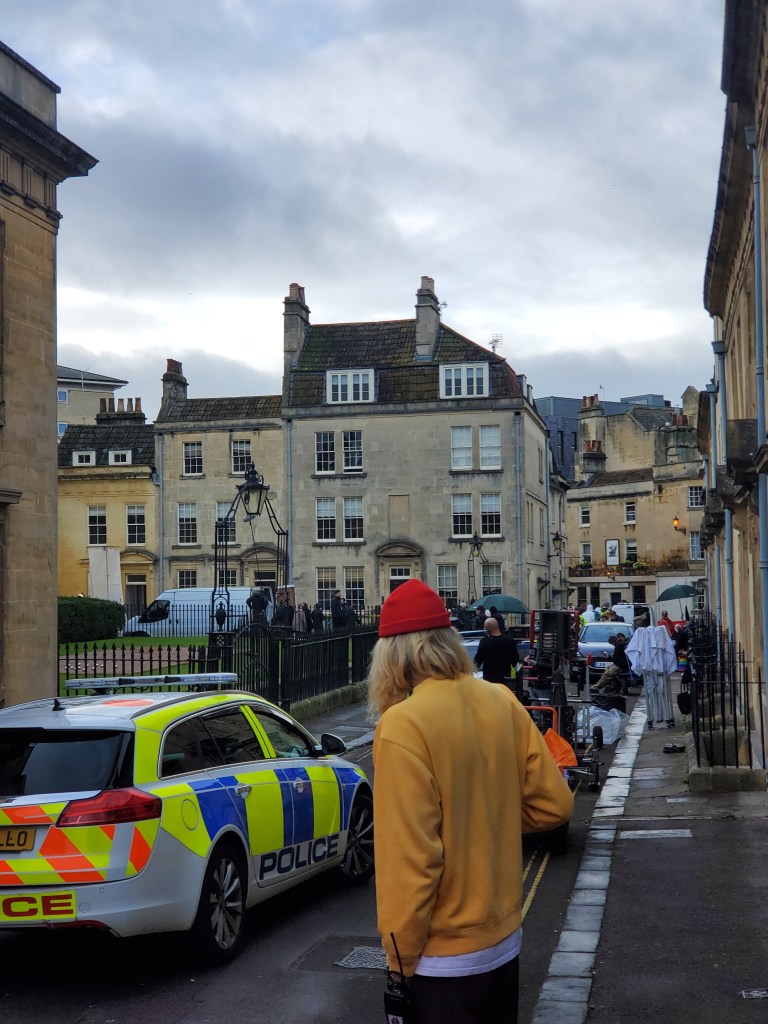
Number Three:  “Blue/Orange”—a snapshot of the British mental health system (which seems as woefully deficient as the American one), full of dark humor and unnerving exchanges, with racial tension in the mix.  On a Tuesday evening, the little theater in Bath was packed, which did my heart good.  In this version, the character with the most authority of the three was played by a Black actor, which shifted the power dynamic to an intriguing level.  Like “Art”, this is a play I would want to see again and again to continue to analyze its many nuances.

Number Four:  “Abigail’s Party”—a 70’s comedy of manners.  I saw it once before, in Belfast, and wondered then why such a juicy acting opportunity is not presented in the US.  On second viewing, I have to concede that, while there is tremendous joy in period costumes and set, the play is very British.  It is not just a play set in a specific decade, but in a specific place (I, of course, appreciate every Demis Roussos reference).  But I still think that the crafted written characters can stand well enough on their own, and you do not have to be British or have lived through the decade to appreciate this powerful dark[ish] satire of the middle class pretenses.  It is a bit of a precursor to “The God of Carnage”, to my mind.  (And how many Yasmina Reza can one post contain?)

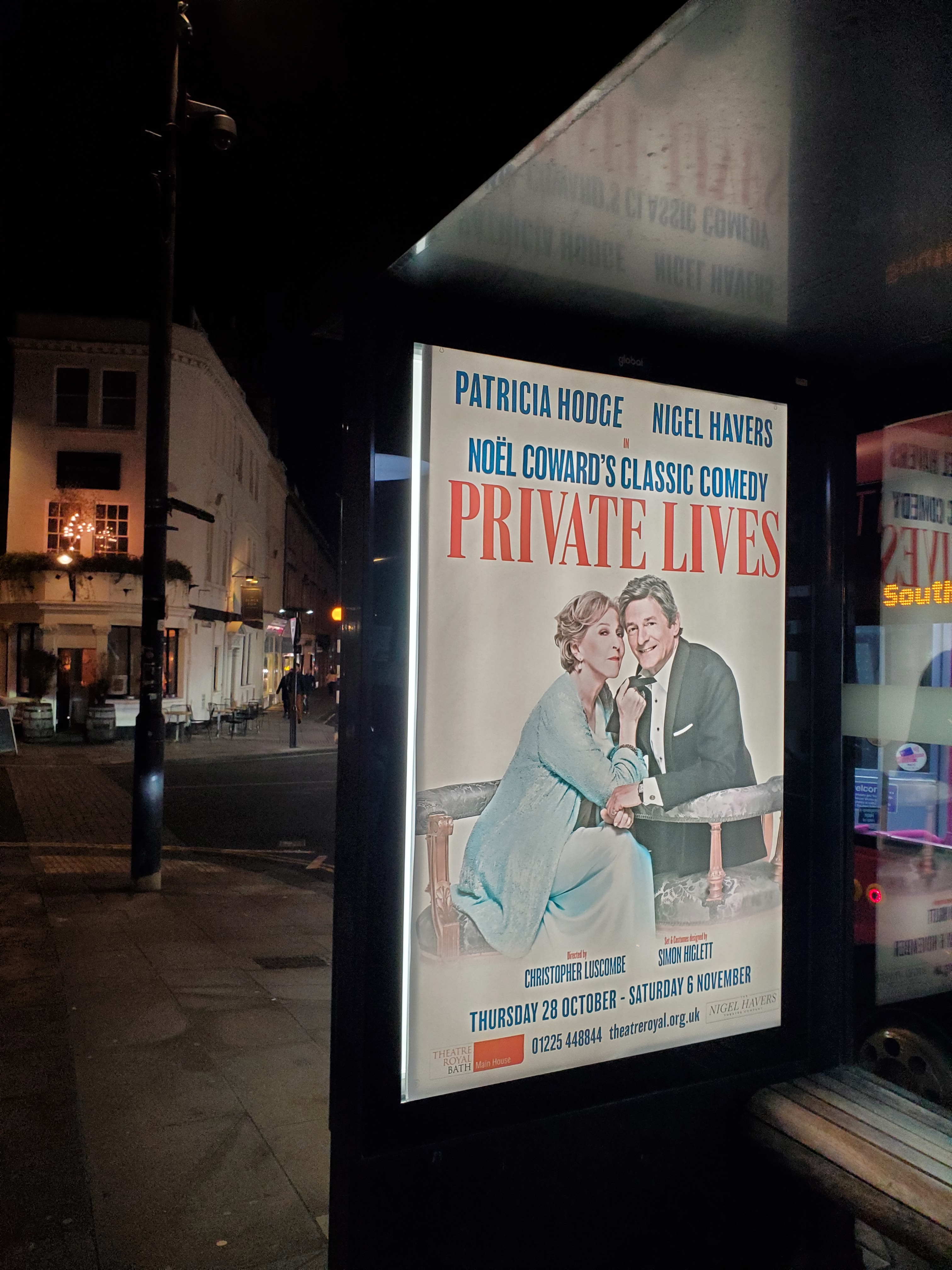
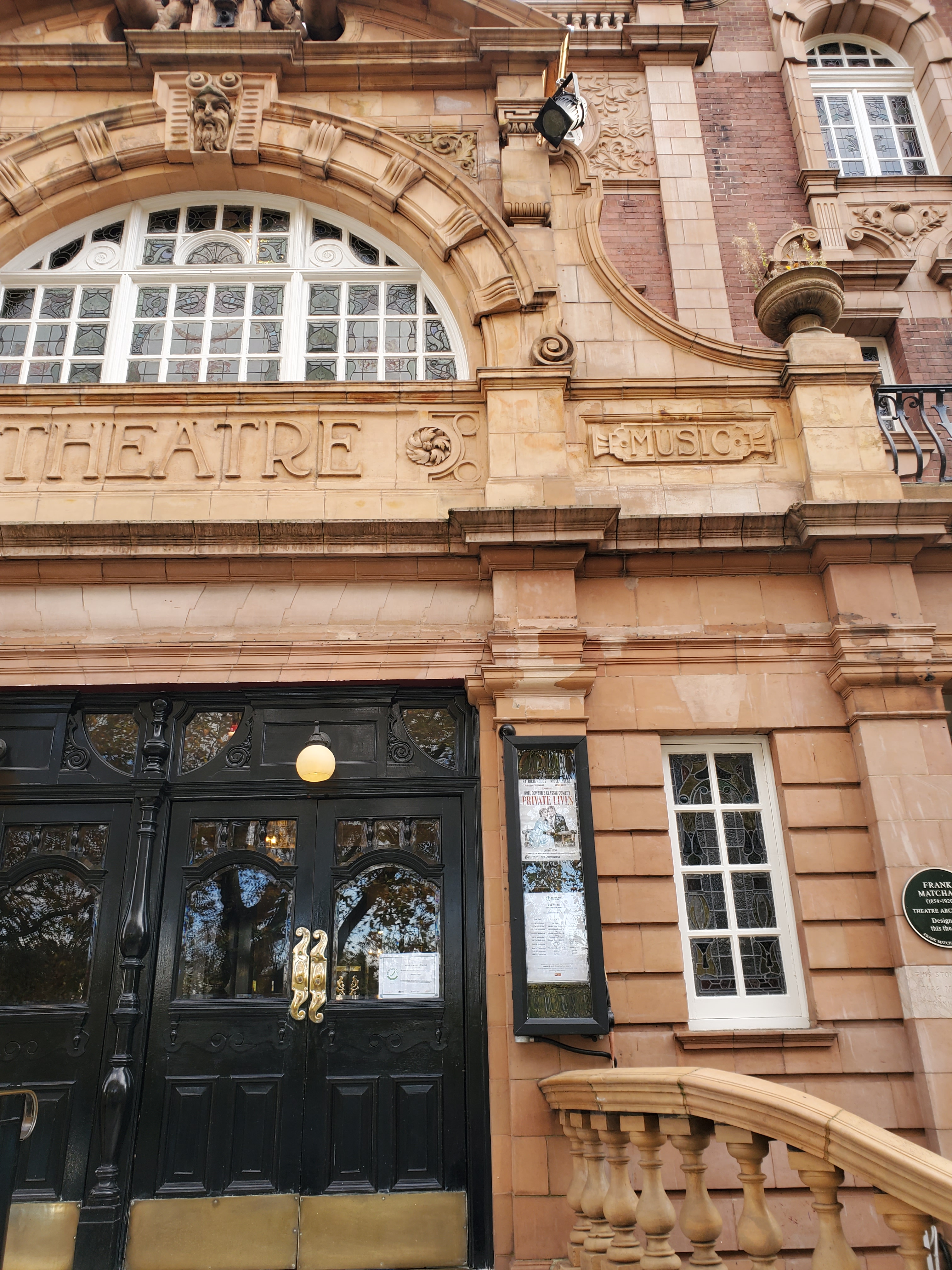
Number Five:  “Private Lives”—which needs no introduction.  I am well familiar with this play both on its own and through “Moon Over Buffalo”.  Like “Art” (there I go again!), I have seen it in three countries—and like with “Art”, I traveled to England to see Nigel Havers in it.  Of course, he was marvelous as Elyot, as he is in everything he does—and Patricia Hodge as Amanda was an extra treat. 

This time, I was determined to meet him, waited at the stage door, and was shocked when he actually came out—and there was no one to converge on him but me and the trailing spouse.  You would think that I would have used this opportunity to shine with my witty repartee and winning personality.  You would be wrong—I have no such gifts.  Spouse said that I should have prepared and rehearsed a speech.  Son asked if mentioned how much we appreciated his performance in “Art”.  But of course not—I blurted out that I came all the way from Detroit to see him on my birthday (sort of endearing), and went on for a bit about how much I loved him in “Chariots of Fire”.  While I did not mention that I have literally seen the film over fifty times in the theater and can recite it verbatim (which is apparently more annoying than charming, as my family tells me), I inanely informed him that I have a “Chariots of Fire” luggage tag on my suitcase.  https://oldladywriting.com/2021/09/27/adventures-of-a-suitcase/ What a dork!  Having followed Nigel Havers’ career for forty years, having even read his autobiography twice (“Playing with Fire”; highly recommended), that was the best I could do under pressure.  Well, I suppose I could have done worse.  (Someone, please tell me how I could have done worse!)  I am consoling myself that I excel in a more intimate discussion setting.  Next time, next time…

Honorable mention:  Upon returning home, I had the opportunity to see “Pretty Woman” the musical.  My assessment of the show:  the seats at the Fisher Theater in Detroit are the most comfortable ones.

Who Tells Your Story?

Although I love theater, I am almost never at the forefront of seeing something before it becomes popular.  A lot of it is because I do not live near where shows start—although I am given to understand that “Fiddler on the Roof” premiered at Detroit’s Fisher Theatre in 1964, that was literally before my time.  The odds of me finding myself, during my travels, near a Broadway or West End show that is not yet big but will be are pretty slim.  While it has happened more than once that I saw a show that I thought was destined for greatness which later went nowhere[1], the opposite never happens.  Probably the biggest missed opportunity, not counting all the shows I regret missing in Stratford over the years, was during a 2015 visit to New York. 

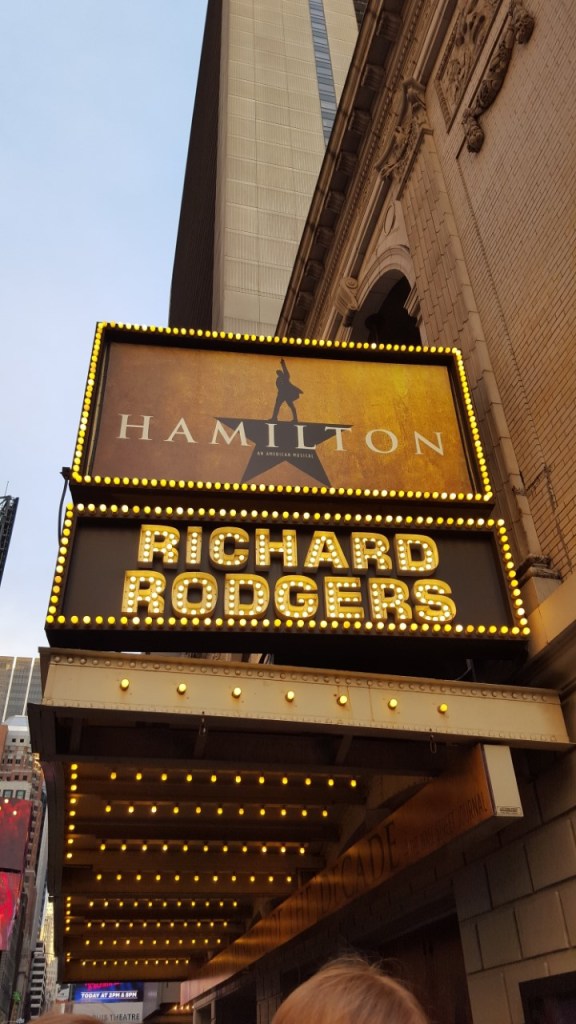
My actor son was living in Brooklyn and about to leave on tour with “Aladdin”[2].  The family was visiting him, and naturally, decided to see a Broadway musical.  Walking past the Richard Rodgers Theatre, I noticed the not-yet-familiar black silhouettes on gold background. 

“What is this all about?” inquired I. 

“It’s a new rap musical about Alexander Hamilton”, replied son, dismissively.

“Hmm, that sounds really stupid”, opined I, disdainfully.

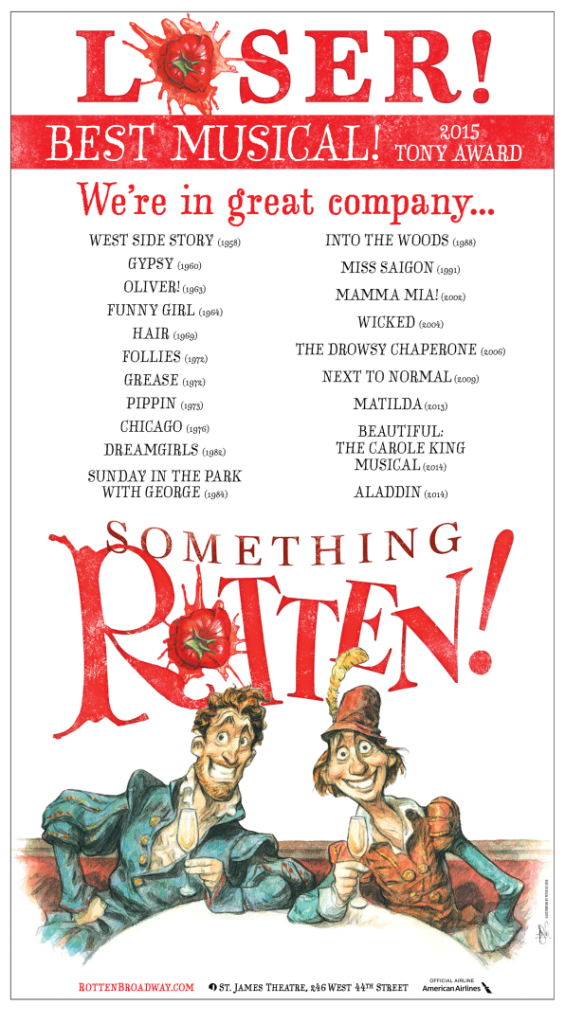
“It does indeed”[3], agreed son, and we moved on, chuckling to ourselves.  This was too much even for this theater-appreciating family.  Spouse, in his low-key way, was noting that “Something Rotten!” “looks good”.  When this man says that something “looks good”, it means that he is super-excited and jumping up and down inside with the mad desire to see whatever this is.  We bought tickets to “Something Rotten!” and enjoyed it immensely, witnessing a standing ovation in the middle of Act I—which, of course, is an incredibly rare occurrence, and a sure indication of potential long-term success[4]

I did not give “Hamilton” another thought until, on a Christmas flight to London, I saw the soundtrack as one of the offerings of Delta in-flight entertainment.  I tried to listen, and it was nice enough, but the flight is an overnight one.  I sleep on overnight flights.  I fell asleep.

And then I woke up with a jolt, because something terrible happened to the Hamilton family (OK, they also turned the lights on and started serving breakfast)!  I am neither proud nor ashamed to say that my knowledge of American history is limited to two years of high school—and the first year, my English was not good enough to fully grasp the goings on.  Alexander Hamilton was covered that year, and I remembered that he was shot in a duel by Aaron Burr, but who knew that his son was also killed?  It was sad!  It was like “Les Miz”!

I landed in London a “Hamilton” fan, and decided to travel to New York in the foreseeable future and see this musical in person.  I mean, how much could it cost, if we fly with miles and grab a hotel room with points?  Couple of hundred bucks for tickets? 

Not so fast, newly-minted-fans!  This brought back memories of “Phantom” in the ‘90s [https://oldladywriting.com/2020/04/25/team-phantom/]—but, times have surely changed, and in the classical dilemma of time versus money, I had a little bit less of the former and a tiny bit more of the latter.  Tickets were procured, and their extortionate cost was somewhat balanced out by the fact that we flew to New York on Spirit Airlines, and with no more than a handbag per person.

Was it worth it?  Yes, yes it was—although spouse did say, after it was all over, “It was great, but not like the first time I saw “Les Miz”.  I will not dispute that, because “Les Misérables” holds an extra-special place in my heart.  I also will not do a review of “Hamilton”, because I doubt that anything is left unwritten about it.  But this is what it means to me.

In theater productions, I live for that one moment when everything shifts and you remember it forever, either because it’s the funniest thing you’ve ever heard:

            “A handbag?!” in “The Important of Being Earnest”

            “The whole staff was slaughtered” exchange in “Hothouse”

or it breaks your heart:

            “Could you ask as much from any other man?” in “Jesus Christ Superstar” (because you know what happens to him…)

            As soon as the miners appear in “Billy Elliott” and sing “The Stars Look Down” (because you know what happens to them…)

or, in some cases, the entire play is brilliant:  “Art”; “August Osage County”

I will not call it an “aha” moment, because it is not a moment of cerebral discovery, but it is more of an “oh”—or “aww”?—moment, which is purely emotional in nature.  It is the “wait for it” or “catharsis” moment.  It is what live theater does best, that moment of unity of hearts and souls between the characters on stage and the audience.

“Hamilton” both starts and ends on that moment.  The opening number is so big, so smart, so creative, so instantly recognizable, and when we heard, “What’s your name, man?”, and there was that little pause, and Lin-Manuel Miranda appeared and said “Alexander Hamilton”—well, the entire audience of 1,300+ lost their collective minds!  Not to take away from “Something Rotten!”’s standing ovation in Act I, but that was a rock star-caliber moment.  Lin-Manuel Miranda’s presence is electric, and his charisma and enthusiasm on stage cannot be overemphasized.  I would say that I knew, once again, that I was in the presence of greatness [https://oldladywriting.com/2020/07/26/all-my-world-is-a-stage/]—except that by the time I got to see “Hamilton”, live and with the still original cast, that would have been a major understatement. 

And then there is that closing number, “Who Lives, Who Dies, Who Tells Your Story”.  I love a good ending.  I mean, who doesn’t, but I really, *really* love a good ending.  A good ending is worth the price of admission even more than a good beginning, because it stays with you, even after the curtain falls.  “Hamilton” ends like it begins, with the satisfying big number, but with more poignancy.  It’s the combination of “Anatevka”, “Impossible Dream”, and “Do You Hear the People Sing?”, these other great finales, because it is both tragic and hopeful, tender and confident, wistful in the loss of a promising life cut short, yet satisfying in the summary of its legacy.  It earns my inarticulate but sincere praise of “I cried and cried”. 

Who tells your story?  Little by little, I am trying to tell mine…


[1] My spouse still laments “Martin Guerre” by Claude-Michel Schönberg and Alain Boublil, the creators of “Les Miserables” and “Miss Saigon” fame.  You haven’t seen that version of “Martin Guerre”?  No one has.

[2] Small print--not THAT “Aladdin”.

[3] This is why my writing career is still fledgling.  I cannot write dialogue.

[4] This was after “The Musical”, which I still think is one of the most fun and clever numbers of the genre, basically an entire “Forbidden Broadway” in several minutes and on a major stage.  And to be fair, Christian Borle did get a Tony for his part in this, not to mention eight other nominations for the show itself!

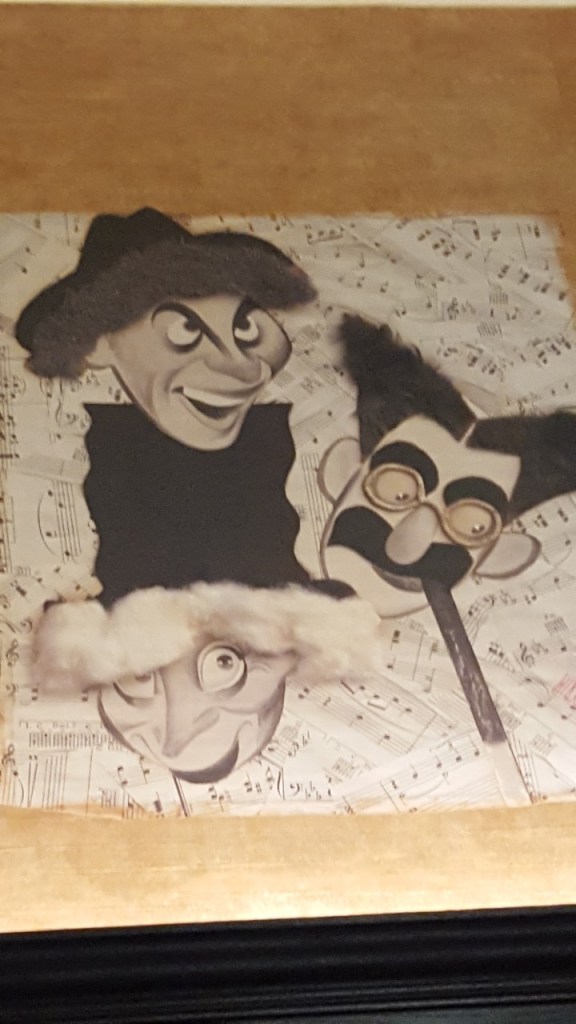
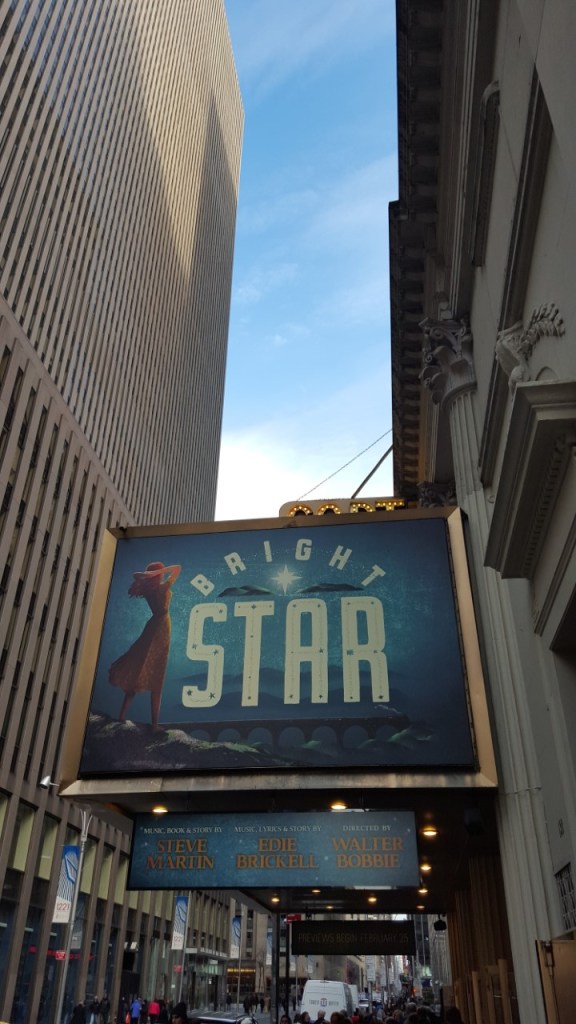
It was a magical weekend overall. We also saw “Bright Star”, starring the wonderful Paul Nolan, who deserves an award for every role which he graces with his talent, and stayed at the Algonquin, Harpo Marx’ old stomping ground.  Those are stories for another day!]

London Calling

With my love of travel, my love of Gilbert and Sullivan, and my love of “Chariots of Fire”, there is one important location that has not yet been mentioned.  It Is a Glorious Thing – Old Lady Writing Did you guess London?  If so, you guessed correctly.  If not, I cannot fathom what you are thinking. 

London was slightly elusive in my younger days.  During my college summer in Europe, the Chunnel train was not yet in existence.  While the British rail system was covered by the Eurail Pass, the passage from the continent to Albion was not.  There was no way I was going if there was an extra charge.

The Royal Family in the “good old days” (At Madame Tussaud’s in London. I love wax museums, and never miss one!)

Around the time of my last college spring break, my mother gifted me with enough free, rapidly expiring airline miles for two tickets to Europe.  I could bring a companion.  No catch.  In what can only be described as a fit of temporary insanity, I invited Grandma.  No, really, I was twenty one years old, and I went to London with my Grandma.  I am expecting to be rewarded for this in my next life…

And so, I flew to New York, and Grandma and I set out on a cross-continental flight together.  Our troubles started immediately when she set off a metal detector.  The year was 1990, a kinder, gentler time when everyone could walk on to the departure gates, and TSA was only a vague concept—except in a case of an elderly, five feet tall woman who was  bringing not only an apple for her long flight, but an accompanying knife wrapped in a handkerchief.  Bizarrely, the TSA agent who confiscated Grandma’s best paring knife agreed to mail it back to her home address in Brooklyn.  The potential loss of the knife caused Grandma considerable distress during our vacation, until we were informed by triumphant Grandpa, upon being picked up from our return flight, that the knife arrived safe and sound.  No “How was your trip? How is London?  Welcome home!”, but “Those bastards did not steal our knife after all!”

The flight itself was an unmitigated nightmare.  Grandma, immeasurably energized by full access to me for the upcoming week, decided to start early on what we call “educating” me, but really the better term is “nagging”.  I was treated to a seven-hour lecture about the various deficiencies of my character, my appearance, my behavior, my friends both male and female, and my overall prognosis for a productive life.  As a graduating university senior heading to an Ivy League law school and holding down two jobs, I naively thought I might have had a right to feel sort of OK about myself.  However, I was also overweight and single, two of the most cardinal of mortal sins in The World According to Grandma.

Holiday Inn London – Kensington Forum Hotel |Best Price Guaranteed |Kensington London Hotel (hikensingtonforumhotel.co.uk)

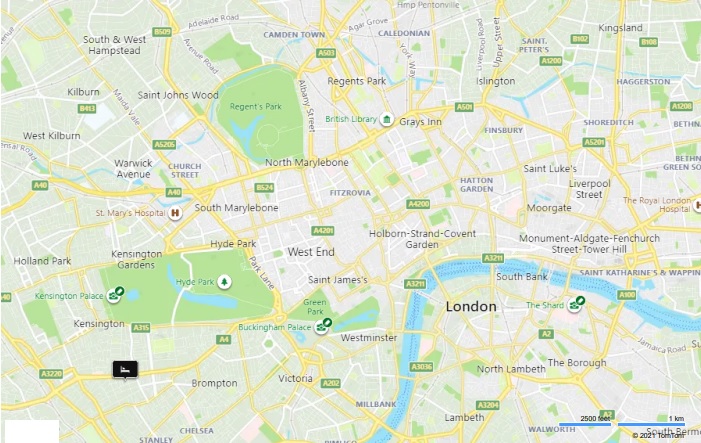
We were staying at the Forum Hotel, now Holiday Inn Kensington Forum.  This is important, because this hotel is huge—900+ rooms and 27 stories. Upon arrival, after a sleepless night of “education”, I determined that I lost interest in my travel companion.  We had a brief discussion and decided that, in order for each of us to preserve our own mental, emotional, and physical well-being, we will tour the city separately and only share sleeping quarters.  I lived in a dorm—I could do it!  Grandma was married for 45 years at that point—she could definitely do it!  We each had our own money, room key, basics of the English language (some better than others), and I generously gave her one of my maps of London (this was when giant folding paper maps were all the rage).  She stormed off.  I breathed a sigh of relief.

Here is what I did next: (1) Called my mom as I still do during all important times, or really any time at all. She was supportive, as she generally tends to be.  (2) Unpacked my suitcase and staked out my bed.  (3) Took a shower, washed and blow-dried my hair, and changed clothes, because I needed a pick me up.  (4) Opened the minibar and daringly consumed an adult beverage, because I needed a pick me up.  (5) Ate a bar of chocolate, also from the minibar, because, well, isn’t it obvious? (6) Unfolded my giant paper map and determined that the first stop on my tour that day will be Harrod’s, which was the closest landmark to this hotel, and also made the most sense, given how the trip started.

The reason for these boring details is because I want to convey that I was only ready to depart the hotel quite a fair bit of time after Grandma.  I mean, all of these activities took a while.  I am not sure exactly how much, but long enough that when I heard a tentative knock at the door, I logically assumed that the day’s cleaning crew was arriving.  Since this was my first time staying at a place fancy enough to be cleaned (and with a mini-bar—did I mention the minibar?), I grabbed my coat and rushed to the door, on my way toward my adventure in London, yelling encouragingly to whoever was behind the door that I am leaving and they can get down to business.

Behind the door was Grandma.  All this time, she was trying to find her way out of the huge hotel, rode the elevator, stumbled on the underground garage, gift shop, and every other floor, but regrettably, never the lobby.  She was exhausted, defeated, and ready to make peace.

Thus began my love affair with the West End… [The photo is not mine]

The rest of the week actually went reasonably well, all things considered.  We walked a lot (some of it was because Grandma was always a tireless walker her entire life, never having learned how to drive), saw all the main sites, including a day trip to Windsor Castle (where Grandma concluded that the tiny medieval royal beds are far inferior to her Italianate suite back in Brooklyn), and experienced our first (but far from my last) West End musical (“Me and My Girl” at the Adelphi theater).  In those days, London was still boasting its terrible cuisine, though to be fair, the two of us, a college student and a Soviet retiree, were decidedly not “foodies”.  We ate at McDonald’s and were excited.  Once we had pastries at a cafe and felt rather sophisticated.  I bought six decks of cards for my collection. I took only twice as many photos.  Every night, after Grandma fell asleep, I watched British TV and treated myself to a beverage and chocolate from the mini bar. 

It was not my best trip to London, but it was a decent first encounter with an exciting city which I came to know well in subsequent decades.  Later, there came many laughs, many discoveries, and many unforgettable theater experiences.  This was the slightly inauspicious start.

One of the twelve photos I took. Seriously? What is it even?