Featured

Havana Daydreaming

“Oh, Havana, I’ve been searching for you everywhere
And though I’ll never be there…”

(Billy Joel, “Rosalinda’s Eyes”)

In 1997, I prepared my first list of places I wanted to visit in this lifetime.  It was pretty basic, containing about what you would expect (although even then, my focus was primarily on Europe).  The list was revised several times in the intervening years, and I am currently working off the most current, 2020 version.  It is significantly more precise (I narrowed New England down to Maine, identified specific cities and experiences in various countries which I have already visited, and ultimately, decided there is nothing for me in either Minnesota or Australia—no offense).  The place at the top of this new[ish] list is Cuba.  In 1997, I did not imagine that visiting Cuba was possible.  It seems complicated still (especially for someone with my aversion to organized group travels, and given the general state of the world).  But everyone has to have that one place that remains elusive.   

This is the least horrifying photo I could find in the public domain. Or any other, for that matter.

When I was in second grade, the mother of one of my classmates did a presentation to our class about her trip to Cuba.  Bulgaria was exotic enough.  Cuba was unimaginable.  She came with a show and tell.  There must have been some candy, though I have absolutely no memory, real or imagined, of that, and have no experience with Cuban treats to this day.  There must have been some elementary-level geo-political presentation; we already felt a certain reverence for our exotic, far away only friend in the Western Hemisphere.  What I do remember very vividly is a little stuffed crocodile that she brought with her.  I am sure that a baby taxidermy croc would intrigue any child; it was so fascinating to me that in my mind’s eye, I still see Irka Rybakova’s mother standing in front of our class in her belted dress, holding this shiny leathery wonder.  Neither alligators nor crocodiles exist in Russia; this was years before I saw one in a zoo.  So strong was this impression that for years if I heard “Cuba”, the first image that would come to me is that of a little crocodile. 
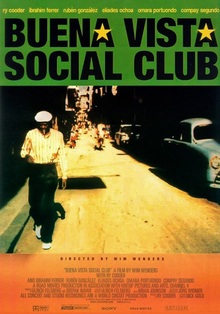
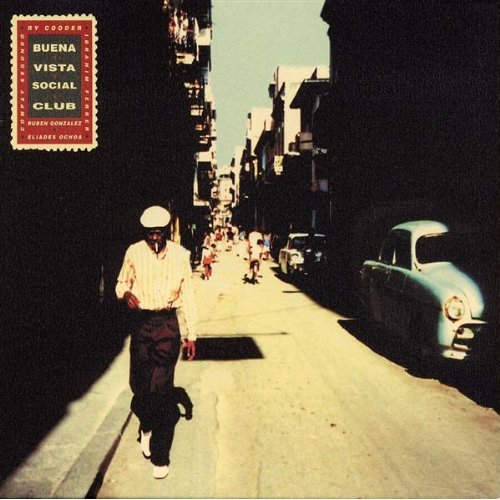
That is, until I saw a documentary on PBS[1]—and that day is about as far away from today as it is from the day I saw the baby crocodile, which is to say that I have identified Cuba with its marvelous music for at least as long as I have identified it with crocodiles, a distinct improvement.  The film touched me on every level—I did not just fall in love with the music, but the sights of Havana, the camaraderie of old musicians, their unpretentious yet assured personalities, their warmth and pride in their homeland[2].  From that time until CDs have gone the way of cassette tapes, I have accumulated a lovely collection of traditional Cuban music.  My meager Spanish is just enough to get the gist of most songs, and that is indeed enough for me.  At some point, the Buena Vista Social Club orchestra came to town during a worldwide tour.  I did not go (something about ticket prices, and I am generally not a concert goer).  While it is tempting to call this the biggest regret of my life, it did not feel so at the time.  The CDs continued to sustain me.
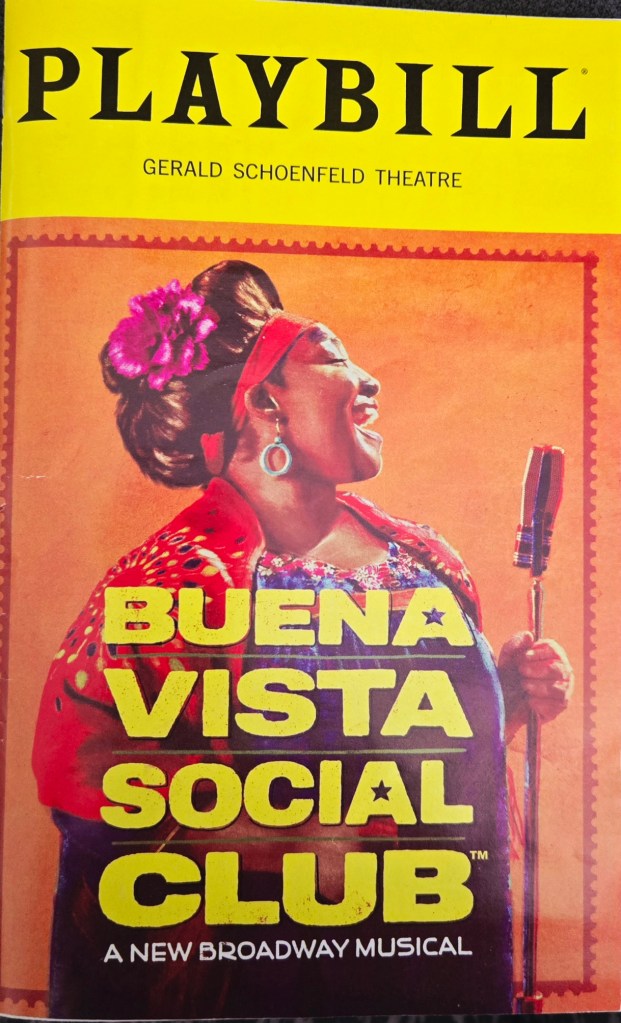
Almost two years ago, Buena Vista Social Club musical showed up off Broadway, but it was December, and I had other plans.  Once again, I made an informed decision to hold out. This time, I was not wrong, for a little over a year later, it finally appeared on The Great White Way, and I was there for it.  Well, to be honest, I was not the first in line.  I was skeptical.  When you love something, you do not want it touched and tinkered with.  You do not want your memories sullied.  This is why I avoid movies based on books I love[3], and generally try to avoid musicals based on movies, which these days is practically an impossibility.  My mother and I planned a trip to NYC, and I was still not convinced, thinking that I will grab the tickets when I get there.  Then Buena Vista was nominated for a Tony, and I figured I better make a move before it becomes a hotter ticket than my limited window of opportunity could support.

I loved the music, but knew nothing about the story, or even cared about it.  On the night of the Tony Awards, I instantly recognized all the characters during the musical number as if they were old friends.  I figured, if nothing else, I will still love the music.  I have seen jukebox musicals, some with better books than others, and in all cases, the music alone has been enough.   
It turned out to be the story I did not know I needed.  The prequel to the events of the documentary, when Omara Portuondo met Ibrahim Ferrer, Compay Segundo, Ruben Gonzalez and others, when they were all making music in the waning days of the Batista regime and the dawning of the revolution, is full of hope, exuberance, and excitement, and sparkles with gentle humor.  The reunion of the former bandmates several decades later, familiar from the documentary, is wistful and burdened with the weight of years gone by, as these things go.  Through it all, the musicians—recipients of the most well-deserved special Tony Award—are simply spellbinding, and the songs are just as gorgeous as ever I heard and loved them.

And then there are the Portuondo sisters.  On the eve of the revolution, one leaves for the U.S., in the scene reminiscent of another musical, on seemingly the last plane out of Havana.  The other stays, because someone has to continue to sing the songs of the people, for the people.  The moment when Omara decides not to leave, whether based in truth or in romantic fiction, touched my heart even more than hearing Chan-Chan live.  Some choices we make, some are made for us, some are conscious and based in sacred truth, some are based on the cards we are holding at the time.  Sitting in the Schoenfeld Theatre on a Friday night in July, seeing and hearing this story with all my senses, I both cried for and praised the impossible, life-altering, life-affirming decision[4]. https://buenavistamusical.com/


[1] When we still had PBS…

[2] The Mandela Effect had me believing all these years that Buena Vista Social Club won the Oscar for best documentary.  It did not. The documentary that won that year was “One Day in September”.  Do you remember it?  Me, neither. 

[3] No, Les Miserables does NOT count, because I saw the French TV special first, for those reading [all] along.

[4] I once had a classmate of Cuban heritage.  His father fled to the US during Batista’s rule; his mother, during Castro’s.  He marveled at the idea that had they never left Cuba, they would have never met, being from such different socio-economic background.  The conclusion that I drew from this story, however, was that people flee various regimes for various reasons, not just the ones from which we are taught to believe they do.

Featured

Do You Hear the People Sing?

It has been brought to my attention more than once[1] that all my theater posts have referred only obliquely to my most favorite musical of all time, “Les Miserables”.  And so because I (1) tend to not write timely and (2) am most assuredly not a theater reviewer, here is a tribute more than 30 years in the making.

My first encounter with “Les Miserables” was when the French black and white 1958 miniseries made it to the Soviet television during my childhood.  It seems to be the superior cinematic version because it is French and stars the great Jean Gabin.  At whatever single-digit age I was when I saw it, however, I was incredibly impressed by Gavroche, his pluck, tragic death, and the fact that he lived inside an elephant.  So much did I carry on about this elephant than when we saw the US movie version, the one with Hugh Jackman[2], my kids were besides themselves with the realization that I did not exaggerate this fact.  (I really do not embellish—it’s just that my reality has routinely been stranger than fiction…)

When I moved to New York City in 1990, “Phantom of the Opera” was the hottest ticket in town.  It was not even brand new by then, but the wait for tickets was two years.  Two years, “Hamilton” fans!  In those pre-internet days, I literally had to call the box office and be told that I can get on the wait list.  I planned to be in NYC for at least three years, but I was also 21.   Needless to say, I never got on a wait list, and never saw “Phantom” on Broadway. 

Somehow, word got around that “Les Miserables” not only did not have a decade-long wait for tickets but was offering student discounts to the tune of $14.  Now, this was a very different time with very different pricing structure for live theater.  Full price tickets were $50, which was substantial, especially for poor students.  But, movie ticket prices in NYC were climbing into double digits, so to see a Broadway show for just a few more dollars seemed—and was—extremely reasonable.  Some friends of mine took advantage of this amazing offer and reported that, while the show was good, it was “depressing”.  This was high recommendation, leading me to believe that the story was not Hollywood-ized.  Of course I loved it.  If I knew then what I know now, I would have seen it again.  And again.

In the 1990s and early 2000s, “Les Miz” was touring on a semi-regular basis, and I saw it twice more in Detroit.  The third time, in 2010, my kids were finally old enough to be worth a ticket (for at that point, we were already hundreds of dollars away from the measly $50, let alone $14).  I built it up as the best thing they will ever see live on stage.  The lights came down, and I broke out in cold sweat, because—“There is no ship in Les Miz”!  The Abomination came to town.  For three interminable hours, I watched my beloved show dismantled.  Gone were the revolving stage and the barricades, replaced with CGI images.  Gavroche’s song was cut.  The whole production was just somehow pedestrian, dull, in a word—miserable.  And poor Enjolras, the tragic hero of the doomed uprising, is wheeled away in a cart possibly borrowed from Spamalot (don’t you just expect him to spring up singing “I’m not dead yet”?)  Trevor Nunn, the director of the original production, hated it, asking “why something inferior has been created when something superior could have been created.” [3]  Why indeed? 

I took this musical for granted because it always existed, it always toured, but after seeing the new and worsened version, I was crushingly disappointed.  I took to the internet and discovered that the original version was still playing at the West End.  That was all well and good, but before I even had time to lament this unreachable dream, I learned that I would be going on a business trip to London in the coming months.  If ever I believed in luck and fate, it was at that moment.  But… but, I must have forgotten that life is just a series of turns around which fate is waiting with a stuffed eel skin[4].  Thinking that a musical that is a quarter of a century old is not the hottest ticket in town, I figured that I will just grab a ticket at a half-price booth upon arrival.  However, leisurely perusing West End offerings with the idea to see what else I could see[5], led me to a sudden shocking discovery: there were no tickets for “Les Miserables” during the time of my trip!  Whaaat?!   An increasingly frantic internet search revealed that Alfie Boe[6] was doing a limited run as Jean Valjean.  Furthermore, Matt Lucas was appearing as Thenardier at the same time—and frankly, my money is still on him causing the sellout, because when he said “Paris in the DUST” and chuckled knowingly, the audience just died like when Lin Manuel Miranda first appears on stage and utters “Alexander Hamilton”.

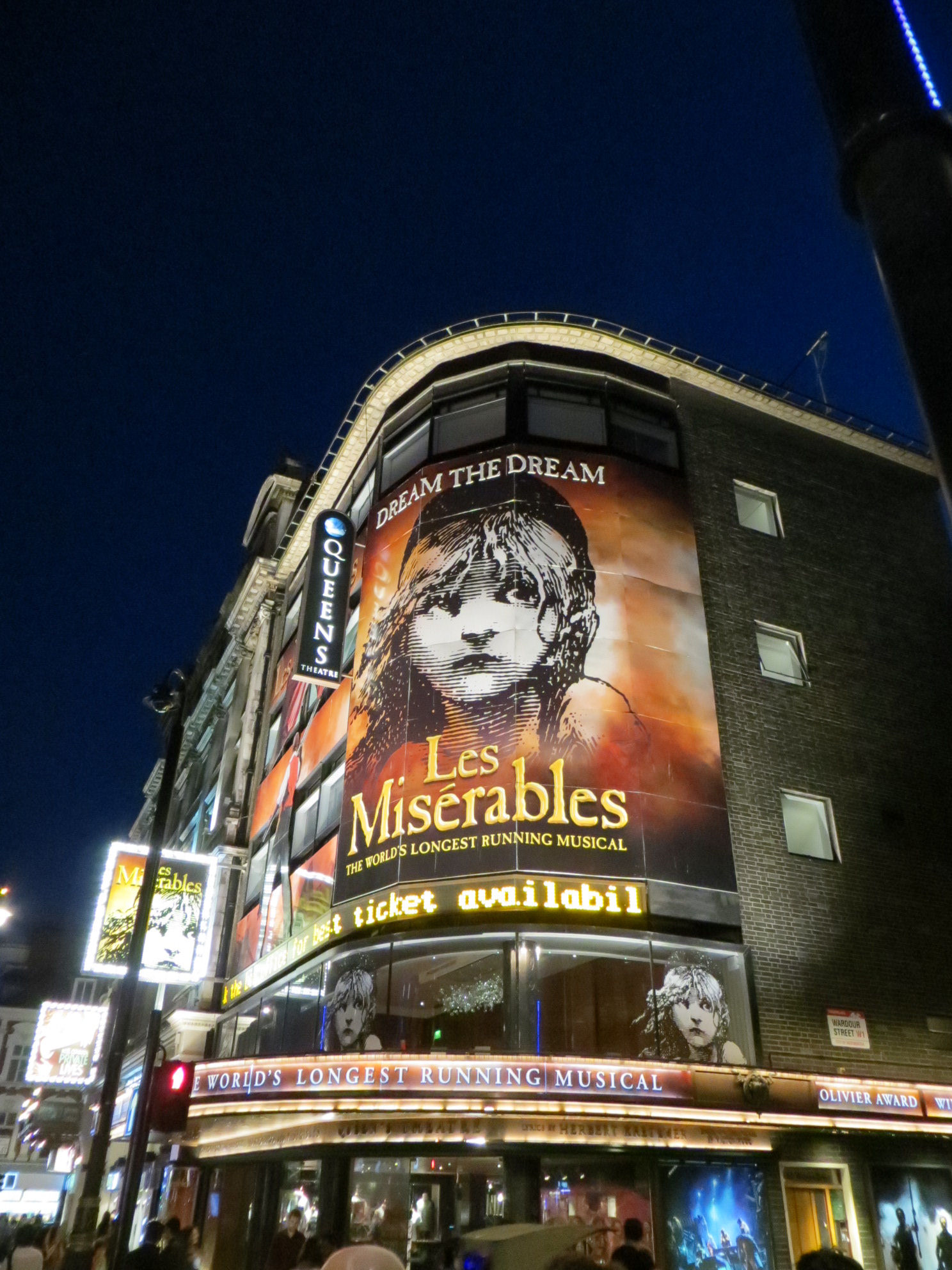
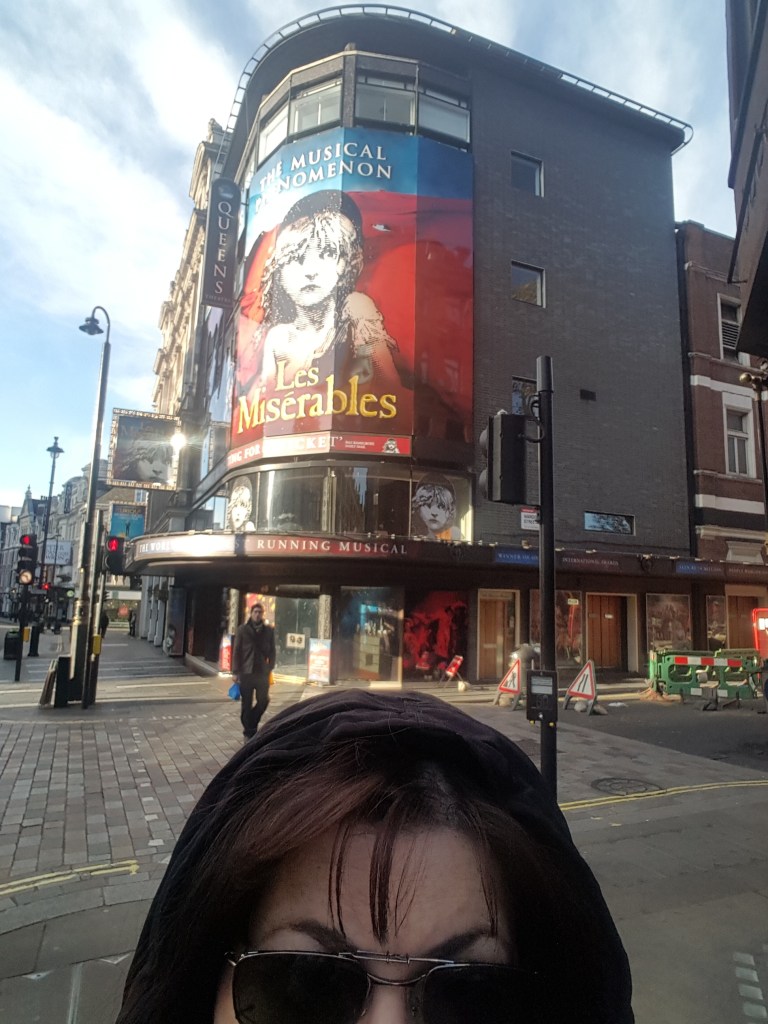
Top of the show, 2011, Queen’s Theatre

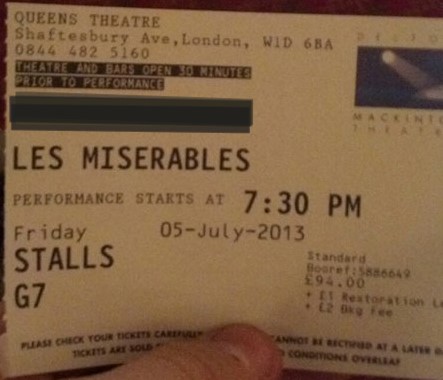
So yes, that was a spoiler alert: I got the ticket, from a reseller.  I actually got two tickets, because they were not sold singly, and it was still cheaper than a ticket to a touring production in Detroit, because, well, U.S. theater prices versus the rest of the world.  If you know, you know.  It was all that I remembered and missed, and more, because I knew to never take it for granted again—not just the gorgeous music and the moving story, but Trevor Nunn’s iconic production.  

2015

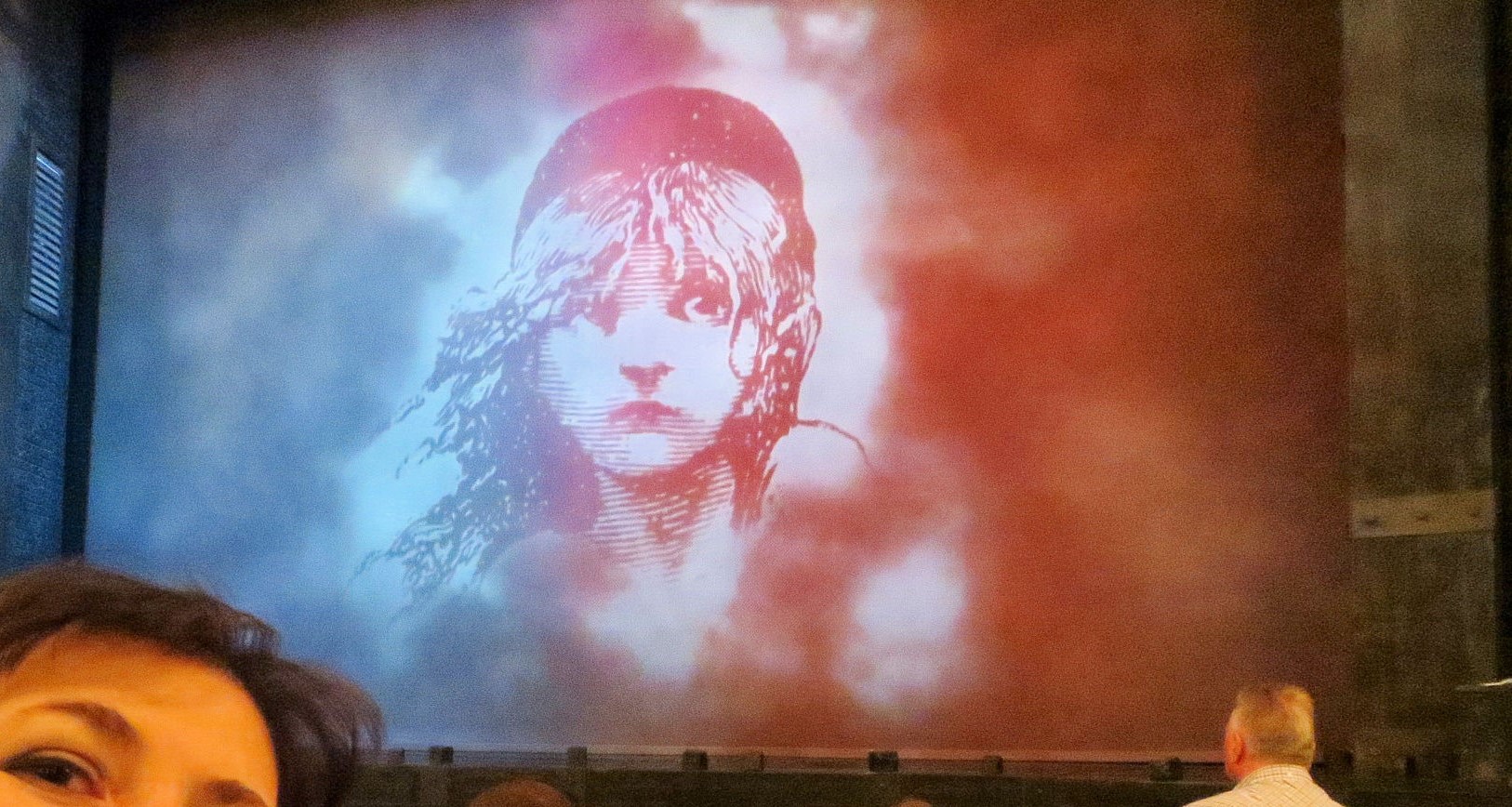
In the few years that followed, I was extremely fortunate to see the original London production four more times.  The last time was in the spring of 2018.  In 2019, it closed, and was eventually replaced by The Abomination.  On my last visit to London, in November 2021, weeks after Les Miz’ post-pandemic reopening, I walked on by [ https://oldladywriting.com/2021/11/28/west-end-and-beyond/].  I am grateful that the last time I saw Les Miserables, it was in its full glory, revolving stage, barricade coming together and turning, no unnecessary projections and other staging fails too numerous to mention.  Hope dies last, but in any case, the original production of Les Miserables lives in my memory.


[1] Maybe it was only once, but very recently on World Theatre Day.

[2] Hugh is great in many ways, but he is no Jean Gabin.  I said what I said.

[3] https://playbill.com/article/trevor-nunn-speaks-out-on-revised-london-bound-les-miz-mackintosh-responds-com-169704

[4] P.G. Wodehouse

[5] I also saw “Billy Elliott” and “Betty Blue Eyes”; the first one because a colleague chose it and the second one because it looked like something that would never come to the U.S., which, as you know, is how I pick my West End shows.

[6] Alfie Boe is an incredible operatic tenor.  But the best Valjean is Killian Donnelly, who not only sings, but is a fantastic actor.  OK, Jean Gabin is THE best Valjean overall, but Killian Donnelly is the best singing Valjean.  I said what I said.

Who Tells Your Story?

Although I love theater, I am almost never at the forefront of seeing something before it becomes popular.  A lot of it is because I do not live near where shows start—although I am given to understand that “Fiddler on the Roof” premiered at Detroit’s Fisher Theatre in 1964, that was literally before my time.  The odds of me finding myself, during my travels, near a Broadway or West End show that is not yet big but will be are pretty slim.  While it has happened more than once that I saw a show that I thought was destined for greatness which later went nowhere[1], the opposite never happens.  Probably the biggest missed opportunity, not counting all the shows I regret missing in Stratford over the years, was during a 2015 visit to New York. 

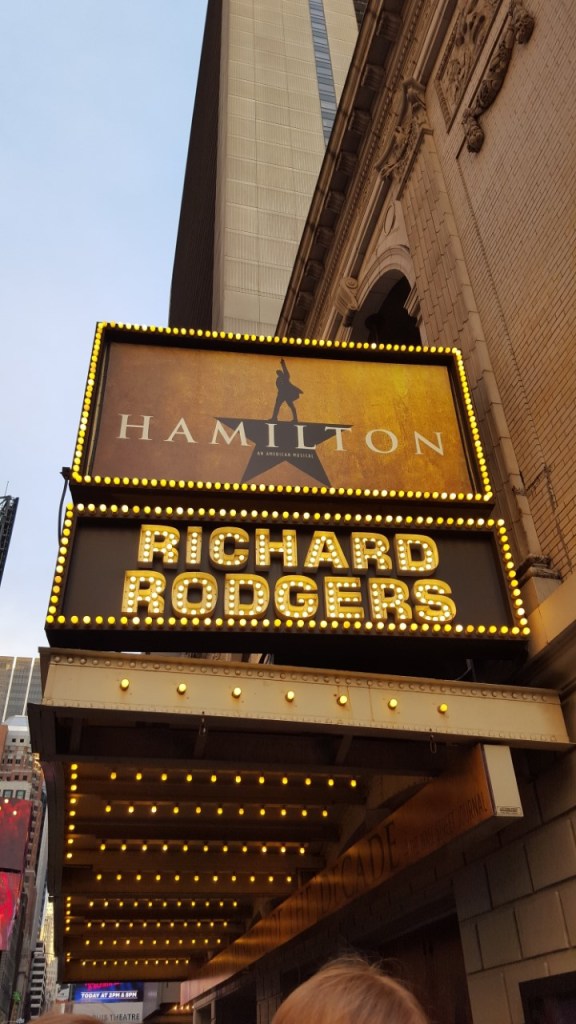
My actor son was living in Brooklyn and about to leave on tour with “Aladdin”[2].  The family was visiting him, and naturally, decided to see a Broadway musical.  Walking past the Richard Rodgers Theatre, I noticed the not-yet-familiar black silhouettes on gold background. 

“What is this all about?” inquired I. 

“It’s a new rap musical about Alexander Hamilton”, replied son, dismissively.

“Hmm, that sounds really stupid”, opined I, disdainfully.

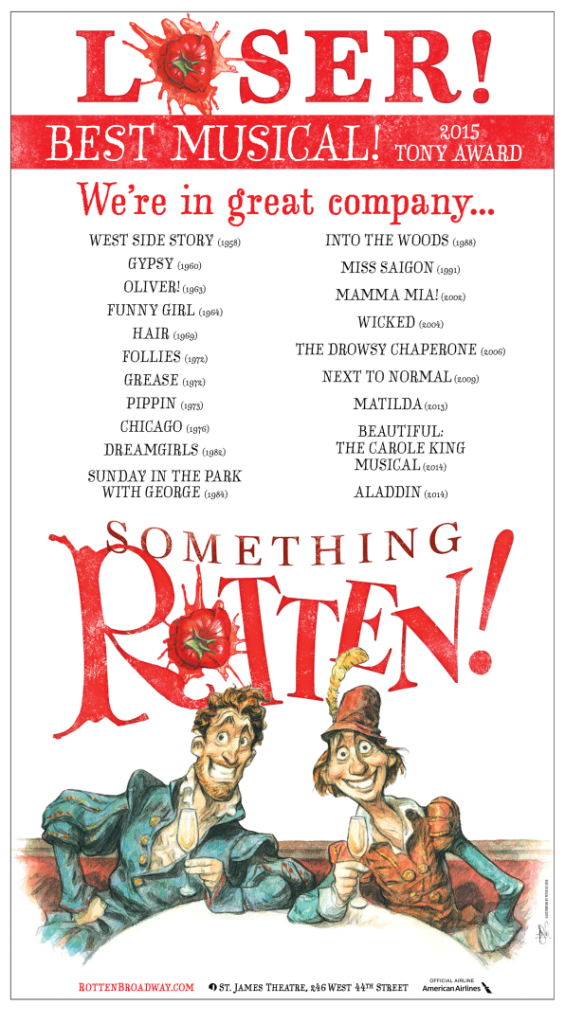
“It does indeed”[3], agreed son, and we moved on, chuckling to ourselves.  This was too much even for this theater-appreciating family.  Spouse, in his low-key way, was noting that “Something Rotten!” “looks good”.  When this man says that something “looks good”, it means that he is super-excited and jumping up and down inside with the mad desire to see whatever this is.  We bought tickets to “Something Rotten!” and enjoyed it immensely, witnessing a standing ovation in the middle of Act I—which, of course, is an incredibly rare occurrence, and a sure indication of potential long-term success[4]

I did not give “Hamilton” another thought until, on a Christmas flight to London, I saw the soundtrack as one of the offerings of Delta in-flight entertainment.  I tried to listen, and it was nice enough, but the flight is an overnight one.  I sleep on overnight flights.  I fell asleep.

And then I woke up with a jolt, because something terrible happened to the Hamilton family (OK, they also turned the lights on and started serving breakfast)!  I am neither proud nor ashamed to say that my knowledge of American history is limited to two years of high school—and the first year, my English was not good enough to fully grasp the goings on.  Alexander Hamilton was covered that year, and I remembered that he was shot in a duel by Aaron Burr, but who knew that his son was also killed?  It was sad!  It was like “Les Miz”!

I landed in London a “Hamilton” fan, and decided to travel to New York in the foreseeable future and see this musical in person.  I mean, how much could it cost, if we fly with miles and grab a hotel room with points?  Couple of hundred bucks for tickets? 

Not so fast, newly-minted-fans!  This brought back memories of “Phantom” in the ‘90s [https://oldladywriting.com/2020/04/25/team-phantom/]—but, times have surely changed, and in the classical dilemma of time versus money, I had a little bit less of the former and a tiny bit more of the latter.  Tickets were procured, and their extortionate cost was somewhat balanced out by the fact that we flew to New York on Spirit Airlines, and with no more than a handbag per person.

Was it worth it?  Yes, yes it was—although spouse did say, after it was all over, “It was great, but not like the first time I saw “Les Miz”.  I will not dispute that, because “Les Misérables” holds an extra-special place in my heart.  I also will not do a review of “Hamilton”, because I doubt that anything is left unwritten about it.  But this is what it means to me.

In theater productions, I live for that one moment when everything shifts and you remember it forever, either because it’s the funniest thing you’ve ever heard:

            “A handbag?!” in “The Important of Being Earnest”

            “The whole staff was slaughtered” exchange in “Hothouse”

or it breaks your heart:

            “Could you ask as much from any other man?” in “Jesus Christ Superstar” (because you know what happens to him…)

            As soon as the miners appear in “Billy Elliott” and sing “The Stars Look Down” (because you know what happens to them…)

or, in some cases, the entire play is brilliant:  “Art”; “August Osage County”

I will not call it an “aha” moment, because it is not a moment of cerebral discovery, but it is more of an “oh”—or “aww”?—moment, which is purely emotional in nature.  It is the “wait for it” or “catharsis” moment.  It is what live theater does best, that moment of unity of hearts and souls between the characters on stage and the audience.

“Hamilton” both starts and ends on that moment.  The opening number is so big, so smart, so creative, so instantly recognizable, and when we heard, “What’s your name, man?”, and there was that little pause, and Lin-Manuel Miranda appeared and said “Alexander Hamilton”—well, the entire audience of 1,300+ lost their collective minds!  Not to take away from “Something Rotten!”’s standing ovation in Act I, but that was a rock star-caliber moment.  Lin-Manuel Miranda’s presence is electric, and his charisma and enthusiasm on stage cannot be overemphasized.  I would say that I knew, once again, that I was in the presence of greatness [https://oldladywriting.com/2020/07/26/all-my-world-is-a-stage/]—except that by the time I got to see “Hamilton”, live and with the still original cast, that would have been a major understatement. 

And then there is that closing number, “Who Lives, Who Dies, Who Tells Your Story”.  I love a good ending.  I mean, who doesn’t, but I really, *really* love a good ending.  A good ending is worth the price of admission even more than a good beginning, because it stays with you, even after the curtain falls.  “Hamilton” ends like it begins, with the satisfying big number, but with more poignancy.  It’s the combination of “Anatevka”, “Impossible Dream”, and “Do You Hear the People Sing?”, these other great finales, because it is both tragic and hopeful, tender and confident, wistful in the loss of a promising life cut short, yet satisfying in the summary of its legacy.  It earns my inarticulate but sincere praise of “I cried and cried”. 

Who tells your story?  Little by little, I am trying to tell mine…


[1] My spouse still laments “Martin Guerre” by Claude-Michel Schönberg and Alain Boublil, the creators of “Les Miserables” and “Miss Saigon” fame.  You haven’t seen that version of “Martin Guerre”?  No one has.

[2] Small print--not THAT “Aladdin”.

[3] This is why my writing career is still fledgling.  I cannot write dialogue.

[4] This was after “The Musical”, which I still think is one of the most fun and clever numbers of the genre, basically an entire “Forbidden Broadway” in several minutes and on a major stage.  And to be fair, Christian Borle did get a Tony for his part in this, not to mention eight other nominations for the show itself!

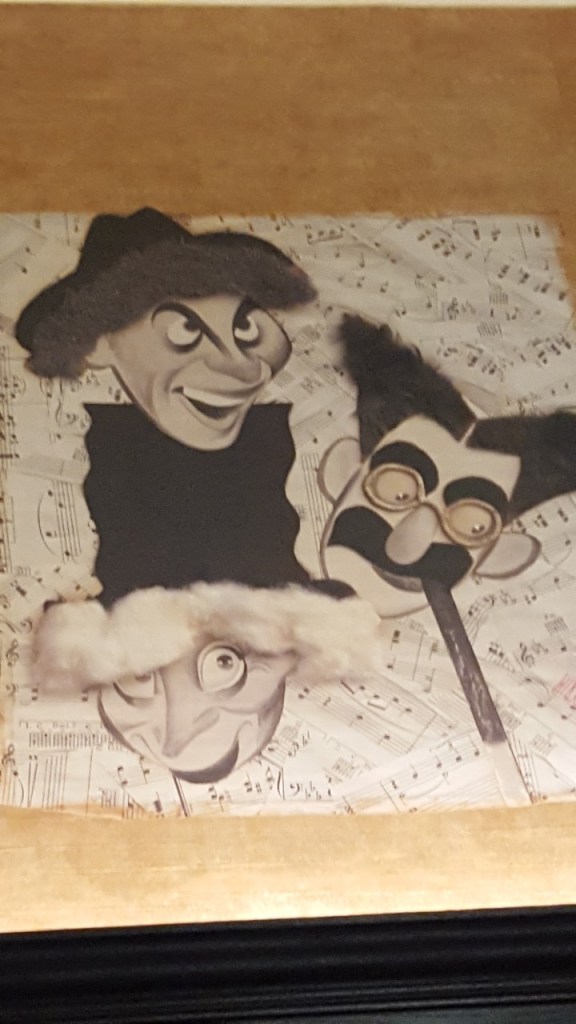
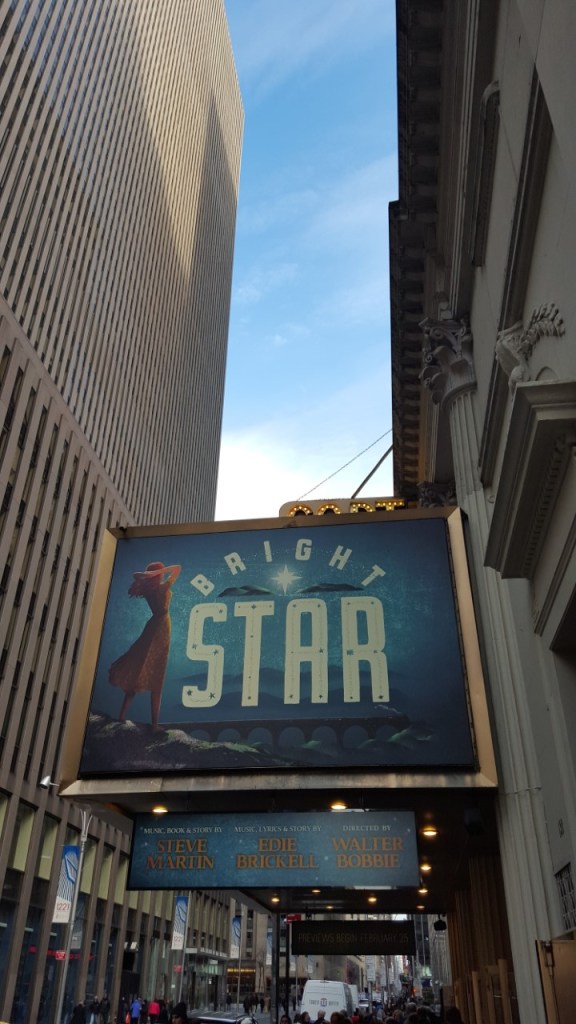
It was a magical weekend overall. We also saw “Bright Star”, starring the wonderful Paul Nolan, who deserves an award for every role which he graces with his talent, and stayed at the Algonquin, Harpo Marx’ old stomping ground.  Those are stories for another day!]