All My World Is a Stage

In my pre-plague life, I never had a spare weekend.  I [used to] see a lot of live theater.  Over the past couple of decades, most other hobbies fell by the wayside as this one escalated.
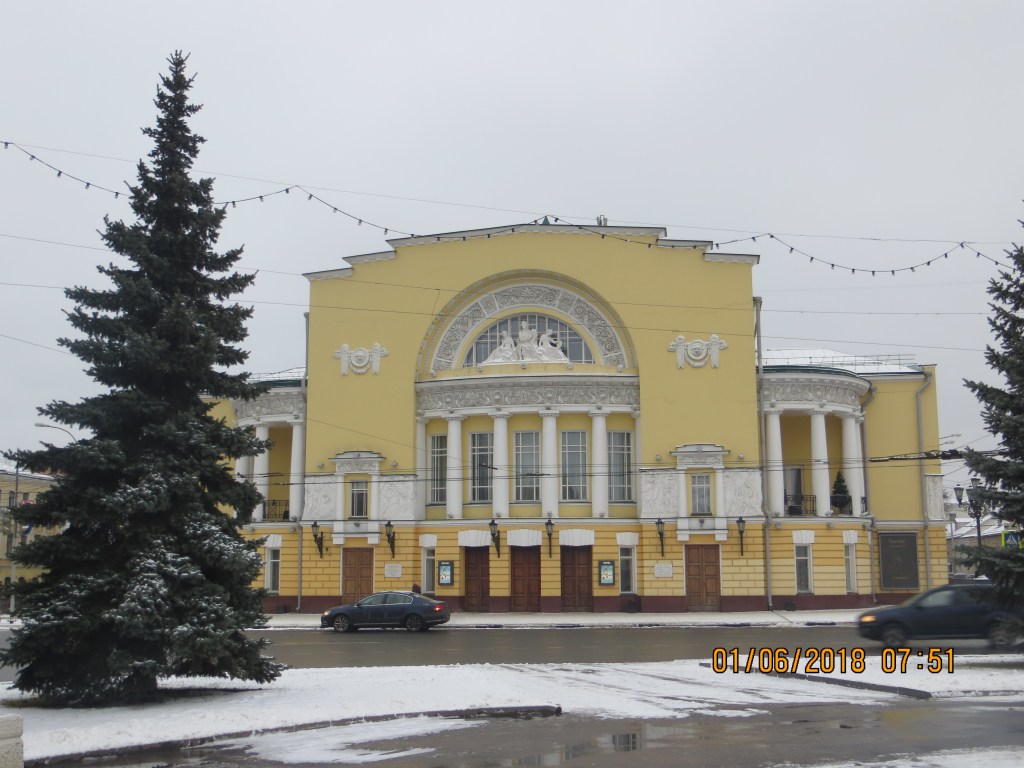
A few people asked me about the origins of this love.  One was Geraint Wyn Davies[1].  He was just being polite and making small talk, but I launched into some inane monologue of sharing a birthplace with the first professional theater in Russia, the Volkov, named after its founder, Fedor Volkov.  This is factually true, but really, in my day the Volkov was a disaster.  It is a gorgeous classical building of pale yellow, with white columns and ornate façade, second in appearance only to the Bolshoi.  Many famous theaters are so nondescript from the outside.  The House that Moliere Built is simply stunning in its unimpressiveness, despite being home to the largest and deepest stage I have ever seen.  But the Volkov is beautiful, and sits in a strategic location, facing the large round Volkov square containing the statue of Fedor Volkov himself (no surprise),

and one of the oldest historic monuments in town, the 17th century Banner (Znamenskaya) Tower.  It is a spectacle—but a spectacle that used to be entirely external. 

Oh, to be sure, it is also magnificent inside—with its marble red-carpeted stairs, frescoed walls, sculpted ceiling, velvet curtains, and a buffet serving delectable pastries.  Unfortunately, what used to happen on stage in the ‘70s was either stale plays by Ostrovsky (in all fairness, I have never seen or read any of them), stock Communist plays (I have certainly never seen those either), Nutcracker (with substandard local or traveling cast), and an occasional Moliere or other permissible Western classic (performed in a standard static declamatory style).  Before the Young Viewer’s Theater was built (after my time), my class would occasionally troop over to the Volkov on a field trip to see a morality play about the Young Pioneers. 

The pastries were always excellent!

Right before we left the Soviet Union forever, my grandmother and I spent a few days in Moscow.  The family friend with whom we stayed knew someone who worked at the Satire Theatre, and managed to get us in to see “Pippi Longstocking”.  If one was to have such luck as to get into the Satire, or really any Moscow theater in those days, one would be hard pressed to find anything less exciting than “Pippi Longstocking”.  Nonetheless, as proverbial beggars cannot be choosers, it was still thrilling.  There were a couple of actors whom I knew from TV, and that was enough.  I still recall one tune from the musical, for that is indeed what it was, and that is no small measure of an impression it made on me almost 40 years ago.  I never heard this tune again except in my head.  Those were the days when memories were made.

In the US, we were astonished to learn, theater tickets were distributed on a sort of first come, first served basis to those who had the means to pay, rather than on a complicated favoritism scale as a part of a behind the scenes black market economy.  That was an incredible concept, although I did not know the actors and did not want to see them.  Whenever my mother and I found ourselves in New York at the same time, she dragged me to Times Square to stand in line for half price tickets.  The first Broadway play I saw was “Foxfire”, with Jessica Tandy, Hume Cronyn[2], and Keith Carradine.  We must have already been living in the US for a bit, because I knew who Keith Carradine was[3].  I understood almost nothing, as my English was so poor and certainly not theater-ready at the time, but I did understand that I was in the presence of greatness.  I held on to the memory and still cherish.  I wish I had kept the program…

We saw a few great shows over the years when I was in high school: several G&S productions https://oldladywriting.com/2020/03/29/it-is-a-glorious-thing/, and an amazing production of “As You Like It” in Jackson before Michigan Shakespeare Festival settled there. https://www.michiganshakespearefestival.com/   It is still the gold standard for that play for me.  Each act was done in a different setting.  The city was all shades of gray and furs and muffs, the forest was all pastels, and the rest I do not remember.  Nonetheless, for what was my first encounter with Shakespeare in the language I was still learning, it certainly left a lasting impression.  But the real theater life started in Fort Worth.

When I was in college and my parents (I use the term loosely when it includes my late stepfather) lived in Fort Worth, they discovered a small regional theater called Stage West. https://stagewest.org/  In a tiny space of about 100 seats, they used to put on a fantastic variety of plays—and still do.  My first exposure was to a dysfunctional comedy at Christmas called “Seasons Greetings”—we still laugh about “Pig number one, pig number two”, although I have never seen it performed since.  From then on, every time I visited my parents, we would go to Stage West.  It was always a delight, with an underlying feeling of uncomfortable incredulity about how a troop of local actors in some shed on a rough dockyard-like street would do a better artistic job than the permanent staff of the oldest professional theater in all of Russia, working in a gorgeous building with delicious pastries.

As an aside, I had the great fortune of revisiting Stage West a few years ago during a work conference in Dallas.  My mother joined me, and we saw Stoppard’s “The Real Thing”.  As a purportedly more sophisticated theater goer after the passage of almost three decades, I was still astonished.  It was a world-class production.  And one of those moments when I said to myself, I am the luckiest girl in the world.  Gosh, I just live for those moments!

And then there came Stratford.  https://www.stratfordfestival.ca/  This is a story that has been told often, and at almost every Stratford social event.  It is just a conversation starter—how long have you been coming, what was your first experience?  In my young married life, theater was not a factor, as we had neither time nor money, and never both at the same time.  One fine day in 1996, my college friend suggested a girlfriends’ day to see a play.  So the three of us drove three hours, arrived on a rain-soaked Saturday in August, ate some weird concoction prepared by one of us (not me!) for lunch in the car, and entered the Festival Theatre to behold the great William Hutt as King Lear.  It was unquestionably one of the defining moments of my life. I wish I had kept the program…

Initially it was an annual trip.  Initially it was just Shakespeare.  Then we added other shows that sounded interesting, and once a season became not enough.  Then some years later my friend lost interest and was replaced by my spouse.  Then my kids started coming, and several other friends came along, and I even went by myself once when I could not sell anyone on “Fuenteovejuna”[4].

Along the way, I started to go to the theater everywhere I have traveled for work or leisure, and then planning trips with seeing plays as the goal.  It became my identity— “I go to the theater”.  It is what I do and who I am.  For the time being, I do not and I am not.  It feels like an intermission of my life.  With theaters closed for the foreseeable future, I no longer know who I am and what to do with my after-work life.  As I see it, I have two options:  (1) reinvent and find some new interests, or (2) hunker down with my memories and wait it out.  Or maybe both?  Stay tuned…
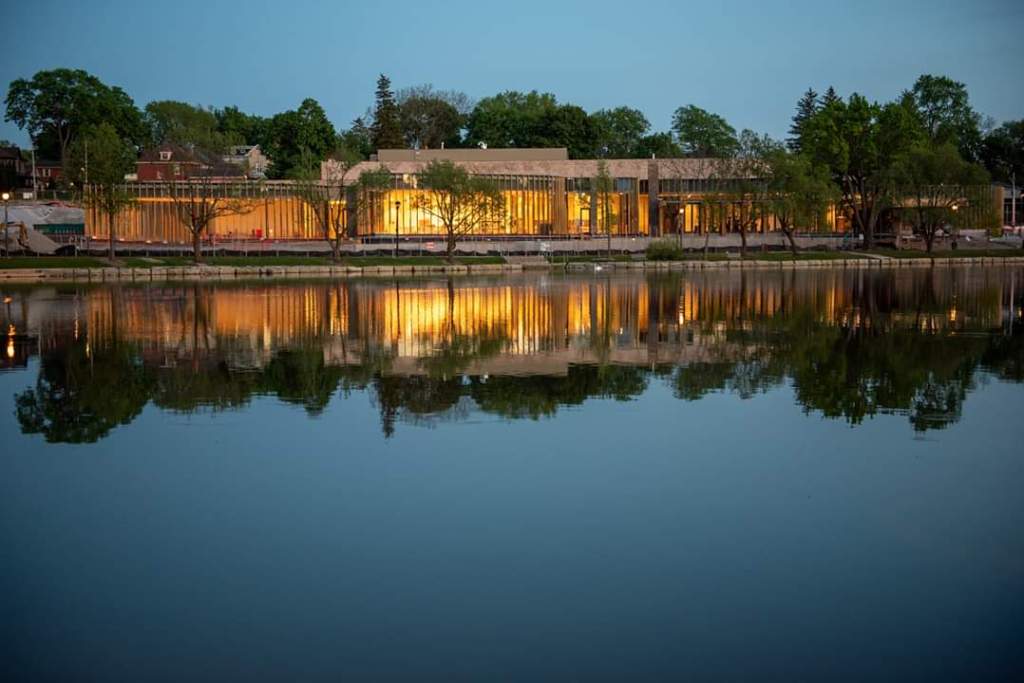
The new Tom Patterson theater–as of this writing, it has not yet opened…

[1] I am just name dropping here. J

[2] Is it a coincidence that Hume Cronyn is Canadian?  I think not.

[3] I saw Keith Carradine on a BroadwayCon panel a few years ago, and he actually mentioned “Foxfire” with fondness.  What a full circle!

[4] Anyone who has not seen this Stratford production should be living with regrets.  I am just saying.

Team Phantom

***Warning this post contains plot spoilers.  I do not want to discourage anyone from reading anything I write, but here it is: I will be divulging the plot of “Love Never Dies” below.  To my three loyal readers—I think you already know this, so please read on!

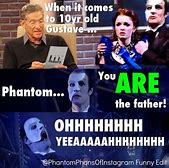
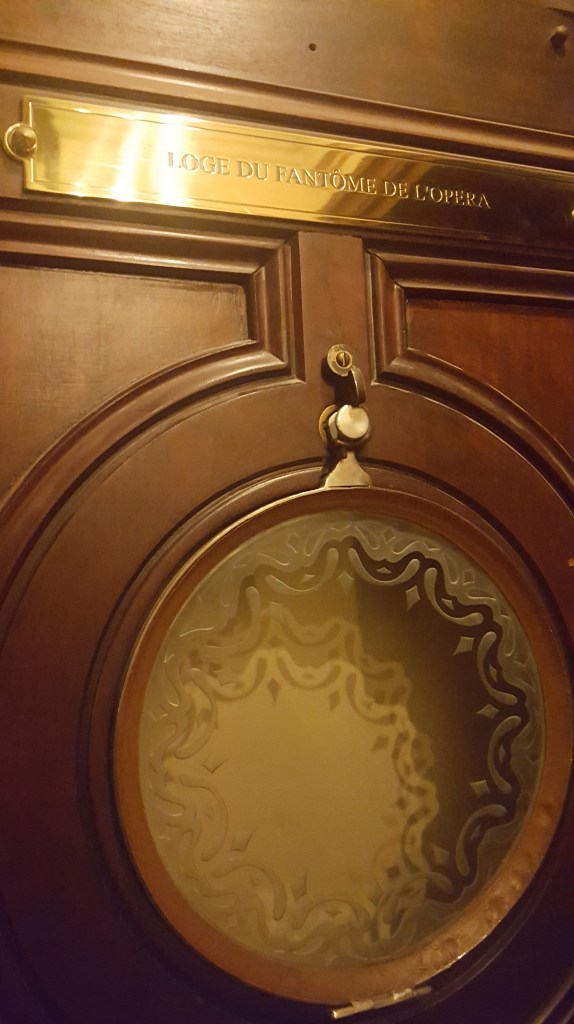
Last Saturday I woke up to the words “The Phantom of the Opera is here!” thundering through my house.  Being the musical lover that I am, I rolled out of bed, quite literally, and stumbled downstairs toward the source.  Spouse was watching the Sir Andrew Lloyd Webber YouTube channel, The Shows Must Go On.

When I moved to New York City, “Phantom” was the hottest ticket in town.  It was not even new by then, but the wait for tickets was two years.  Two years, “Hamilton” fans!  In those pre-internet days, I literally had to call the box office and be told that I can get on the wait list.  I planned to be in NYC for three years, but I was also 21.  Needless to say, I never got on a wait list, and never saw “Phantom” on Broadway.  Instead, I continued to listen to the tape.  I loved the soundtrack, and still do.  

However, something always bothered me about “Phantom”.  Plot is important to me (unless we are talking about “G&S” (https://oldladywriting.com/2020/03/29/it-is-a-glorious-thing/).  The fact that Christine ends up with Raoul always seemed like a copout. Raoul is not that special, but he is handsome, and beautiful girls end up with handsome men and not with disfigured cavern dwellers.  I realize that that’s the original story, but I also think that Sir Andrew can do whatever he wants to do.  And guess what?  A quarter of a century later, he did.  “Love Never Dies” is a vindication of Team Phantom.

Seeing “Love Never Dies” was one of those unexpected transformative experiences that only live theater can give.  We found ourselves in London for a night’s layover, and my only goal was to sleep in a pod.  That was, by the way, absolutely terrible.  You might think it would be cute to sleep in a box where you cannot even comfortably turn, as I did before I experienced this nonsense, but trust me—it is the worst. But I digress.

We had a few evening hours in London, so of course ran to Leicester Square to buy show tickets.  “Love Never Dies”, the sequel to “Phantom”, seemed interesting.  Little did we know, it was selling terribly and was already set to close.  I am still sad about it.  This is not only one of the most beautiful stories and musical works I have seen (“Beneath the Moonless Sky” and “Devil Takes the Hindmost” quartet are alone worth the price of admission), but it has also finally reconciled me to “Phantom” by redeeming (and ultimately martyring—and what can be more redeeming than that?)  the seemingly superficial Christine.

Once I saw “Love Never Dies”, I have not been able to view “Phantom” the same way.  Once you know that Raoul will end up a drunk and a gambler and a total anchor for Christine, their whole courtship in “Phantom” looks doomed.  I kept wanting to tell Christine to just ditch him and stay with Phantom.   

When I saw “Beneath a Moonless Sky” live on stage, it was so unexpected and so heartbreaking.  Christine sang, “I loved you, I’d have followed anywhere you led”, and I just saw her in a completely different light, a woman beaten but unconquered by a bad marriage, full of regrets over a lost love, a woman who was prepared to follow her heart but who was given no choice in the matter and tried to do her best.  And Angel of Music returns too late, because life is complicated…

I understand that a lot of the fans of the original story hated the fact that Christine dies in “Love”.  But I think that no other solution would have worked.  No one would have believed if she and Phantom stayed together and lived happily ever after, and no one would have believed if she stayed with that wastrel Raoul.  Sorry, but she basically had to die—which makes the entire two-parter a great and tragic love story and ultimately elevates the original “Phantom”[*].

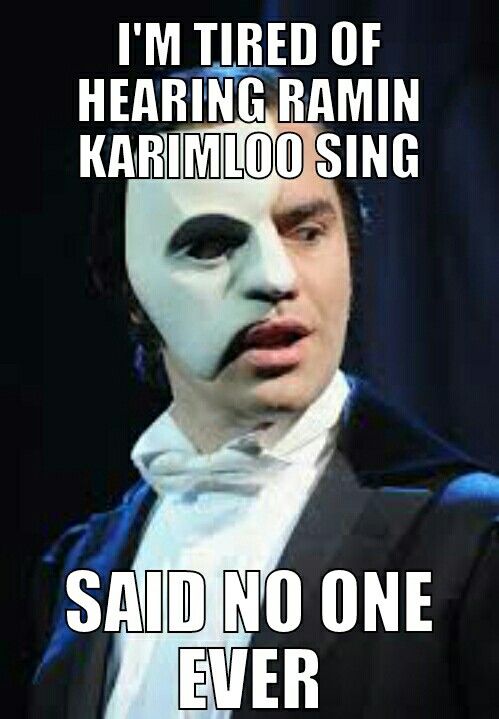
Now a word about the failed London production versus the revised Australian one, which was more successful.  If you see “Love Never Dies” on official video, you will see the latter one—and I am sorry.  Aside from the fact that I saw Ramin Karimloo as Phantom and Sierra Boggess in it, the West End version is superior in several subtle but key ways.  First, the set is better—one of those rare instances where computer generated set works (and anyone who knows me knows that I do not love CGI on stage).  The lights of Coney Island in Adelphi Theater were unforgettable!  The entire show is just darker and more mysterious, which is absolutely what it needs to be.

Second, starting the show with Madame Giry and the Phantasma freaks reminiscing is much more intriguing and evocative of the start of “Phantom” (“The Coney Island Waltz/That’s the Place That You Ruined, You Fool!”), while starting the show with Phantom singing “Till I Hear You Sing” [Once More] is just too much foreshadowing.  I am a firm believer that you just do not need to see Phantom in his mask until a few numbers in.  You know he is coming, unless you have never seen or heard of him.  In which case, you are in for an even bigger treat!


[*] Honorary mention goes to the amazing music box monkey that steals the show, according to my youngest son.

It Is a Glorious Thing

If you do not know that “Chariots of Fire” is my favorite movie, you do not know me.   https://oldladywriting.com/2019/06/04/run-your-own-race/ Once I saw it, I became obsessed with everything mentioned in the film, such as

  • Watching PBS, in the hopes of running into any of the actors who appeared in “Chariots”.  This was before BBC America, friends!
  • Watching the Olympics.  OK, I loved the Olympics since Moscow ’80.  “Chariots” didn’t do it singlehandedly, but still.
  • Wanting to go to England.  We had no resources to do that for a very long time.  Eventually I went to London for spring break of my senior year in college.  With my grandmother.  I repeat—with my grandmother.  If you do not know how fraught our relationship is, you do not know me.  But there is a happy end to this particular story—I have visited London many times since then, sans Grandma, and each trip has been an improvement.
  • Wanting to take “Sybil” for my middle name.  Sybil is NOT my middle name, because by the time I could acquire one, I had fallen in love with The Monkees.
  • Wanting to see all the Gilbert and Sullivan operettas.
  • Wanting to have “Jerusalem” sung at my funeral.  I am saving this one for last.  Literally and obviously.

So, one of the many unexpectedly wonderful benefits of this great film is that it introduced me to the world of Gilbert and Sullivan.  And unlike my belated foray into running, this was instant.  In the movie, Harold Abrahams joins Cambridge’s Gilbert and Sullivan society.  Apparently, this is factual.  So snippets of the operettas are part of the soundrack—it is not all Vangelis.  I must confess, although of course—of course!—I bought the record, I am not a huge Vangelis fan.  I am generally not a fan of instrumental music.  Not going to classical music concerts is one of my small rebellions against my upbringing.  But I love musical theater.  I need words and a plot.
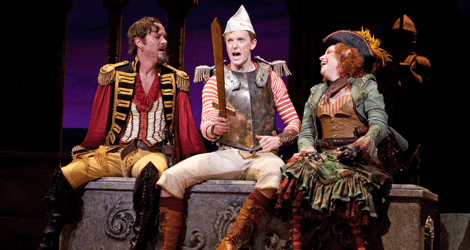
Over the past 40 years, I have only seen four of their operettas—the three BIG ones, and “Ruddigore”.[1]  It started with “HMS Pinafore”.  My high school, during a woefully depressed year when our millage did not pass, the school day was cut to five hours, and buses were cancelled (a disaster in rural Midwest), put “Pinafore” on in the choir room.  The set was minimal, if any, but the costumes were great, because all guys were dressed like sailors.  I recognized “He is an Englishman” from “Chariots of Fire” and was pretty excited.  I was also amazed at the vocal and acting talents of my peers.  The fact that I was generally unfazed by the immense inanity of the plot is a commentary on how limited my command of the English language was at the time. 


Literally no idea what’s going on

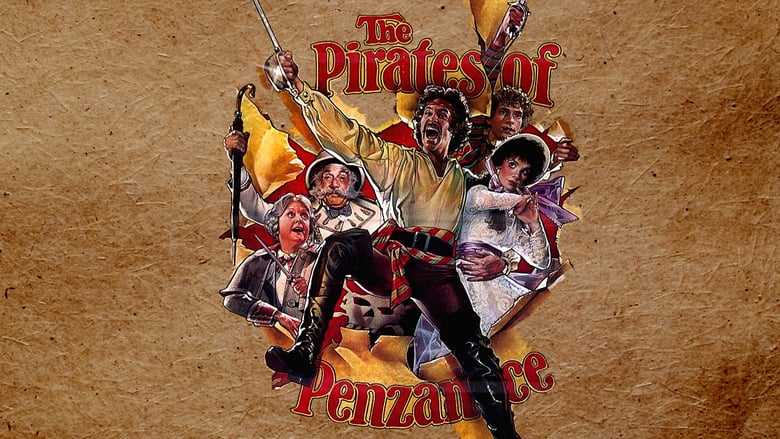
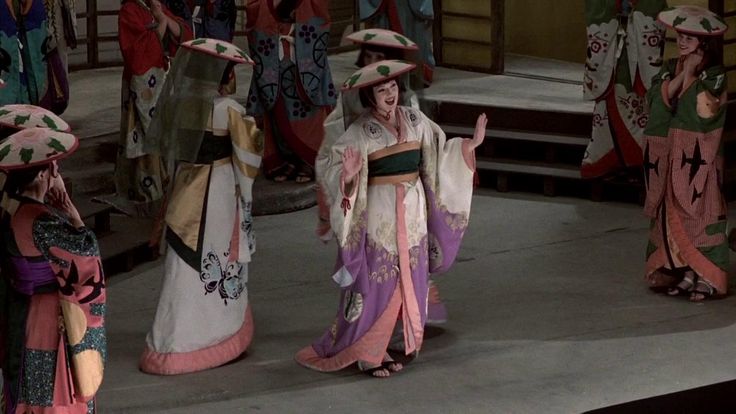
In short succession, my mother and I managed to see professional touring productions of “The Pirates of Penzance” and “The Mikado”.  I had high hopes for the latter because of its special part in “Chariots”—but either my English regressed or the plot is even more bizarre than that of “Pinafore”, because I did not understand it.  I have never seen it again. 

Not necessary

“Pirates”, however, was great!  “Pirates” is (or should it be “are”?) great!  The production we saw in Detroit in the early ‘80s was perfect.  I remember nothing about it except the lead.[2]   I think “Pirates” stands wonderfully well on its own merits.  It is a fun, light, colorful bit of cheery entertainment.  I am generally very open and even eager to see variations on the classical traditions—with certain exceptions.  Directors, please, do not mess with “Pirates”!

“The Pirates of Penzance” also happens to be my husband’s favorite musical.  Strangely, he does not care about the rest of the G&S body of work.  He just loves “Pirates”.  Specifically, he is obsessed with the Major General character. Even more narrowly, the “Modern Major General” song, and how quickly the actor can do it.  Fast-talking Major General equals great “Pirates”.  The Major General who is not fast enough just ruins everything for spouse. 

He also claims that he saw that touring production in Detroit and remembers the young blond lead.  To think that we could have met a decade before we did, at a Gilbert and Sullivan show!  It would have led nowhere, for a whole host of reasons, but it is kind of romantic to think that we might have been at the same theater event.  Happy World Theatre Day! 


[1] This is kind of shameful.  I know I had many other opportunities.  Once the plague is over, I should focus more on G&S…

[2] The actor who played Frederick in the touring production of “The Pirates of Penzance” subsequently returned as the lead in “Joseph and the Amazing Technicolor Dreamcoat”.  I like to pretend that I saw Andy Gibb in “Joseph”, but I did not. I saw this guy.  I wish I knew who he was, because he was great.  If anyone knows—please tell me.  This was before I started keeping show programs, unfortunately.

The Merry Wives of Stratford

Some years ago, I decided that I needed to complete the Shakespeare canon.  For a spectator like me, that means only seeing the shows, not acting in them or directing them (I laugh because this is true).  As I see several Shakespeare stagings every year, I am ever surprised by the universality as well as timelessness of his works.  I mean, after a few centuries, they are not dated (unless the director allows them to be, which is decidedly NOT the goal).  I am also occasionally surprised by how my relation to the various plays has changed over the years—the ones I thought I loved I occasionally outgrew, the ones I either did not know or did not much like I grew to appreciate more, and so forth.  As of this writing, I have five plays left to see, which seems like a shockingly large number considering how long I have been at it—so, if anyone hears of Henry VI being done anywhere, please let me know.  I do mean anywhere, I will travel for this!

I have deliberately been avoiding The Merry Wives of Windsor for years.  I glimpsed it once on TV, must have been on Masterpiece Theater, and I hated it.  It seemed like a lot of commotion of people running around in bonnets and pumpkin pants, laughing at jokes that made no sense, and the language itself was unintelligible to me.  It also had Falstaff, a character many like, but I kind of hate.  I just do not find him funny or endearing or charismatic in any way.  I just find him annoying. 

But, with so few plays left to complete the canon, and with Stratford Festival—the greatest theater in North America, if not the world—staging Merry Wives this season, I decided to bite the proverbial bullet.  Spoiler alert:  I am glad I did, but I am still not crazy about this play. 

Antoni Cimolino, the Artistic Director of the Festival who directed the play, set it in 1953.  It was the year the festival was founded by Tom Patterson.  Is it weird that I immediately thought that it was the year that Stalin died?  Seems like it was a much more carefree year in Canada than in the USSR, but maybe not so much when it came to women’s rights.  Frankly, though, I did not find the story to be too offensive in the #MeToo era.  Falstaff is lecherous and pushy, but easily confounded and disarmed.  Mr. Ford is jealous not like Othello, but like Moliere’s clueless and pompous husband characters.  The women outsmart and outplay the men with ease, plus great humor and spirit.  So, I am inclined to just view this story as a harmless farce rather than a statement on gender relations.

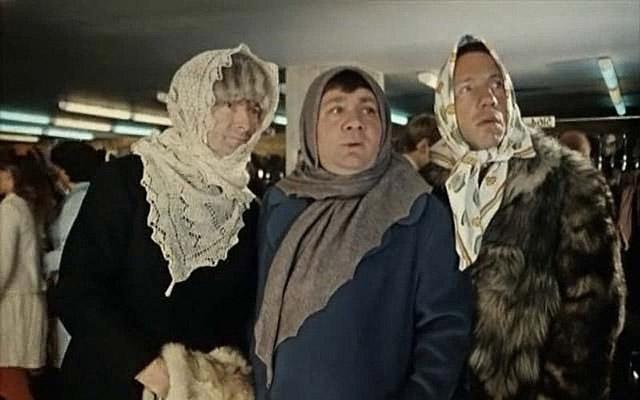
And what a farce it is—but I am not against farces.  I am an easy laugh, but what of it?  A peculiar mix of Monty Python and I Love Lucy is not the worst to which a comedy can aspire—and achieve.  In this particular production, the stars of Stratford are out in full force.  Brigit Wilson as Mrs. Page is just the most luminous wide-eyed Lucille Ball impersonation ever, and I mean that in the best way possible.  The incomparable Geraint Wyn Davies is possibly the only Falstaff I can stomach, and he actually made me feel sorry for the fat buffoon at the end.  Aww, Geraint with that sparkle in his eyes, his Falstaff exuding the benign mirth that reduces the creep factor almost to zero!  And Lucy Peacock as Miss Quickly is channeling the comic relief housekeepers straight out of the Soviet comedies of the death-of-Stalin era, whose kerchief, ankle boots like my grandmother would wear, and intermittent snacking made me feel all warm and fuzzy and nostalgic.  Ben Carlson, as the Welsh parson, is the funniest I have ever seen him be–and Ben is usually witty funny, not ha-ha funny, so this was a joy to behold.  When he agrees with Mr. Ford that Falstaff in drag as the old woman of Brentford must be a witch because she has whiskers and a beard, I died laughing!  (I use this phrase to excess; I guarantee you will see it again.)  Graham Abbey as Mr. Ford, while very funny as well, is basically Tartuffe’s Orgon, whom he played on the same stage two years ago. It is not his fault that this part is so similar—after all, I have seen Geraint Wyn Davies play Falstaff before, which is literally the same character.  I am just saying it was not a surprise, that’s all.

The Monty Python theme plows through the play in the character of Dr. Caius.  Gordon Miller plays him essentially as the French Taunter from Monty Python and the Holy Grail, complete with pronouncing every letter in “knight”.  When you hear it, you just can’t unhear it.  He even throws in John Cleese’s silly walk.  It’s all very funny, but a bit much, including the exaggerated French accent that is at times utterly unintelligible, although every second word is “bugger”. 

So, I walked out of the theater not feeling that I saw a Shakespearean play.  Is that necessarily a bad thing?  I do not think so.  I laughed a lot, I had a good time, and that is a value in itself.  The fact that a comedy written 400 years ago still retains the humor of a much more modern piece is astonishing.  When Antoni Cimolino mentioned that Merry Wives has funnier jokes than Neil Simon he was not kidding (see what I did there?).  If there was a deeper message, I might not have gotten it.  But, in the words of John Cleese’s Pope in the Penultimate Supper sketch, “I may not know much about art, but I know what I like!”  

P.S.  E.B. Smith needs to have a bigger part in this play, and really in every play.