Featured

Memories of The Fourth Sense

I recently had perfume custom made for me.  It sounds fancier than it is, because you basically go on this website[1], pick several scents, and fervently hope that they combine into something that does not make anyone within sniffing vicinity gasp and choke.  Suggestions of complementary scents are available, but I scoffed at those and proceeded to trust my own senses. I was not disappointed!

I knew nothing about fine fragrances growing up—which is no surprise, considering my upbringing.  My no-nonsense grandmother (she of https://oldladywriting.com/2021/08/30/just-boil-water/) did not bother with such frivolities.  She was kind enough to buy me a bottle of children’s eau de cologne one summer in Estonia.  The bottle was shaped like a clown, leaked to the point of extreme transience, and left no olfactory impression on me whatsoever.  She also, in a fit of unprecedented and unrepeated generosity, bought me a tiny bottle of adult perfume, Vecrīga (Old Riga), which miraculously survived to present day and, considerably less miraculously, turned itself into vinegar in the intervening decades without me ever opening it.  I had vague plans to wear it on my wedding day, but forgot and instead dumped half a bottle of Dali on my wrists.  As the latter is currently fetching $800 on EBay while the former is not, I can only say that my marriage was—and is—worth it[2].

In college, the same friend who introduced me to Elton John’s music [https://oldladywriting.com/2019/06/23/rocketman/] also introduced me to quality scents.  She mocked the drugstore-bought Lutece supplied by my mom, who still picks perfume based on the attractiveness of its receptacle, and gave me a bottle of Oscar De La Renta from her personal collection.  Fun fact: today, a half-used bottle of former would set you back the same $90 as the retail-bought bottle of the latter, which just confirms the old adage that there is no accounting for taste, as well as there is no limit to the pull of nostalgia.  But, once I started drenching myself in that designer fragrance, no fewer (and yet no more) than two young men followed the scent straight to my apartment.  In the immortal words of Simon and Garfunkel, “It was a time of innocence”.

When I was in Greece, walking through the Club Med resort on the way to my job as an ouzo drinker [https://oldladywriting.com/2020/07/30/the-wrong-way-to-the-parthenon/ ], a fragrance wafting from some flowers instantly transported me to warm nights on the Black Sea.  I did not expect to smell it again until I discovered Orange Blossoms at Lush.  I do not think oranges grow in Crimea, where I spent the summers of my childhood.  In fact, growing up I was violently allergic to what everyone assumed were oranges, but it was actually the poison with which they were injected to make them ripen or at least appear ripe during their long trek to my North Volga hometown. Logic tells us that this particular scent should not evoke any memories more pleasant than a trip to the children’s hospital—yet it does, and logic is a sword by which I do not want to die.  I am happy to report that Orange Blossoms, after suffering a couple of setbacks, did not permanently join the list of my favorite discontinued things [https://oldladywriting.com/2022/01/29/murder-at-the-marsh/] but has instead become my signature scent.  I also read somewhere that it is the signature scent of French women, so in this case, logic is firmly on my side. 

As for the ones that did join the sad list, there is Yves St. Laurent’s In Love Again.  Like Orange Blossoms, it came, went, came back—but then disappeared for good.  My tenuous connection with YSL was thus severed, and Fragonard took his place as my French perfumer [https://oldladywriting.com/2019/06/09/when-did-the-arc-de-triomphe-start-leaning/].  I owe allegiance to Fragonard for (1) creating not just one but—count them—four scents I love (Belle de Nuit, Emilie, Etoile, and Fragonard itself), (2) not attempting to cancel any of them, and (3) supplying me with its version of Orange Blossoms during the dark period when Lush did not.

Yes, this is a photo of the actual perfumes in my bathroom. All accounted for. Vecrīga is in the middle.

Some years ago, my erstwhile BFF asked what gift I wanted from the homeland; I had trouble coming up with something that I could not get here, and requested a bottle of Red Moscow perfume.  Her cousin finally located it in a Soviet nostalgia shop in actual Moscow, and the two of them could not be dissuaded from the conclusion that this peculiar retro item was meant for my ancient grandmother.  Rumor has it that it existed before the Revolution of 1917 as The Empress’ Favorite Bouquet, and was renamed like so many things during the Soviet era.  I had no idea what it would smell like, and just thought it would be something weird at best, and most likely fetid.  But you know what?  I love it.  It is a very strong floral chypre (there are those orange blossoms again, though I cannot detect them in it) that lasts from morning till night.  There is something symbolic as well as ironic in the existence of a fragrance that survived two ages of empires—and hopefully will outlast a third.

And so what is this custom scent that I chose?  Tulips and mimosa.  Surprised?  Tulips do have a smell, albeit a very subtle and delicate one.  Mimosa—the flower, not the drink—overwhelms in this particular combination, but I am fine with that.  In my childhood, mimosa was the earliest blooming flower of spring, omnipresent on March 8, International Women’s Day.  The smell of this perfume conjures bouquets of those fuzzy yellow balls on the desks of all the girls in class.  One of the big benefits of that egalitarian society was that no one was excluded, unlike the mortifying Valentine Day popularity contests in the U.S.[3]  The homeroom teacher insured that all the boys participated, and all the girls got flowers, and sometimes even perfume, though I do not recall what kind (in any case, it would not have been Red Moscow).  And now Queen’s Bouquet © (see what I did there?) recalls one of the most pure memories of my joyful childhood during these complicated times…[4]


[1] https://scentcrafters.com/ 

[2] I found a lovely write up which made me regret just slightly that I have never really sniffed Vecrīga myself.  But, in my younger days, I would not have appreciated it, and now, I have enough, so all is well. And in any case, I still have never been to Riga. https://www.fragrantica.com/news/Spirit-of-the-City-Riga-in-Dzintars-fragrances-18365.html

[3] Do I even need to mention that the only carnations that I got in high school were from female friends?

[4] The many links to the previous blog posts are for my new subscriber(s) who might have missed them in the past. [insert smiley face]

Personal Best

The unthinkable and the entirely unexpected happened—I won a running award that was not just for showing up!  I actually placed second in my age category in a masked, socially distanced race. And though I have always joked that the only way I will place is if only three women run, I always secretly hoped for just such an eventuality.  Frankly, I thought I might have to wait a couple more decades for the ranks to start thinning.  Turns out I just had to wait for the pandemic that would turn most races virtual.  The point in my favor was that with no more than 100 runners, the competition was not that stiff.  However, I have to clarify that there were seven (7) women that showed up in my age category.  And I still placed second (2nd).  There were five (5) entire women slower than me, which is an amazing improvement since gym class[1]. https://oldladywriting.com/2019/06/04/run-your-own-race/

The race itself was actually pretty brutal, and not something in which I would participate under normal circumstances.  I mean, I did not know how crazy it would be because as always, I carefully read the directions about where to park, where to stand to socially isolate at the start, and when to wear the mask.  I blithely overlooked the facts that the race was (1) at night, and (2) in the woods.  Words like “moonlit”, “9 pm”, “trail”, and “forest” did not cause any alarms to go off, so excited I was to just run in an actual race.  And so, I literally stumbled through the dark jungle, leaping (and I use the term loosely) over tree roots, trying not to slip in the mud (as it rained shortly beforehand), alternately praying and swearing.  It was also extremely hilly.  Pure adrenaline moved me forward, based on a desperate desire to not perish in the woods.  This was easily the most exciting thing that happened to me since the plague came to town.

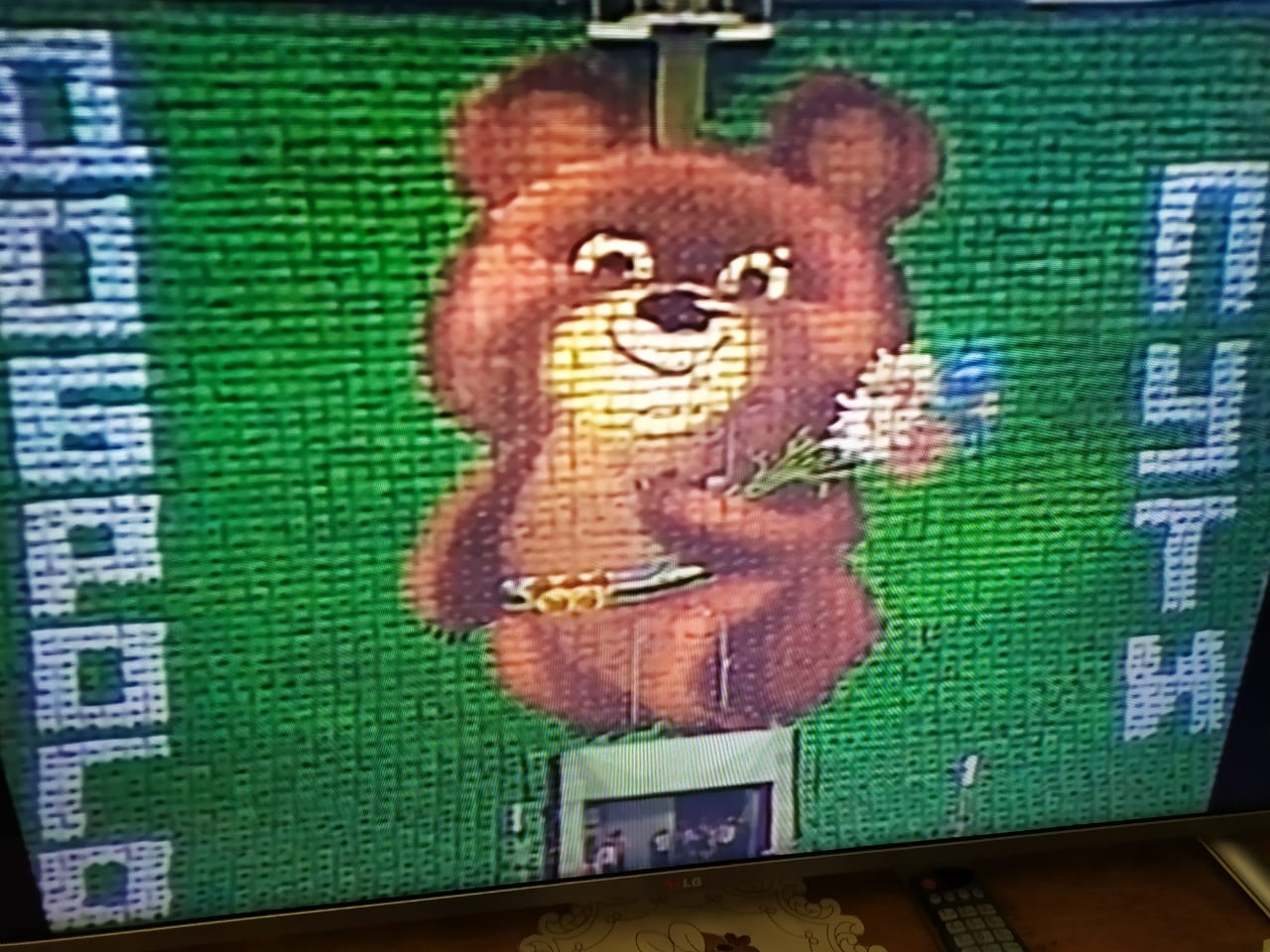
Picture this logo on everything that money can buy in the USSR in 1980. It is more than you would expect.

The real twist in all of this is that this past weekend marked the 40th anniversary of the Moscow Olympics.  I tend to see symbolism and omens in everything.  For me, it seemed auspicious to run—and “medal”!—on such an august (see what I did there?) occasion.


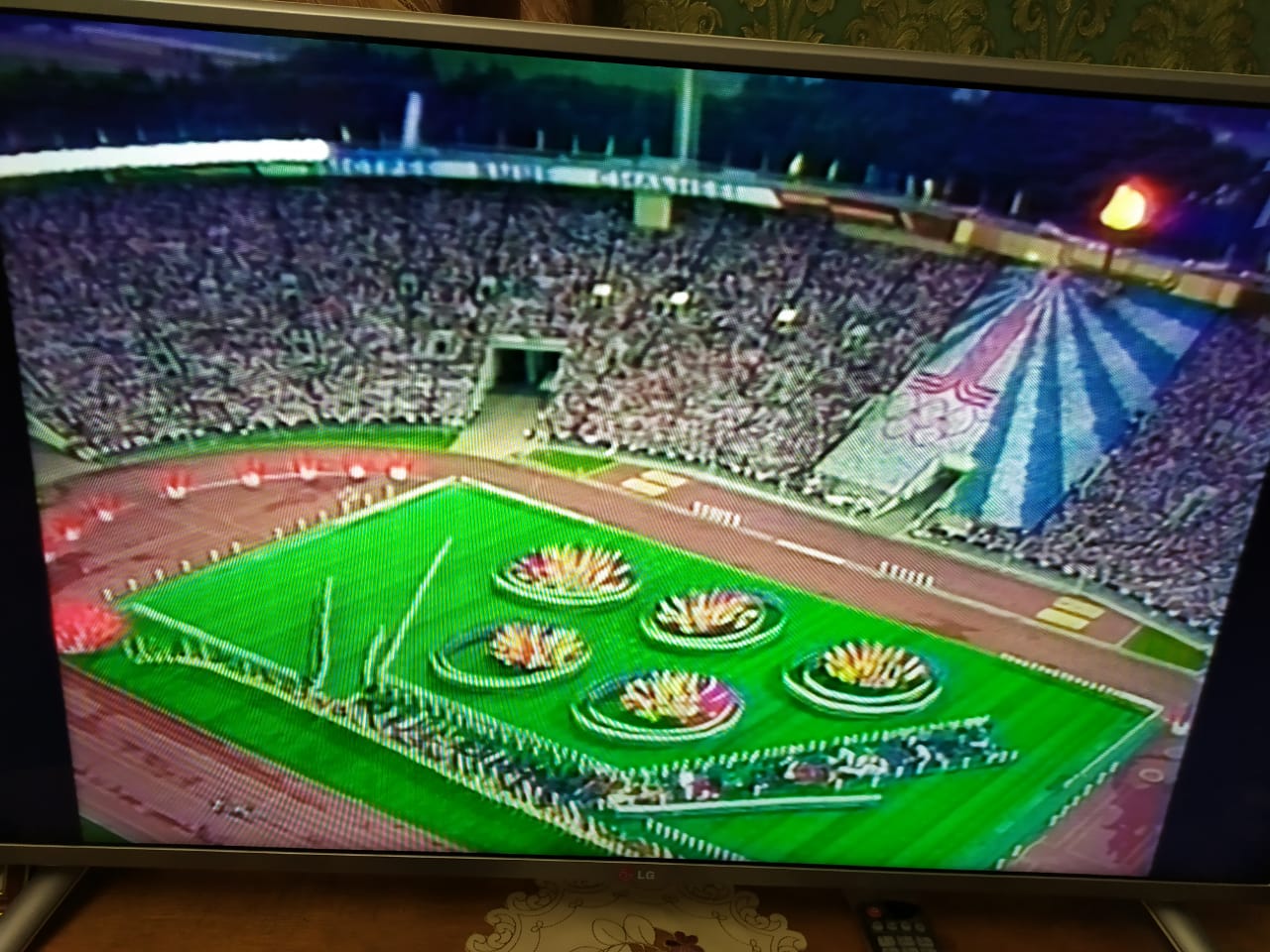
The year 1980 was one of the best, if not THE best, year of my life.  It was the last year of my childhood, and my childhood was pretty wonderful.  The Olympics lent the entire year the aura of magic, camaraderie, and celebration.  These were the first Games to come to Eastern Bloc, and are the only Summer Games that took place there to this day.  They were a tremendous big deal for The Soviet Machine.  We all know now how that worked out, sadly, and from then on[2]. But for those of us in close proximity to the Big Event, it was a truly exciting time.

This New Year’s card also lives in my basement.

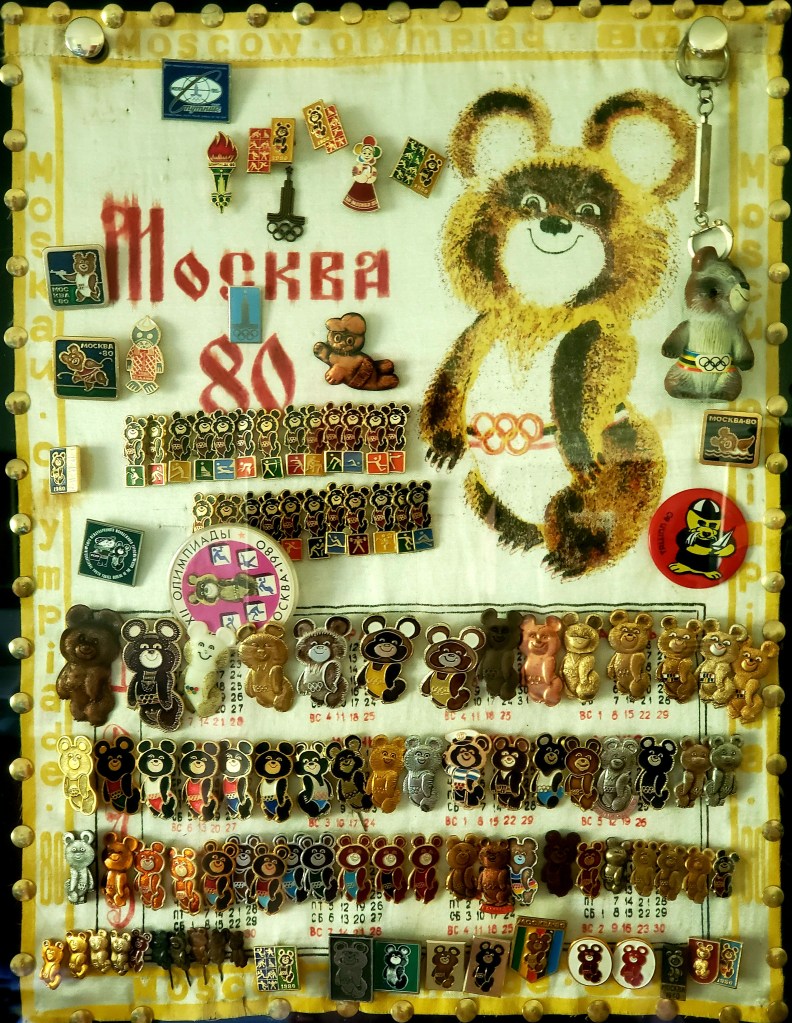
There were several things that made it so.  First, the merch.  You literally could not buy anything that did not have the Olympic logo on it.  And everything that had the logo cost more, even if it was just a few kopeks. It was a cunning plan to raise money, I suppose.  We normally call such a scheme a “load”, but during that glorious year, people were eager to buy even dinner plates that had the discreet stylized image of the Kremlin with the five rings under it.  I myself was a proud owner of a messenger bad with the logo.  I mean, everyone had one, but I was not usually cool enough to have anything that other kids had.  Yet that year, I did!  And of course, Misha the Olympic Bear was the best mascot, because bears are awesome, and he was the cuddliest of bears.  I dreamed of owning a stuffed toy, but that was an unattainable dream.  I did get a rubbery squeezable one, which we duly brought to the US among our very limited possessions, and which is still lurking somewhere in my house, not having been properly appreciated by my kids.  Fun fact:  the mascot of the sailing regatta, held in Tallinn, was Vigri the Seal.  Since my grandmother and I spent part of the pre-game summer in Tallinn, I am a proud owner of a small wooden Vigri.  He also crossed the Atlantic and lives in my basement.

My mom and I diligently collected every Misha–and some Vigri–pin we could find. Seriously, how cool is this?!
NOT the same brand that we had

Second, the food.  Because of my hometown’s close proximity to Moscow, https://oldladywriting.com/2019/06/28/the-three-monuments/ we were getting food.  Not the regular food like meat and potatoes and apples, but tiny portions of packaged food like butter and jam, as well as juice boxes.  These were intended for the athletes, but were siphoned off to the periphery both before their arrival and after their non-arrival.  These were items that you would see outside the Soviet Union in an average, non-fancy diner at breakfast.  To us, they were ambrosia.  I was under strict orders from my grandmother to not tell my friends that we had a supply of this amazing stuff, else we would have an infestation of neighborhood kids in search of mythical juice boxes.  (I received the same orders when we bought a color TV and a car, and whenever we had bananas in the house).

NOT the same brand that we had. There is no image of the incredible juice boxes that I could find. One of the flavors was pineapple–like we even knew what that tasted like!

I still think of Moscow Olympics every time I open a tiny jam container when I have breakfast at a diner.  And I still think of that glorious summer of plenty and exhilaration when I think of the Olympic Games.  And I still say, whenever anyone Russian asks me when I left the Motherland, “After the Olympics”.  And everyone understands.


[1] The plague took my friend who was slower than me in gym class.  I mourn her more than anyone will ever know, and for reasons that have nothing to do with anything that has yet been written…

[2] Five countries have been represented at all Summer Olympic Games – Greece, Great Britain, France, Switzerland, and Australia, but only Greece has participated under its own flag in all modern summer Olympic Games.  Good for Greece, rising above the fray! https://oldladywriting.com/2020/07/30/the-wrong-way-to-the-parthenon/

The cool blue bottle is for winners only!

The Wrong Way to the Parthenon

I always loved Greece.  To clarify, I always loved Ancient Greece, having grown up on “The Trojan War and Its Heroes” (a masterful retelling of the story old as time for elementary school age children, with delicate silhouette illustrations in which I colored in the hair of every single Achaean), “Adventures of Odysseus” (which always made me uneasy because his 20 year absence from home seemed like a little longer than a lifetime to a seven year old me), and “Legends and Myths of Ancient Greece” (a compilation so complete that I would venture to guess that it contained a story of Zeus turning into almost every creature in Greek fauna to pursue various women—and why that would be more attractive than if he simply appeared to them as a handsome guy is something that I took as Olympian Gospel).

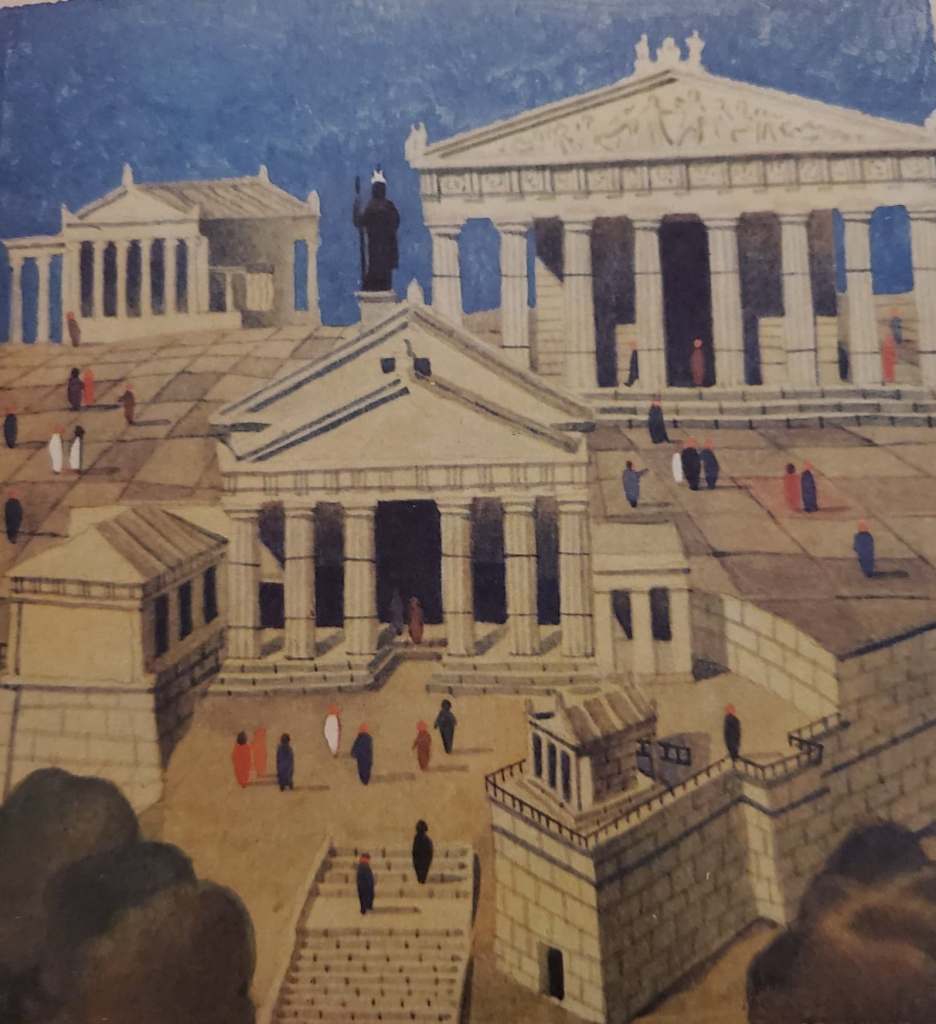
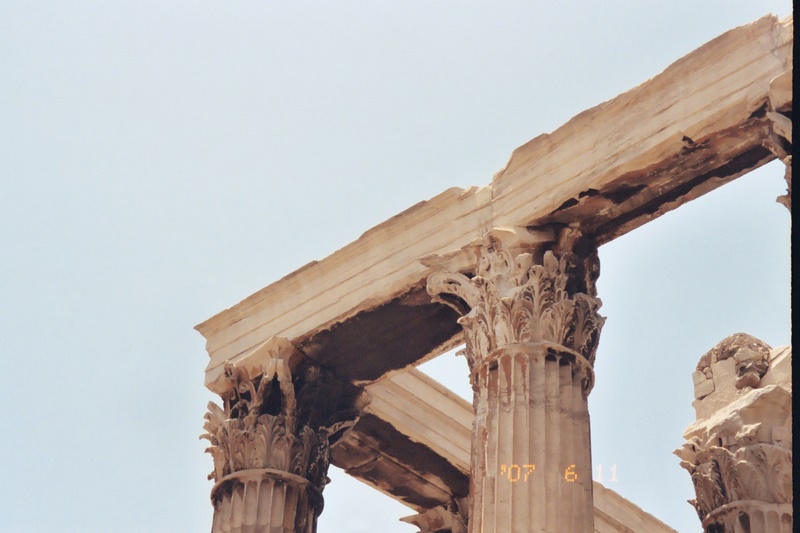
My other source of information about Greece was, of course, my beloved childhood encyclopedia, “What is this, who is that?”  https://oldladywriting.com/2019/11/03/liechtenstein/ It contained not only an article on Greece, but one on “Ancient Greeks” and one on the “Acropolis”.  It stated, quite inarguably, that Parthenon is one of mankind’s most marvelous creations.  But, the article grimly concluded, it exploded in 1687.  Given that this was before the internet, and in the USSR to boot, even imagining the Parthenon’s remnants was beyond the possible.

And so, when the first Big Birthday that we could afford to celebrate with a Big Trip was nigh, we went to Greece. 

These ARE the actual shoes I wore in Greece. And now think, do they look like they would work well on such trip? On any trip, except to the mailbox? I rest my case.

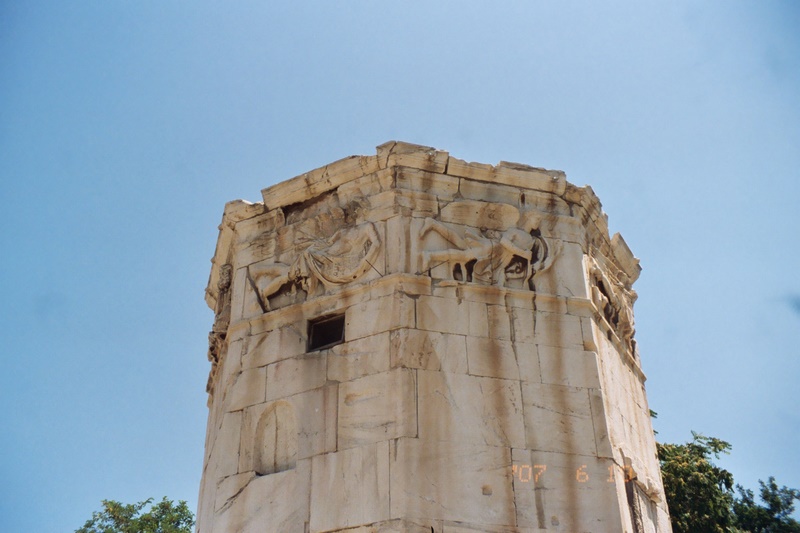
The year was 2007, and it was my last vacation with a non-digital camera.  Because we could afford to splurge for a milestone birthday, I took four rolls of film for a week’s vacation.  Coincidentally, this is the same number of photos I took over an entire summer in Europe almost 20 years earlier.  I also would like to have said that it was my last vacation for wearing uncomfortable shoes.  But, alas, it was not.  I am kind of known (not widely, only within my family) as someone who brings the wrong footwear on vacation.  There have been a few vacations during which a day is dedicated to looking for new shoes for me, because the ones I am wearing are literally trying to kill me.  A useful tip: if you have freakishly giant double extra wide size 42s, do not attempt to shop for ladies boots in Paris. It is an exercise in frustration, and a waste of time.

And so, armed with several useless phrases picked up from a talking parrot of a Greek guy I used to know, lousy shoes, analog camera, but strong knowledge of Greek cuisine (because we live near one of the best Greektowns in the US, if not THE best) as well as strong knowledge of Greek mythology, we arrived.

Our base was a timeshare in Marathon, which is literally marathon distance to Athens.  We never ran or even walked there, because, first, it was long before my running days, and second, it is apparently uphill for half the distance.  It is pretty much the toughest race one can run, which explains a lot about Philippides’ fate upon completing it.  We took a bus every day, which was not physically exhausting, but mentally taxing.  First, it was never quite clear when the bus left Marathon.  There was an hourly schedule, but it was not even loosely followed.  We often had to just meander along the route with the hope that the bus will overtake us as some point during the 26 mile journey, and preferably sooner than later, because Greece is hot in June.  Second, it was completely unclear what bus would take us back to Marathon from Athens.  Every evening, we would wander through the bus park, leaning into every one and yelling “Maratonas?”  Depending on the reaction of the driver, we would board the bus, which took a different route back every.single.time.  And finally, the highlight of the Athens-Marathon trip was when one fine evening, the bus was abruptly stopped in the middle of the road and boarded by heavily armed Greeks in military uniforms who roughly removed an unprotesting and guilty-looking young man.  We recognized him as an employee of the resort where we were staying and from whom we bought sunscreen the previous day.

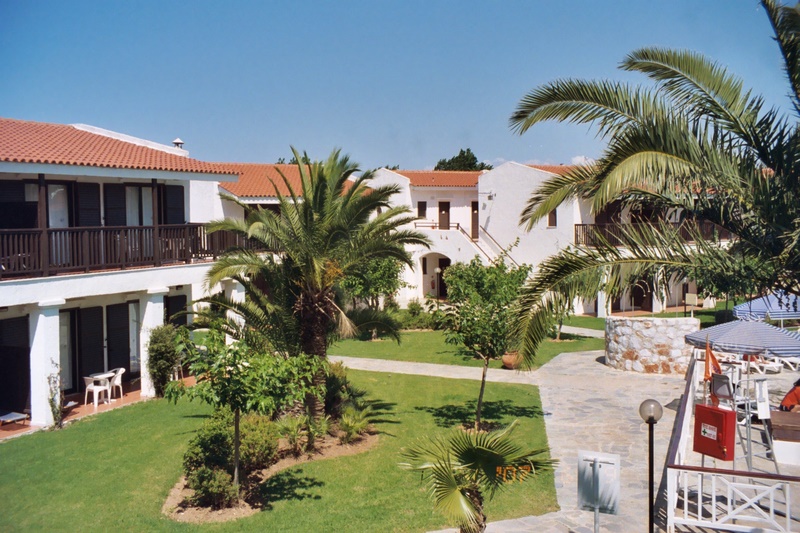
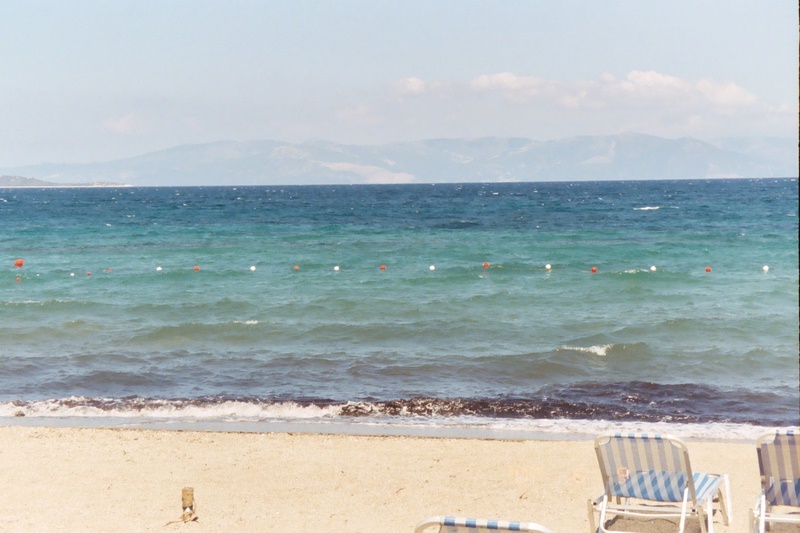
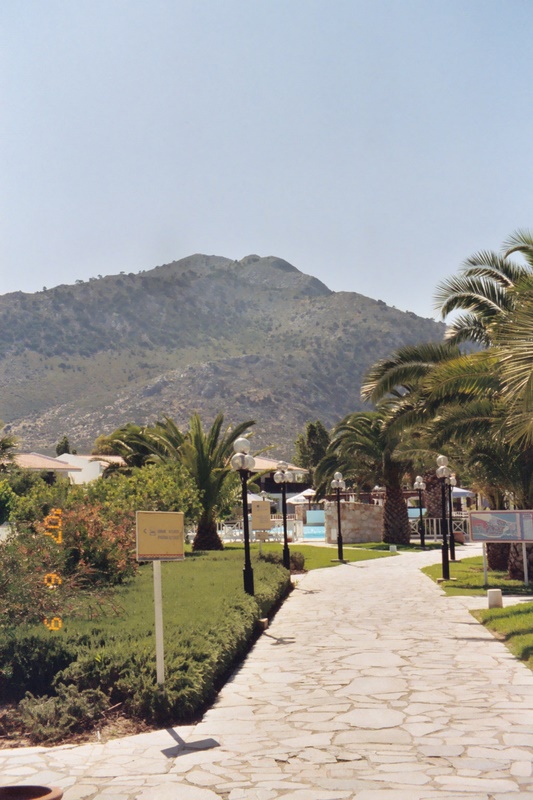
The resort, aside from apparently employing at least one known shady character, was lovely.  June is not yet a busy time in Europe, so we had it almost entirely to ourselves.  Upon arrival, I promptly invested in a bar card so that I could enjoy local libations every evening.  But, as it was not full tourist season, the bar was sparsely stocked.  So, spouse drank Greek beer while I drank ouzo like it was my job.  Funny thing about ouzo, though—you really cannot drink too much of it.  And so it was two beers and two ouzo[s] every night.  I also bought a box (yes, you read that right) of retsina at the resort shop, along with a small fortune in sunscreen and bandaids.  I have not drank retsina since, as that box did not make much of an impression.  I am not sure I have had ouzo since.  I still sort of associate it with duty rather than pleasure.

The resort had a breakfast buffet which we enjoyed the first morning.  And the second, but less so.  By the third, we thought the scrambled eggs looked familiar, as in they seemed to look literally exactly the same as the day before.  By the fourth day, they were turning green, along with the ham.  We stopped eating there after that.

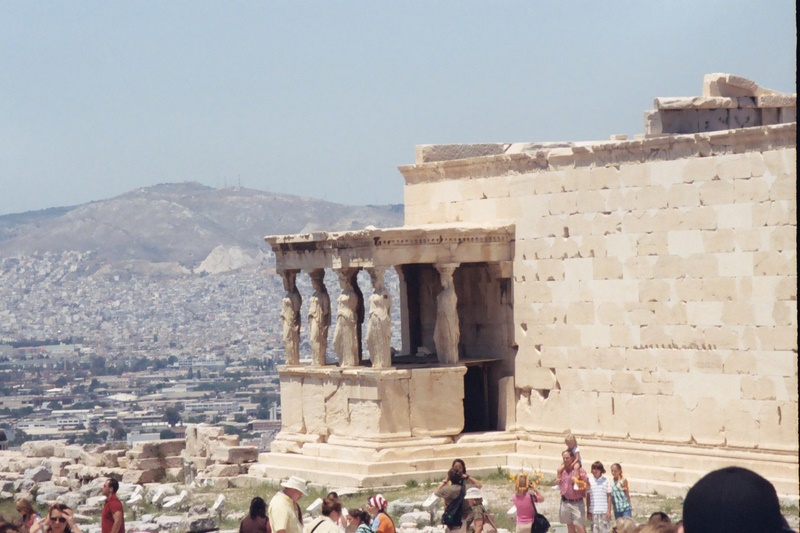
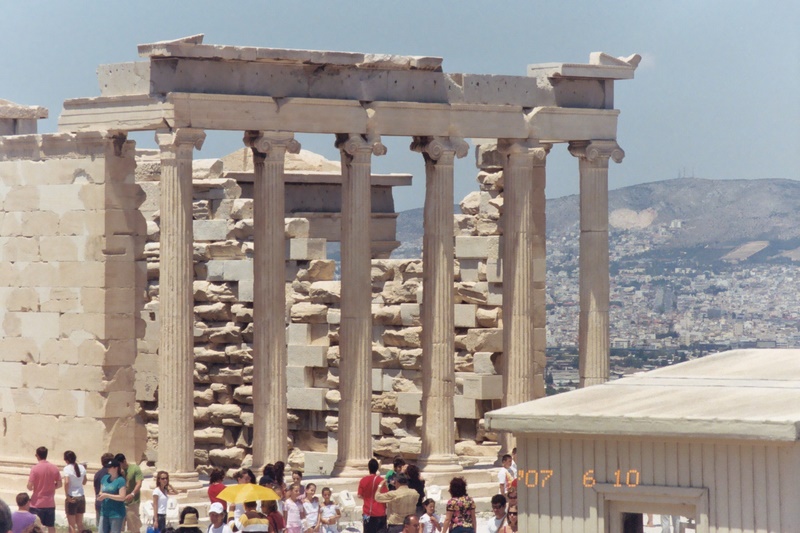
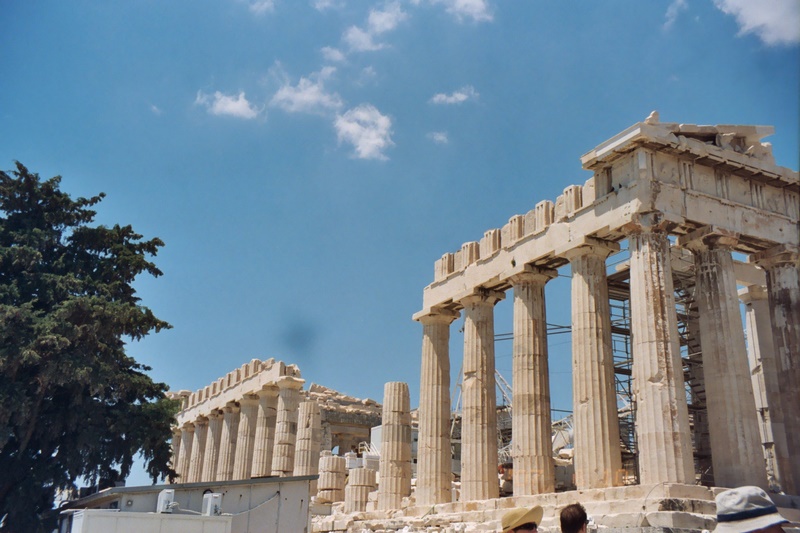
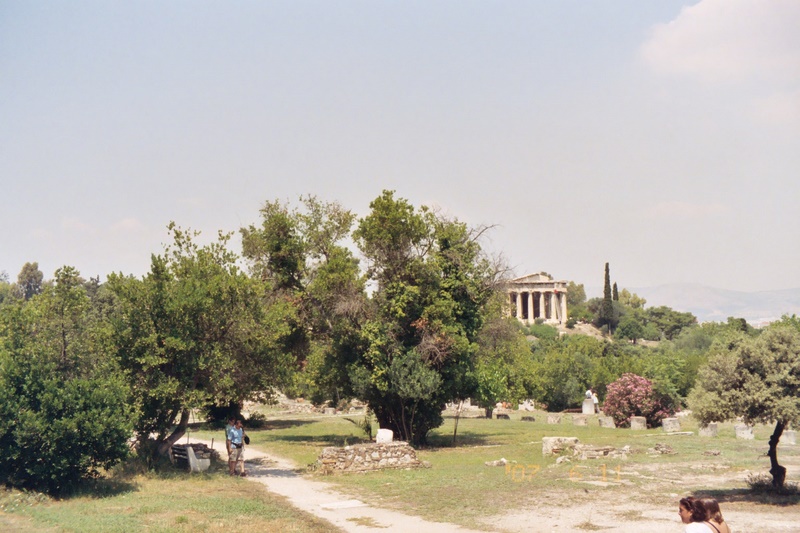
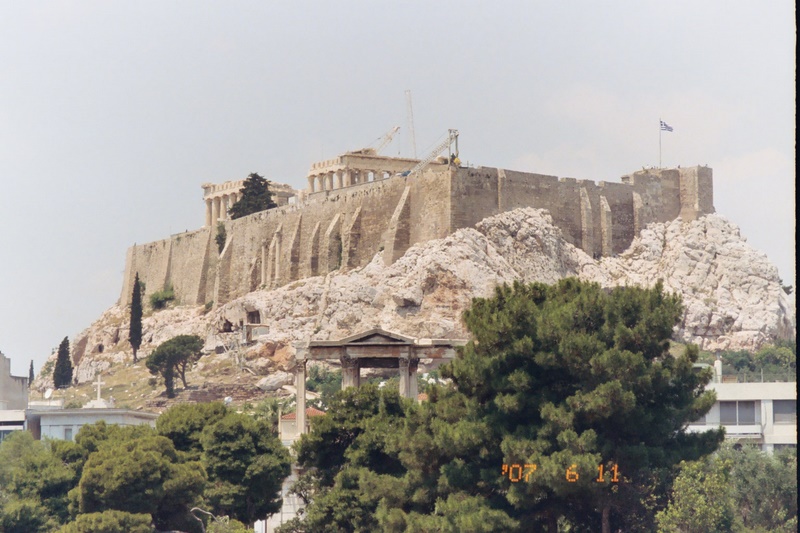
So, the first day of the vacation we, of course, decided to see the Parthenon.  We arrived at the Acropolis and entered through some gate at the foot of the hill.  From there, we had to choose to turn right or left.  The map we had (for of course this was before GPS as well) did not help with choosing the direction, and being mindful of the fact that most people would go right, we went left. 

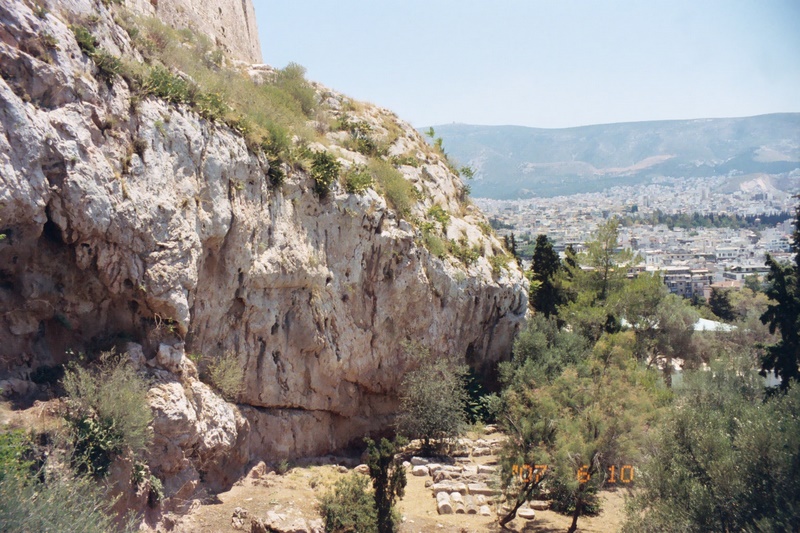
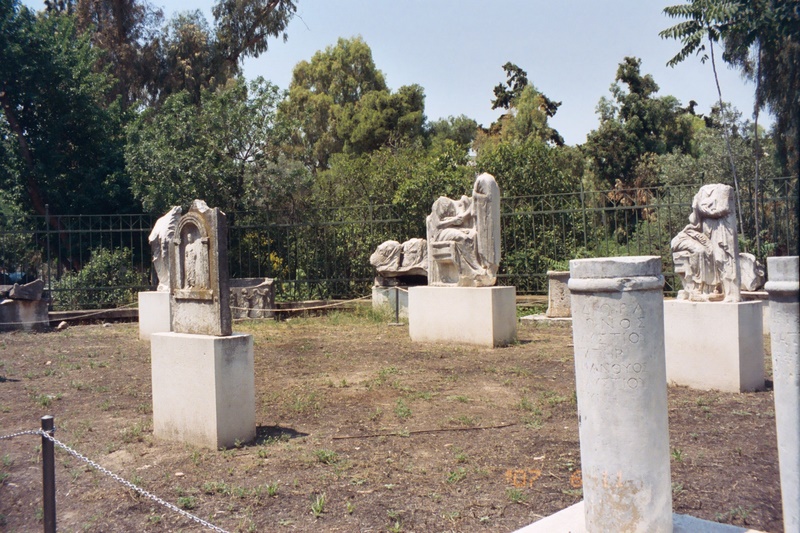
The trip up the Acropolis hill was literally a long and winding road.  Along the way, we encountered a couple of Russians loudly arguing in the shrubbery and predictably calling each other “goat”, giant turtles crawling around in a friendly manner, an ancient amphitheater, and many other similar curiosities during a two hour trek in 100 degree heat wearing entirely unsuitable shoes.  Approaching the entrance to the Parthenon, fainting from exhaustion and practically falling on the seller of water and ice cream, we realized that had we turned right when we first arrived, we would have been right around the corner from the ticket booth…

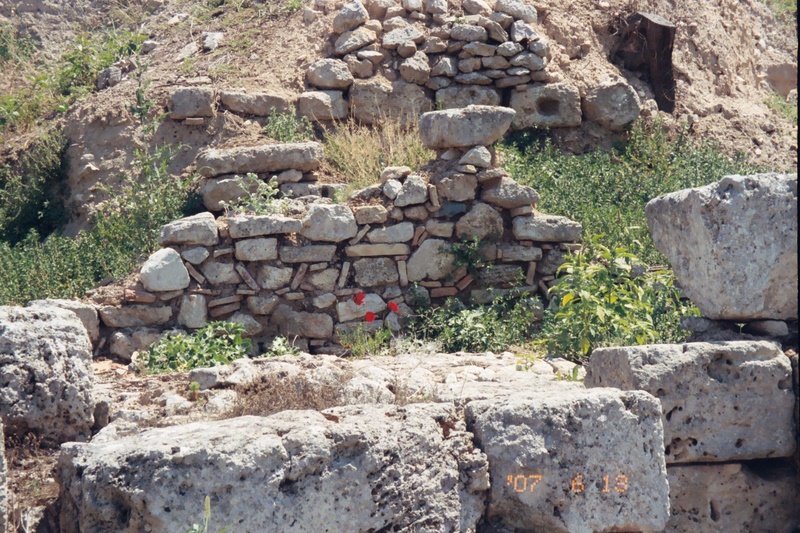
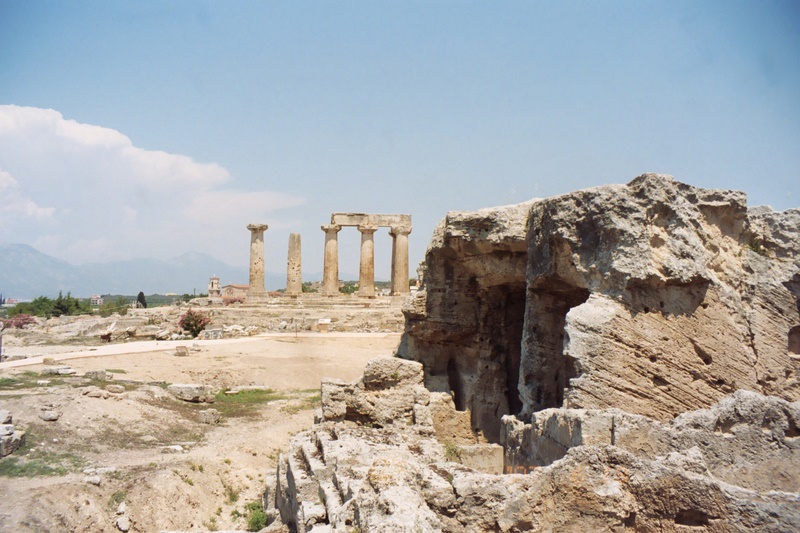
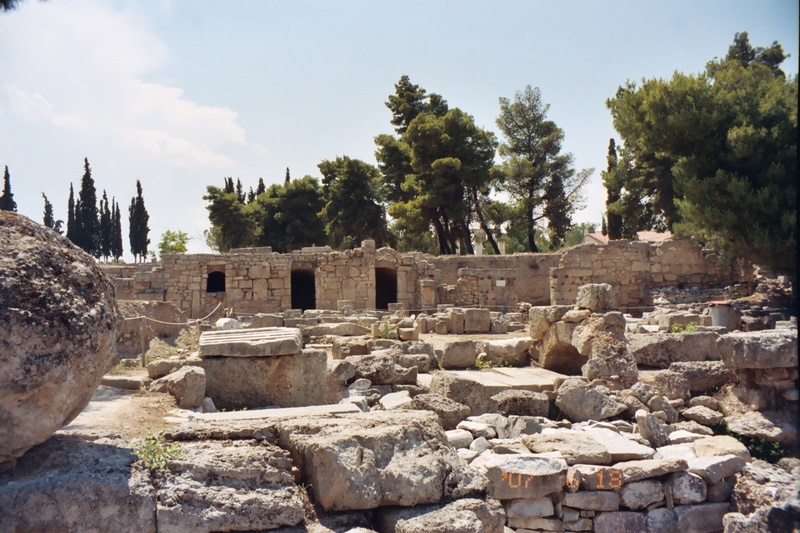
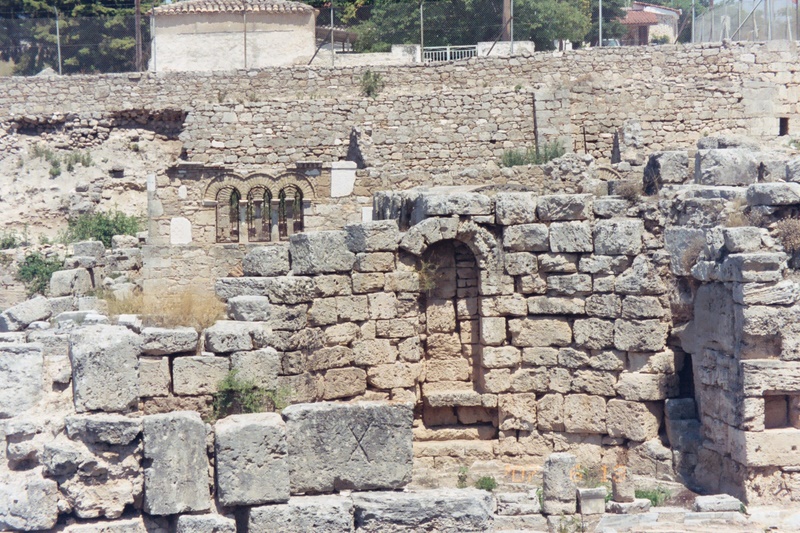
You would think we would have learned something from this experience—and you would be wrong.  A couple of days later we went to Corinth, determined to check out where St. Paul preached to the Corinthians.  We walked and walked, but nothing in town looked like the ancient Corinth of my imagination.  Surprise—we took the wrong turn yet again, as there is New Corinth and Ancient Corinth.  We did eventually find the latter, complete with the exact spot on which St. Paul once stood.  I mean, he must have—the place is not that big.

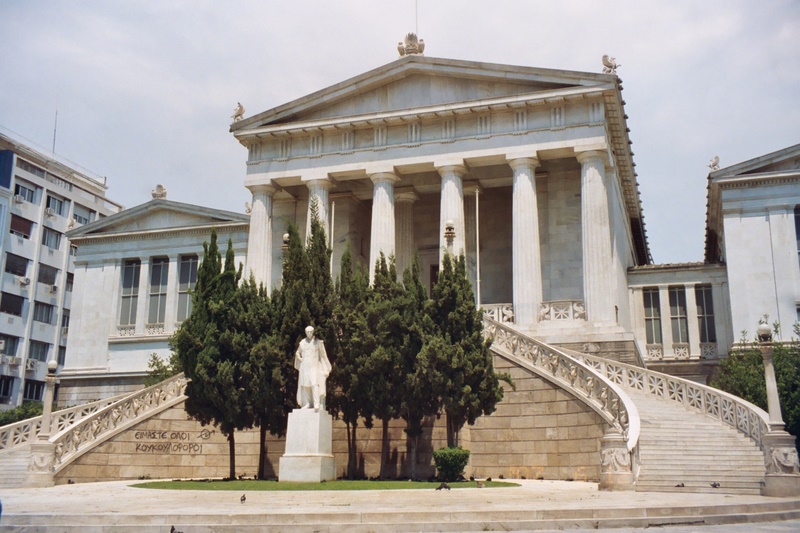
And finally, the one place where nothing went wrong during our trip was the National Archaeological Museum of Athens.  We spent almost an entire day there.  The highlights included the famous Mask of Agamemnon (quite an ugly mug completely dissimilar from the lovely drawings in my childhood book), kouros statues about which I also learned in childhood (clearly I was a very well-informed kid), and busts of all the Roman emperors in chronological order, which I tried to identify by using my extensive knowledge thereof acquired entirely from the Marcus Didius Falco novels by Lindsey Davis. http://www.lindseydavis.co.uk/

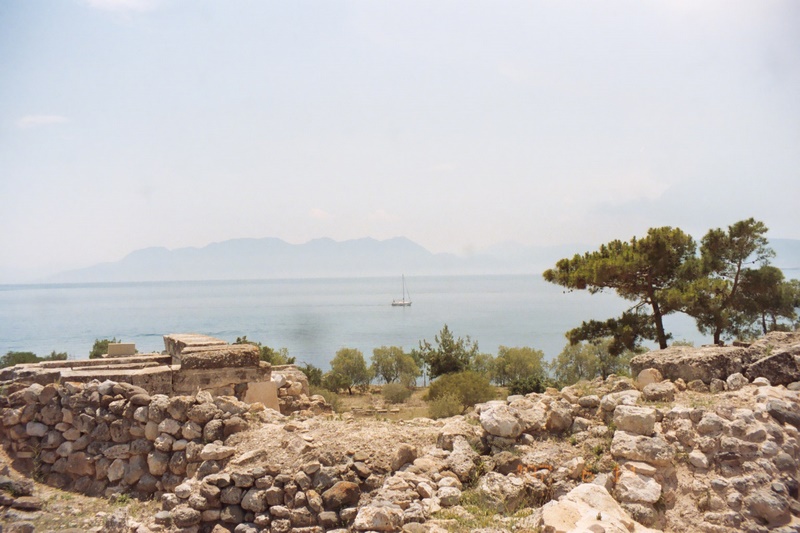
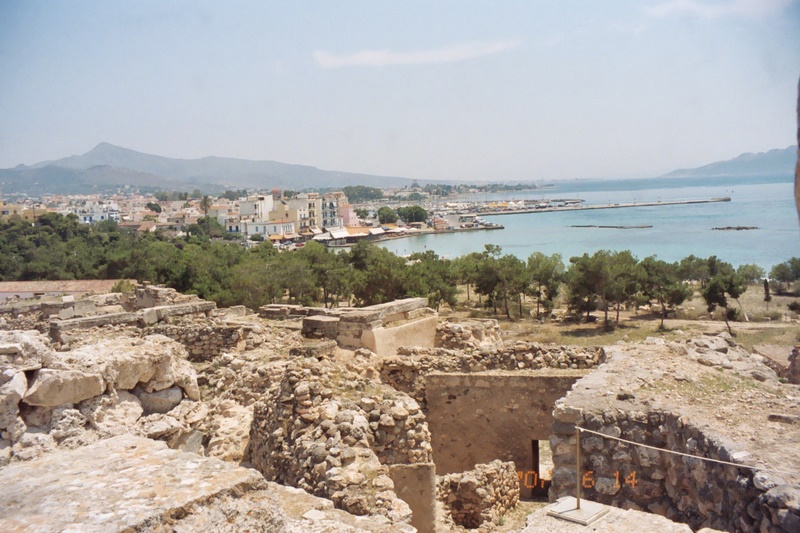
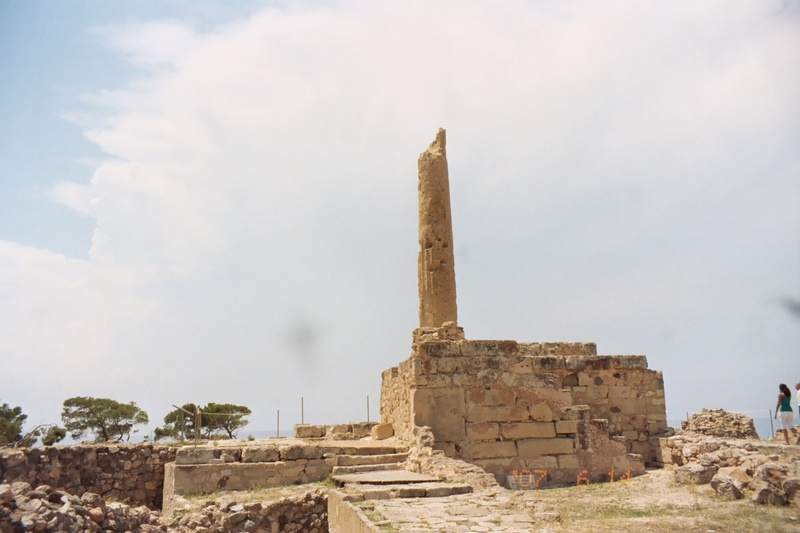
As for the famous Greek Islands, we did not visit them.  We did go to one, Aegina, because it is the closest to Athens, and a fast boat gets you there from the Port of Piraeus in about 40 minutes.  Maybe next time.