
I am not a total holiday Scrooge or Grinch. I do happily celebrate Christmas. In fact, my family’s most cherished and enduring Christmas tradition is to watch “The Muppet Christmas Carol”. We have not missed a year since it came out. I can recite all the words, just like I can to “The Lion in Winter” (another Christmas movie, though not part of our lore) and, of course, “Chariots of Fire” (entirely unrelated to this holiday, but I never pass up an opportunity to mention it). And a few years ago, I actually went to three churches on Christmas Eve: Orthodox Church for Eve of the Nativity service, Catholic Church because a friend of mine sang “O Holy Night” during mass, and Methodist Church for evening carols and candles. (This feat is not likely to be repeated)
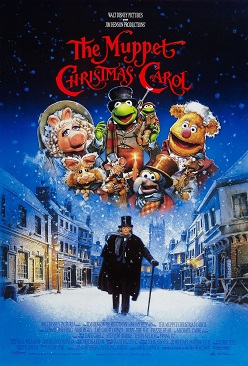
Back in the Old Country, all holidays were secular, some were political, and we only read about Christmas in classical literature. The religious aspect of it was merely a relic of antiquity, but we had the rest of it, the tree with all the trimmings, the gifts, Grandpa Frost and Snow Maiden, festive meal with friends and family, kids pageants, seasonal movies and, of course, “The Nutcracker”. It was just entirely conflated with New Year’s. It was the “New Year’s tree” and Grandpa Frost, bearing gifts, was joined, at a critical juncture, by Baby New Year. As a child, I had some vague notion that the pre-revolutionary holiday, while similar to our own, contained some forbidden mystical elements, but never understood why it was celebrated before the actual final day of the year—and what did people then do on December 31, the *real* holiday, if they already spent all of its currency the week before? I assumed it might have had something to do with the old Julian calendar, with its confusing two week delay, which was finally abolished in 1918.

Our first year in the U.S., my mother allowed me to open the gifts under the tree on Christmas rather than December 31, but strictly because I was a tremendous pest about it. She literally told me, “I hear in this country, they open the gifts a week early”! I took that as a very personal victory, and it was also the first time I heard that this unfamiliar holiday was still being celebrated, and in the New World no less. Who knew? We continued to do our tree/gifts/dinner thing on New Year’s Eve.
For the next decade, this holiday continued to elude me. American Christmas always seemed reserved for family, but it was also a part of the larger holiday landscape, so December 25 was really no different than any other vacation day until the big event—New Year’s Eve.
One time in college, I actually spent part of winter break with a Jewish friend. Her kind mother was so concerned that I was being deprived of some family tradition that she took me to a neighbor’s house to at least look at a decorated Christmas tree. It was nice, and I did not have the heart to tell her that the tree alone did not mean much, and it was a week early anyway.
On my drive home, late that Christmas Day, my car spun out on a highway in a snowstorm and ended up facing the oncoming traffic. Some kind man drove me home in my car, because I was too shaken up, while his wife followed in theirs. They kept asking if I had someone to be with me. I reassured them that I did. But, I lived alone in Michigan, my parents lived in Texas and were on a cruise to boot, my grandparents lived in New York and were visiting friends in Atlanta, all my friends were with their families, every single store and restaurant in town was closed, and this was before cell phones. I started watching TV, and it blew out in the middle of “National Lampoon’s Christmas Vacation”. It took me some years to learn how the movie ends.
The last time I did not celebrate Christmas was a tail end of a very rough year, probably one of the Bottom Three in my life thus far. My personal life was unsettled, I was fed up with living in Manhattan in a high-rent closet where cockroaches paraded by my futon every morning in search of sustenance (but the joke was on them, because I kept everything, including silverware, in a refrigerator that they have never figured out how to breach), and fed up with school after attending it non-stop in various form for almost two decades. I still lived alone, but finally near family, which was the one saving grace in an otherwise dark period.

My mother inexplicably sent me a small live evergreen tree, which was incongruous in my tiny apartment, and incompatible both with my hectic lifestyle and black thumb. Predictably, it did not survive the season.
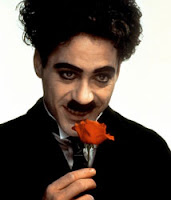
I cannot remember now what depths of despair made me summon my grandparents all the way from Brooklyn on Christmas Day to my tiny studio. We first went to see “Chaplin” at the movie theater. Robert Downey Jr. was not the action star he is today but a handsome young romcom-ish actor, before all his troubles, and way before he successfully overcame them. The film was beautiful, and he should have gotten the best actor Oscar. I still think of it as one of the biggest Oscar snubs in my lifetime. Back at my place, grandmother fried up some liver and onions on my two-burner stove, and somehow all three of us managed to squeeze in and enjoy both the feast and the company, keeping the window open because the radiator emitted unrelenting heat—but I lived on the ninth floor, so it was safe. If this is not a quintessential immigrant Christmas in New York, I do not want to know what is.


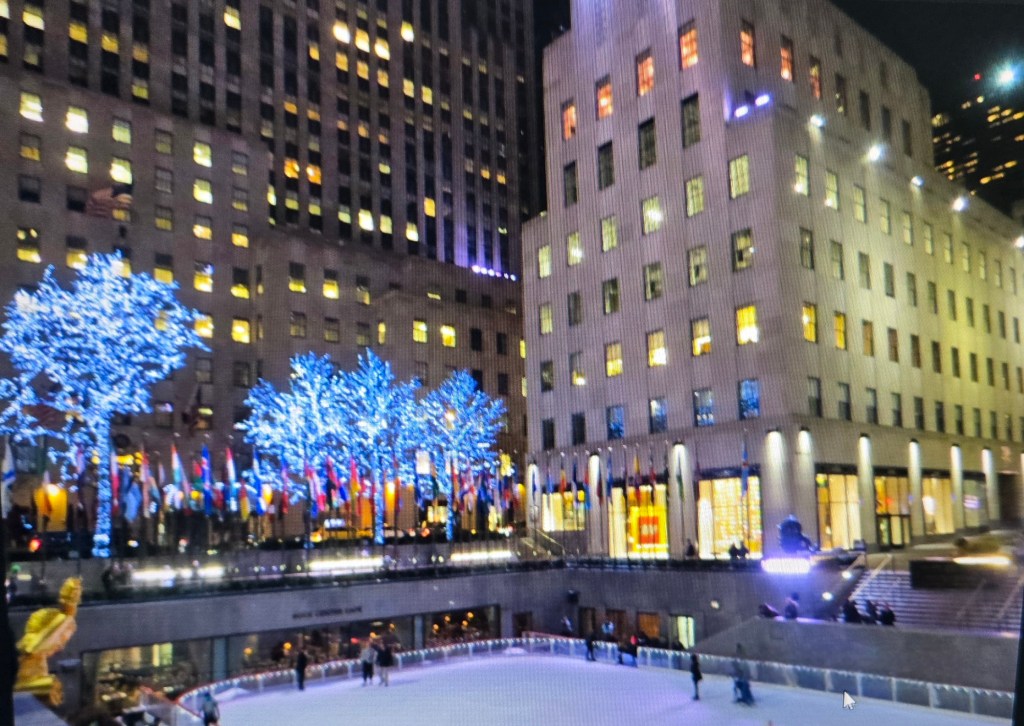
Through the years, that day has acquired the soft patina of nostalgia, but I do know that it looked and felt less like “Home Alone 2” than “Fairytale of New York”, for this was a time before Disney moved into Times Square, and you could literally smell Manhattan Valley, the upper part of Upper West Side, as soon as you crossed into the 90s.
I did not record this particular day in my diary, but sometime before the end of that year, I wrote about how much I hated my life. Within a week, a new year dawned, and it turned out to be one of the Top Three for me. It just goes to show, the darkest hour is just before dawn.









 Old Lady Writing