
I meant to add this as a follow up to Part I. Like for Rose Tyler, it is certainly an unexamined subject for me. I never had a father. Well, strictly, it is not true. He has always existed in the ether, and walks the Earth today.
Here is how we first met. Back in the pre-Afghan invasion days, before the Soviet Union reinstituted the draft, young men were only conscripted if they were not in college. Those pursuing a higher education were exempt from the brute service. My father failed out of college and was immediately snapped up. One fine day during my fifth summer, I was told that my father was coming home. I was made to wear a hideous sleeveless blue dress with pink trim, and have not forgiven my mother for it to this day. It was made in Egypt, and had a head of Nefertiti on the inside tag. It freaked me out, and I hated the dress because of it. I also hated how my bangs were pulled back in a bow. It seemed a lousy first impression to make on my father.
He arrived with a bouquet of flowers for my mother, and I recall turning away from a hug. He was a stranger, and it was all completely embarrassing. I lived with my grandparents, and young men were scarce in my world. He was probably about 25 at the time.
I think my parents were only together for that one summer. Several memories I have of that time are as follows:
Living with my other grandparents. They had a two bedroom apartment. It was a standard and familiar layout of the times. I remember they had a vase on the floor with cattails. I must have had the urge to pick at them. I probably did. My other grandmother, who, as my father later confirmed, disliked my mother and her family (and me, I certainly felt so), was ironing a beige dress with white lace that I had and ironed out a crease on the front. It was the design of the dress, and I protested, because “my” grandmother would not do such a thing. She responded that she was also a grandmother of mine. Whatevs, lady. I never believed her, and she never really was. I addressed her with the polite “vy” instead of the familiar “ty”, which irritated her. I do not even have a photo of her. I would not know her in this life or the next. She died just a few years ago.
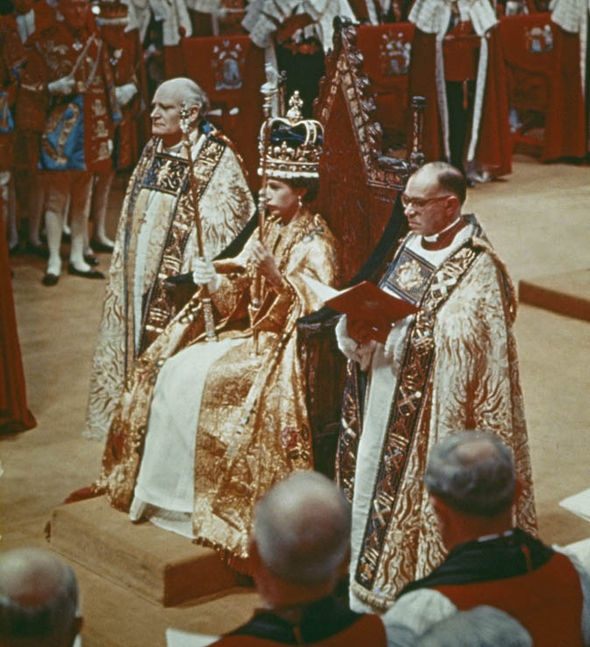
Toys. My other grandparents presented me with some cool toys. There was a set of amazing dollhouse furniture, which I regrettably did not treasure. Of course, it would have never made it to America anyway. What did was an old Viewmaster which my father must have had as a child when his parents lived in India. It had some amazing Western shows, such as a three-disk set of “Bambi”, “Three Little Pigs”, “Little Black Sambo” (it was a long time ago…), coronation of Queen Elizabeth II, lots of brightly colored parrots and one monkey (there is always one monkey), and incredible views of faraway Asian lands, particularly Mount Fuji and the Taj Mahal. I brought it frequently to show and tell in my Russian school. The collection made it to America but not past high school. When I went away to college, I neglected to supervise, and my mother, predictably, lost it. It is a damn shame. Damn shame.
Aunt. My mother is an only child. My father has a younger sister. They seems to have retained a close relationship to this day. She was a college student at the time, and he encouraged me to shake a fist at her and yell, “We will show you, students!” Only recently did I learn that this was because of the famous Shurik the Student movie, “Operation Y”. My father must have been a fan. My aunt Tanya seemed a benign, but nondescript, presence. I remember almost nothing about her. My father was allowed to name his newborn baby sister Tatiana, which is apparently his favorite name. He suggested it as a name for me, but of course my mother had to step in without something less “common”. It appears that my father did not get a vote. He managed to prevail with my sister, who has a different mother.
Car. My other grandfather had a car. It was huge and green and white, but maybe it wasn’t either. My father must have known how to drive, because I recall sitting in the front, which is quite illegal for very young children, Soviet Union being no exception, and he admonished me to slide under the dashboard if we saw the road patrol out in the country. Great parenting right there!

Dacha. My family never had a dacha, a “beyond the Volga” country home, because my grandfather worked all the time. It was not that my grandparents could not afford it, but more that they did not want to be bothered with working the land. Besides, pretty much everyone we knew had a dacha. My other grandparents’ dacha was a two story construction, which was very exciting. The second story was some kind of a loft where my parents slept. I wonder if that is what caused my affinity and longing for lofts. I have never lived in one. My father’s paternal grandmother was still alive at the time. She seemed ancient. She was dressed all in black and sat on the steps of the dacha and yelled at me whenever I ran in or out of the house. I have no recollection of her being elsewhere, just on the steps of the dacha.
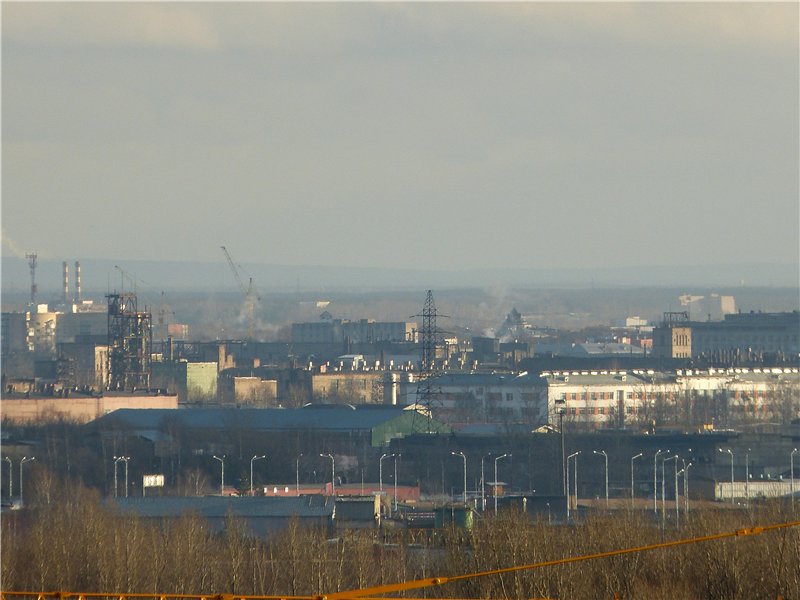
And then there were the pranks. Tall, handsome, fair, young, my father was not really a parent, but a fun older brother type. One time we came to pick my mother up from work (he was not working—not then, not later). My mother worked at the Synthetic Rubber Plant. There was a mean old Soviet woman guarding the exit. It was a secure facility, and those without authorization could not enter. I saw my mother walk toward us down a long hallway. Father urged me to run to her, past the mean woman—and I did. It was, of course, unimaginable, but it was fun!
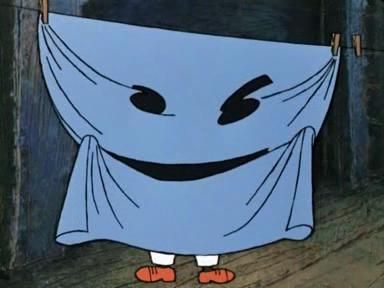
Another time we were waiting for my mother to come home. My father came up with a basic, but ballsy, plan of cutting out eyes in a sheet, putting me on his shoulders, and scaring my mother as soon as she entered the apartment. It was hilarious. He was so much fun!
I never had any grievances against my father. He was—and, I am afraid, remains—a stranger, but the memories are mine and lovely…


 Old Lady Writing