Tooth Fairy

Last year, I lost my favorite tooth.  I mean, I did not misplace it, nor did it fall out.  It was surgically removed.  This tooth, #6, was my first root canal and my first crown.  My own grandfather put the crown on it, made from a melted down earring, and it lasted for decades.  Eventually, the crown wore out, and then the tooth itself.  There was even another root canal in the mix, so suffice it to say, #6 and I were bonded by hardship.  On the day when #6 and I finally parted ways, the nurse offered me nitrous oxide and oxygen, and how could I say no?  I welcome any option that results in less or no pain for me.

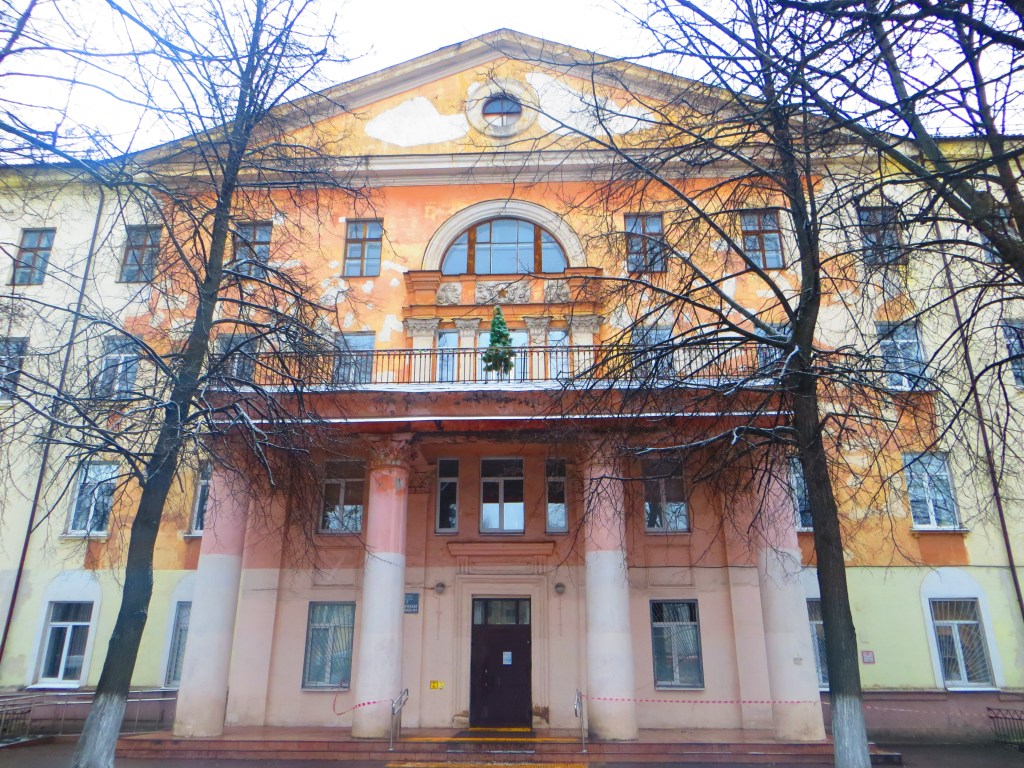
Jubilee Square. Motorbuilders Palace is on the left. The clinic is on the right.

As I was dutifully breathing in and out, an unbidden memory came to me, of me and my classmates trooping down Lenin Avenue to the Jubilee Square (the one with the Motorbuilders Palace [https://oldladywriting.com/2020/08/18/valor-and-glory-of-the-motorbuilders/].  In my mind’s eye, I saw the golden Russian autumn sung by poets, maple leaves everywhere, the only melancholy season of an ever-sunshiny year.  The school year has begun long ago enough to be a bore and a burden, and the time has come for one of the most unpleasant organized events of the Soviet school system—the dental checkup.  It is about a mile from the school to the clinic—the longest mile.  If ever I felt like a lamb to the slaughter, this was most certainly the time.  Usually, I got some kind of exemption, being raised by dentists and being dragged to the children’s dental clinic by my grandmother on my own free time, but that day, I was all out of aces.  It is also possible that this was shortly after my grandmother took me to the clinic and I escaped, bolting out of the torture chair and making it halfway through Jubilee Square before I was captured (traffic in those days was unimpressive, but not nonexistent—I was absolutely in danger of being struck by a bus, a fate still preferable to any dental procedure).  I have to add, individual cabinets are a Western luxury.  In Soviet Russia, an army of Orin Scrivello clones with their whirring drills were leaning over screaming kids in one big room in a fog of ether.  

I have a lot to say about growing up in an apartment where our kitchen doubled as the prosthodontist’s office, but that is another story for another time.  But one thing I know is true, and that is that our home never smelled of ether.  Maybe grandpa had no access to it.  Maybe the smells of grandma’s cooking overwhelmed.  Regardless, the scents of home were not medicinal.  And I know this because had I been immune to these odors, I would not have been so jolted into panic each time I entered a Soviet dental clinic and been positively engulfed by that distinct piercing stench.  A mere whiff was enough to activate the fight-or-flight instinct.  It was always flight, because fighting presumes staying, and there are no fools.  Flee, always flee. 

The unintended consequence of my recurrent, determined, and frantic rejections of the most feared dental procedures was that my grandmother gave up (a precursor of things to come—a scythe came upon a stone, as in, she met her match when it comes to wills of iron), leaving me at the mercy of the school system.  And so began the long march.

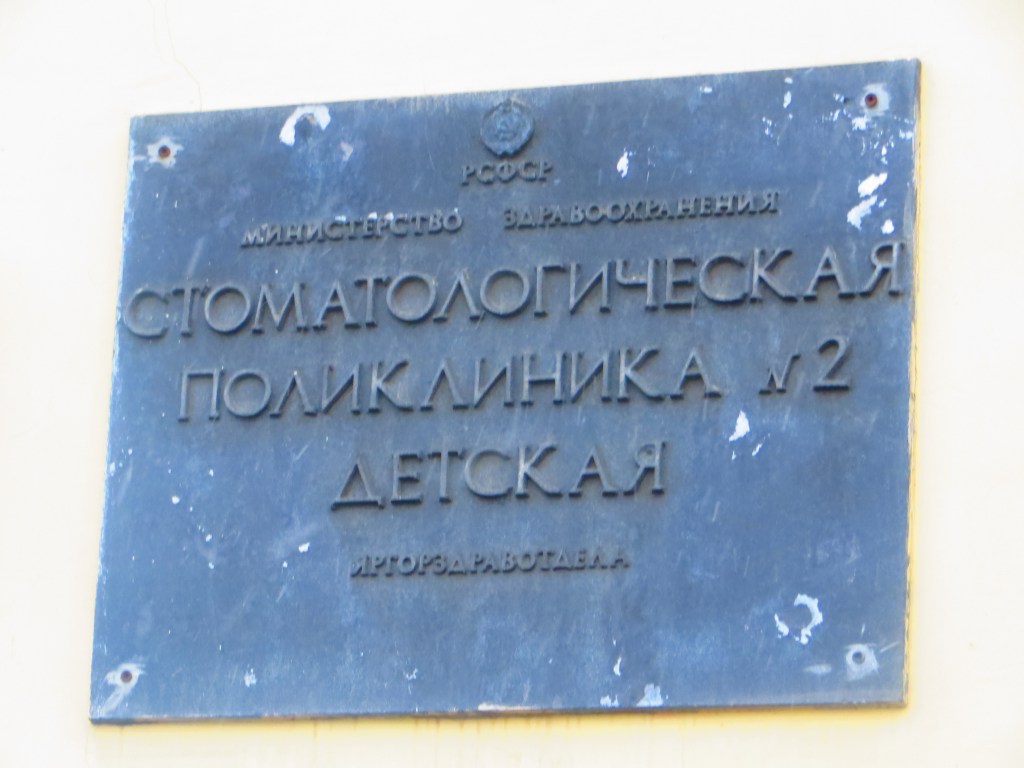
The clinic where my grandmother worked. The was not just dentistry here, but other tortures as well. To be continued…

I always think of that BBC commercial, “They say one’s cows are mad, they say one’s dentistry is diabolical” when I think of the dentists of my childhood.  My grandfather did not work with children and was overwhelmingly busy with his relentless stream of patients, and my grandmother—well, I did not trust her.  More specifically, I did not trust in her not taking care to not inflict pain. (Well, that was a lot of “nots”—also emblematic of my childhood). 

That day, which my classmates and I anticipated with varying degree of fear but with unanimous distaste, was the source of much scheming.  While most of them were fairly resigned to this grim fate, I had one accomplice whose fear of the dentist actually exceeded my own.  His name was Max, and he was a freethinker.  I am told he eventually became an alcoholic, a fate not only unsurprising but entirely predictable given both his environment and spirit (no pun intended).  But when I knew him, ages seven to 12, he was a shrewd kid with a profound dislike of conformity and authority.  He was non-confrontational but steadfast in his avoidance of anything extra.  He was the epitome of “quiet quitting” decades ahead of its time. One of his catchphrases was “And the lesson is going on”, whispered to me whenever a teacher would get distracted and go off on a tangent, meaning that while time is getting wasted, no work gets done, and that is its own reward.  Max never got any exemptions from attending mandatory events, and yet he never attended them.  He just did not show up. He was reprimanded, chastised, shamed, and accused of being an “individualist”.  He gave zero you-know-well-whats.  He was, of course, a member of my Link. [https://oldladywriting.com/2023/11/11/scrap-metal-fiasco/]

Max and I conferred and confirmed that we were not going to the dentist, with the class or without.  Ever.  We did not have the audacity to just not show up to school that day—that seemed just too brazen, and we were not hooligans.  We were conscientious objectors.  And so, as the column of the condemned dragged itself along that familiar tree-lined alley, led by our fearsome homeroom teacher, the grammatically and socially challenged instructor of algebra and geometry, the two of us simply ducked into the labyrinth of yards off Lenin Avenue.  Without any regard for consequences, we ran for our lives.  We were not good friends, merely coconspirators.  We quickly went our own way, but for one brief shiny moment, we were bound by the shared taste of complete and utter freedom.

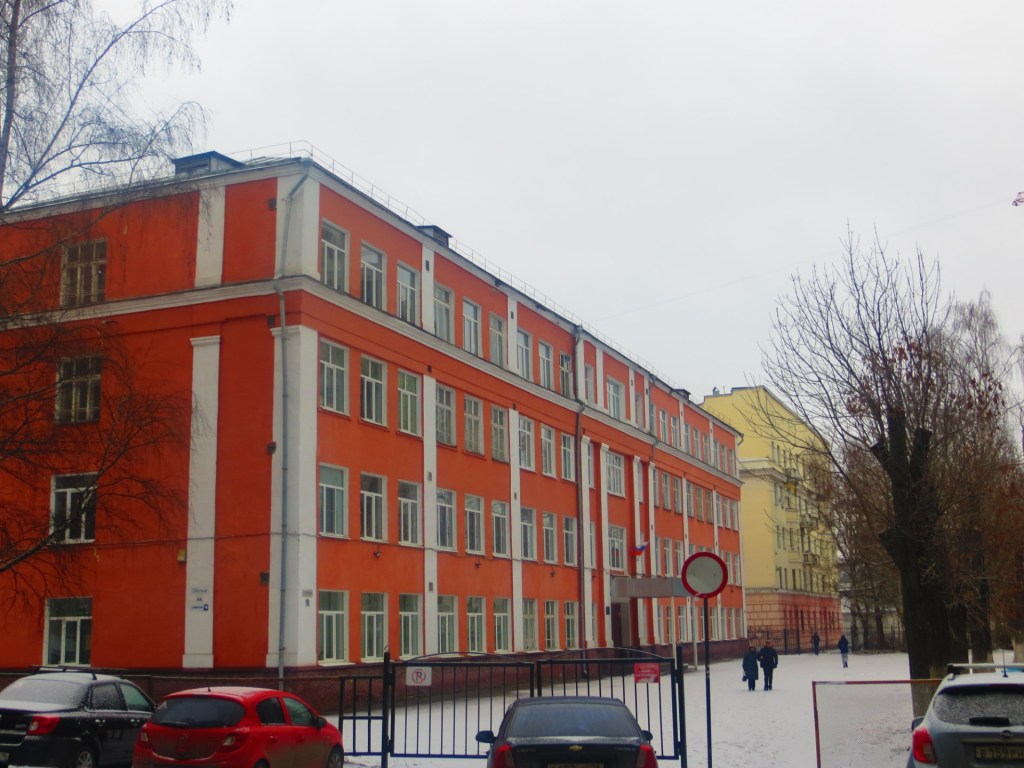
Lenin Ave. We escaped between those yellow buildings on the left. Photo taken in January; alas, I have no autumnal images to share.

And all these many years later, in a dental surgery under the calming influence of gas, it all came back to me, the sepia colors and the smell of fall leaves, the voices of my young comrades, the distinct flavor of childhood of unlimited future and potential, and the feeling of my long ago and far away home deep in my bones.  It never ceases to amaze me how memories can be summoned by the most unlikely agents and at the most unlikely times.  And how joy can be found even in the middle of pain.

Papa Taught Hebrew in Harbin

My grandmother used to tell me stories about her childhood, in the 1920s, which were both exotic and relatable.  She was only 45 when I was born, which seemed ancient to me, of course, but now I know that the half century mark is prime time for reflection and reminiscing.  We are unreliable narrators of our own lives, and the charm of her mischievous and adventurous early years in the small provincial town on the Volga remains the biggest shared treasure of our fraught relationship. 

Now that I am the age that she was when she was raising me, I realize how memory shifts as time goes by.  In her telling, she was a spirited and inquisitive child that was frequently in trouble with her humorless but loving parents.  The irony that these were the qualities she most deplored in me escaped me then.  I also bought into this portrayal of her parents for the time being, while years later it came to me that perhaps the character trait she most chose to emulate—grim rigidity—was the least praiseworthy attribute of this couple.  They never seemed quite real, just shadows of semi-forgotten ancestors, even though less time separated my childhood from them than from today.

I recently read “People Love Dead Jews” by Dara Horn.  In this book, which had me both nodding in agreement and holding my breath, I came across a chapter about the Jewish community in Harbin in early 20th century.  I do not know if more is written about this place and time in history, but this was the first time I gasped in recognition:  “Papa taught Hebrew in Harbin”.  For among grandmother’s stories was always this nugget: her father spent several years in Harbin, teaching Hebrew to children while his brothers were running a business there.  This has always been just a naked, stand-alone fact, and when I was a child, it always seemed like enough information.  Great-grandfather, whom no one in my world besides grandma and her brother ever met, for he died before The War and before she left her hometown that neither my mom nor I ever even visited, was always described as a stern disciplinarian and seemed sufficiently boring to not merit additional investigation.  But grandma’s own childhood memories of her father speaking Chinese to make the neighborhood kids laugh echoed my own delight when her brother, my beloved great uncle, would pretend to speak Chinese to me.  I knew he was faking it, but he was so delightfully comical!

I finally learned that this interlude in great-grandfather’s life was not random, as I always assumed without additional thought.  Fortunately for me and mine, his ultimate fate was arguably better than that of many of the people he would have known in Harbin—and that is saying a lot, considering that he returned to his hometown of Lyozna, Belarus [1] (at some point before getting engaged to my great-grandmother on June 12, 1919 in Vitebsk[2]), got married and had two children, lived through the darkest years of Stalinism, and died before he was 60 in 1940.

I have been an immigrant since I was a teenager.  I have traveled.  I spent two summers in Europe, and I have been to China on a work trip, to the beautiful and sophisticated Shanghai, which is actually nowhere near Harbin and has a completely different history.  Every day of my professional life, I talk to people who have, at a minimum, spent several years in a foreign country.  Until now, I have not thought of this remote, unknown man’s journey, his years (how many?) in a much colder climate, in a completely different world.  I never imagined that he had his own “stranger in a strange land” journey.

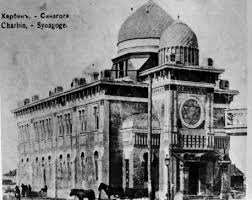
Synagogue in Harbin

As a child I did not know enough about the world to imagine China at the beginning of the 20th century.  I never gave a single thought to how great-grandfather traveled so far—and back—what kind of business these nameless brothers of his had, why and when did he return to Belarus, eventually making his way to and settling in Russia proper. My grandmother was not a person who did not talk about the past, but I do not know how much she knew about that period of her father’s life.  Somewhere along the way, there was some falling out with these uncles that severed the family ties for all eternity (they were not welcome to attend their brother’s funeral).  It might have been related to this business in China, but grandmother’s own mother never told her.  In those days, people did not ask; children did not question their parents.  It is nearly impossible for me to understand the respectful yet reserved, affectionate yet distant relationships of that bygone era.  To the families of these great-uncles, whoever and wherever they are, my family is the missing link, the lost tribe.  Do their descendants remember today that there was another brother, another uncle?  Is this Harbin interlude a part of their family lore?  Sometimes I lament the loss of family memories to family feuds on top of the already precarious and unreliable way history was treated in the Soviet Union.  Other times, I concede that maybe it is only natural that the lives of ordinary people do not survive generational memories.

Dara Horn’s book gave me an unexpected glimpse into my great-grandfather’s unknowable life.  There is a connection that survives time and space, and a memory that is a blessing.

 זיכרונו  לברכה  אַבְרָהָם


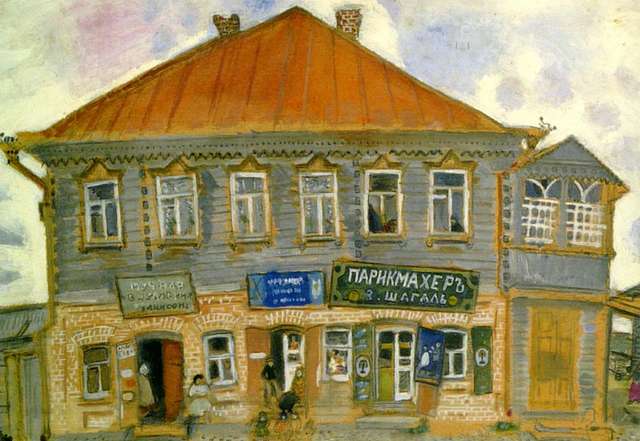
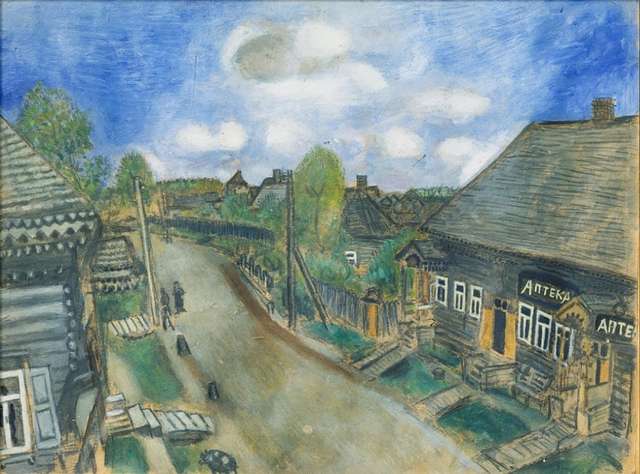
[1] The birthplace of Moishe Shagal, aka Marc Chagall.  I wonder if they knew each other?  They would have been contemporaries. 

[2] The only exact date in this narrative, because my great-grandparents’ engagement announcement somehow survived time and distance, and I treasure it.

Never Not in a Book Club

I have mentioned before how much I love reading [https://oldladywriting.com/2021/04/03/so-many-books-so-little-time/].  It is generally a solitary activity, unless one is in a book club.  The need to share thoughts, ideas, impressions, to laugh and maybe even cry together over a story is so basic and valuable to me that I never not want to be in a book club.  Even the worst book club, in my experience, cannot be all bad because, well, books!

Book clubs, I have been in a few.  Initially, I thought they have to be run by libraries, for that is how I first got into one.  We moved, I found a new library with a new book club, we moved again, and so forth.  I loved the discussions, but eventually tired of the transient nature of those institutional associations.  The last one, at the library in our current town, was a lunchtime affair.  I was the only one who had to make an effort to come from work every month; everyone else was decades older—with the expected outlook on life.  Conversation was decent until the librarian assigned Kevin Boyle’s “Arc of Justice: A Saga of Race, Civil Rights, and Murder in the Jazz Age”.  As other members spent MY lunch hour lamenting the collapse of property values in Detroit thanks to The Great Migration, I fled never to return.

I had a great time forming a book club with a couple of gal pals.  It evolved—or devolved, depending on your viewpoint—almost immediately into an Eating and Drinking Club.  The books were entirely incidental to the social aspect.  At some point, there weren’t even any books.    We clung to the pretense:  Book Club goes to the movies, Book Club gets Thai food, Book Club visits speakeasies, Book Club actually tours a library.  Eventually, the Eating and Drinking Club grew into Weekly Beer Night, and it happily continues as such to this day. 

And yes, you know it’s coming, my tale of being in the worst book club ever–The Rich Ladies’ Book Club.  I was invited by an acquaintance, so in my defense, I did not know that books alone would not provide enough commonality or shelter within the group.  In their defense, I suppose no one expected a working class interloper or was prepared to deal with one.

There were some positives, such as everyone taking a turn selecting the books, and the books were generally wonderful—that is to say, normal book club fare.  The Rich Ladies did not always read them, but I did, and greatly enjoyed.  The overwhelming negative was the steady stream of one-up-woman-ship.  There were endless talks of the cost of kids’ hockey training and travel (while I wondered when did hockey become rich people’s sport and remembered how back in the Old Country any frozen puddle served its purpose) and other sports.  My oldest was already involved in theater, which did not impress anyone; my invitation to a community theater play was met with baffled murmurs. That is your child’s extracurricular activity?  Instead of expensive sport?  How very unusual…

I was always vaguely feeling like I was in a badly scripted parody of “Mean Girls, the Pre-Menopause Years”.  One time, everyone effusively commiserated with one of the Rich Ladies, whose interior designer’s unavailability drove her in desperation to buy a mass-produced lamp at Pottery Barn (while I have been generally satisfied and occasionally thrilled by the offerings at Target).  It was a calamity to be sure, but kudos to the resourceful lady of the house who braved the common throng and saved the day—and one could hardly tell that the item was not bespoke.  Well, as long as one did not examine it closely.

The proverbial pièce de resistance was the time I brought a bottle of wine, which was an expected offering at each meeting.  It was—wait for it—white Zinfandel, and from an unknown label to boot.  It was from a local winery owned by someone I knew, so I thought that was a nice touch.  Gasp!  If there was any doubt before, this misstep immediately outed me as an unwashed mass.  The hostess, a woman with a carefully cultivated stereotypical Gallic aggression I never actually encountered in France, insisted that I can only drink the wine I brought, being that it was not fit for The Rich Ladies’ consumption.  Not wishing to cast their precious nectars before such a swine, they shared their wine bottles; I drank some of mine and took the rest with me (of course the hostess politely but firmly requested that it be removed from her home).  To be fair, this was before I learned that what I really prefer is a robust red.  But you know what?  If I had to do it all over again, I would not only bring white zin—I would bring a box of it! [I am deliberately not posting any photo of wine in a box, because I do not want to shame any wine maker or drinker thereof]  Had I been younger and less secure in my proletarian character, or had The Rich Ladies’ snootiness been less absurdly shallow, I might have felt worse.  But as it was, I just never returned to their exclusive club.  I am sure a sigh of relief was breathed on both sides.

One unexpected blessing of The Plague is my current book club, courtesy of bookclubs app and Zoom technology.  There is a core group of four, with occasional drop-ins.  We are friendly, but do not socialize outside of book club—not the least reason for which is that we live all over the country.  We have spirited and deep (if I do say so myself) conversations about the books we read, and occasionally go off on tangents.  Some months I am reluctant to log in (for I am in charge of technology), because I would rather vegetate on the couch, yet I inevitably emerge refreshed, encouraged, and motivated.  As much as life has taught me that all things come to an end and that change is inevitable, I sure hope this remains a constant for as long as possible, and that I am never not in a book club.

[What follows is the list of books read by my book club that I ranked 5 stars on Goodreads. Among these, I particularly recommend “Detransition, Baby” (no spoilers–but read with an open mind), “The Cider House Rules” (not new, but a modern classic, heartbreaking yet heartwarming), “Station Eleven” (I read it before the plague, and it haunted me until the unimaginable happened, and beyond), “The Midnight Library” (if you ever wondered, like me, where the road not taken might lead), and “The Sign for Home” (one of the most unique, thought-provoking, life-affirming, funny, and touching stories I have ever read–and the author, the wonderful and talented Blair Fell, Zoomed into our meeting and was an absolute joy to meet!)]

Fortress By the Sea

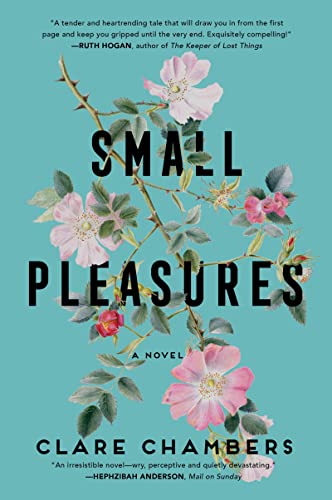
A few years ago, I updated my Vacation Bucket List.  I am not nearly as adventurous a traveler as people think I am.  I like castles, cathedrals, and art museums.  After I saw Raphael’s Sistine Madonna at the Dresden Gallery, a moment for which I was waiting almost my entire life, I was temporarily adrift.  It was the apex of my dreams.  I even had to ask spouse for suggestions on where we should go next, which is how we ended up at Oktoberfest (worth every crowded, beer-soaked minute, and a story for another time).  I needed to brainstorm.  Many of my travel ideas have been known to come from books, and I have followed the footsteps of some favorite characters.  In my adult life, none touched my heart more than Uhtred of Bebbanburg, the imperfectly perfect hero of Bernard Cornwell’s Saxon Chronicles.

All his life Uhtred was pining for his fortress by the sea.  I have been pining alongside him, from the first book which I read in 2009.  He regained Bebbanburg in the 10th book, and after that, the last three books were superfluous and I do not remember them (although that might be partially because my shorter term memory is declining with age).  But really, much like “The Odyssey”, the quest was the story.  All the other plotlines were just there to support this lifelong journey of Uhtred back home.  From the beginning, I could identify with his longing.  I always felt that I was essentially a female, modern-day version of Uhtred.  There are some subtle differences, mainly related to the sword-wielding, but basically, I am Uhtred.  His feeling of yearning for his lost ancestral home defined him and gave his life purpose, and I identified with that completely.  I spent so much time listening to Uhtred wax nostalgic about his ancestral fortress by the sea, I had to see it for myself.  I had to see the sight of the happy ending.

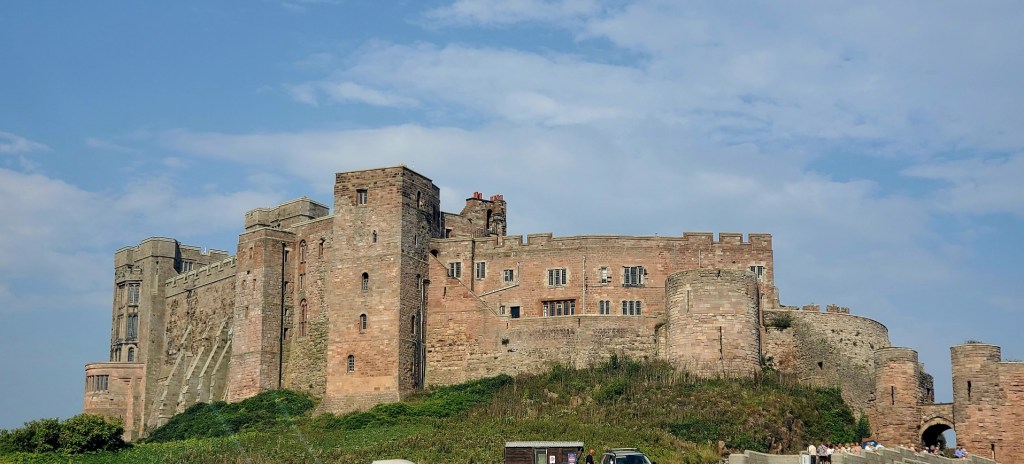
Bebbanburg, under its modern name of Bamburgh, is in the very north of England, in Northumberland, and is much closer to Edinburgh than London.  Once that simple geographical equation became clear to me, the rest was easy.  I planned a trip to Glasgow, because I have already been to Edinburgh once before, and Glasgow, from where all the rugged and rogue BBC policemen seem to come, was as yet unexplored and still a mere couple of hours from Bamburgh. (Yes, where I come from we measure distance in hours).

An honorable Bucketless mention goes to my valiant effort of driving from Glasgow to Bamburgh.  Even in Europe, trains do not reach every corner of the continent, and one car ride is always simpler than two trains, a bus, and a cab.  I will not lie, anxiety was high, and even as someone to whom driving is as natural as walking, I was by no means sure that either the car or its passengers will emerge unscathed from this trip.

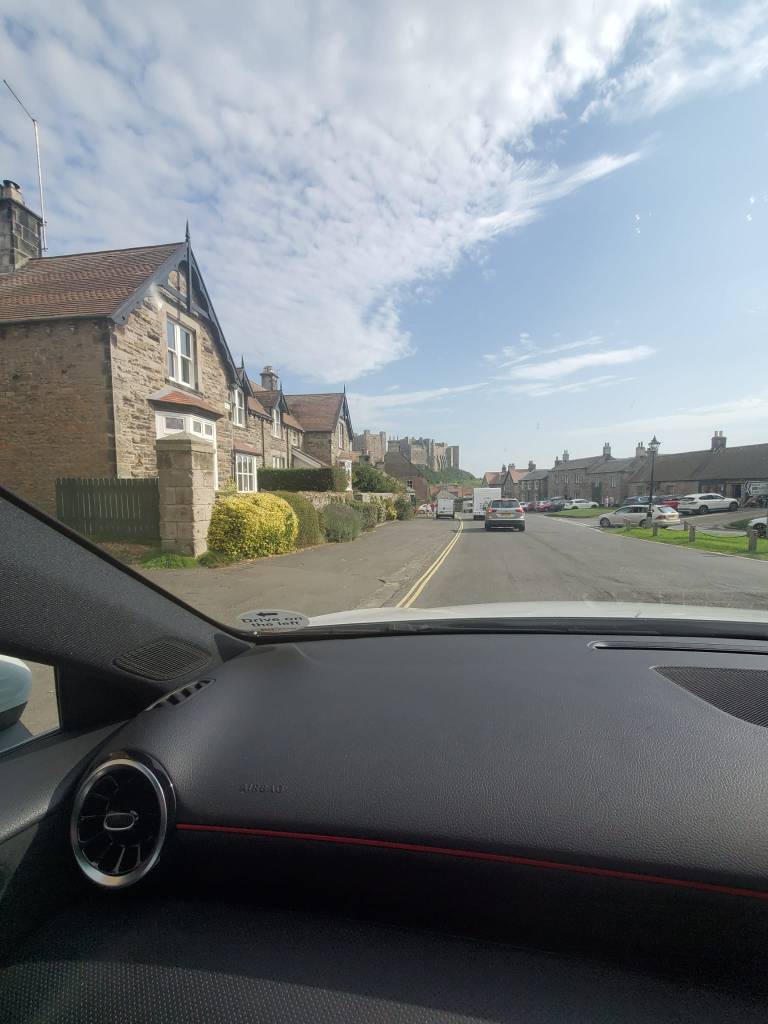
And yet we did.  I never, ever, not in any demented fantasy, pictured myself driving on the wrong side of the road.  But once I did, I realized that the wrong side of the road is not the problem, you just move along (and the helpful “Drive on the left” sticker became a mantra I constantly whispered to myself).  It’s sitting on the wrong side of the car, with all that unaccustomed space on the left where nothing but the door should be, that is the real issue.  It is difficult to stay within the lines and not veer to the left.  If I had a continental car, it would have been a piece of cake.  In any case, no one got hurt, and I never want to do it again in this lifetime—even though I am quite inordinately proud of having done it.  But seriously, it was not enjoyable at all.
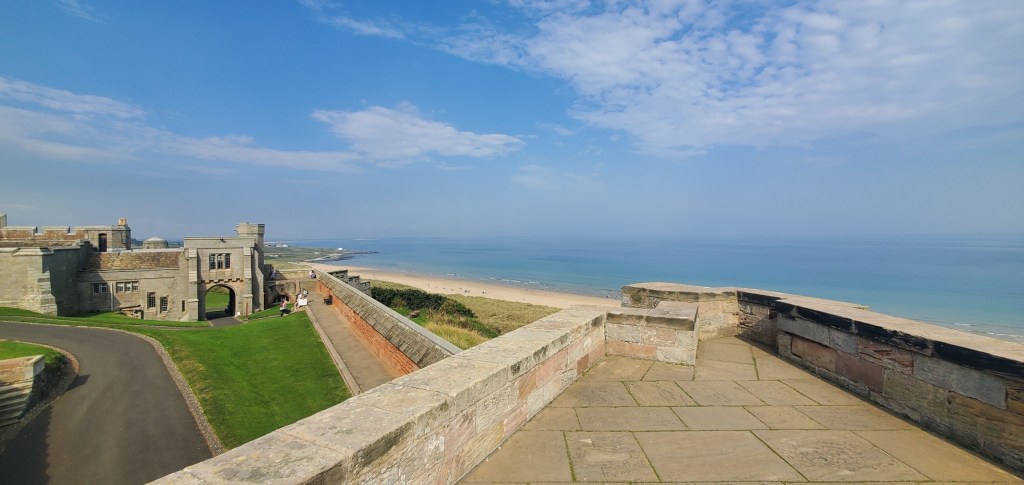
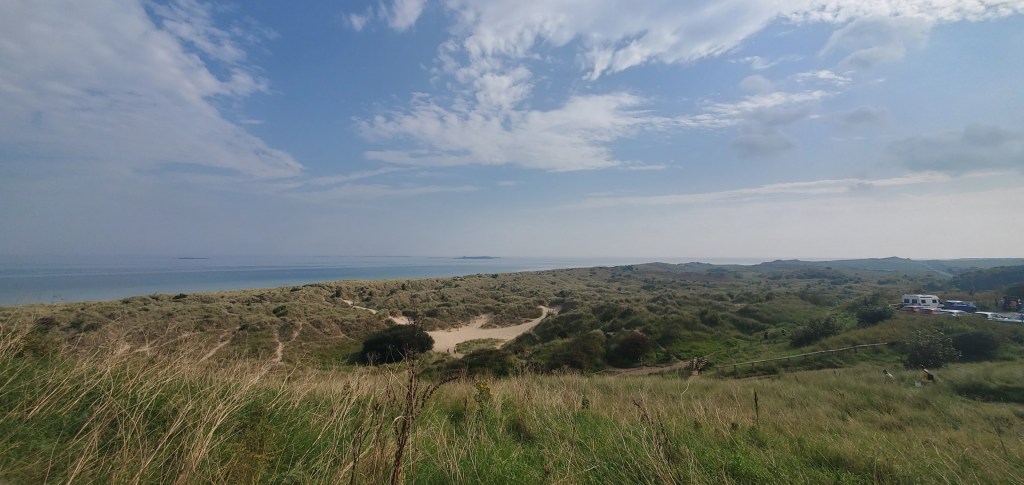
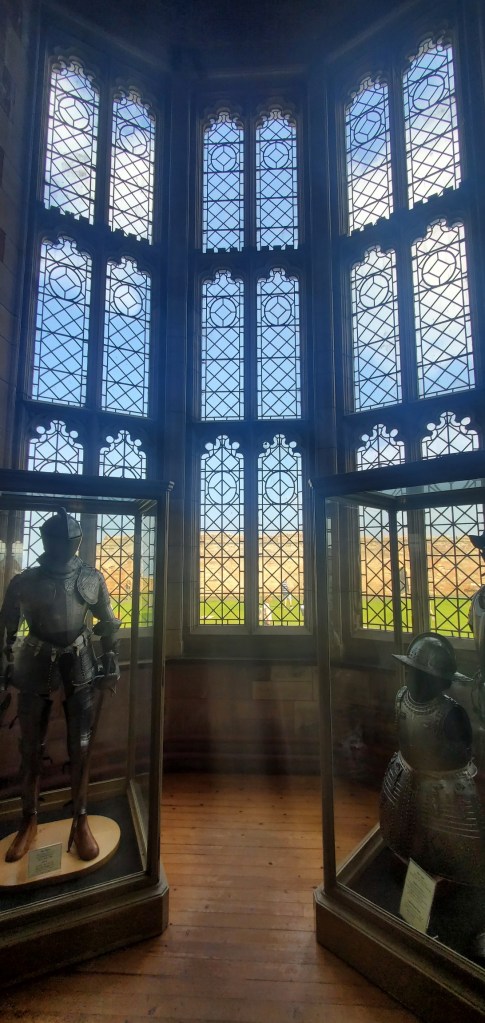
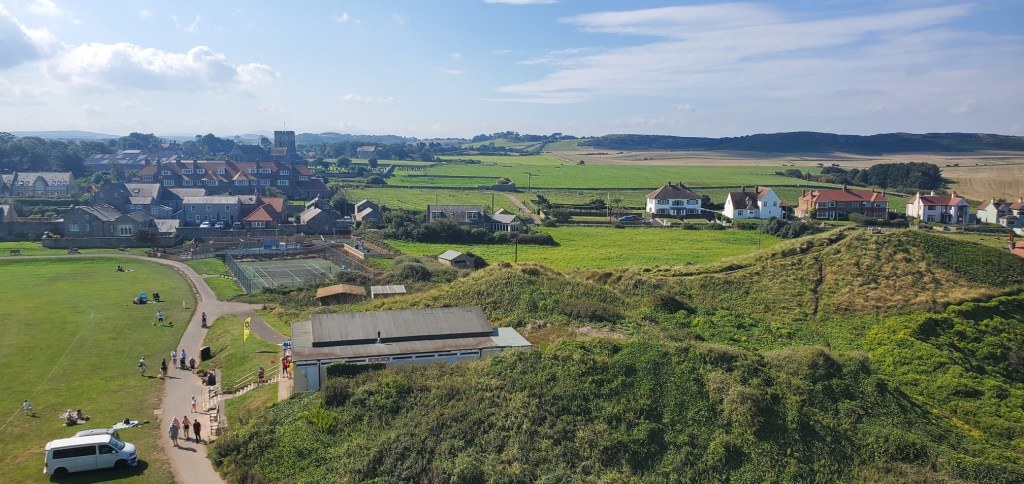
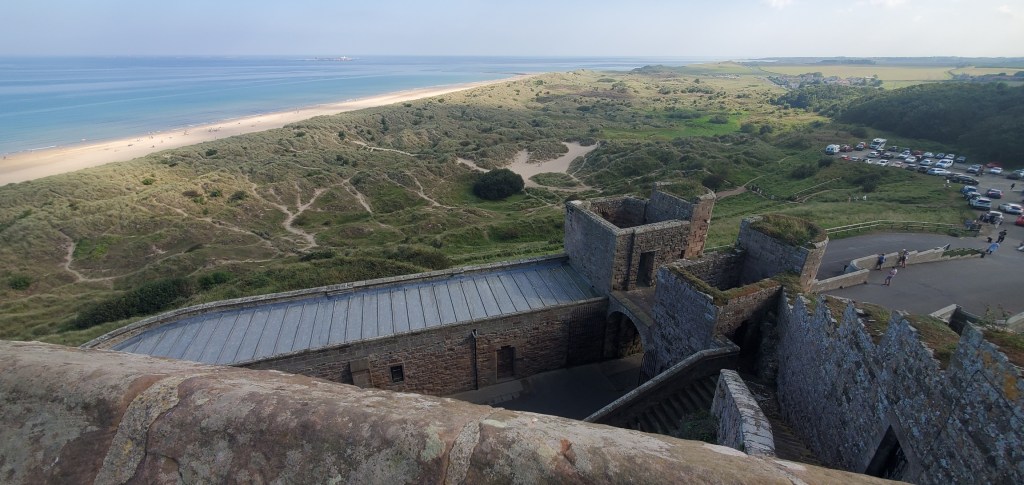
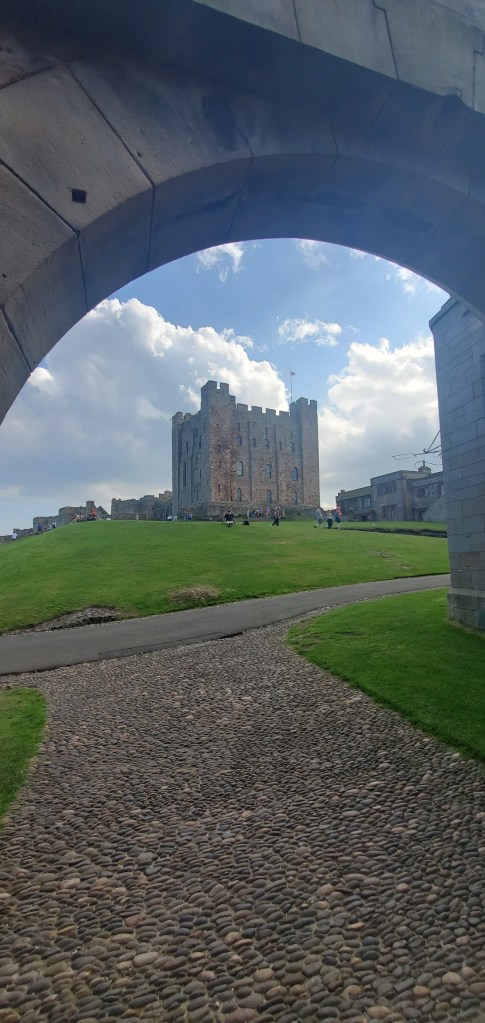
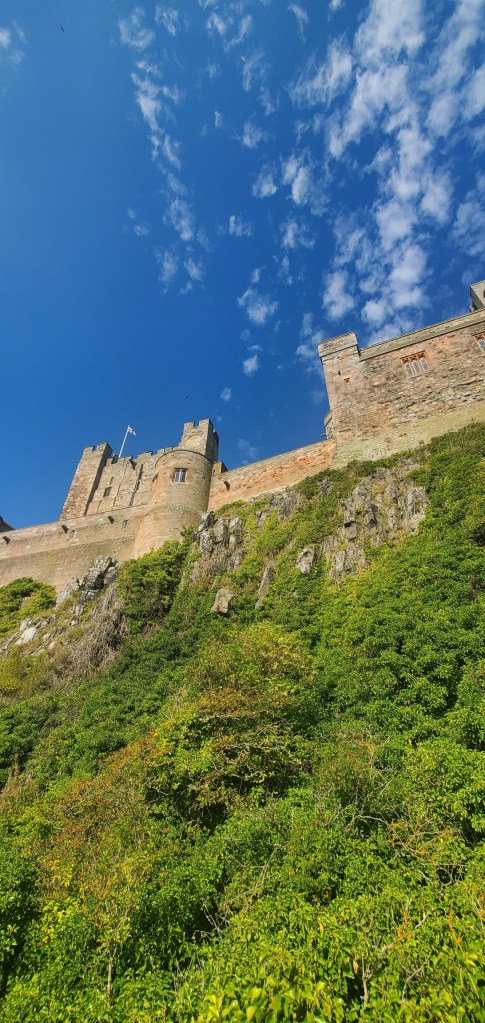
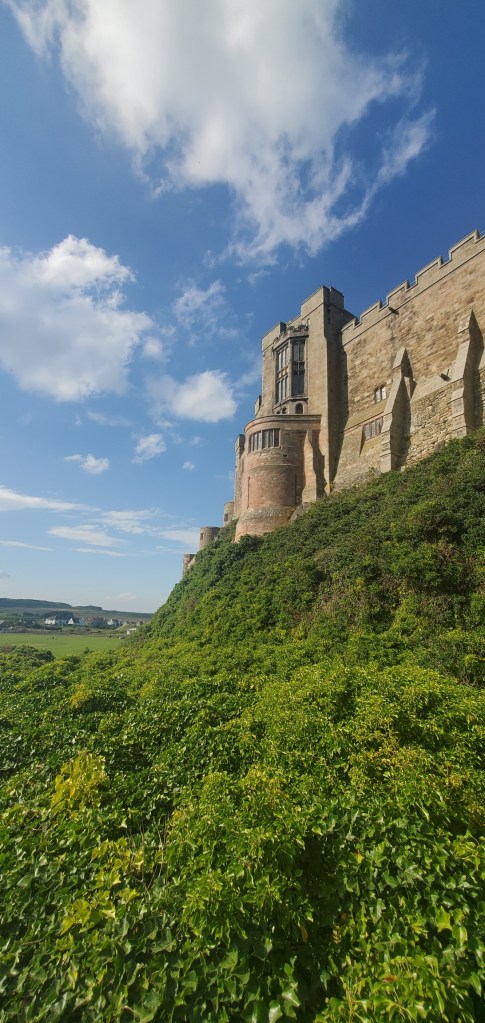
Driving up to Bamburgh castle from the road, seeing it just suddenly come into view, imagining what those Vikings must have seen over a millennium ago as they approached this imposing stone bastion—well, all I could do was yell “Foto machen!”at the spouse, as I could not pull over for fear that I would lose my precarious driving momentum.  Is it beautiful?  Of course.  The current owners—not Uhtred’s descendants, alas—do a good job of displaying the history of the area and showcasing the connection to “The Last Kindgom” (not the books, but the TV series, which I, expectedly, found to be a pale shadow of the books).  The castle is majestic, and the views of the North Sea from the ramparts are stunning.  The village at the foot of the fortress is charming and picturesque. 

I have seen a lot of castles in my lifetime, including an exhausting obligatory field trip of the Loire Valley during my semester in France, at the end of which I could not imagine that a time would come when I would voluntarily seek out a chateau if I was not required to write an essay about it.  Oh, the irony!  Last year, I visited Mont St. Michel, another bucket list item, certainly more famous in the world, and arguably more magnificent, in the eye of any beholder.  But, I have never read a book about Mont St. Michel, let alone an epic full of longing for home, a decades-long quest to regain one’s destiny, a story of homesickness and loss that echoed in my heart with every installment of Uhtred’s journey’s many setbacks and heartbreaks.
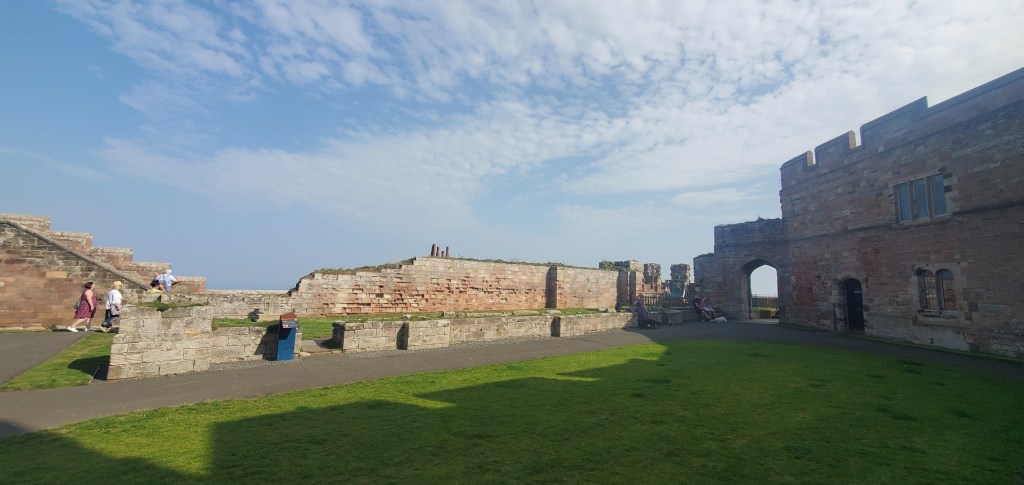
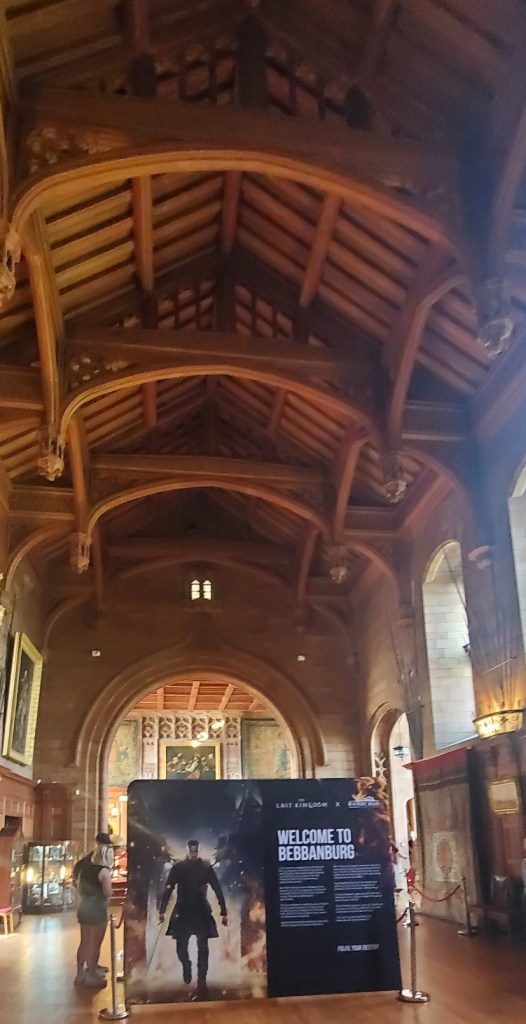
This is why Bebbanburg.  It is not just a cool castle.  And it is not even just a cool story.  It’s THE story.  Uhtred loses parents and parental figures, siblings, wives, children, and friends.  He lives a life that is not his, a life that was thrust upon him by circumstances and the wills of others.  He goes viking, serves and follows orders of people he hates and who hate him, fights in foreign wars, has adventures, achieves success, fame, and fortune, and makes friends for life.  Yet through it all, he just wants to go home.  Bebbanburg is the reality of his childhood, the dream of his adult life, and ultimately the recaptured reality of his old age.  He went home again, and he stayed home.  It was exhilarating to stand on those ramparts and imagine him there, his life’s goal achieved.  We should all be so blessed to end our journey exactly where we belong.

Scrap Metal Fiasco

“Nothing that happens to us after we are twelve matters very much.” J.M. Barrie

I must preface the following with a disclaimer.  I have told this story so often that I am pretty certain I have already written it, so if you have already heard or read it, please let me know (and like it anyway). 

I was six years old when I cautioned myself to beware, for I was surrounded by people who were not smarter than me.  It might have been a devastating realization to a child that young.  Instead, it was an inspiration to rally and rely on myself—the old “trust but verify” (which is, in fact, a Russian proverb), minus the trust.  I proceeded to have an eventful childhood full of hijinks, camaraderie, and a singular focus on defying authority.  Almost half a century later, I stand by every shenanigan, and only wish I had made more mischief.  “Forget regret or life is yours to miss”—Jonathan Larson was also right.

In some late years of the seemingly never-ending stagnation of Leonid Brezhnev’s rule, I was a Young Pioneer.  Surrounded by like-minded and like-spirited delinquents-in-training, I vacillated between apathy and active defiance, usually settling on an attitude of passive aggression.  My class of just under thirty pupils[1] was divided into three “links”, similar to a coed Cub Scout den without parents.  In the most disorganized, wild, and irresponsible class, I predictably belonged to the laziest and most undisciplined link.  There were eight of us, if memory serves, which included a core group of restless and adventurous girlfriends, and a couple of unpopular boys.  To snatch defeat out of the jaws of any potential victory was almost a point of honor for me and my young comrades.  To be fair, we usually started out doing what we were supposed to, and proceeded to fail in an epic manner.  None illustrates this better than the one time we collected scrap metal.  So unmitigated was this disaster that our entire school was banned from this time-honored activity for my remaining time back in the USSR.

The day of scrap metal collection, Link One and Three departed post haste in search thereof.  We members of Link Two briefly lingered in class.  Our Link Leader, an earnest, sweet girl who stood alone in our entire class as a follower of the prevailing ideology, made a short motivational speech along the lines of, do not attempt to evade your Young Pioneer duty.  This motivated the rest of us to want to bail on the whole thing, but someone yelled “Construction”, and we rallied.

There used to be a small park next to my school with a couple of see-saws and slides.  I used to come there on field trips with my daycare, and it was still there when I was in first grade.  However, by the start of second grade, the little friendly playground was demolished and taken over by construction of the regional archives.  Five years later, the site of the stalled construction was the school’s perpetual grim neighbor[2].  There was a crane which never seemed to move, and the more daring of us enjoyed crawling through the hole in the fence and all over what looked like the ruins of an old fortress[3].

And so of course construction (and we called it just that, as in “let’s go and find some metal at the construction”) became our first target.  Several of us filed through the habitual hole in the fence, but were dismayed to find that the site was picked over.  The better organized and more ideologically focused Links One and Three already raided it and carried off all the spare metal!  As I say, my little gang was always a day late and a ruble short. We took a couple of abandoned hammers and managed to detach a piece of pipe we determined to be nonessential, but it was not nearly enough.  (Surprisingly, no one thought to cut the fence down for scraps).

My school was located in a residential urban area, surrounded by apartment buildings.  It was an older, more established area of the city, though not quite the prestigious historic center.  Raiding the surrounding courtyards, we added a couple of unattended shovels and rakes to our bounty.  It was a bit of a task to stop the boys from hitting each other with the shovels, but I do not recall any significant injuries during this escapade.

In one of the courtyards, we spotted a child playing with a toy metal wagon and attempted to negotiate surrender, but his vigilant grandma chased us off with a broom.  We also kept losing link members with every encounter, kind of like when Three Musketeers started off for England in search of the queen’s diamonds.  Getting distracted, losing interest, and entirely changing course was typical behavior for me and my friends during any school-sanctioned undertaking.

Still, five intrepid girls persevered, and fortune really smiled on us when we encountered a clearly abandoned metal bed frame in one of the courtyards—with wheels, and even a mattress to boot!  Never questioning why a bed would be parked near an apartment building entrance, we immediately threw off the unnecessary ballast of a mattress, situated our rakes, shovels, and hammers on the springs, and proceeded to move the bed on out.  It was a swift and stealthy getaway, several middle-schoolers in school uniforms[4] earnestly pushing a bed along a lively avenue.  Some passers-by stared, some wondered, none dared to stop the purposeful Young Pioneers.

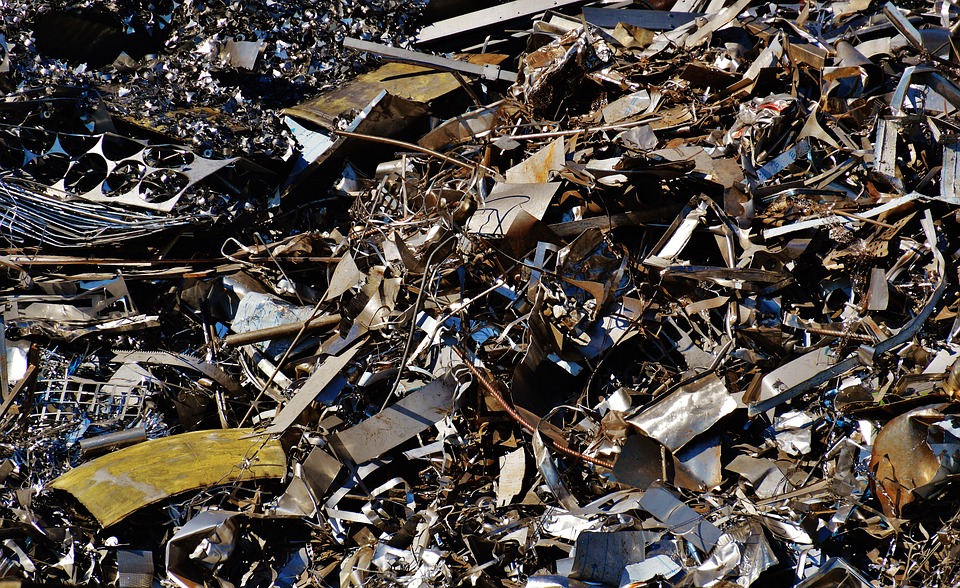
Not the image of that actual bed. It is surprising how a search for “metal bed with wheels” only comes up with images of hospital beds…

What should have been the long-sought success not just for our merry band of misfits but for the entire class went decidedly pear shaped, for the owners of the all this paraphernalia (neighbors in the process of moving, careless gardeners, construction supervisor) eventually found their way to our school and claimed their belongings.  The worst part was that the bulk of our bounty, the bed and garden tools, was easily returned with apologies because—private property, so a “remnant of the past”, in the ideology of the times.  It was the looting of the construction site—“plunder of state property”—that was the real offense, and our couple of hammers and the piece of nonessential pipe were the least of it.  The more proactive students got there before us and in their zeal carried off everything that was not nailed down, and some things that were, including the nails themselves.  I never got the opportunity to participate in collecting scrap metal again, but I will never forget our glorious entry into the school courtyard, riding on a bed, wielding a rake—Young Pioneer triumphant!


[1] In the Soviet Union, and I believe in today’s Russia as well, you moved from grade 1 to 8 with the same group of 30 or so students, took the same classes, and had the same teachers.  In my school, there were 3 classes to a “parallel”. After grade 8, a third of the students who did not pass the high school entrance exams would go on to trade and vocational schools, and the rest were reshuffled into 2 classes. My school, which housed grades 1 to 10 (and later, the added 11th grade), would graduate about 60 students from high school.

[2] First, not a uniquely Soviet issue.  Second, when I visited in 2018, I saw the unimpressive final product. I did not even take a picture of it. (I found this on GoogleMaps)

[3] If this is not a classic example of “attractive nuisance”, I do not know what is. What we thought we were getting versus what we got (not actual photos).

[4] Brown woolen dresses with black aprons.

Do You Hear the People Sing?

It has been brought to my attention more than once[1] that all my theater posts have referred only obliquely to my most favorite musical of all time, “Les Miserables”.  And so because I (1) tend to not write timely and (2) am most assuredly not a theater reviewer, here is a tribute more than 30 years in the making.

My first encounter with “Les Miserables” was when the French black and white 1958 miniseries made it to the Soviet television during my childhood.  It seems to be the superior cinematic version because it is French and stars the great Jean Gabin.  At whatever single-digit age I was when I saw it, however, I was incredibly impressed by Gavroche, his pluck, tragic death, and the fact that he lived inside an elephant.  So much did I carry on about this elephant than when we saw the US movie version, the one with Hugh Jackman[2], my kids were besides themselves with the realization that I did not exaggerate this fact.  (I really do not embellish—it’s just that my reality has routinely been stranger than fiction…)

When I moved to New York City in 1990, “Phantom of the Opera” was the hottest ticket in town.  It was not even brand new by then, but the wait for tickets was two years.  Two years, “Hamilton” fans!  In those pre-internet days, I literally had to call the box office and be told that I can get on the wait list.  I planned to be in NYC for at least three years, but I was also 21.   Needless to say, I never got on a wait list, and never saw “Phantom” on Broadway. 

Somehow, word got around that “Les Miserables” not only did not have a decade-long wait for tickets but was offering student discounts to the tune of $14.  Now, this was a very different time with very different pricing structure for live theater.  Full price tickets were $50, which was substantial, especially for poor students.  But, movie ticket prices in NYC were climbing into double digits, so to see a Broadway show for just a few more dollars seemed—and was—extremely reasonable.  Some friends of mine took advantage of this amazing offer and reported that, while the show was good, it was “depressing”.  This was high recommendation, leading me to believe that the story was not Hollywood-ized.  Of course I loved it.  If I knew then what I know now, I would have seen it again.  And again.

In the 1990s and early 2000s, “Les Miz” was touring on a semi-regular basis, and I saw it twice more in Detroit.  The third time, in 2010, my kids were finally old enough to be worth a ticket (for at that point, we were already hundreds of dollars away from the measly $50, let alone $14).  I built it up as the best thing they will ever see live on stage.  The lights came down, and I broke out in cold sweat, because—“There is no ship in Les Miz”!  The Abomination came to town.  For three interminable hours, I watched my beloved show dismantled.  Gone were the revolving stage and the barricades, replaced with CGI images.  Gavroche’s song was cut.  The whole production was just somehow pedestrian, dull, in a word—miserable.  And poor Enjolras, the tragic hero of the doomed uprising, is wheeled away in a cart possibly borrowed from Spamalot (don’t you just expect him to spring up singing “I’m not dead yet”?)  Trevor Nunn, the director of the original production, hated it, asking “why something inferior has been created when something superior could have been created.” [3]  Why indeed? 

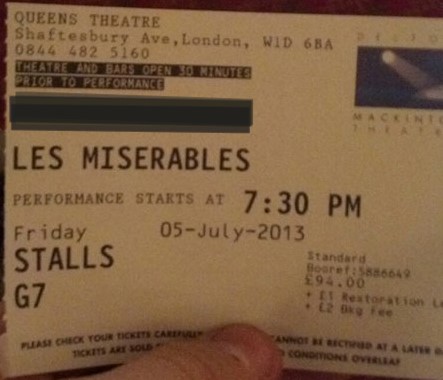
I took this musical for granted because it always existed, it always toured, but after seeing the new and worsened version, I was crushingly disappointed.  I took to the internet and discovered that the original version was still playing at the West End.  That was all well and good, but before I even had time to lament this unreachable dream, I learned that I would be going on a business trip to London in the coming months.  If ever I believed in luck and fate, it was at that moment.  But… but, I must have forgotten that life is just a series of turns around which fate is waiting with a stuffed eel skin[4].  Thinking that a musical that is a quarter of a century old is not the hottest ticket in town, I figured that I will just grab a ticket at a half-price booth upon arrival.  However, leisurely perusing West End offerings with the idea to see what else I could see[5], led me to a sudden shocking discovery: there were no tickets for “Les Miserables” during the time of my trip!  Whaaat?!   An increasingly frantic internet search revealed that Alfie Boe[6] was doing a limited run as Jean Valjean.  Furthermore, Matt Lucas was appearing as Thenardier at the same time—and frankly, my money is still on him causing the sellout, because when he said “Paris in the DUST” and chuckled knowingly, the audience just died like when Lin Manuel Miranda first appears on stage and utters “Alexander Hamilton”.

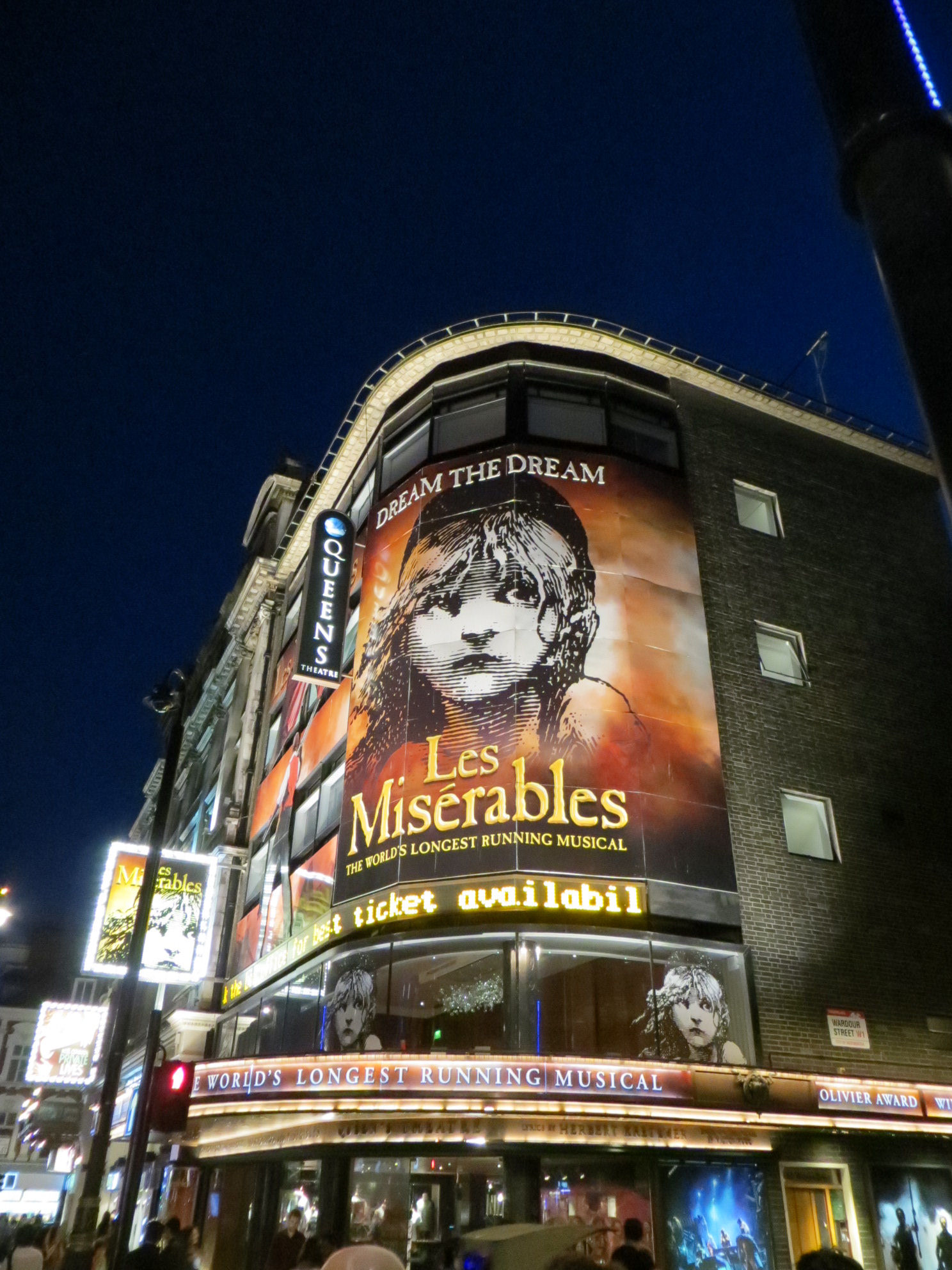
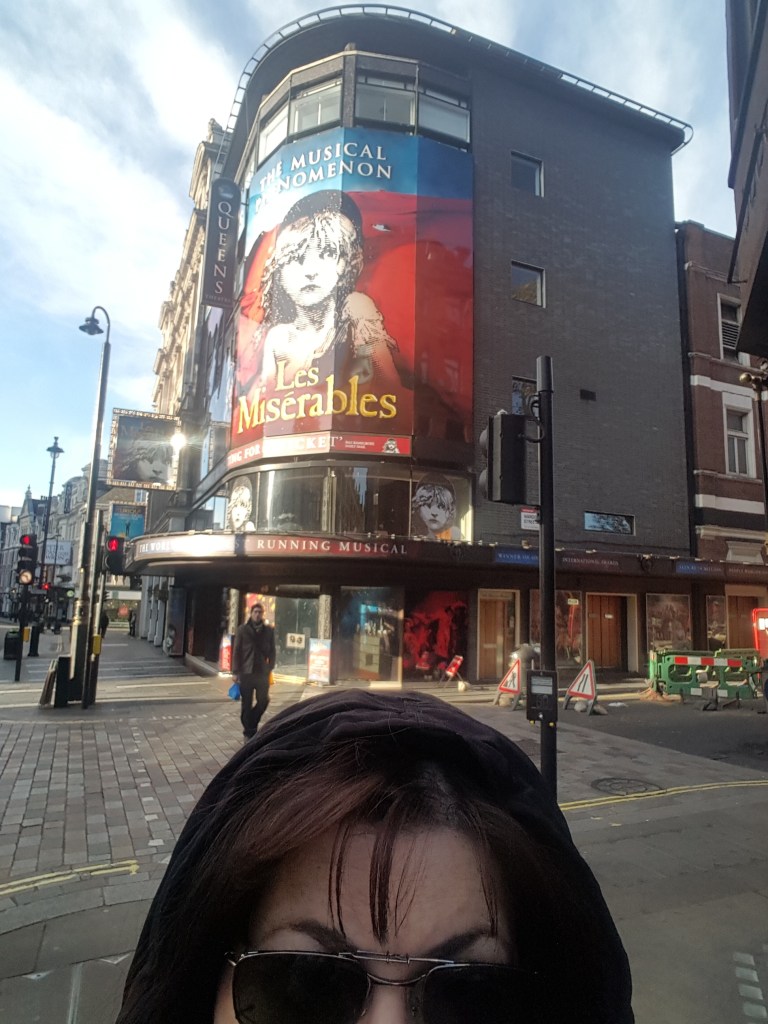
Top of the show, 2011, Queen’s Theatre

So yes, that was a spoiler alert: I got the ticket, from a reseller.  I actually got two tickets, because they were not sold singly, and it was still cheaper than a ticket to a touring production in Detroit, because, well, U.S. theater prices versus the rest of the world.  If you know, you know.  It was all that I remembered and missed, and more, because I knew to never take it for granted again—not just the gorgeous music and the moving story, but Trevor Nunn’s iconic production.  

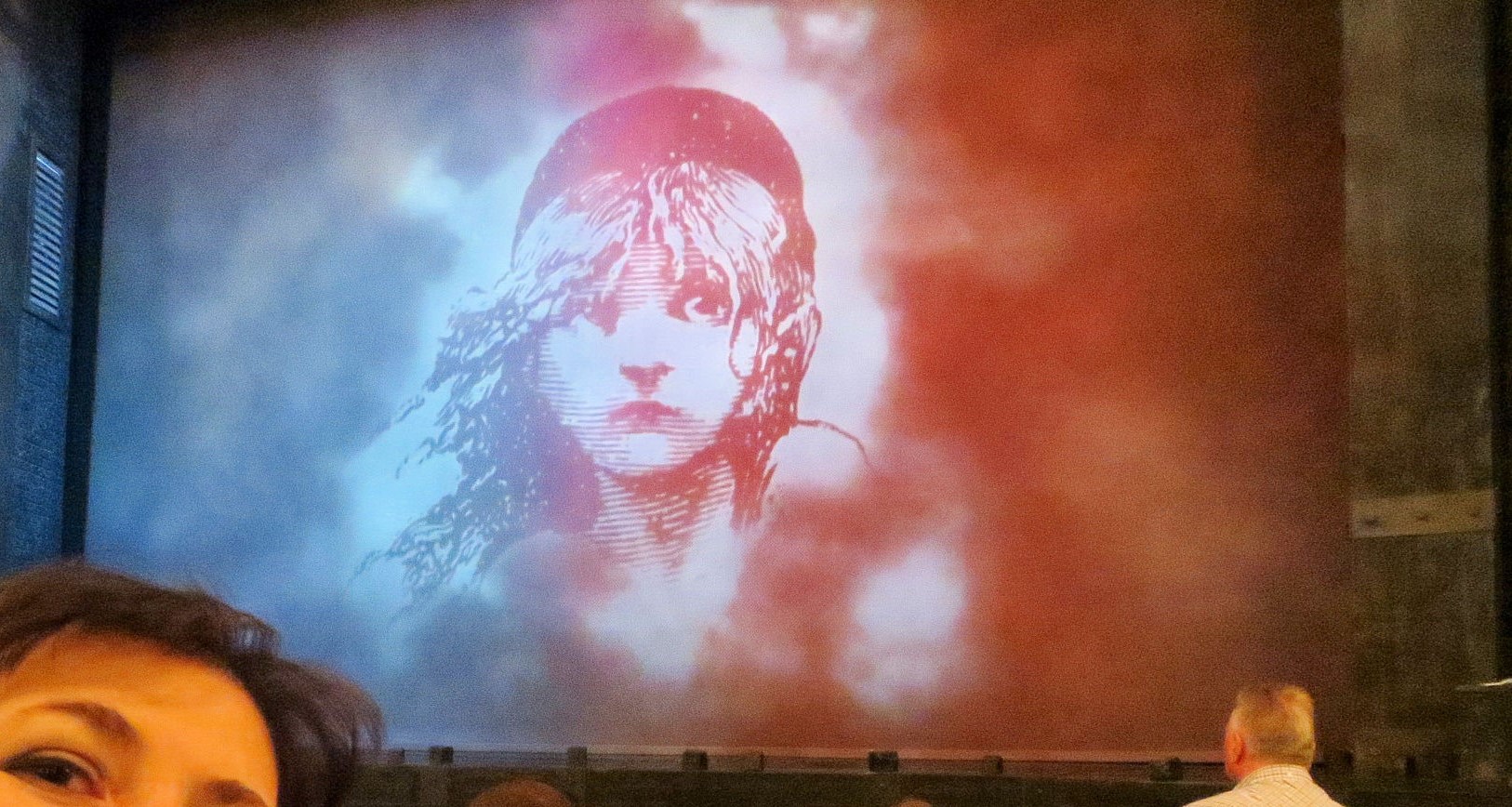
2015

In the few years that followed, I was extremely fortunate to see the original London production four more times.  The last time was in the spring of 2018.  In 2019, it closed, and was eventually replaced by The Abomination.  On my last visit to London, in November 2021, weeks after Les Miz’ post-pandemic reopening, I walked on by [ https://oldladywriting.com/2021/11/28/west-end-and-beyond/].  I am grateful that the last time I saw Les Miserables, it was in its full glory, revolving stage, barricade coming together and turning, no unnecessary projections and other staging fails too numerous to mention.  Hope dies last, but in any case, the original production of Les Miserables lives in my memory.


[1] Maybe it was only once, but very recently on World Theatre Day.

[2] Hugh is great in many ways, but he is no Jean Gabin.  I said what I said.

[3] https://playbill.com/article/trevor-nunn-speaks-out-on-revised-london-bound-les-miz-mackintosh-responds-com-169704

[4] P.G. Wodehouse

[5] I also saw “Billy Elliott” and “Betty Blue Eyes”; the first one because a colleague chose it and the second one because it looked like something that would never come to the U.S., which, as you know, is how I pick my West End shows.

[6] Alfie Boe is an incredible operatic tenor.  But the best Valjean is Killian Donnelly, who not only sings, but is a fantastic actor.  OK, Jean Gabin is THE best Valjean overall, but Killian Donnelly is the best singing Valjean.  I said what I said.

…and Bratislava

I always assumed that if I made it to Vienna, I would have to add a day for Bratislava.  Fun fact:  Vienna and Bratislava are two closest European capitals in terms of distance, so I understand that it is a common side trip, but that was never my reasoning.  I generally do not like to “gallop through Europe”, as the saying goes.  I learned to not overplan from experience (although my consequential plunge into underplanning has resulted in some unintended and occasionally hilarious jams—but that is another story for another time).  I like to take in the sights and go at my own pace, and I dislike leaving a place without exploring it fully.  So short story long, if I am going somewhere, I am not also going somewhere else.  However, what led me to Bratislava was not its proximity to Vienna, but that Trip That Never Happened 42 years ago.

To be fair, Bratislava was never going to be more than a train connection on our original journey.  We always knew that we were not going to see the town.  It was an almost unimaginably different world back then. Europe was still divided into East and West, and getting from East to West was complicated even with a passport.  A moot point, in any case, because we had no passports.  We no longer had passports because we no longer had citizenship of any country, none at all.  We were put on a train heading out of the USSR, and the first stop was Bratislava.  Czechoslovakia was still united, and Bratislava was not a national capital of anything. 

NOT what I remembered

We disembarked in Bratislava and waited for the train to take us into the *real* West, to Vienna.  On that cold and lonely platform in December of 1980, I do not remember any other passengers.  It was just the four of us, my mom and grandparents and I, and we stood there with our two suitcases per person for what seemed like hours.  This might be an invented memory, but I remember going into the train station itself and seeing chewing gum for sale (if you ever heard how prized it was in the Soviet Union—it’s all true!).  Could we have just walked into the city?  Were there any guards who would have stopped us?  It is impossible to know now, because the only tangible goal was to get on that train heading to Vienna.  These days, the hour-long trip between the two cities is almost akin to a suburban commuter ride.  Back then, one travelled from the Eastern Block to the Capitalist West in a fancy sleeper compartment, and I remember it taking hours—probably because of border control.  My mother remembers red velvet upholstery; I do not.

But there IS a vending machine selling dairy products

And so Bratislava remained something I never even pictured, just a footnote to a trip to Vienna.  The only part of a this visit I could envision was arriving at that train station and walking past that kiosk selling gum and sundries out into an unimaginable town.  Medieval? Baroque? Modern? The important part was the station, the kiosk, the sunlit town square.  None of them turned out to be real in 2022.

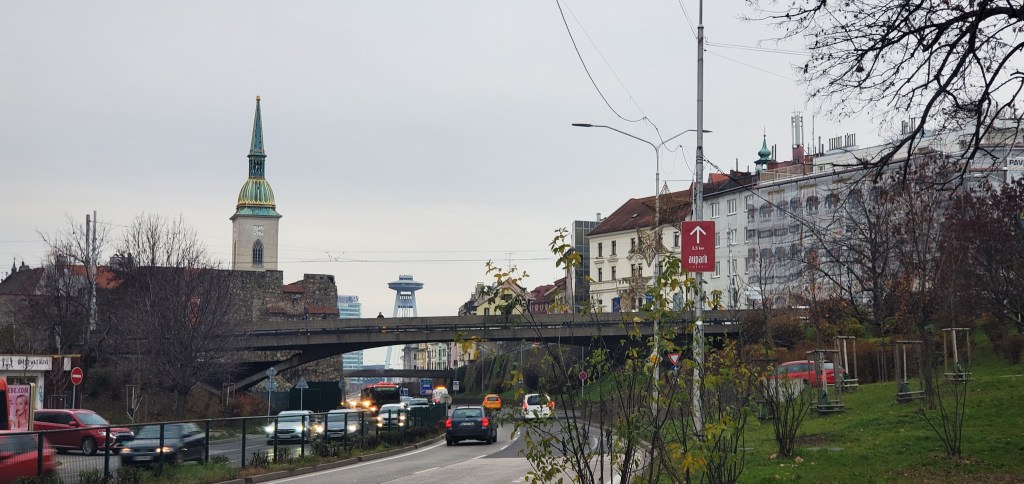
My persistence in going to Bratislava in the face of my mother’s mild opposition; my brisk realization that in this century, trains to and from Vienna connect to Bratislava via a suburban station and not the main one, preventing the recreation of that long ago voyage; brief panic about having to also get on a bus to get to city center—none of these are worth recounting.  Well, maybe the briefest of mentions—repeatedly seeing the words “Bratislava Petrzalka” instead of “Bratislava Central” or “Bratislava Hlavna” led this sophisticated traveler and polyglot to feverishly search the interwebs for a route into the city (get on the bus in this area, alarmingly advised the web, never take the taxi).  Otherwise, we would be walking out of the train station into a somewhat grim peripheral disappointment and then right back to Vienna, as per tradition. 

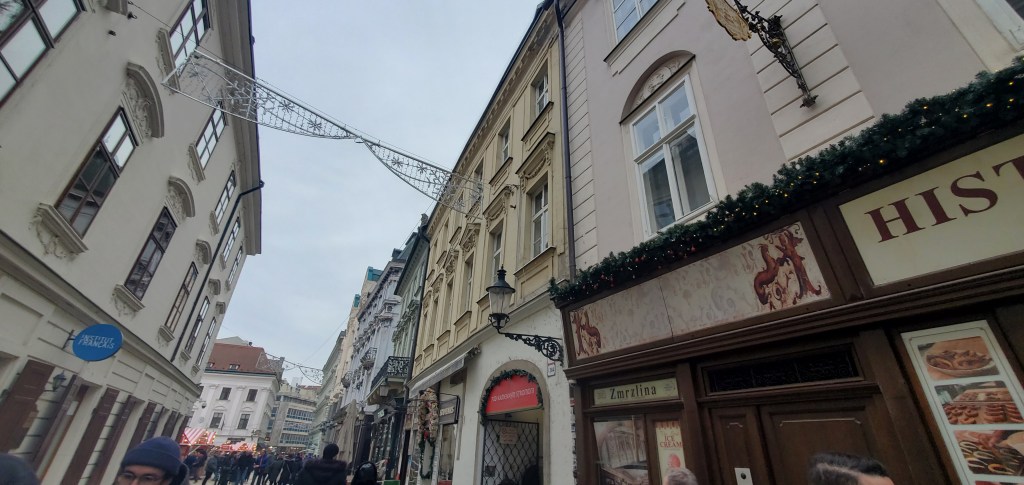
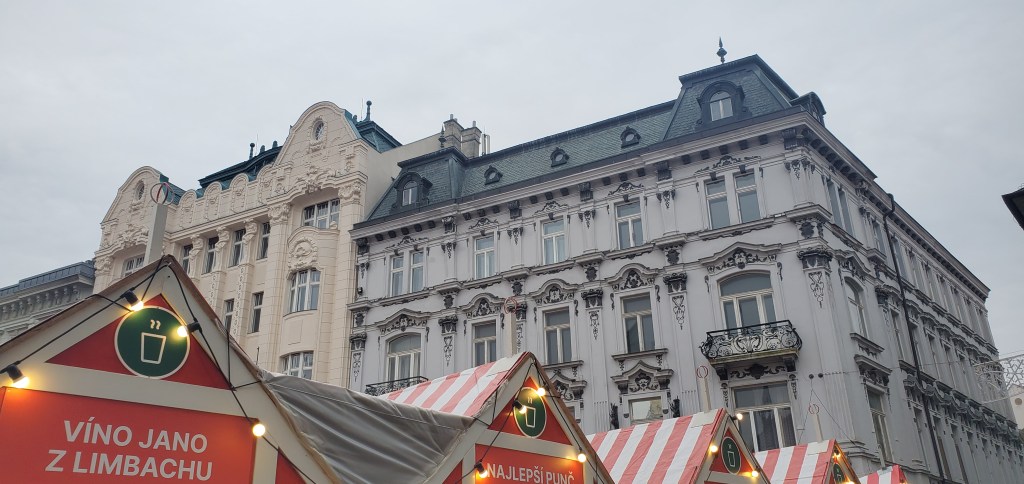
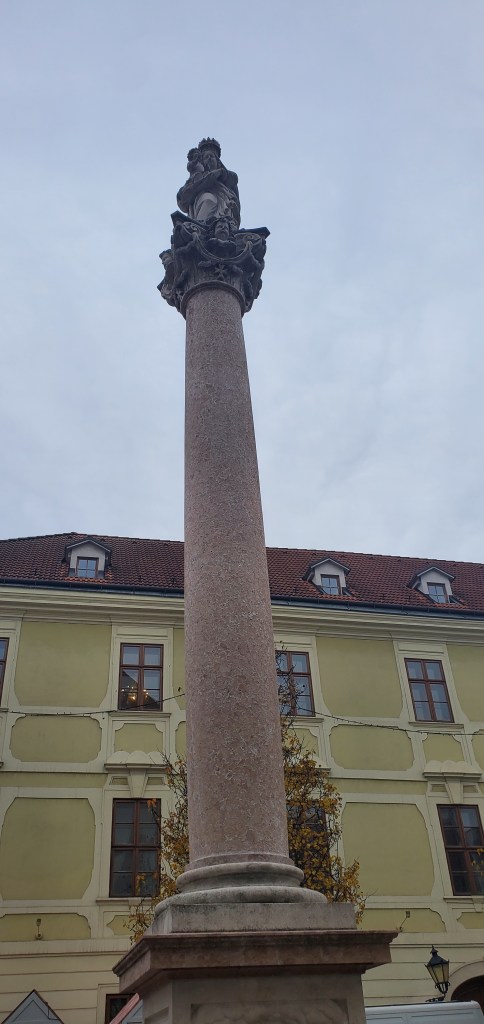
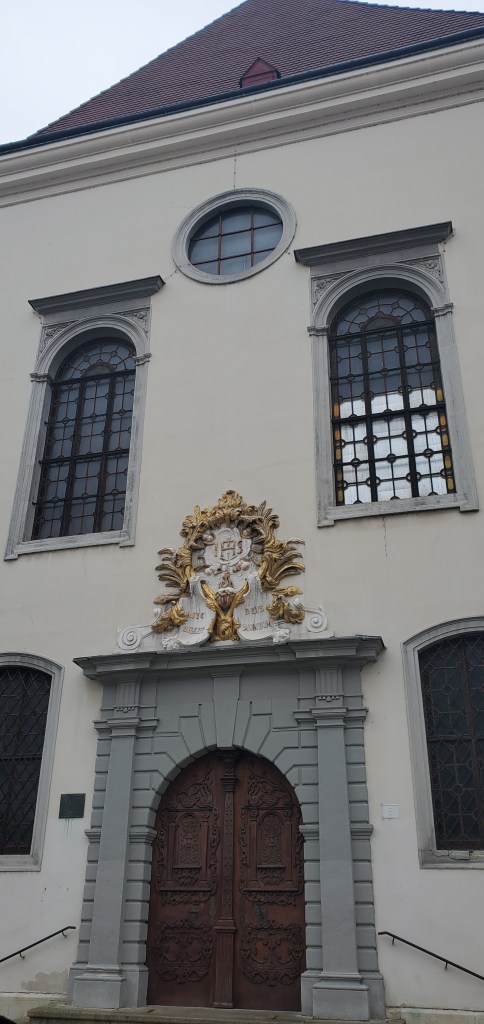
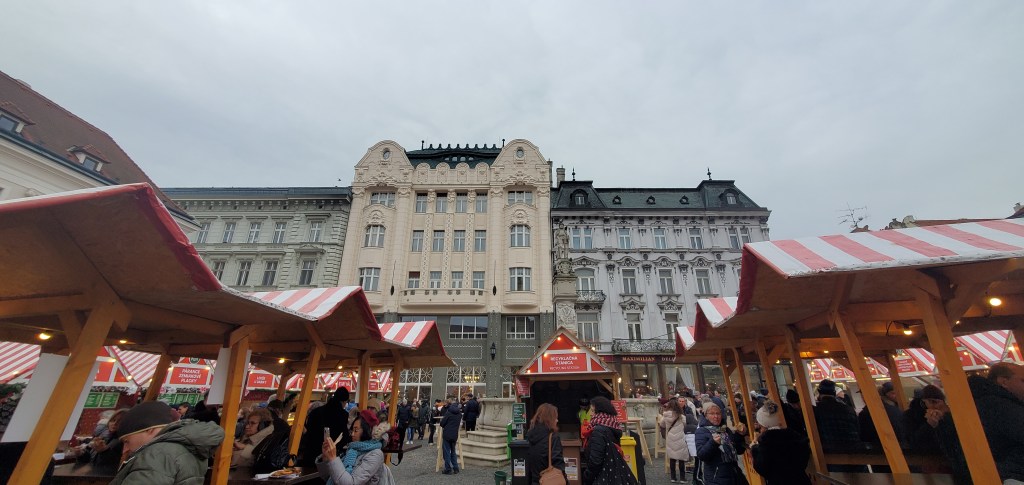
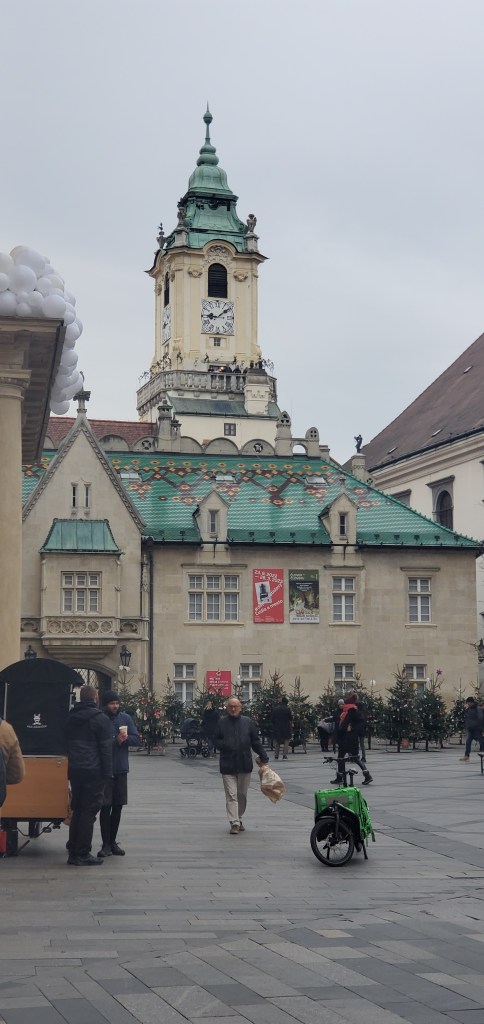
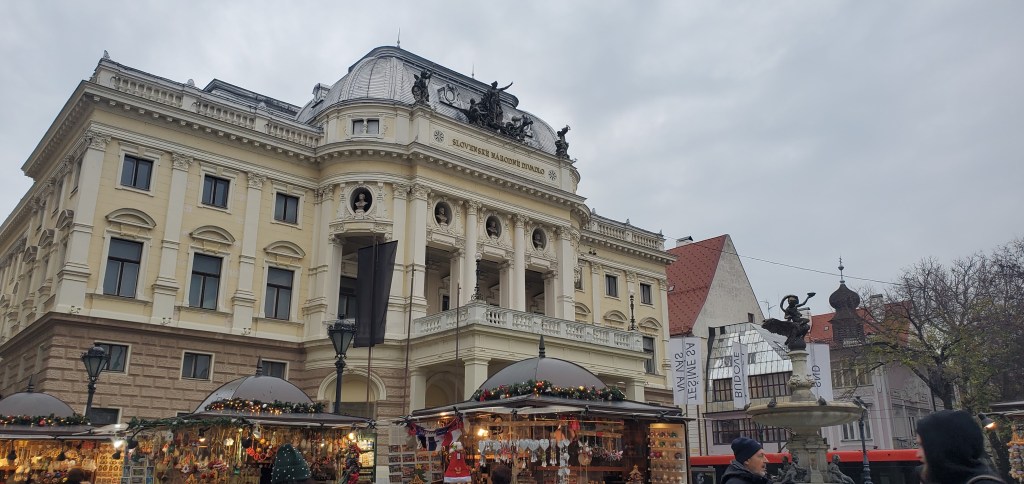
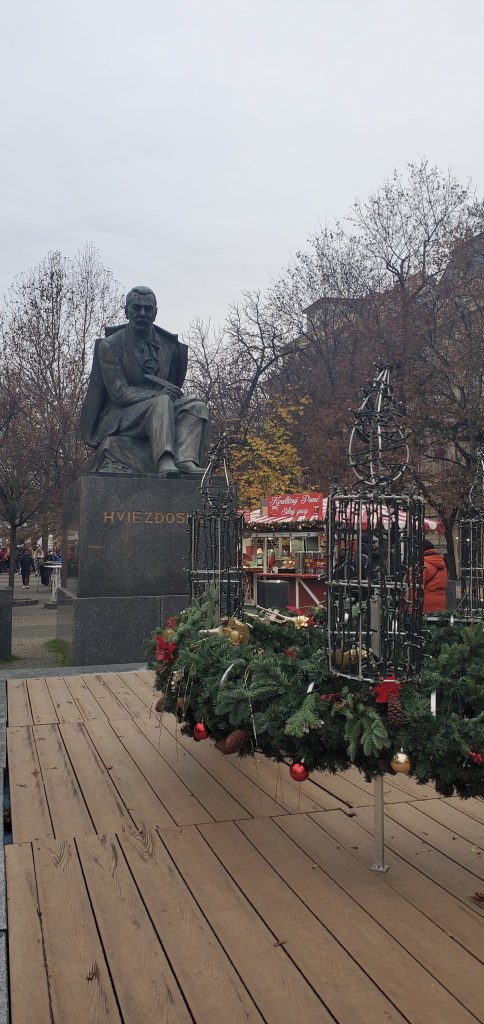
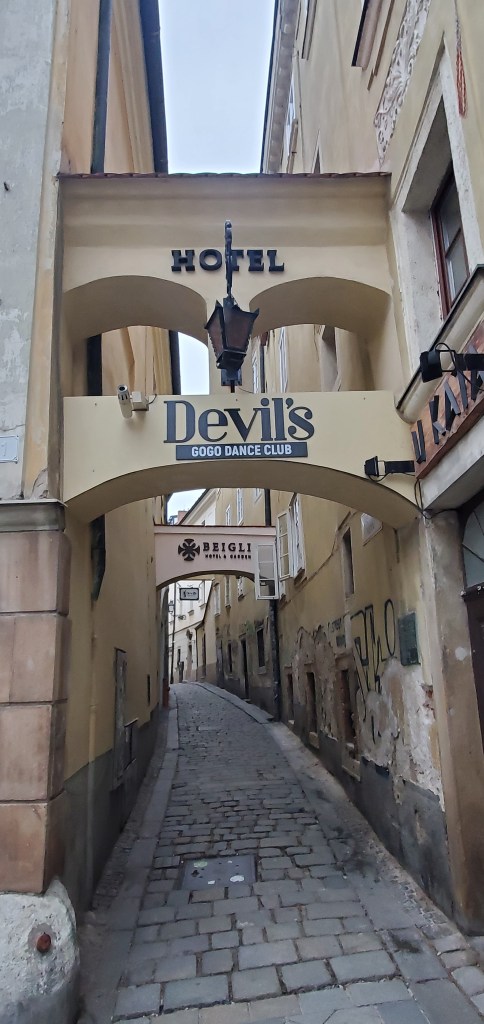
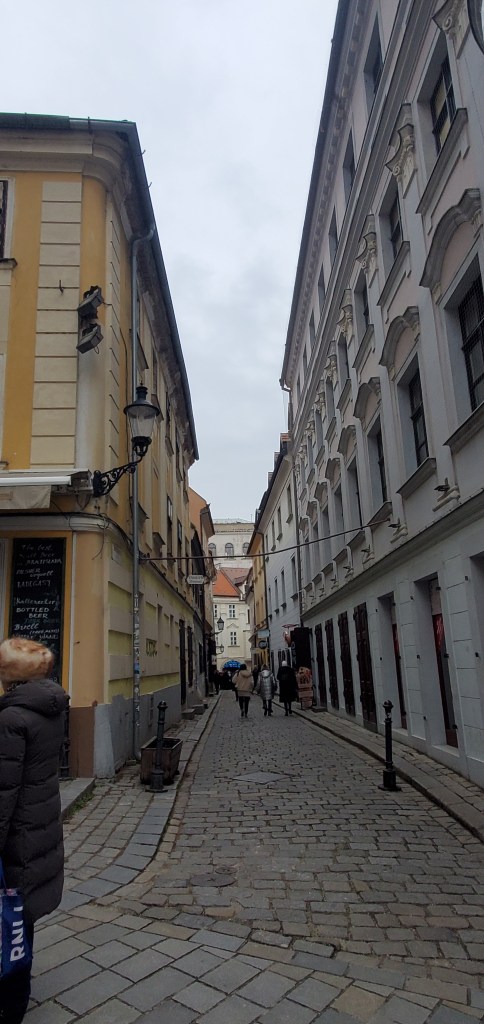
Ultimately, I feel like I gave Bratislava a short shrift.  We walked around a bit, enjoyed the most lavish meat feast I could ever imagine (allegedly for two people, but there were six meat servings), encountered another Christmas market (again, mostly meat), saw some charming medieval sites, and hightailed it back to Vienna before dark.  But I think Bratislava deserves more than just a couple of hours.  It seemed like a lovely town I would like to get to know better.  I would have liked to visit its castle high above the city, its churches and museums, taste the local wine at a very cool cellar by which I walked, and learn more about the effect the decoupling from Czechia had on Slovakia.  I could have researched and planned prior to going, but I think the existence of this town was simply too fantastic to contemplate.  Now that I know that it is real, we need to be properly introduced.

Vienna Waited for Me

***I simply could not allow the last entry for this year to be the one from February 12th.  It is almost impossible to imagine now how different the world was then.  And while #oldladywriting is not chronological, I do occasionally respond to current events.  The trouble is, the events of the past ten months have altered my life in ways invisible but irrevocable, have killed my soul, and have not yet been processed to the point where I can write about them.  At all.  And yet, the pre-war post must not stand at the last one.  So here we go.  And for the record, we here at #oldladywriting are, and have always been, against wars of aggression.***

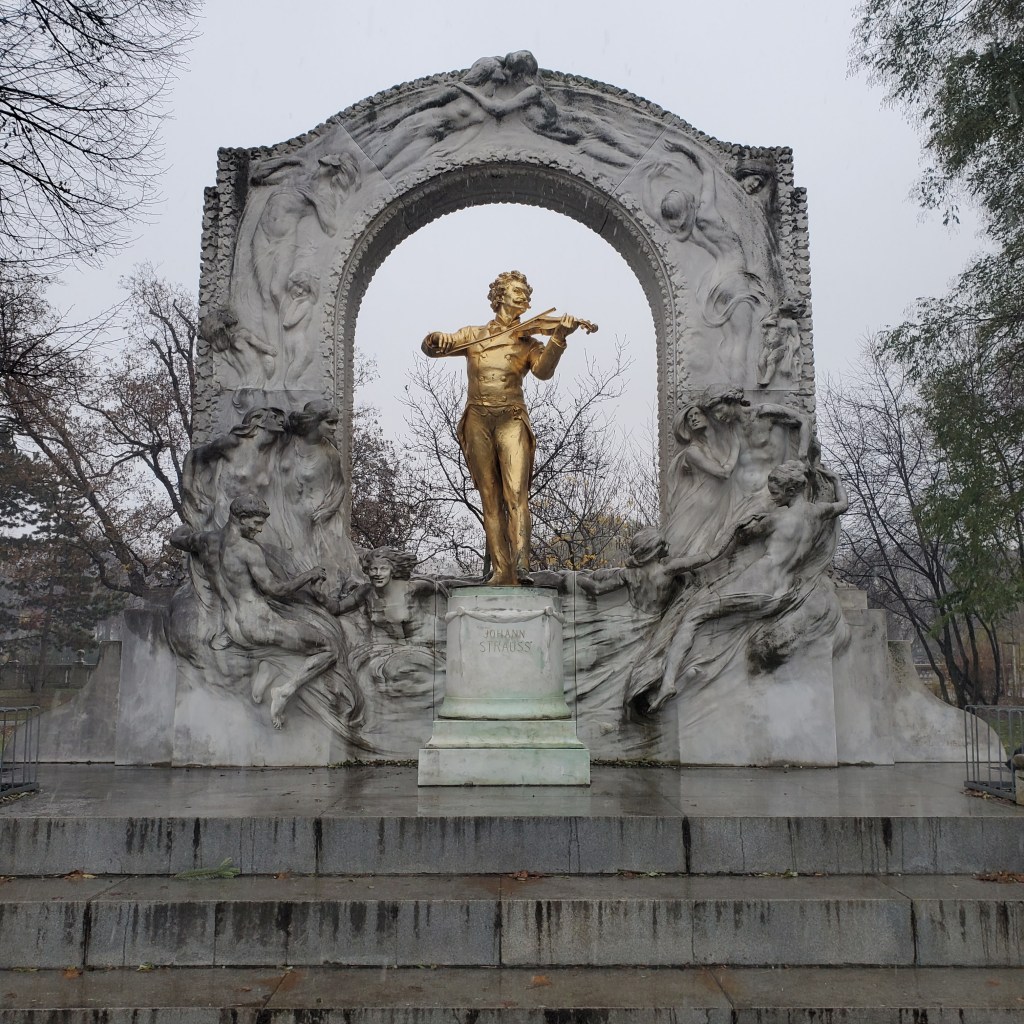
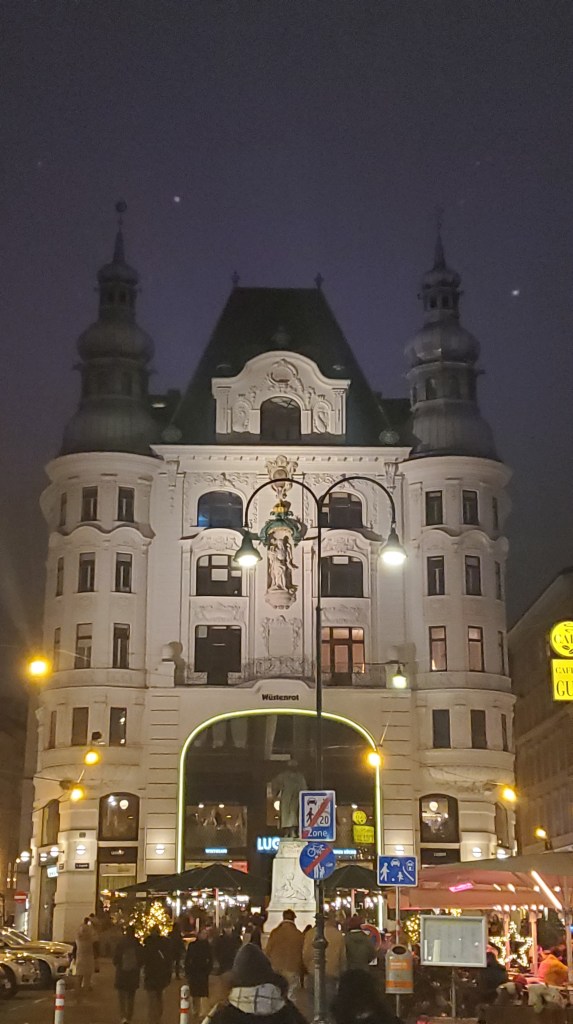
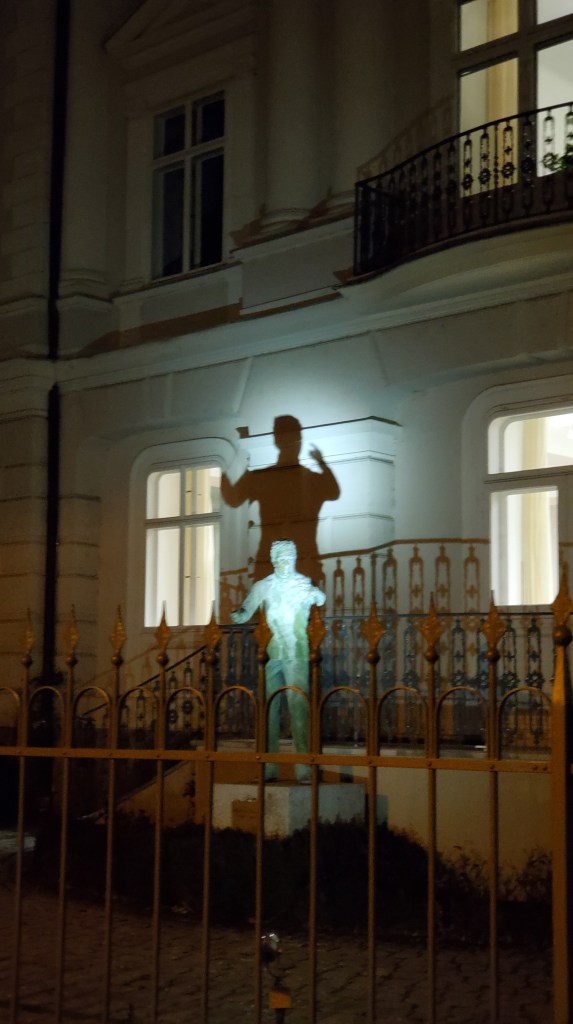
Almost 42 years to the day I was first supposed to come to Vienna, I finally did.  I was trying to imagine what it would have been like to have seen it back then, but it could have been like my first encounter with Rome, chaotic and no-budget.  https://oldladywriting.com/2021/01/18/roman-holiday/ Vienna was supposed to have been our first stop out of the Soviet Union, and it actually seemed more real than Rome, the planned second stop that ended up being the first.  For me, the main reason was that shortly before our departure flight, I saw a segment on Vienna on the TV program, Cinema Travel Club.  Why “cinema” travels?  Because the vast majority of Soviet citizens had no realistic hope of seeing any of these sights in person.  But I did. I knew we were going to Vienna.  I think the program was careful not to show any capitalist sights as too enticing, so there were no videos of stores or restaurants.  I glimpsed the famous statue of Johann Strauss in the city park, and that was enough.  I held on to that image, exotic yet relatable, and the arch under which he elegantly held his violin was going to be my personal gateway to the West.

What happened instead in December of 1980 was the first of the many shocks and disappointments of the journey as long as life itself, because instead of allowing a handful of Soviet refugees to roam freely in its stadtpark and look at the gilded statues, the Austrian government preferred to hold us in a detention facility until we could be shipped off to become the Italian government’s problem.  And thus, for the next four decades, my only memories of Vienna consisted of an empty train station platform, a terrifying nighttime bus ride to we knew not where, and a crane that was visible beyond the tall brick wall surrounding the courtyard where we could promenade.

Coincidentally, once I got out of a cab at my hotel when I was finally let loose on Vienna, the first thing I saw was a crane on the other bank of the Danube.  Surprise—it did not trigger anything.  Too much time has passed, and too much has changed.  I was mentally and emotionally ready.  It was my fifth and finally successful attempt. 

Yes, incredibly, I was foiled more than once!  The second time was when I was spending my summer in Paris, and after crisscrossing Europe for a month, I planned to swing by Vienna as my final stop.  Exhaustion prevailed.  I literally got on the train in Amersfoort, realized that I could not face another night on the train, disembarked at the next stop, and returned to my Dutch family for a couple of weeks of playing board games and going to bars.  It was what I needed.

The third time was when my son went to Austria as an exchange student, and my mom and I figured we could meet him there.  I went so far as to buy a Lonely Planet guide, which I ended up finally using this month.   Then my beloved grandfather was diagnosed with cancer and given just weeks to live.  All plans for the immediate future were cancelled.  He lived another year; no regrets about any missed trips, just gratitude for the time we had.  My son brought me back a statuette of Strauss, and I still treasure it.

Finally last year, I came the closest, buying airplane, opera, and Spanische Hofreitshule tickets, and reserving a hotel for a week in Vienna with mom, to celebrate her half-milestone birthday and enjoy the grandest Christmas markets in Europe (and I am nothing if not a lover of Christmas markets).  Just days before the trip, the plague closed down Vienna, and the refunds for everything I bought and reserved trickled in. 

And so we tried again, a year later.  And we succeeded.  And ultimately, who knows if me at twelve, with my first Western European encounter, or me at nineteen, with my last backpacking-through-Europe adventure, or me at closing in on forty, with enough to spare but still focused on the career that was in the ascendant, would have enjoyed this city as much?  On the flip side, would it have touched me in some more remarkable way than it did now, after decades of semi-luxury travel?

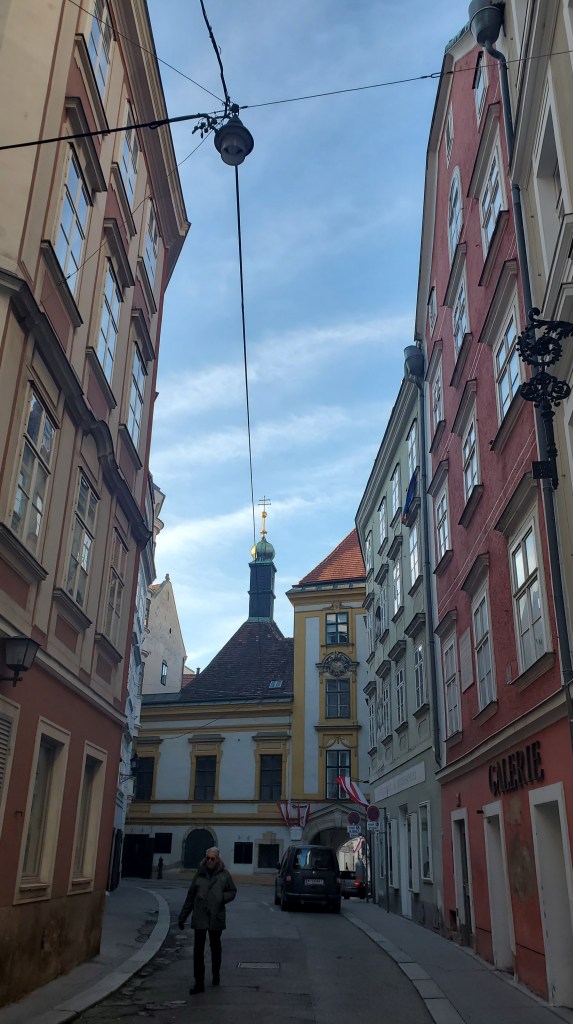
As one gets older, sees more, experiences more, those thunderbolts out of the sky experiences are fewer and far between.  Vienna is a lovely city, but it is just another beautiful European capital.  Its museums are grand, but I have been to the Louvre, Prado, and Zwinger—not because I am so fancy, but because I am now so old.  The food is delicious, but eating in an expensive restaurant is not the event of the decade that it would have been, well, decades ago.  At that detention facility, I was impressed with the miniature butters (being fully aware of the fact that these were not, in fact, holdovers from the Olympics, but were how people in the West ate every day) and Manner wafers.  OK, so I still bought several bags of those, but that’s because they were the seasonal kind.  I grab everything that’s labeled “seasonal” or “limited edition”. 

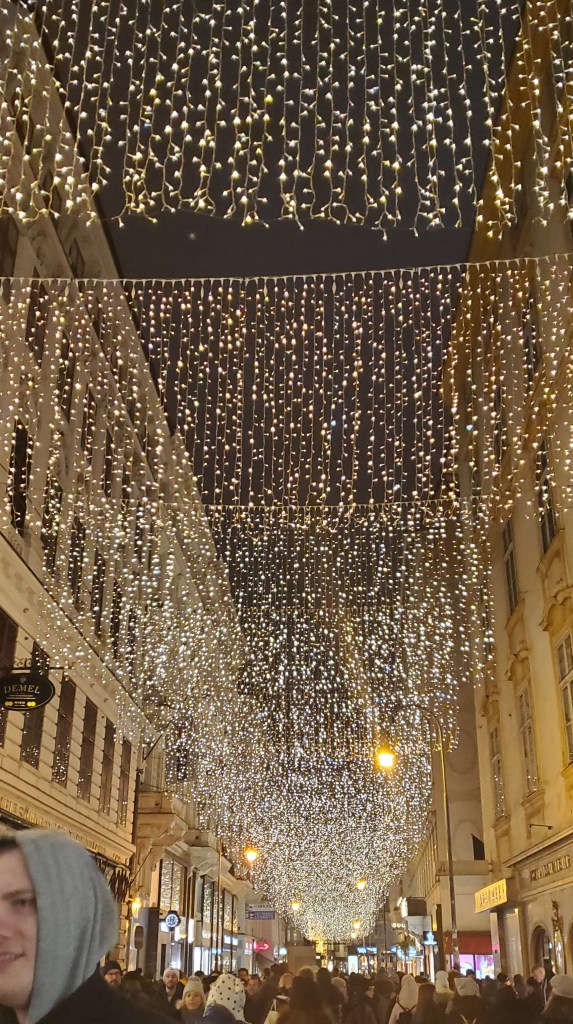
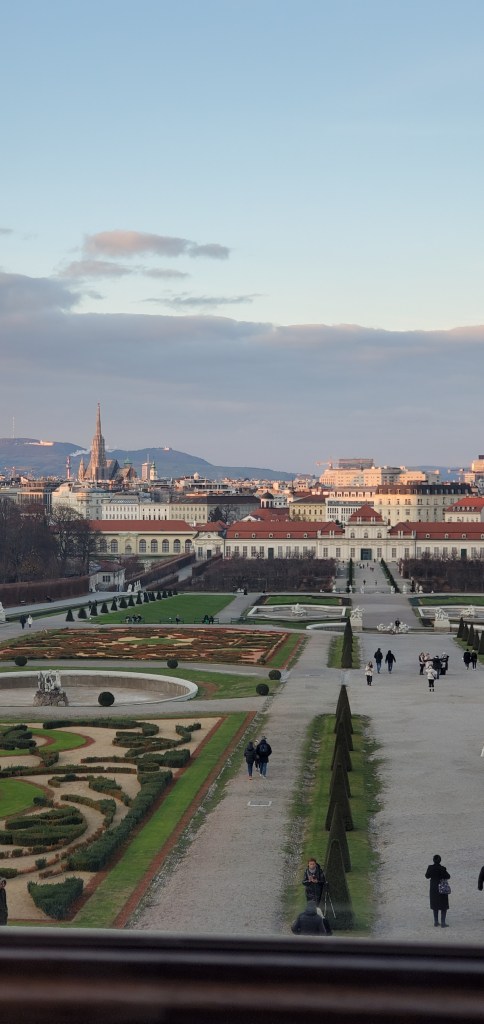
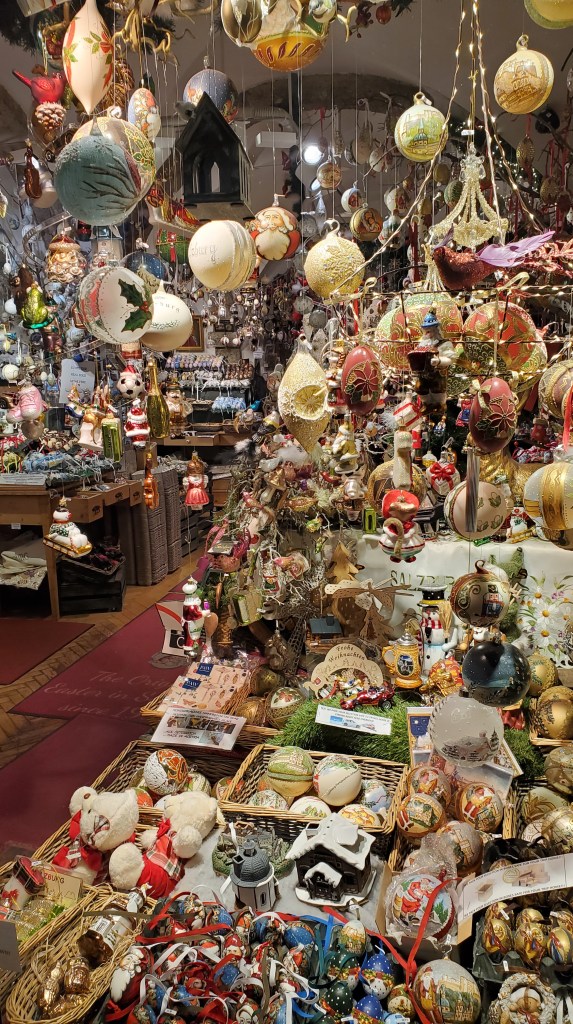
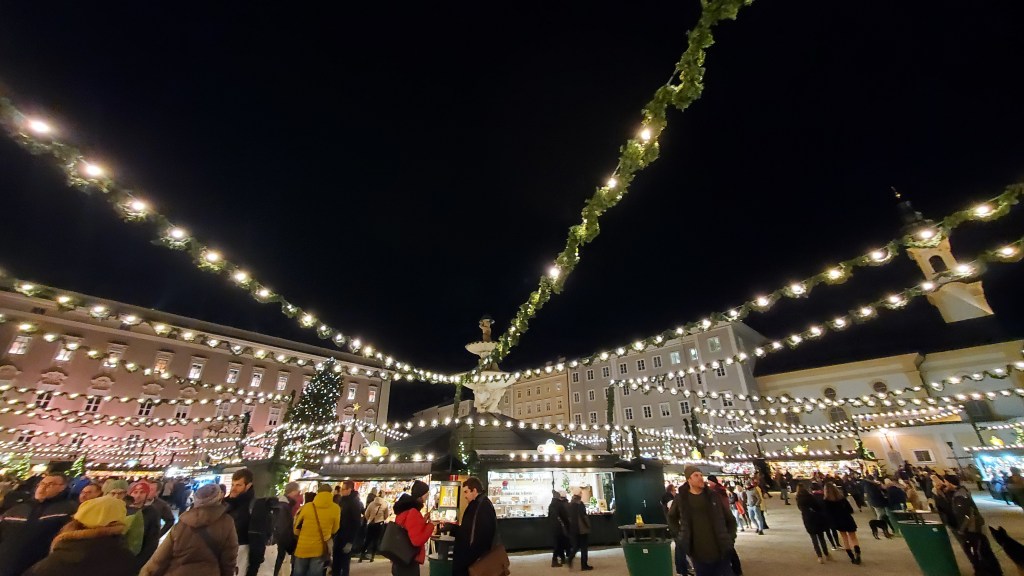
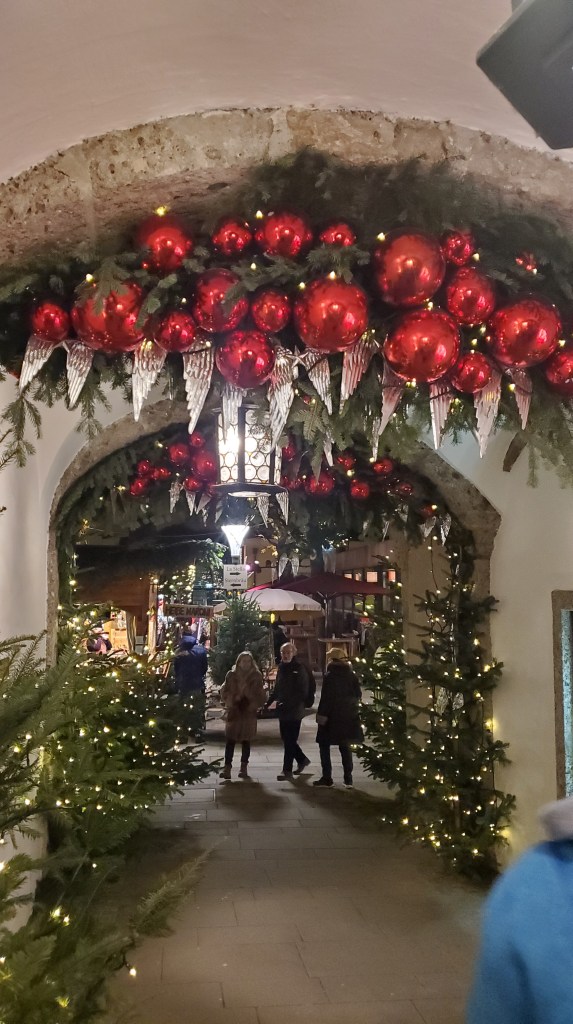
It was still a gorgeous trip, because, well, look at these museums, palaces, restaurants!  For a Euro-centric traveler that I am unashamed to be, there are no complaints here.  And the piece of the proverbial resistance—Christmas markets!  As much as my allegiance will always rest with the one in Paris, Viennese merchants have pitched tents in literally every open square and alley, so one could basically engage in a punsch and sausage tasting as a progressive walk through the city.  As shocked as I was to finally make a trip to a location colder than the one where I live, this experience was absolutely worth it. 

And since I am not a travel writer of even the humblest kind, I can only conclude with a brief record of what impressed me the most in the City of Music:

  1. Statue of Strauss – pure nostalgia for me, but in any case, you cannot miss The Waltz King if you come to his town.
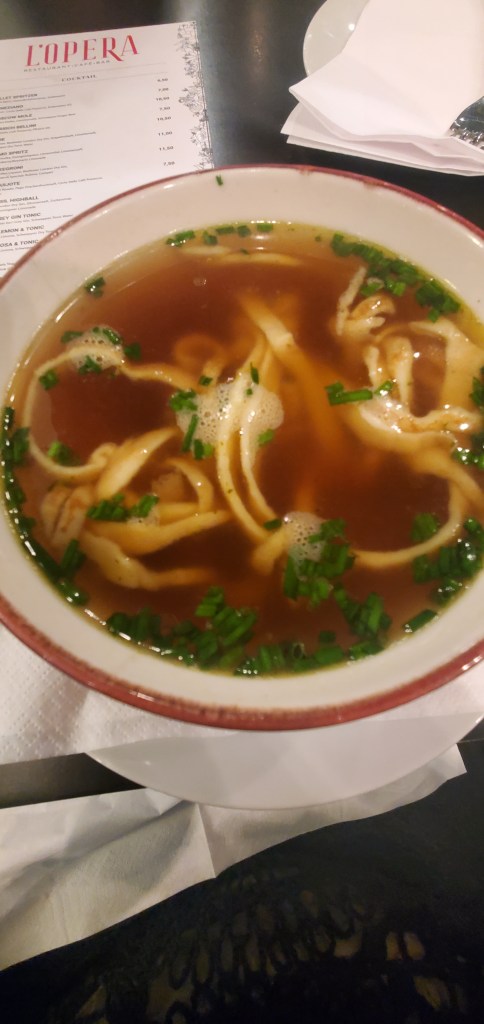
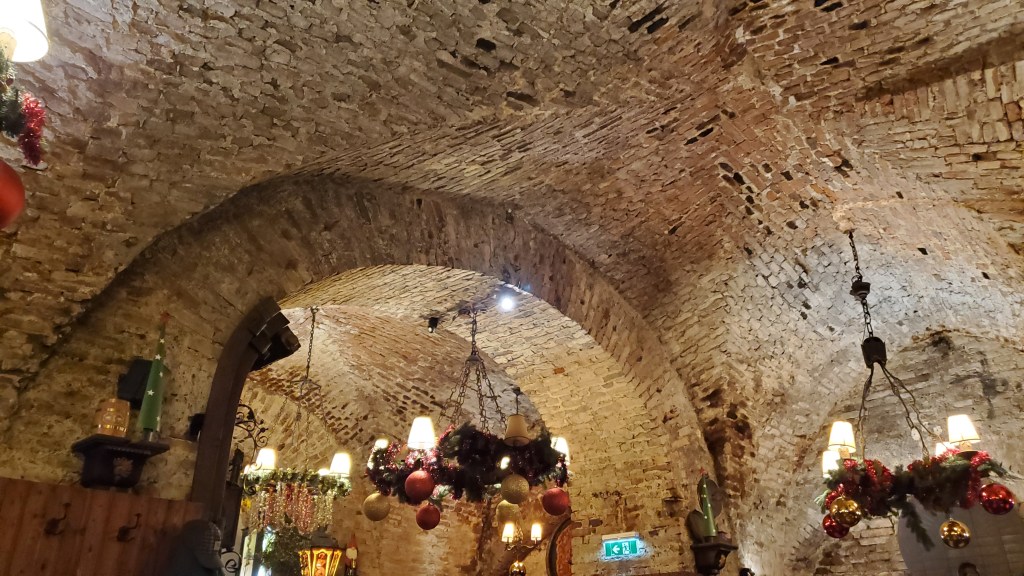
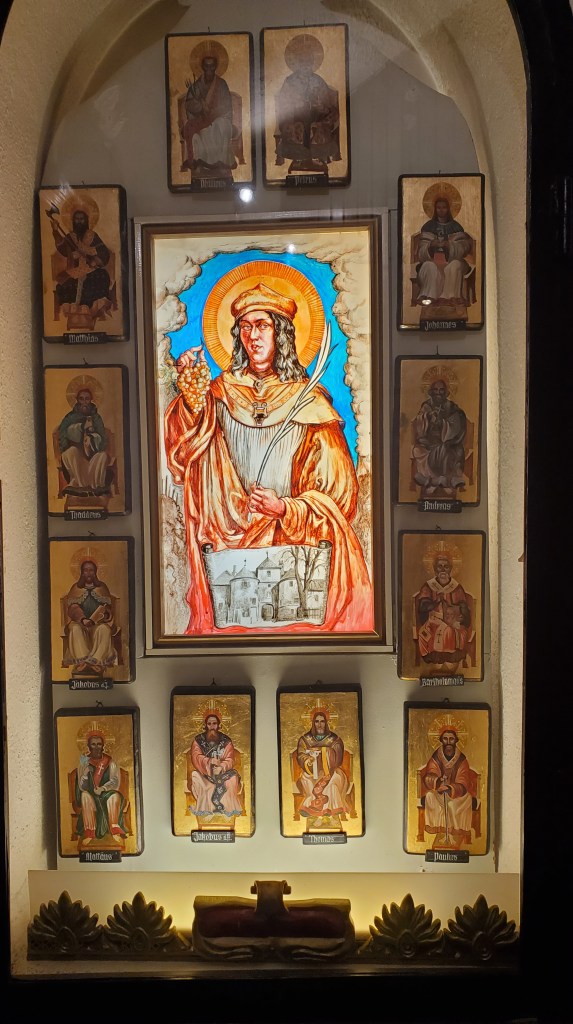
  2. The food – everywhere, but especially at the Twelve Apostles, which was recommended by a friend and serves delicious black currant wine.  I do not know what a vegetarian, let alone a vegan, would do in Austria, however. 
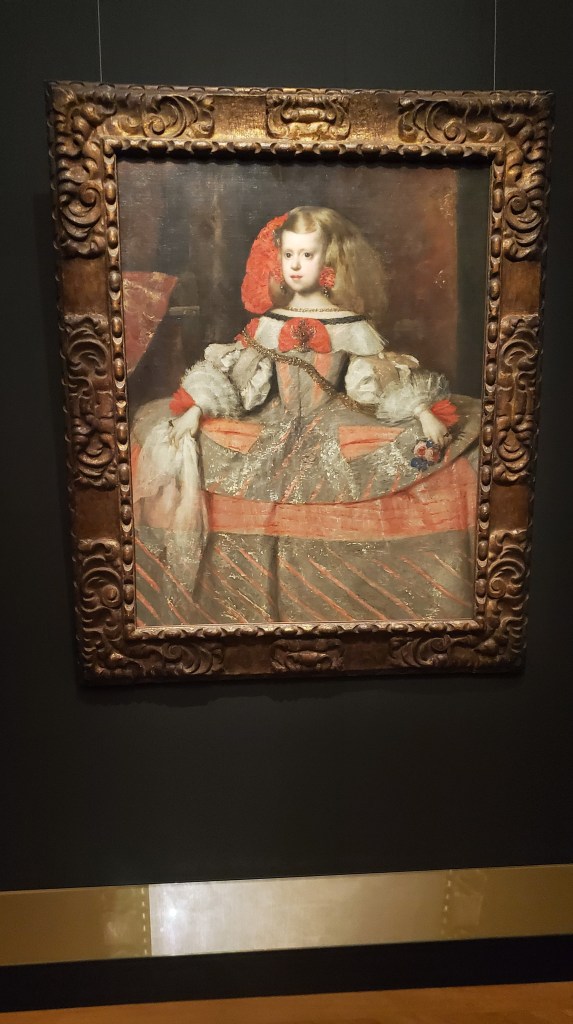
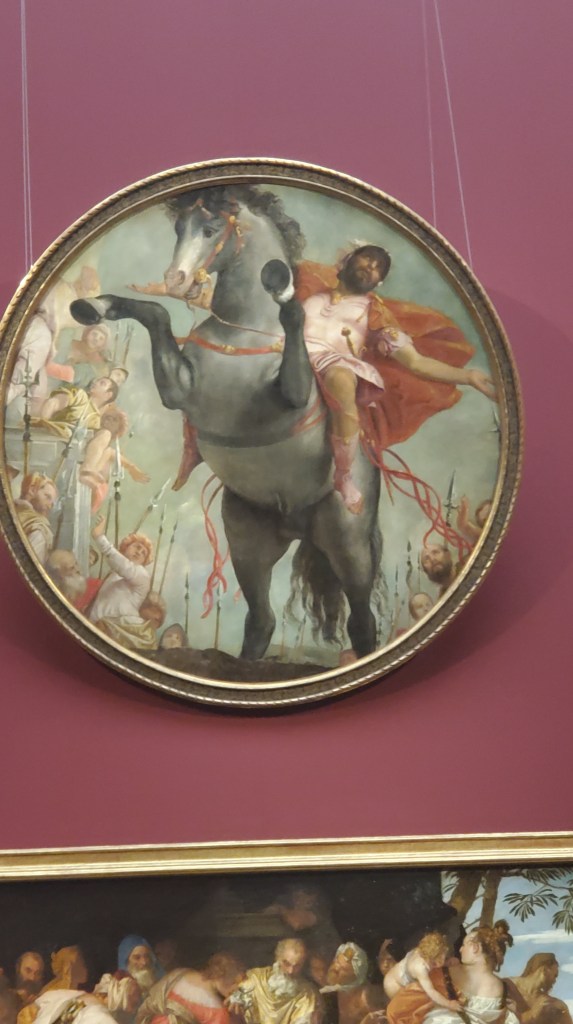
  3. Kunsthistorisches Museum – on par with any great art museum in the world.  I was ever so pleased to run into my childhood “friend”, Infanta Margarita.
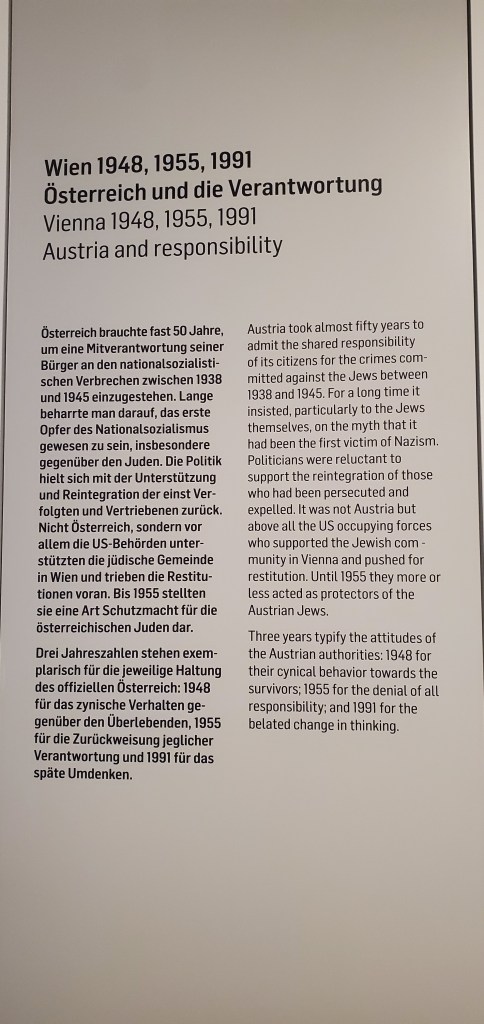
  4. The Jewish Museum – if you are Jewish, it will confirm your worst suspicions.  If you are not, hopefully it will open your eyes. 
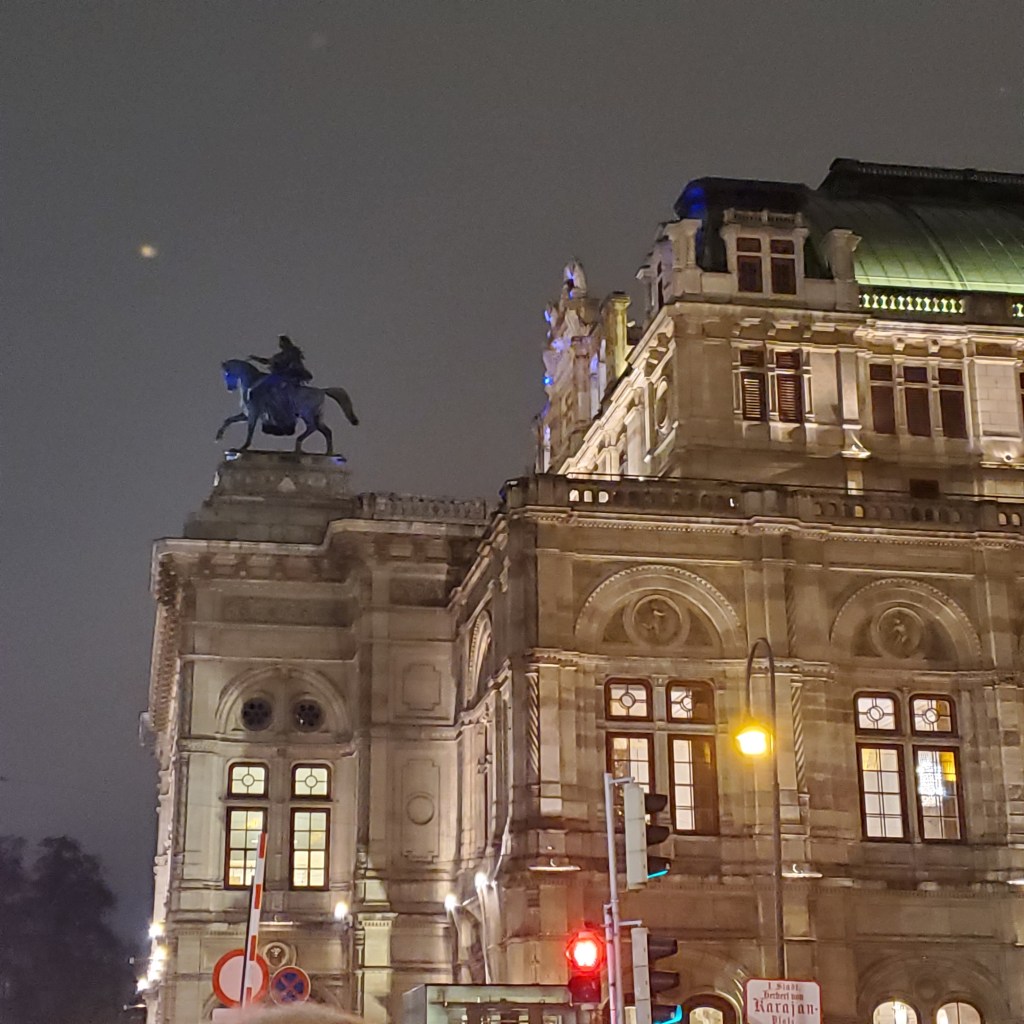
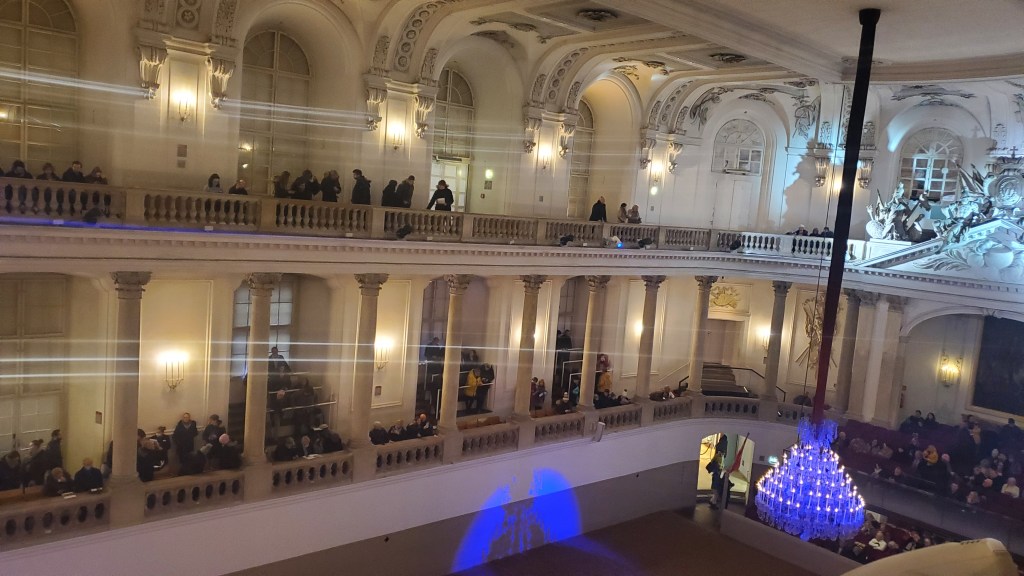
  5. The Vienna Opera – we saw “Tosca”.  I thought “The Magic Flute” would have been more appropriate, but it was my mother’s birthday, and she is the opera connoisseur.  I loved it; she less so.  I maintain that a live experience is always greater than the televised one, so we agreed to disagree.
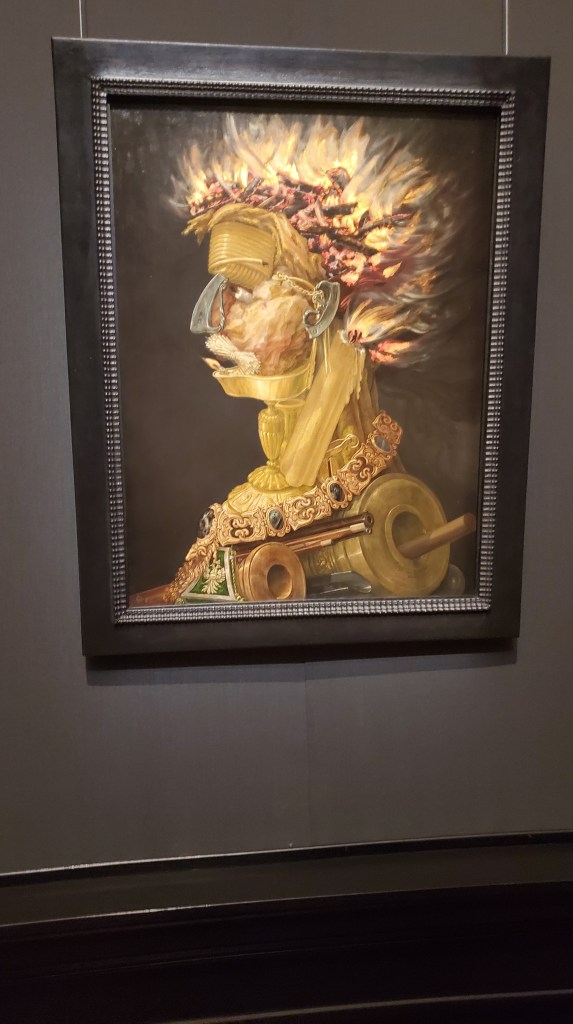
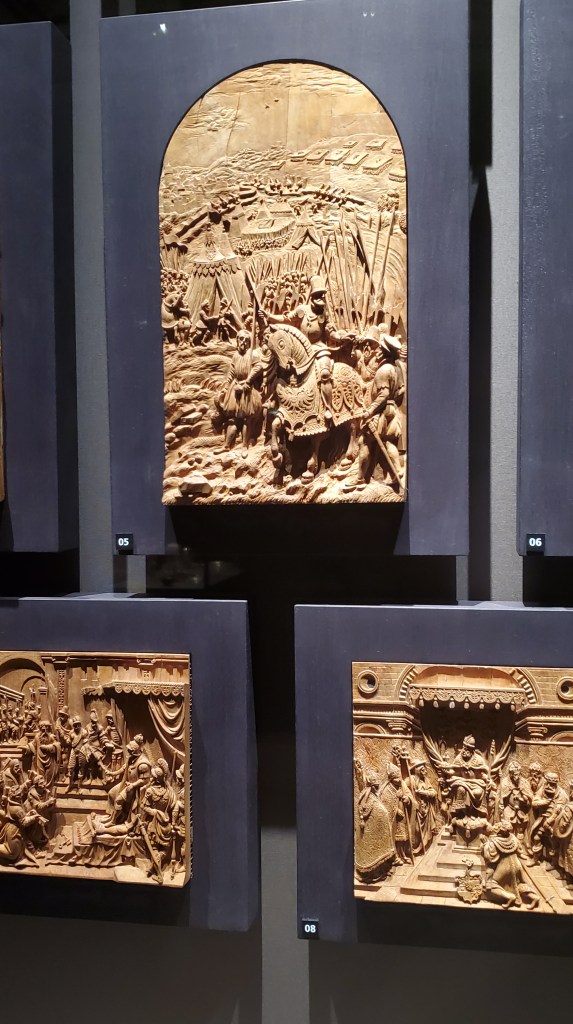
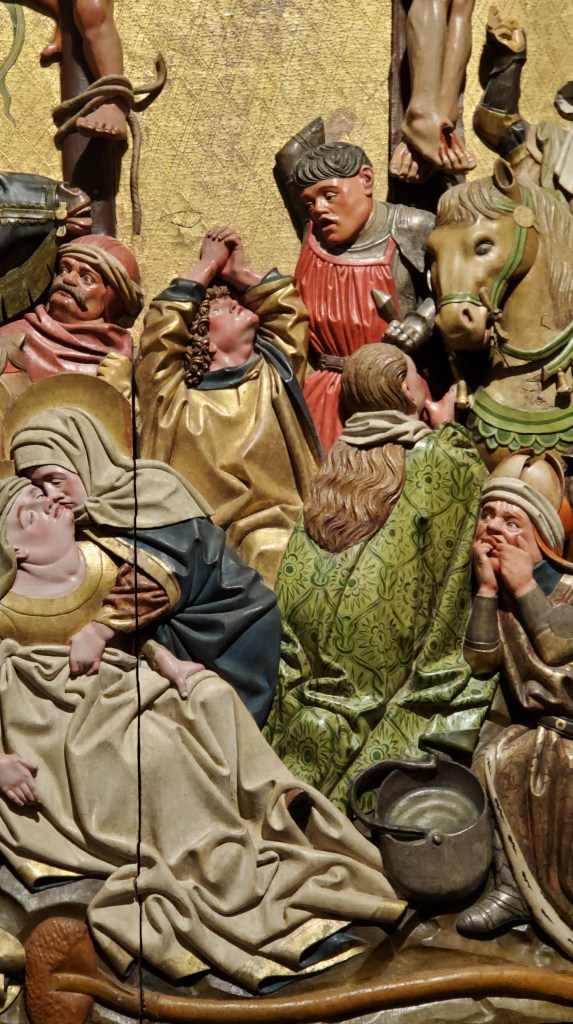
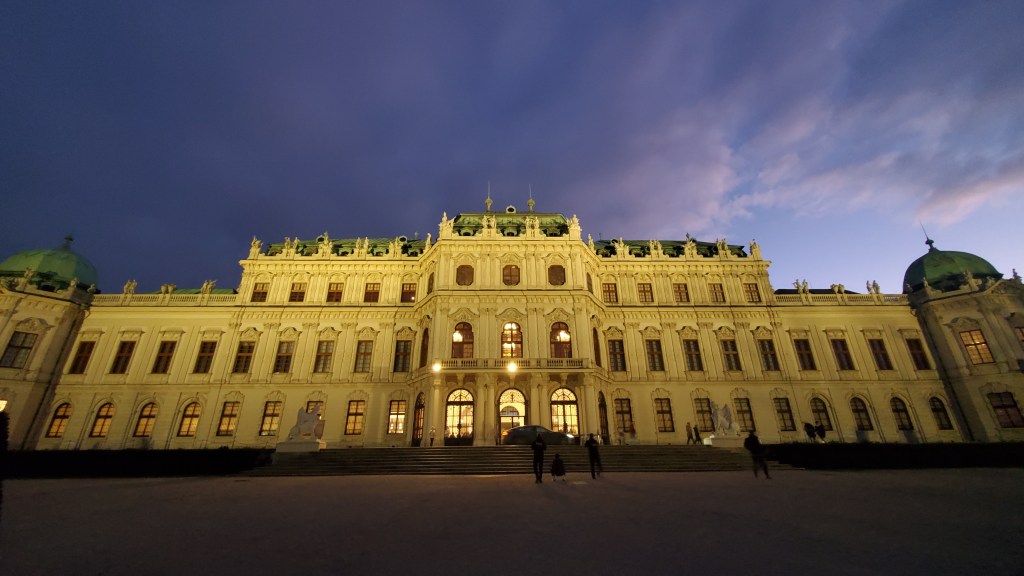
  6. The Belvedere Palace – we came for the Klimt, but left completely mesmerized by this 15th century carved relief altarpiece.  How come it is not more famous?  (Or is it, and we just don’t know?)
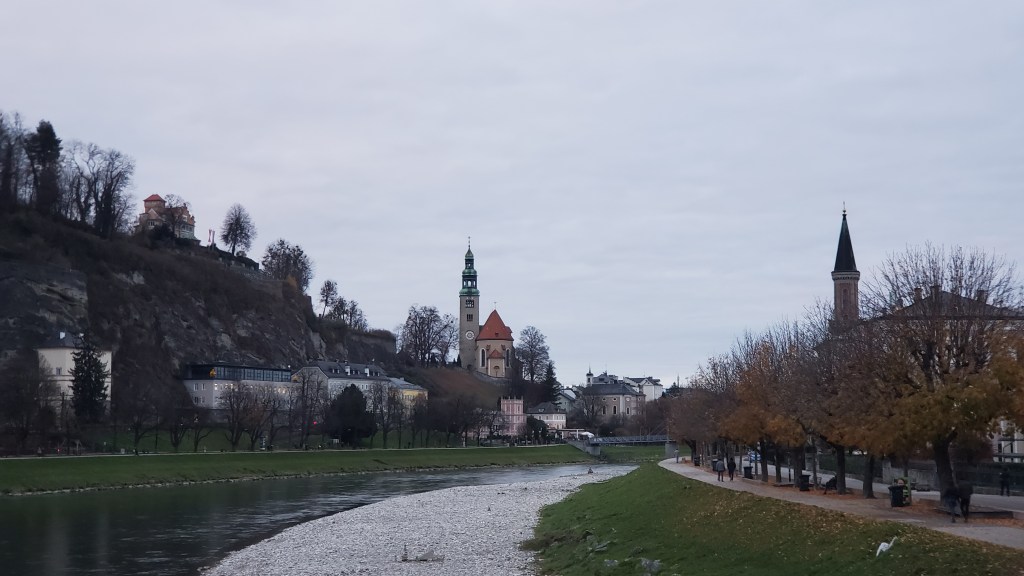
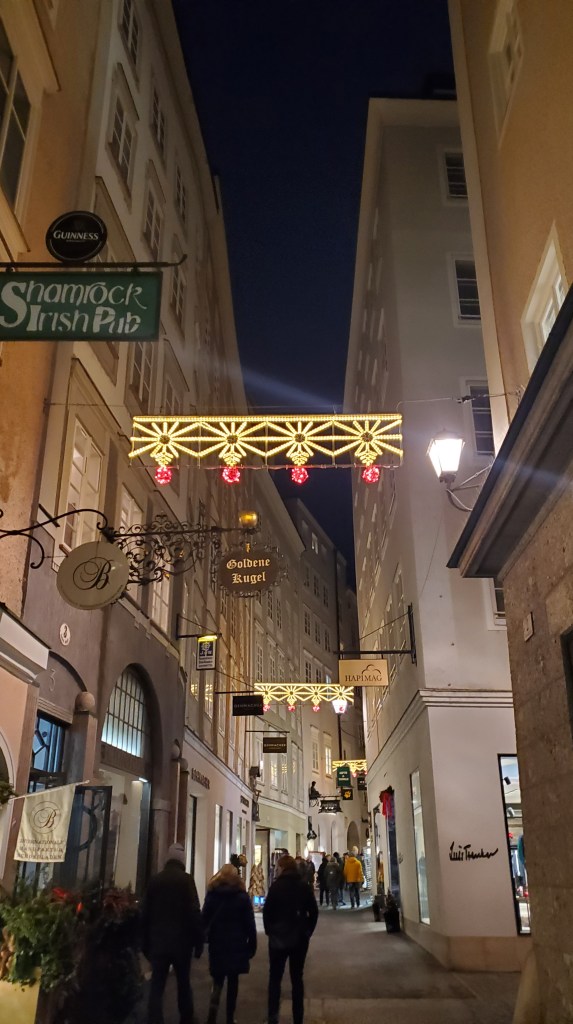
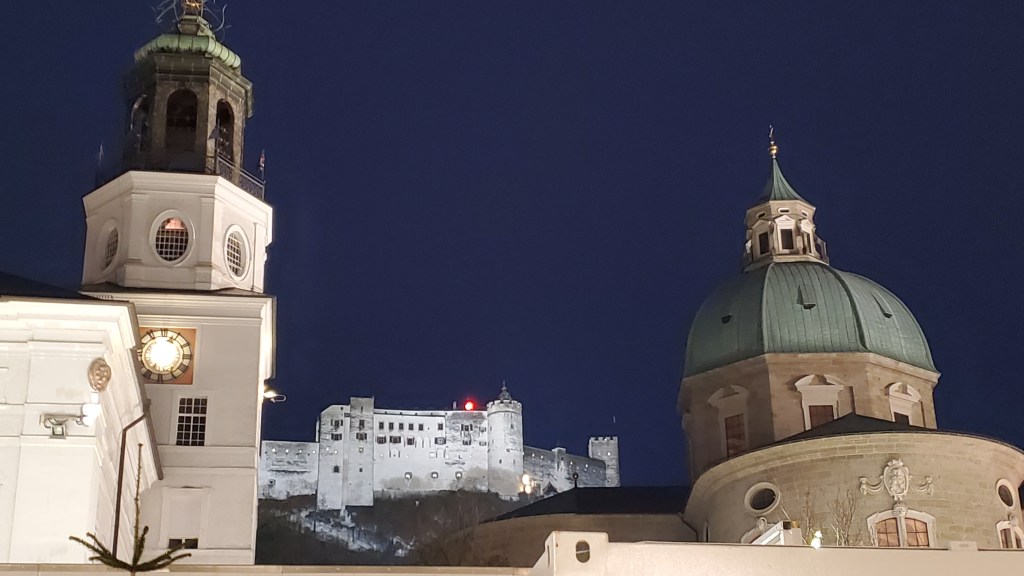
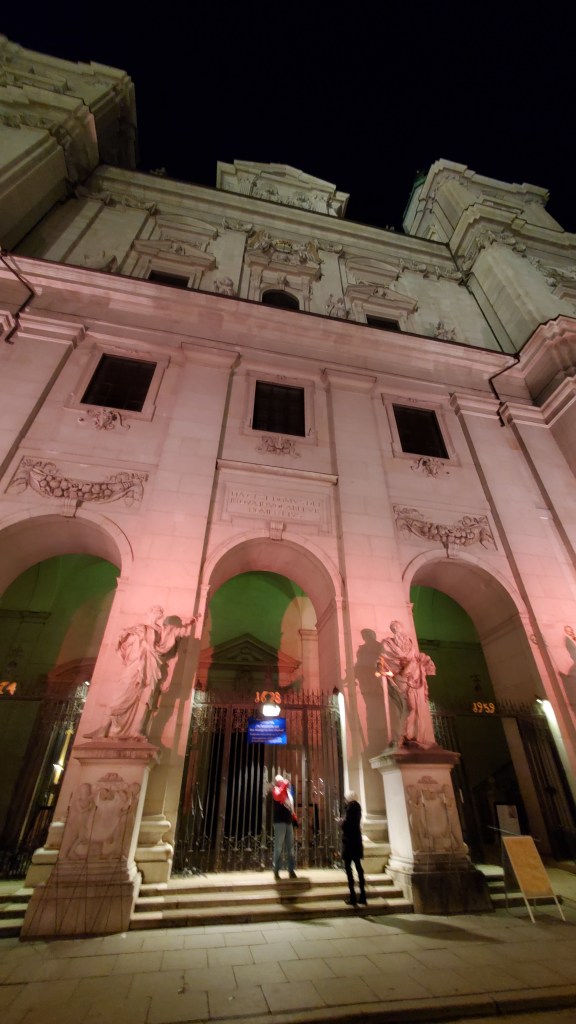
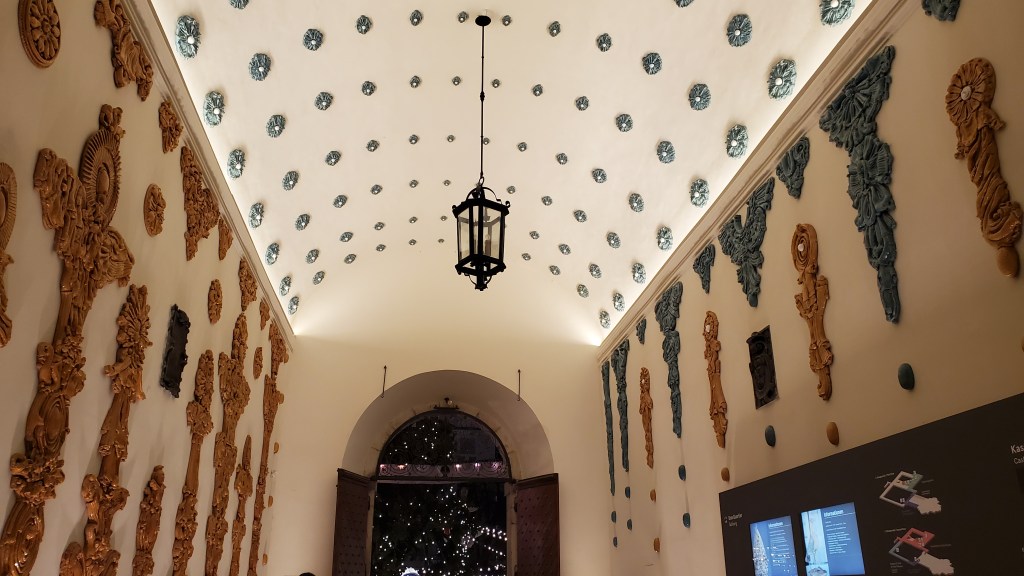
  7. Oh, we also went to Salzburg, which is exactly what you would imagine—quaint, cute, picturesque, and full of Mozart.  Definitely worth a side trip.
  8. And Bratislava – to be continued.

Winter Games

There was only one significant Summer Olympiad in my life https://oldladywriting.com/2020/08/09/personal-best/ , if I do not count the 1924 Paris Games, portrayed so gloriously in my favorite movie, “Chariots of Fire”—and, predictably, the occasional gymnastics competition that I caught when spouse (most decidedly not a fan) was not watching.  But, I have tried to see the Winter Olympics every time, and when they suddenly showed up in 1994 after only two years, it was an extra dose of excitement for me.

Coincidentally, the first Winter Olympics also came in 1924, but if there is an awesome movie about that, I am not aware.

I like to watch pretty much every winter sport with, again, a very predictable exception of curling.  Some of it might be going back to the fact that in the limited TV offerings of my Soviet childhood, European and maybe even world championships of figure and speed skating, alpine and Nordic skiing and, of course, hockey took up a lot of viewing time.  If something similar was going on in the summer, I cannot comment—summers were not spent in front of TV. 

The first Winter Olympics I watched were the 1984 Sarajevo Games, they of the incredible Torville and Dean’s Bolero.   Although we had more channels than I was used to, still, this was before cable and all of the other choices we have today, and my parents would not have missed the Olympics.    It was a great time, seeing familiar sports (because to this day I have no concept of American football, and understand that baseball is basically an opportunity to enjoy a hot dog for the price of a steak), and even some of the athletes familiar from the Before Times.  I may or may not have pranced around our living room to my own choreographed Bolero moves, as my love of Christopher Dean momentarily overcame my dislike of Ravel’s music.

And then came Calgary 1988.  I was in college, and in my first wonderful year of solo apartment living. Although there were many highlights, including the Jamaican bobsled team, what I remember best is that, while almost everyone left for winter break, my BFF and I, neither in possession of a TV set, would trudge to our old dorm, watch the games on the TV in the first floor lounge, and bluntly discourage any stray denizen of East Quad from attempting to change the channel.  There was one timid freshman who seemed to cherish a hope that he might glimpse some other program during this, his first big break away from home, but that was not to be in the presence of two brash Russian women.  Eventually, he succumbed and joined us in our ardent and vocal support of Katarina Witt and Alberto Tomba.

That also happened to be the week that we somehow discovered the invention of answering machines, and were making an almost daily drive to the F&M Drug Store, now defunct, to buy, try, and return them in the quest for the perfect one, and then run to the payphone during commercials to check if anyone left us any messages.  If the machine picked up after the first ring, there indeed was a message—in my case, inevitably from that moronic boyfriend who once used up the entire answering machine tape reciting the Gettysburg Address.  Overall, this technology ended up getting used more for evil than for good, especially by my grandmother, who immediately mistrusted it and assumed that recorded message in response to a call is a harbinger of doom and a sure sign that I am dead or at least in peril, for what possible reason could any human have to be away from their landline, at any age or in any circumstance?  In subsequent years, she has also been known to use up the entire tape with messages of escalating fury, usually in a span if some minutes, but in February of 1988, this new toy seemed hopeful and benign.

By 1992, I owned a TV set.  Well, more accurately, my law school boyfriend did, and Alberto Tomba temporarily replaced Matlock in his affections.  I seem to recall an unusual number of figure skating bloopers that year, with women flying out of hands of their partners and crashing into boards, people crashing on their heads, and that one female skater who fell literally every time she stood up and eventually gave up.   Curiously, I cannot find any validation for this after an afternoon of extensive research, so either my memory is terribly flawed, or there is a major decades-long cover up.  If anyone has any information, please comment!

I must add that in Winter Olympics, I do not always root for the Home Team, whatever name it might bear over the years[1].  In speed skating, I cheer for the Dutch, the historic masters and inventors of the sport.  If a Dutch skater wins, I stand and sing “Wilhelmus van Nassouwe”.  OK, sing is not what I actually do—I mostly hum with interjections of “Prinse van Oranje” and “Koning van Hispanje” at random times. And I have a shot of genever in memory of Uncle Art.  I have no idea if he enjoyed speed skating, but he was Dutch and liked genever, and that’s good enough for me.

In hockey, my loyalty is also time-honored.  My grandpa was a huge hockey fan, and a great admirer of Team Canada.  I live in Hockeytown, USA, where all the best players have always been Canadian[2].  I actually know the words to “O Canada” and cry every time I hear it, and pretend to be Canadian whenever I think I can get away with it[3].  And of course, Canadians are masters and inventors of the sport.  Canada is near, and grandpa is always is my heart and never far from my thoughts.  His saying, whenever a match outcome was less desirable was “Friendship won”.  Oh, would that everyone had his generosity of spirit!

In bobsled, I root for Jamaica—who doesn’t?

This year, the Russian Freestyle Skiing team is packed with athletes from my home town.  How cool is that?  I am not entirely sure what this event is, being that it is a newer one, but I am watching, and cheering.  I did hear one commentator acknowledge that a competitor was from Yaroslavl, which filled me with pride and joy.

Final thought:  When I asked my students whether they had any questions (after I just finished talking about regulatory compliance obligation, an understandably riveting topic that kept everyone awake), the only one they had is the only one that was at the forefront of everyone’s minds:  were Nathan Chen’s scores inflated?  Because as a professor I must always take an opportunity to educate, I responded that no, I do not think so, and that he is indeed extremely capable.  Privately, I awarded Nathan Chen extra points for skating to both Charles Aznavour and Elton John. 


[1] Currently, it is Russian Olympic Committee, but throughout the history of the modern Olympics, it competed as the Russian Empire, Soviet Union, Unified Team, Russia, and Olympic Athletes from Russia.  I am not bothered by the absence of the flag, but I miss the anthem. 

[2] Occasionally they are Russian

[3] No, I am not making a false claim to citizenship, this is just in casual conversations—don’t report me to IRCC!

Murder at the Marsh

It never ceases to amaze me how certain things, activities, even people that seem irreplaceable are, in fact, not.  Along the lines of favorite things that no longer are, https://oldladywriting.com/2019/08/06/a-few-of-whose-favorite-things/ I once kept a list of “Things that I Loved That Got Discontinued”.  When life was less full of stuff, before a certain gazillionnaire made everything magically available for purchase online, finding a substitute for certain beloved items was much, much harder than it is today.  I have to say, though, some of these still have no parallel. 

Shanty Creek Resort, site of the below-mentioned Oktoberfest and many a ski-trip since
Not the actual photo of incomparable deliciousness, but a close approximation.

The items I miss the most are: Celestial Seasonings Irish Cream Tea, Breyer’s Vanilla Chocolate Almond Swirl Ice Cream, Peanut Butter and Jelly Pop Tarts, and Lean Cuisine Linguine with Clam Sauce.  I actually wrote to Lean Cuisine when I could not find my favorite entrée in the frozen section of my local Meijer’s, and they wrote back that it had a “small but loyal following”.  What they meant is, it was not selling well. What I read was, there are others like me, who are they, where are they, can we form a club? To this day, I have not found a more delicious linguine with clam sauce at any restaurant from North America to Italy itself.  As for tea, I visited Celestial Seasonings headquarters—which merits a separate story, because it was a magical experience—and was told roughly the same thing about the Irish Cream tea.  A pity about all these delicious foods.  Tastes are hard to replace.

Amongst the non-edible items, I miss St. Ives Henna Shampoo, although it is quite possible that I just mourn the thick hair of my younger days.  I just searched and saw it on EBay for $80, and died laughing.  That’s nothing, though—the apricot variety, with which I am not familiar, is going for $120.  I don’t know what miracles shampoo would have to perform for such price.  I would probably pay that much for the linguine with clam sauce, though—I have my priorities.

I also listed several experiences that are never to be repeated, such as the Oktoberfest weekend at Shanty Creek resort in Bellaire, Michigan—a magical weekend during which spouse fell in love with spaetzle and won an apple pie in a pumpkin seed spitting contest, and just had fun badly dancing the polka.  This was even before I liked beer!  We attempted to make it an annual tradition, but as soon as we registered for the following year, it was cancelled never to be enjoyed again.  Until we went to the original Oktoberfest in Germany—and again, our luck manifested itself, because the following year, the plague came, and Munich has not held its celebration since…

But there is nothing that I miss more than Murder Mystery Weekends.  Back in the days before all information came from the interwebs, we used to search for fun activities in the magazines.  This seems impossibly quaint now, but I remember vividly perusing the pages of AAA’s Michigan Living and uncovering all sorts of cool stuff, like the aforementioned Oktoberfest. 

Participation in murder mystery weekends required teams of three or four, and spouse and I joined forces with his parents.  This was over 20 years ago, which is shocking in itself, and remain the pinnacle of my relationship with my in-laws.  Oh, this was serious business!  We would show up at the Marsh Ridge resort in Gaylord, Michigan for a Friday night dinner, when the plot was set and the first murder would occur.  Inevitably, we missed it.  No one is that focused after a week’s work and a drive Up North.  Then the real entertainment began.

Certain rooms at the resort were designated as “crime scenes”.  Teams would be allowed to enter for a few minutes at a time.  We could question the suspects—a pointless task that was usually left to my mother in-law, as it yielded little to no results, but kept her occupied while spouse, father in-law, and I searched for clues by lifting and opening everything that could be lifted and opened.  My first move was always to lift the toilet lid.  There was never anything there. I still maintain that it’s a great hiding place.

Murders and searches would continue throughout Saturday, with a break for lunch.  It was intense, alternately frustrating and exhilarating.  At one point, my father in-law said that even when you return to your own room, you just want to tear everything up looking for clues!  Saturday after dinner, after the last desperate rummage and the last exasperated interrogation, we had to prepare and submit our detailed solution.  On Sunday at breakfast, all was revealed, and the team who solved the most crimes and found the clues was awarded the most points and was declared the winner.  I have to add that the young man by name of Jim Russell who masterminded and wrote the intricate scripts and played the chief detective who served as the sort of advisor to us hapless sleuths was an earnest and thorough host whose genuine love of the game prevented the experience from becoming the random unsolvable farce that murder mystery dinners and weekends usually are.  No, this was like the early seasons of Midsomer Murders, convoluted plots full of wacky characters, mild shocks, unexpected laughs, and satisfying conclusions. 

One of the resort rooms in all its ’90s’ glory. Note the jacuzzi tub on the left–not that anyone had time for that during the Murder Mystery weekend!

We progressed steadily up the championship ladder, ransacking hotel rooms and working our little gray cells, and finally won—of course we did!  But as is the way of things, instead of being rewarded with the grand prize of free return the following year, we were informed that the resort will no longer be hosting murder mystery weekends, and were given gift certificates for the pro shop.  We loaded up on sweatshirts, the last of which, barely worn, I just recently donated (it had neither hood nor pouch, and the sewn on logo was scratchy).  It is small wonder, because the cost of the weekend was a bargain, and the additional property damage inevitably caused by overzealous amateur investigators was not sustainable.
A couple of sad mystery-less years followed, during which spouse and in-laws and I in vain searched for a replacement.  Then the weekend was remounted, but with a different cast and crew.  It became unnecessarily challenging, and it didn’t take.  We did win the consolation prize for funniest answer with a hilarious poem which we sadly did not preserve—but the prize itself lives on, my lucky running hat which accompanied me on three half marathons, two marathon relays, and countless races from one to ten miles.  

Then I had another kid, another job, and life became busier.  The more things change, the harder they are to change back.  But I miss the utter escapism of those murder mystery weekends, and I miss the good times with my in-laws.  Both are high on the list of Things that I Loved That Got Discontinued.