Godfather and Me

I had a client once who professed to be a disciple of The Godfather.  He claimed that he read the book daily to gain wisdom.  It was his Bible, or, as they say in Russia (for he was indeed Russian), “table book”—meaning, a book that you keep on your table for daily reference.  He was a product of The Wild 90s—a decade of extreme instability and possibilities back in the Old Country, so no wonder one or both Dons Corleone were his models and ideals.  It was quite a different time in the U.S. in the 90s, where I was focused on building a career and a family in a way that did not involve any bloodshed.  And so, the hopeful young me thought that there were many literary characters much worthier of admiration.
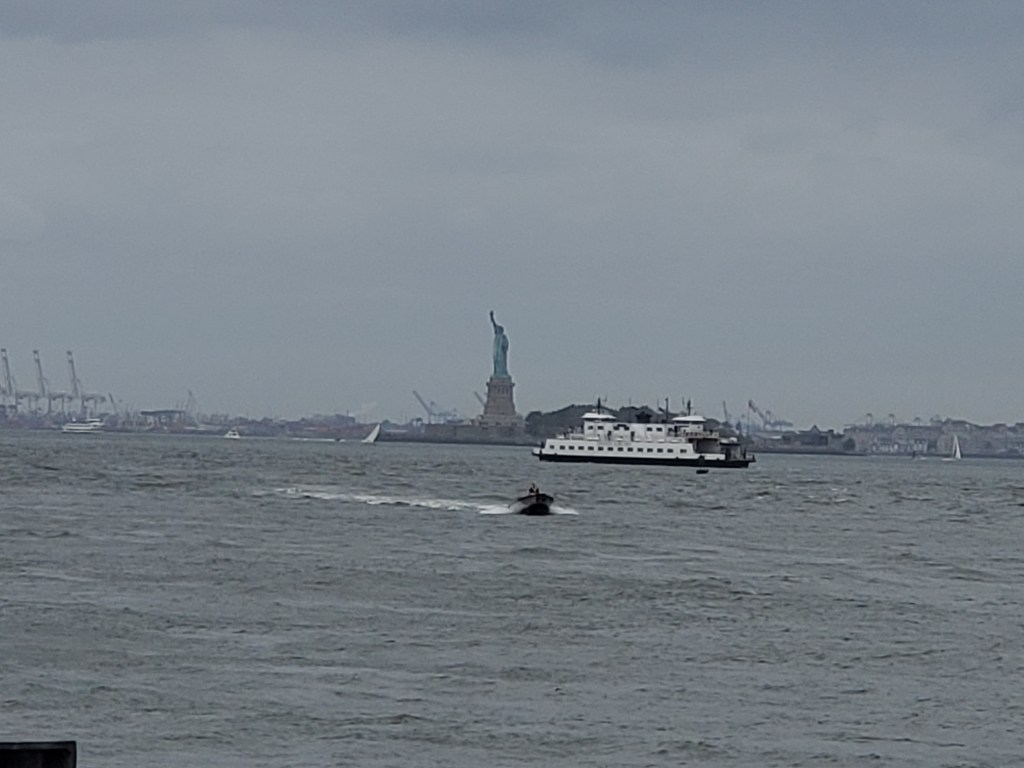
Coming to America (actually, already here, just out and about)

It took me quite a few years to appreciate The Godfather in my own way.  I first saw it as a teenager; my mother must have rented it in her quest to absorb American popular culture (a trend that, at least for her, turned out to be reversible).  I liked it—who wouldn’t—but I did not really “get” it, not completely.  It was certainly a big story, with an iconic score.  At the time of the first viewing, the death of Sonny Corleone touched me the most.  I was no stranger to similar scenes of unflinching and unfair brutality in Soviet cinema.

I am not posting any scenes of murder and mayhem in this family-friendly blog.

Some decades later I caught The Godfather Saga, a spliced chronological combination of the first two movies, when it was once (once!) shown on TV in 2012.  I thoroughly appreciated the sequential flow, and finally jumped on its bandwagon.  Since there were no more movies to be had once I watched the final part of the trilogy, I read the book and all its sequels, including the ones written after Mario Puzo’s death.  Conventional wisdom claims that the film is better than the book.  Nah, it’s just more recognizable.  The book is fine.  However, how that client of mine chose it to be his life primer is still incomprehensible.  What actual life lessons worth emulating did he really learn from it? I always suspected it was so much posturing…

The story and its characters are so ingrained in our culture that I think we just identify with the familiarity of it.  There was even an episode of “Married with Children” literally called “The Godfather”.  I do not remember the plot (nor is it relevant), but there is a moment when Bud, feeling excluded, exclaims that he is not Fredo, it’s Kelly who is Fredo. 

Going through a particularly turbulent time at work, my mind unearthed this memory, and I became mildly fixated on figuring out who I am in the Godfather universe.  Identifying with the hapless Bud Bundy for the purpose of this exercise, and this exercise only, I started suspecting that *I* was Fredo.  Somehow I came to accept the idea of The Godfather as a microcosm of both work and family life where everyone has a cinematic, if not literary, doppelganger.  Surprisingly (Or not?  No, I really was surprised) there are quizzes to tell you what Godfather character you are.  I took several, with the unexpectedly consistent results.  Spoiler alert: I am not Fredo. 

These highly scientific quizzes are based on the movies and not the books.  In the books, Fredo is a thoroughly debauched and deviant womanizer.  He is not, or not just, the stereotypical middle child, overlooked and unable to find his place among the stronger and smarter siblings.  He is simply unsympathetic and unredeemed.  He is most assuredly not an innocent victim—he is basically not a nice guy.  It was tempting to relate to the slightly less harmful, more sad-sack movie version of him for a hot minute while feeling sorry for myself, but fortunately, the feeling passed.

While I certainly do not, not have I ever, identify with Michael Corleone in any of the movies or the books, I quite [over]use the quote “Just when I thought I was out, they pull me back in.”  It has basically become one of my favorite sayings about the state of my career over the past few years.  But it is just one saying.  The rest of his character and destiny resemble mine not at all.

I would have thought I would be Tom Hagen, at least as a professional courtesy, but truth be told, I am no one’s consigliere, no one’s voice of reason, and much more of a perennial ethnic outsider walking along to a funky beat than he would ever want to be.

And so, the big reveal of the quiz is that I got Kay, Michael Corleone’s second wife.  The highly scientific explanation was that I allegedly can be naïve and foolish when it comes to judging others.  That much is true—I have been known to misplace my trust in folks. But who hasn’t?  I protest a lot, but despite my attempts at outward cynicism, I hope for the best—and “hope dies last” is another favorite mantra. 

Kay has always been one of my least favorite characters in The Godfather.  She is just not cool in the romanticized world of the mafia dons.  But, she is also smart, independent, and—this is a big one—not a ruthless killer.  She finds the strength to break with the evil empire and make a new life for herself, and, ultimately, I can relate to that so much more than to anything and anyone else in those movies and books.  It doesn’t change a thing, but even so, I am feeling pretty good about this.  It’s nice to know.

And yet sometimes—sometimes—I cannot help feeling that in the parallel Godfather universe, I am the horse’s head.

Featured

Never Not in a Book Club

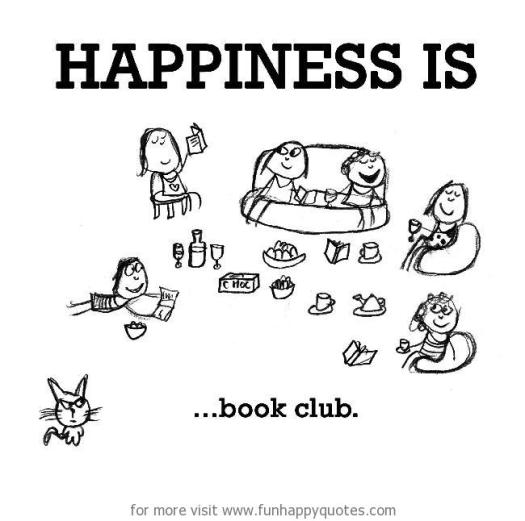
I have mentioned before how much I love reading [https://oldladywriting.com/2021/04/03/so-many-books-so-little-time/].  It is generally a solitary activity, unless one is in a book club.  The need to share thoughts, ideas, impressions, to laugh and maybe even cry together over a story is so basic and valuable to me that I never not want to be in a book club.  Even the worst book club, in my experience, cannot be all bad because, well, books!

Book clubs, I have been in a few.  Initially, I thought they have to be run by libraries, for that is how I first got into one.  We moved, I found a new library with a new book club, we moved again, and so forth.  I loved the discussions, but eventually tired of the transient nature of those institutional associations.  The last one, at the library in our current town, was a lunchtime affair.  I was the only one who had to make an effort to come from work every month; everyone else was decades older—with the expected outlook on life.  Conversation was decent until the librarian assigned Kevin Boyle’s “Arc of Justice: A Saga of Race, Civil Rights, and Murder in the Jazz Age”.  As other members spent MY lunch hour lamenting the collapse of property values in Detroit thanks to The Great Migration, I fled never to return.

I had a great time forming a book club with a couple of gal pals.  It evolved—or devolved, depending on your viewpoint—almost immediately into an Eating and Drinking Club.  The books were entirely incidental to the social aspect.  At some point, there weren’t even any books.    We clung to the pretense:  Book Club goes to the movies, Book Club gets Thai food, Book Club visits speakeasies, Book Club actually tours a library.  Eventually, the Eating and Drinking Club grew into Weekly Beer Night, and it happily continues as such to this day. 

And yes, you know it’s coming, my tale of being in the worst book club ever–The Rich Ladies’ Book Club.  I was invited by an acquaintance, so in my defense, I did not know that books alone would not provide enough commonality or shelter within the group.  In their defense, I suppose no one expected a working class interloper or was prepared to deal with one.

There were some positives, such as everyone taking a turn selecting the books, and the books were generally wonderful—that is to say, normal book club fare.  The Rich Ladies did not always read them, but I did, and greatly enjoyed.  The overwhelming negative was the steady stream of one-up-woman-ship.  There were endless talks of the cost of kids’ hockey training and travel (while I wondered when did hockey become rich people’s sport and remembered how back in the Old Country any frozen puddle served its purpose) and other sports.  My oldest was already involved in theater, which did not impress anyone; my invitation to a community theater play was met with baffled murmurs. That is your child’s extracurricular activity?  Instead of expensive sport?  How very unusual…

I was always vaguely feeling like I was in a badly scripted parody of “Mean Girls, the Pre-Menopause Years”.  One time, everyone effusively commiserated with one of the Rich Ladies, whose interior designer’s unavailability drove her in desperation to buy a mass-produced lamp at Pottery Barn (while I have been generally satisfied and occasionally thrilled by the offerings at Target).  It was a calamity to be sure, but kudos to the resourceful lady of the house who braved the common throng and saved the day—and one could hardly tell that the item was not bespoke.  Well, as long as one did not examine it closely.

The proverbial pièce de resistance was the time I brought a bottle of wine, which was an expected offering at each meeting.  It was—wait for it—white Zinfandel, and from an unknown label to boot.  It was from a local winery owned by someone I knew, so I thought that was a nice touch.  Gasp!  If there was any doubt before, this misstep immediately outed me as an unwashed mass.  The hostess, a woman with a carefully cultivated stereotypical Gallic aggression I never actually encountered in France, insisted that I can only drink the wine I brought, being that it was not fit for The Rich Ladies’ consumption.  Not wishing to cast their precious nectars before such a swine, they shared their wine bottles; I drank some of mine and took the rest with me (of course the hostess politely but firmly requested that it be removed from her home).  To be fair, this was before I learned that what I really prefer is a robust red.  But you know what?  If I had to do it all over again, I would not only bring white zin—I would bring a box of it! [I am deliberately not posting any photo of wine in a box, because I do not want to shame any wine maker or drinker thereof]  Had I been younger and less secure in my proletarian character, or had The Rich Ladies’ snootiness been less absurdly shallow, I might have felt worse.  But as it was, I just never returned to their exclusive club.  I am sure a sigh of relief was breathed on both sides.

One unexpected blessing of The Plague is my current book club, courtesy of bookclubs app and Zoom technology.  There is a core group of four, with occasional drop-ins.  We are friendly, but do not socialize outside of book club—not the least reason for which is that we live all over the country.  We have spirited and deep (if I do say so myself) conversations about the books we read, and occasionally go off on tangents.  Some months I am reluctant to log in (for I am in charge of technology), because I would rather vegetate on the couch, yet I inevitably emerge refreshed, encouraged, and motivated.  As much as life has taught me that all things come to an end and that change is inevitable, I sure hope this remains a constant for as long as possible, and that I am never not in a book club.

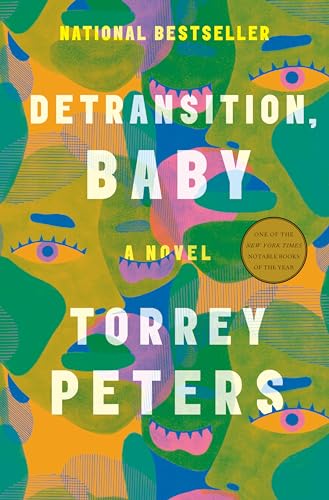
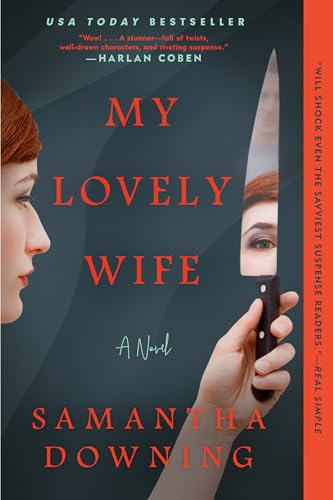
[What follows is the list of books read by my book club that I ranked 5 stars on Goodreads. Among these, I particularly recommend “Detransition, Baby” (no spoilers–but read with an open mind), “The Cider House Rules” (not new, but a modern classic, heartbreaking yet heartwarming), “Station Eleven” (I read it before the plague, and it haunted me until the unimaginable happened, and beyond), “The Midnight Library” (if you ever wondered, like me, where the road not taken might lead), and “The Sign for Home” (one of the most unique, thought-provoking, life-affirming, funny, and touching stories I have ever read–and the author, the wonderful and talented Blair Fell, Zoomed into our meeting and was an absolute joy to meet!)]