Featured

Lyon and Environs

After discovering Beaujolais Nouveau on a trip to France in 2017, followed by some social-distanced celebrations on the Third Thursday of the Eleventh Month during The Plague Years, I decided to add the visit to this annual event, Les Sarmentelles de Beaujeu in the heart of the wine region, to my bucket list.  Spoiler alert:  I was saddened, but not entirely surprised to discover that my wine and charcuterie consumption has a limit.  No, I will not tell you what that limit is, because it is kind of embarrassingly low.  In any case, even before the trip, I correctly guessed that merely drinking copious amounts of wine will not be enough for a European vacation—and decided to add the heretofore unknown to me the city of Lyon to my travels, due to its proximity to the festival.

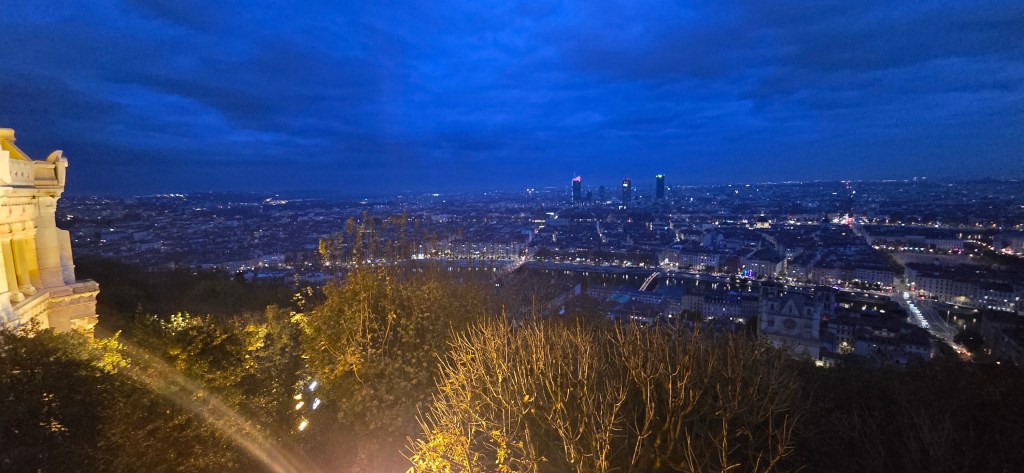
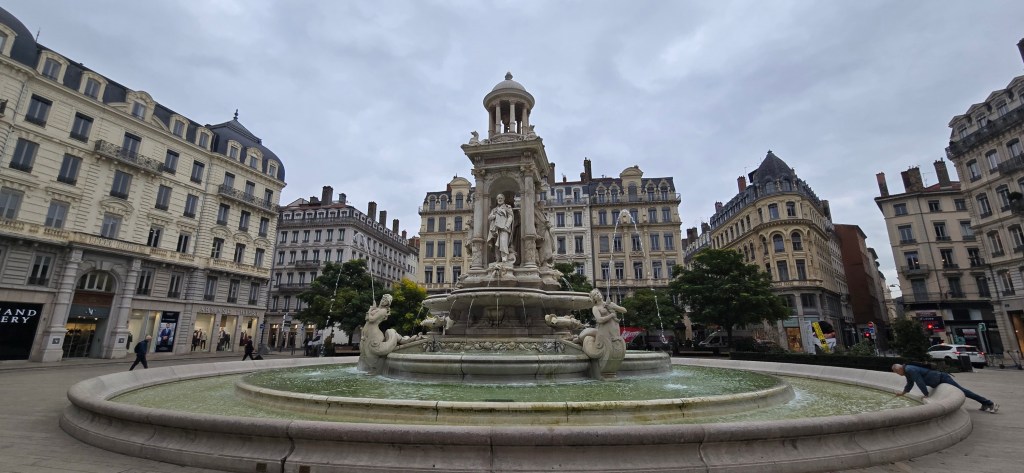
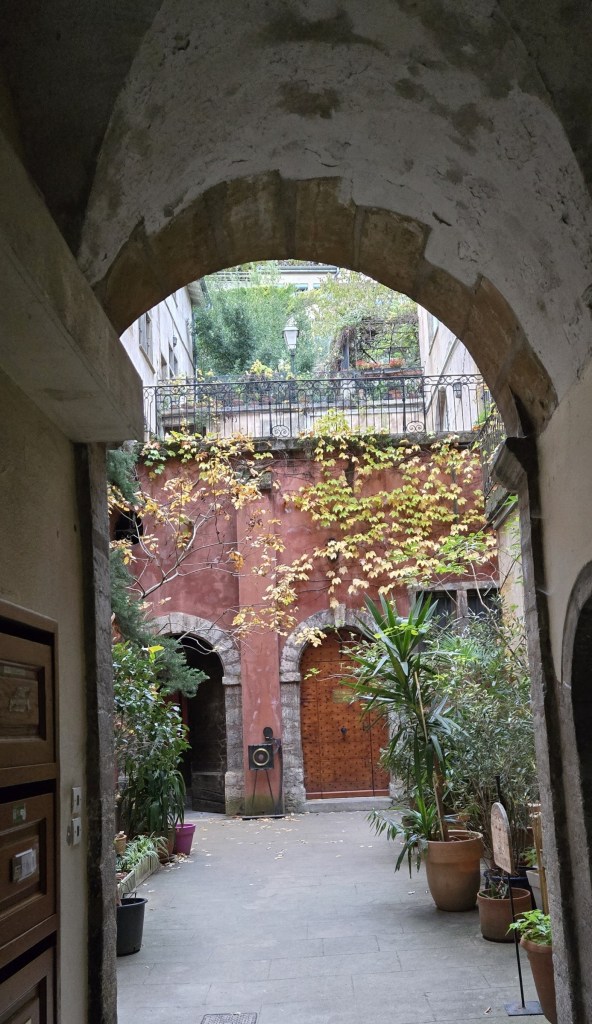
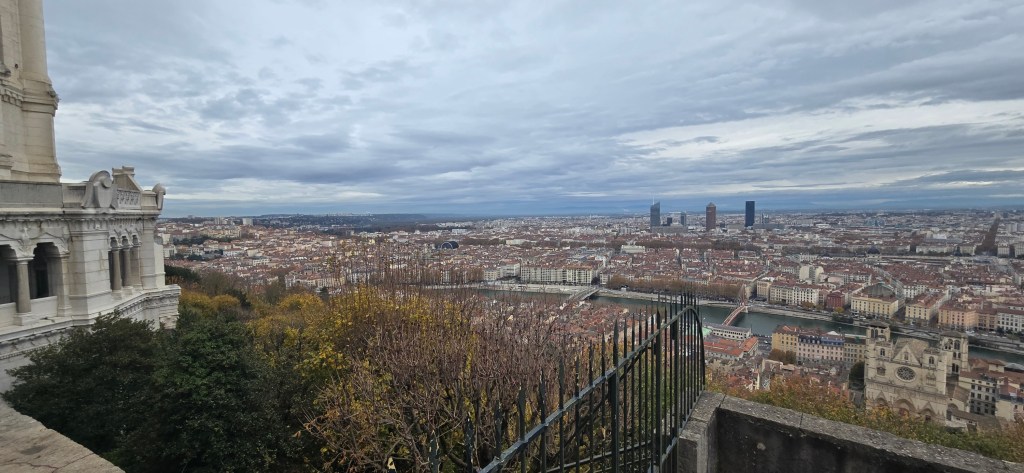
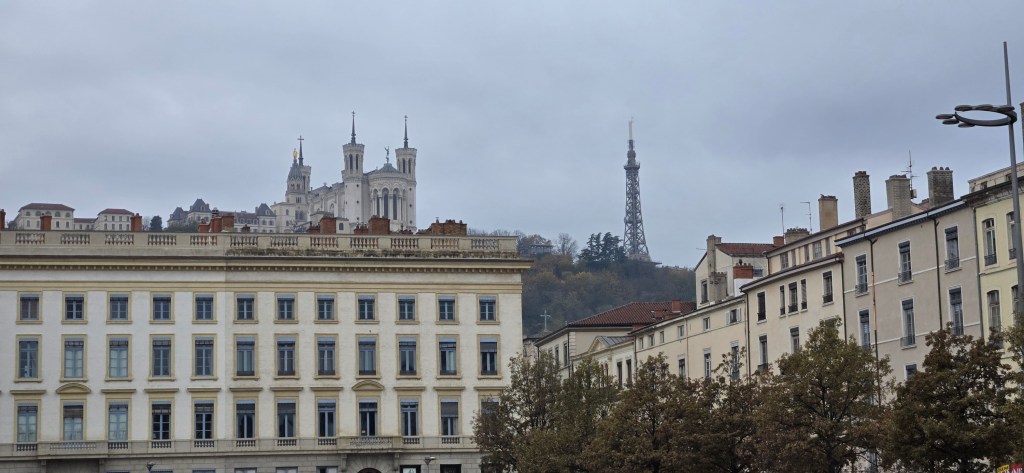
For reasons that are passing understanding, quick online research resulted in a portrayal of this city as crowded and crime-ridden, with traffic jams for days.  This gave me some measure of anxiety, despite the fact that I (1) drove in Munich on the opening weekend of Oktoberfest, (2) drove in Scotland, (3) drove and lived in New York City, and (4) you know of some of my other more colorful misadventures, including being attacked by monkeys.  I discovered Lyon to be just what I expected (once the sane voices in my head, including that of Rick Steves, prevailed), a lovely French town with rich history and interesting food.  Here are some highlights:

The food.  Lyon certainly has its own gastronomic style. I will try anything once.  Once.

Andouillette sausage: Our very first meal upon arrival was to order sausages, Lyonnais and Andouillette.  I just knew “sausages”, and how bad can they be?  I do not eat them at home, they are gross to me, but I enjoyed them in Germany.  And with all the emotional and historical baggage set aside, I have to admit—Germans do them best.  Lyonnais was covered in mustard, which was fine.  The other one was made of tripe.  I am sure Rick Steves warned me, but I forgot. (Also forgot to take a picture of this delicacy; probably for the best)

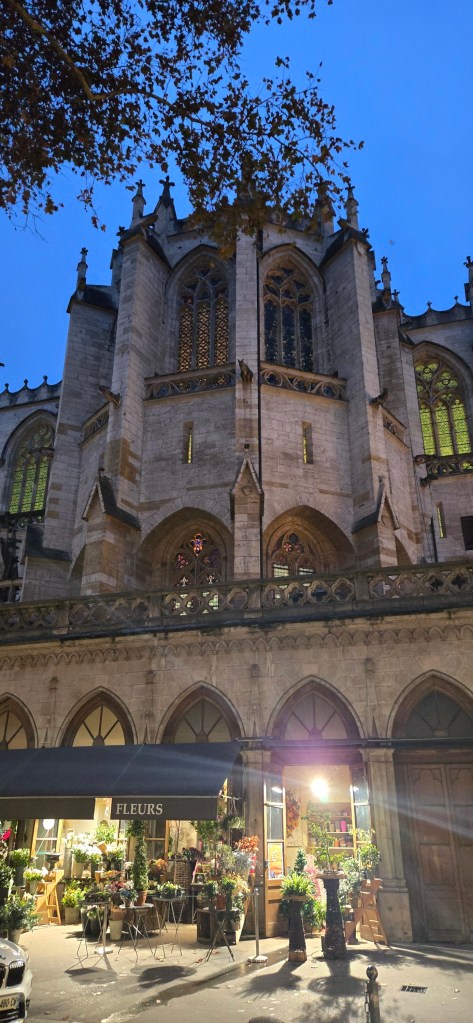
Brioche praline:  I am not a fan pralines.  It is the texture for me.  I was raised by dentists, and have bad Soviet-era teeth, so I am forever conscious when crunchy things come into contact with them (although the biggest villain in my dental saga turned out to be Laffy Taffy—took one of my crowns clean off).  Spouse and I watched people with intriguing colorful packages walk by, and were determined to try whatever extremely popular item they contained.  The actual store turned out to have a line to enter snaking for almost a block.  We demurred, but managed to get in the next day during a slow time.  Having bought the small brioche (which was still quite substantial), we parked ourselves on the nearest bench, in the courtyard of St. John Cathedral, and eagerly unwrapped our package.  It was as expected.  Brioche would have been fine without the pralines.  It would have been better with coffee.  My advice is, get the coffee, and leave this thing alone. 
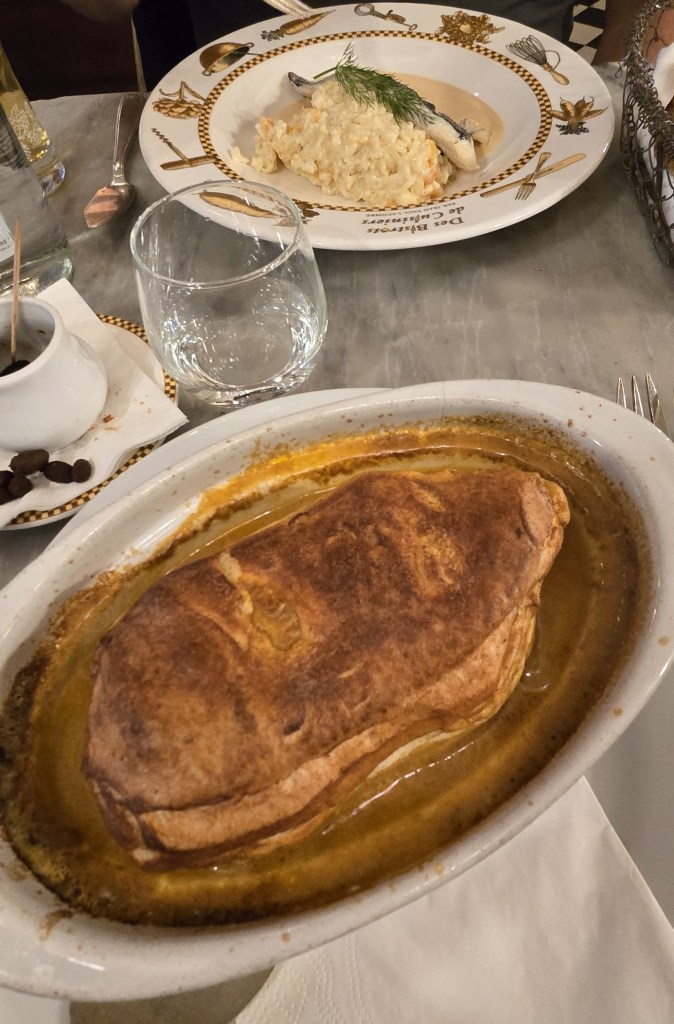
Pike dumpling:  I read that one of the Lyonnais delicacies is dumplings.  I was as game for that as I am for everything else.  I love baos.  I expected a stuffed bun.  I got something completely different.  It took me a bit of time to figure out that the word is not “dumpling” but “soufflé”—confusing, because “soufflé” is literally a French word, so why not use it?  So I basically got a fish soufflé.  It was very airy and delicate and not fishy (and I do not say “fishy” like it’s a bad thing), and I enjoyed.

Cervelle de canut:  It is a creamy cheese spread with herbs and spices, a bit tart courtesy of added vinegar.  To me, it was a less salty, less chunky version of the Austrian Liptauer spread, with which I am more familiar.  Basically, “creamy”, “cheese”, and “spread” are three words that go together in the best possible way. Speaking of three words that do NOT go together, I have not tried Salad Lyonnais.  Bacon, egg, and lettuce together is neither my idea of a good time, nor does it seem interesting enough for a vacation meal. Sorry not sorry.

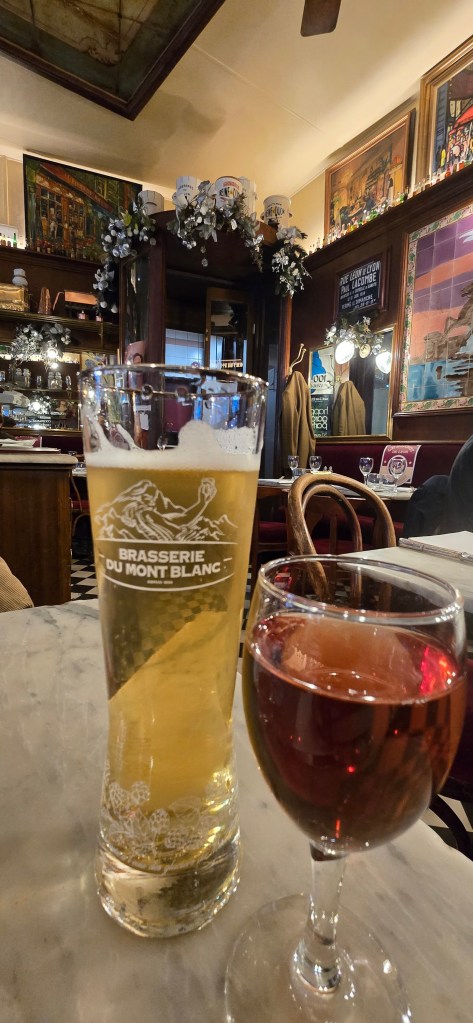
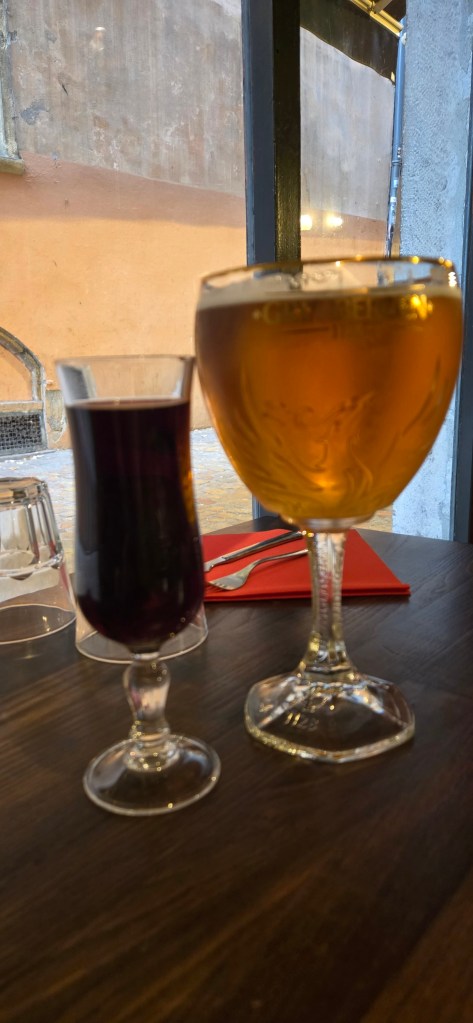
Kir:  It seems that every region in France has its own take on this drink.  I love it in every variation, which is ironic, because I hate black currants.  When I was growing up, I loved the delicate white and red currants, but always found the thick-skinned black ones a bit too aggressive.  Crème de cassis, however, is delicious when diluted with champagne to make Kir Royale.  In Brittany, I discovered Kir Breton, which substitutes apple cider for white wine.  In Lyon, they unironically serve up Communard, with red wine in place of white.  Next time I host a party, I need to offer a flight of Kirs.  I just came up with this idea, and hope I will not forget it.
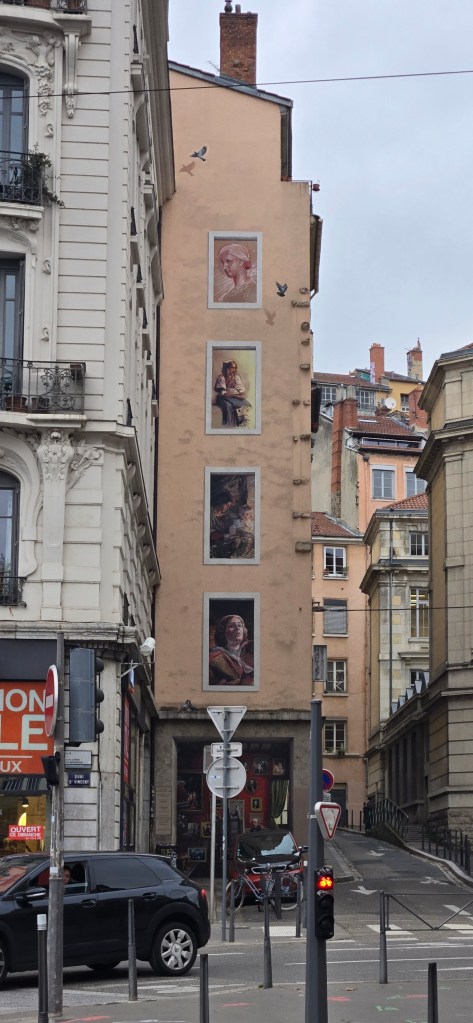
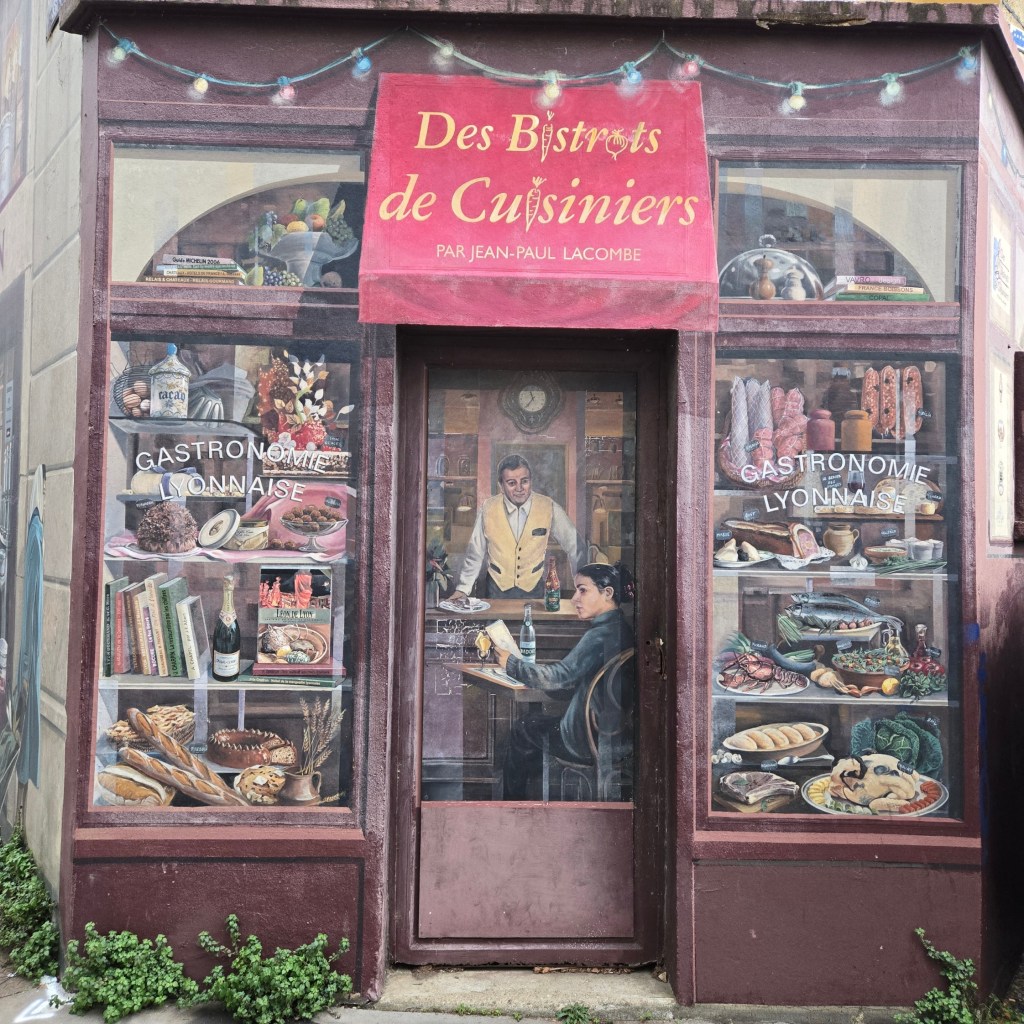
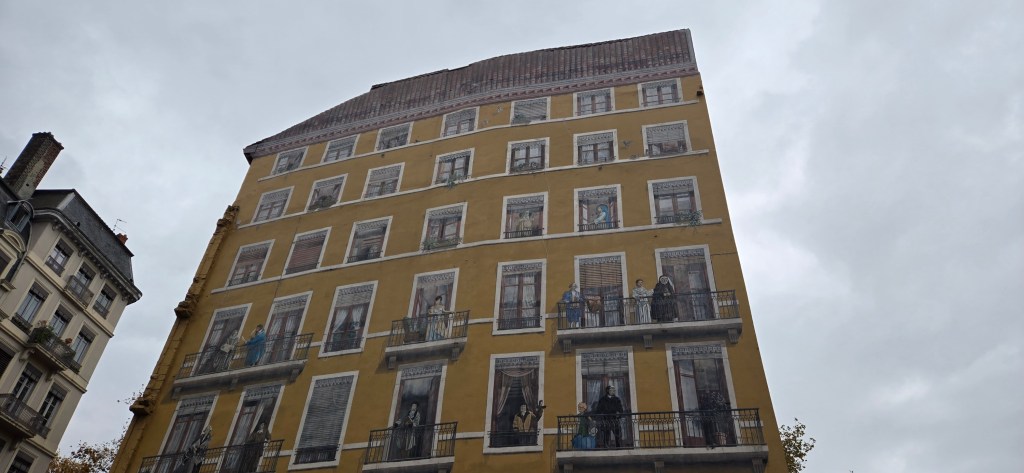
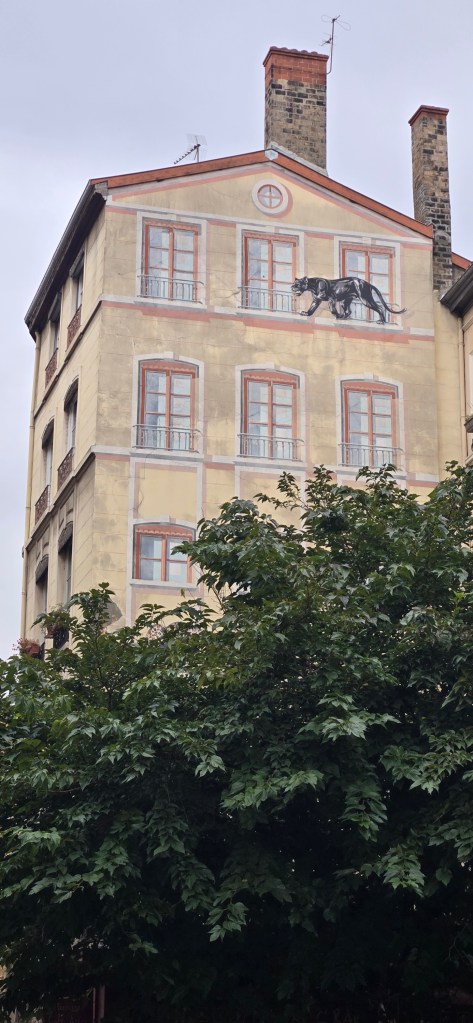
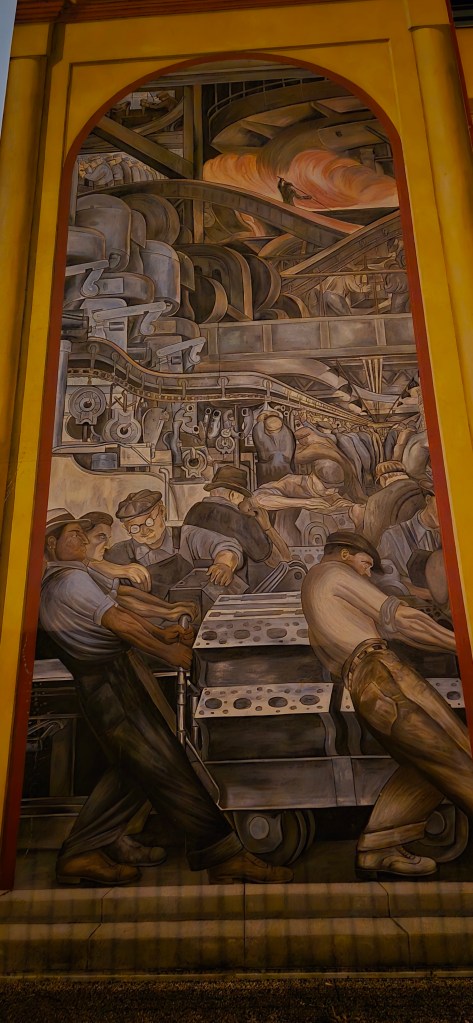
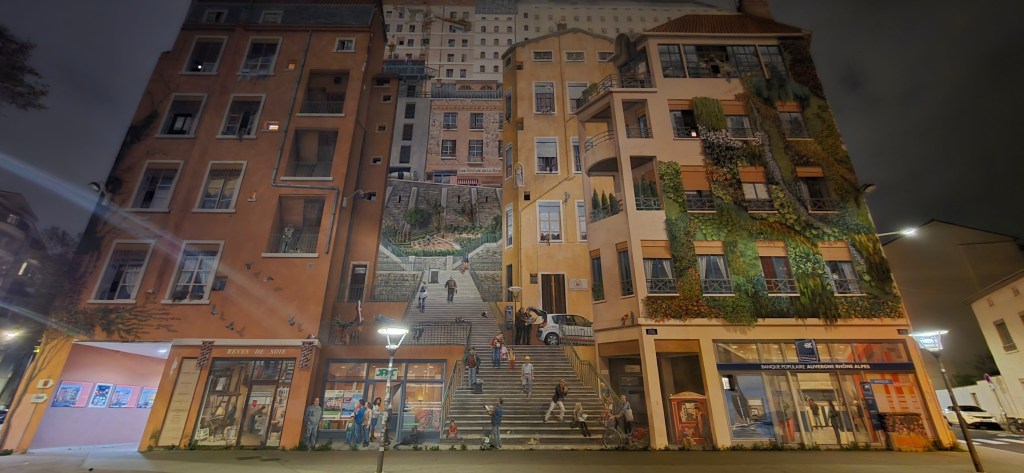
Murals: Lyon has a lot more to offer than just eating and drinking, and one absolutely amazing feature of the city is its murals—specifically, the trompe l’oeil kind.  I was really only looking for that one that is in all the tour books and pops up on social media whenever one sees anything about murals, Le Mur des Canuts (“Wall of the Silk Weavers”, the largest mural in Europe), but the handy paper map that we got at the hotel listed a few more, and so we went on a quest.  The best part of this kind of treasure hunt is that, because they are on outside walls of random buildings, they just sneak up on you.  You walk along, and there is a fake cat on a windowsill, or a fake windowsill, or a fake window.  After a while, you start questioning every door—is it real?  Is it just painted on?  Special mention goes to the Diego Rivera Mural which even has a small part that replicates the magnificent Detroit Industry Murals, as well as a portrait of Vladimir Ilyich Lenin; I sure recognized his familiar face.
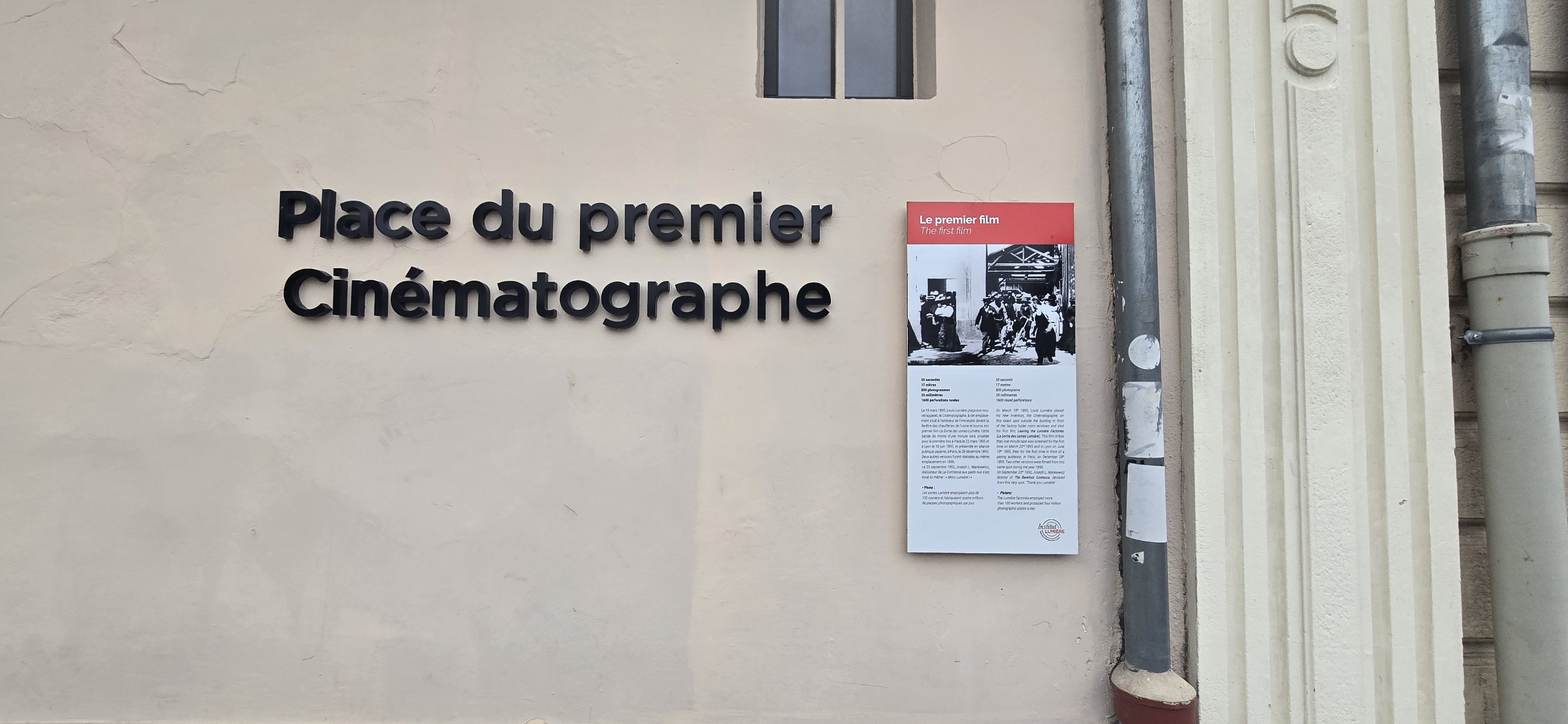
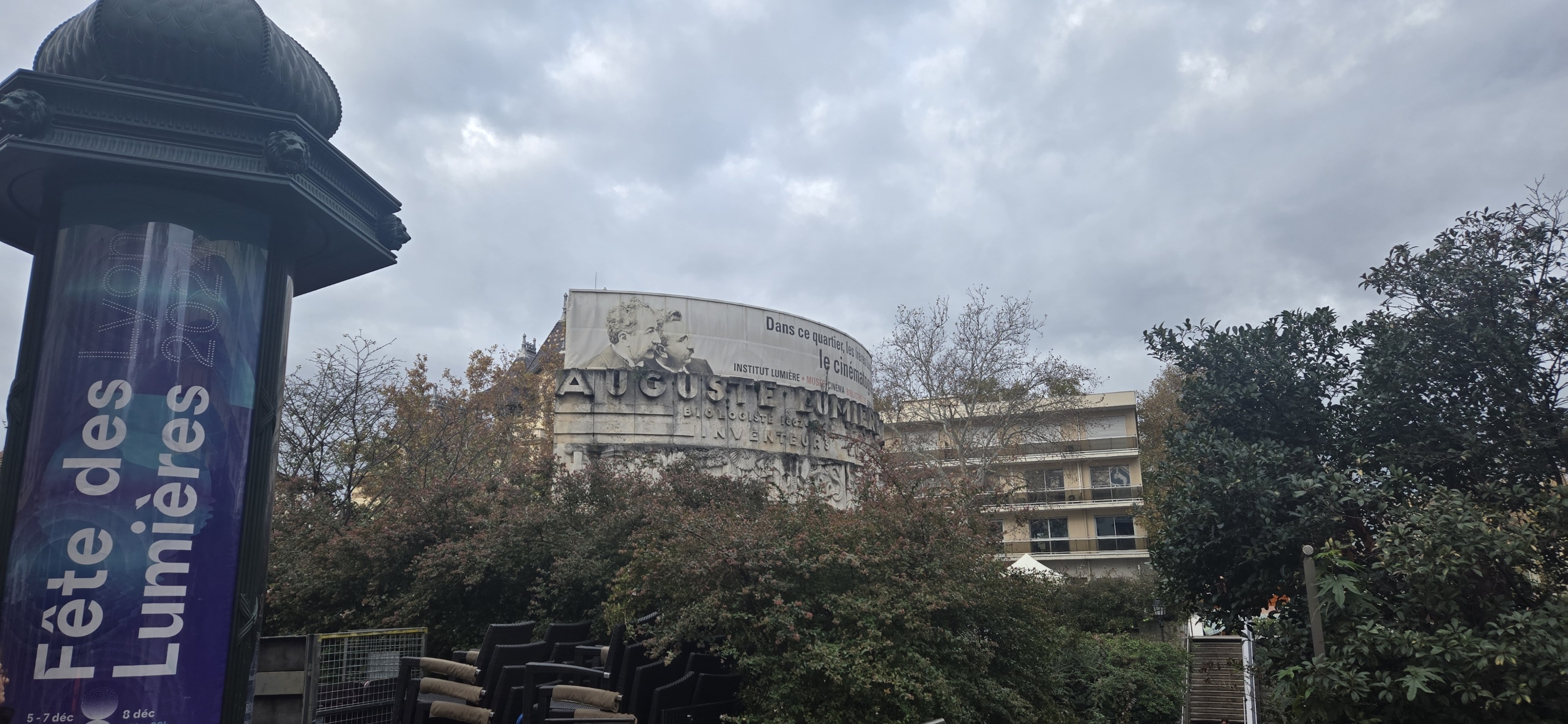
Lumière museum—In college, I took a couple of French cinema classes, including during my very first trip to France for my semester abroad, so the Lumière name was familiar to me.  This is not a French cinema museum (there is one in Paris, also very cool), but specifically, a museum of the Lumière family legacy and the early days after the invention of the cinematograph, in their actual villa.  Auguste and Louis were brilliant scientists, businessmen, and artists, and the world has not been the same since they were in it.
For the rest of the sights, the other museums, cathedrals, etc., check out a reputable tour book and do not trust the keyboard warriors—and I am unanimous in that.
Featured

Another Turkeyless Thanksgiving

I have disliked Thanksgiving before it was politically correct to dislike it.  Well, technically, that is an exaggeration, but the warmest emotion I ever felt toward it was indifference with a tinge of bafflement.  And by “Thanksgiving” I mean the actual celebration and trappings thereof; I always have, and always will, welcome and support the idea of a four-day weekend.  In fact, the four-day weekend is one of my most aspirational career goals.  But I digress.
Of all the big American holidays, Thanksgiving was easy for my mother to embrace during our early immigrant years because of its secular nature and a very specific, mandatory, and exotic (to us) menu.  Paradoxically, these are the very same attributes that eventually turned me off it.

For me, it has been a struggle to celebrate something to which I am not connected emotionally, religiously, or traditionally.  The holidays of my childhood were deeply rooted in the Soviet calendar, the May Day with its first blooms of spring, the Victory Day with its patriotic pride, the October Revolution (celebrated in November during the fall break, so kind of like the long weekend of Thanksgiving).  And then there were the traditional ones, New Year’s Eve conflated with Christmas, a kind of two-for-one complete with Grandpa Frost, gifts under the decorated evergreen tree, but also champagne and a glorious feast at midnight, Cheesefare disguised as Rites of Spring, and some very low-key, irreligious and food-focused Easters and Passovers.

And thus, Thanksgiving did not offer me anything from the very beginning.  When I first watched Macy’s Parade on TV, it seemed chaotic and pointless.  I was used to parades in which you walk, with classmates, with family, with balloons, banners, flowers, and it’s a party.  Watching giant things float is faintly anxiety-inducing to me.  The bland menu as well is almost opposite of comfort food, especially the turkey stuffing, which remains incomprehensible to me.  My spouse enjoys pumpkin pie, and I can make a good one, but making a pie out of pumpkins continues to persist as an alien construct.

My first distinct memory of this holiday is, fittingly, one of attempted avoidance.  My senior year of high school my mother and stepfather went on a cruise, taking advantage of the long weekend—a practice I later wholeheartedly embraced.  I was left home alone, having just turned 17 and anticipating four days in the company of my VHS tapes and Little Debbie snack cakes.  A caring friend was absolutely appalled at the idea of me spending the holiday alone, and took me to a large family gathering at her uncle’s farm.  It was a very nice time, and her kindness stayed with me.  This scenario played out again the following year, with different high school friends.  It was my first year of college, my parents were far away, and being enveloped in the warmth of a family that was not mine, and thus non-judgmental, remains a cherished memory.

For the rest of my time in college, Thanksgiving became a prized homestretch to write the final term papers.  I developed an efficient 24-hour four-day rotation of half hour writing/half hour listening to music while eating Oreos and mixed nuts and drinking black coffee.  Before my mom gifted me a Mac and a dot matrix printer my senior year, Sunday after Thanksgiving was spent in an interminable line at one of the university computing centers, waiting to type up and print my handwritten pages.  I will never forget when a frat boy from one of my Poli Sci classes spotted me sitting on the hallway floor in an unwashed mass of exhausted students and gave me his number that was dozens if not hundreds closer to being called for computer access than mine.  It’s funny, these memories of random acts of kindness…  I have to say that those solitary, but productive days were my second favorite iteration of this strange holiday.

The least favorite, by far, was the actual gatherings with family.  Oh, it is not the family itself, as much as the rituals.  Thanksgiving at my in-laws’, while casual and inoffensive, included the traditional menu I dislike and the obligatory mind-numbing football game that basically concluded with a disorienting midday nap for me.  Thanksgiving at my mom’s was exactly the opposite, extreme formality in dress and elaborate Russianized variations on the dreaded poultry and other dishes, also followed by naps on stiff furniture and a desperate search for the nearest open WalMart as the only available diversion.

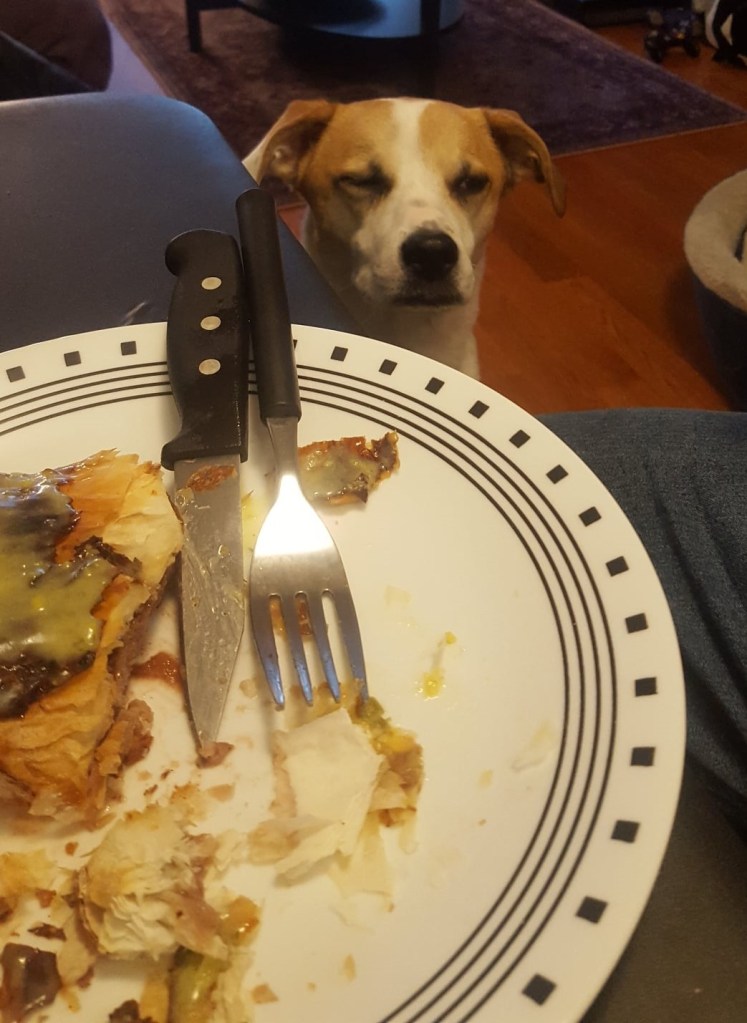
I don’t know who put this thing on my plate. I am sure I did not eat it. (2009)

The truly worst, however, were the Thanksgiving gatherings at my own house.  One time, my mother literally broke her foot when she slipped while running on my newly mopped floor.  Why was she running?  Oh, because as soon as she arrived at my house and saw me manually mashing potatoes, she exclaimed that she brought an electric potato masher to my house in anticipation of just such a clumsy error on my part, and ran for it.  Spouse finished the mashed potatoes and turkey, as I ate Lorna Doone cookies from the emergency room vending machine.  It was a horrible weekend however you look at it, but there is a tiny moral here of letting adult children adult.

Another Thanksgiving saw my son run away from home.  We assumed he was spending the night at a friend’s after one of the typical teenage fights.  It turned out that he was driving all night to none other than my mom’s house.  When he crossed the border into Tennessee on Thanksgiving Day, he realized that he did not know her exact address, and the gig was up.  It was a strange, strange weekend, and the less said about it, the better.

I have to give a nod to a few gatherings in New York.  There was my first year living in Manhattan, when I was wandering Greenwich Village with a friend (we saw “Home Alone” during its first run in a movie theater, and I also saw “L’Atalante”—and how is that for an eclectic mix that only NYC can provide), and because of exams coming after Christmas (creating a nightmare of a different kind), Thanksgiving was truly a four-day urban holiday.  There were also milestone family birthdays that coincided with Thanksgiving, and we gathered in Russian restaurants in Brooklyn with our traditions, including singing, dancing, and the comfort foods such as caviar/herring/tongue/”Olivier” salad and copious amounts of vodka.  Good times! 

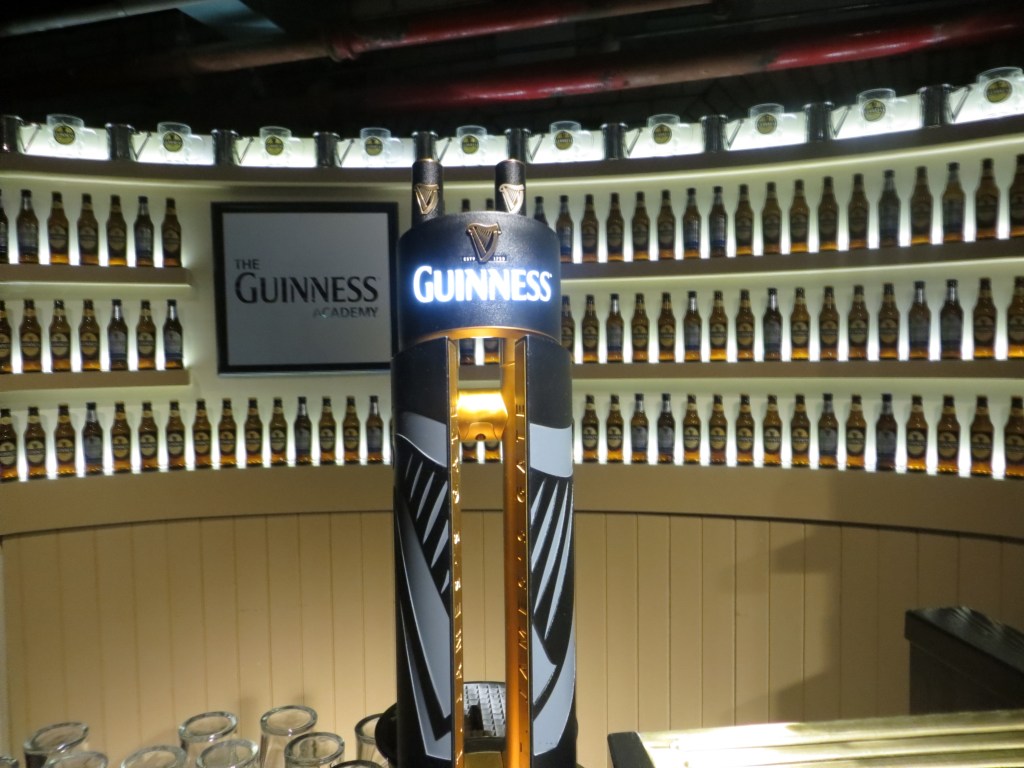
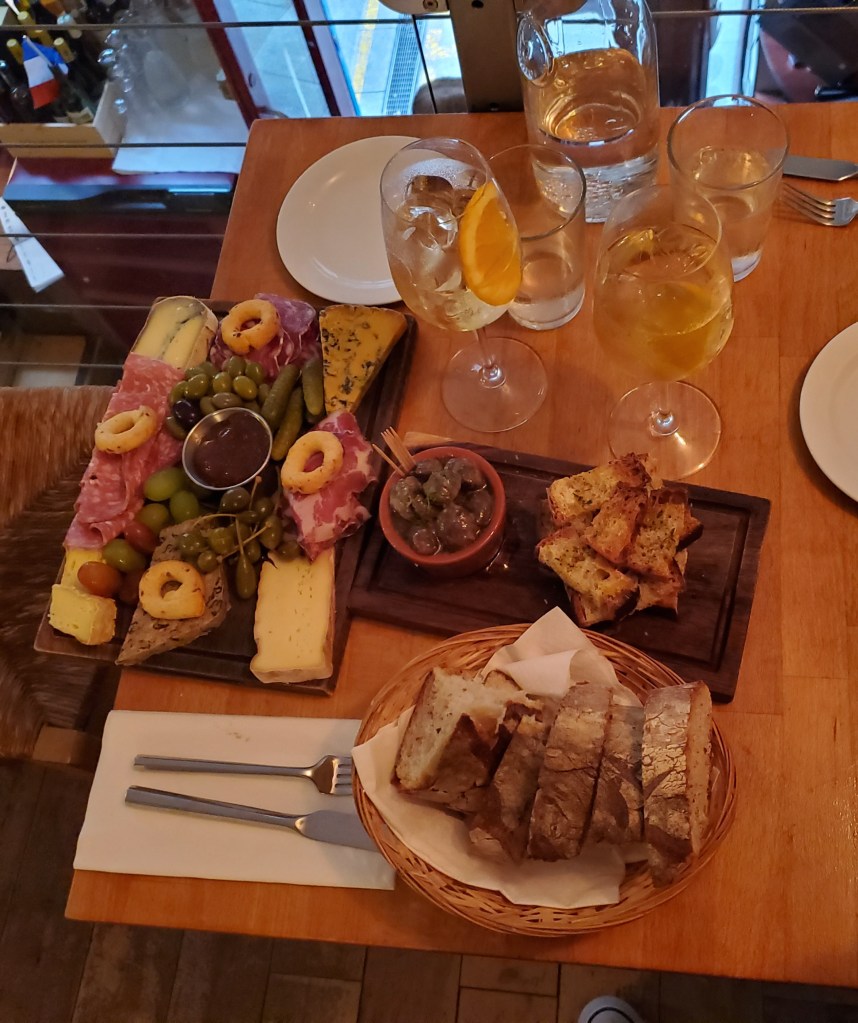
And this brings me to the best Thanksgivings.  They were all non-traditional and European.  There was paella in Spain (2008), rabbit in Malta (2010), Kir Royale at the Deux Magots in Paris (2012), discovery of Guinness in Dublin (2013), fresh turbot in Italy (2014), this incredible smoked orange liqueur in Portugal (2016), discovery of Beaujolais Nouveau on the French Riviera (2017), and the surprising charcuterie in Dublin (2019).

Also whiskey tasting in Dublin. Tealing Distillery. (2019)

Honorary mention goes to Vegas 2015—not quite out of the U.S., but still, Vegas is not your typical Thanksgiving venue—and Chicago 2018, with this failed Beef Wellington.

(2018)

Last year we attempted to have a first firmly post-pandemic family Thanksgiving, albeit in Chicago, and I woke up to a smell of smoke and a wail of sirens.  The building next door caught on fire.  It was a restaurant, so closed for the day.  No one was hurt.  But as I passed the fire trucks on my morning run along the lakeshore, I said to myself, strike three. 

Meet Me in Sistine Chapel or Rome, Second Try

My second trip to Rome was in 1988, during that much-mentioned European summer in college.  There were endless discussions about where everyone will travel after classes end.  I wanted to go to Scandinavia.  Almost everyone wanted to go to Italy.  I went to Scandinavia, by myself—but not before I went to Italy with my roommate Kathy.

This looks like something out of “Rocco and His Brothers”. Milo in 1988

But at the outset, I have to acknowledge that I made a small, but vital error in my first Roman reminiscence when I wrote that I never entered Pensione Milo since 1981. Roman Holiday – Old Lady Writing Apparently I did, during this second visit, and not only that, but Kathy and I even went up to the lobby and loitered there for a bit.  There are photos from this second visit—but, due to lack of funds and related constraints of a 35mm camera, the careful rationing of available resources resulted in zero images of the pensione’s interior.  And then three decades passed, and I completely forgot this ever-critical fact—until I conferred with the old diary.  And there it was.  Never let it be said that I do not acknowledge my mistakes.

As a teenager, I wrote about my life in great detail, which I desperately envy now.  I envy my younger self’s complete and utter self-absorption—but, that is certainly the prerogative of youth.  I would love to recapture that focus in my Third Thirty, and preferably a little before.

And thus present recollection refreshed informs us that on Thursday, July 7, 1988, Kathy, Naomi, and I were the second group to depart the Travelers Hotel in Nimes (the town I missed revisiting due to the plague last year, Pont du Gard and the Plague – Old Lady Writing) on a night train to Paris.  While waiting on the platform, we were rewarded by being kissed by sailors from a Marseille-bound train that stopped in Nimes for a literal minute.  It was a kinder, gentler time.  No judgment.

In my diary, I wrote in puzzling detail about traversing Paris with Naomi from Gare de Lyon to Gare du Nord with my hateful, incredibly heavy orange Soviet-edition suitcase.  Wheeled suitcases were already a thing then, but out of about 35 people in the group, I was the only one without one.  Being an immigrant, and of the refugee kind to boot, I spent the decade trying, yet never quite succeeding, to fit in.  I would like to think that the orange suitcase was the last vestige of that difficult passage to America. 

In any case, it was a complicated plan in which Kathy (who stored her suitcase at Gare Montparnasse—a detail that never becomes important again in this narrative) and I, after parting ways with Naomi, first headed to the Netherlands, where I left the detested luggage with my erstwhile host family, and then traveled all the way down to Rome, after which we efficiently worked our way back up via North of Italy, Switzerland, Belgium, Luxembourg, Belgium again, Switzerland again, to finally tearfully part back in Paris.  She mentioned once that she will probably not return to Europe, as she was looking forward to getting married and living the good life in the U.S.  I was instantly shocked, as I envisioned that summer as the beginning of many adventures to come.  We were both right.  And she is still the best roommate I’ve had (present spouses excluded, of course).

But the very first day—after the luggage was sorted and after we spent about two days sitting on various trains (for sleeping wagons are only covered by the Eurail Pass if there is literally no other mode of transportation) and missing various trains (for the Italian rail schedule was an unsolvable mystery in the ‘80s) was Rome.

The hostel where we stayed was either worse than Milo, or I came to expect more.  No, it was clearly the former—as a college student of extremely limited means, my expectations would not rise for at least another decade (remember the First Spanish trip? The First Spanish Trip – Old Lady Writing)  We arrived exhausted and bedraggled at Roma Termini, looking forward to a shower before bed.  I do not recall who went in first—but whoever it was, discovered that only cold water was available (I would guess it had to be me, because had Kathy told me that there was no hot water, why would I have gotten in?  She would have—I would have stayed filthy).  We sat on our respective beds, felt sorry for ourselves, and had a good cry.  I had a fleeting thought that Rome and I just aren’t meant to be.

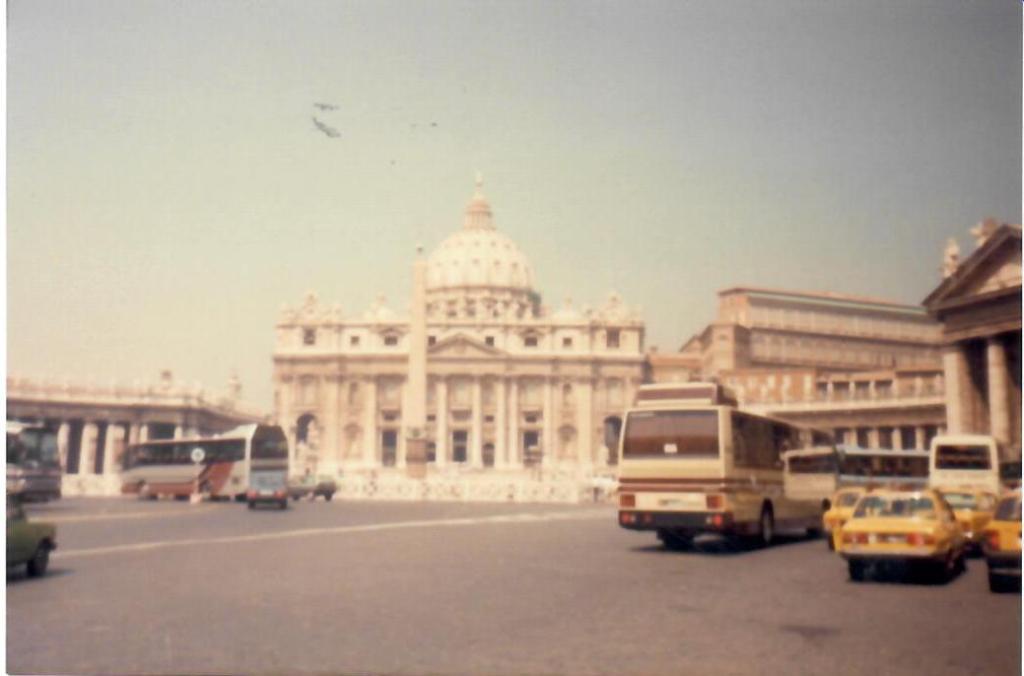
Our one day in Rome was action-overpacked.  We met several friends from our group—inside the Sistine Chapel, no less, because in those pre-cell phone days you had to pick a landmark, a time, and hope that everyone made it.  It was kind of like a student/buddy moment of Sleepless in Seattle.  Kathy and I walked all the way from the hostel near Termini to the Vatican.  We already know now that it is less than 5k Roman Holiday – Old Lady Writing, but after a long train ride, a traumatic first evening, and on a sweltering, tourist-packed August day it seemed like a manifestation of all the confusion and disorder that I remembered from my previous Rome stay. 

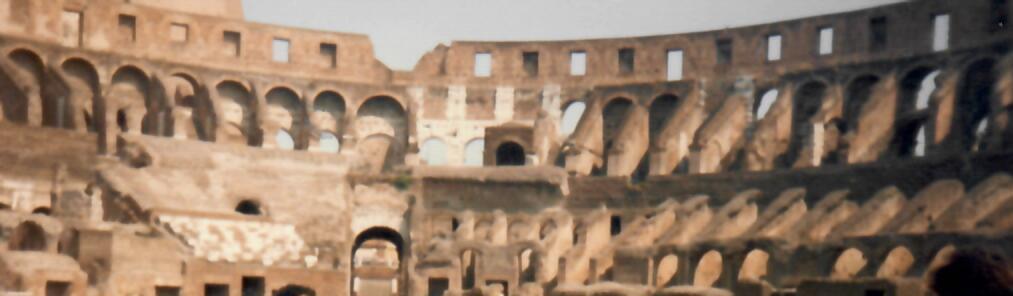
So, I finally saw the Sistine Chapel, and then the Colosseum.  We ate some terrible pasta at a cheap restaurant nearby, cementing my poor opinion of Italian food for the next few decades.  We visited the catacombs.  It was exciting to finally be out and about as a paying, albeit a decidedly not flush, tourist.  But Rome was still overwhelming, in its size, its sights, its sounds, its infinite variety.  If the first trip was one prolonged anxiety attack, the second trip was an assault on the senses.  To be fair, it was only a day, and short on time and money, we made the best of it.  Third time turned out to be the charm.

Pont du Gard and the Plague

In my adult life, I developed a fear of the plague.  I blame two fictional sources for this:

  • The film “Horseman on the Roof”.  Apparently it is based on a novel, which I have not read, and is set during the 1832 cholera epidemic in Provence.  Something must have gotten lost in translation and/or in my memory, as the latter is absolutely convinced that the story is about The Plague.  In all fairness, cholera is pretty nasty, too.  The film was made in 1995, and I would have seen it on video some few years later, so I have been frightened for 20+ years now. 
  • The book “Year of Wonders” by Geraldine Brooks. I read it in 2004, and have been *legitimately* frightened for almost 16 years.  It actually is about the plague, though the one from the 1600s, not the Black Death of the 14th century.  Which just goes to show that whatever century or whatever contagion, they are all awful[1]

Until literally three days ago, I assumed that the fear of the plague was the same as some of my other phobias, such as the irrational dread of large statues. (Yes, the Statue of Liberty is pretty much my worst nightmare.  I choose not to read too much into that…)  Turns out, the plague is back. 

Actual toilet paper purchased by me in France for no other reason that it was needed at the time. ‘What an auspicious purchase!

I am not making light of it.  Like everyone else, I am trying to adjust to the ever-changing environment in which the toilet paper is scarce like it was back in the USSR, borders are closing (like they were back in the USSR), and no one trusts the government as a source of correct information (I think I see a pattern…) Unlike many other folks, I spent the last week in France, and gained some unexpected perspective.  Spoiler alert:  I think that cancer or work-stress-induced-heart-attack are still my more realistic foes in this lifetime.

I had three modest goals for this past week in the South of France:

  1. To see the newest D’Artagnan statues.  Until the last decade, there were three in the world; now there are five.  If I had to drive for several hours to a couple of French villages to complete this quest, well, I did.  Of course I did.
  2. To see the Palace of the Popes in Avignon, and hopefully locate the mural of Gerard Philippe nearby.  Done.undefined
  3. To stop by my old stomping grounds in Nîmes.  This did not happen.  We woke up on the day for which we scheduled this visit to the announcement that the US borders were closing the next day.  Supposedly US citizens would still be allowed to enter the country, but tell this to someone with a different family history.  This refugee rallied, got on a train from Perpignan to Paris, and flew out of Paris as soon as Delta would let her on a plane.  Home is where the dogs are.  And a paycheck.

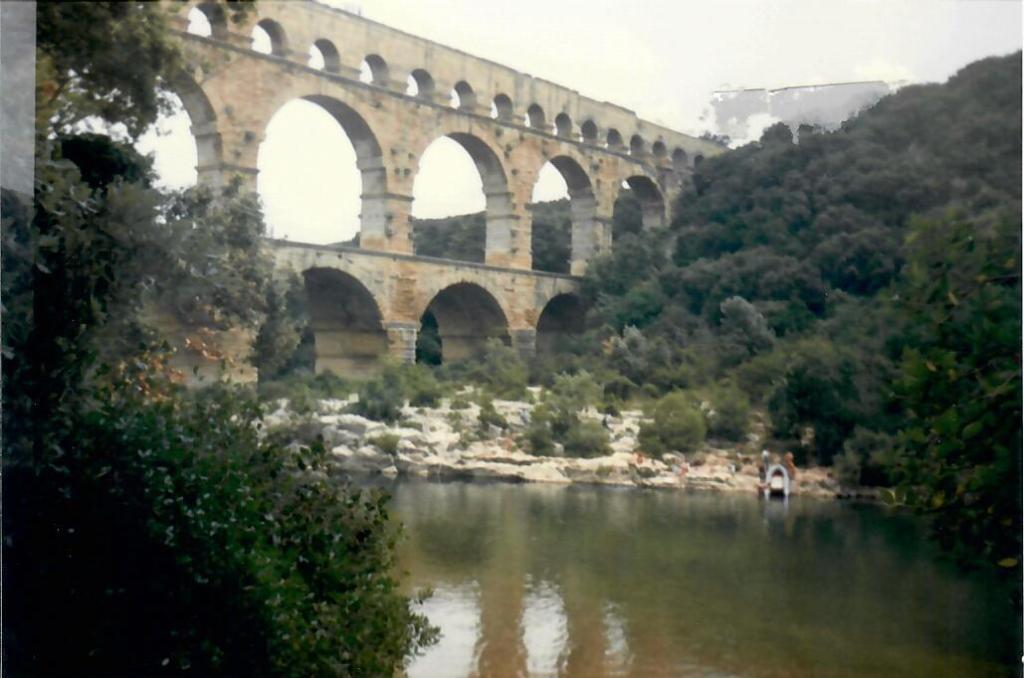
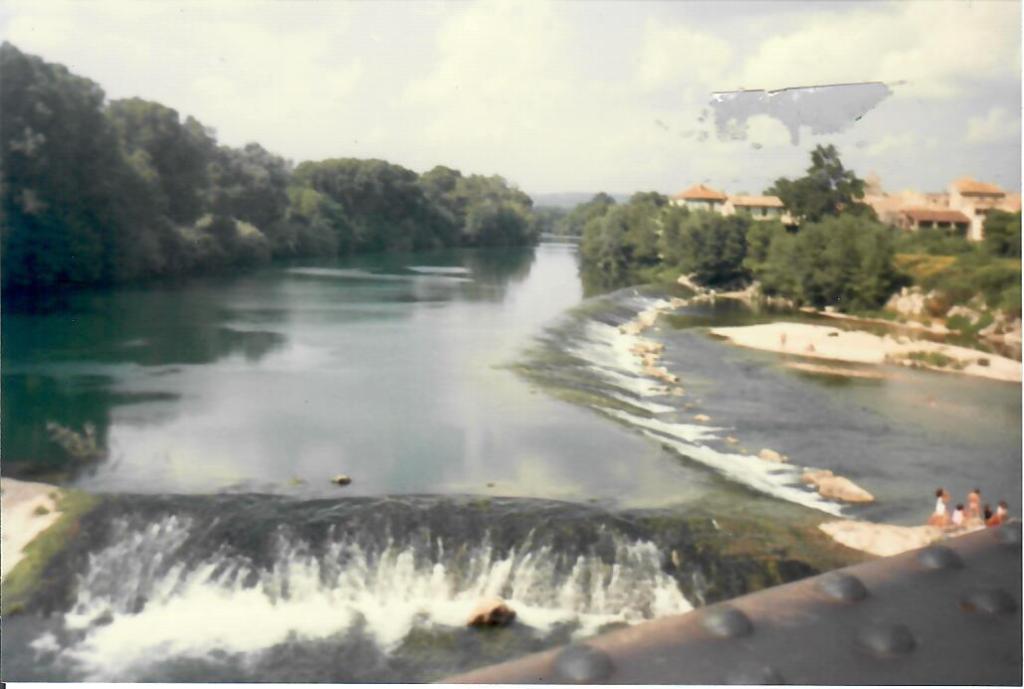
The last official day of vacation, on the way back from Avignon to our timeshare, we stopped at Pont du Gard.  I did not intend to stop there, because I had the most vivid memory of my previous visit there. Yes, it was during “that summer that I spent studying in France” https://oldladywriting.com/2019/06/09/when-did-the-arc-de-triomphe-start-leaning/.  It was such a good day!  I mean, I acutely remember it as a *Good Day*.  It was June of ’88[2], the sun was shining, and I was surrounded by friends.  Our summer program included an art class, so some were drawing the bridge.  I took two photos, which in the day of pre-digital cameras was the rough equivalent of the 19 I took this second time.

Pont du Gard then

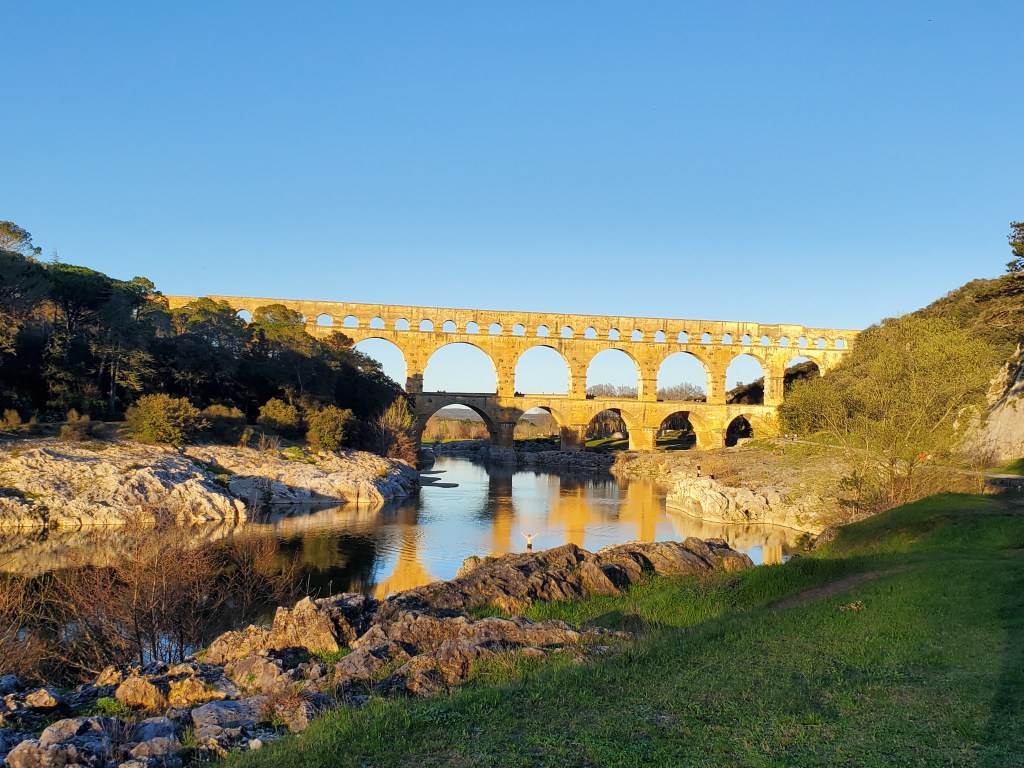
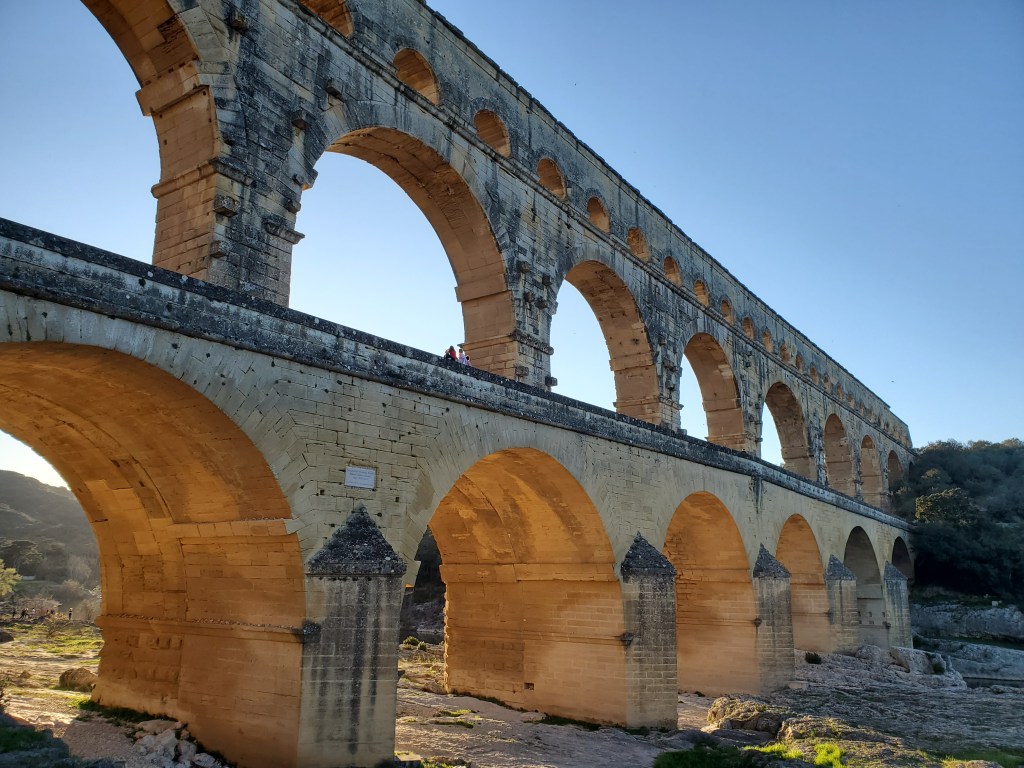
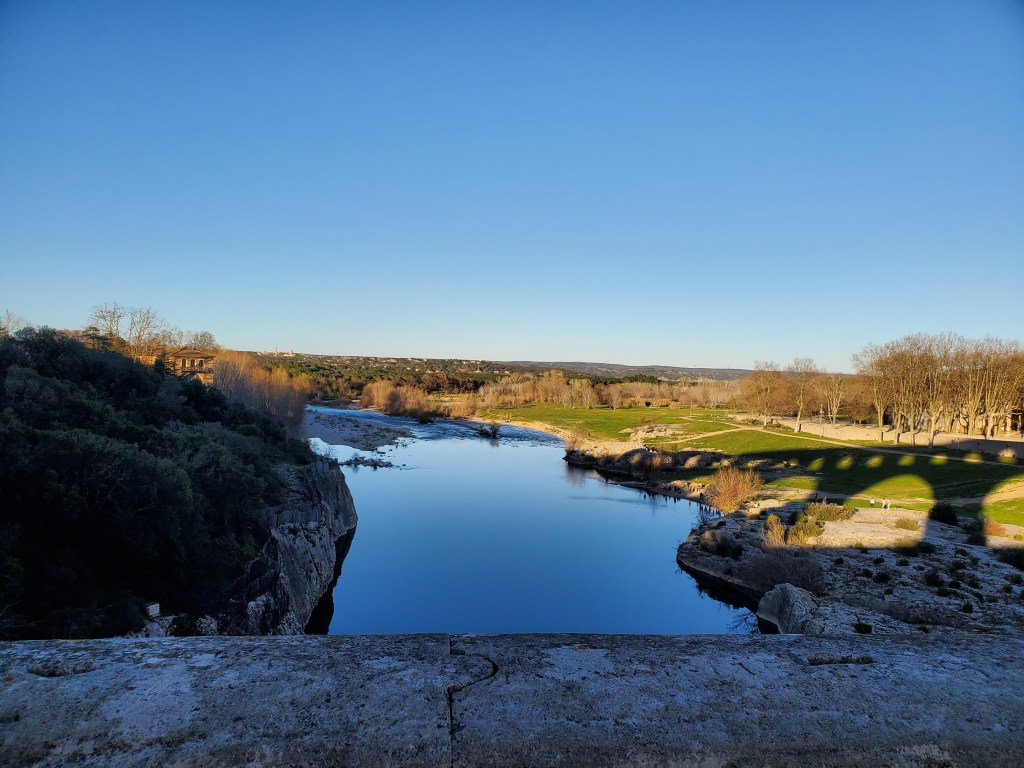
We went to Pont du Gard this past week because it was on the way, and we had time.  We waffled a little, because it costs $10+ per person to get into the surrounding area.  But if I have learned anything in this life it is that you cannot put a price on regret.  So we paid and started walking.  And there it was, standing since shortly after the death of Christ, towering through millennia over The Plague, my friends and me, my spouse and me, impassively watching people come and go, sun shining, river flowing, and the aqueduct still standing.

Pont du Gard now

It has been almost 32 years.  I have lost touch with all but three of the people in that group.  Yet on the last day of my “Feast During the Plague”, I felt surrounded by their ghosts.  I have never missed KIES Group ’88[3] as much as I did during that time and in that place! 

So, the ghosts of my friends from 1988.  The majestic mass of that huge ancient Roman aqueduct from the first century A.D.  Spouse and I, having a *Good Day*.  And I kept thinking, I’ve had an interesting life.  I was fortunate enough to see and be seen at this site twice in the past two centuries.  And I am still in touch with three of the people who shared that incredible summer with me, and share the memories of that day.  If the plague gets me, I have lived[4].  If the plague gets me, the bridge still stands.  Lalalalala….life goes on!  And that is how Pont du Gard helped me to deal with my fear of the plague. 


[1] Unrelated to this topic, I love Geraldine Brooks’ books except one.  I cannot recommend “The Secret Chord”.  It is shockingly violent.  I would rather read about the plague of any kind.  As of this writing, she has five novels out.  Read four of them in this order: “Year of Wonders”, “People of the Book”, “Caleb’s Crossing”, “March”. 

[2] June 28, 1988, to be precise. I know this, because I had to keep a diary in French for class.  Apparently I did not swim, because I felt fat in a bathing suit.  But it was still a great day!

[3] KIES—Kentucky Institute for European Studies.  Now it’s the Kentucky Institute for International Studies or KIIS (pronounced like “keys”), a consortium of public and private Kentucky colleges and universities which administers a variety of international studies programs in Central America, Europe, South America, and China. It was founded by Murray State University in 1975.  Back then, it was just Europe.  And it was incredible.  That summer changed my life, and unlike many other life-changing events, it changed it for the *better*! 

[4] But I am still betting on cancer or death-by-stressful-job.  Not morbid, just realistic.