Featured

Yahrzeit

“It is so fatally easy to make young children believe that they are horrible.”

― T.H. White, The Once and Future King

My grandmother departed this life about a month short of her 102nd birthday.  Whenever anyone says that I have “good genes” and can expect a similarly lengthy tenure this side of paradise, I immediately rush to correct them.  First, she was an outlier; we do not have longevity in my family, and my father did not make it to 75.  Second, her long, long, LONG life was nowhere near a blessing that people imagine it to be, not to herself and not to her immediate family.

Grandmother lived life with an unshakeable belief that her way was always right.  She tolerated no challenges to her authority, even in little things[1].  I would maybe concede that there might be something to this, being myself a person prone to doubts, regrets, and second-guessing, had any of it given her any joy.  She often repeated her life’s philosophy: you have to hate yourself, and that will inspire you to be a better person.  But even as a child, I suspected that deriving inspiration from self-hatred is not going to be my path in life.  Years later, I came to the conclusion that her inflexibility was simply the result of lack of introspection, fear of the unknown and the unknowable, and an absence of curiosity.   

She had a hard life, but that is neither an excuse nor an explanation.  A lot of people have had hard lives.  She lost her father as a teenager—but as far as losing fathers, I can certainly do her better.  She lived through the wars—yes, plural, because she would always mention the Russo-Finnish War of 1939 in the same breath as The Great Patriotic War.  I once read a book on history’s dumbest wars[2], and was delighted to recognize the Winter War as “Grandma’s War”.  But again, the number of people who were affected by wars in their lifetime does not necessarily equal the number of people who permanently lose their joie de vivre.  While I suspect that the privations and fear of the dark decade of the 1930s in the Soviet Union were not helped by one of history’s most stupid wars, our family did not lose anyone to it, or even to the massive devastation that followed, and did not live in a territory that was occupied by anyone since the Tatars-Mongols came to town in the 13th century.  And even my grandmother was not old enough to remember that.  All of my friends had grandparents (and some even parents) who lived through The War, yet most of them were not forced to wage their private battle for independence against their own families.

A nephew drowned in the 1950s, which seemed to affect grandmother more than the young man’s own mother, my grandfather’s older sister.  Grandmother drew the following conclusions from his accidental death: (1) water must be feared, and learning to swim can only lead to trouble (which made my growing up on a river and spending all the summers of my childhood at the seaside that much less pleasurable), (2) a tragedy is sure to befall your children as soon as you look away (despite the fact that the beloved nephew was an adult when he died—it truly was just an accident, a tragic accident that can happen to anyone who is living a life and doing things in the world), and (3) daring to enjoy life after bad things happen to loved ones makes you a bad person.  The strongest condemnation that grandmother voiced about her sister in law who survived the death of a son was that “she must have loved herself too much”—too much for what?  For going on living?  Yes, that was indeed the implication, for loving oneself was the greatest character flaw she could imagine. 

To be fair—though fairness has never entered into our relationship—the world has changed quite a bit from the time she was taking life lessons from her own mother in the 1920s to the time she was attempting to impart these instructions to me half a century later, and more drastically still to the present day.  Looking back, I have trouble recalling any words of wisdom from her which I have stored away or applied to any situation in my life.  There was always a lot about decorum, much of it so embarrassing that my hand does not rise to share it here.  There was quite a bit about appearances, equally outdated and, not surprisingly, heavy on body shaming.  But nowhere did she stand out quite like she did in teaching me basic homemaking skills: plucking chickens[3], scrubbing floors (on hands and knees—never make it easy by using a mop), darning socks, etc.  Maybe the last one is not entirely useless—but that is mostly because I enjoy the needle and thread crafts.  Still, her point was that no one will marry a girl who could not do these things.  Despite my reasonable and consistent academic success, she labeled me quite early on as a potential failure in life due to my lack of enthusiasm for cleaning supplies over books, and for my unswerving commitment to learn how to enjoy life rather than endure it.

Food was the biggest and, in retrospect, the only language of love that she spoke.  Talking about anything beyond the basic needs was simply not done.  Are you hungry?  If yes, have some bread with either salt or sugar.  If not, go play outside.  God, she was so tough when she was raising me, and in the era when it was no longer really necessary!  She was always wearing an apron, always stirring a pot—no, literally, an apron was a part of her “uniform”.  In her later years, when she would come to my house, she would bring an apron to wear around.  Later still, she would bring a change of work clothes, an old dress that was no longer fit to be seen in public. My house was never clean enough for her.

She always made sure that I was well fed and clothed, and my physical needs were always met.  She never said I looked nice without adding that something was off in my appearance.  She never told me I did something well without mentioning that someone else did it better.  She often lamented that I was not living the life that she felt I should be living in order to make her proud.  I never tried hard enough, and I never measured up.  I lived with her until I was almost 13, and it was possibly the greatest disappointment of her life that there came a day when she lost control of mine. 

To many, she was a good friend, loyal, present, and generous.  She never forgot a birthday and never refused a request for help.  She kept in touch with several generations of acquaintances, neighbors, and distant relatives.  Her tirelessness, which did not flag until her 90s, was remarkable, and I continue to hope that I inherited a sufficient fraction of it.

She outlived all her friends and most relatives, including some who were much younger.  Only a handful of people remain who really knew her.  There were some good times; I am deeply sad that there were not more.


[1] There was one thing—she did not monitor what I read, either among the books we had at home or the books I would pick up from the various libraries I frequented.  Her loss of vigilance on this front was my saving grace, although she did think that I spent too much time reading and not enough outdoors. 

[2] Stupid Wars: A Citizen’s Guide to Botched Putsches, Failed Coups, Inane Invasions, and Ridiculous Revolutions, by Ed Strosser and Michael Prince 

[3] Did my aversion to poultry start in childhood?  Over the past few decades, I worked my way from observing grandma burning feathers off chickens with a blowtorch to experiencing mild nausea at so much as a sight of a cooked chicken breast.  It seems to be socially acceptable to be teased about this; I am happy to provide this cheap laugh.
Featured

Poison, Fire, and Flood

One of the main villains of my raucous childhood was one Shturman.  This was, and is, his real last name.  I am not changing it here because (1) he is not likely to read this, (2) this unusual name[1] is too much a part of him, and (3) every word is true.

Shturman’s code name was “Douche”.  No, listen, in Russian, it just means “shower” (and in French as well, but we did not know it then).  And the reason he was “Shower” was because we called him “D.Sh.”, which stood for “Durak Shturman”, which means “Shturman the Fool”.  So it all fits together rather beautifully.  Since “fool” was the worst insult we knew, literally everyone’s code name started with “D”, but this was the only one that is not lost in translation[2].  At school, he was known as “Shturm Zimnego”, or “Storming of the Winter [Palace]” (the event that, according to what we were taught at school, started the Great October Socialist Revolution), but we did not feel that he deserved so much honor.

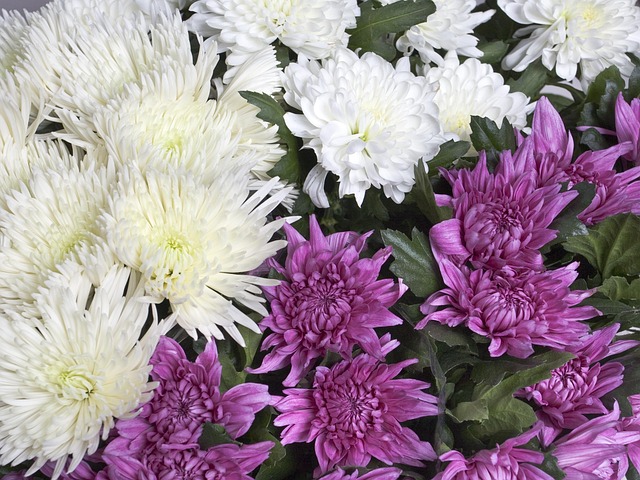
All positive comments regarding these flowers will be deleted

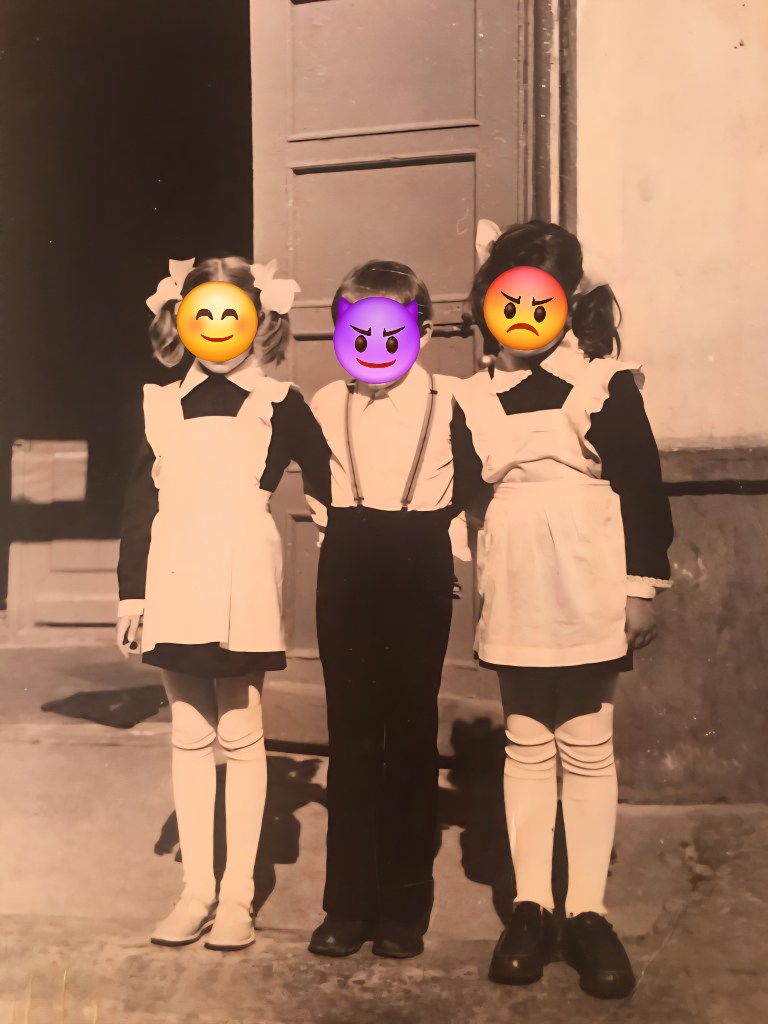
My BFF and I met him on the first day of school, September 1, 1975.  In fact, we all met each other for the first time that day.  It was not a good day for me, for it started out quite literally on the wrong foot.  All the girls were wearing pretty summer sandals (my friend’s were pink).  I, as was my lot in childhood, was wearing heavy, hideous black/brown booties.  I was perpetually overdressed in childhood by my overprotective grandmother; I always had a couple more layers on than anyone else.  My mother, who gets incredibly defensive about every single choice made for me not by me, would undoubtedly say that prettier shoes could not be found—and that would be a lie.  Everyone else wore common Soviet-style sandals readily available at any children’s clothing store in town.  My ugly orthopedic boots were imported.  And to top it all off, the trend of sending me off on the first day of school with a bouquet of chrysanthemums for the classroom teacher started that unfortunate day.  You guessed it—everyone else had lovely summer flowers.  I yearned for daisies, and cannot abide chrysanthemums to this day.  But I digress.

Mine and my BFF’s mothers and both of Shturman’s parents went to high school together.  Their paths diverged for a few short years after college and joined again on that day when it was discovered that they had children born in the same year (two in January, just a week apart, and one in November), who will be starting school not just at the same time, but at the same school and in the same class.  Of course, given that our parents were friends, we were thrown together a lot in those early years, for all the holidays, all the birthdays, summer trips to the countryside, etc.  Well, since I lived with my grandparents, I was not allowed to celebrate with my friends, so that was one very small benefit, having a bunch of 50+ year olds rather than Shturman over.  And since I was born in November, I did not have to share my birthday with him, only with the October Revolution, celebrated in November according to the “new”, Gregorian calendar.

To commemorate the Revolution, we got a few days off from school—basically, our fall break.  In that place and time, it was common to gather for all festivities.   One year, when I was maybe in second grade, we all met at my BFF’s apartment.  The adults, which consisted of Shturman’s parents and mine and my friend’s mothers (both divorced, but with or without boyfriends—memory fails) went for a walk.  Do not be shocked, it was a kinder, gentler time; neighbors looked out for each other and each others’ kids.  And it turned out that the real danger lurked within…

The adults departed for their nighttime stroll, and BFF and I hoped to have some fun:  sing along to Soviet pop music with pantyhose on our heads, make plasticine animals, read about astronauts and plan our own future space adventures—really, the possibilities were endless.   It was a Soviet studio apartment: one room, bathroom, and a kitchen at the end of the hallway.  We staked out the kitchen.  Shturman pestered us for a bit, at one point brandishing a bottle of wine[3] and boasting that he can drink it all.  We called his bluff with all the disdain we could muster; predictably, he did nothing but buzzed off to the room.  But our little gray cells were already activated.

As children, we were told that alcohol is poison. As we saw adults drink copious amounts thereof, the unspoken assumption was that it is poison specifically to children.  Which budding sociopath came up with the cunning plan of serving tea laced with alcohol to our arch enemy shall remain undisclosed.  I know that “Hey, Shturman, do you want some tea?” was not spoken by me.  He and I were never verbal with each other, letting our fists do the talking. 

My friend made him a cup of tea, which was actually mostly vodka.  Shturman, clearly feeling very pleased with himself and his imaginary superiority over us, took a sip, immediately choked and started coughing, eyes bulging.  You did not see this coming, right, because you thought Russians drink vodka from birth, and I am here to break down the stereotypes.  He dropped the cup, and there was that moment in which you know things can go either way—and this is how they went, with him screaming “I will kill you!” and us shrieking and running.  Studio apartment, where are you going to go?  Bathroom, of course—the only place with a lock.

Shturman started pounding on the door and screaming, “Come out or it will be worse for you!  I will break down this door!”  BFF was sort of turning on me: “So, alcohol is poison, huh?  He is alive and well, and even worse than he was!”  I was just hoping the door will hold, and besides, it was a modern apartment, with a “combined” bathroom, meaning toilet, sink, and tub were all in the same place.  We had all the conveniences, and could wait him out until our parents’ return.  Eventually our enemy calmed down and walked away, and we settled in the bathtub, lulled into a false sense of security.

Suddenly, a scratching sound alerted us to a new potential disaster.  Shturman procured matches and started lighting them and shoving them under the door.  He decided to smoke us out, that weasel!  But the joke was on him—we had access to plenty of water, and started pouring it on the matches, having emptied the toothbrush glass for this purpose. Neither side was going to surrender, but we assumed that the matches will run out before water.  As luck, good or bad depending on perception, would have it, adults came home before either, to a minor river in the hallway, with purses and shoes floating by.

We refused to leave the bathroom until the Shturman family departed.  I remember nothing of the aftermath of this event (not even the last of its kind), beyond never getting along with this Shturman until I left the country several years later.  I have not seen him since.  Wherever he is, I hope he is not holding a grudge.


[1] It literally means “navigator” in Russian.  Unusual and kind of cool, if one stops and thinks about it.

[2] For example, we referred to Shturman’s father as “D.P.”, i.e., “Durak Papasha”, meaning “Dad the Fool”.  We disliked him because his son looked just like him, and we never saw him as anything other than his son’s father.  Yet DP was the only father that was present in our group of friends.  Something to unpack here.

[3] Again I remind you, different time, different place, no burden of Puritan heritage. 

Thank You for Being a Friend

According to my recently unearthed diary (it was not missing or anything, I just do not like to refer to it too often because of the cringe factor), my teen years were full of seemingly perpetual anguish related to various betrayals which I would never recollect but for this traumatizing written record.  I was, at times, surrounded by The Mean Girls—but who wasn’t in their teen years?  But in a period of just three days recently, I interacted with a variety of people who, in various ways, reminded me how incredibly blessed I have been by friendships in this lifetime. 

  • I auditioned for several parts in a show at the local community theater.  I did not get cast for several reasons.
    • First, for one of the characters, my Russian accent is no longer convincing.  Yes, and I feel slightly stupid even writing this, but I am only identified as vaguely Eastern European to someone with a very good ear.  There were literally women on that stage who sounded authentically foreign-born (and weren’t), while I was doing a desperate impression of Crazy Russian Hacker.  And I am terrible enough with accents that I cannot just summon it.
    • Second, the director decided that the part of a “wanna be lawyer” should be played by a man, because, well, lawyers are men.  Triggering, and certainly nothing I have not heard from every corner over the past three decades, but for reasons passing understanding I always expect more parity from community theater.  What an unlikely source of optimism!  This actually reminds me of a time when I was not cast in another show.  It was a dual part—Eastern European mother in her youth in Act I, and then her daughter, a lawyer, a couple of decades later, in Act II.  The director called me and told me that I was believable as one but not as the other, and for the life of me I cannot remember which one was which.  There is great irony somewhere here, but ultimately, I guess I would prefer to think that I am an implausible lawyer.  Frankly, I usually feel that way anyway…
    • But, my point in all of this is that I ran into two women I know at the audition.  The camaraderie, the emotional support, the cheering each other on and complimenting each other even though we were up for the same couple of parts was absolutely lovely.  I have not known either of these fine humans in my youth, so cannot tell with certainty if we are all improving with age or if I am meeting a better class of people. Perhaps a little bit of both, which is both sensible and hopeful.
  • Not to make it sound like my American youth was misspent in the friendship department, the following day I drove to Hell (a real town; I am not this inventive) for a “Still 50” party of a high school classmate I have never met before.  Well, we met during a series of Zoom calls that were held on the regular during the darkest days of the pandemic, and encompassed a group of pals who all graduated within three years of each and now live all over not just the continental U.S., but as far as Hawaii.  I count myself more than a little lucky to enjoy the company of almost a dozen folks who knew me at my utmost awkward, clueless, and, in my mother’s characterization, gloomy, and who still willingly interact with me going on forty years later. 
  • The following day I had a lunch lasting several hours with a college friend.  We have not seen each other in about a decade, which is a ridiculous and inexplicable gap, but there it is.  The old saying of picking up where you leave off without missing a beat is always true with this friend, and has been for over thirty years.  I often see people question if there can be genuine, non-romantic friendship between men and women, and this long-standing unshakeable bond between an introverted engineer/scientist and a [seemingly] extroverted lawyer/amateur thespian is a testament to the fact that friendship, like love, is a gift that you take where you find it.
  • And finally, there is my childhood BFF.  She is the one whom I met on my first day of school, and who is the closest I have come to having a sister in this world (I have known my actual sister for a fraction of the time, both in quality and quantity—but that is another story for another time).  We have lived world apart for over forty years, and have averaged one in-person meeting per decade during this time.  Right now, she is on a road trip to the Russian Near North.  From each scenic stop, she has been sending me daily videos, narrating the town histories, telling fun local facts, showing scenic views.  They visited Novgorod the Great, Petrozavodsk the capital of Karelia, Murmansk above the Arctic Circle, stopped on the shores of the Barents Sea.  I have felt included in this wonderful adventure.  In return, I send videos of my foster dog.  And beer.  And my office.  And I feel unbelievably fortunate that my first school friend is still my best friend.  She is, and always will be, family.

The wisdom of the years taught me that not all friendships are for always.  Some relationships are for a season, and every season has its ups and downs.  Looking back, there have certainly been some downs.  But, as the song goes, thank you for having been a friend (this is the Russian/Georgian version—not to be confused with the theme to “The Golden Girls”).  The ups have, and continue to, fill this life with meaning, warmth, and laughter.