
After discovering Beaujolais Nouveau on a trip to France in 2017, followed by some social-distanced celebrations on the Third Thursday of the Eleventh Month during The Plague Years, I decided to add the visit to this annual event, Les Sarmentelles de Beaujeu in the heart of the wine region, to my bucket list. Spoiler alert: I was saddened, but not entirely surprised to discover that my wine and charcuterie consumption has a limit. No, I will not tell you what that limit is, because it is kind of embarrassingly low. In any case, even before the trip, I correctly guessed that merely drinking copious amounts of wine will not be enough for a European vacation—and decided to add the heretofore unknown to me the city of Lyon to my travels, due to its proximity to the festival.


For reasons that are passing understanding, quick online research resulted in a portrayal of this city as crowded and crime-ridden, with traffic jams for days. This gave me some measure of anxiety, despite the fact that I (1) drove in Munich on the opening weekend of Oktoberfest, (2) drove in Scotland, (3) drove and lived in New York City, and (4) you know of some of my other more colorful misadventures, including being attacked by monkeys. I discovered Lyon to be just what I expected (once the sane voices in my head, including that of Rick Steves, prevailed), a lovely French town with rich history and interesting food. Here are some highlights:
The food. Lyon certainly has its own gastronomic style. I will try anything once. Once.
Andouillette sausage: Our very first meal upon arrival was to order sausages, Lyonnais and Andouillette. I just knew “sausages”, and how bad can they be? I do not eat them at home, they are gross to me, but I enjoyed them in Germany. And with all the emotional and historical baggage set aside, I have to admit—Germans do them best. Lyonnais was covered in mustard, which was fine. The other one was made of tripe. I am sure Rick Steves warned me, but I forgot. (Also forgot to take a picture of this delicacy; probably for the best)

Brioche praline: I am not a fan pralines. It is the texture for me. I was raised by dentists, and have bad Soviet-era teeth, so I am forever conscious when crunchy things come into contact with them (although the biggest villain in my dental saga turned out to be Laffy Taffy—took one of my crowns clean off). Spouse and I watched people with intriguing colorful packages walk by, and were determined to try whatever extremely popular item they contained. The actual store turned out to have a line to enter snaking for almost a block. We demurred, but managed to get in the next day during a slow time. Having bought the small brioche (which was still quite substantial), we parked ourselves on the nearest bench, in the courtyard of St. John Cathedral, and eagerly unwrapped our package. It was as expected. Brioche would have been fine without the pralines. It would have been better with coffee. My advice is, get the coffee, and leave this thing alone.
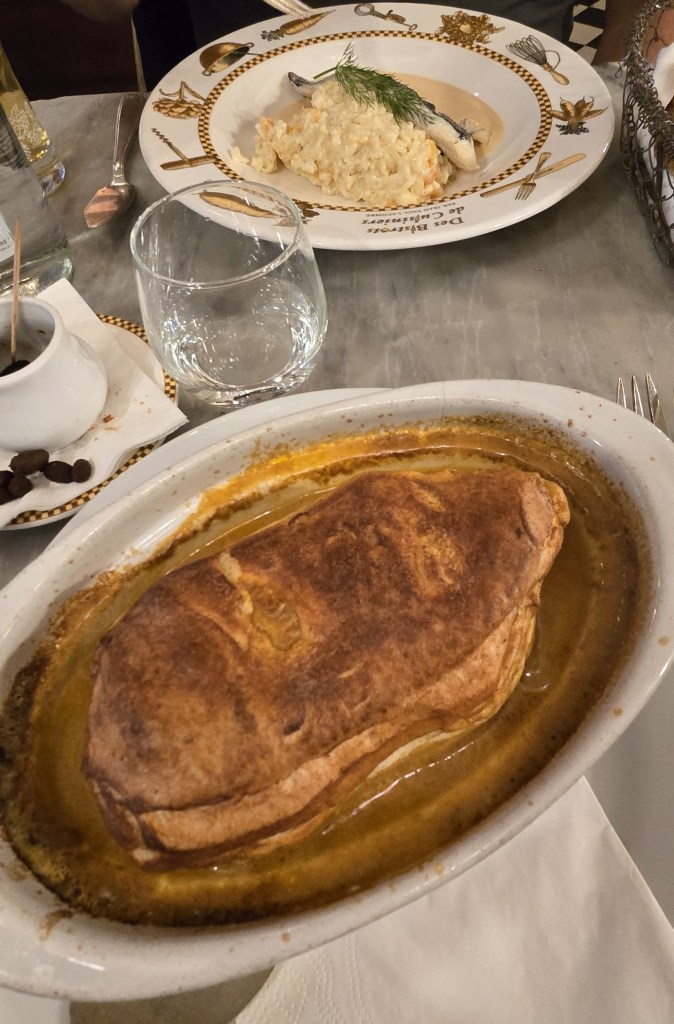
Pike dumpling: I read that one of the Lyonnais delicacies is dumplings. I was as game for that as I am for everything else. I love baos. I expected a stuffed bun. I got something completely different. It took me a bit of time to figure out that the word is not “dumpling” but “soufflé”—confusing, because “soufflé” is literally a French word, so why not use it? So I basically got a fish soufflé. It was very airy and delicate and not fishy (and I do not say “fishy” like it’s a bad thing), and I enjoyed.

Cervelle de canut: It is a creamy cheese spread with herbs and spices, a bit tart courtesy of added vinegar. To me, it was a less salty, less chunky version of the Austrian Liptauer spread, with which I am more familiar. Basically, “creamy”, “cheese”, and “spread” are three words that go together in the best possible way. Speaking of three words that do NOT go together, I have not tried Salad Lyonnais. Bacon, egg, and lettuce together is neither my idea of a good time, nor does it seem interesting enough for a vacation meal. Sorry not sorry.
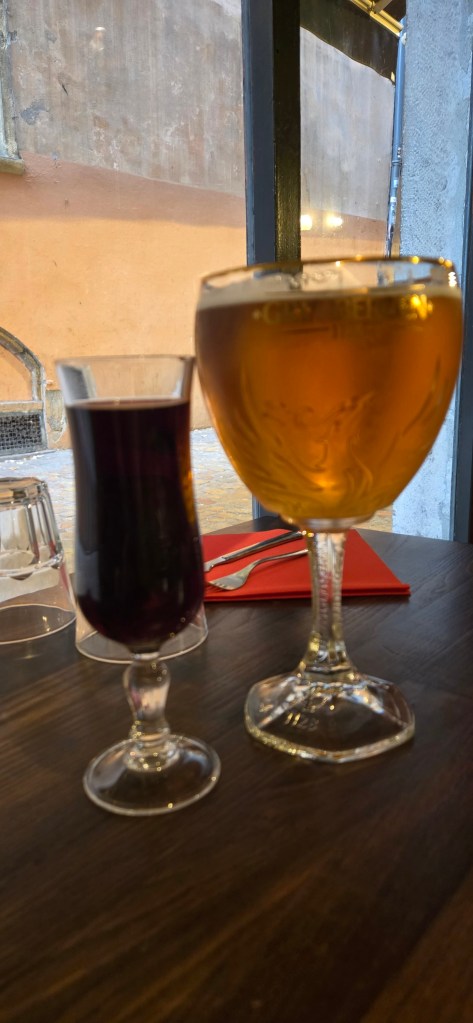
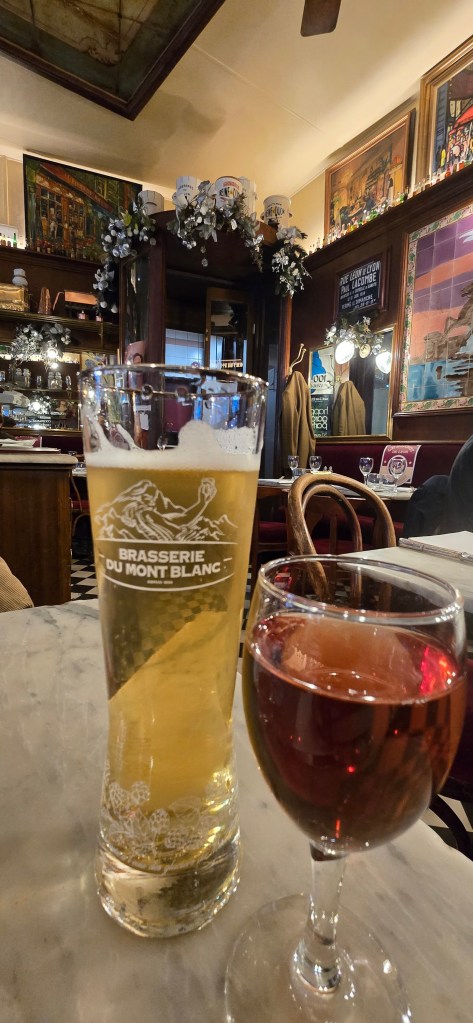
Kir: It seems that every region in France has its own take on this drink. I love it in every variation, which is ironic, because I hate black currants. When I was growing up, I loved the delicate white and red currants, but always found the thick-skinned black ones a bit too aggressive. Crème de cassis, however, is delicious when diluted with champagne to make Kir Royale. In Brittany, I discovered Kir Breton, which substitutes apple cider for white wine. In Lyon, they unironically serve up Communard, with red wine in place of white. Next time I host a party, I need to offer a flight of Kirs. I just came up with this idea, and hope I will not forget it.
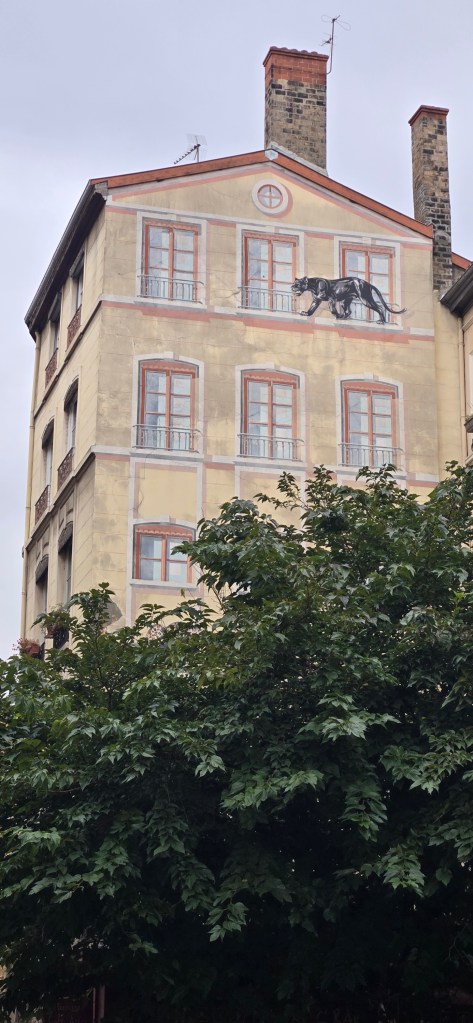
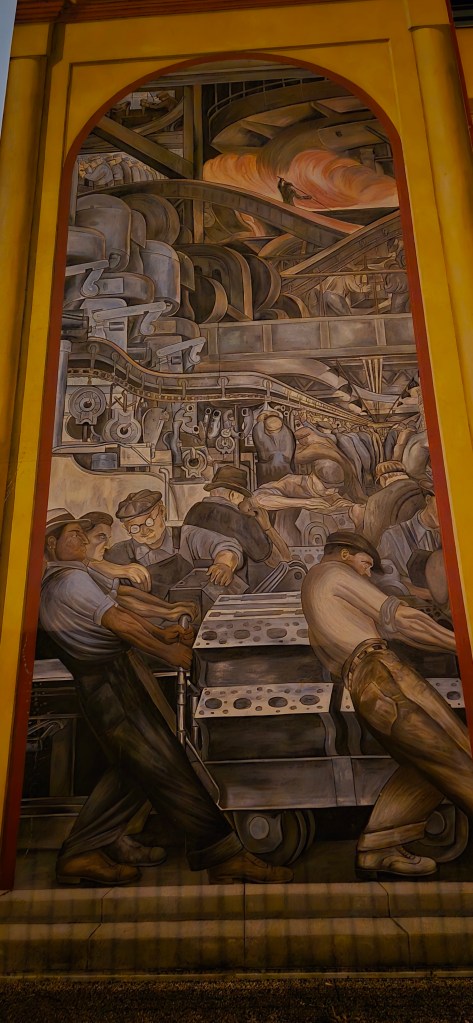
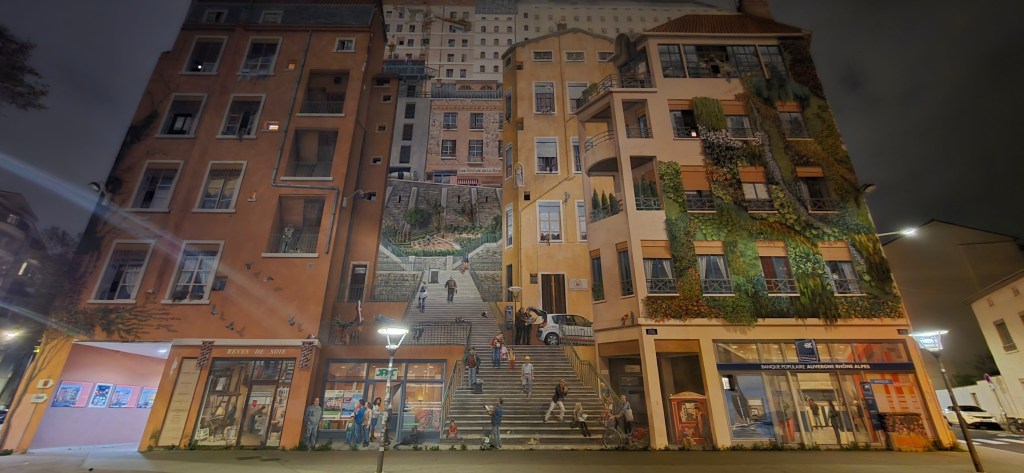
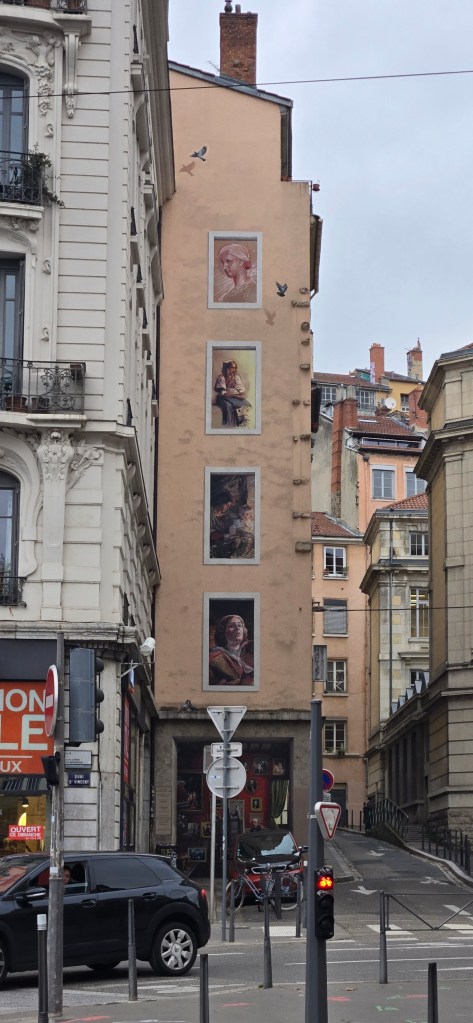
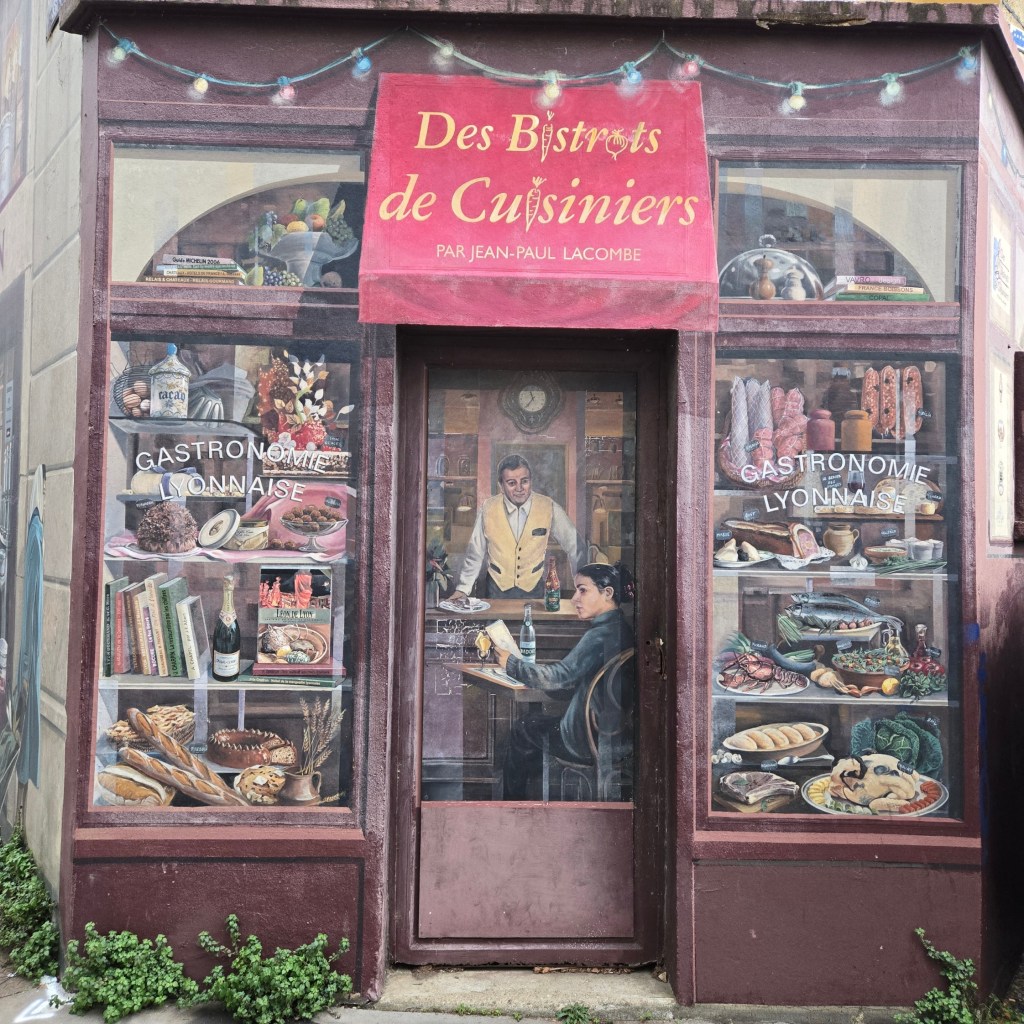
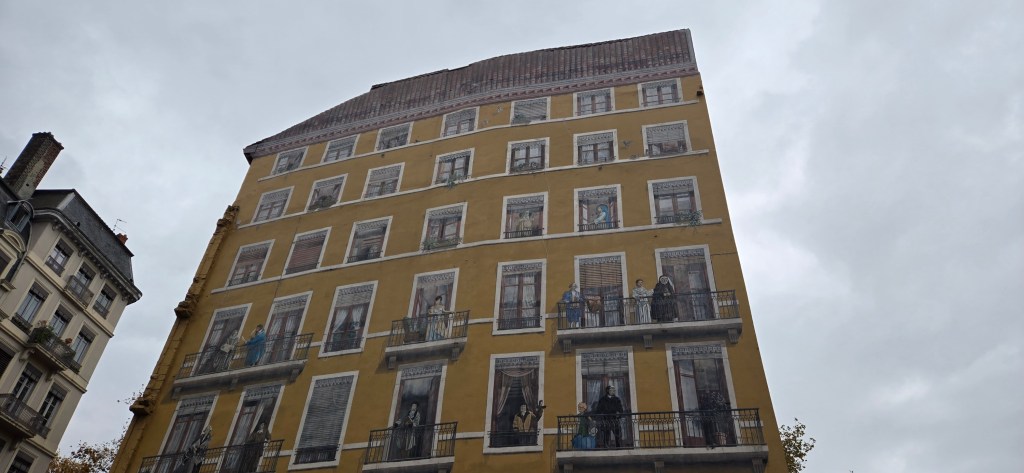
Murals: Lyon has a lot more to offer than just eating and drinking, and one absolutely amazing feature of the city is its murals—specifically, the trompe l’oeil kind. I was really only looking for that one that is in all the tour books and pops up on social media whenever one sees anything about murals, Le Mur des Canuts (“Wall of the Silk Weavers”, the largest mural in Europe), but the handy paper map that we got at the hotel listed a few more, and so we went on a quest. The best part of this kind of treasure hunt is that, because they are on outside walls of random buildings, they just sneak up on you. You walk along, and there is a fake cat on a windowsill, or a fake windowsill, or a fake window. After a while, you start questioning every door—is it real? Is it just painted on? Special mention goes to the Diego Rivera Mural which even has a small part that replicates the magnificent Detroit Industry Murals, as well as a portrait of Vladimir Ilyich Lenin; I sure recognized his familiar face.

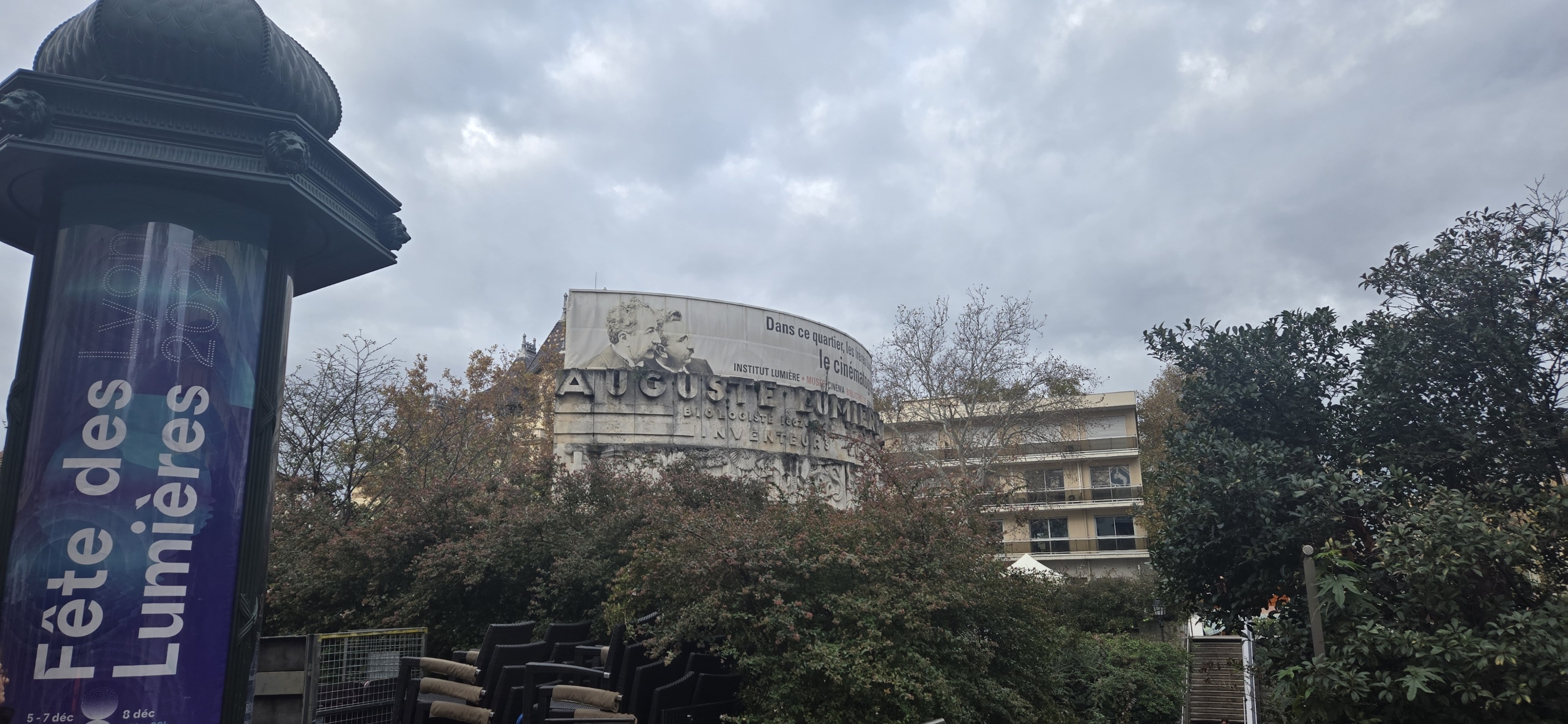
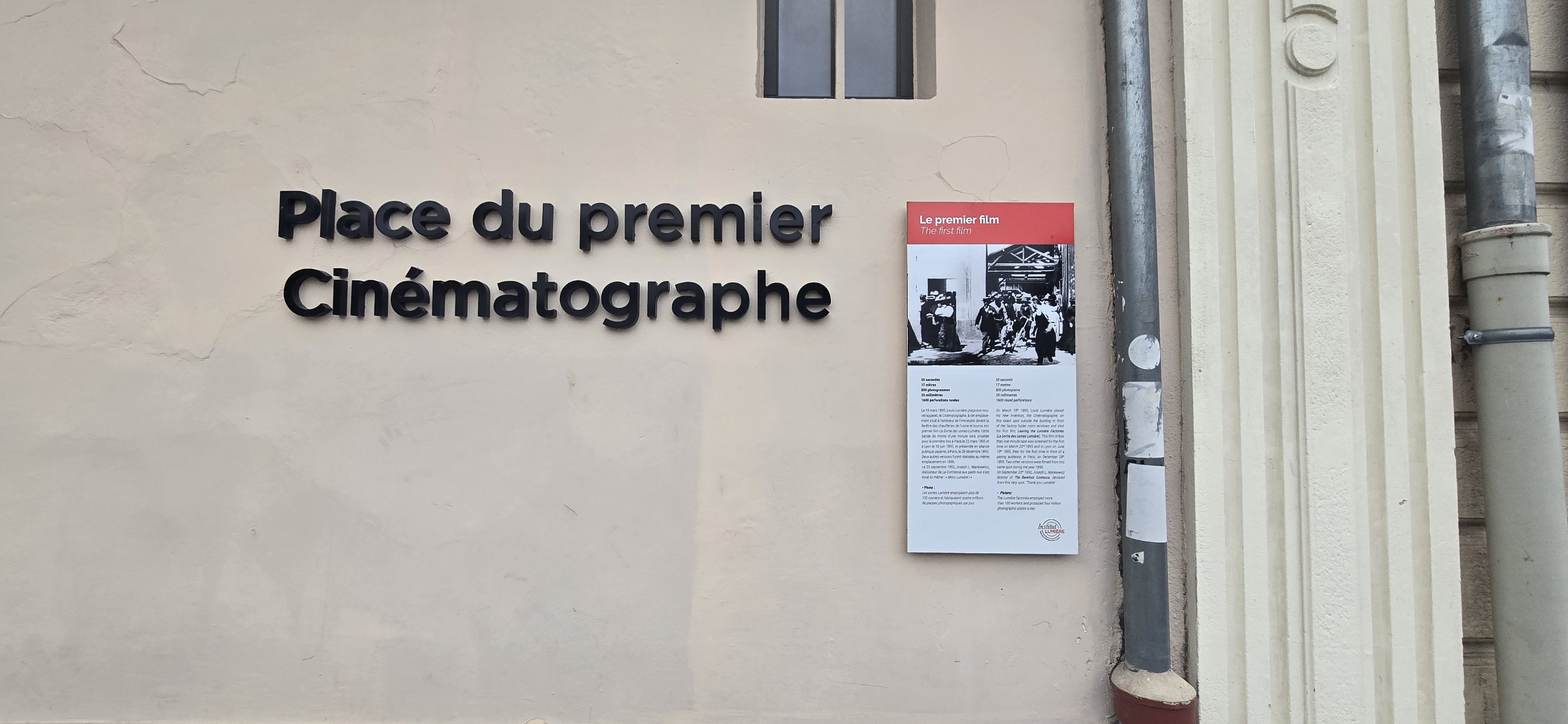
Lumière museum—In college, I took a couple of French cinema classes, including during my very first trip to France for my semester abroad, so the Lumière name was familiar to me. This is not a French cinema museum (there is one in Paris, also very cool), but specifically, a museum of the Lumière family legacy and the early days after the invention of the cinematograph, in their actual villa. Auguste and Louis were brilliant scientists, businessmen, and artists, and the world has not been the same since they were in it.


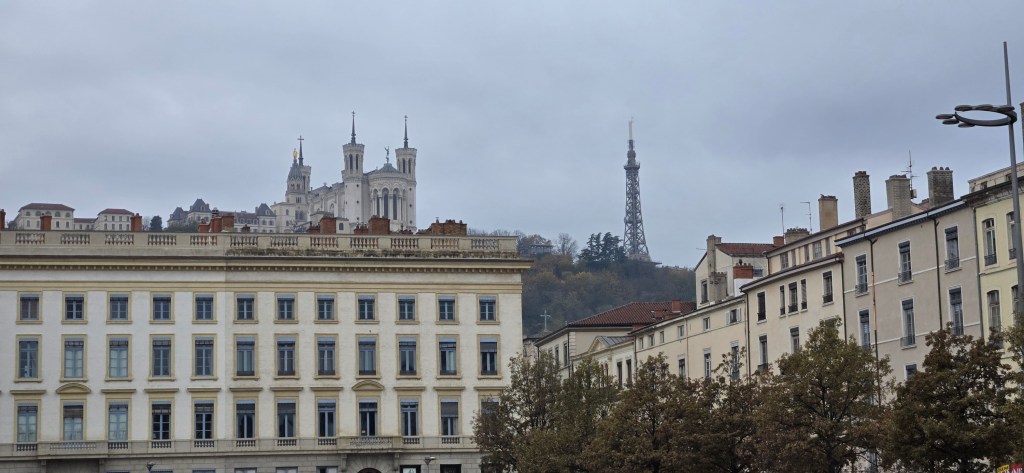
For the rest of the sights, the other museums, cathedrals, etc., check out a reputable tour book and do not trust the keyboard warriors—and I am unanimous in that.












 Old Lady Writing