My childhood was spent on a quaint little street (which merits its own story) of post-war apartment buildings. My grandparents moved there in the 50s, but by the time I was growing up, it transitioned from being a new construction on the outskirts of town to being the last street of the old town before the bridge to the Motorbuilders plant and the wave of new developments. This location and timing were significant for two reasons. First, as the original settlers grew older and their children, those the age of my parents, starting to move away, our street started losing its children. I lived with my grandparents, so most of my friends moved away. And second, I was sent to attend school at the “exemplary” #37 (where I, rebel and delinquent https://oldladywriting.com/2023/11/11/scrap-metal-fiasco/, never lived up to the teachers’ memories of my mother, socially conscious gold medal recipient) while the few kids remaining in the neighborhood went to the local #57. As the result of these events, by the time I was of school age, I had no friends in the neighborhood or, as we say, “in the yard”. My great good fortune was that my best friend from the yard would continue to visit her grandparents every weekend, and she was more than enough.
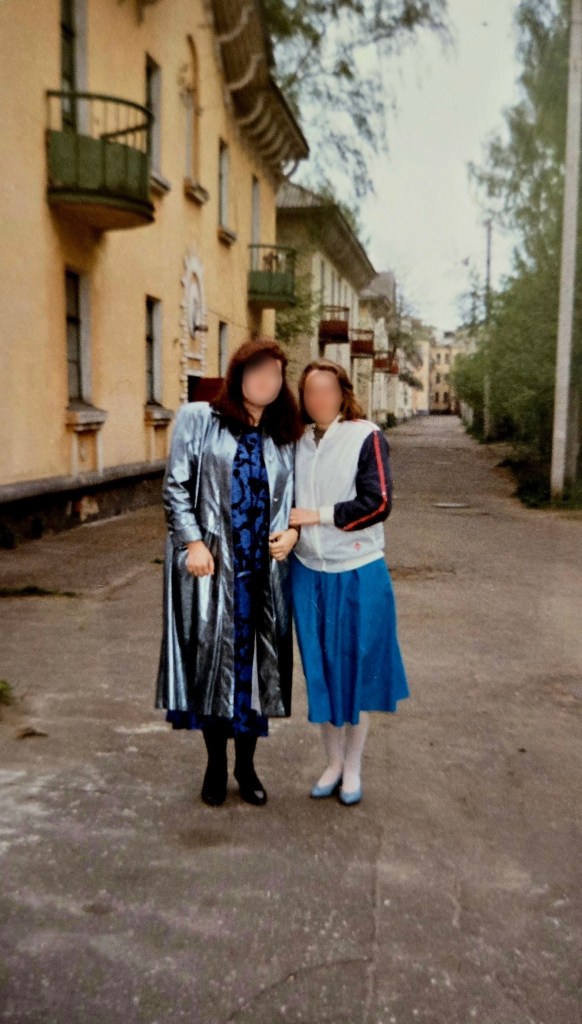
My first conscious memory of Tanya was when I was five years old, and my grandmother and I were returning from my first summer in Crimea https://oldladywriting.com/2024/09/15/on-the-train-to-crimea/. Tanya and her mother were also returning from a summer somewhere, I want to say Gelendzhik, which back then was just a Black Sea resort with no palaces in sight. We all converged on the “sausage train” from Moscow, where Tanya and I pooled our toy resources in the aisle. She was two years older than me, but only a year ahead in school because of her December birthday, so she was just about to start first grade.
From then on, most of the memories of my childhood are connected with her. There was the routine of the Sunday mornings (we went to school six days a week, Sunday was our only day off) when I would knock on her grandparents’ apartment door to see if her mom brought her over on Saturday night. She was a late sleeper, so I would hang outside, dribbling a ball or jumping rope, until she came out of the building. There were also all the winter vacations, when we would split our time between skiing around the yard and sliding down various hills on a big metal plate, or watching TV and drawing at her grandparents’. We were never at my house—my grandmother hovered, my grandfather was seeing patients—but Tanya’s grandparents’ apartment was the most warm and welcoming place. Her grandfather, Sergei Ivanovich, was mostly silent and absent, but her grandmother, Anna Stepanovna, was the kindest, gentlest woman I have ever known. God gave her a long life with unimaginable tragedies along the way. It was my privilege to have known her.
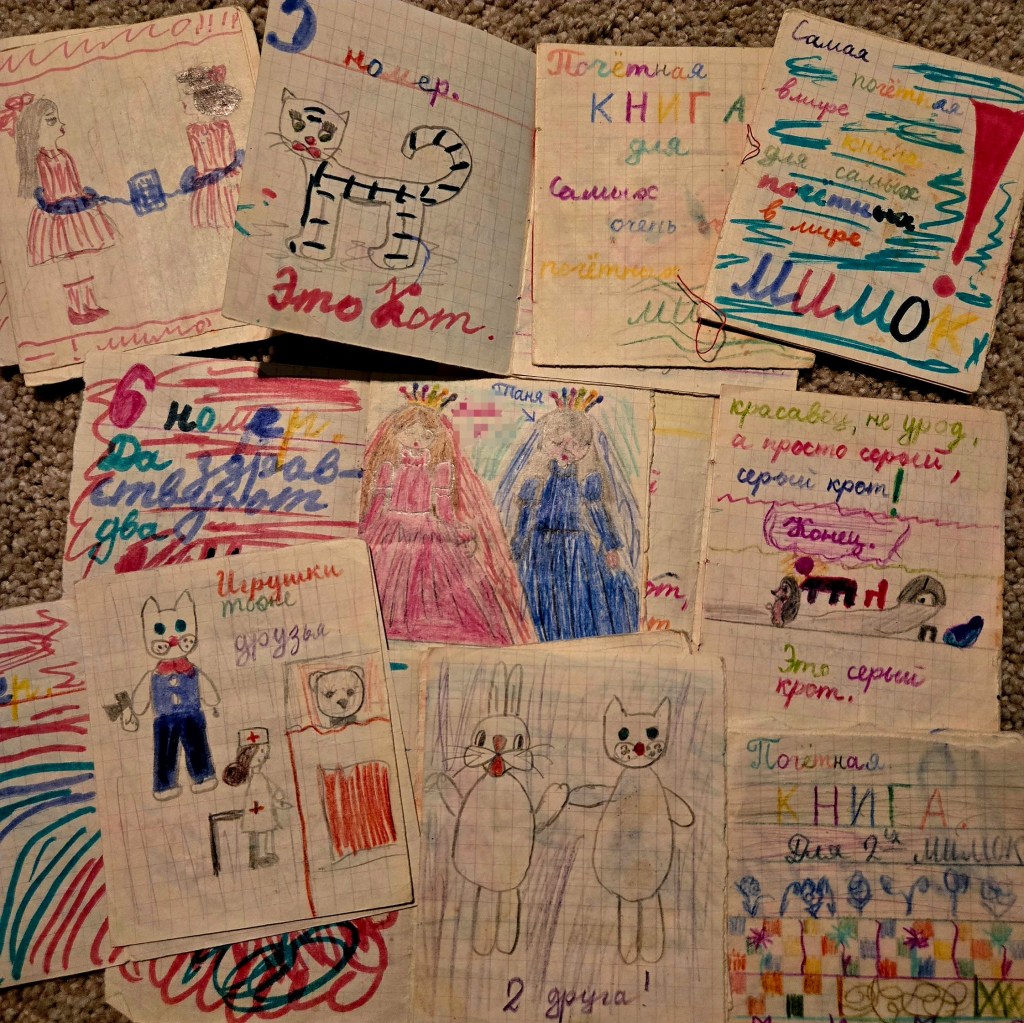
Tanya, being older or most likely just being more talented and creative than me in every way, always took the lead, and I happily followed. She did not just draw—she came up with the idea of making a little magazine and we “published” an issue every day during one winter break. In the summer, she taught me various tricks and games to play with a bouncy ball and how to make dolls out of matchsticks and flowers. She came up with catchy poems, made up words, fun nicknames (her son still knows me by the enduring childhood nickname we called each other), and games that transferred our neighborhood into islands of adventure. She turned every outdoor game into a showcase, whether sliding on ice patches or jumping off milk crates. She called the back door to the nearby household goods and services building “mysterious”, and we would spend hours observing to see if anyone goes in or out (no one ever did). With her, the mundane became extraordinary.
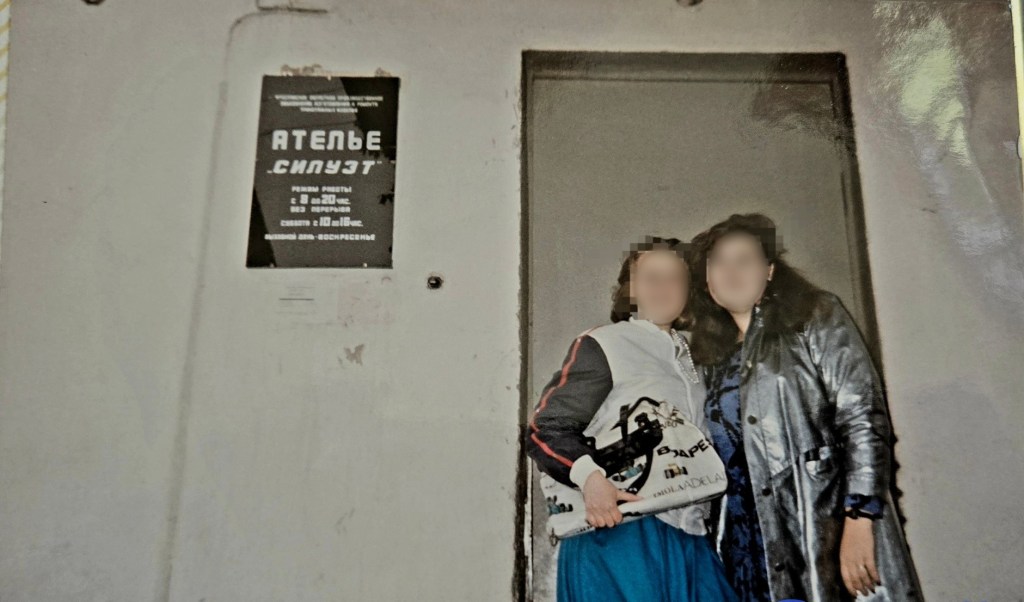
She also instigated most, if not all, of our shenanigans, some more questionable than others: jumping on a mattress on someone’s patio until we got caught and chased away by the owners, sneaking into the training session of the folk circus until we got caught and chased away, running across our tiny street in front of infrequent vehicles until some truck driver stopped and yelled at us, throwing pebbles through the open window of the sewing shop of the household services building… Actually, that one ended badly: the manager (who probably exited through the “mysterious door”) chased us all the way to Tanya’s grandparents’ house, where we ran for safety. My grandmother was over at the time, dragged me home, and grounded me, even though we cried, apologized, and were forgiven by the manager lady. Anna Stepanovna came to our house to beg my grandmother to let us continue playing, but you can guess how that ended. Our piece de resistance was sporadically sending bizarre, occasionally rhyming, always pompous letters from “secret admirers” to Tanya’s great-uncle, an unassuming man whose appearance we found comical (although, to be fair, we never mocked it in our letters). We thoroughly enjoyed composing our outlandish missives whenever the spirit moved us, but the joke ended up being on us—the man taught at a technical school, and assumed that he did indeed have admirers among his female students.
Because my grandmother liked and trusted Anna Stepanovna, Tanya was the only friend to whose house I was allowed to go unaccompanied. Sleepovers were not common in our world, largely because of lack of space, but one time, when there was a family wedding that my grandparents were attending, I begged and pleaded and was allowed to stay at my friend’s—which was a surprise to her! I was watching a children’s movie on TV when she arrived on a Saturday night, and hilarity ensued. I was preparing for this, she was not, so I take full responsibility for coming up with what seemed like such a good idea at the time, setting an alarm clock for the middle of the night and putting it under her grandfather’s pillow. It was the only time in my life I was swatted by a belt, which I richly deserved. It was also the only sleepover and probably the most fun and memorable night of my childhood.
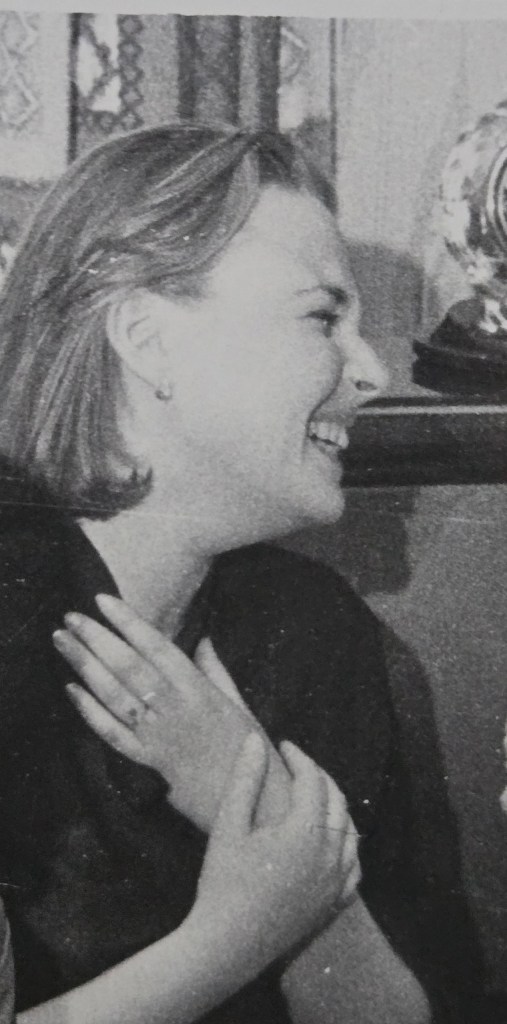
I envied Tanya to some extent, but it was more of an admiration. She was a beauty, blond and blue eyed, tall and willowy. She was a ballet dancer in childhood, and I’ve hobbled on her pointed shoes. As a teenager, she no longer danced, but took up piano. She loved animals; she called her kitten “member of the family” and it was always used as part of his name. She desperately wanted a dog, a dream that was realized in her adult life so much so that her son became a dog trainer. Because of her early childhood in Bulgaria https://oldladywriting.com/2025/05/20/thank-you-for-the-alphabet/, Tanya had real Bulgarian friends who would visit with their exotic foods like lokum (Turkish delight) and gum. Her uncle had an Army friend who was stationed in East Germany and sent exotic toys. In the apartment where she lived with her mother, she had her own room. She was so cool in every way, but she also had an open, sunshiny personality. She was the never a “mean girl”.
I was, by every measure, a very late bloomer, so by the time Tanya became a teenager, our two years’ age gap became more marked. She no longer came to her grandparents’ every weekend, and the time I used to spend in the yard I started spending with my school friends. But she came to say a wrenching and tearful good bye on my last night at home…
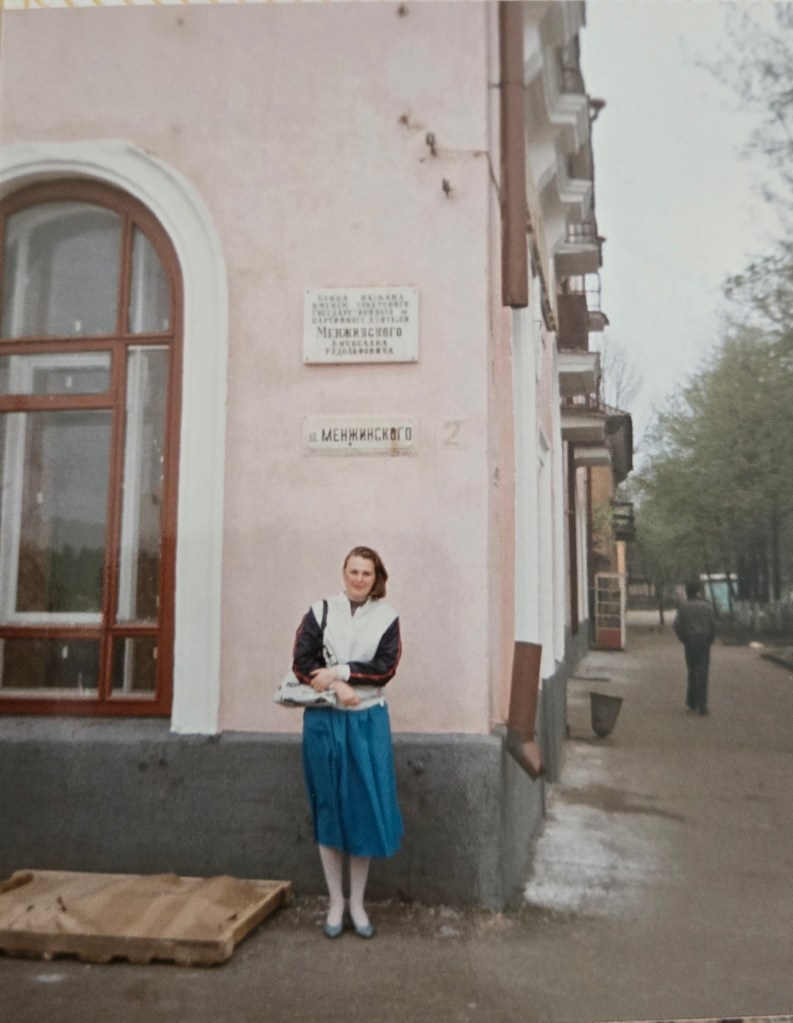
There was only one visit after that, when I was 19. It was as if no time has passed. We retraced the steps of our childhood adventures; we had a lot of laughs. Her grandmother was alive and as warm and vibrant as ever. Our lives diverged quite a bit after that, as lives do, regardless of town and country, but we kept in touch. She got a lot less than she deserved, which is unfair and unjust. I will not write about that, for I was not a witness, and it is not my story to tell. Her last text to me was, “I remember the taste [of lokum]!” I always thought there would be more time, as one does…
Memory eternal. December 2, 1966 – June 16, 2026, 10:30 p.m.