
We had a saying back in the day, “Chicken is not a bird, Bulgaria is not abroad” (sounds better in Russian). It meant no real disrespect; I am certain it came from a place of envy.
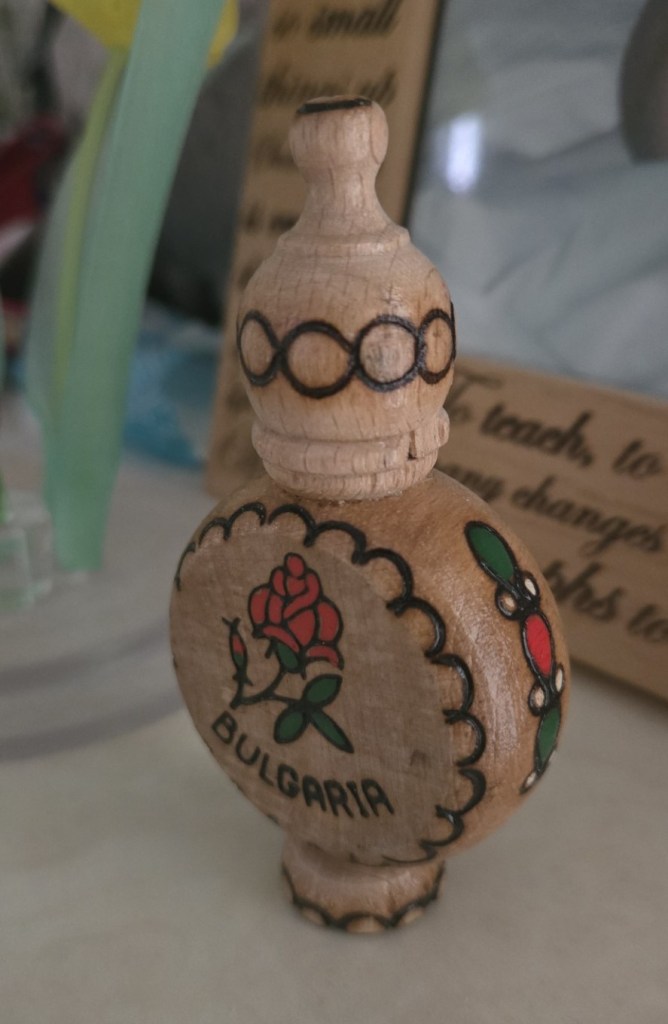
A close childhood friend of mine lived in Bulgaria with her parents until her father, who was stationed there, died in an accident, and she and her mother returned to our provincial town and our quiet little street. For years, they would be visited by Bulgarian friends who spoke lightly accented Russian and brought amazing toys and delicacies. I heard so much about it in my childhood that I felt like I kind of sort of knew it.
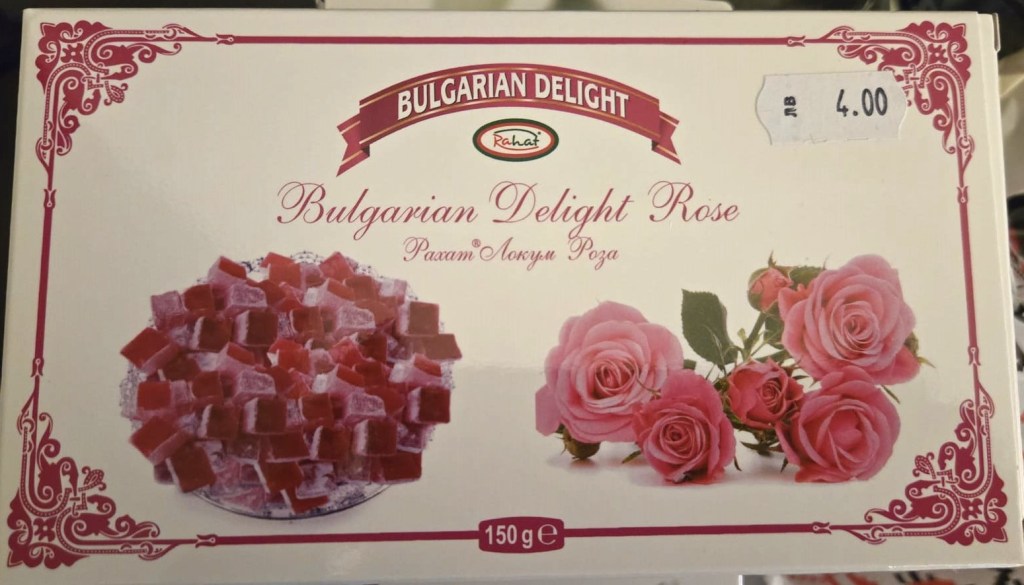
Bulgaria seemed like us but better. The people looked, spoke, and dressed a lot like us (though, of course, more fashionably), but were friendlier, less care-worn, just brighter somehow. I imagined their cities were cleaner, and of course the stores were full of treats. We were supposed to be the biggest, the best, and the most powerful country in the world, but according to numerous accounts from these real people, they had more of everything. It was a paradox that remained unresolved in my childhood.
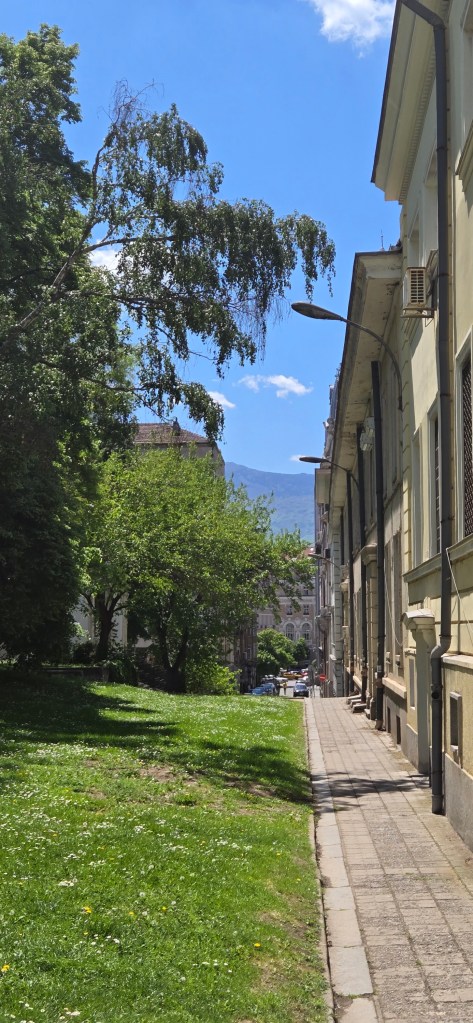
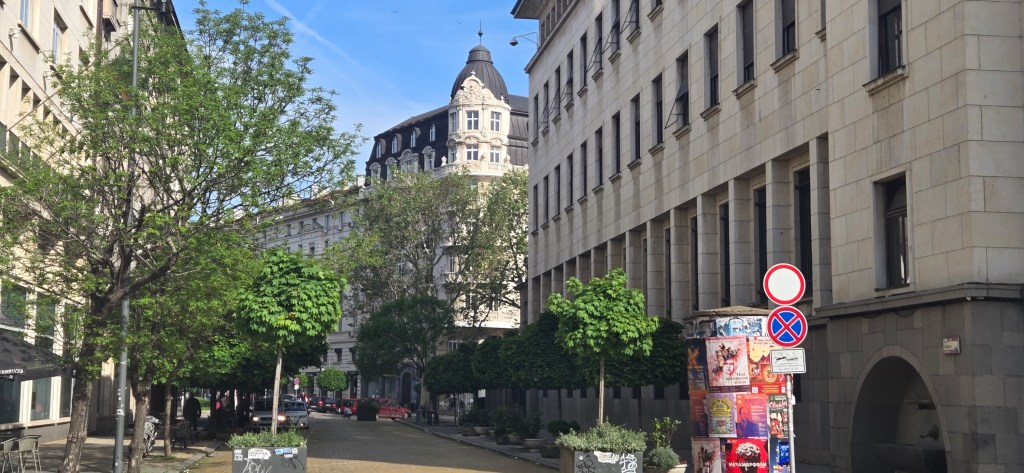
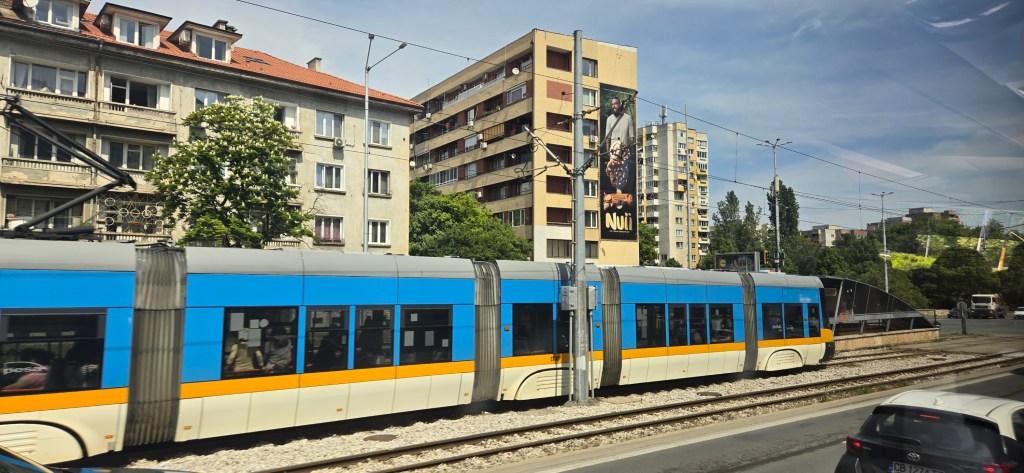
Finally coming to Bulgaria, after imagining it for decades as a fairy tale land of plenty, I found that counterlife I never really lived. So far away and so long after my childhood, I take the concept of plenty entirely for granted. Instead of being excited by the exotic otherness that I would have expected to see as a child, I was touched by the occasional glimpses into the past. The trams and trolley buses. The tree-lined streets with slightly uneven pavement. The post-war Soviet-style buildings. The city parks with benches full of people just hanging out on a warm spring evening. The onion-domed Orthodox churches. And everywhere, the signs in Cyrillic.

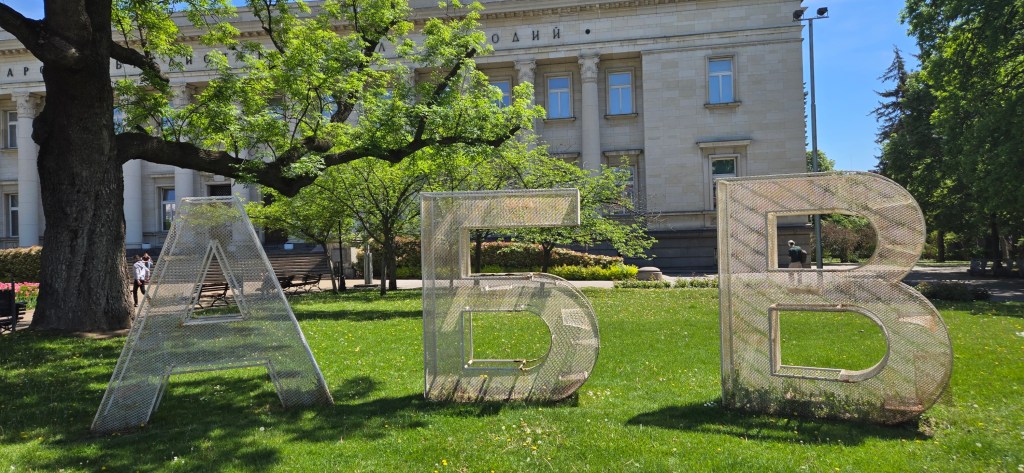
Coincidentally, Sanaz Toossi’s Pulitzer Prize winning play “English” is currently nominated for the Best Play Tony Award. I saw it performed locally, and sobbed through the whole thing. One quote stays with me: “When I speak English, I know I will always be a stranger”. I have been a stranger in a strange land for decades. I speak a foreign language in my home, to my children. I do not know Bulgarian, but just the cadence of it and the occasional words I could pick out in this native-adjacent language was music to my ears. And seeing familiar letters everywhere, effortlessly reading signs, just absorbing the words, well, that was balm to my eyes—and my soul. Thank you for the alphabet, Bulgarians Saints Cyril and Methodius!

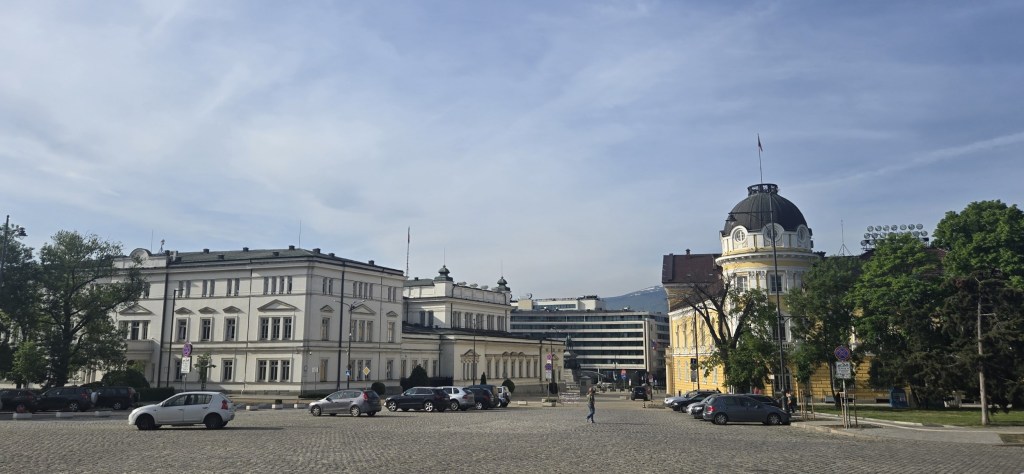
As soon as I arrived in Sofia, I went for a walk that was both purposeful, soaking it all in, and aimless, just wandering the streets and searching for the memories of that parallel childhood. Walking on the Tsar Osvoboditel Boulevard, taking the slight curve and suddenly seeing the National Assembly building with its tri-color flag, I almost mistook the green stripe for blue. I could have been in Moscow (had I ever wandered around Moscow on my own—I never have). It could have been 1972 (if one ignores the modern cars zooming by). Everything was both larger than my own hometown (for Sofia, after all, is a capital, while I come from provincial backwater), yet small enough to feel familiarly nostalgic. In short, just as I dreamed it would be…

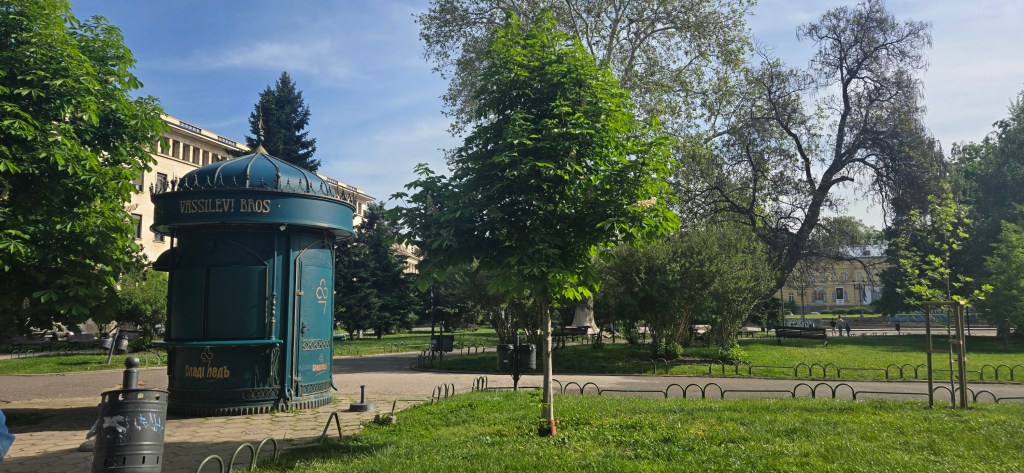
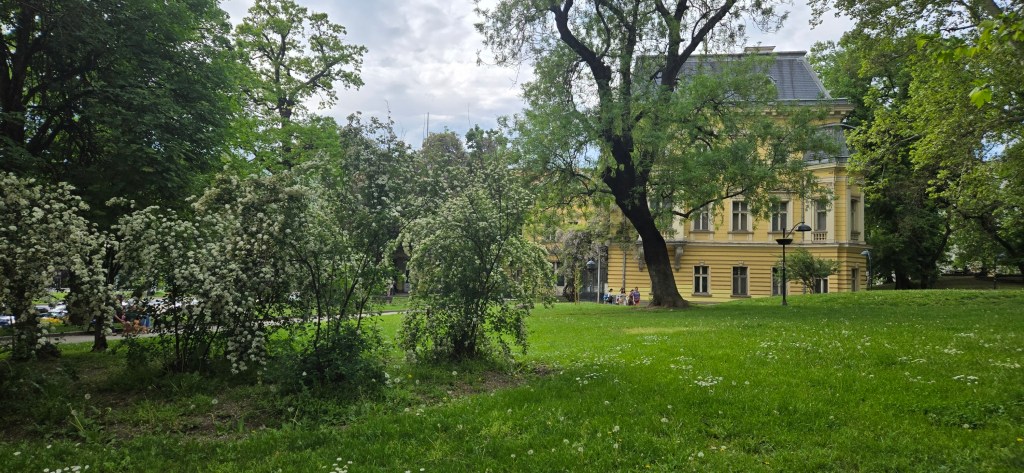
I wandered through the lovely City Garden, and came upon the beautiful neoclassical building of the National Theater named after Ivan Vazov where I saw a poster for the upcoming production of none other than “Rosencrantz and Guildenstern Are Dead”. How I wish I could have seen it there!
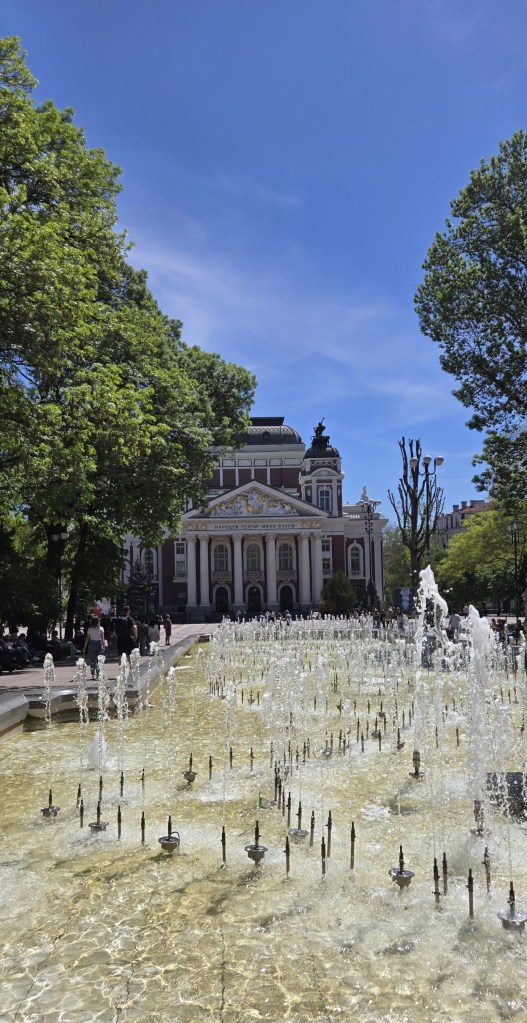

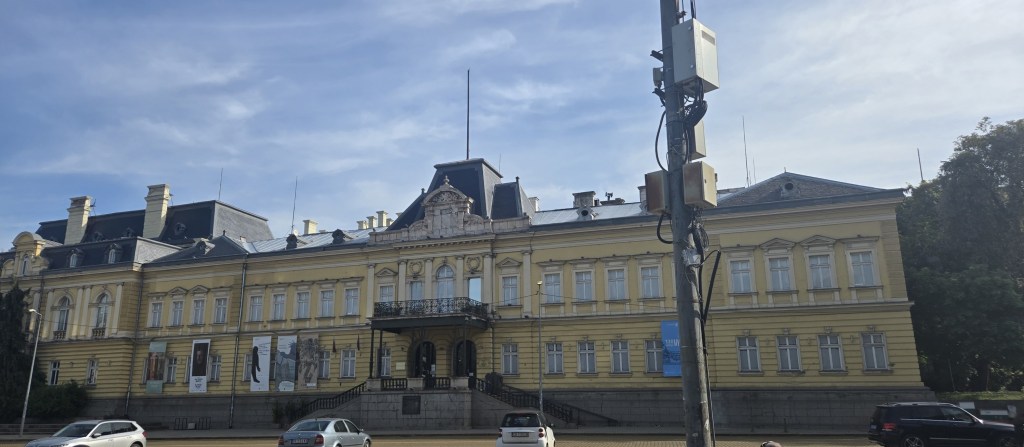
This mix of green spaces, cheerful fountains and colorful flower beds, elegant pre-war buildings on cozy streets and imposing post-war ones on wide avenues, it was all so recognizable from another place and time. Vitosha Boulevard, the lively pedestrian street with rows of stores and outdoor cafes was the one place that stood out as belonging strictly to the Western, European Union present. We had nothing like that during the Soviet era. And even that was heartwarming, a confirmation (as if I needed one) that there is no stagnation, life marches on, and new and wonderful things continue to happen. This is not just an imaginary country of my childhood, but a thriving, vibrant, warm and beautiful land of dynamic present and promising future.


And speaking of Tsar Osvoboditel (Liberator), none other than Alexander II of Russia, who freed Bulgaria from the Ottoman Empire: my great-great-grandfather fought in his army. I do not know if he fought in the battles for Bulgarian independence, but I choose to imagine that he did. I do know that the fact that he was “Alexander’s soldier” decided my family’s destiny, for it enabled him and his descendants, including my beloved maternal grandfather, to live in Russia proper, beyond the Pale of Settlement. So I have feelings of gratitude to Alexander II that are at least as warm as those that Bulgarians still seem to harbor. In Russia, he earned his moniker for the emancipation of the serfs, but in Sofia, his impressive monument bears the inscription “To the Tsar-Liberator from grateful Bulgaria”. He seems to have been the last of the decent ones, as far as Tsars go.
I only spent two days in Sofia, two glorious, beautiful sunny days at the beginning of the longest vacation I have taken in my adult life (10 days). If I never make it to the land of my actual childhood, I know where to look for a substitute.






 Old Lady Writing