The War of the Roses

Five years ago, I wrote how in my quest to complete the Shakespeare canon, I was still five plays short.  As of this writing, I only [still?] have two to go (“Troilus and Cressida” and “Two Noble Kinsmen” for those keeping track at home).  “Henry VI” trilogy is done, and how!

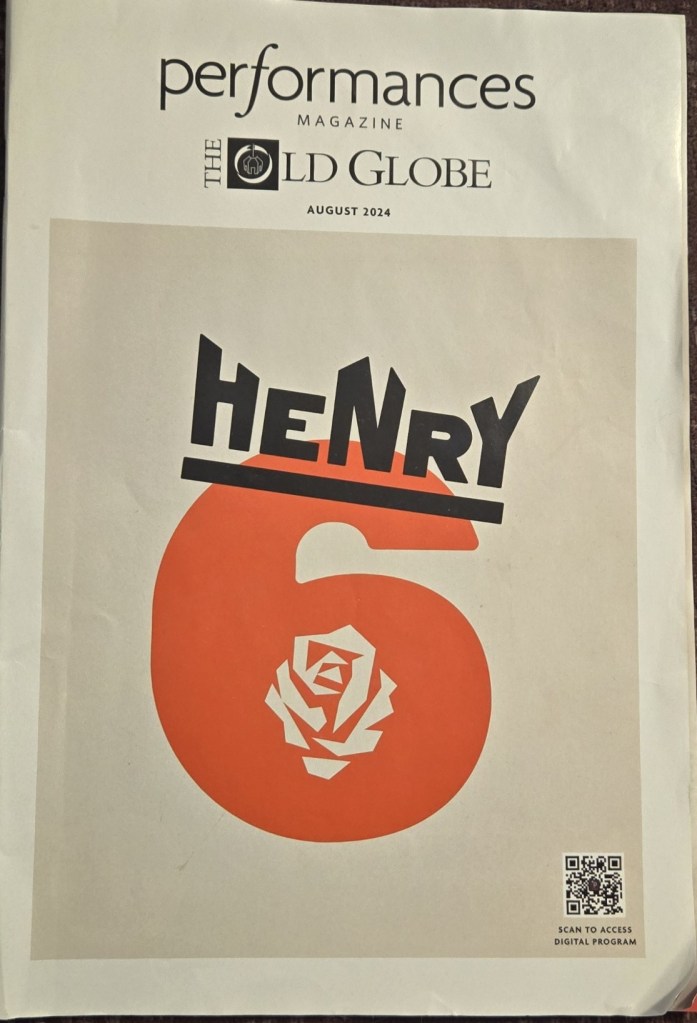
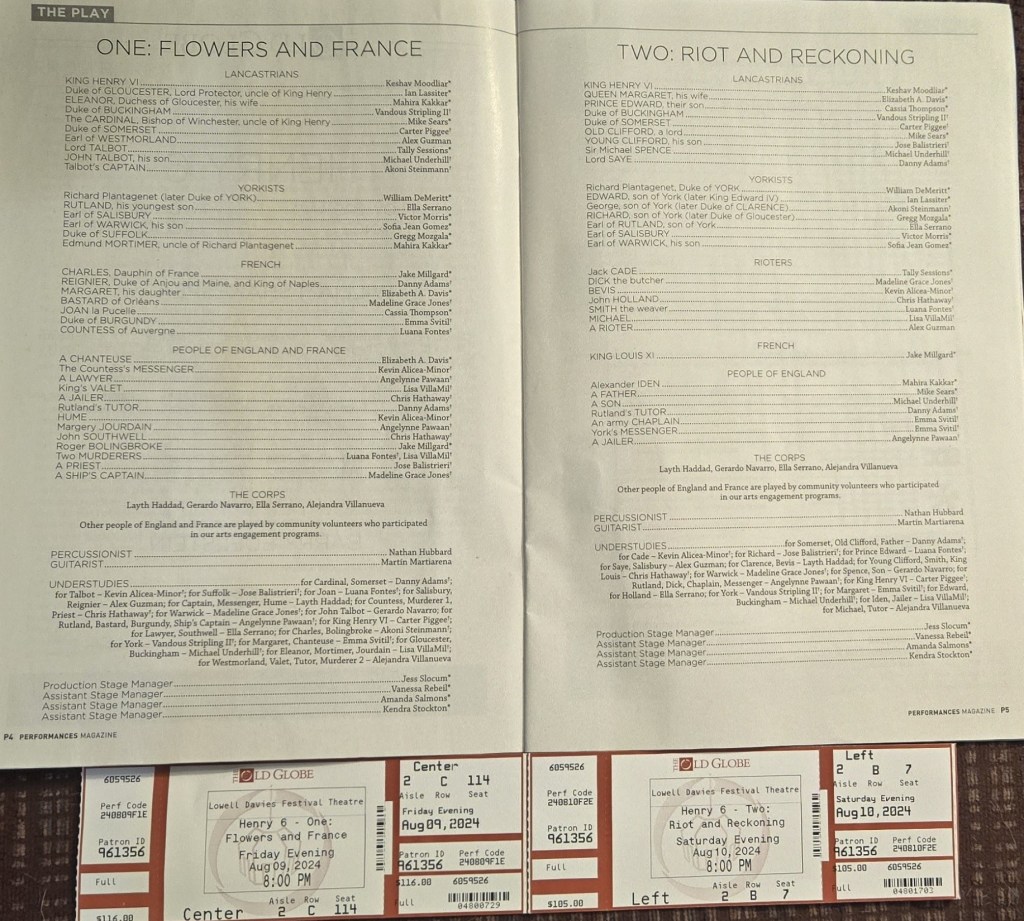
I have to note that it took me fewer attempts to get to Henry (three) than to Vienna (five).  I literally had tickets to see it at the Oregon Shakespeare Festival in the fall of 2020, and we all know how that went.  Michigan Shakespeare Festival was going to produce it this summer but sadly, had to go dark.  I was merely wondering what might be playing at The Old Globe in San Diego during my upcoming trip next spring when I noticed that it is actually doing “Henry VI” this summer.  And so I said to myself, who am I if I am not true to this glorious quest?  I found the perfect weekend when the “Henry VI” Parts 1-3 would play on two successive nights, reserved a hotel room, and spent a couple of months in happy anticipation of a visit to the place of which I warmly think as American Crimea. 

Credit to production designers: Lawrence E. Moten III, Scenic Design; David Israel Reynoso, Costume Design; Mextly Couzin, Lighting Design; Melanie Chen Cole, Sound Design; Caite Hevner, Projection Design.

I have been to The Old Globe several years ago, and loved their production of “Red Velvet”.  However, checking the tickets shortly before the trip, I was slightly dismayed to discover that “Henry” is being staged at an outdoor venue.  I pictured lawn seats, actors scurrying to not be seen behind awkward wooden set pieces, and lots of bugs.  In the Midwest, I have missed more than one outdoor performance and sporting event (yes, I have been known to attend a baseball game, don’t look so shocked!) that have been rained out.  However, I know as well as anyone that it never rains in Southern California, and was willing to put up with the rest of the potential unpleasantries just to cross this elusive trio of plays off my list.  Spoiler alert:  this did not turn out to be your usual Shakespeare in the Park.

Now, much as all I know about French history I learned from the novels of Alexandre Dumas, all I know about English history I learned from Shakespeare.  While I still need to recite the opening lines of “Richard III” to help myself remember who is York and who is Lancaster (and need a mnemonic device I heretofore have not found to identify which rose is red and which is white), I am happy to have finally filled the gap between “Henry V” and “Richard III”. 

It turns out that the gap includes some pretty exciting stuff, such as Joan of Arc’s last stand, epic battles between the English and the French, and intense subsequent plotting and fighting for the crown among the various English heirs and pretenders.  What’s not to like?  Ah, here is what:  my least favorite line in all of Shakespeare, “let’s kill all the lawyers”, makes its annoying appearance.  Even though in the play (and I knew this before seeing it) it is meant as the first step to chaos and political instability and is spoken by a villainous character, it has been misquoted for centuries.  But I am getting ahead of myself.

I have been seeing Shakespeare performed primarily at the Stratford Festival in Canada, which is as good as it gets.  I have seen some fantastic interpretations elsewhere, innovative, beautifully acted, creatively staged, but I have always thought that Stratford’s scale and scope is second to none.  Until now.  And unexpectedly, this “Henry VI”—actually, styled as “Henry 6”—an English Civil War saga 600 years old, filled me with patriotism.  I was all like, look at our American actors being as good as Canadians!

First, the outdoor theater at the Old Globe is basically the same as any other theater but without a roof—and a roof is not critical to a play unless you are dropping a chandelier from the ceiling.  But the way the natural surroundings of the gorgeous Balboa Park worked with the set, however, was both unique and exhilarating.  Every time those giant doors opened to let actors on stage and we saw, instead of the usual backstage darkness, majestic trees lit in the night, it was a spectacle like none I have ever experienced.  The most powerful moment came early on, when Lord Talbot, The Sword of England, first burst on the scene, from the actual forest, backlit and accompanied by stirring rock music.  It was just too cool!

Second, rarely have I seen a Shakespeare production that is so accessible, yet still recognizably classic.  The inventive prologue gave a quick summary of The Henriad (Richard II/Henry IV, Henry V–it was yet unwritten by Shakespeare at the time of the staging of Henry VI) and set the stage for what is to follow.  The costumes, the crowns, the crowds, the chaos—oh, it is history all right, but what gripping history!  Maybe these are earlier plays, but what they lack in familiar soliloquies they more than make up in the absorbing (and true) story that is better than any tragedy (or comedy) from the pen of the same author. 

This production is full of fun anachronisms, including a hilarious presentation by Richard of York to explain his right to the throne with the aid of an overhead projector.  I have to add that, besides the valiant Talbot, Richard was my other favorite character.  Is he supposed to be sympathetic?  I found his sincerity and single-minded focus on the throne endearing.  There was one scene where others are talking, planning, plotting, and he just paces around the stage, literally circumnavigating it, talking to himself.  I caught myself with my mouth literally gaping open, trying to absorb everything that was going on.

I liked the first part more than the second one, for purely subjective reasons—more of the French (Charles the Dauphin bearing hilarious resemblance to King Herod in “Jesus Christ Superstar”), Talbot and the cult of Talbot, and just a lot more humor.  The second part, all about the infighting and plotting for the English throne among the English themselves, is quite a bit darker.  And once that madman Richard III shows up on the scene, events start snowballing, and you know it will end badly.  He gets his own show later; let’s see more of the other people.

Also, Part 2 started right off with the reenactment of the January 6 riot, complete with the QAnon Shaman, albeit with the Union Jack painted on his face—and, obviously, with Shakespeare’s words, which, I imagine, elevated that particular disaster.  It was disturbing and a terrible reminder that we humans never change and learn nothing from history.  We live through these cataclysms and they shock us, but there is nothing new under the sun. Shakespeare already wrote about it…

The thing about Shakespeare is, his words, or even what we take to be his words, are constantly edited and reinterpreted.  Having seen “Henry VI”/”6” for the first time, I do not know if I have fallen in love with the play itself, or with this particular version of it.  But does it really matter?  It was a magical experience that touched my heart, and that is what great theater does.

Hometown: Ann Arbor

When I started law school, we had this incoming yearbook with everyone’s photos, so that you could get to know your classmates—you were going to be with them for three years.  We had to list our undergraduate institution and hometown.  The first was easy because factual; the second, for me, became unexpectedly convoluted.

At that time, I was not even a decade out of the Old Country, but it was lost to me, irrelevant, and politically incorrect (oh, how the times have not changed!).  I had no home with my mother and stepfather, last and least because they moved states a couple of times since my last sojourn with them.  I was living year round, working, and attending university in Ann Arbor, Michigan, and so it became my hometown, by default and of the moment.    

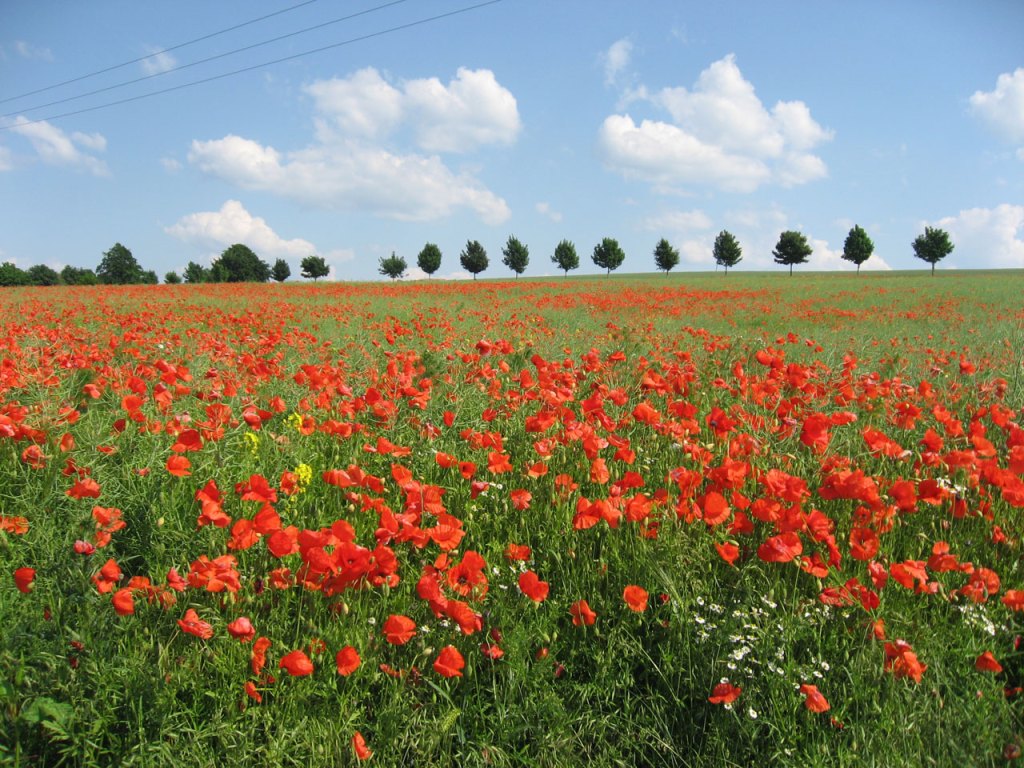
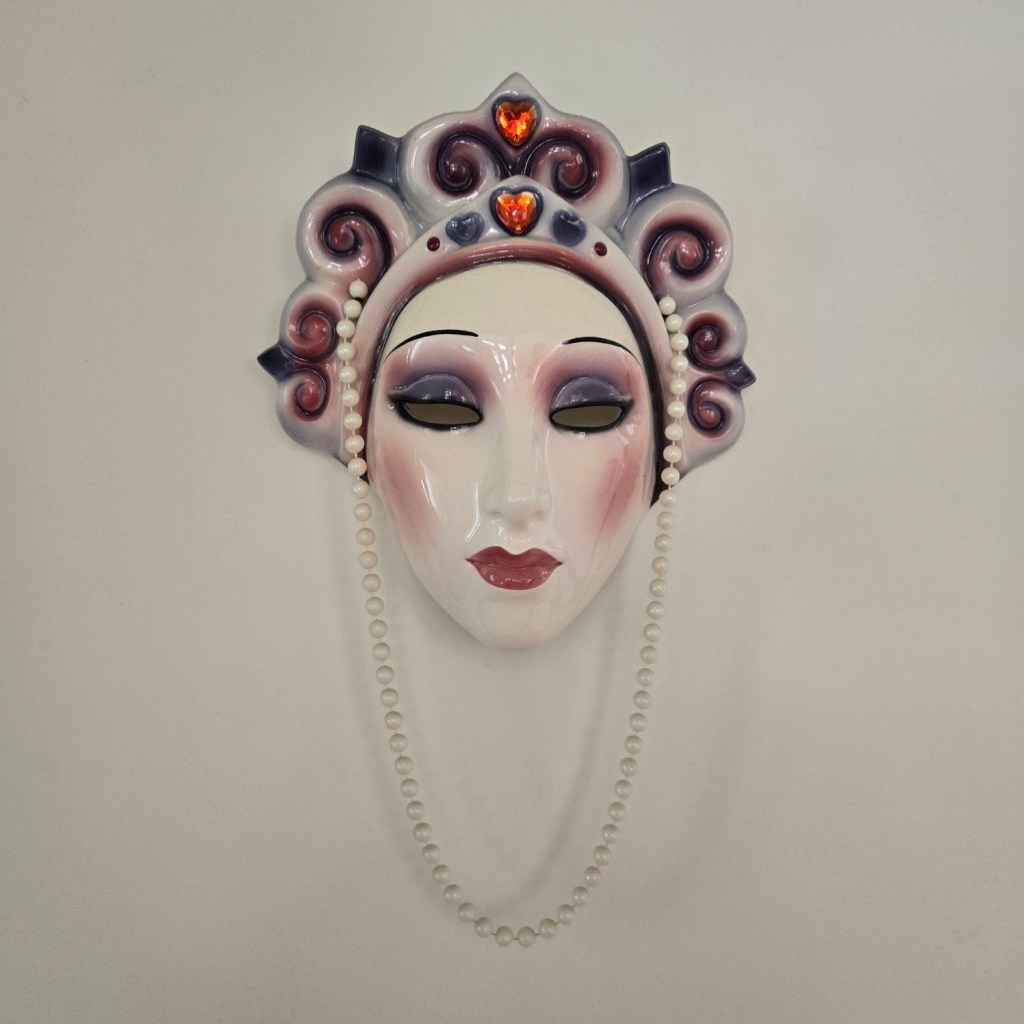
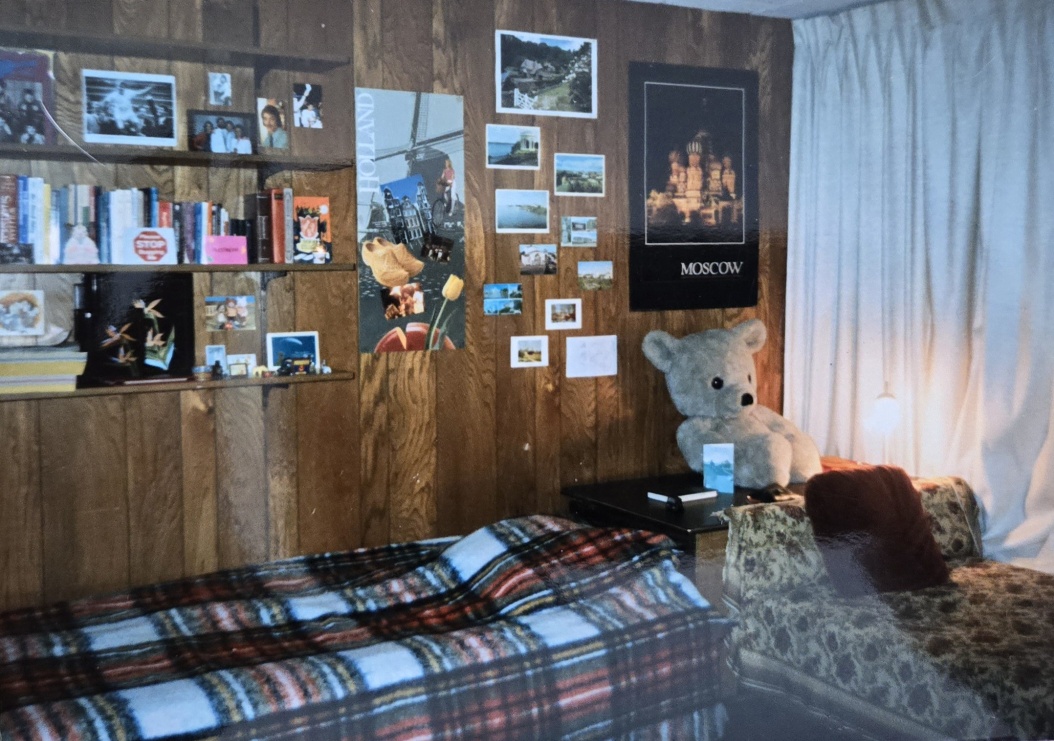
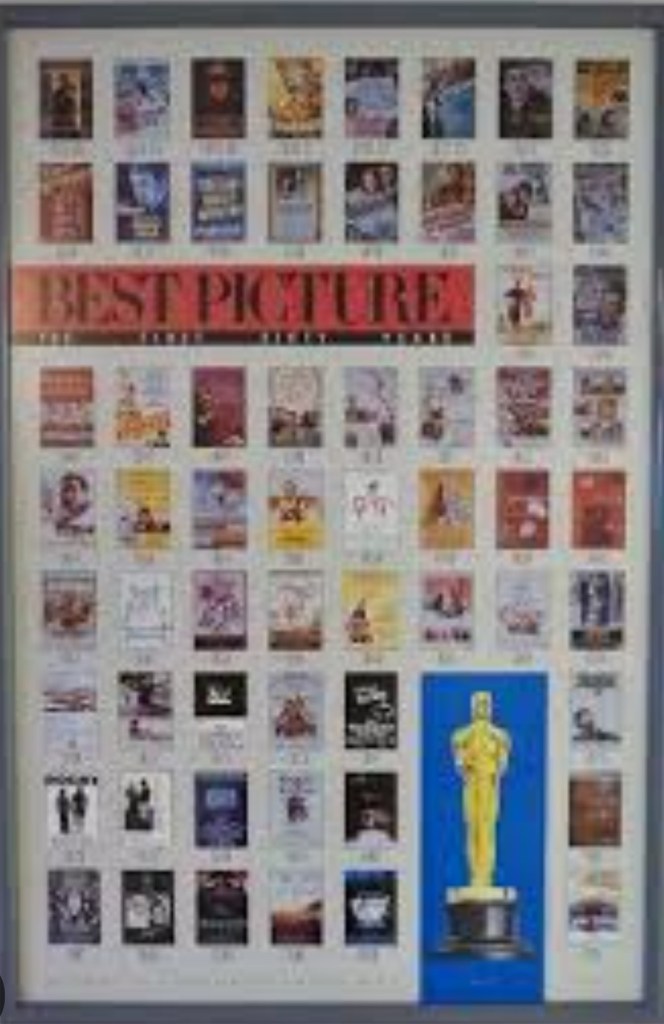
I lived in the same studio apartment for three years, which was the only place in this lifetime that was all mine, decorated by my teenage self with a combination of my favorite things, including a porcelain mask bought at Middle Earth from when I dreamed of an entire wall of masks (I still have it, the lone holdover; I never bought any others), and a collection of posters of my favorite people and places: best of the Netherlands sent to me by my beloved Dutch host family, the Marx Brothers and the Monkees, Oscar winning movies when there was still a finite number and I knew every one, Mardi Gras by Andrea Mistretta, a field of poppies that reminded me of a train ride from Moscow to Crimea, and an obligatory poster of Moscow (I am most assuredly not from Moscow, but that was the best that was available at Borders). The posters subsequently fell victims to a flood in the basement of my first house, but most of these are still some of my favorite things.

Out there, next to State Theater, is the location of the original Borders bookstore.

And speaking of Borders, I lived a block away from the original bookstore.  This was the Borders before it was a chain, before it was international, before it sold music or had a café, and even before the flagship store moved into the space vacated by Jacobson’s (another sad loss; Jacobson’s was a great store).  Being able to just walk in and browse, after work, between classes, on the weekends—ah, it was heaven!  It was certainly a big part of what made Ann Arbor home.  When I was in high school, coming to Ann Arbor with my mother was a double-edged sword:  she would visit her friends, I was either bored or resentful, but Borders and the nearby movie theater on Fifth that showed foreign and art films that would never make it to our painfully provincial town of Jackson were always worth the trip[1]

Summers in Ann Arbor were magical yet awful.  It was like being in one of those weird stories in which a person wakes up one day and the world is different: there are no adults, or half the population is gone, or the Beatles never existed.  All right, maybe this last one is not strictly relevant.  But basically, you just walked out on the street one day, and all the students were gone, save for the few of us year-round semi-townies.  On the one hand, it was nice to just work and have the predictability of time off.  I craved the stability, but I missed the difference of days and the extra activities that filled the school year.  And, full time job was not twice as boring as a part time job, it was more boring cubed or quadrupled.  It took up so very much time, leaving only the evenings of nothing to do or the weekends of trying to find things to do.  There were no tasks to perform in my free time, but instead, the panic of not having those tasks.  It was the waiting time.  Which is how I sometimes still feel in my adult life.

Eventually, Ann Arbor became too small to contain me and my dreams.  It really is a tiny town, with the downtown you can criss-cross in a quantity of minutes, not hours.  Were it not for the diagonal part of the main campus (obviously nicknamed The Diag), you could look right through it.  I was weary of walking the same half dozen streets.  I needed a change of scenery, and so I went to the biggest city I could find.

Back when there was only one tall building on South University.

I spent another summer in Ann Arbor after that, two years later.  All but one of my friends were gone, and I was living out a Cat Stevens song lyric, “For you will still be here tomorrow, but your dreams may not” and an agonizing “you can’t go home again” adage.  I was a wildly unhappy law student and summer associate in a big firm, terrified by the future not of my own dreaming unfolding in front of me.  It was such a weird time, living in an old familiar place, but on different terms, as a quasi-adult in a college town.  Living in New York, I yearned for Ann Arbor, yet the minute I arrived, the streets started closing in on me again. 

And now, some more decades later, the changes make the town barely recognizable to me.  Gone are all the stores I frequented—yes, literally every single one.  Not one survives, not Borders, not Middle Earth, not Peaceable Kingdom, not Falling Water, not Schoolkids Records.  Some restaurants remain, and there are better ones, including a handful of decent breweries, which would have been irrelevant to the underage me in any case.  But the stores were special because of all the solitary browsing one could do, in a crowd yet apart.  This is a feeling one can cultivate only in an urban environment, walking in, walking around, walking out, invisible.

Ann Arbor is a reminder, a symbol of the time when everything was possible.  Before I started law school, I could have started anything else instead.  The road was chosen, but not yet taken.  I could have taken a gap year (no, I could not have, I had no resources for that, but it is nice to think that I might have had options).  I could have kept working at an office job and used my after work hours to find myself and my path.  I could have… well, that is about it.  I never really had choices.  But there was that one brief shining moment when I thought I did—and that was in Ann Arbor.  And so, this town will always be for me a symbol of possibilities, and that is enough for it to have been called “home”.

[1] “Cinema Ann Arbor: How Campus Rebels Forged a Singular Film Culture” by Frank Uhle is a time-machine trip down memory lane to a time that I just barely glimpsed, but during which I consider myself incredibly fortunate to have lived.

[https://oldladywriting.com/2021/01/30/the-road-not-taken/]


Fortress By the Sea

A few years ago, I updated my Vacation Bucket List.  I am not nearly as adventurous a traveler as people think I am.  I like castles, cathedrals, and art museums.  After I saw Raphael’s Sistine Madonna at the Dresden Gallery, a moment for which I was waiting almost my entire life, I was temporarily adrift.  It was the apex of my dreams.  I even had to ask spouse for suggestions on where we should go next, which is how we ended up at Oktoberfest (worth every crowded, beer-soaked minute, and a story for another time).  I needed to brainstorm.  Many of my travel ideas have been known to come from books, and I have followed the footsteps of some favorite characters.  In my adult life, none touched my heart more than Uhtred of Bebbanburg, the imperfectly perfect hero of Bernard Cornwell’s Saxon Chronicles.

All his life Uhtred was pining for his fortress by the sea.  I have been pining alongside him, from the first book which I read in 2009.  He regained Bebbanburg in the 10th book, and after that, the last three books were superfluous and I do not remember them (although that might be partially because my shorter term memory is declining with age).  But really, much like “The Odyssey”, the quest was the story.  All the other plotlines were just there to support this lifelong journey of Uhtred back home.  From the beginning, I could identify with his longing.  I always felt that I was essentially a female, modern-day version of Uhtred.  There are some subtle differences, mainly related to the sword-wielding, but basically, I am Uhtred.  His feeling of yearning for his lost ancestral home defined him and gave his life purpose, and I identified with that completely.  I spent so much time listening to Uhtred wax nostalgic about his ancestral fortress by the sea, I had to see it for myself.  I had to see the sight of the happy ending.

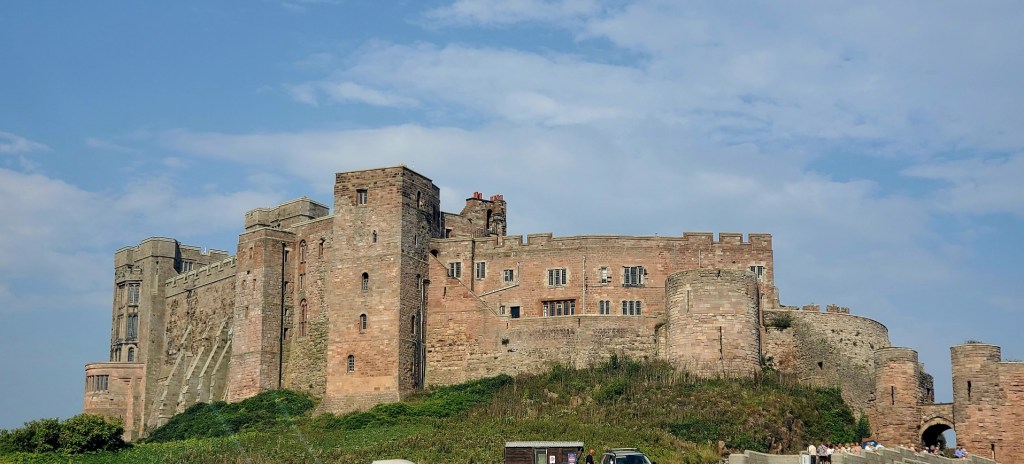
Bebbanburg, under its modern name of Bamburgh, is in the very north of England, in Northumberland, and is much closer to Edinburgh than London.  Once that simple geographical equation became clear to me, the rest was easy.  I planned a trip to Glasgow, because I have already been to Edinburgh once before, and Glasgow, from where all the rugged and rogue BBC policemen seem to come, was as yet unexplored and still a mere couple of hours from Bamburgh. (Yes, where I come from we measure distance in hours).

An honorable Bucketless mention goes to my valiant effort of driving from Glasgow to Bamburgh.  Even in Europe, trains do not reach every corner of the continent, and one car ride is always simpler than two trains, a bus, and a cab.  I will not lie, anxiety was high, and even as someone to whom driving is as natural as walking, I was by no means sure that either the car or its passengers will emerge unscathed from this trip.

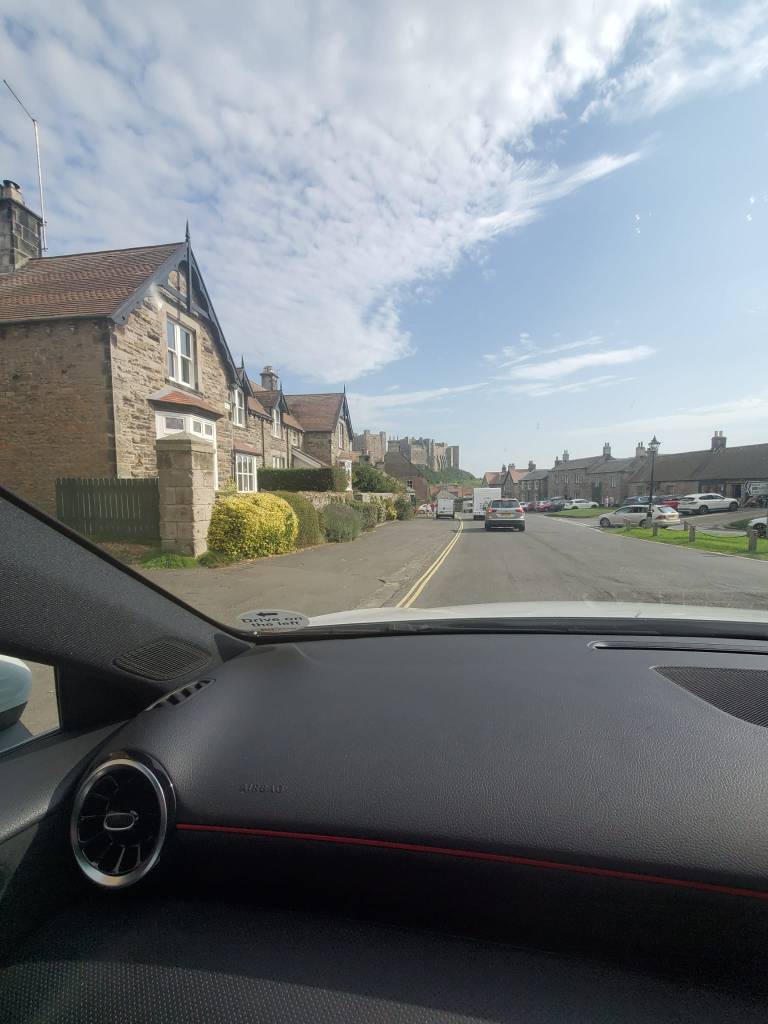
And yet we did.  I never, ever, not in any demented fantasy, pictured myself driving on the wrong side of the road.  But once I did, I realized that the wrong side of the road is not the problem, you just move along (and the helpful “Drive on the left” sticker became a mantra I constantly whispered to myself).  It’s sitting on the wrong side of the car, with all that unaccustomed space on the left where nothing but the door should be, that is the real issue.  It is difficult to stay within the lines and not veer to the left.  If I had a continental car, it would have been a piece of cake.  In any case, no one got hurt, and I never want to do it again in this lifetime—even though I am quite inordinately proud of having done it.  But seriously, it was not enjoyable at all.

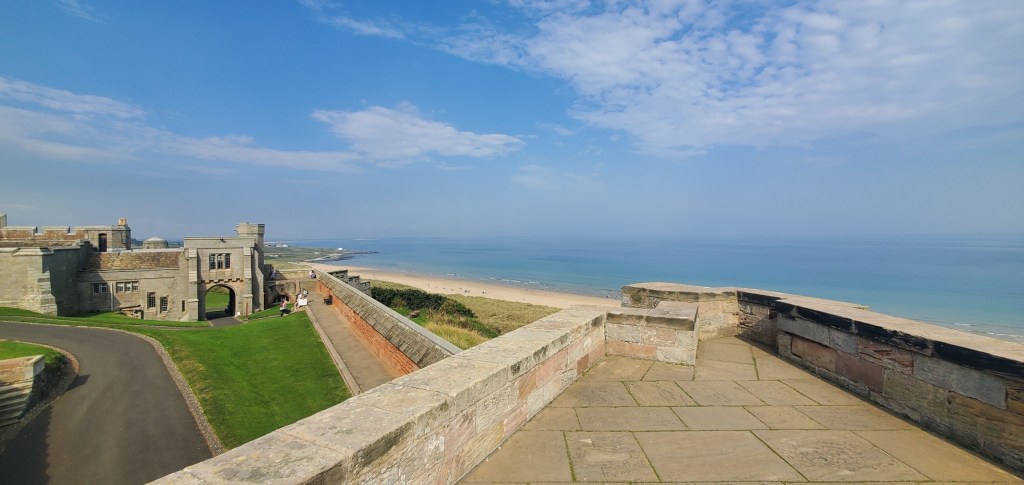
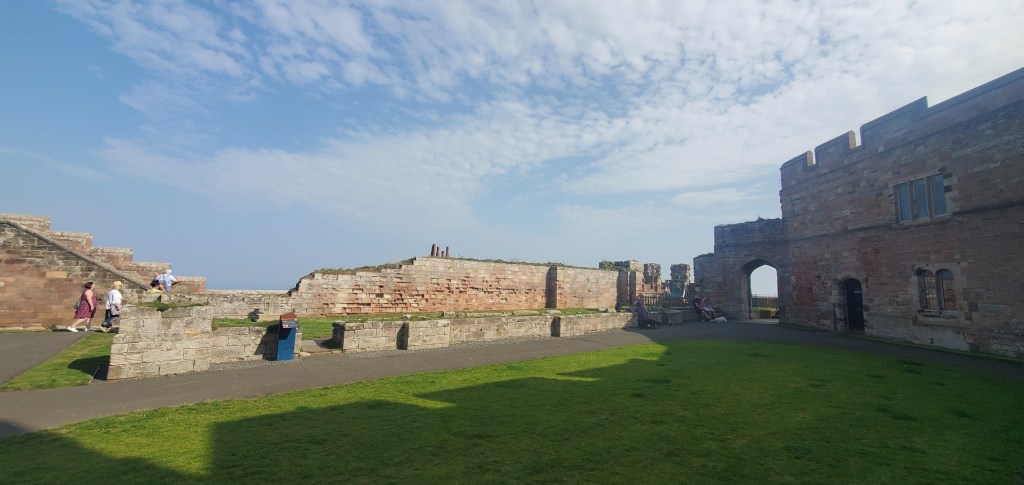
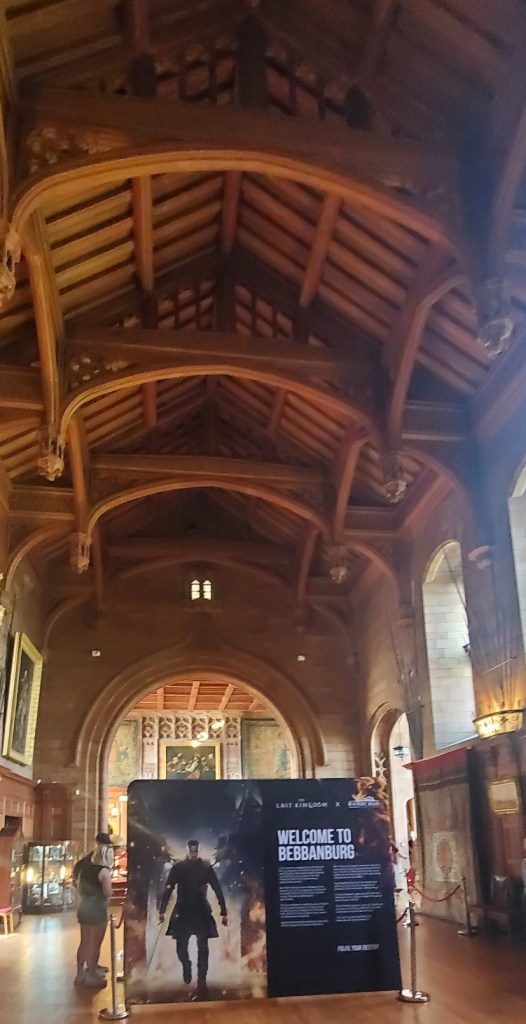
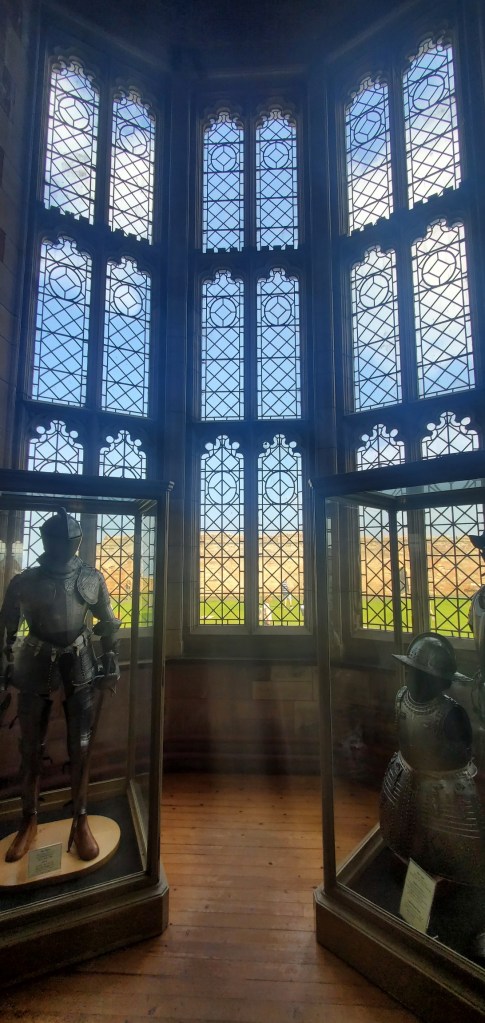
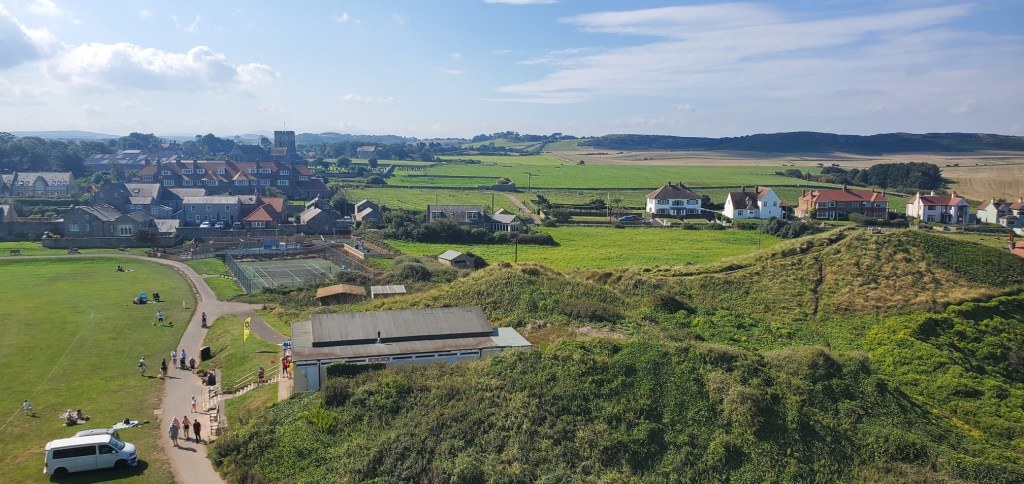
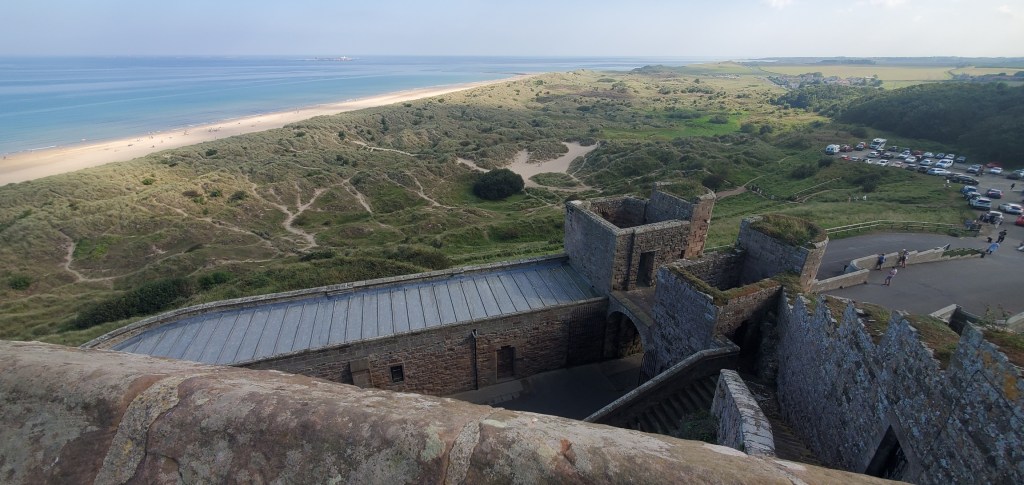
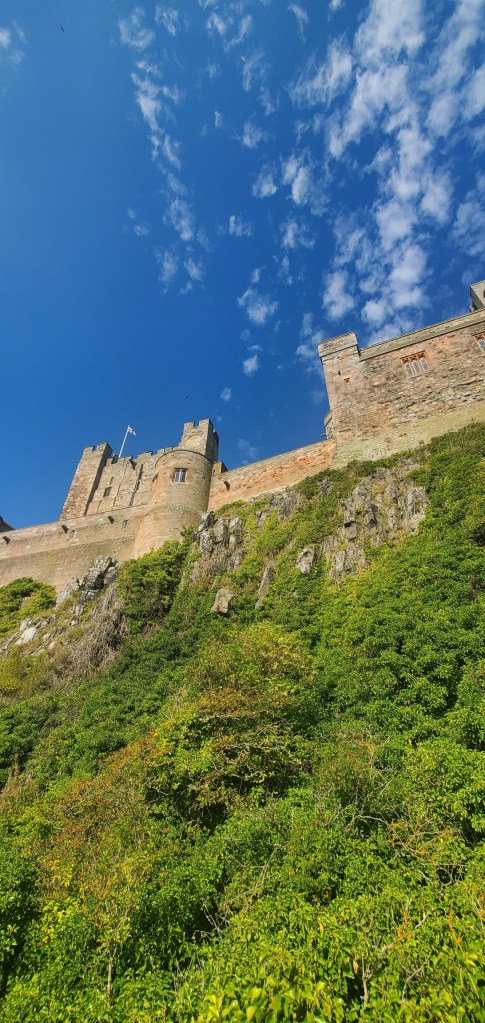
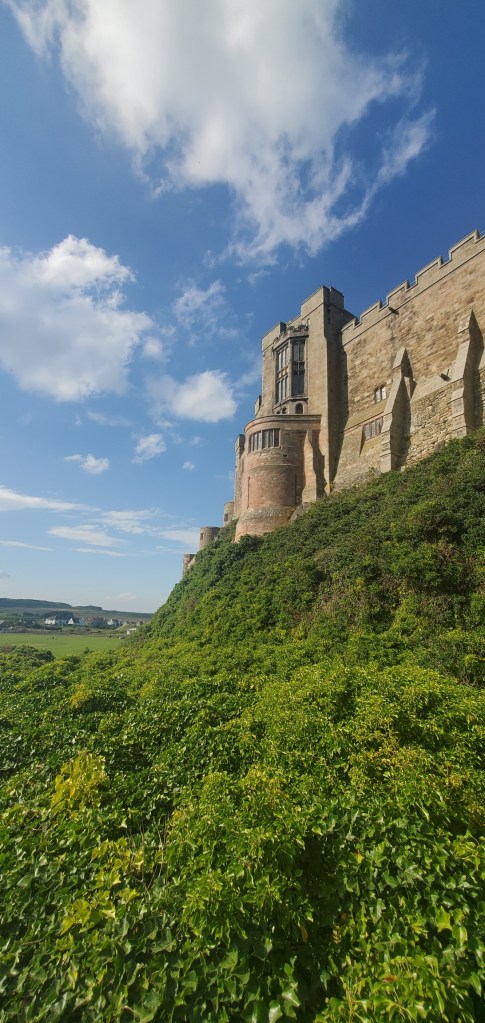
Driving up to Bamburgh castle from the road, seeing it just suddenly come into view, imagining what those Vikings must have seen over a millennium ago as they approached this imposing stone bastion—well, all I could do was yell “Foto machen!”at the spouse, as I could not pull over for fear that I would lose my precarious driving momentum.  Is it beautiful?  Of course.  The current owners—not Uhtred’s descendants, alas—do a good job of displaying the history of the area and showcasing the connection to “The Last Kindgom” (not the books, but the TV series, which I, expectedly, found to be a pale shadow of the books).  The castle is majestic, and the views of the North Sea from the ramparts are stunning.  The village at the foot of the fortress is charming and picturesque. 

I have seen a lot of castles in my lifetime, including an exhausting obligatory field trip of the Loire Valley during my semester in France, at the end of which I could not imagine that a time would come when I would voluntarily seek out a chateau if I was not required to write an essay about it.  Oh, the irony!  Last year, I visited Mont St. Michel, another bucket list item, certainly more famous in the world, and arguably more magnificent, in the eye of any beholder.  But, I have never read a book about Mont St. Michel, let alone an epic full of longing for home, a decades-long quest to regain one’s destiny, a story of homesickness and loss that echoed in my heart with every installment of Uhtred’s journey’s many setbacks and heartbreaks.

This is why Bebbanburg.  It is not just a cool castle.  And it is not even just a cool story.  It’s THE story.  Uhtred loses parents and parental figures, siblings, wives, children, and friends.  He lives a life that is not his, a life that was thrust upon him by circumstances and the wills of others.  He goes viking, serves and follows orders of people he hates and who hate him, fights in foreign wars, has adventures, achieves success, fame, and fortune, and makes friends for life.  Yet through it all, he just wants to go home.  Bebbanburg is the reality of his childhood, the dream of his adult life, and ultimately the recaptured reality of his old age.  He went home again, and he stayed home.  It was exhilarating to stand on those ramparts and imagine him there, his life’s goal achieved.  We should all be so blessed to end our journey exactly where we belong.

…and Bratislava

I always assumed that if I made it to Vienna, I would have to add a day for Bratislava.  Fun fact:  Vienna and Bratislava are two closest European capitals in terms of distance, so I understand that it is a common side trip, but that was never my reasoning.  I generally do not like to “gallop through Europe”, as the saying goes.  I learned to not overplan from experience (although my consequential plunge into underplanning has resulted in some unintended and occasionally hilarious jams—but that is another story for another time).  I like to take in the sights and go at my own pace, and I dislike leaving a place without exploring it fully.  So short story long, if I am going somewhere, I am not also going somewhere else.  However, what led me to Bratislava was not its proximity to Vienna, but that Trip That Never Happened 42 years ago.

To be fair, Bratislava was never going to be more than a train connection on our original journey.  We always knew that we were not going to see the town.  It was an almost unimaginably different world back then. Europe was still divided into East and West, and getting from East to West was complicated even with a passport.  A moot point, in any case, because we had no passports.  We no longer had passports because we no longer had citizenship of any country, none at all.  We were put on a train heading out of the USSR, and the first stop was Bratislava.  Czechoslovakia was still united, and Bratislava was not a national capital of anything. 

NOT what I remembered

We disembarked in Bratislava and waited for the train to take us into the *real* West, to Vienna.  On that cold and lonely platform in December of 1980, I do not remember any other passengers.  It was just the four of us, my mom and grandparents and I, and we stood there with our two suitcases per person for what seemed like hours.  This might be an invented memory, but I remember going into the train station itself and seeing chewing gum for sale (if you ever heard how prized it was in the Soviet Union—it’s all true!).  Could we have just walked into the city?  Were there any guards who would have stopped us?  It is impossible to know now, because the only tangible goal was to get on that train heading to Vienna.  These days, the hour-long trip between the two cities is almost akin to a suburban commuter ride.  Back then, one travelled from the Eastern Block to the Capitalist West in a fancy sleeper compartment, and I remember it taking hours—probably because of border control.  My mother remembers red velvet upholstery; I do not.

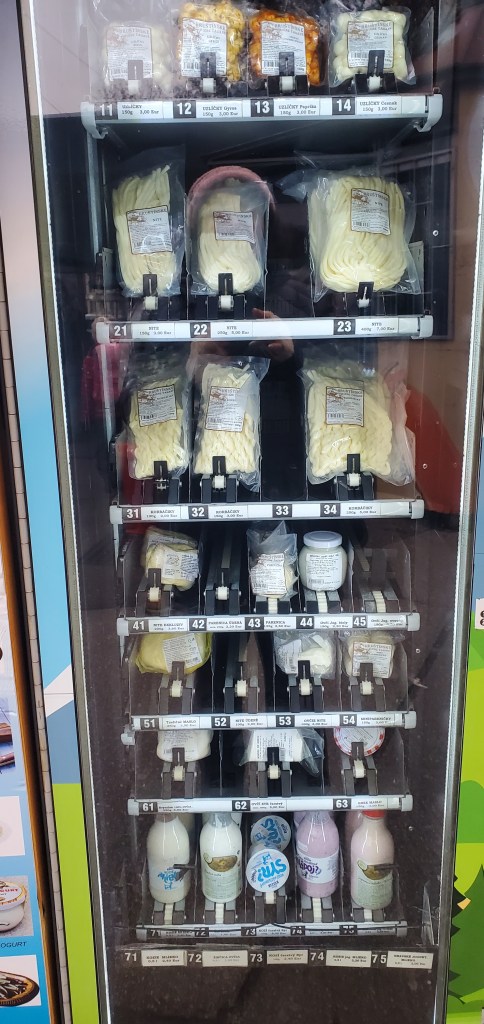
But there IS a vending machine selling dairy products

And so Bratislava remained something I never even pictured, just a footnote to a trip to Vienna.  The only part of a this visit I could envision was arriving at that train station and walking past that kiosk selling gum and sundries out into an unimaginable town.  Medieval? Baroque? Modern? The important part was the station, the kiosk, the sunlit town square.  None of them turned out to be real in 2022.

My persistence in going to Bratislava in the face of my mother’s mild opposition; my brisk realization that in this century, trains to and from Vienna connect to Bratislava via a suburban station and not the main one, preventing the recreation of that long ago voyage; brief panic about having to also get on a bus to get to city center—none of these are worth recounting.  Well, maybe the briefest of mentions—repeatedly seeing the words “Bratislava Petrzalka” instead of “Bratislava Central” or “Bratislava Hlavna” led this sophisticated traveler and polyglot to feverishly search the interwebs for a route into the city (get on the bus in this area, alarmingly advised the web, never take the taxi).  Otherwise, we would be walking out of the train station into a somewhat grim peripheral disappointment and then right back to Vienna, as per tradition. 

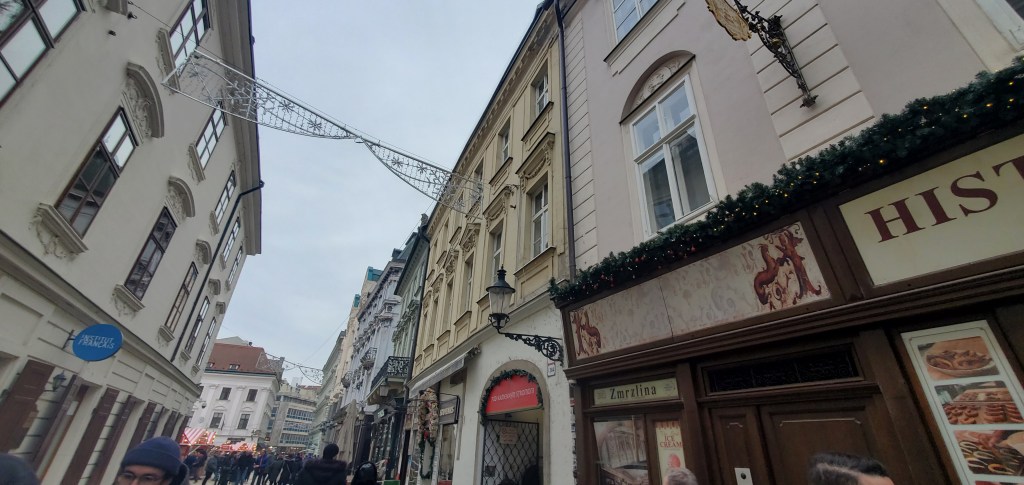
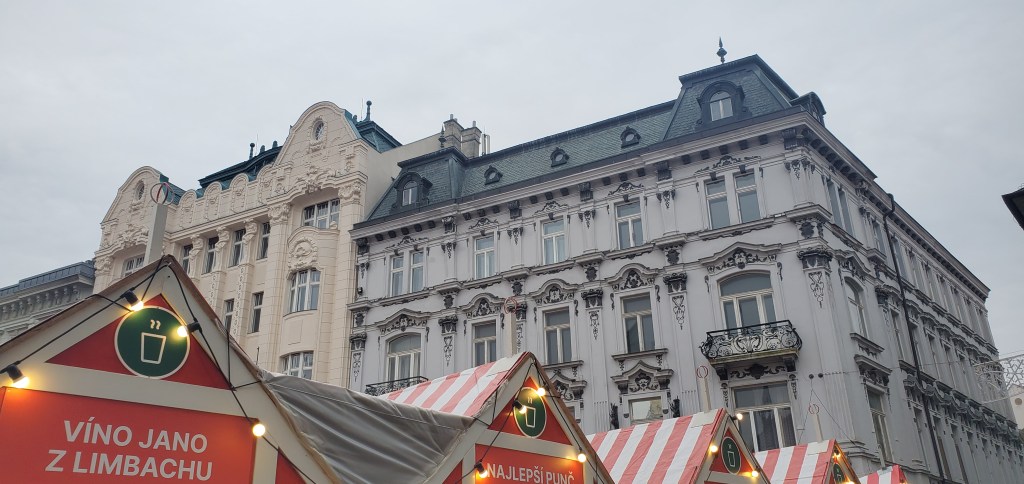
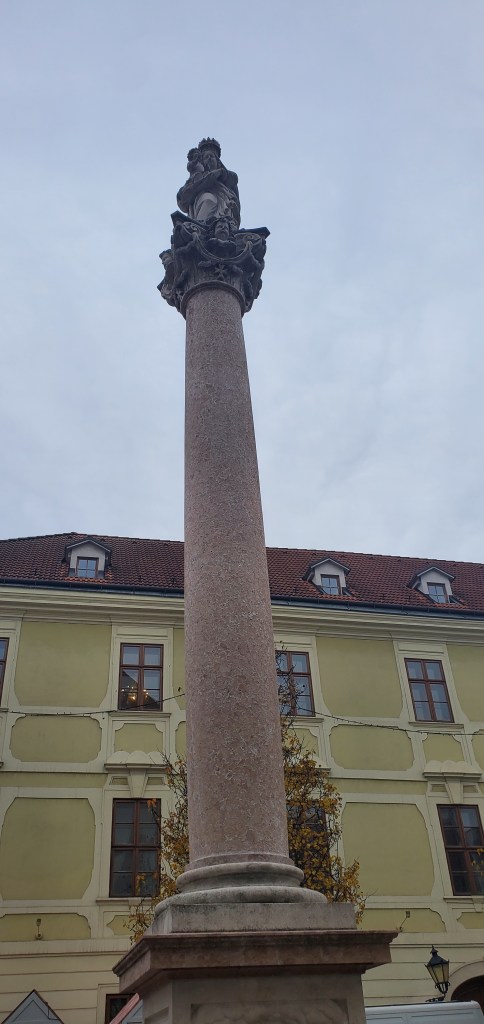
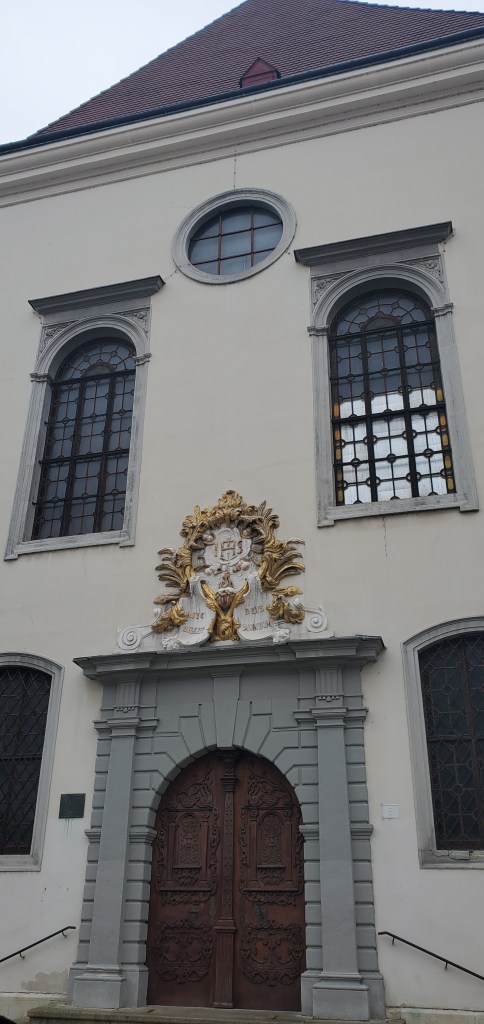
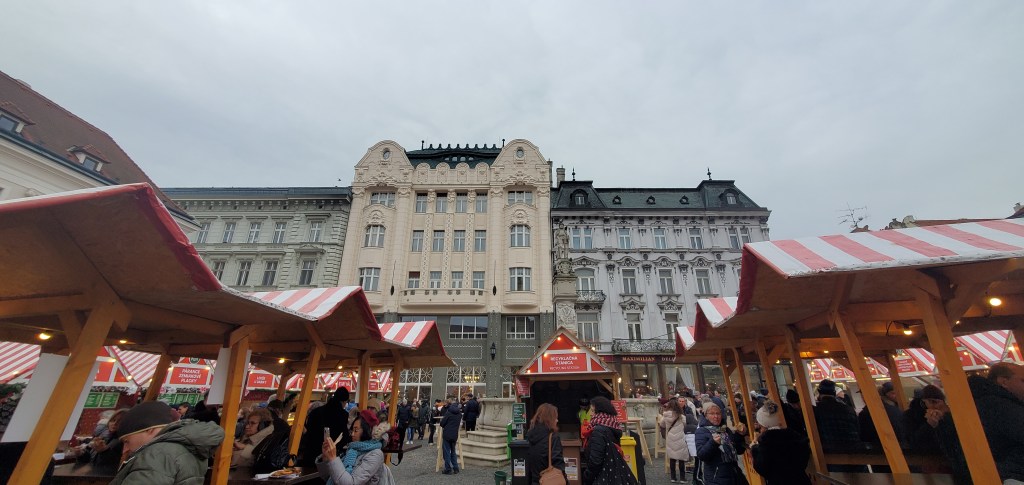
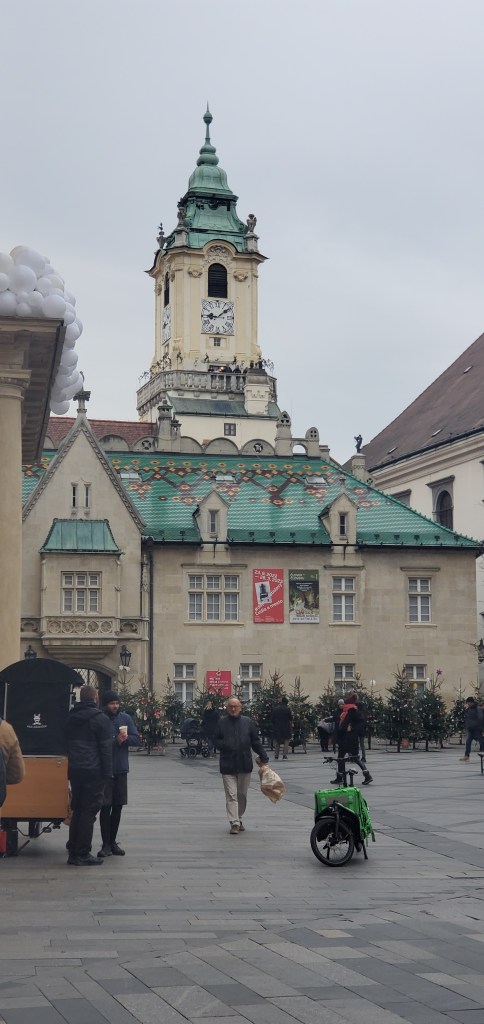
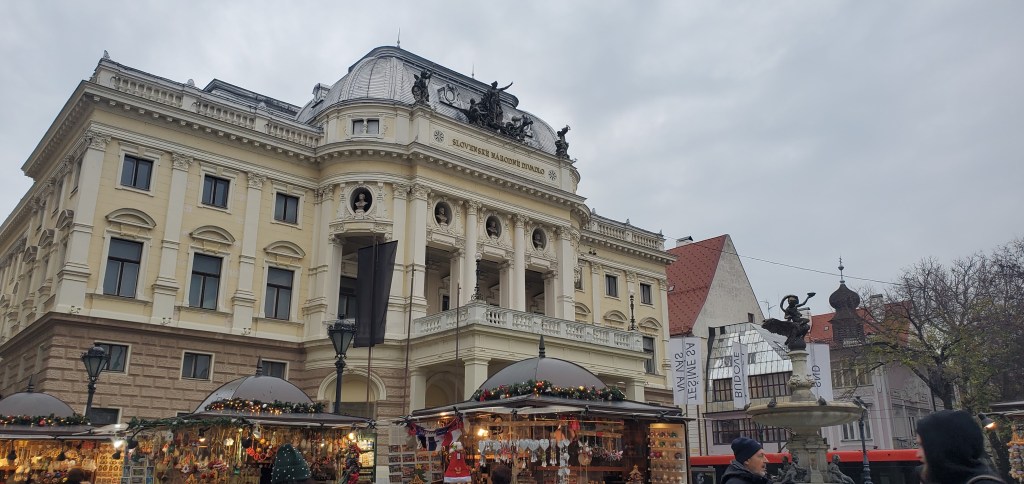
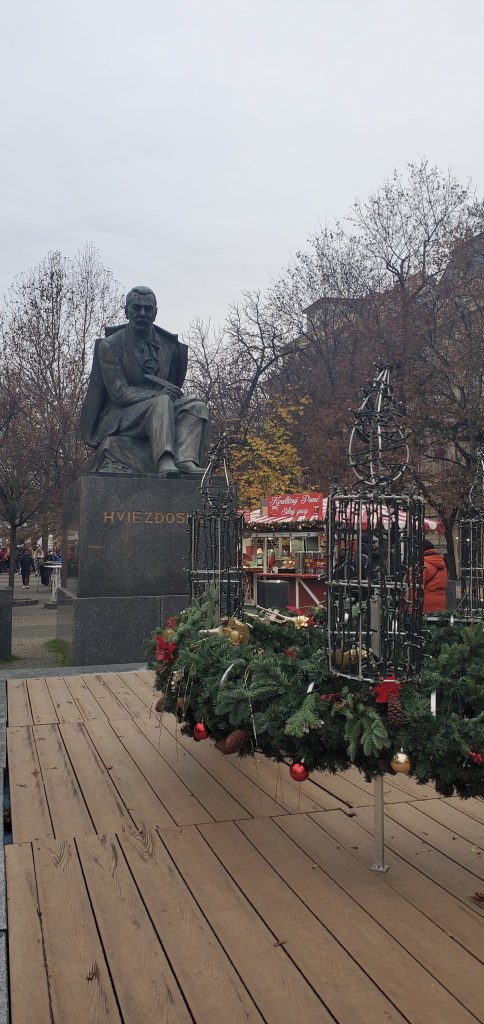
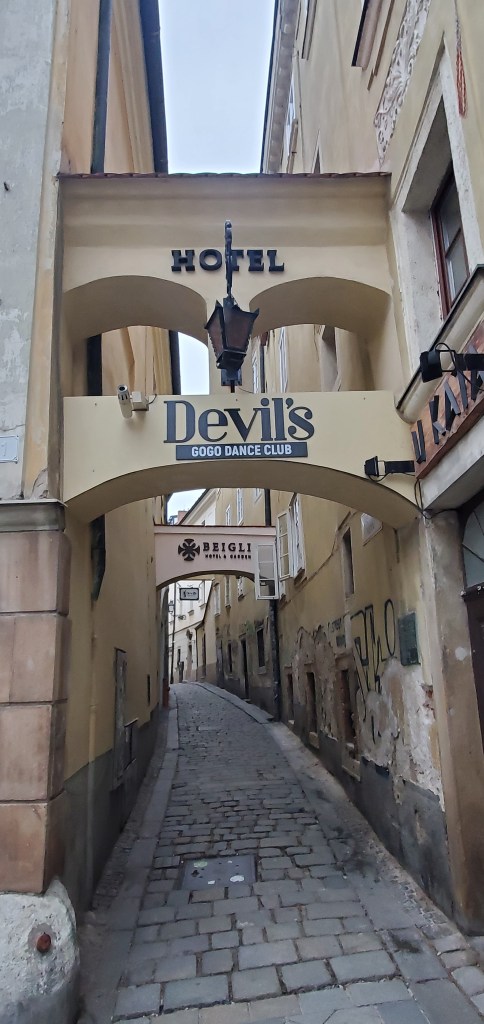
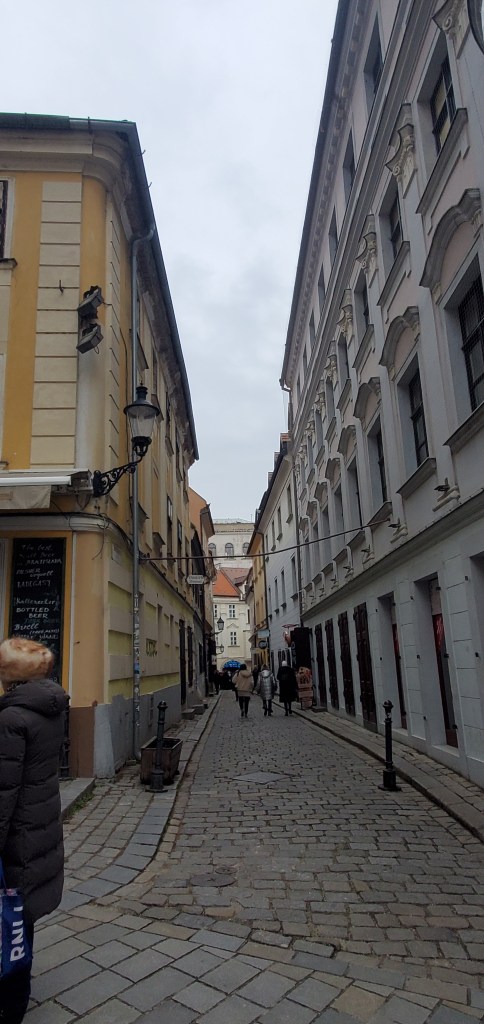
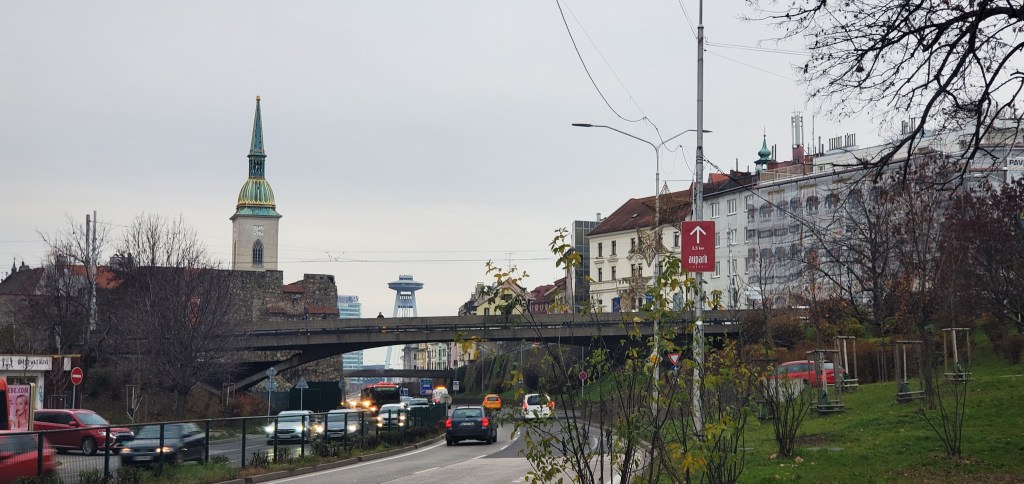
Ultimately, I feel like I gave Bratislava a short shrift.  We walked around a bit, enjoyed the most lavish meat feast I could ever imagine (allegedly for two people, but there were six meat servings), encountered another Christmas market (again, mostly meat), saw some charming medieval sites, and hightailed it back to Vienna before dark.  But I think Bratislava deserves more than just a couple of hours.  It seemed like a lovely town I would like to get to know better.  I would have liked to visit its castle high above the city, its churches and museums, taste the local wine at a very cool cellar by which I walked, and learn more about the effect the decoupling from Czechia had on Slovakia.  I could have researched and planned prior to going, but I think the existence of this town was simply too fantastic to contemplate.  Now that I know that it is real, we need to be properly introduced.

Vienna Waited for Me

***I simply could not allow the last entry for this year to be the one from February 12th.  It is almost impossible to imagine now how different the world was then.  And while #oldladywriting is not chronological, I do occasionally respond to current events.  The trouble is, the events of the past ten months have altered my life in ways invisible but irrevocable, have killed my soul, and have not yet been processed to the point where I can write about them.  At all.  And yet, the pre-war post must not stand at the last one.  So here we go.  And for the record, we here at #oldladywriting are, and have always been, against wars of aggression.***

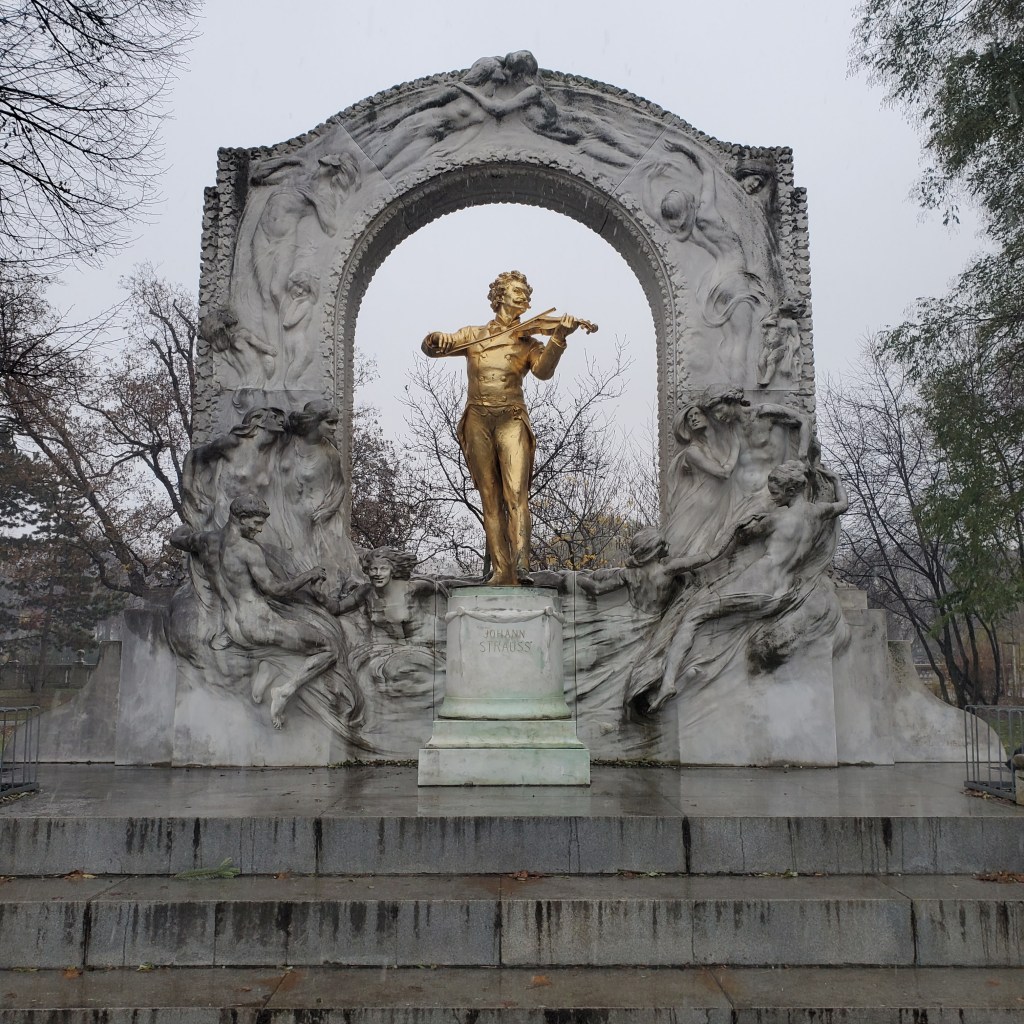
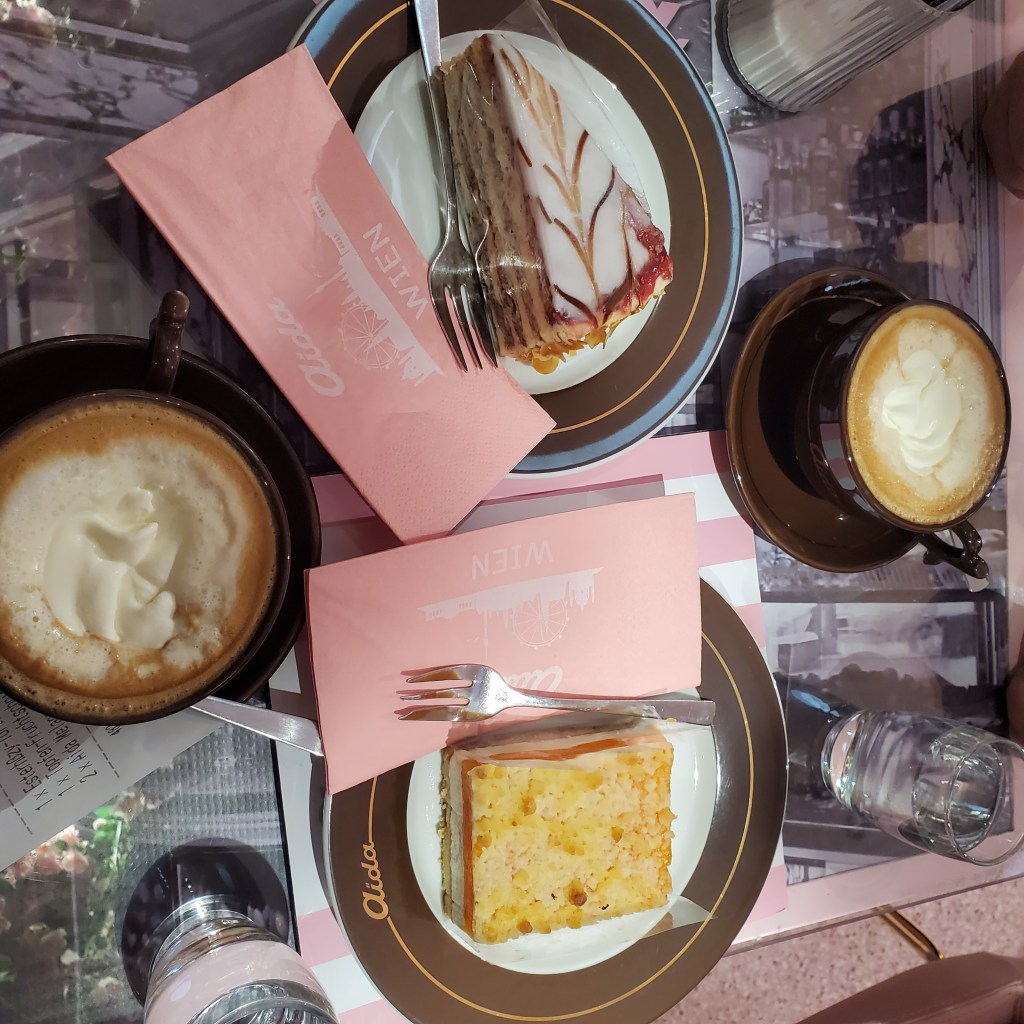
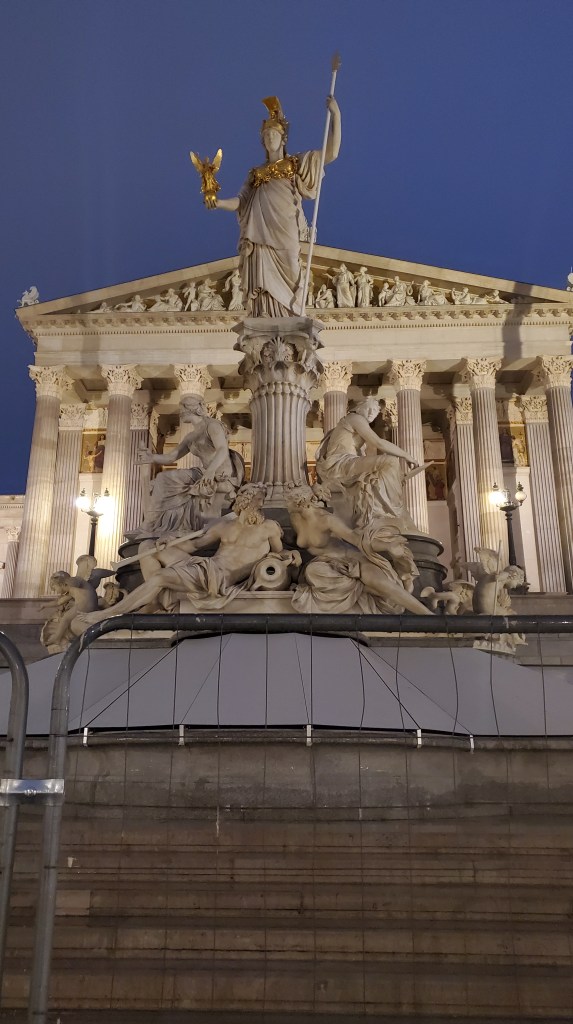
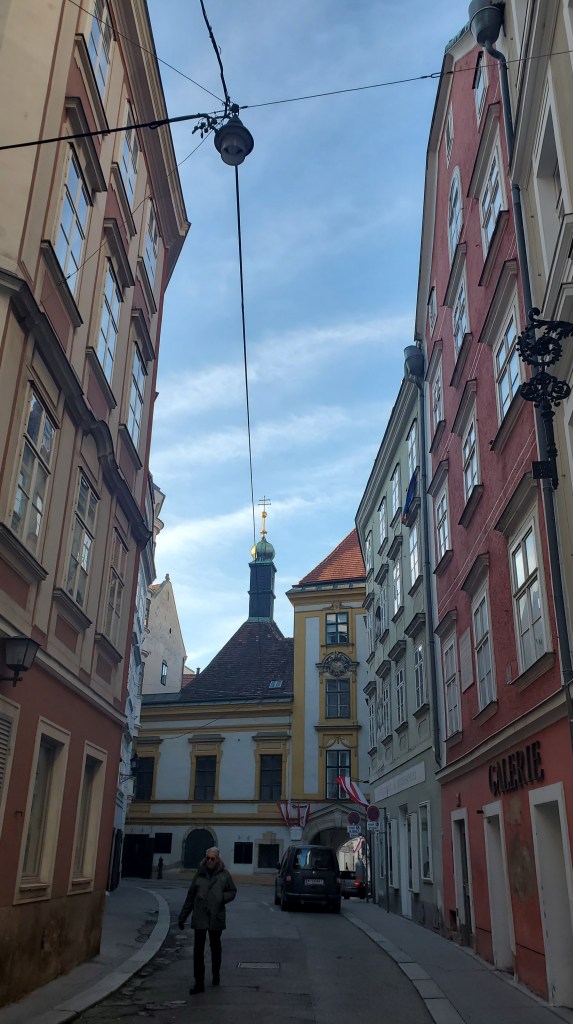
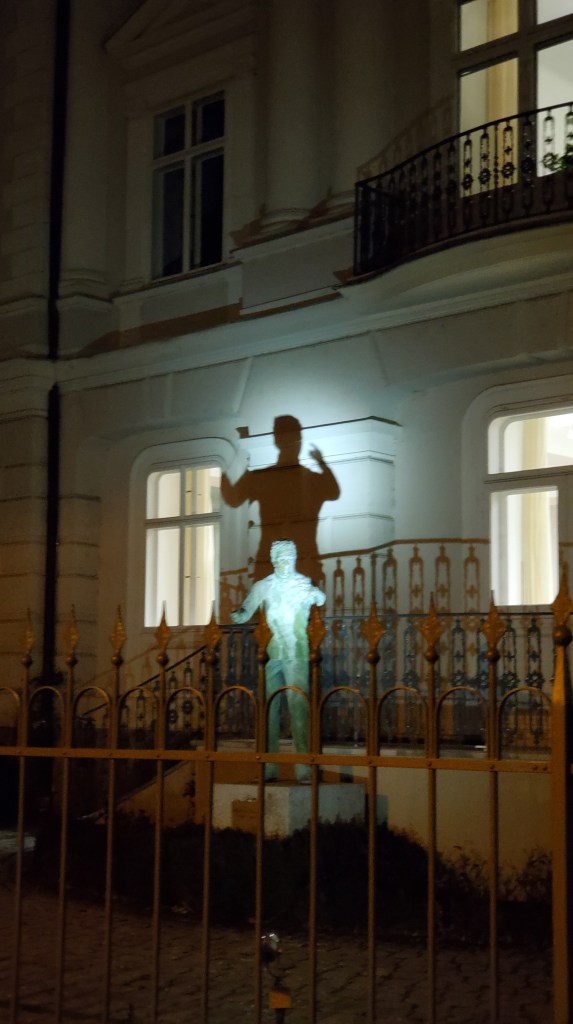
Almost 42 years to the day I was first supposed to come to Vienna, I finally did.  I was trying to imagine what it would have been like to have seen it back then, but it could have been like my first encounter with Rome, chaotic and no-budget.  https://oldladywriting.com/2021/01/18/roman-holiday/ Vienna was supposed to have been our first stop out of the Soviet Union, and it actually seemed more real than Rome, the planned second stop that ended up being the first.  For me, the main reason was that shortly before our departure flight, I saw a segment on Vienna on the TV program, Cinema Travel Club.  Why “cinema” travels?  Because the vast majority of Soviet citizens had no realistic hope of seeing any of these sights in person.  But I did. I knew we were going to Vienna.  I think the program was careful not to show any capitalist sights as too enticing, so there were no videos of stores or restaurants.  I glimpsed the famous statue of Johann Strauss in the city park, and that was enough.  I held on to that image, exotic yet relatable, and the arch under which he elegantly held his violin was going to be my personal gateway to the West.

What happened instead in December of 1980 was the first of the many shocks and disappointments of the journey as long as life itself, because instead of allowing a handful of Soviet refugees to roam freely in its stadtpark and look at the gilded statues, the Austrian government preferred to hold us in a detention facility until we could be shipped off to become the Italian government’s problem.  And thus, for the next four decades, my only memories of Vienna consisted of an empty train station platform, a terrifying nighttime bus ride to we knew not where, and a crane that was visible beyond the tall brick wall surrounding the courtyard where we could promenade.

Coincidentally, once I got out of a cab at my hotel when I was finally let loose on Vienna, the first thing I saw was a crane on the other bank of the Danube.  Surprise—it did not trigger anything.  Too much time has passed, and too much has changed.  I was mentally and emotionally ready.  It was my fifth and finally successful attempt. 

Yes, incredibly, I was foiled more than once!  The second time was when I was spending my summer in Paris, and after crisscrossing Europe for a month, I planned to swing by Vienna as my final stop.  Exhaustion prevailed.  I literally got on the train in Amersfoort, realized that I could not face another night on the train, disembarked at the next stop, and returned to my Dutch family for a couple of weeks of playing board games and going to bars.  It was what I needed.

The third time was when my son went to Austria as an exchange student, and my mom and I figured we could meet him there.  I went so far as to buy a Lonely Planet guide, which I ended up finally using this month.   Then my beloved grandfather was diagnosed with cancer and given just weeks to live.  All plans for the immediate future were cancelled.  He lived another year; no regrets about any missed trips, just gratitude for the time we had.  My son brought me back a statuette of Strauss, and I still treasure it.

Finally last year, I came the closest, buying airplane, opera, and Spanische Hofreitshule tickets, and reserving a hotel for a week in Vienna with mom, to celebrate her half-milestone birthday and enjoy the grandest Christmas markets in Europe (and I am nothing if not a lover of Christmas markets).  Just days before the trip, the plague closed down Vienna, and the refunds for everything I bought and reserved trickled in. 

And so we tried again, a year later.  And we succeeded.  And ultimately, who knows if me at twelve, with my first Western European encounter, or me at nineteen, with my last backpacking-through-Europe adventure, or me at closing in on forty, with enough to spare but still focused on the career that was in the ascendant, would have enjoyed this city as much?  On the flip side, would it have touched me in some more remarkable way than it did now, after decades of semi-luxury travel?

As one gets older, sees more, experiences more, those thunderbolts out of the sky experiences are fewer and far between.  Vienna is a lovely city, but it is just another beautiful European capital.  Its museums are grand, but I have been to the Louvre, Prado, and Zwinger—not because I am so fancy, but because I am now so old.  The food is delicious, but eating in an expensive restaurant is not the event of the decade that it would have been, well, decades ago.  At that detention facility, I was impressed with the miniature butters (being fully aware of the fact that these were not, in fact, holdovers from the Olympics, but were how people in the West ate every day) and Manner wafers.  OK, so I still bought several bags of those, but that’s because they were the seasonal kind.  I grab everything that’s labeled “seasonal” or “limited edition”. 

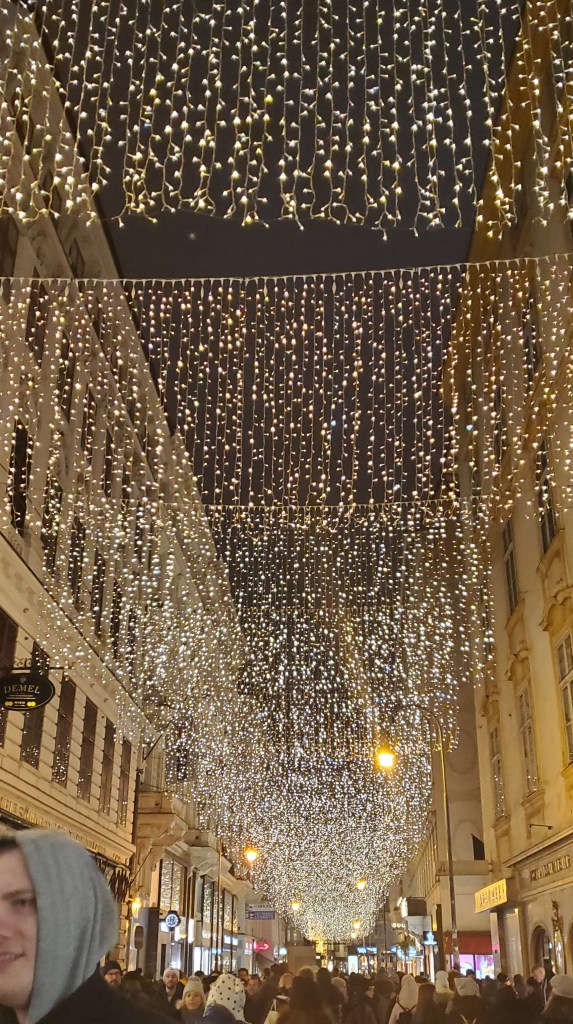
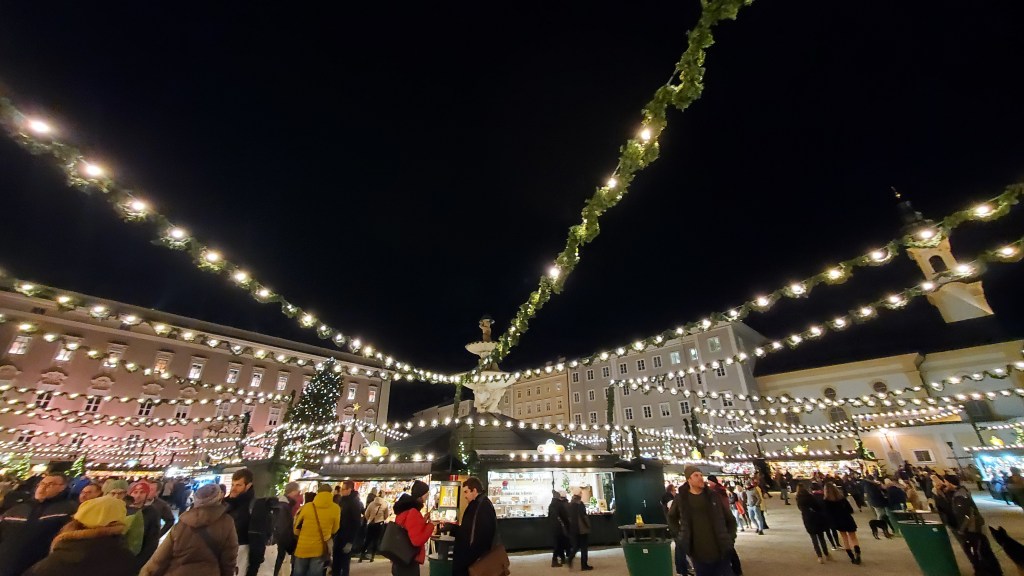
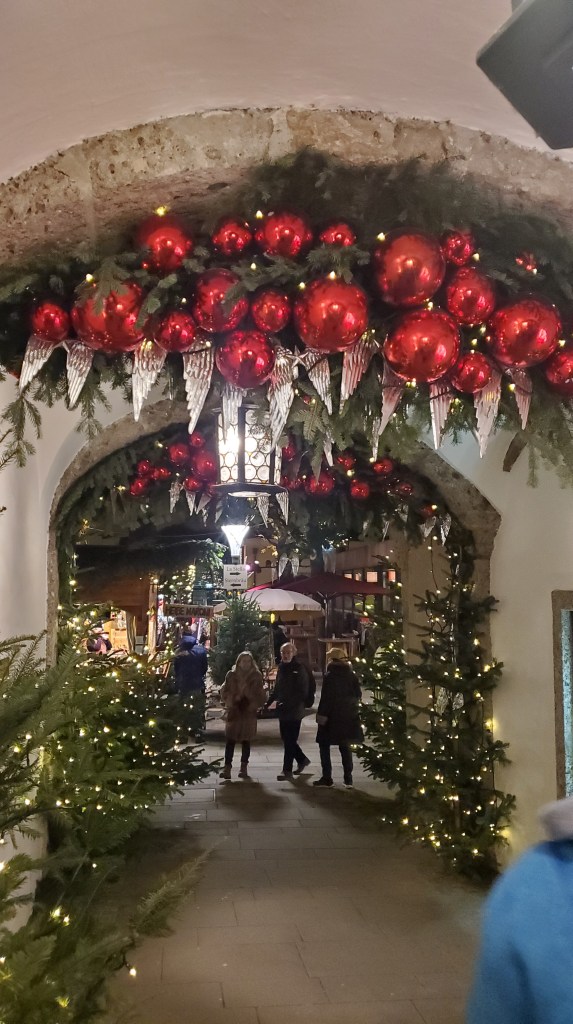
It was still a gorgeous trip, because, well, look at these museums, palaces, restaurants!  For a Euro-centric traveler that I am unashamed to be, there are no complaints here.  And the piece of the proverbial resistance—Christmas markets!  As much as my allegiance will always rest with the one in Paris, Viennese merchants have pitched tents in literally every open square and alley, so one could basically engage in a punsch and sausage tasting as a progressive walk through the city.  As shocked as I was to finally make a trip to a location colder than the one where I live, this experience was absolutely worth it. 

And since I am not a travel writer of even the humblest kind, I can only conclude with a brief record of what impressed me the most in the City of Music:

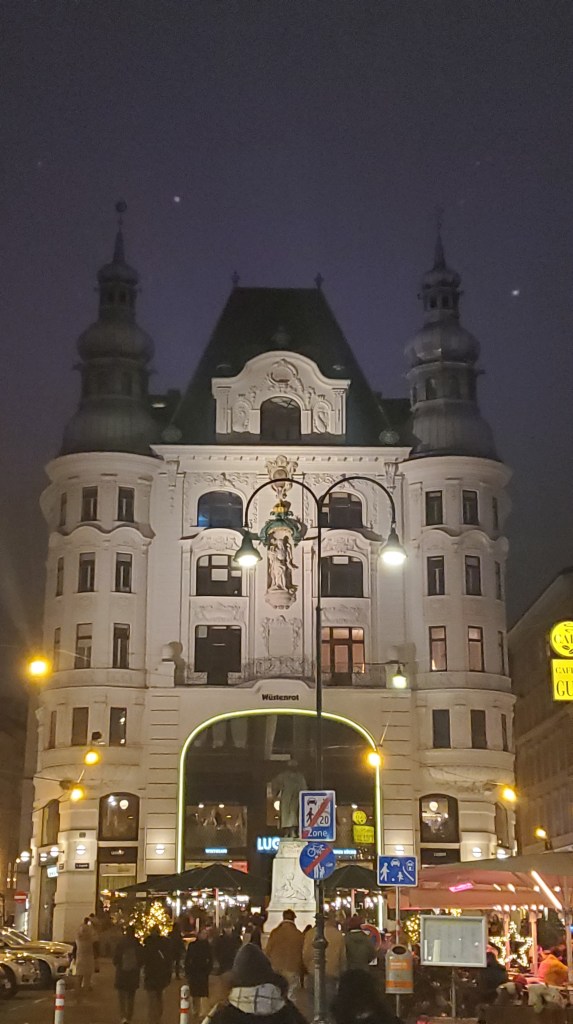
  1. Statue of Strauss – pure nostalgia for me, but in any case, you cannot miss The Waltz King if you come to his town.
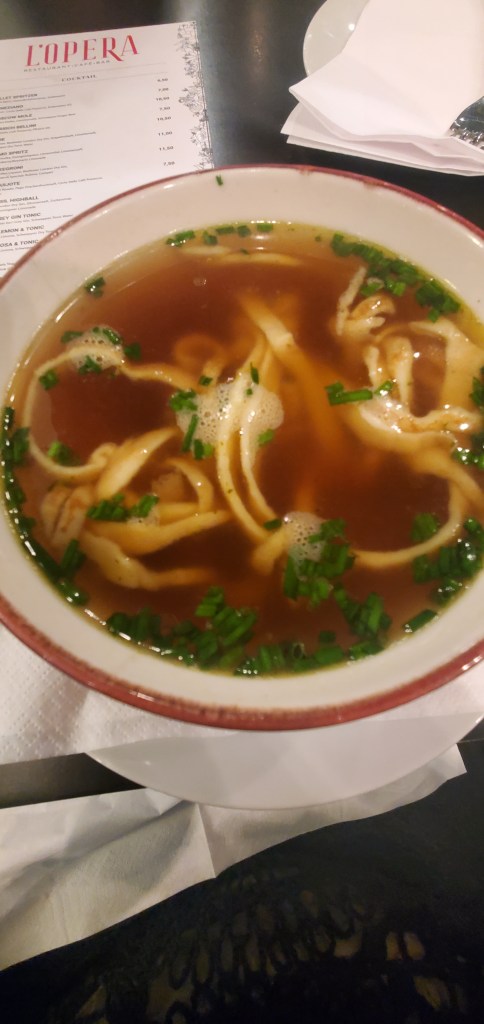
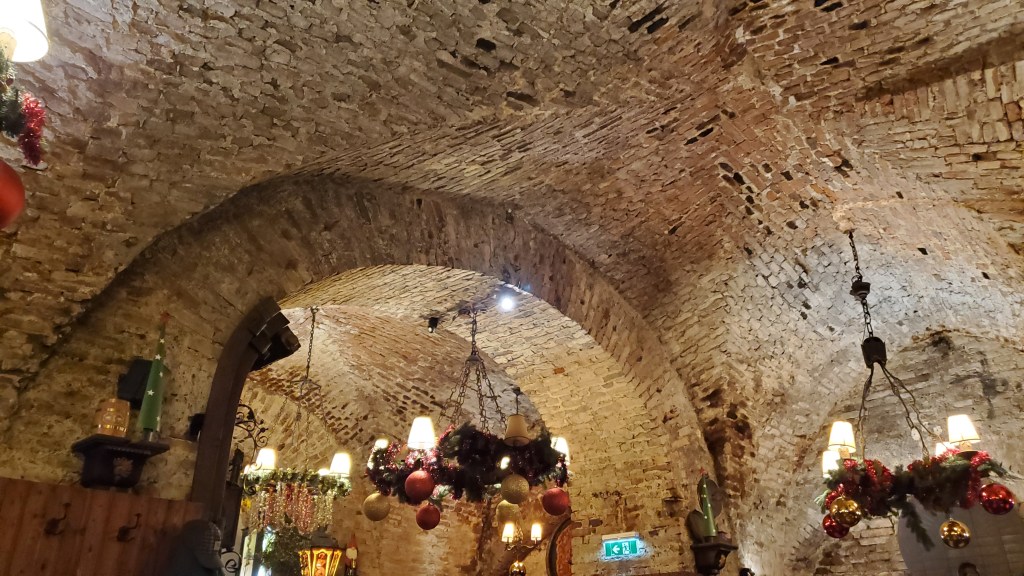
  2. The food – everywhere, but especially at the Twelve Apostles, which was recommended by a friend and serves delicious black currant wine.  I do not know what a vegetarian, let alone a vegan, would do in Austria, however. 
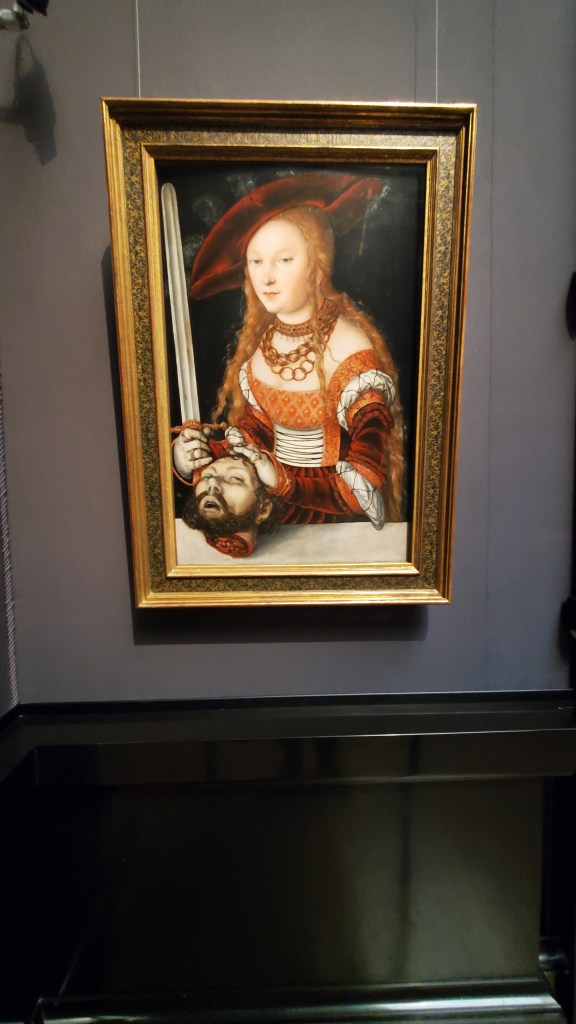
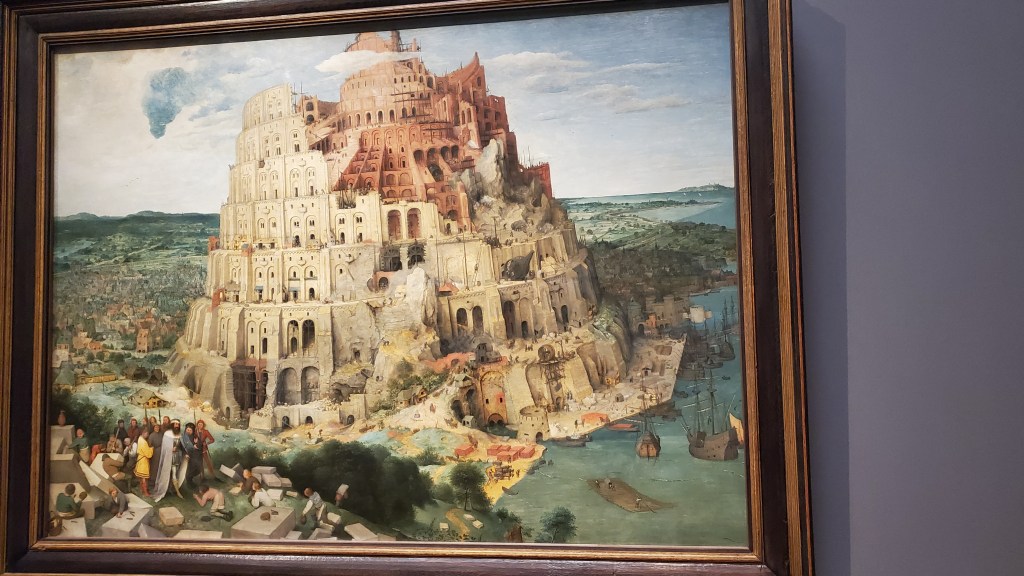
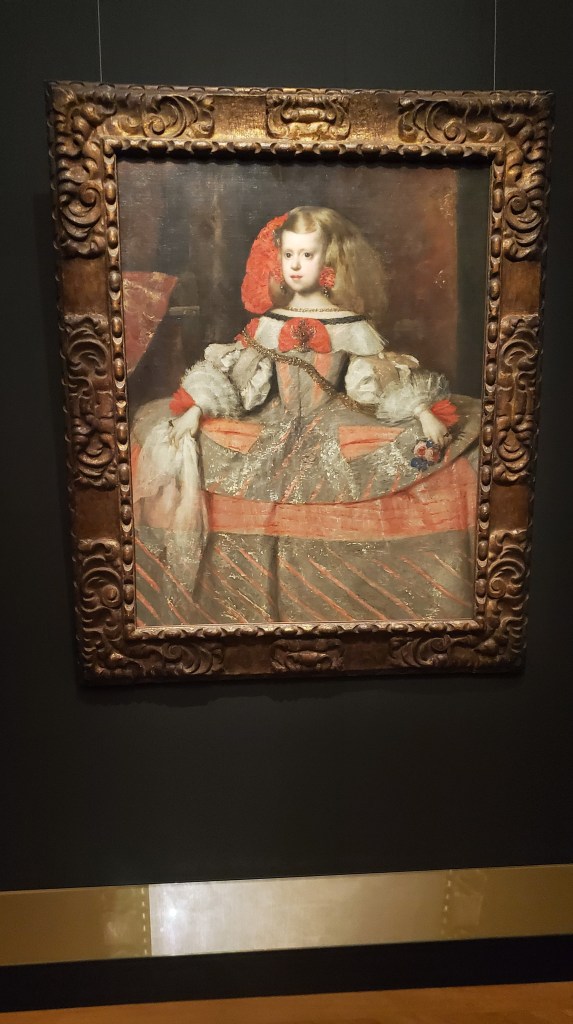
  3. Kunsthistorisches Museum – on par with any great art museum in the world.  I was ever so pleased to run into my childhood “friend”, Infanta Margarita.
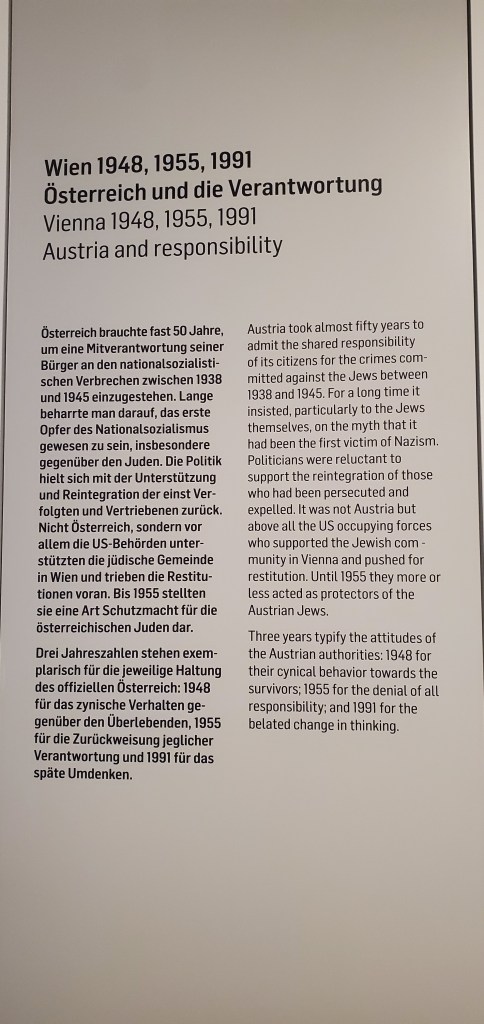
  4. The Jewish Museum – if you are Jewish, it will confirm your worst suspicions.  If you are not, hopefully it will open your eyes. 
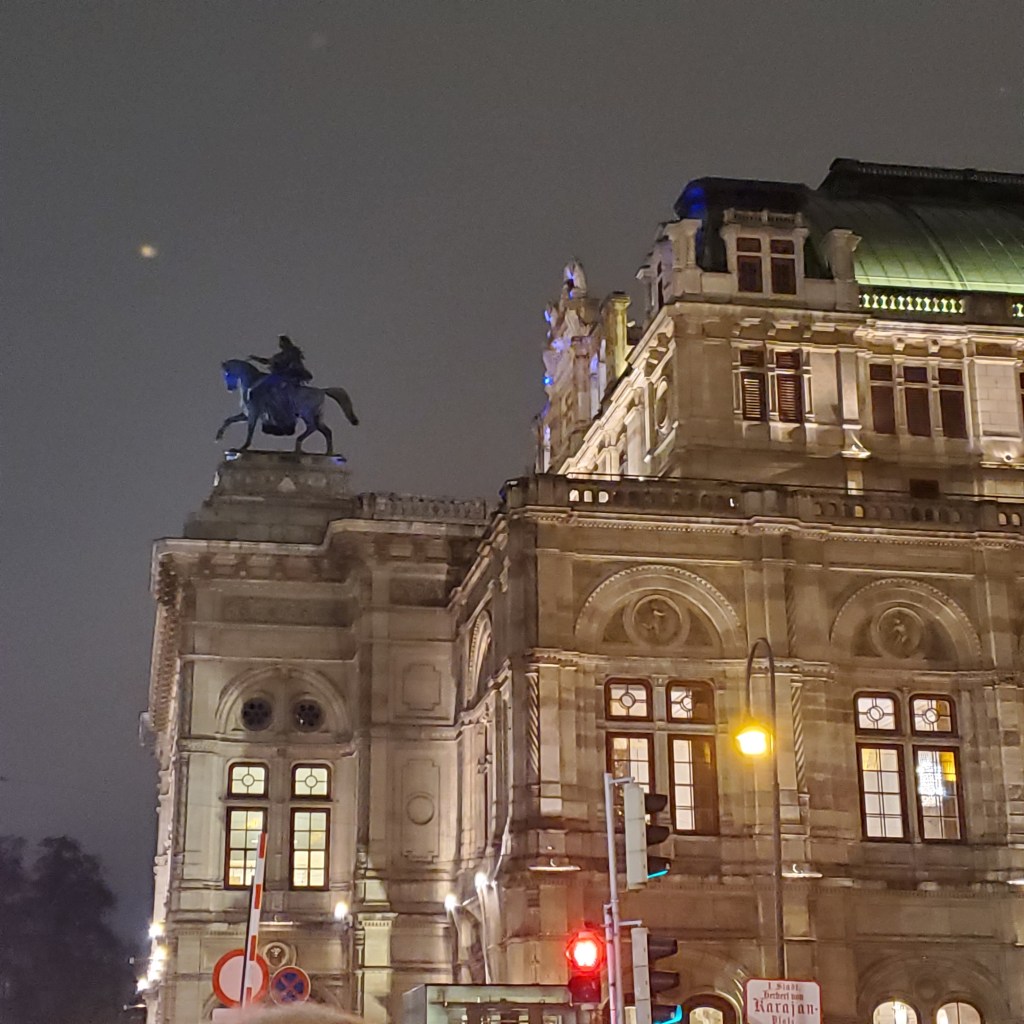
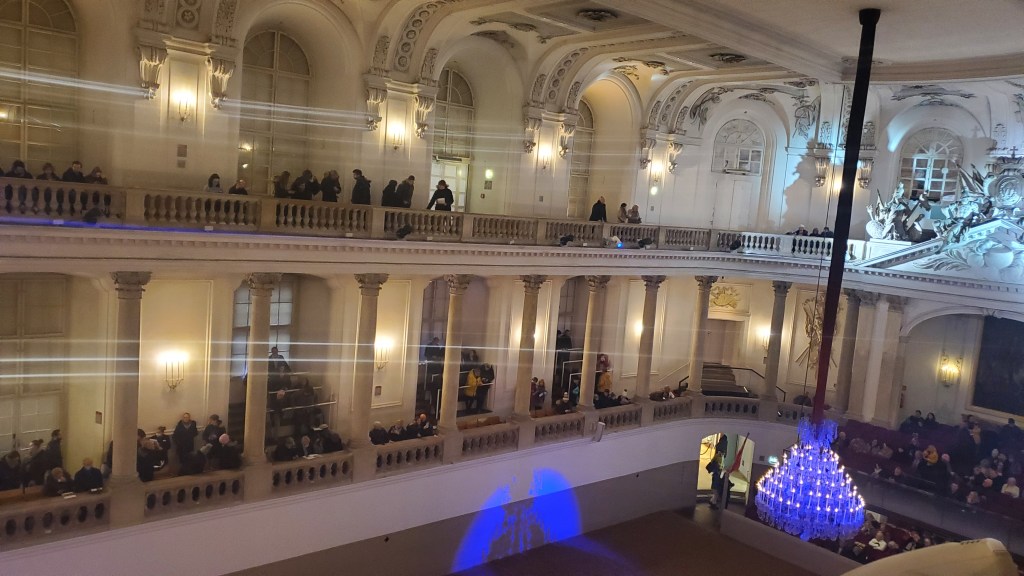
  5. The Vienna Opera – we saw “Tosca”.  I thought “The Magic Flute” would have been more appropriate, but it was my mother’s birthday, and she is the opera connoisseur.  I loved it; she less so.  I maintain that a live experience is always greater than the televised one, so we agreed to disagree.
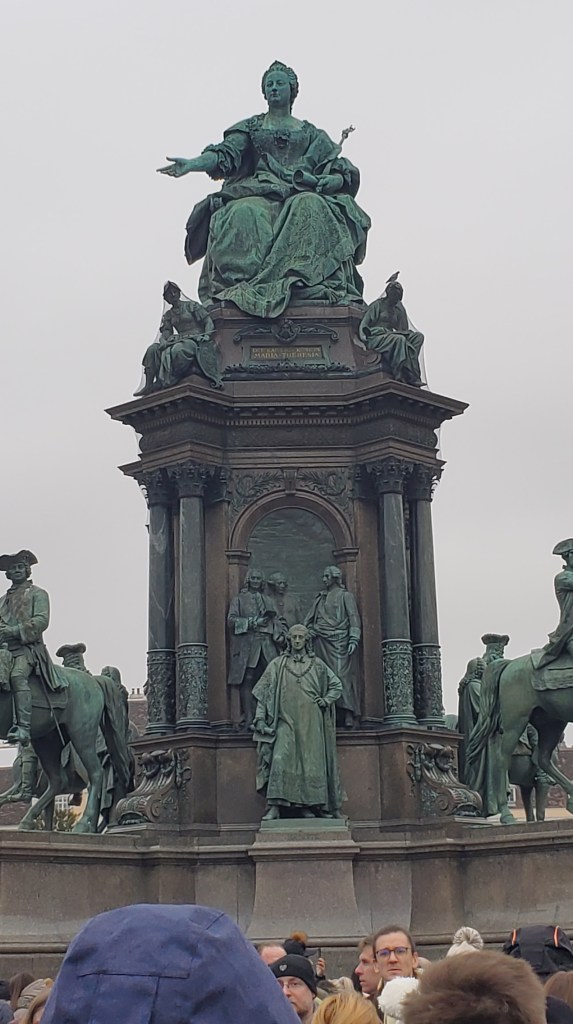
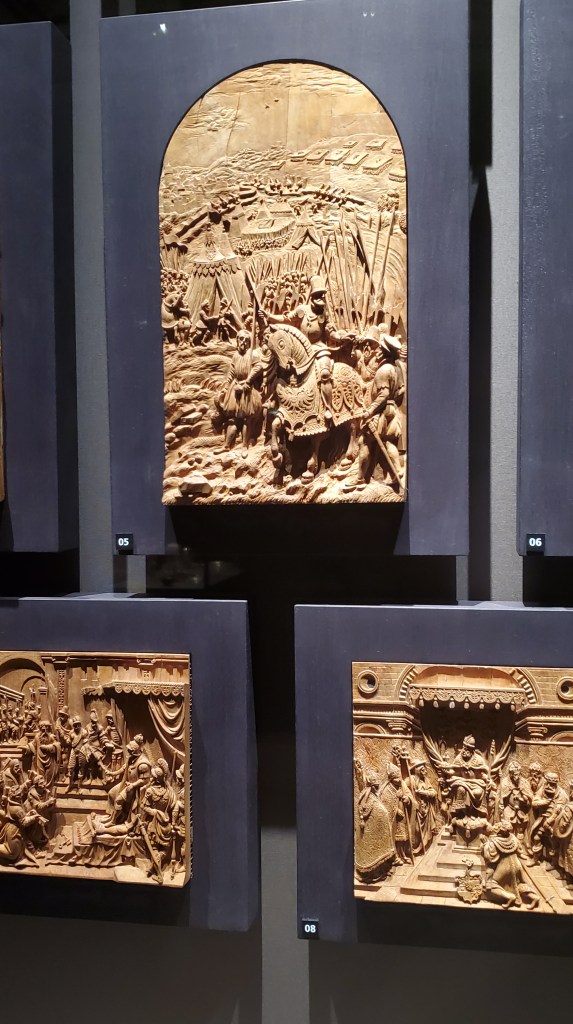
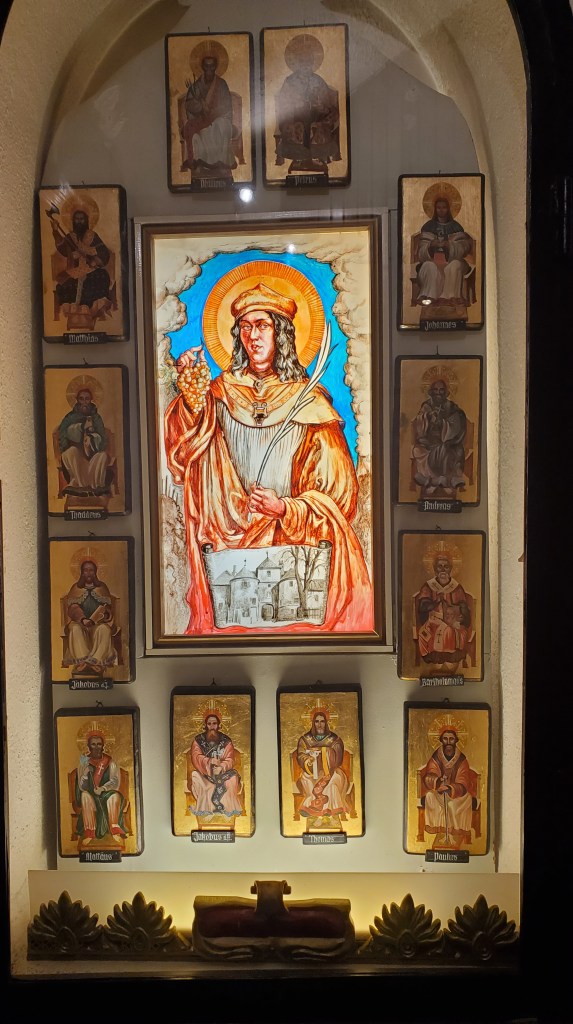
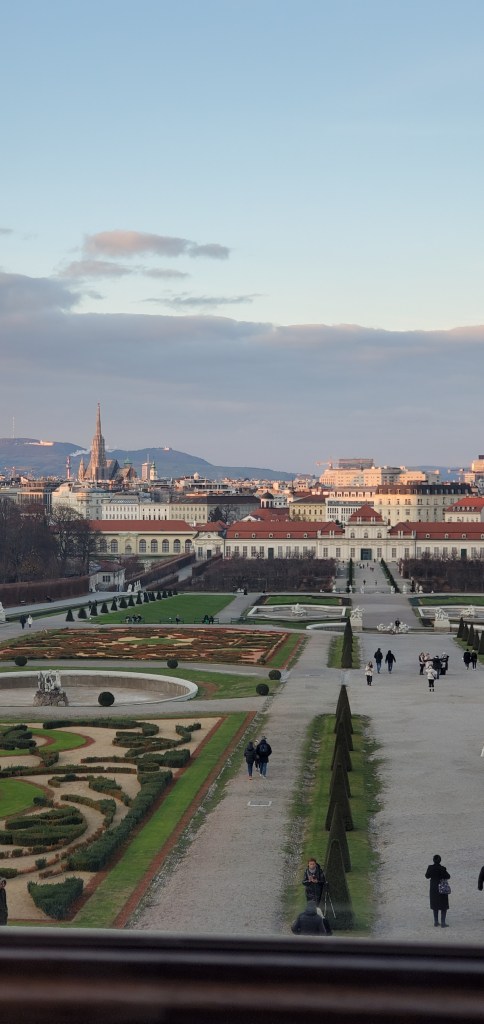
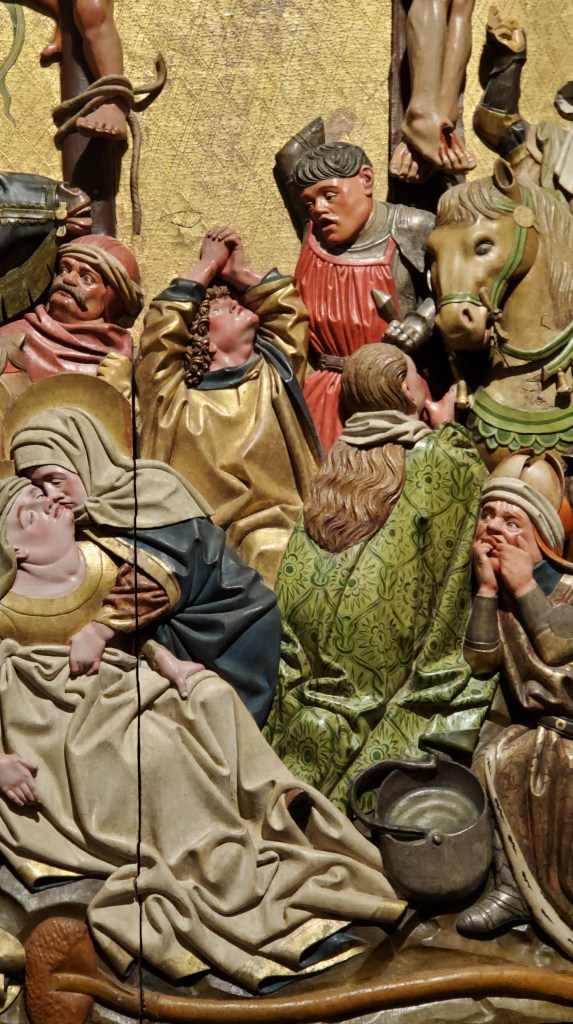
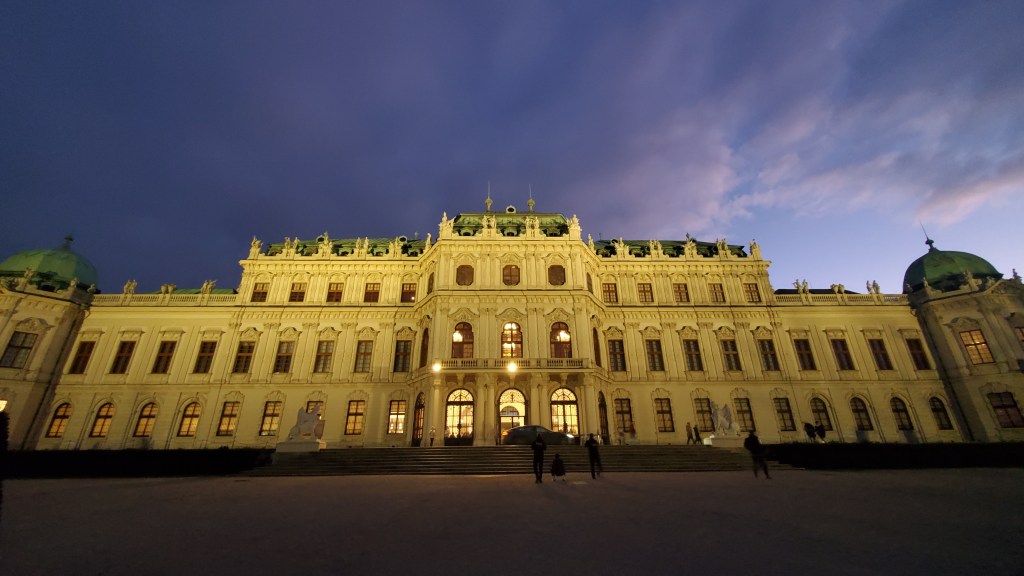
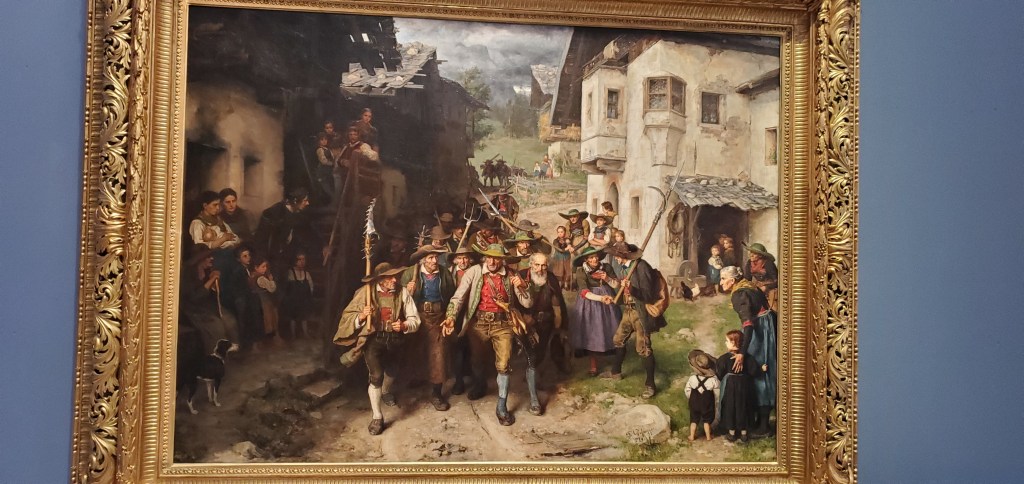
  6. The Belvedere Palace – we came for the Klimt, but left completely mesmerized by this 15th century carved relief altarpiece.  How come it is not more famous?  (Or is it, and we just don’t know?)
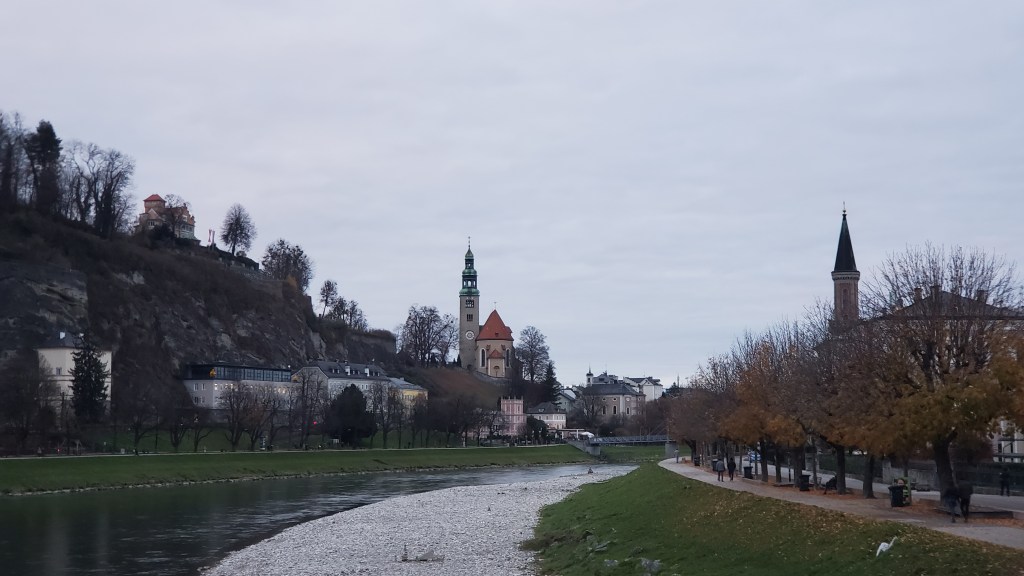
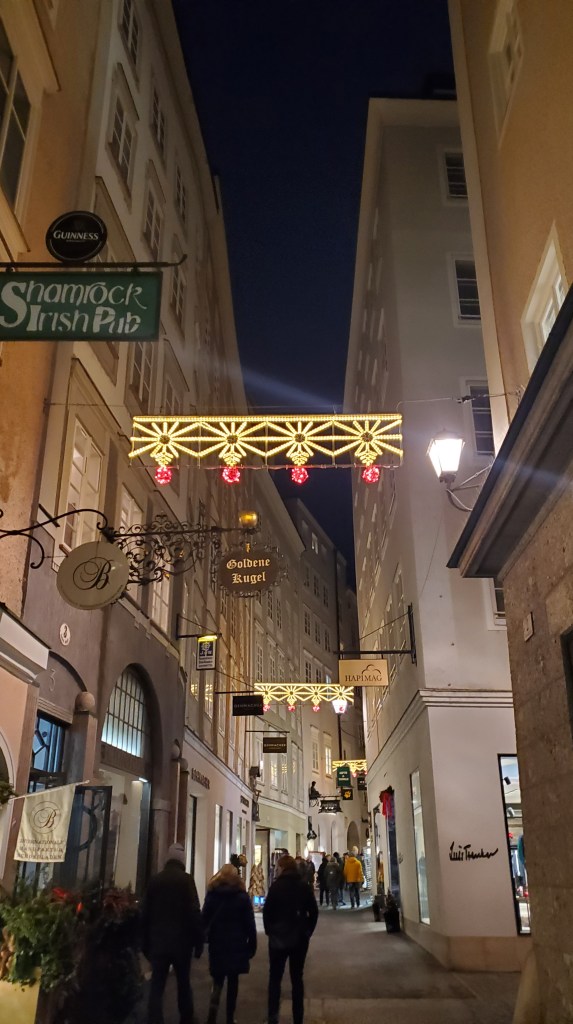
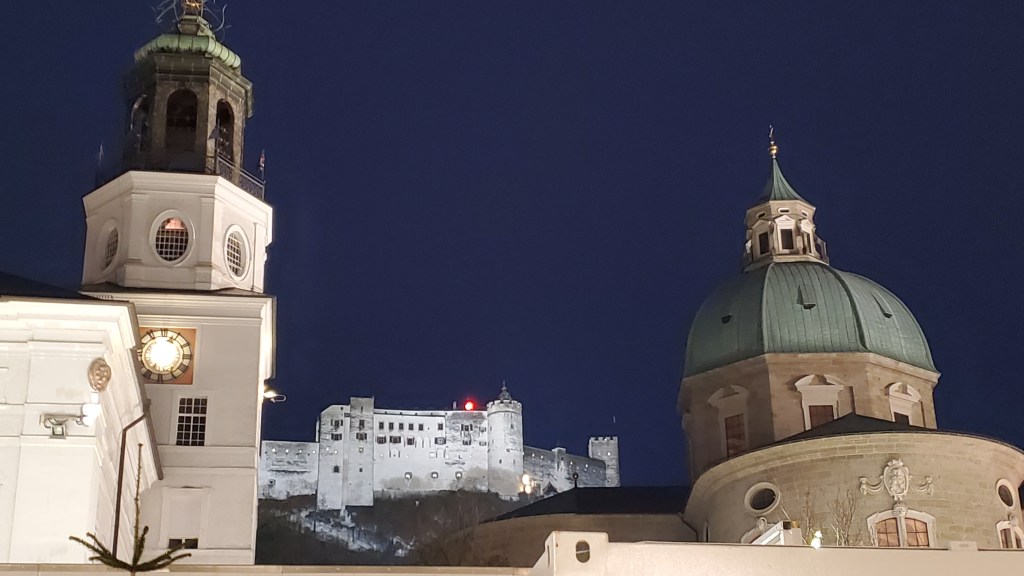
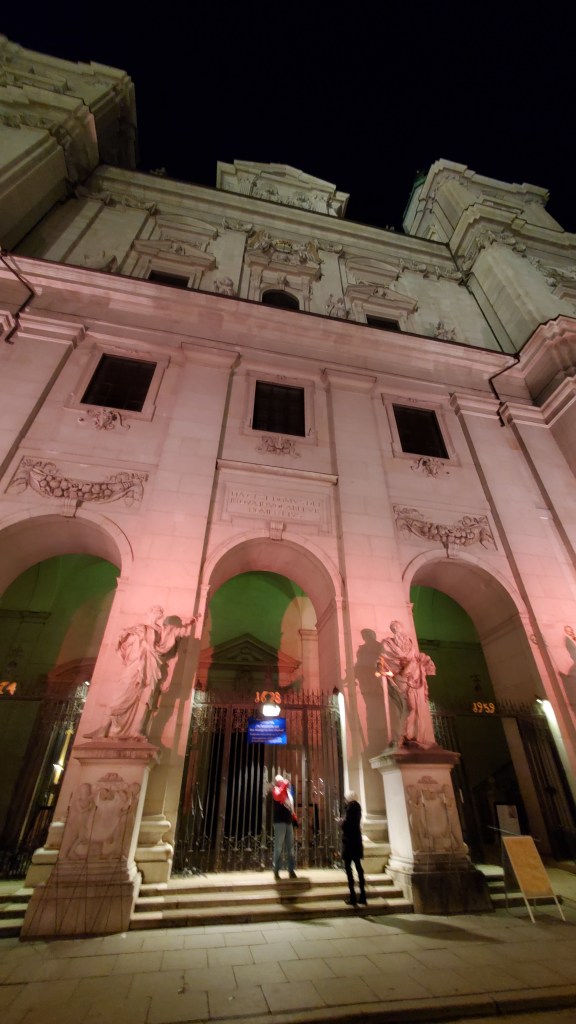
  7. Oh, we also went to Salzburg, which is exactly what you would imagine—quaint, cute, picturesque, and full of Mozart.  Definitely worth a side trip.
  8. And Bratislava – to be continued.

West End and Beyond

The great Russian writer Konstantin Paustovsky astutely noted, “A sense of nature is one of the foundations of patriotism”.   During the pandemic, while everyone was communing with nature, camping and hiking, I most assuredly was not.  I visited one national park (with mixed success) https://oldladywriting.com/2021/06/11/i-went-up-north-once-once/, did not take down my old lady bicycle from the ceiling of our garage where it has been hanging for about twenty years now, and did not take up “hiking” as a hobby.  I waited and bided my time in a Midwestern suburb until an opportunity to travel to London presented itself.

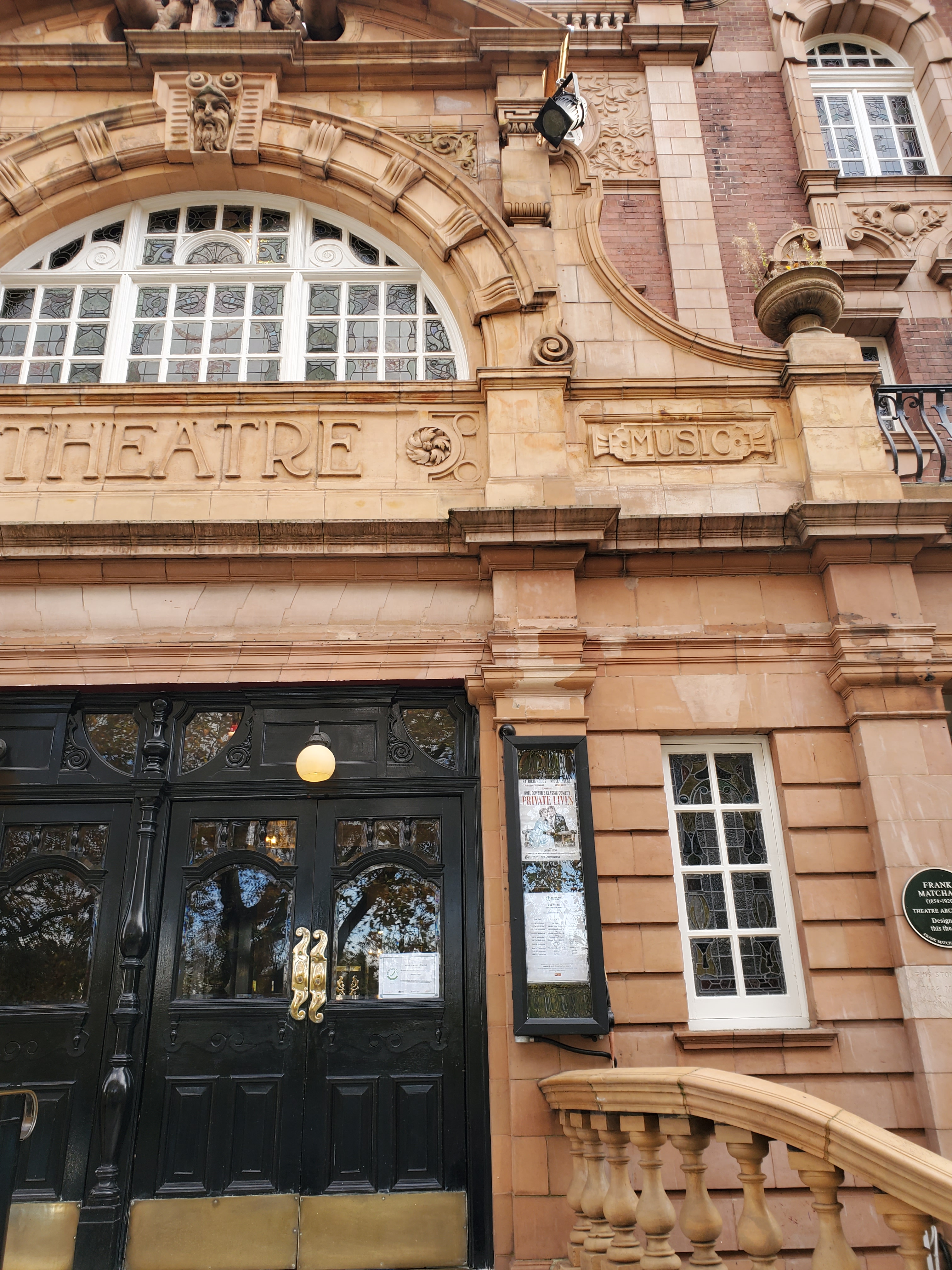
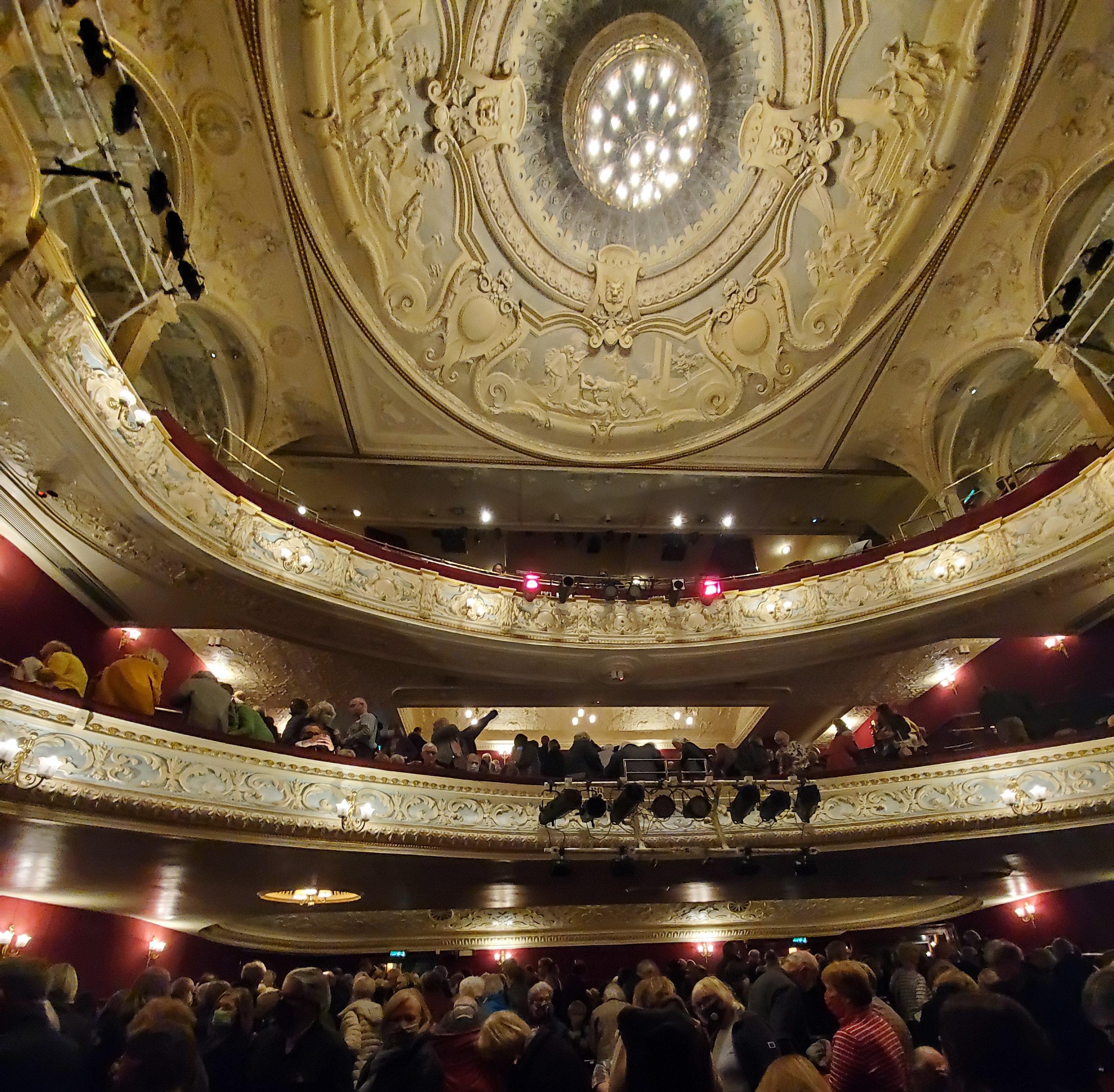
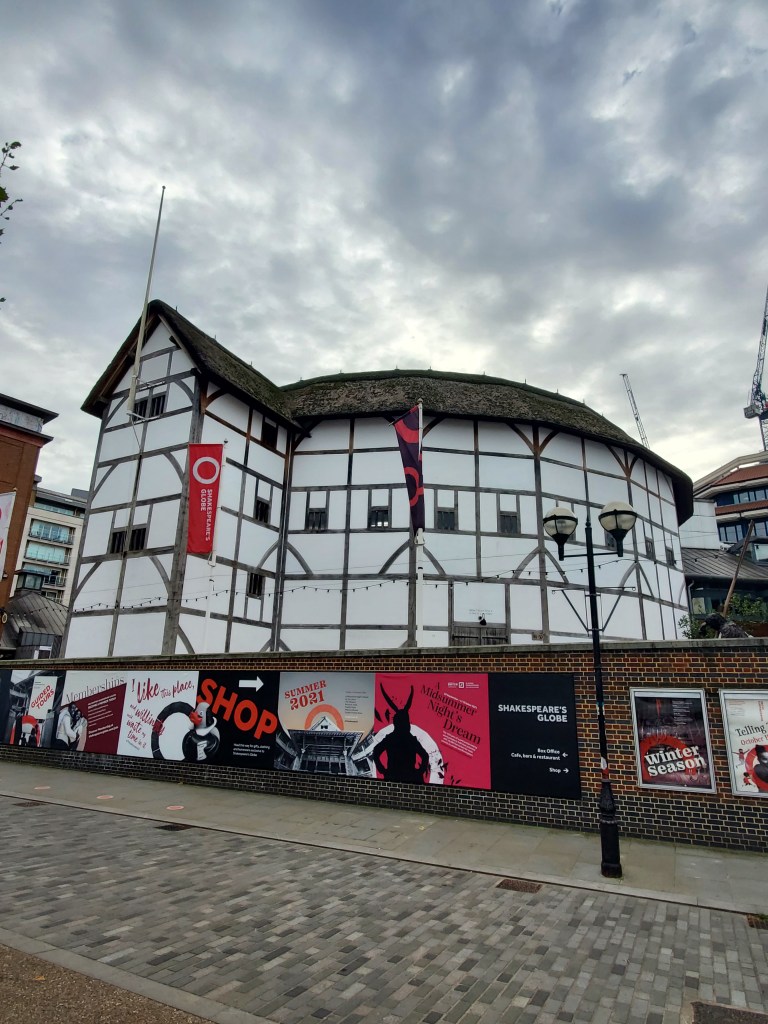
I saw five plays in seven days, which is my ideal vacation under any circumstances.  Now that the original production of “Les Miserables” has been replaced (not permanently, I fervently pray) by the abomination that is the 25th anniversary version, my London dance card is emptier.  I must clarify that at the West End, I try to see shows that I am unlikely to see anywhere else.  Unless Sir Patrick Stewart, Sir Ian McKellen, or the not-yet-knighted David Tennant or John Simm are appearing in “Jersey Boys” or “Book of Mormon”, I am catching those when they come to Detroit.  On this trip, I even wandered out of London, to Bath and Richmond.  The theater scene even outside of the West End was breathtaking.

And here they are, in order of appearance.  Spoiler alert:  all were great.

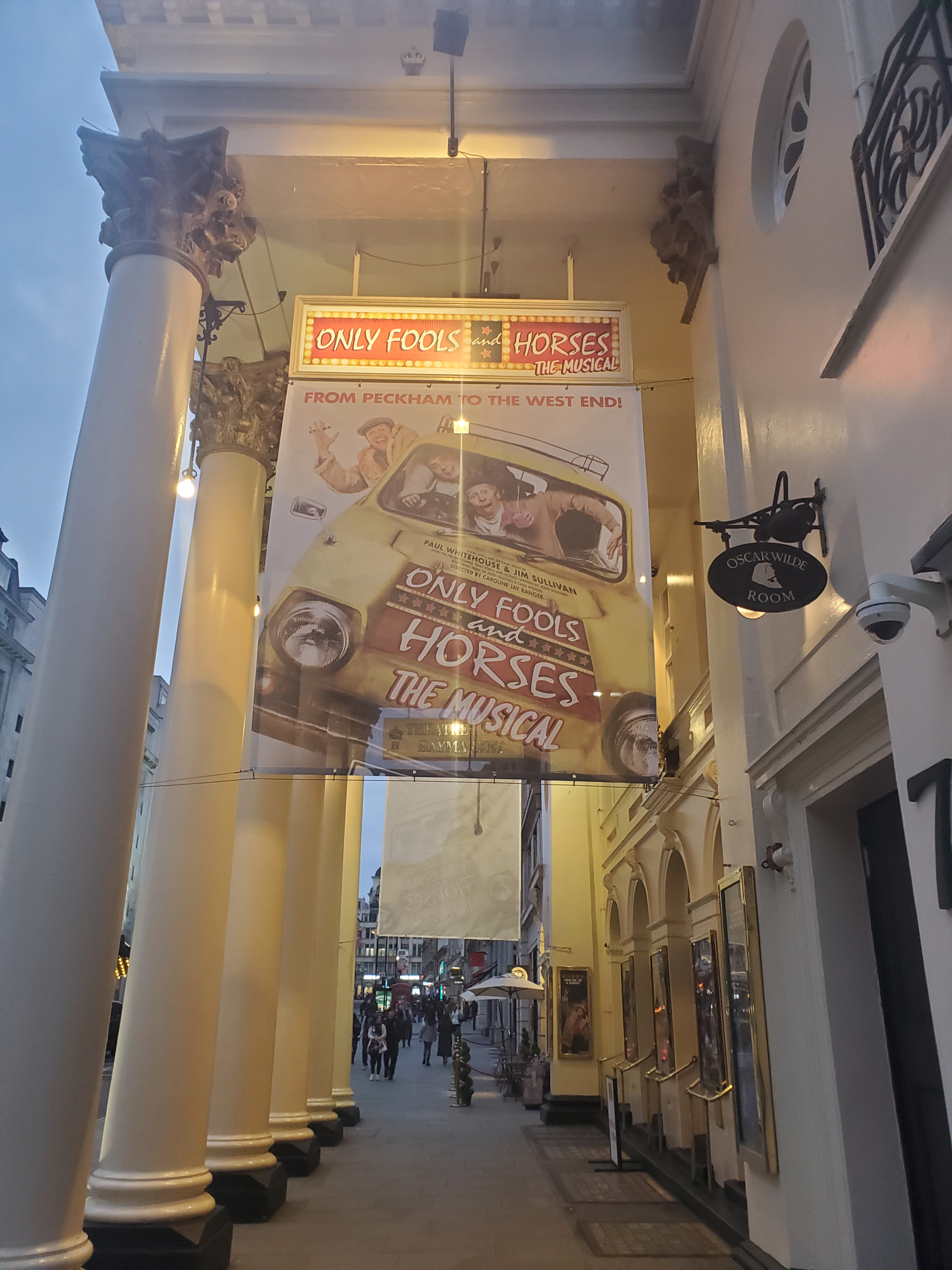
Number One:  “Only Fools and Horses”—a delightful new[ish] musical to welcome us back to the West End.  I actually researched the current offerings for about five minutes and this one jumped out at me as something that will never make it to the US, being as it is based on what is apparently a cult favorite English sitcom from the 80’s that is not part of the BBC America repertoire.  The fact that I missed many inside show references did not diminish the enjoyment.  The shady dealer older brother, the earnest goofy younger brother, the slightly demented grandad, various other comical yet lovable characters inhabiting their corner of London, catchy tunes, fun choreography, heartwarming story, and the evident delight of the audience made me want to go out and find the original TV show.  This was met with zero success during the trip, but thank God for Brit Box.

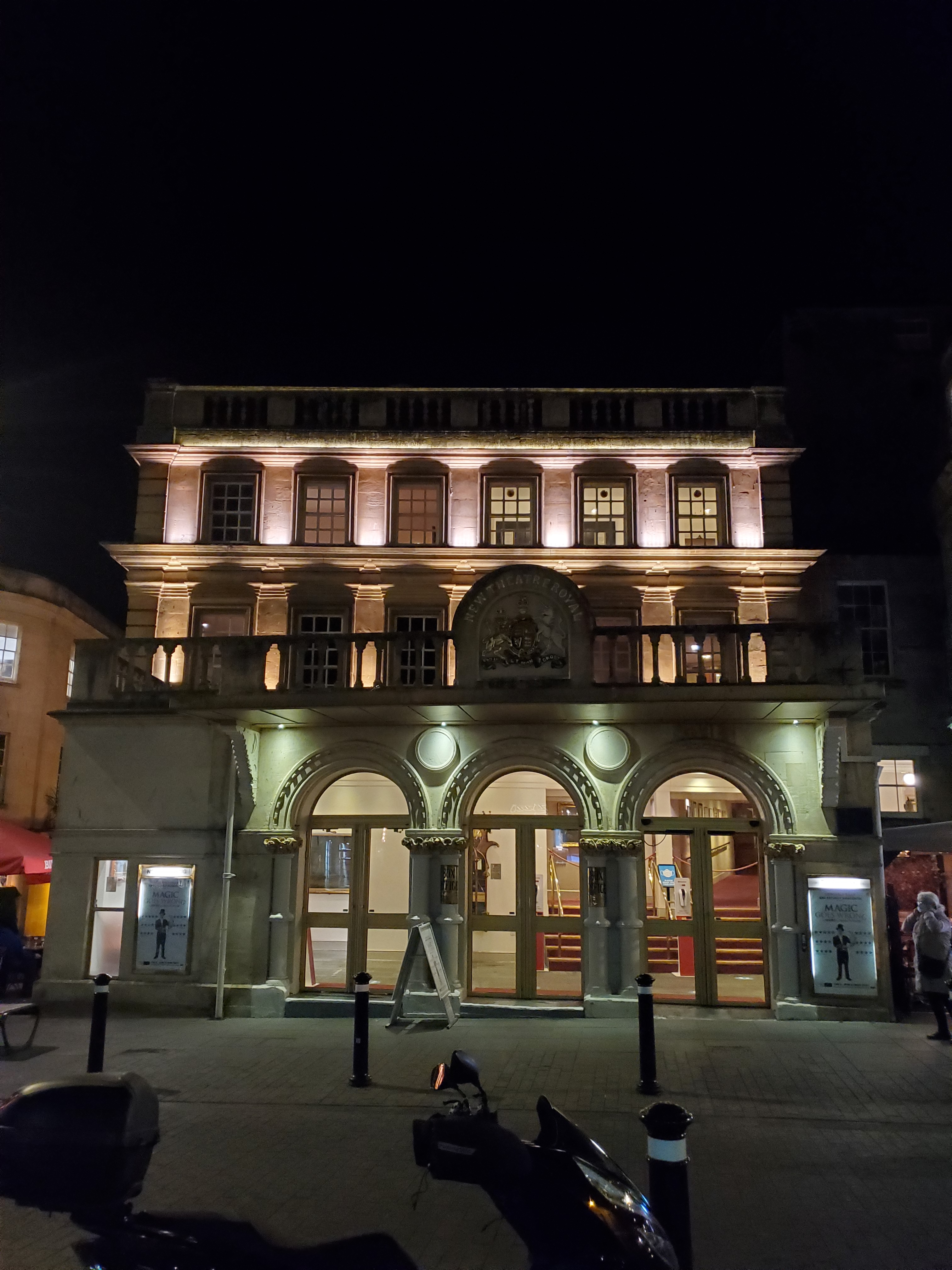
Number Two:  “Magic Goes Wrong”—the latest installment in the “Goes Wrong” series by Mischief Theatre company.  We saw “Peter Pan Goes Wrong” at the London Apollo a few years ago (“Magic”’s current home), and it was the funniest thing I have ever seen in my life.  The woman who sat next to spouse actually confessed that she wet herself laughing, which is neither surprising nor shameful given the level of creative absurdity that starts even before the curtain goes up.  The element of surprise is gone once you have seen one of their shows—I mean, you know that everything that can go wrong will—but it is still a hilarious great fun.  Penn and Teller created the magic side of it, so there is some actual legitimate magic alongside the bumbling tomfoolery.  I suppose *that* is the surprise.

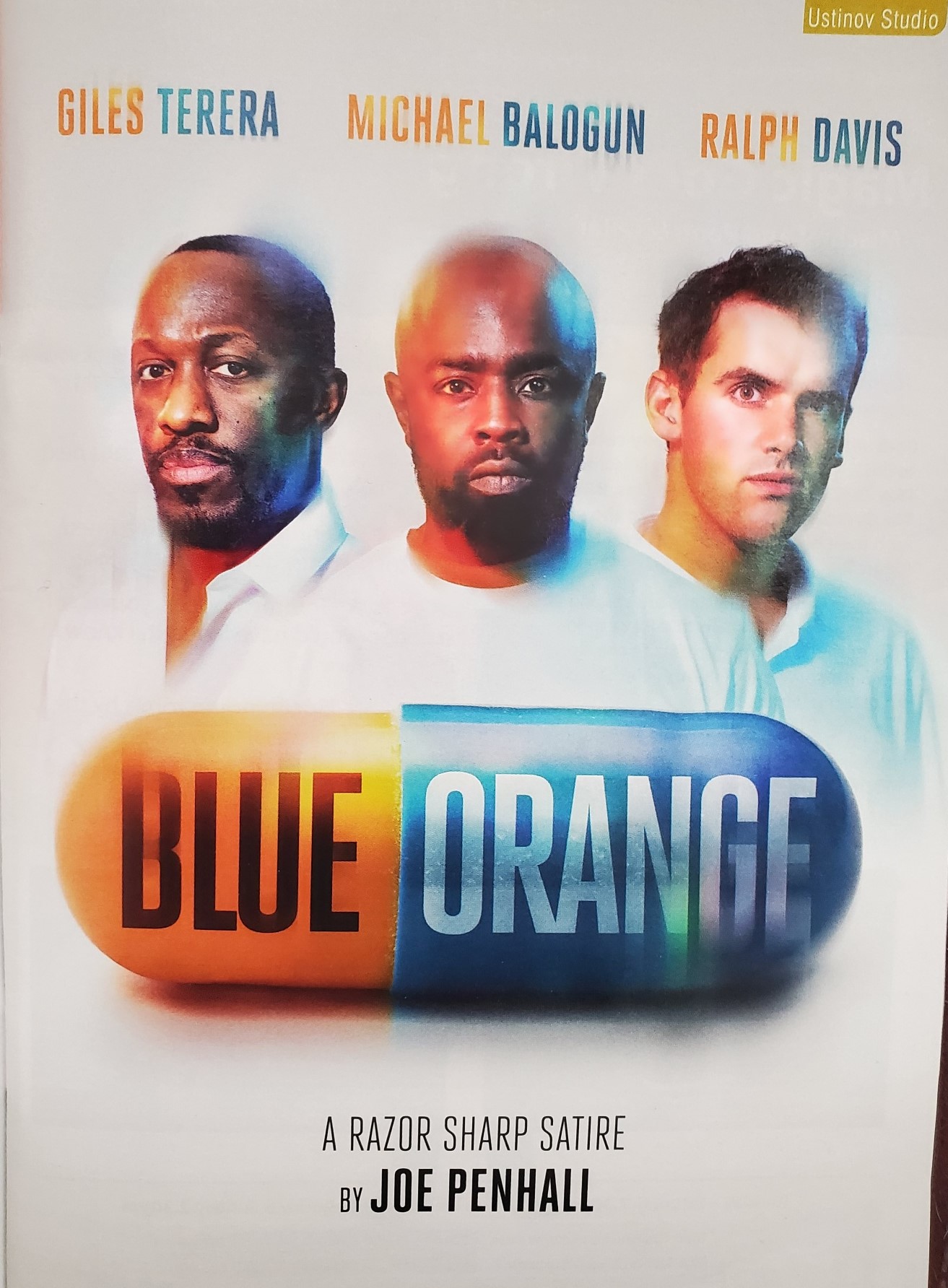
Number Three:  “Blue/Orange”—a snapshot of the British mental health system (which seems as woefully deficient as the American one), full of dark humor and unnerving exchanges, with racial tension in the mix.  On a Tuesday evening, the little theater in Bath was packed, which did my heart good.  In this version, the character with the most authority of the three was played by a Black actor, which shifted the power dynamic to an intriguing level.  Like “Art”, this is a play I would want to see again and again to continue to analyze its many nuances.

Number Four:  “Abigail’s Party”—a 70’s comedy of manners.  I saw it once before, in Belfast, and wondered then why such a juicy acting opportunity is not presented in the US.  On second viewing, I have to concede that, while there is tremendous joy in period costumes and set, the play is very British.  It is not just a play set in a specific decade, but in a specific place (I, of course, appreciate every Demis Roussos reference).  But I still think that the crafted written characters can stand well enough on their own, and you do not have to be British or have lived through the decade to appreciate this powerful dark[ish] satire of the middle class pretenses.  It is a bit of a precursor to “The God of Carnage”, to my mind.  (And how many Yasmina Reza can one post contain?)

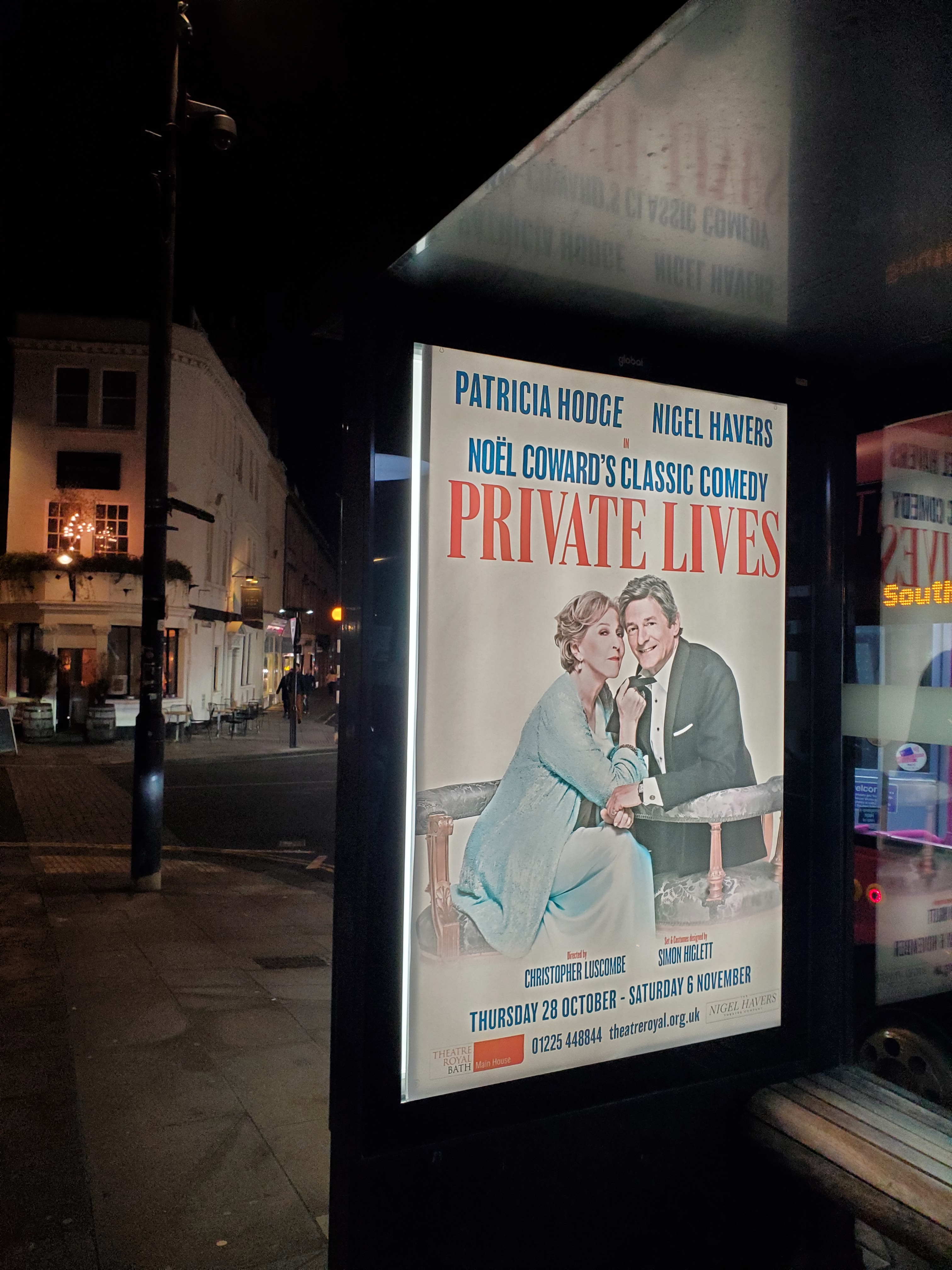
Number Five:  “Private Lives”—which needs no introduction.  I am well familiar with this play both on its own and through “Moon Over Buffalo”.  Like “Art” (there I go again!), I have seen it in three countries—and like with “Art”, I traveled to England to see Nigel Havers in it.  Of course, he was marvelous as Elyot, as he is in everything he does—and Patricia Hodge as Amanda was an extra treat. 

This time, I was determined to meet him, waited at the stage door, and was shocked when he actually came out—and there was no one to converge on him but me and the trailing spouse.  You would think that I would have used this opportunity to shine with my witty repartee and winning personality.  You would be wrong—I have no such gifts.  Spouse said that I should have prepared and rehearsed a speech.  Son asked if mentioned how much we appreciated his performance in “Art”.  But of course not—I blurted out that I came all the way from Detroit to see him on my birthday (sort of endearing), and went on for a bit about how much I loved him in “Chariots of Fire”.  While I did not mention that I have literally seen the film over fifty times in the theater and can recite it verbatim (which is apparently more annoying than charming, as my family tells me), I inanely informed him that I have a “Chariots of Fire” luggage tag on my suitcase.  https://oldladywriting.com/2021/09/27/adventures-of-a-suitcase/ What a dork!  Having followed Nigel Havers’ career for forty years, having even read his autobiography twice (“Playing with Fire”; highly recommended), that was the best I could do under pressure.  Well, I suppose I could have done worse.  (Someone, please tell me how I could have done worse!)  I am consoling myself that I excel in a more intimate discussion setting.  Next time, next time…

Honorable mention:  Upon returning home, I had the opportunity to see “Pretty Woman” the musical.  My assessment of the show:  the seats at the Fisher Theater in Detroit are the most comfortable ones.

Adventures of a Suitcase

Whenever I see my suitcase arrive at the luggage carousel, I am genuinely surprised.  No, really, I literally speak to it.  I say something along the lines of “Welcome, you made it!” or “Fancy meeting you here!” or “Thank you for not getting lost” or I might even greet it in the language of the country where we landed and say “Bienvenue” or “Quelle surprise”. 

I never expect my suitcase to arrive at the same time and place as me.  And so, its simultaneous appearance unfailingly brings joy.  You would think that I have experienced significant luggage loss.  You would be wrong.  There were those two times in the late 90s when my suitcase was delivered to my house a day late, full of dirty vacation laundry.  It was still under the Northwest regime.  Funny, everyone who flies always says that whichever airline has the monopoly in their town is notorious for losing luggage, and I, too, used to say, Northwest always loses luggage, even though it only happened twice.  But I digress.

The most recent and most dramatic missing suitcase saga took place when I flew to Budapest to meet my sister.  Yes, I was meeting my one and only sister for the first time ever at age forty, a momentous and exciting and life-changing event, but the fact that my suitcase remained at the transfer location of the world’s if not worst, then the most inconvenient airport[1] threatened to ruin everything.

This fashion bad accompanies my sister and me in all the photos of our first day in Budapest

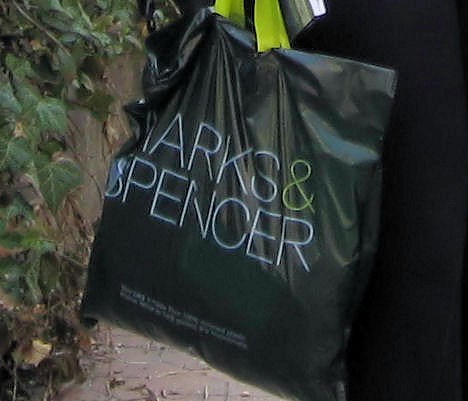
Like a complete travel neophyte, which I am most assuredly not, I packed all my clothes and personal belonging into my checked luggage, and all the gifts for my sister and her family into the carry on.   We were spending almost an entire week together—toys for my niece could have waited.  My own clean underwear and eye makeup remover could not.  I actually cried all night—a fact of which I am decidedly not proud, but for some incomprehensible reason cannot stop from telling everyone[2].   We got up in the morning, promptly found Marks and Spencer and I purchased some clothes I still wear.  The fact that I managed to not get hurt while shopping there was a bonus. [https://oldladywriting.com/2020/11/02/the-first-spanish-trip/]

I have had more bad luck with luggage literally not completing the trip with me *without* getting lost.  One time, spouse and I were flying to Malta, if memory serves, and at the very start of our journey, right in Detroit Metro airport, were seized with uncontrollable hatred for one of our suitcases.  At that point in time, we possessed one suitcase with wheels.  The other one had no wheels [ https://oldladywriting.com/2021/04/10/meet-me-in-sistine-chapel-or-rome-second-try/%5D.  It suddenly struck us both as an unforgivable deficiency.  We spontaneously purchased a suitcase with wheels and repacked.  I stuffed the now empty wheel-less suitcase into the garbage bin of the ladies room, and worried, until we boarded our plane, that airport security will suspect it of being one of those strategically abandoned bags. 

Another time, we were traveling from London to Paris via the Chunnel.  On the walk to St. Pancras station, one of our suitcases[3], while in possession of all four wheels, unexpectedly lost a handle.  I mean, its handle came off and simply could not be reattached without tools—and who has tools in the early morning on an empty street in London while on vacation?  Spouse gamely hefted the case and carried it.  There is even a saying in Russian, “suitcase without a handle”—awkward to carry, but a pity to abandon.  Well, we were perfectly willing to abandon it by the time we arrived at the train station, after many stops and many more curses.  In fact, we were looking forward to abandoning it—but not so fast.  The replacement model in the station’s store was insanely expensive in pounds, let alone dollars.  The handle-less suitcase made its voyage to the continent.  We had better luck in Paris, and any embarrassment at packing and repacking our stuff in full view of passers-by in the middle of Gare du Nord was mitigated by relief of finally  finding four working wheels AND a handle.  A lovely French saleswoman politely inquired if we would like to take our empty bag with us.  Never have I said “Non!” with greater emphasis (though I did politely add “Merci”).
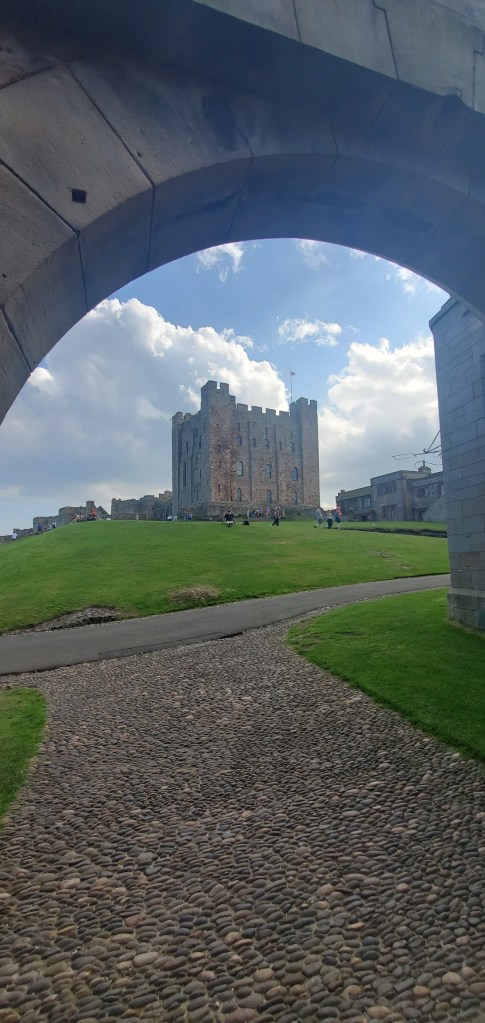
When my son was going to Austria for a summer exchange, we duly outfitted him with two suitcases.  The American group’s chaperone, a personage who generally inspired less confidence and trust in me than my 13 year old, requested printed photos of the luggage to present to the airline in the event of luggage loss.  I could not convince her that that is not how any of it works[4], and so I printed the photos of two blue suitcases well in advance of the travel date and congratulated myself on not being hostile or passive-aggressive.  Then something made one of the suitcases unavailable to travel, and it had to be replaced.  What would you do?  Exactly what I did, I bet:  put an “X” through one of the images on the photo and write “This one is now black”.

Meanwhile, my very first wheeled suitcase is still alive and relatively well.  The zipper broke, leaving it permanently expanded and unable to fit into the overhead compartment [5]. This is an non-issue, because I check it every time I travel because, as we say back in the Old Country, one who does not take risks does not drink champagne.


[1]  Paris Charles de Gaulle, as if you had to ask.

[2]  See, there I go again.  To be fair, of the three people that regularly read my writing, at least two already know this story. 

[3] Fun fact—it was the self-same suitcase that was purchased in an airport.  It did not last long.

[4] But she was persuaded that a watermelon (1) is neither uniquely American for a cultural show-and-tell in Austria nor (2) can be taken on a plane—and not because it is big and heavy and can break…

[5] See above. Did you notice the luggage tag?

Bad Day in Chicago

Two years ago I had a bad day.  https://oldladywriting.com/2019/08/09/three-worst-fears/ It is not like I am commemorating it, but something got me thinking about another spectacularly bad day I had quite some years ago that had longer-lasting effects.  The peculiarity of that particular day was that the bad and odd things that happened to me were not my worst fears realized but quite the opposite—the series of unfortunate events actually generated brand new anxieties.

I was in Chicago.  I will fight my usual impulse to make a short story long, but to set the stage, I was arriving to a work conference in the Loop from a client visit in the suburbs.  As of this writing, I see that it is a distance of about 35 miles that should take just under an hour—but this writing is taking place well away from rush hour traffic.  The actual trip consisted of a series of missteps (one quite literally) that resulted in trauma both emotional and physical.  If what follows will keep just one person safer from harm, this cautionary tale will have served its purpose.

If this is in your rear view mirror, you might be heading in the wrong direction

First, if you see a bunch of very tall buildings in your rearview mirror AND the lake is on your left, you are driving *away* from Chicago.  This was in the days before GPS, but even so, if the GPS dies and you have a moment of panic, just head toward the very tall buildings.  For reasons now unknowable, I did the opposite, and immediately learned a very valuable lesson—in urban rush hour traffic, getting off at the first exit and reversing your direction is a maneuver that, while technically simple, can take hours to execute.  By the time I turned around and proceeded back on the right course, I chewed off all my nails, got a sore throat from screaming in exasperation, called spouse several times to express my frustration (entirely unproductive, but somewhat therapeutic), and got cramps in my foot from keeping it on the brake and in my hands from gripping the steering wheel. 

You are now going in the right direction

After finally fighting my way through the Chicago gridlock, I was met with another conundrum.  I was supposed to leave the rental car in a designated spot in one of those urban garages that have one long ramp going up, one even longer coming down, and one more leading nowhere just for show (with apologies to Sheldon Harnick).  After driving in and out of the garage and explaining to the attendant that I am not staying, not parking, just trying to find the mysterious location to surrender the car, please do not charge me the minimum fee of $20 per minute, I promise I will not pass this way again, yes I know I keep taking the parking ticket, but how else can I get into the garage and find the spot to leave the car, I lost all reason and did something of which I am not proud (but not ashamed, either, if truth be told).  I left the car on the street, ran into the rental office, threw the keys on the desk and invited the attendant, in no uncertain terms, to deal with the parking debacle on their own time.  The stunned human on the receiving end of my wrath hurriedly assured me that they will handle the situation and even offered me a ride to the hotel.  Which I proudly declined.  Which was my next mistake.

Still have no idea how you end up at the river level.

In the intervening years, I have gotten to know Chicago better, but I still do not quite understand that part of it where you suddenly end up under a bridge.  I find it immensely confusing.  That day, angrily stomping to my hotel, I was so surprised to find myself walking down steps into a river that I missed them (the steps) entirely.  I landed on the pavement, and my suitcase landed on top of me.  By the time I arrived at the Omni (the one near Water Tower Place—a fair distance if you know the area), everything was hurt and I was dying.  Of course, it never crossed my mind to hail a cab, because that is the kind of ridiculous human being that I am. (In the process, I lost my cool reversible magnetic bracelet from Kohl’s, and I am still steamed about that). 

I ran into a colleague in the lobby who asked me if I wanted to go out to dinner.  I wanted nothing less, and instead proceeded to make my next mistake—take a hot bath.  Not feeling the immediate effects of that particular blunder, but starting to feel like the starving dog that is my normal state of being, I reassembled myself and reinserted myself into a dinner with a couple of my work sisters.  By the time I stood up after my meal, my entire body was throbbing with pain.  Today’s me would have immediately hailed that cab back to the hotel and ordered a tub full of ice from room service.  That day’s me, not wanting to miss anything, did her best not to limp as she followed the cool girls to the fortune teller’s. Another fatal error.

Yes, you read that right, for some reason a fortune teller was deemed to be a fun activity to kick off the work conference and/or our first night in the big city.  We took turns having our sessions and I was, of course, last, for no reason other than it took me the longest to hobble nonchalantly across the waiting room.  The psychic read me somewhat correctly—I was buzzing with stress as well as suppressed physical agony.  I was having a very bad day.  She told me, in a nutshell, that no one likes me and that I will probably be divorced very soon.

When I finally made it back to the hotel, I called my unsuspecting spouse to yell at him for plotting to leave me.  As of this writing, I am still married.  I have not visited a fortune teller since that fateful day, and I refused to drive in Chicago for over ten years.

Of course Jimmy does not drive in Chicago. He has someone doing it for him. Be like Jimmy.

Thank You for Being a Friend

According to my recently unearthed diary (it was not missing or anything, I just do not like to refer to it too often because of the cringe factor), my teen years were full of seemingly perpetual anguish related to various betrayals which I would never recollect but for this traumatizing written record.  I was, at times, surrounded by The Mean Girls—but who wasn’t in their teen years?  But in a period of just three days recently, I interacted with a variety of people who, in various ways, reminded me how incredibly blessed I have been by friendships in this lifetime. 

  • I auditioned for several parts in a show at the local community theater.  I did not get cast for several reasons.
    • First, for one of the characters, my Russian accent is no longer convincing.  Yes, and I feel slightly stupid even writing this, but I am only identified as vaguely Eastern European to someone with a very good ear.  There were literally women on that stage who sounded authentically foreign-born (and weren’t), while I was doing a desperate impression of Crazy Russian Hacker.  And I am terrible enough with accents that I cannot just summon it.
    • Second, the director decided that the part of a “wanna be lawyer” should be played by a man, because, well, lawyers are men.  Triggering, and certainly nothing I have not heard from every corner over the past three decades, but for reasons passing understanding I always expect more parity from community theater.  What an unlikely source of optimism!  This actually reminds me of a time when I was not cast in another show.  It was a dual part—Eastern European mother in her youth in Act I, and then her daughter, a lawyer, a couple of decades later, in Act II.  The director called me and told me that I was believable as one but not as the other, and for the life of me I cannot remember which one was which.  There is great irony somewhere here, but ultimately, I guess I would prefer to think that I am an implausible lawyer.  Frankly, I usually feel that way anyway…
    • But, my point in all of this is that I ran into two women I know at the audition.  The camaraderie, the emotional support, the cheering each other on and complimenting each other even though we were up for the same couple of parts was absolutely lovely.  I have not known either of these fine humans in my youth, so cannot tell with certainty if we are all improving with age or if I am meeting a better class of people. Perhaps a little bit of both, which is both sensible and hopeful.
  • Not to make it sound like my American youth was misspent in the friendship department, the following day I drove to Hell (a real town; I am not this inventive) for a “Still 50” party of a high school classmate I have never met before.  Well, we met during a series of Zoom calls that were held on the regular during the darkest days of the pandemic, and encompassed a group of pals who all graduated within three years of each and now live all over not just the continental U.S., but as far as Hawaii.  I count myself more than a little lucky to enjoy the company of almost a dozen folks who knew me at my utmost awkward, clueless, and, in my mother’s characterization, gloomy, and who still willingly interact with me going on forty years later. 
  • The following day I had a lunch lasting several hours with a college friend.  We have not seen each other in about a decade, which is a ridiculous and inexplicable gap, but there it is.  The old saying of picking up where you leave off without missing a beat is always true with this friend, and has been for over thirty years.  I often see people question if there can be genuine, non-romantic friendship between men and women, and this long-standing unshakeable bond between an introverted engineer/scientist and a [seemingly] extroverted lawyer/amateur thespian is a testament to the fact that friendship, like love, is a gift that you take where you find it.
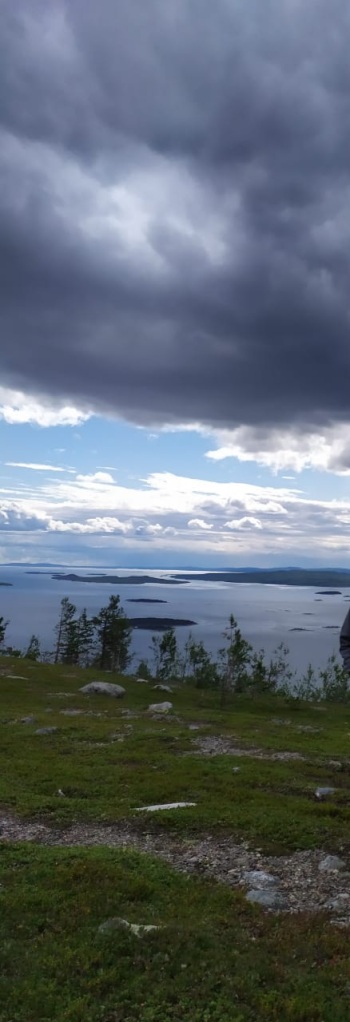
  • And finally, there is my childhood BFF.  She is the one whom I met on my first day of school, and who is the closest I have come to having a sister in this world (I have known my actual sister for a fraction of the time, both in quality and quantity—but that is another story for another time).  We have lived world apart for over forty years, and have averaged one in-person meeting per decade during this time.  Right now, she is on a road trip to the Russian Near North.  From each scenic stop, she has been sending me daily videos, narrating the town histories, telling fun local facts, showing scenic views.  They visited Novgorod the Great, Petrozavodsk the capital of Karelia, Murmansk above the Arctic Circle, stopped on the shores of the Barents Sea.  I have felt included in this wonderful adventure.  In return, I send videos of my foster dog.  And beer.  And my office.  And I feel unbelievably fortunate that my first school friend is still my best friend.  She is, and always will be, family.

The wisdom of the years taught me that not all friendships are for always.  Some relationships are for a season, and every season has its ups and downs.  Looking back, there have certainly been some downs.  But, as the song goes, thank you for having been a friend (this is the Russian/Georgian version—not to be confused with the theme to “The Golden Girls”).  The ups have, and continue to, fill this life with meaning, warmth, and laughter. 

I Went Up North Once. Once.

I do not know Michigan well.  I have lived here intermittently for a total of about 35 years.  While I have made a point of hitting the major museums in the metropolitan Detroit area and even farther afield when my children were young, much of the state still eludes me.  I had a few obligatory encounters with it upon first being brought here when I was in high school.  I think my mother organized get-acquainted trips to Mackinac (if you are not from here, do not bother trying to pronounce it) Island, Traverse City, and Holland.  Only the last one is remembered, because we took pictures of ourselves wearing wooden shoes and standing next to decorative windmills.  Shortly thereafter I learned that Holland, Michigan bears about as much resemblance to the country for which it is named as the Renaissance Festival to the actual life of the period.  The other trips left no impression whatsoever, if they even happened. 

And so, for the first long post-pandemic weekend, I decided to go and look at the Sleeping Bear Dunes, which seem to consistently show up in those “10 Things to See” and “Best of” lists that I usually do not trust.  The closest lodging appeared to be in Traverse City, and so I figured we can hit both landmarks with one trip. 

Of course, no trip involving me goes completely smoothly.  Under the category of “What fresh hell is this”, my car was assaulted by a flock of birds.  Or maybe it was one bird.  It was all so sudden!  One moment we were merrily cruising on a very boring stretch of I-75 at a safe speed of no more than five over the limit, and the next, my entire windshield was covered in a vile substance, reducing visibility in a most dangerous manner.  I am not a fan of birds.  They have never contributed anything positive to my life, whether in a friendly, decorative, or nourishing manner.  This was just a culmination of everything I have always known about them as an unpleasant species.  It was all uphill from there.

Because Michigan has an inhospitable climate with more rainy days than Seattle (I read this factoid somewhere and cannot stop repeating it), a long sunny weekend is rare and treasured.  Memorial Day being the first long weekend after a dreary winter, most of the state’s inhabitants flock “Up North”, ostensibly to enjoy the beautiful nature.  We arrived around the early dinner time.  Strangely enough, the nature areas were sparsely attended.  Everyone was at the restaurants.  Literally every sit down restaurant for miles had a dinner wait list of at least two hours, putting our mealtime somewhere between eight p.m. and next week.  We opted to eat what might have been a pressed rat sandwich at a fast food place.  To be fair, we did not travel Up North for the food.  I am told there are some nice restaurants there, but I remain skeptical.

For dessert, we had gnats.  That was surprising and unintentional.  Apparently they are plentiful around the Grand Traverse Bay, and pursued us in swarms for the duration of our promenade.  While not biting, they were quite aggressive with their intent to enter every orifice.  We have managed to both inhale and ingest more than we wanted, which is to say, any.  Although I do enjoy trying unusual food, the gnats made me feel a little like being in a Monty Python “Crunchy Frog” sketch.

Overall, this was a very successful trip, and the extra layer of confusion and inconvenience actually added that certain Midwestern charm to the experience.  I mean, if everything had been perfect, it would not have been Michigan, but Ontario. 

I have been to that area once in the winter (ask me about the ski trip to which my mother brought more suitcases than there were days), but this was really the first time that I was able to walk, observe, and enjoy.  The town itself remains indefinable, as I have not noticed anything distinguishing it from any other similar small tourism-focused towns in Michigan, outside of the various local festivals which I have never attended, and so far without regret.  I am given to understand that the area wineries are lovely, but again—the Niagara wine region is just as close, and Canada has my heart.

Nonetheless, Grand Traverse Bay is lovely.  It is an objectively beautiful area and, gnats notwithstanding, promenading along its shore was a joy.  While I do not enjoy aquatic activities, or being wet in general, I like bodies of water on sight, and harbor a hope that my Third Thirty (or sooner) includes being near one.  It is not likely to be this particular one, but it sure is picture-perfect.

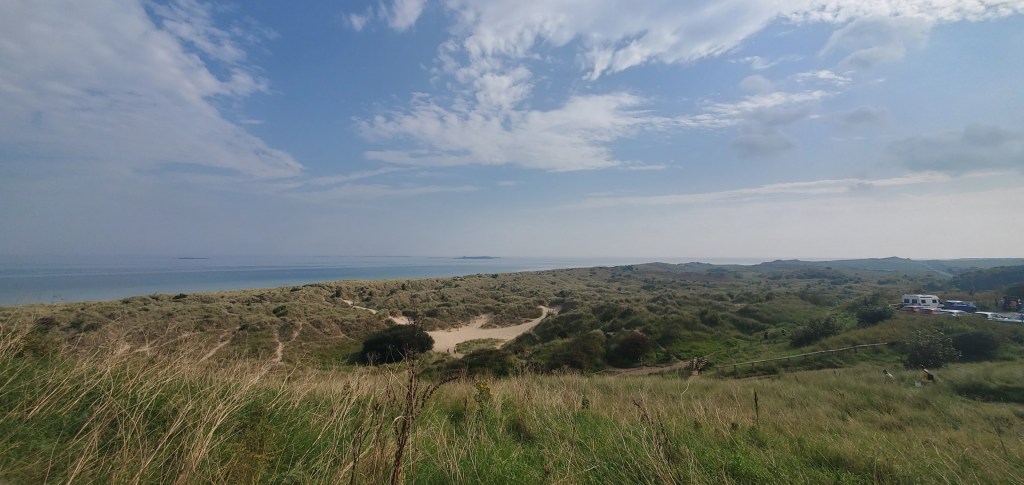
The main event of the trip, Sleeping Bear Dunes, also did not disappoint.  I did not know Michigan had this much sand!  I was warned in advance that if one goes down the sand mountain to the water, one must climb back up.  As we say back in the Old Country, there are no fools here—of course I did not go down the sand mountain.  I am most assuredly not a climber.  I stayed at the top and took photos with my phone, though I am sorry I read the plaque about the legend of the sleeping bear—it is very sad.  We stopped at the various scenic locations in the national park, enjoyed the views, walked on the trails (I would not call it hiking, which I believe requires a bit more vigor than what we exerted), and returned home.  Despite the fact that on a holiday Monday the four hour drive doubled in time spent due to traffic, the trip was ultimately both worth it and not requiring of a repeat.   Until some gal pal persuades me to explore the Leelanau Peninsula’s wine country.